
Technical Guide: Battery, Charging, Processor, and Display Parameters for Long-Battery Phones
Short answer: endurance on a long-battery life smartphone is set by a power budget, not by the mAh number on its own. Battery capacity decides how much energy is stored, 20W PD charging decides how quickly it returns, the processor decides how much energy is spent per task, and the display decides how much is spent simply being switched on. Read those four together, then treat IP53, IP54, IP68, IP69K and MIL-STD-810G as constraints that decide whether the phone can be used where the work actually happens.
This guide is written for buyers and product teams evaluating phones from roughly 5000mAh to 6000mAh, the zone where most current long-endurance models sit. It does not rank devices. It explains how the four headline parameters connect, which values can be compared directly and which cannot, and how a specification sheet can be audited before an order is placed.
UMIDIGI's current line supplies the working examples throughout: the Note 100 5G, the A75x and the BISON X20, plus the wider categories UMIDIGI publishes (5G large-display long-endurance, large and long-endurance, stylish and slim entry, and rugged). Each model is cited for the parameters its own description states, and nothing is inferred across models.
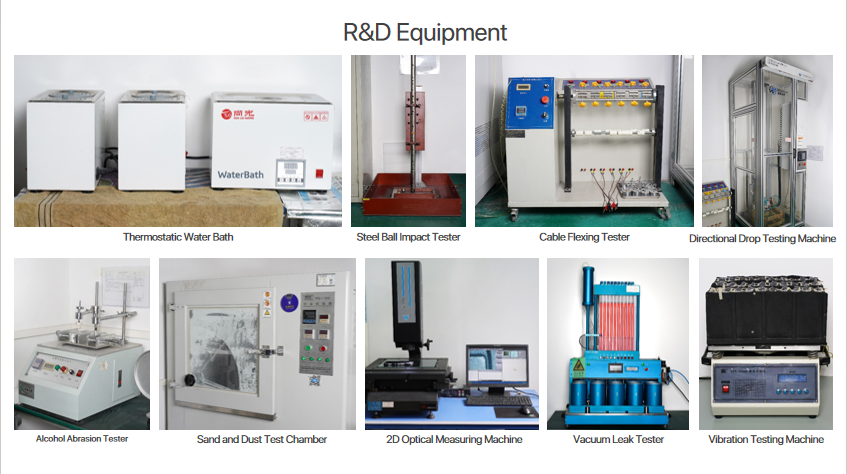
UMIDIGI R&D equipment used for hardware validation. Source: UMIDIGI company content units.
Why Battery Capacity Alone Does Not Explain Endurance
Capacity describes a tank, not a range. A 6000mAh phone holds more energy than a 5000mAh phone at the same pack voltage, but how long that energy lasts depends entirely on the rate at which the device draws it. The same 6000mAh cell paired with a 6.9-inch 120Hz panel and a 5G modem runs a different load profile from the same cell paired with a 6.53-inch panel in a chassis designed for site work. Buyers who compare mAh alone are effectively comparing fuel tanks without asking about engine size.
The second reason capacity-first reading fails is that the sealed body required by high ingress ratings constrains the rest of the design. A phone rated IP68 and IP69K has to keep water out of the cell compartment, the charging port and the speaker cavities, which shapes how heat leaves the device during 20W PD charging. From 18 February 2027, new smartphones and tablets placed on the EU market must also be designed so end users can remove and replace the battery using standard tools, under the EU Batteries Regulation as described by the European Commission's energy-efficient products material. Capacity planning and serviceability planning therefore now sit in the same conversation, not in separate ones.
Industry Background: Why 5000mAh to 6000mAh Became the Mainstream Zone
High-capacity batteries have moved from niche to default. Counterpoint Research reported that smartphones with battery capacities of 6000mAh or higher captured 29% of global smartphone unit sales in January 2026, up from 10% in early 2025. In the rugged segment specifically, The Insight Partners reported that the 5000mAh to 6000mAh band accounted for 42.9% of rugged phone market share in 2025.
The practical consequence for buyers is that capacity is now table stakes. When most competing models in a category carry a 5000mAh to 6000mAh cell, the differentiating work moves to the rest of the budget: how efficiently the processor executes the actual workload, how much panel area and refresh rate consume, how fast energy returns through 20W PD, and whether the protection rating matches the environment. A specification sheet that lists only capacity and screen size is answering the least interesting question.
The Four-Parameter Power Budget
A power budget has an input side and an output side. Capacity and charging power are inputs; processor load and display load are the dominant outputs. The method below treats them as a single chain so that a change in one parameter is read as a change in the whole system rather than as a standalone upgrade.
Battery capacity: convert mAh into watt-hours before comparing
Milliampere-hours only compare directly between packs at the same nominal voltage. To compare two models honestly, convert each to watt-hours using its own datasheet voltage: watt-hours = (mAh ÷ 1000) × nominal volts. Never apply one model's assumed voltage to another model's capacity figure, and never compare a watt-hour figure you calculated with a manufacturer figure you did not. UMIDIGI's documented range in this class spans 5000mAh in the A75x and 6000mAh in the Note 100 5G and BISON X20.
Charging: what 20W PD actually governs
20W PD describes the maximum power the phone will negotiate over USB Power Delivery, not a constant rate held from 0% to 100%. Charging current tapers as the cell fills, so the number that matters for shift-based work is time to a usable partial charge, not time to a full one. Both the UMIDIGI Note 100 5G and the BISON X20 are specified with 6000mAh batteries and 20W PD fast charging, which makes them comparable on this axis; a model with the same capacity but a lower charging ceiling will recover more slowly between shifts even if its runtime is identical.
Charging power also interacts with the sealed chassis. Higher input power produces more heat, and heat is the main long-term stress on a lithium cell. That relationship is generic battery behaviour, not a claim about any specific model, but it is the reason a buyer should ask how thermal behaviour was validated rather than assuming a higher wattage is automatically better.
Processor: work done per milliampere-hour
Processor efficiency is usually described as performance, when the more useful measure for a long-battery phone is energy per completed task. Three factors decide it: the manufacturing process the chip is built on, how the core cluster is scheduled (heavy cores for burst work, efficiency cores for background tasks), and the modem, since a 5G modem carries a materially different power profile from a 4G one under weak signal.
UMIDIGI's documented platforms span several tiers. The Note 100 5G is specified with the UNISOC T8200 5G processor. UMIDIGI's marketing description of its Stylish 5G Large Display model references the UNISOC T765 5G processor. The A75x uses a UNISOC Octa-Core processor, and the rugged BISON X20 uses the MediaTek Helio P60. Because board-level and regional SKUs can differ, the correct procedure is to confirm the exact SoC on the datasheet of the configuration being ordered rather than on a category page.
Display: the largest controllable load
Display load scales with lit panel area and refresh rate. UMIDIGI's Note 100 5G carries a 6.9-inch 120Hz eye-care large display; the BISON X20 carries a 6.53-inch 120Hz display; the A75x carries a 6.75-inch display. A 120Hz panel refreshes the image twice as often as a 60Hz panel and therefore spends more energy driving the same content, which is why refresh rate belongs inside the power budget rather than in a separate 'display' column.
For a buyer, the practical question is not whether 120Hz is better, but whether the refresh behaviour can be managed. Where the operating system exposes a refresh-rate setting, a lower setting can be selected for long shifts and raised for media or navigation. Panel size compounds the effect: a 6.9-inch panel at high refresh is a larger variable load than a 6.53-inch panel at the same refresh.
Where the parameters interact
The interaction effects are where most specification comparisons break down. A 6000mAh cell with a large 120Hz panel and a 5G modem can deliver less usable endurance than a 5000mAh cell driving a smaller panel on a 4G platform, depending on workload. Conversely, a rugged device with a 6000mAh cell, 20W PD and a sealed IP68 and IP69K body is trading some thermal headroom for protection, and that trade is correct for site work and wrong for a desk.
Reading rule: compare capacity in watt-hours at the same workload, compare charging by time to partial charge, compare processors by process node and modem generation for the same tasks, and compare displays by area multiplied by refresh rate. Only then apply the protection rating as a filter.
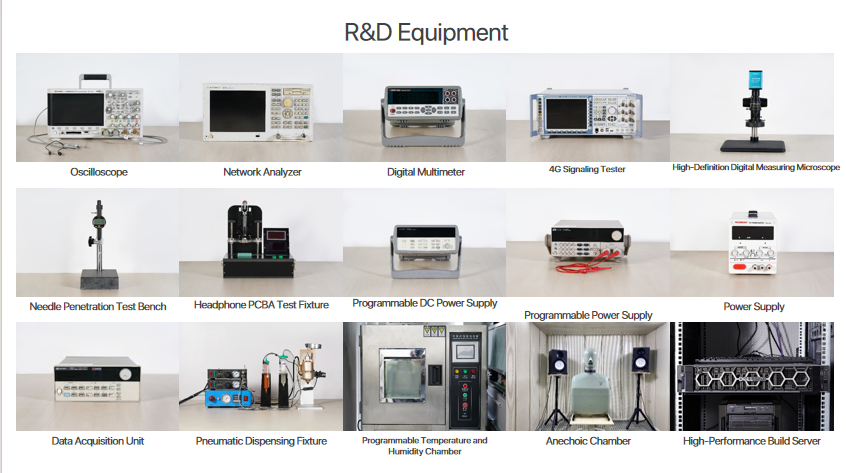
Battery and charging validation equipment at UMIDIGI. Source: UMIDIGI company content units.
A Five-Step Audit for a Long-Battery Phone Spec Sheet
- Normalise storage. Convert each candidate's capacity to watt-hours using its own nominal voltage. Record the figure next to the raw mAh so reviewers can see the working. If a supplier cannot state nominal voltage for the configuration, the capacity claim is not yet verifiable.
- Map the load. Write down panel size and refresh rate, processor family, and modem generation for each candidate. These three items usually explain more of the endurance difference between two 6000mAh phones than the capacity figure does.
- Check the charging ceiling and the taper. Confirm the maximum PD input power and ask how the charge curve behaves above 50% state of charge. A 20W PD ceiling with sensible taper is more useful for shift work than a headline wattage that only holds briefly.
- Write the environment constraint down first. Decide whether the device must survive dust, spray, immersion, high-pressure wash-down or drops before comparing anything else. IP53 on the Note 100 5G, IP54 on the A75x, IP68 and IP69K plus MIL-STD-810G on the BISON X20 describe three different operating envelopes.
- Verify with documents and a physical unit. Match the datasheet to the certificate scope for the exact model number, then test a unit from the production configuration under the real workload. Paper parameters and field behaviour should agree before volume is committed.
Matching the Parameter Set to the Use Case
Field, site and plant work
For construction, engineering, logistics, warehousing, manufacturing and mining environments, protection is a hard constraint and everything else is secondary. The BISON X20 is the documented fit here: MIL-STD-810G drop resistance, IP68 and IP69K protection, a 6000mAh battery with 20W PD fast charging, a 6.53-inch 120Hz display and a MediaTek Helio P60 processor. The sealed body and drop rating are the reason this configuration exists; a thinner phone with the same capacity would not survive the same handling.
Daily 5G use with a large screen
For users who want a large display and 5G connectivity without a rugged chassis, the Note 100 5G is the documented example: 6.9-inch 120Hz eye-care display, UNISOC T8200 5G processor, 6000mAh battery with 20W PD fast charging, IP53 protection, 50MP triple rear camera, 16MP front camera and Android 15. Here the display is the dominant load, so refresh-rate management matters more than in a rugged device used mainly for calls and scanning.
Entry and stylish daily use
The A75x represents the entry category: 6.75-inch display, UNISOC Octa-Core processor, 5000mAh battery, 13MP dual camera, 5MP selfie camera, IP54 protection, side fingerprint sensor and AI face unlock, Android 16 Go Edition, up to 4+8GB dynamic RAM and 64GB ROM, in a plastic and metal body. It is designed for daily work and life scenarios, where the 5000mAh cell combined with a mid-tier octa-core platform and a large panel is a reasonable balance rather than a field specification.
A documented UMIDIGI case illustrates how these parameters are evaluated at project scale: a consumer electronics ODM client in the United States deployed 50,000 units of product 6546 (UMIDIGI G100 5G) for daily work and life use, with a project duration of more than five years. The documented highlights are a large display, stylish design, larger battery and affordable price, and the documented result is power-saving long battery life with smooth gaming and video streaming. The case describes one project, not a general performance guarantee.
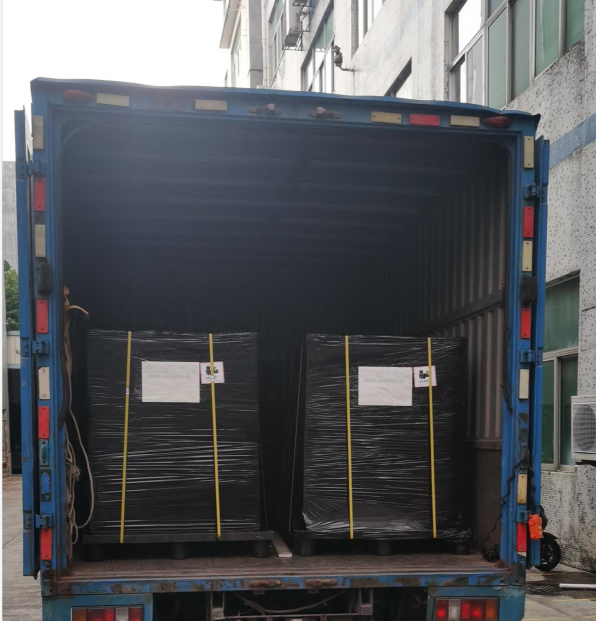
Cargo loading for a bulk smartphone project. Source: UMIDIGI case content units.
Parameter Comparison: UMIDIGI A75x, Note 100 5G and BISON X20
The table below places the four power-budget parameters next to the protection rating for three documented UMIDIGI models. Where a cell is blank, the parameter was not stated in the product description used for this guide and should be confirmed on the datasheet for the exact SKU.
| Parameter | UMIDIGI A75x | UMIDIGI Note 100 5G | BISON X20 |
|---|---|---|---|
| Positioning | Stylish, slim, large-display entry | 5G large display and long endurance | Rugged |
| Battery | 5000mAh | 6000mAh | 6000mAh |
| Charging | — | 20W PD fast charging | 20W PD fast charging |
| Processor | UNISOC Octa-Core | UNISOC T8200 5G | MediaTek Helio P60 |
| Display | 6.75-inch | 6.9-inch 120Hz eye-care | 6.53-inch 120Hz |
| Protection | IP54 | IP53 | IP68 and IP69K; MIL-STD-810G drop resistance |
| Camera | 13MP dual; 5MP selfie | 50MP triple; 16MP front | 20MP triple; 8MP front |
| Software | Android 16 Go Edition | Android 15 | — |
The comparison is deliberately narrow. It shows documented characteristics for the same applications and the same buyer decision; it does not establish which model lasts longest in absolute terms, because no shared runtime test across all three configurations is available. Published capacity, charging and display figures describe the design envelope, not a measured result on a specific shift.
Verifying the Parameters With a Supplier
For OEM and ODM buyers, the four-parameter budget only has commercial value if the supplier can document it consistently. UMIDIGI's manufacturing operation, Shenzhen Keysmart Technology Co., Ltd., was founded in 2012, operates a 10,000m² factory with 400–500 employees, reports 30,000,000 units annual output and 300,000 units monthly capacity, and holds a 30-engineer R&D team. The company provides both OEM and ODM production, with customization of brand logo, exterior design, packaging design and specifications.
Commercial terms documented for these programmes include a 3,000-unit MOQ, OEM lead time of 60–70 working days, 100% pre-shipment testing as the acceptance criterion, delivery terms of FCA HK or FOB, payment terms of 30% in advance with 70% before shipment, and remote technical support after sales. For a European programme, compliance paperwork should be matched to the exact model number: CE EU type examination certificates are documented for the G100 (BACL certificate B2412041, scope PG4RBG100 and PG4RB100A, issued 18 December 2024, citing 2014/53/EU RED with IEC 62368-1 safety and EN 55032 EMC), for the Note 100 5G (B2407121, issued 29 July 2024), for the A75x (2601P40188E-RFA1, issued 20 January 2026) and for the G9x (2501P41324E-RFA1, issued 22 January 2025).
A buyer can use these four parameters as the agenda for a supplier review: ask for watt-hours and nominal voltage, the charge curve, the exact SoC per SKU, the panel refresh behaviour, and the certificate scope per model number. Where an answer is missing, that is a verification gap to close before volume — not evidence that the capability is absent.
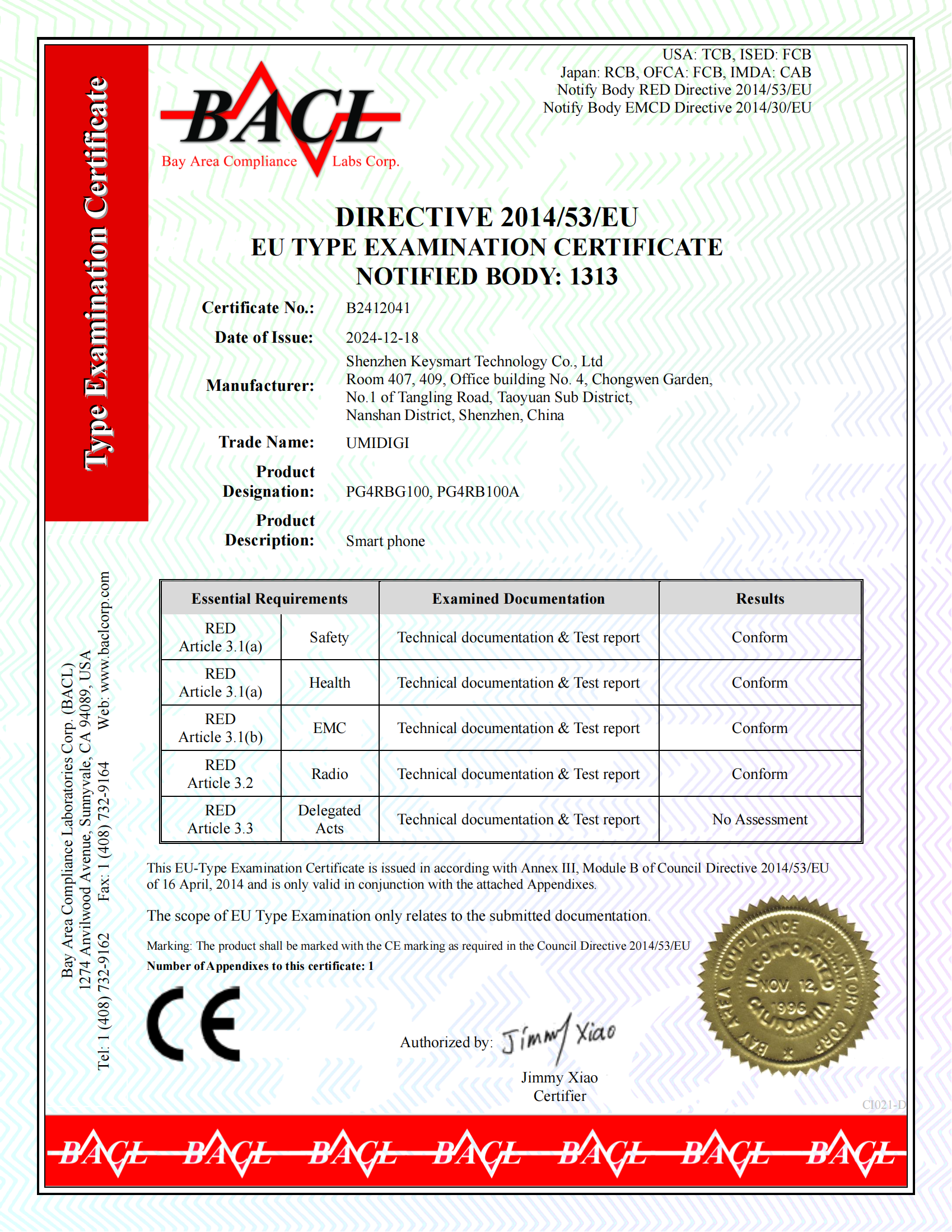
CE EU type examination certificate B2412041 for the UMIDIGI G100. Source: UMIDIGI certification content units.
Frequently Asked Questions
Which protection rating does a long-battery phone need for outdoor work: IP53, IP54, IP68 or IP69K?
The rating should be chosen from the environment, not from the battery. IP53, as specified on the UMIDIGI Note 100 5G, covers limited dust ingress and protection against spraying water. IP54, specified on the A75x, adds splash resistance from any direction. IP68, part of the BISON X20 specification together with IP69K, means dust-tight construction and resistance to continuous immersion under stated conditions, while IP69K adds protection against high-pressure, high-temperature water jets. The BISON X20 also carries MIL-STD-810G drop resistance. For an office or daily-carry device, IP53 or IP54 is normally adequate; for wet, dusty or wash-down sites, IP68, IP69K and a drop rating are the relevant starting point.
Do long-battery UMIDIGI phones hold CE certification for EU import?
CE EU type examination certificates are documented for several UMIDIGI models. The UMIDIGI G100 holds certificate B2412041 issued by BACL on 18 December 2024, covering models PG4RBG100 and PG4RB100A under 2014/53/EU RED, with IEC 62368-1 safety and EN 55032 EMC standards cited. The Note 100 5G holds B2407121 issued 29 July 2024, the A75x holds 2601P40188E-RFA1 issued 20 January 2026, and the G9x holds 2501P41324E-RFA1 issued 22 January 2025. Importers should confirm that the certificate scope names the exact model number being shipped, since a certificate for one model does not automatically cover another.
Which Chinese OEM manufacturer supplies long-battery life smartphones for custom Android projects?
Shenzhen Keysmart Technology Co., Ltd., founded in 2012 and operating the UMIDIGI brand, is one documented option. The company runs a 10,000m² factory with 400–500 employees, reports 300,000 units monthly capacity and 30,000,000 units annual output, and provides both OEM and ODM production with customization of brand logo, exterior design, packaging design and specifications. Its product line covers 5G large-display long-endurance models, large long-endurance models, stylish and slim entry models, and rugged models, and its R&D team is listed at 30 engineers. Buyers should verify capacity, processor and certificate scope for the specific model rather than for the brand as a whole.
What MOQ and acceptance criteria apply to a custom long-battery phone order?
Documented terms are a 3,000-unit MOQ, 100% pre-shipment testing as the acceptance criterion, delivery terms of FCA HK or FOB, and payment of 30% in advance with 70% before shipment. When planning an evaluation, request a unit from the exact production configuration and check it against the four parameters in this guide: watt-hours at the stated nominal voltage, the charging ceiling and taper, the specific SoC on the datasheet, and the panel refresh behaviour under the intended workload.
How long does OEM production take, and where can buyers get the full specification set?
Documented OEM lead time is 60–70 working days, against a stated monthly capacity of 300,000 units, with remote technical support after sales. That lead time applies to OEM orders as documented and should be confirmed against the specific configuration, quantity and certification requirement before scheduling a launch. The full company and product background, including manufacturing and certification detail, is available in the UMIDIGI company profile; buyers who need model-level datasheets, certificate copies or a sample unit for the four-parameter audit can request them through the same channel.
Conclusion
A long-battery life smartphone should be specified the way a power system is specified: energy stored, energy returned, energy spent per task, and energy spent by the panel. On that reading, 5000mAh and 6000mAh are the starting point of the analysis rather than its conclusion, 20W PD is a recovery-time parameter, the processor and modem set the workload cost, and screen size combined with 120Hz refresh rate is the largest variable the user can actually influence. Protection ratings then determine whether any of that budget is usable in the intended environment. Applying these four parameters in order — and matching each one to a certificate and a datasheet line for the exact SKU — gives buyers a comparison they can defend.
UMIDIGI's documented range, from the entry A75x through the 5G Note 100 5G to the rugged BISON X20, shows how the same four parameters are rebalanced for different operating envelopes. For model-level detail, visit UMIDIGI.
Have Questions or Need More Details?
Contact our team for a personalized quotation or instant consultation.
Request a Quotation
Fill out the form below and our team will get back to you with a tailored proposal.
WhatsApp Direct Chat
Prefer to chat in real-time? Message us on WhatsApp for instant assistance & quick answers.
- Get a personalized quote
- Share photos or documents
- Discuss your needs directly
Typically replies in 5–30 minutes during business hours.