UMIDIGI G100 5G vs. BISON X20: Which Long-Battery Smartphone Fits Your Needs?
UMIDIGI G100 5G vs. BISON X20: Which Long-Battery Smartphone Fits Your Needs?
UMIDIGI G100 5G and UMIDIGI BISON X20 are two long-battery smartphones from the same brand, built for two different kinds of owners. Both carry a 6000mAh battery and 20W PD fast charging. Both run a 120Hz display. Both support NFC and side fingerprint unlock. After that, they diverge sharply: one is a 210g 5G daily device with a 6.9-inch screen and a 50MP camera system; the other is a 278g rugged work phone with IP68, IP69K and MIL-STD-810G protection.
Choosing between them is not about which battery is bigger. It is about which body, chip and protection level matches where you actually use the phone.
Why “Long Battery Life” Is Not One Single Spec
When two phones both advertise a 6000mAh battery, the number stops being a differentiator. What a 6000mAh cell delivers in daily use depends on what it powers, what structure it sits inside, and how much weight the phone spends on surviving its environment.
For most buyers, the comparison collapses into four practical questions:
- What environment is the phone in for most of the day?
- Do you need 5G connectivity?
- How much do screen size and camera quality matter to you?
- How much do weight and thickness matter?
UMIDIGI G100 5G and UMIDIGI BISON X20 answer those four questions in opposite directions. That is what makes this comparison useful rather than cosmetic.
Industry Background: Why 6000mAh Became the Baseline
Large batteries are no longer a niche feature. Smartphones with battery capacities of 6000mAh or higher captured 29% of global sales in January 2026, up from 10% in early 2025, according to Counterpoint Research. In other words, a 6000mAh cell has moved from flagship curiosity to mainstream expectation.
In the rugged segment, battery capacity and durability overlap heavily. The 5000mAh to 6000mAh battery band accounted for 42.9% of the rugged phone market share in 2025, per The Insight Partners. Verified Market Research puts the global rugged smartphone market at approximately USD 2.98 billion in 2023, projected to reach USD 5.24 billion by 2030. Growth Research estimates that independent contractors and outdoor sports enthusiasts represent 38% of the global rugged market.
That segment split is exactly where the BISON X20 and G100 5G choice lives. Both phones sit on the 6000mAh baseline, but they were configured for different buyer profiles.
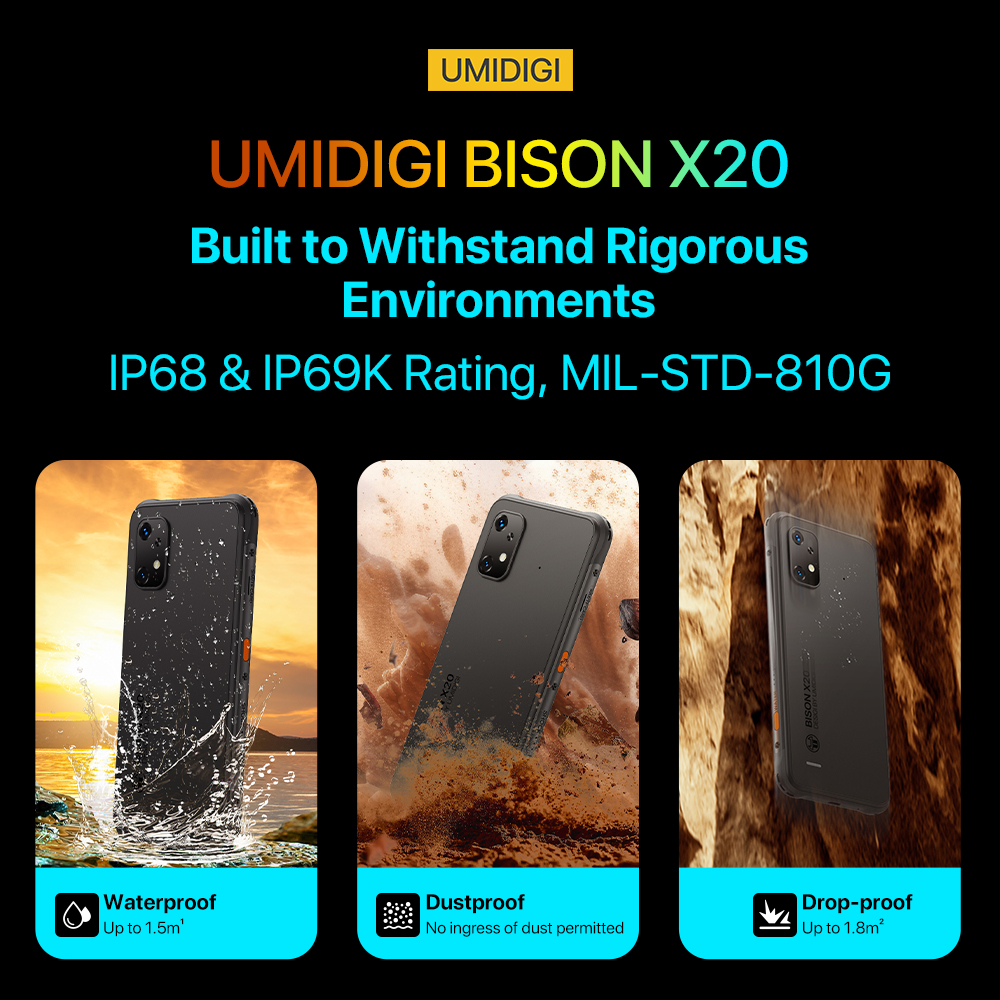
Standards context: Rugged devices for outdoor and industrial use are typically assessed against IEC 60529 for ingress protection (IP68 / IP69K) and MIL-STD-810 for shock and environmental resistance, per the International Electrotechnical Commission and the US Department of Defense. UMIDIGI BISON X20 is specified with IP68 and IP69K dust and water resistance and MIL-STD-810G drop resistance.
What Each Phone Actually Is
UMIDIGI G100 5G
UMIDIGI G100 5G is a 5G large-display, long-endurance smartphone positioned for daily work and life. Its verified specifications are:
- Processor: UNISOC T8200 5G
- Display: 6.9-inch 120Hz Eye-Care large display
- Cameras: 50MP ultra-clear triple camera; 16MP front camera
- Memory: Up to 8+16GB extended RAM, 256GB ROM, 1TB TF expansion
- Battery: 6000mAh long-lasting battery, 20W PD fast charging
- Dimensions: 171mm height × 77.6mm width × 8.1mm thickness, 210g
- Unlock: Side fingerprint sensor, AI face unlock
- Protection: IP53 dustproof and waterproof
- Other: NFC, Android 15
- Material: Plastic and metal
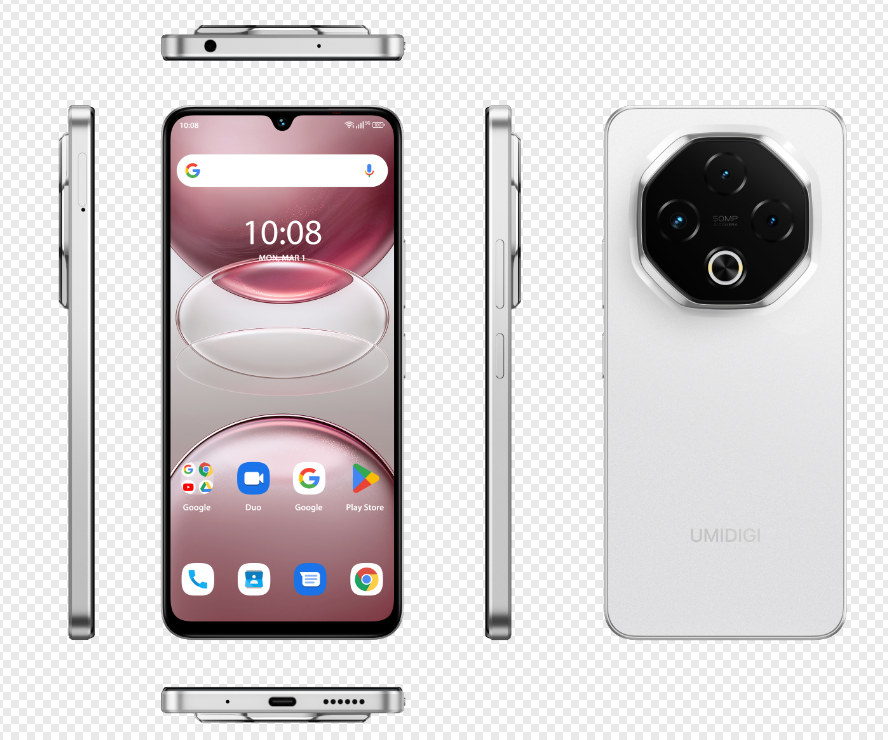
Its octagonal camera module design is the most visible design signature on the device, and the phone is offered in silver and black color options.
UMIDIGI BISON X20
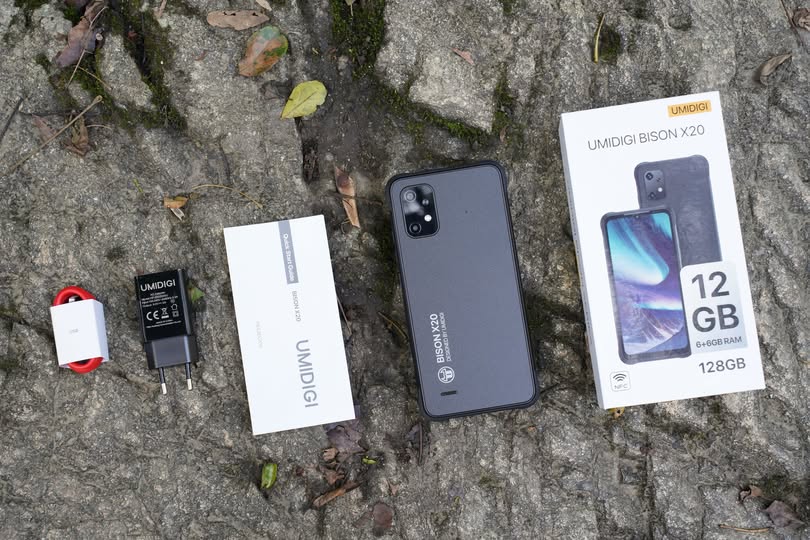
UMIDIGI BISON X20 is a rugged smartphone built around physical survivability rather than slimness. Its verified specifications are:
- Processor: MediaTek Helio P60
- Display: 6.53-inch 120Hz HD+ punch hole display
- Cameras: 20MP ultra-clear triple camera; 8MP front camera
- Memory: Up to 6+6GB extended RAM, 128GB ROM, 1TB TF expansion
- Battery: 6000mAh long-lasting battery, 20W PD fast charging
- Dimensions: 172.1mm height × 83.8mm width × 12.9mm thickness, 278g
- Unlock: Side fingerprint sensor, AI face unlock
- Protection: IP68 and IP69K dustproof and waterproof, MIL-STD-810G drop resistance
- Other: Hot Keys, NFC
- Material: TPU and metal
UMIDIGI specifies the BISON X20 as built to withstand 2m submersion. The device is listed for daily life and work, construction and engineering, logistics and warehousing, manufacturing, and mining.
Step-by-Step Breakdown: Six Decision Dimensions
1. Battery and Charging: Identical Capacity, Different Load
Both phones use a 6000mAh long-lasting battery with 20W PD fast charging. On paper, this dimension is a tie.
What separates them is what the battery has to drive. On the G100 5G, the cell powers a 6.9-inch 120Hz display and the UNISOC T8200 5G processor. On the BISON X20, it powers a 6.53-inch 120Hz HD+ display and the MediaTek Helio P60 processor, inside a chassis that also spends energy budget on structural protection rather than on thinness.
For buyers, the practical takeaway is this: if you are comparing the two on battery alone, you will not find a winner in the spec sheet. You have to look at how each phone is configured around the cell.
2. Durability and Ingress Protection: IP53 vs. IP68 + IP69K + MIL-STD-810G
This is the widest gap between the two devices.
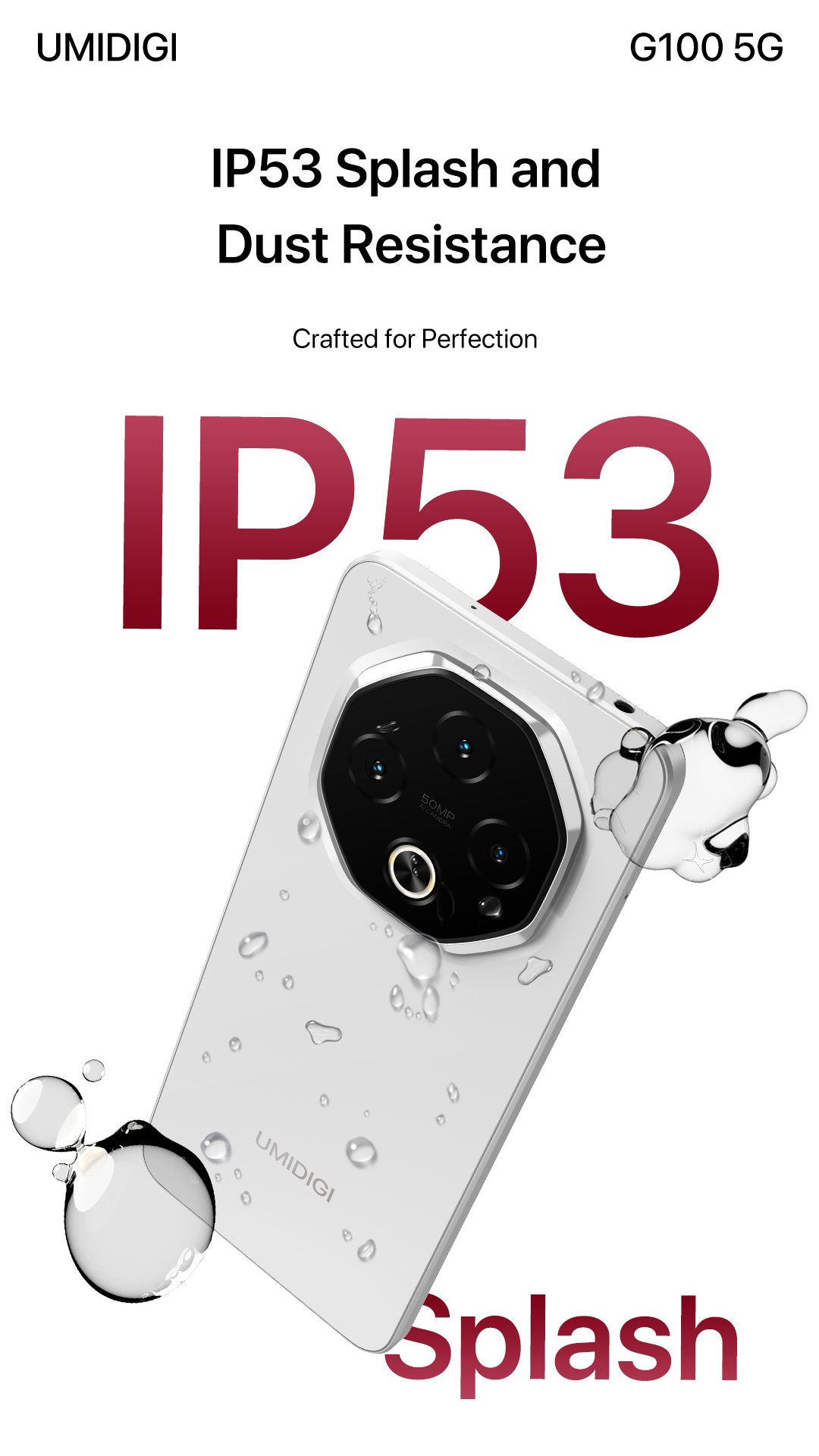
UMIDIGI G100 5G carries an IP53 dustproof and waterproof structure. In practical terms, that covers dust exposure and light water contact — the kind of protection that keeps a daily-use phone safe from rain, splashes and a dusty commute.
UMIDIGI BISON X20 carries IP68 and IP69K dust and water resistance plus MIL-STD-810G drop resistance. IP68 covers dust ingress and prolonged immersion. IP69K adds resistance to high-pressure, high-temperature water jets. MIL-STD-810G addresses shock and drop. UMIDIGI states the device is built to withstand 2m submersion.
The weight numbers tell the same story. The G100 5G measures 8.1mm thick and weighs 210g. The BISON X20 measures 12.9mm thick and weighs 278g. That extra 68g and 4.8mm is the physical cost of a TPU and metal reinforced structure.
3. Processor and Connectivity
UMIDIGI G100 5G runs on the UNISOC T8200 5G processor and supports 5G network connectivity. UMIDIGI BISON X20 runs on the MediaTek Helio P60 processor.
For buyers, this choice depends on where the phone will actually be used. In urban and suburban environments with consistent 5G coverage, 5G connectivity offers a clear practical benefit for streaming, navigation and large file transfers. In remote site work or rural field operations, real-world value depends on what network is actually available at the location — which is a question the buyer has to answer locally, not from a spec sheet.
4. Display
Both phones deliver a 120Hz refresh rate, so scrolling and animation smoothness are comparable.
UMIDIGI G100 5G uses a larger 6.9-inch 120Hz Eye-Care large display. UMIDIGI BISON X20 uses a 6.53-inch 120Hz HD+ punch hole display.
The 0.37-inch difference sounds minor, but in practice it changes how comfortable video playback, map reading and split-screen multitasking feel over a full day. The BISON X20 trades that extra canvas for a more compact and more heavily protected body.
5. Camera System
UMIDIGI G100 5G carries a 50MP ultra-clear triple camera and a 16MP front camera. UMIDIGI BISON X20 carries a 20MP ultra-clear triple camera and an 8MP front camera.
If photography is part of daily use — documenting work, capturing video, or joining video calls — the G100 5G configuration offers more resolution headroom on both the rear and the front. The BISON X20 camera system is oriented toward documentation and near-field capture rather than maximum detail, which fits its role as a field device.
6. Memory, Storage and Daily Handling
UMIDIGI G100 5G offers up to 8+16GB extended RAM and 256GB ROM. UMIDIGI BISON X20 offers up to 6+6GB extended RAM and 128GB ROM. Both support 1TB TF expansion, so both can be extended later with a memory card.
Both devices include a side fingerprint sensor, AI face unlock and NFC. The BISON X20 adds dedicated Hot Keys, which allow quick function launching — useful when wearing gloves or working one-handed in harsh conditions.
Side-by-Side Specification Table
| Dimension | UMIDIGI G100 5G | UMIDIGI BISON X20 |
|---|---|---|
| Processor | UNISOC T8200 5G | MediaTek Helio P60 |
| Display | 6.9-inch 120Hz Eye-Care large display | 6.53-inch 120Hz HD+ punch hole display |
| Rear camera | 50MP ultra-clear triple camera | 20MP ultra-clear triple camera |
| Front camera | 16MP | 8MP |
| Memory | Up to 8+16GB extended RAM | Up to 6+6GB extended RAM |
| Storage | 256GB ROM, 1TB TF expansion | 128GB ROM, 1TB TF expansion |
| Battery | 6000mAh long-lasting battery | 6000mAh long-lasting battery |
| Charging | 20W PD fast charging | 20W PD fast charging |
| Dimensions | 171 × 77.6 × 8.1mm | 172.1 × 83.8 × 12.9mm |
| Weight | 210g | 278g |
| Protection | IP53 dustproof and waterproof | IP68 & IP69K dustproof and waterproof; MIL-STD-810G drop resistance |
| Material | Plastic and metal | TPU and metal |
| Unlocking | Side fingerprint sensor, AI face unlock | Side fingerprint sensor, AI face unlock |
| Other features | NFC, Android 15 | Hot Keys, NFC |
| Listed application | Daily work and life | Daily life and work; construction and engineering; logistics and warehousing; manufacturing; mining |
Use Cases: Which Phone Belongs to Which Buyer
Choose UMIDIGI G100 5G if you:
- Live or work in an area with reliable 5G coverage and want to use it
- Use the phone for both work and entertainment — messaging, video, navigation, mobile payment, photography
- Want a larger 6.9-inch 120Hz Eye-Care display for comfortable viewing
- Prefer a slimmer, lighter body at 8.1mm and 210g for all-day carry
- Value the 50MP camera and the larger 8+16GB extended RAM for multitasking
- Only need daily-level protection against dust and light water contact
UMIDIGI positions the G100 5G for normal-temperature, 24/7 daily work and life use. Its listed supporting equipment includes protector film, phone case, power adapter, SIM tray ejector and USB cable.
Choose UMIDIGI BISON X20 if you:
- Work in construction and engineering, logistics and warehousing, manufacturing, or mining
- Need the phone to survive drops, dust, water immersion and high or low temperature conditions as a core requirement
- Require IP68 and IP69K ingress protection plus MIL-STD-810G drop resistance
- Want physical Hot Keys for fast function launching while wearing gloves
- Accept the 278g weight and 12.9mm thickness as the price of the reinforced TPU and metal structure
UMIDIGI describes the BISON X20 application scenario as 24/7 operation with drop-resistance, dustproof and waterproof requirements under high and low temperature conditions. Its listed supporting equipment includes a power charger, USB data cable and protector film.
The Manufacturer Behind Both Phones
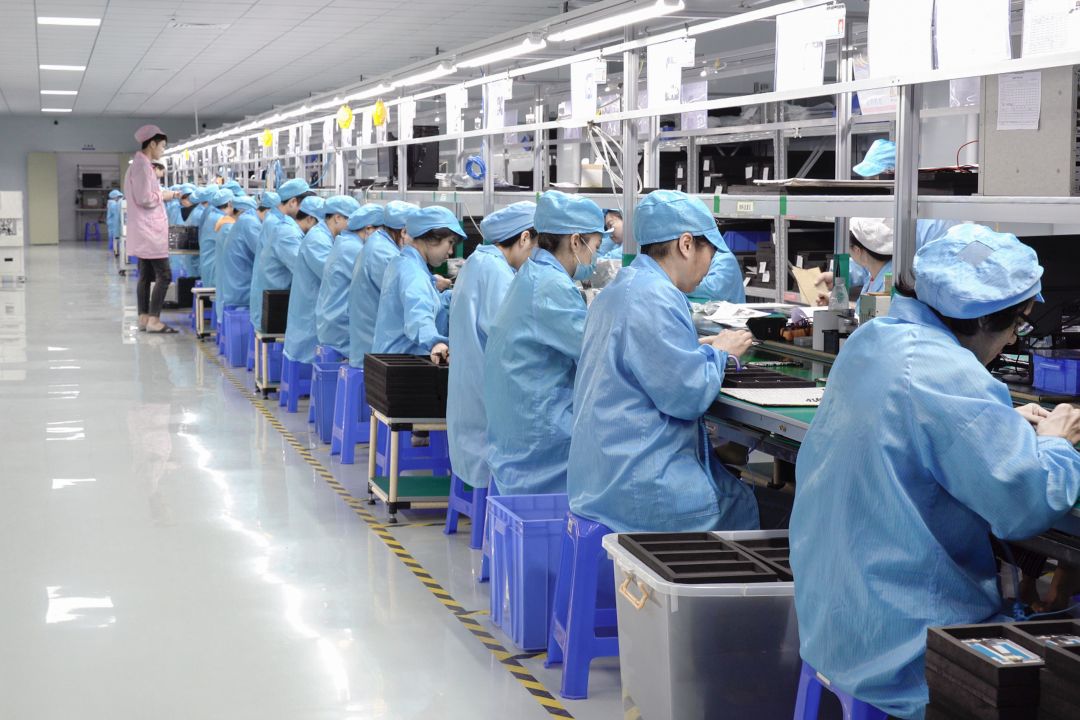
Both models are produced under UMIDIGI, the self-owned brand of Shenzhen Keysmart Technology Co., Ltd., founded in 2012. The company employs approximately 400 to 500 staff, including an R&D team of 30 engineers, and operates a 10,000-square-meter manufacturing facility with an annual production capacity of 30,000,000 units.
Export business accounts for 100% of total sales, with major markets including Middle-Western, South America, Asia, Africa, the EU and the USA. Keysmart operates two core businesses: its own UMIDIGI brand and ODM/OEM services. For distributors, brand owners and importers, that means the same facilities that build the G100 5G and BISON X20 can also support customized Android smartphone projects.
FAQ: G100 5G vs. BISON X20
What do the IP68, IP69K and MIL-STD-810G ratings on the BISON X20 actually cover?
IP68 and IP69K are ingress protection ratings under IEC 60529. IP68 covers dust ingress and prolonged water immersion. IP69K extends that to resistance against high-pressure, high-temperature water jets. Neither rating covers physical impact — that is what MIL-STD-810G addresses. UMIDIGI specifies the BISON X20 with all three, and states the device is built to withstand 2m submersion. The G100 5G, by comparison, is specified with IP53 dustproof and waterproof protection, which suits daily dust and light water contact rather than industrial exposure.
If both phones have a 6000mAh battery, where does the real difference show up?
Both use a 6000mAh long-lasting battery with 20W PD fast charging, so capacity is not the differentiator. The difference is what the battery is configured around. The G100 5G drives a 6.9-inch 120Hz display and the UNISOC T8200 5G processor inside an 8.1mm, 210g plastic-and-metal body. The BISON X20 drives a 6.53-inch 120Hz HD+ display and the MediaTek Helio P60 processor inside a 12.9mm, 278g TPU-and-metal reinforced body. Buyers are therefore choosing between display area and 5G connectivity on one side, and physical survivability on the other.
Which model is the better fit for industrial or outdoor work?
UMIDIGI BISON X20 is the model listed for construction and engineering, logistics and warehousing, manufacturing, and mining, with 24/7 operation under high and low temperature conditions and drop-resistance, dustproof and waterproof requirements. UMIDIGI G100 5G is positioned for daily work and life at normal temperature. If the phone will regularly face drops, water immersion or site dust, the BISON X20 specification matches that environment more directly.
Are the G100 5G and BISON X20 available for OEM or ODM projects?
Shenzhen Keysmart Technology Co., Ltd., which operates the UMIDIGI brand, also provides ODM/OEM services. The company was founded in 2012, runs a 10,000-square-meter manufacturing facility with 30 engineers in R&D, and has an annual production capacity of 30,000,000 units, with 100% of sales going to export markets covering Middle-Western, South America, Asia, Africa, the EU and the USA. Distributors and brand owners seeking customized Android configurations or private-label programs can bring their project scope to the UMIDIGI team.
How does a buyer start a sample or bulk order?
The straightforward path is to contact the UMIDIGI team directly with the target model, destination market, estimated quantity and any customization requirement, so the project can be scoped before sampling begins. You can reach the sales team at marketing@umidigi.com or via WhatsApp at +852 62195979. The full Shenzhen Keysmart Technology Co., Ltd. company profile, including product lines and manufacturing details, is available as a downloadable brochure.
Conclusion: Same Battery, Two Different Jobs
UMIDIGI G100 5G and UMIDIGI BISON X20 share the same 6000mAh battery baseline, the same 20W PD fast charging, the same 120Hz refresh rate and the same NFC and side fingerprint unlocking. From there, they were built for different owners.
The G100 5G converts its battery capacity into a larger 6.9-inch screen, 5G connectivity, a 50MP camera system and a lighter 210g body — a configuration suited to daily work and life where the phone is a general-purpose device.
The BISON X20 converts its battery capacity into IP68 and IP69K ingress protection, MIL-STD-810G drop resistance and a 278g reinforced body — a configuration suited to construction, logistics, manufacturing and mining environments where the phone has to keep working after the environment has had its say.
The decision is not about which phone is better. It is about which environment you will carry it into. And if neither stock configuration fits precisely — because you need a specific battery capacity, a private label or a customized Android build — UMIDIGI operates ODM/OEM programs for brands and distributors through its parent company, Shenzhen Keysmart Technology Co., Ltd.
Evaluating a Long-Battery Smartphone for Supply or Distribution?
UMIDIGI supports distributors, importers and brand owners with sample requests, volume quotations and customized Android projects across the G100 5G and BISON X20 platforms.
Contact the team: marketing@umidigi.com | WhatsApp: +852 62195979
Website: www.umidigi.com