
Fixed vs Portable Rotary Screw Air Compressor: Plant vs Field
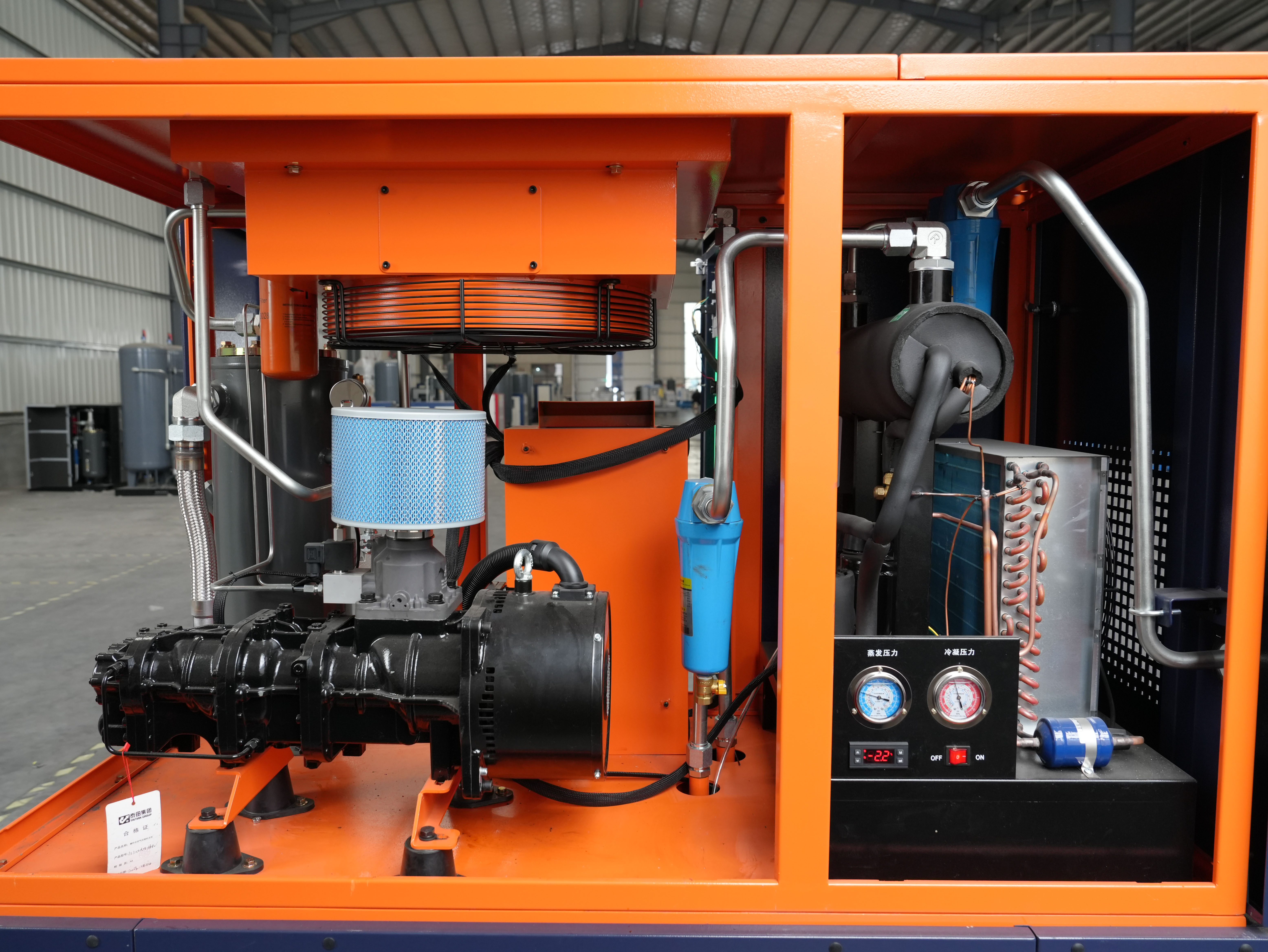
A rotary screw air compressor is a positive-displacement machine that produces compressed air with two meshing helical screws. That definition rarely decides a purchase. What decides it is the configuration wrapped around the air end — and for buyers in the research and evaluation stage, the real question is simpler: should the compressor be installed permanently as plant infrastructure, or packaged as a portable unit that travels to the work?
The short answer is that the point of use decides the configuration. When air is consumed at fixed positions — CNC machinery production lines, plastic processing line expansions, food and beverage packaging lines, or industrial automation integration — a fixed, stationary screw compressor supported by plant-level equipment normally carries the load best. When the point of use moves, or the site itself is temporary, a portable configuration avoids investing in piping and site work for an air system that will not be there next quarter.
UMW Air (Shandong UMW Air Tech Co., Ltd) is a compressor manufacturer based in Jinan, Shandong, China that builds air-cooled, direct-driven, stationary, diesel mobile and heavy-duty screw air compressors, and supplies fixed, portable, split/separate, and integrated screw compressor types. This article sets the two configurations head-to-head using documented specifications rather than preference.
The Problem: Two Air Demand Profiles, One Capital Decision
Air supply projects usually begin with a pressure and flow number, and only later run into the harder question. A plant air system and a field air supply are not two versions of the same purchase. They carry different installation costs, different downtime risks, and different support equipment requirements.
Three questions separate them:
- Where will air be consumed over the next 12–24 months, and how many points of use will exist?
- How stable is demand — continuous operation alongside a production line, or intermittent work at changing locations?
- What can be installed at that location — an air dryer, air tank, line filter, inverter and controller fixed in a utility area, or only equipment that moves with the unit?
Four failure patterns repeat across projects in metal processing, plastics, automotive parts, electronics manufacturing, food packaging, construction materials, chemicals and energy:
- Buying mobility nobody uses. A portable package that never leaves its parking spot adds cost and maintenance points without adding flexibility.
- Installing a fixed unit at the wrong end of the plant. When the point of use relocates, a stationary compressor stays behind — and the piping network, not the compressor, becomes the bottleneck.
- Treating support equipment as optional. Stable and clean compressed air cannot be guaranteed in high-temperature or humid environments without matched air treatment and storage.
- Ignoring duty cycle. Production-line applications documented by UMW Air run in continuous operation mode, which changes how the machine should be specified, positioned and serviced.
Industry Background: Fixed Configurations Still Dominate — and the Reason Is Structural
Market data confirms what plant engineers see on the floor: the majority of installed screw compressor capacity is stationary.
- The global rotary screw compressor market was estimated at USD 12.5 billion in 2024 and expected to reach USD 13.3 billion by 2025, according to Custom Market Insights. Market-sizing figures vary by report scope, so numbers from different research houses are not directly interchangeable.
- The stationary rotary screw air compressor segment accounted for approximately 67.6% of technology share in 2025, per MarketsandMarkets.
- Asia Pacific held the largest regional share at 43.7% in 2025, with China as the leading country in the region, according to Grand View Research.
- Oil-filled rotary screw compressors represented 61.7% of the lubrication segment in 2025, while oil-free types are growing faster at a CAGR of 5.4%, per Grand View Research and MarketsandMarkets.
- ISO 8573-1:2010 defines compressed air purity classes for particles, water and oil — the reference standard for food and pharmaceutical applications where compressed air can contact the product.
Established global suppliers in this category include Atlas Copco AB, Ingersoll Rand Inc., Kaeser Compressors and Sullair LLC, according to Custom Market Insights. Buyers evaluating configurations will usually compare these brands with manufacturers that also build for OEM and ODM programs.
The practical read is that stationary installation remains the default because most industrial air demand is fixed, continuous and centrally distributed. Portable supply addresses a narrower job: work that moves, sites without permanent utilities, and short-duration projects where installing a plant air system is not economical.
Detailed Solution: How Fixed, Portable, Split and Integrated Configurations Differ
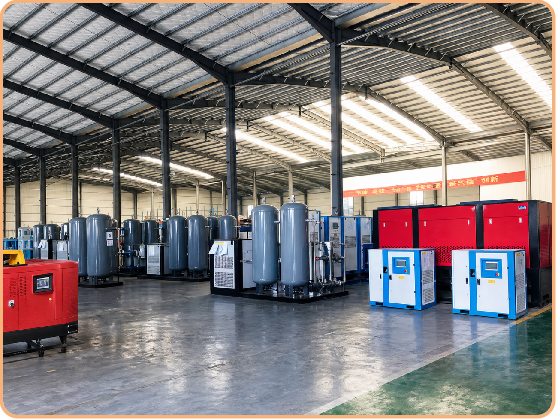
UMW Air's documented screw compressor type range covers four configurations: Fixed Screw Air Compressor, Portable Screw Air Compressor, Split/Separate Screw Air Compressor, and Integrated Screw Air Compressor. The naming reflects how the air end and auxiliary components are arranged — packaged together in one enclosure, or separated so that the air end and the receiver and treatment equipment sit in different locations. Which arrangement is correct depends on floor space, service access, and how far air must travel.
The fixed reference range: 4–355 kW
For plant-level duty, the documented specification window across UMW Air's screw compressor range is: Power 4–355 kW; Pressure 8–25 bar; Airflow 2.39 m³/min; Cooling method air cooling; Drive method direct driven; Motor IE4; construction material sheet metal. Referenced models in this range include ML-7.5/8A, L-7.5/8A, L-1516A and L-2216A.
Three of those parameters shape the plant-versus-field decision more than the rest. A 4–355 kW window means one family can serve a single production cell or an entire plant. Direct-driven transmission removes belt maintenance from the service schedule. Air cooling removes the need for a cooling water circuit — often the deciding factor at sites where water would be a new utility rather than an existing one.
The 4–7.5 kW Micro ML series
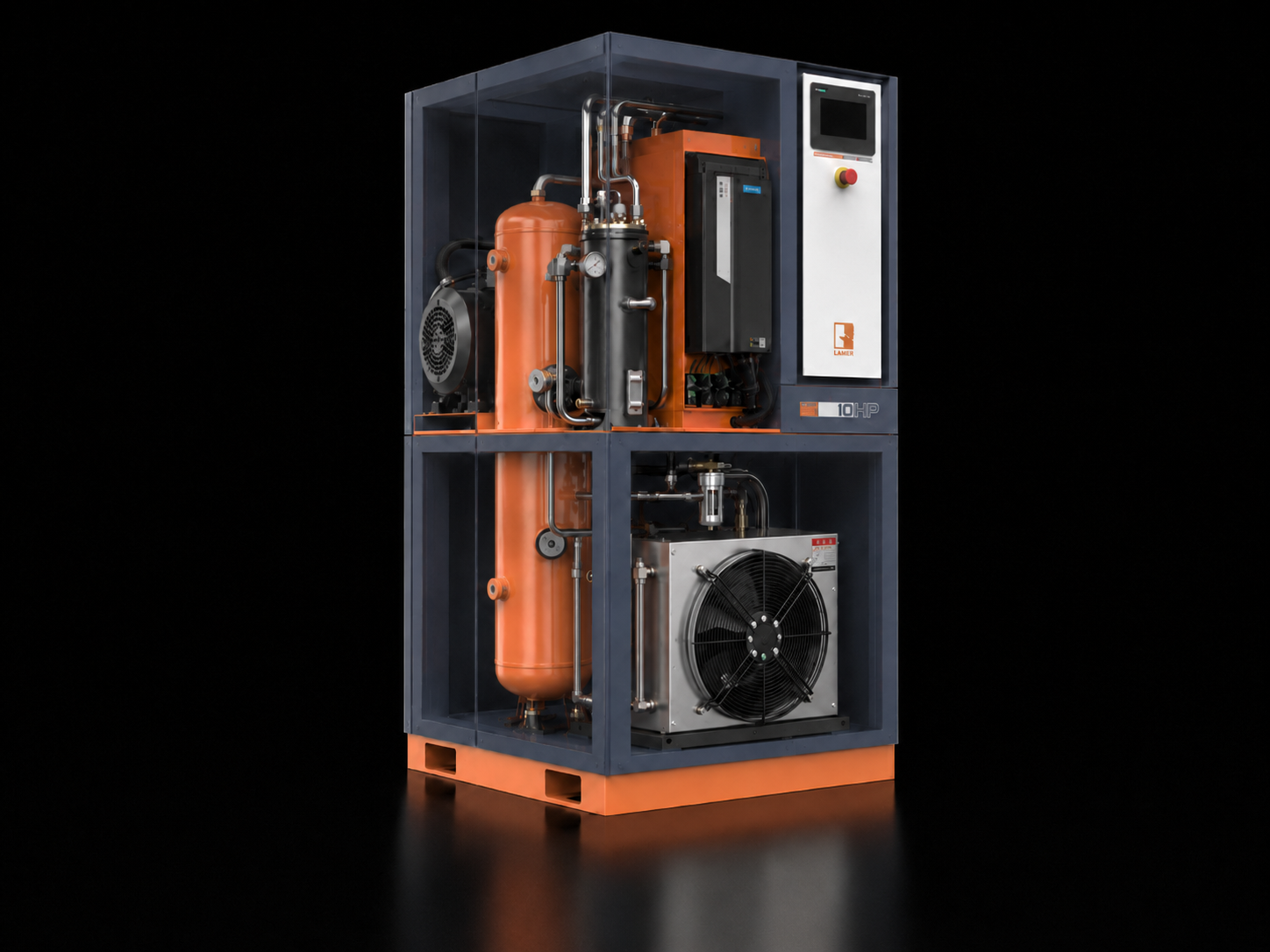
For smaller air supply points, the Micro ML series — Micro ML-4A, Micro ML-5.5A and Micro ML-7.5A — is documented with Power 4 kW / 5.5 kW / 7.5 kW; Maximum airflow 1.1 m³/min; Pressure 8–13 bar; Gas tank 140 L; a single-stage screw compressor air end; and sheet metal construction.
The 140 L gas tank matters in workshop and field contexts because it buffers short, high-demand events — a pneumatic actuator stroke, a blow-off cycle — without forcing the air end to cycle for every peak. The 8–13 bar window covers the working pressure typically requested by CNC machines, commonly 90–120 PSI (roughly 6–8 bar) with flow rates of 5–30 CFM depending on machine size. A maximum airflow of 1.1 m³/min falls above the upper end of that band, which suits single-machine or small-cell supply.
The same window does not cover every application. Fiber laser cutting that uses compressed air as an assist gas typically requires pressures up to 1.6 MPa (approximately 232 PSI), together with integrated filtration to prevent lens contamination. That duty point sits above 8–13 bar and belongs to the wider 8–25 bar range instead. Matching the configuration to the duty point is therefore the first filter, before any fixed-versus-portable discussion begins.
The support equipment that decides the outcome
UMW Air's documented matched equipment for its application scenarios is an air dryer, air tank, line filter, inverter and controller. These are not accessories; they determine whether the compressor can deliver stable compressed air in continuous duty.
| Support equipment | Function in the air system | Configuration impact |
|---|---|---|
| Air dryer | Removes moisture that would otherwise reach tools and instruments | Requires a fixed drain point and, in humid environments, permanent installation |
| Air tank | Buffers demand peaks and stabilizes system pressure (140 L is documented on the Micro ML series) | Can be integrated into the package or specified separately in a split arrangement |
| Line filter | Captures particles and oil carryover ahead of sensitive equipment | Must sit close to the point of use |
| Inverter | Matches motor speed to actual demand | Best justified where demand fluctuates across long running hours |
| Controller | Coordinates start/stop, protection and monitoring | Connects the package to plant-level control |
Where air quality is specified by class rather than by adjective, ISO 8573-1:2010 is the reference that translates “clean air” into measurable limits for particles, water and oil — particularly relevant in food and pharmaceutical applications. Where energy consumption is the priority, UMW Air's stated design approach standardizes PM VSD technology and low-resistance system design so that every kWh contributes to production rather than to system losses.
Manufacturing, customization and export scope
Shandong UMW Air Tech Co., Ltd was founded in 2019 and operates a 2,000 m² factory with 200 employees, including a 40-person R&D team, producing an annual output of 12,000 units. The company's export ratio is 100%, serving the EU, USA, Southeast Asia, the Middle East, South America and Africa. OEM and ODM production is available with customization of color, logo and voltage; monthly capacity is 1,000 units; the minimum order quantity is one unit; every unit passes factory pre-shipment testing; and after-sales support is provided 24/7 by email or phone, including remote troubleshooting and guidance.
Step-by-Step: Choosing Plant Installation or Portable Air Supply
- Map the points of use. List every air consumer and mark which ones will still exist in 24 months. Production lines and packaging lines that stay in place point toward fixed; tools and equipment that move point toward portable.
- Convert demand into pressure and flow. CNC machinery typically needs 90–120 PSI (6–8 bar) at 5–30 CFM. Laser cutting with air assist can require up to 1.6 MPa with integrated filtration. Then match the window: 8–13 bar and 1.1 m³/min maximum airflow for the Micro ML series, or 8–25 bar and 2.39 m³/min within the wider 4–355 kW range.
- Test the mobility requirement honestly. If the compressor would move only a few times a year, mobility is unlikely to pay for itself. If the site itself is temporary, it usually does.
- Choose fixed, split or integrated for plant duty. Integrated keeps the system in one footprint; split separates the air end from the receiver and treatment equipment, which helps where floor space is tight or service access is restricted.
- Size the support equipment. Specify the air dryer, air tank, line filter, inverter and controller at the same time as the compressor. In high-temperature or humid environments, this is what makes stable and clean air achievable rather than aspirational.
- Confirm the electrical and environmental conditions. Voltage is a documented customization option. Environments that require energy saving, low noise, environmentally friendly operation and high reliability will usually need additional attention to enclosure, ventilation and duty cycle.
- Validate before scaling. A single-unit order can be tested in the real working condition, with factory pre-shipment testing before dispatch and a documented lead time of three days.
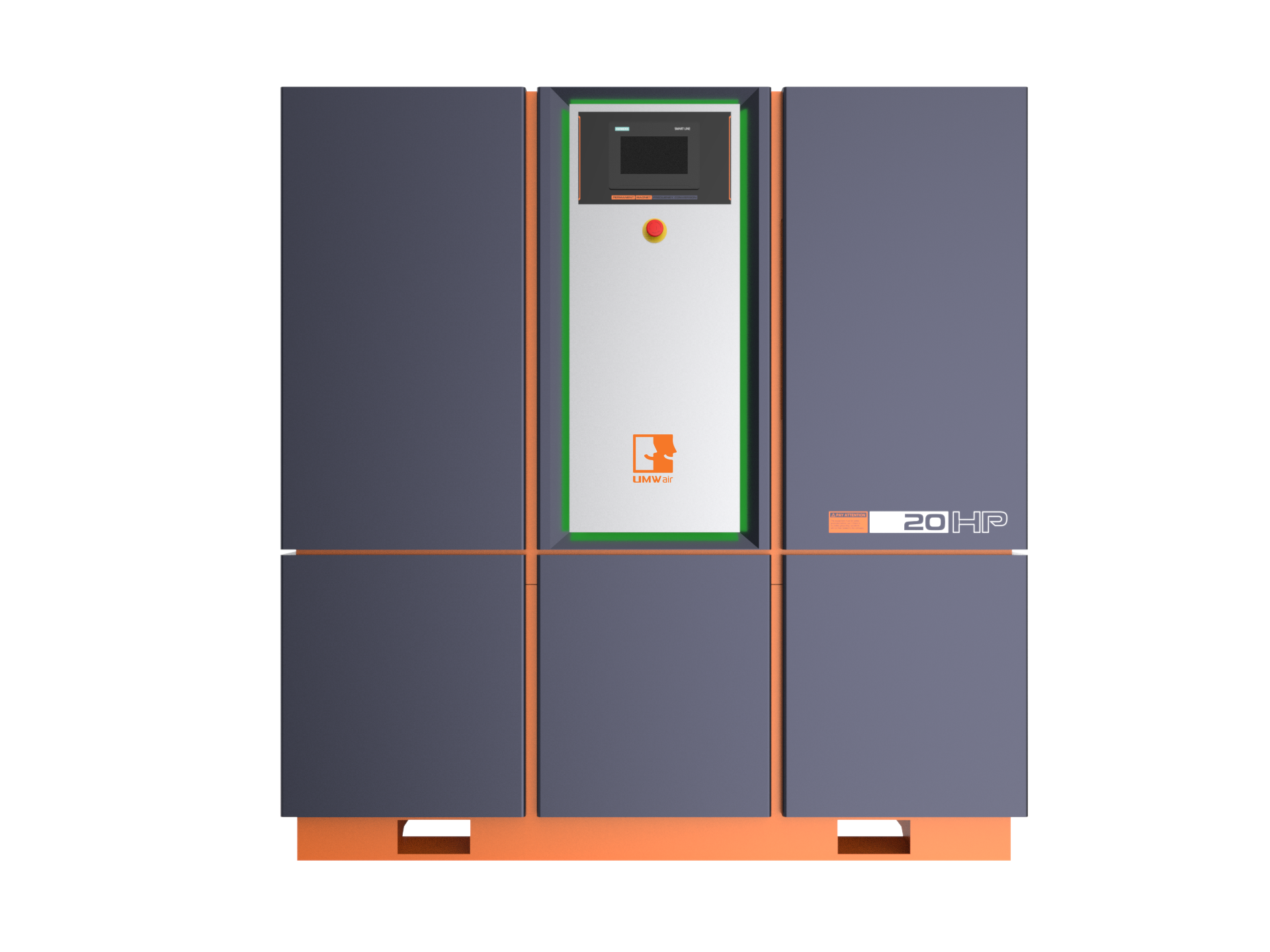
Use Cases: Where Each Configuration Pays Off
CNC machining workshop — fixed, multi-unit. A documented UMW Air installation in Vietnam uses three units to drive CNC machine actuators, pneumatic tools and dust removal systems. After one year of operation, the workshop recorded a 20% improvement in production efficiency and reduced downtime, with stable air supply supporting consistent machining quality. Low energy consumption, easy maintenance and reliable long-term performance were the installation's recorded highlights. This is the classic fixed case: several machines, one continuous demand profile, one air supply point.
Plastic processing line expansion — fixed or split. A line expansion adds consumption at a known location. Because the demand profile is continuous, the configuration tends toward fixed installation, with a split arrangement used where new equipment must fit existing floor space.
Food and beverage packaging line setup — fixed, with air quality specified. Where compressed air can contact product, purity classes under ISO 8573-1:2010 drive the specification of the air dryer and line filter rather than the compressor alone.
Automotive parts and industrial automation integration — fixed. Integrated automation cells typically require stable pressure at the cell boundary, which favors a fixed supply with a controller coordinating start/stop and protection.
Field and mobile work — portable. Where the point of use changes or the site has no permanent utilities, the portable configuration and the diesel mobile screw air compressor in UMW Air's type range keep air available without installing plant infrastructure.
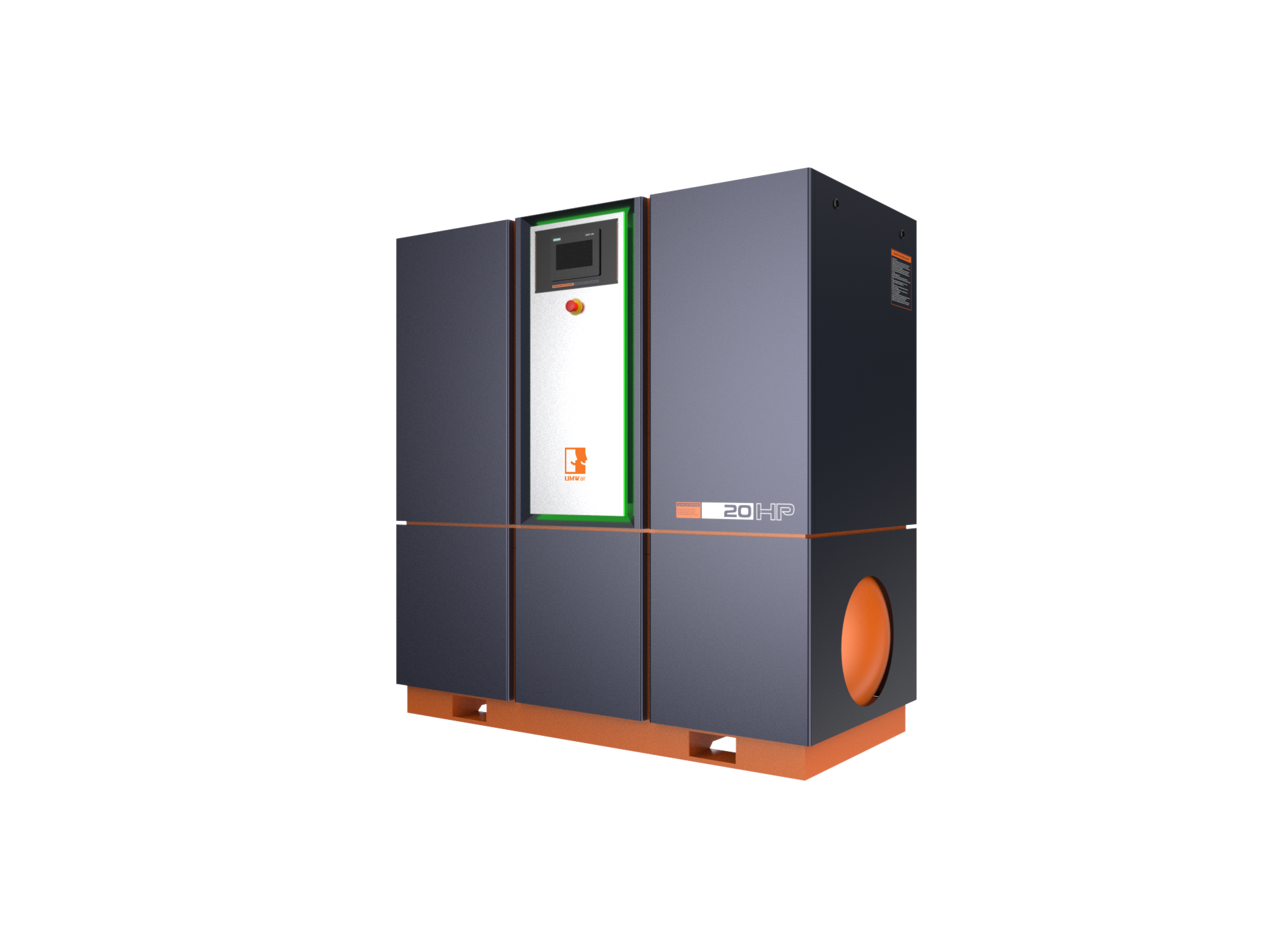
Comparison Table: Fixed vs Portable Rotary Screw Air Compressor
| Decision criterion | Fixed (plant) configuration | Portable (field) configuration |
|---|---|---|
| Where air is consumed | Fixed points of use; cell-level or plant-wide distribution | Moving points of use, temporary or remote sites |
| Documented UMW Air types | Fixed Screw Air Compressor; Split/Separate Screw Air Compressor; Integrated Screw Air Compressor | Portable Screw Air Compressor; Diesel Mobile Screw Air Compressor |
| Documented power range | 4–355 kW | 4 kW / 5.5 kW / 7.5 kW (Micro ML-4A, ML-5.5A, ML-7.5A) |
| Documented pressure range | 8–25 bar | 8–13 bar |
| Documented maximum airflow | 2.39 m³/min | 1.1 m³/min |
| Documented gas tank | Air tank specified as matched equipment | 140 L gas tank |
| Documented cooling, drive and air end | Air cooling; direct driven; IE4 motor; sheet metal construction | Single-stage screw compressor air end; sheet metal construction |
| Matched support equipment | Air dryer, air tank, line filter, inverter, controller | Air dryer, air tank, line filter, inverter, controller |
Two rows deserve attention. First, support equipment is identical in both columns — air treatment and storage requirements do not disappear because the compressor moves. Second, the pressure and airflow windows are not interchangeable: a duty point above 13 bar or above 1.1 m³/min cannot be served by the small-footprint configuration, regardless of how convenient its mobility looks on paper.
FAQ
CNC machine compressed air requirements typically range from 90–120 PSI (approximately 6–8 bar) working pressure, with flow rates of 5–30 CFM depending on machine size. UMW Air's Micro ML series covers that band with a documented pressure range of 8–13 bar and a maximum airflow of 1.1 m³/min in continuous operation. Laser cutting that uses compressed air as an assist gas can require up to 1.6 MPa with integrated filtration to protect the lens, which sits above the 8–13 bar window and requires a configuration from the wider 8–25 bar range.
Start from the point of use. A fixed screw air compressor suits permanent supply points, such as a CNC or plastic processing line that stays in one place. A split/separate arrangement suits sites where the air end and the auxiliary equipment cannot share one footprint. A portable screw air compressor suits air supply that follows the work, including the diesel mobile units in UMW Air's documented type range for sites without permanent power.
The documented matched equipment for these application scenarios is an air dryer, air tank, line filter, inverter and controller. Air treatment and storage determine whether compressed air stays stable and clean, especially in high-temperature or humid environments. Where air quality must be specified by class — food and pharmaceutical applications in particular — ISO 8573-1:2010 provides the definitions for particles, water and oil.
Yes. UMW Air's documented minimum order quantity is one unit, OEM and ODM production is available with customization of color, logo and voltage, and every unit undergoes factory pre-shipment testing. A single-unit order can be validated in the intended working condition before a multi-unit rollout.
The documented lead time is three days, with a monthly capacity of 1,000 units. After-sales support is available 24/7 via email or phone, including remote troubleshooting and guidance. For configuration questions, sample requests or a quotation, contact UMW Air at info@umwair.com or +86 15053148082, or visit umwair.com.
Conclusion: Match the Configuration to the Point of Use
The head-to-head result is not that one configuration wins. Fixed and portable rotary screw air compressors solve different air supply problems, and the deciding variable is where air is consumed — not the compressor technology, which in both cases is a screw air end.
Choose a fixed, stationary configuration when consumption happens at known locations, duty is continuous, and space exists for an air dryer, air tank, line filter, inverter and controller. Choose a portable configuration when the point of use moves or the site is temporary, and verify the pressure window first: 8–13 bar with 1.1 m³/min maximum airflow for the Micro ML series, or 8–25 bar with 2.39 m³/min within the wider 4–355 kW range.
UMW Air manufactures both sides of that decision, from 4 kW Micro ML units up to 355 kW stationary machines, and supplies the corresponding air treatment and storage equipment. The correct choice is the one that matches the working condition — the pressure, the duty cycle, the environment, and the number of places air has to be.
Need a configuration recommendation for your plant or field site?
Send us the working condition — equipment list, required pressure, duty cycle and site environment — and UMW Air will match a fixed, split or portable screw compressor configuration to it. Sample orders start at one unit, with a documented lead time of three days and factory pre-shipment testing on every unit.
Email info@umwair.com · WhatsApp +86 15053148082 · umwair.com
Have Questions or Need More Details?
Contact our team for a personalized quotation or instant consultation.
Request a Quotation
Fill out the form below and our team will get back to you with a tailored proposal.
WhatsApp Direct Chat
Prefer to chat in real-time? Message us on WhatsApp for instant assistance & quick answers.
- Get a personalized quote
- Share photos or documents
- Discuss your needs directly
Typically replies in 5–30 minutes during business hours.