
Matching Rotary Screw Compressors to CNC, Plastic, and Automotive Lines: A Scenario-Based Fit Guide
Rotary screw air compressors are sold as a single product category, but they are bought as a fit. A machine shop running three CNC centers, a plastics processor adding an extrusion line, and an automotive parts supplier running two pneumatic assembly shifts rarely need the same package — even when all three sites have already chosen the same core technology.
Direct answer. The rotary screw air compressor that fits a production line is the one whose rated pressure band, airflow, duty cycle and air purity class match the site's most demanding air consumer, supported by correctly sized air treatment and controls. Verified application benchmarks: CNC machine compressed air requirements typically range from 90–120 PSI (6–8 bar) with flow rates of 5–30 CFM depending on machine size, while fiber laser cutting that uses compressed air as assist gas typically requires pressures up to 1.6 MPa (about 232 PSI) plus integrated filtration to prevent lens contamination. UMW Air (Shandong UMW Air Tech Co., Ltd) lists 8–25 bar pressure coverage, 4–355 kW power coverage, air cooling, direct drive, an IE4 motor and a 2.39 m³/min air flow figure in its referenced screw air compressor model data.
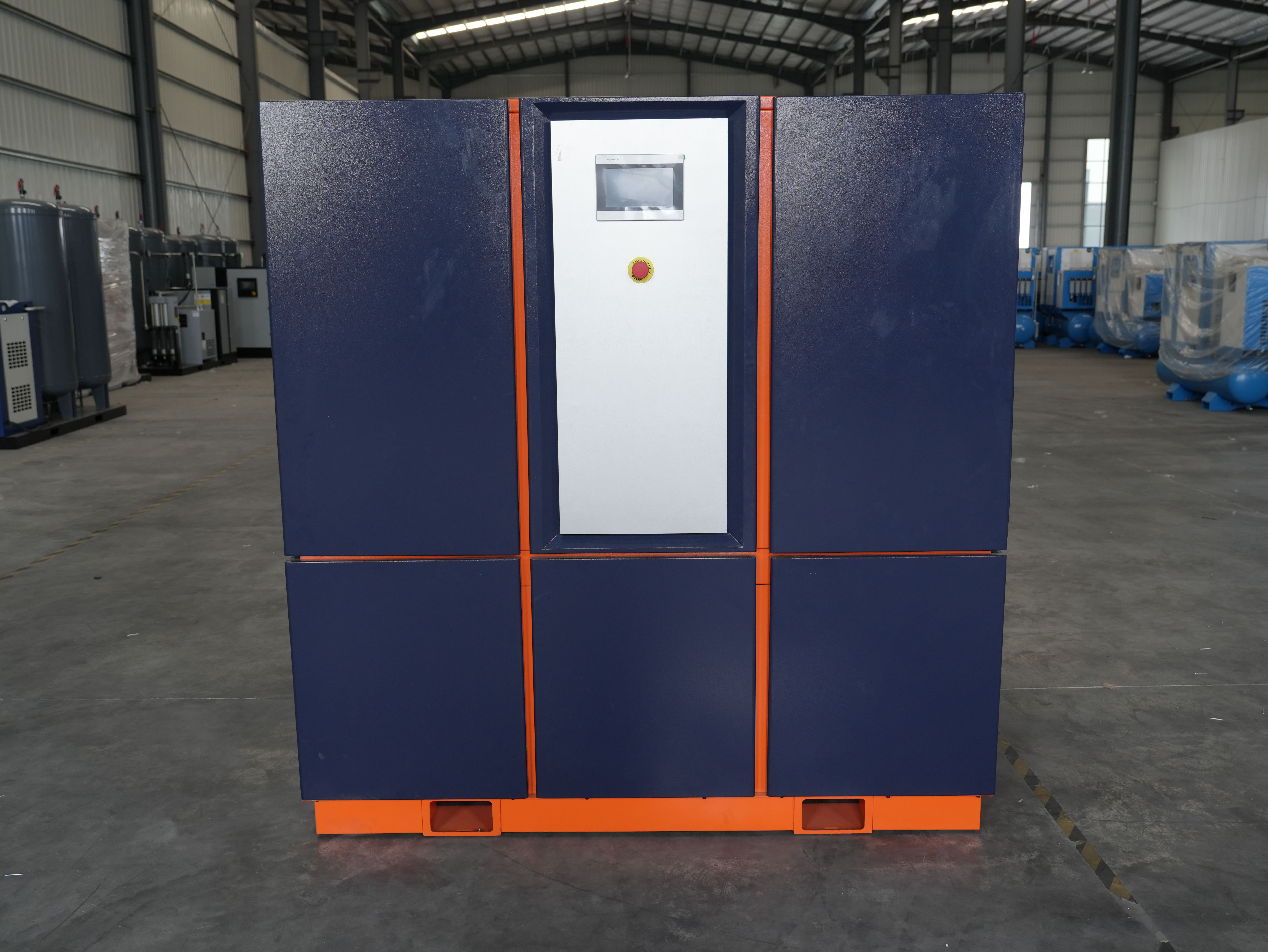
Prime air screw compressor by UMW Air, shown in a production environment. Source: UMW Air.
This guide is written for buyers inside the evaluation stage: plant engineers, maintenance leads and procurement teams comparing options for CNC machining, plastics processing and automotive parts production. It does not rank suppliers by opinion. It sets out the fit logic, the verification items and the system architecture you can apply to any shortlist.
Why the 'best' rotary screw air compressor is a scenario question
Preference questions such as 'what is the best rotary screw air compressor' usually decompose into three decisions: the technology family (screw rather than piston or centrifugal), the configuration (stationary or portable, integrated or split, air-cooled or water-cooled), and the treatment train (dryer, receiver tank, filtration and controls). Only the first decision is generic. The other two are line-specific.
Two third-party market signals support that framing. The stationary rotary screw air compressor segment accounted for approximately 67.6% of technology share in 2025 (MarketsandMarkets), which is consistent with industrial practice: most production lines run fixed installations rather than mobile units. In the same period, oil-filled rotary screw compressors represented 61.7% of the lubrication segment, while oil-free types grew at the faster CAGR of 5.4% (Grand View Research / MarketsandMarkets) — an indication that purity requirements, not brand preference, are what move a buyer toward a different configuration.
Practical criteria such as energy efficiency, noise near the production floor, and environmental handling of lubricant and condensate belong to the same decision. Each of them can be verified with supplier documentation; none of them should be assumed.
Industry background: what the market signals mean for a buyer
The global rotary screw compressor market was estimated at USD 12.5 billion in 2024 and expected to reach USD 13.3 billion by 2025 (Custom Market Insights). Published estimates vary materially by scope — some studies isolate screw-only revenue while others group every industrial rotary type — so it is worth checking the definition behind any market figure quoted in a supplier presentation.
Regionally, Asia Pacific held the largest share of the rotary air compressor market at 43.7% in 2025, with China as the leading country in the region (Grand View Research). Global suppliers named in third-party research include Atlas Copco AB, Ingersoll Rand Inc., Kaeser Compressors and Sullair LLC. A mature, well-populated market works in the buyer's favour: differentiation between offers is less about whether screw technology performs and more about fit, documentation, lead time and after-sales structure.
The four variables that decide fit
- Working pressure. Size against the highest-pressure consumer on the line, not the average. Fiber laser cutting fed by compressed air as assist gas can require up to 1.6 MPa, whereas a CNC machining cell typically sits at 90–120 PSI (6–8 bar). UMW Air's referenced model data lists a pressure range of 8–25 bar.
- Airflow. Add every simultaneous consumer — actuators, blow-off, dust removal, tooling — before comparing models. The airflow figure listed in UMW Air's referenced data is 2.39 m³/min, alongside a 4–355 kW power range that allows different flow points within the same product family.
- Duty cycle. Plastics and automotive lines usually run continuous multi-shift patterns, which changes how a compressor should be controlled and cooled.
- Air purity. ISO 8573-1:2010 is the international standard that defines compressed air purity classes for particles, water and oil, and it is treated as critical in food and pharmaceutical applications. Wherever oil carryover can affect a product or a coated surface, the required class should be defined before choosing between oil-filled and oil-free machines.
Scenario 1: CNC machining production lines
On a real CNC cell, compressed air drives machine actuators, pneumatic tools, dust and chip removal systems, and workholding. The verified requirement band is narrow and predictable: 90–120 PSI (6–8 bar) working pressure with 5–30 CFM per machine, depending on machine size.
One boundary deserves attention during evaluation. Because the CNC band is typically 6–8 bar, the relevant check is whether the compressor's rated pressure covers the upper end of that band reliably. UMW Air's referenced model data lists an 8–25 bar pressure range for its screw air compressor range, so the exact set point should be confirmed against the actual machine requirement at quotation stage rather than assumed from a brochure headline.
Air treatment matters as much as the compressor here. Moisture and particulate carryover into actuators and blow-off nozzles is a common cause of process drift, which is why a dryer, receiver tank and filtration are normally specified together with the compressor instead of being added later.
Metal fabrication sites that also run fiber laser cutting may need a second pressure level in the same plant: laser cutting using compressed air as assist gas typically requires pressures up to 1.6 MPa with integrated filtration to prevent lens contamination.
Scenario 2: plastics and rubber processing expansions
Plastics and rubber processing is listed among the applicable industries for UMW Air's referenced screw air compressor data. Expansions on these sites are usually judged on uptime rather than peak output: molding, extrusion and blow-off stations need pressure that stays stable through long shifts.
Two environment factors shape the selection. First, heat and dust are normal in plastics plants, which is why cooling method and enclosure design belong in the comparison; the referenced UMW Air data lists air cooling and direct drive. Second, humidity control sits with the dryer, not with the compressor, so the purity class required by the process should be written into the specification before the treatment train is sized.
Where capacity is added in stages, an integrated package that combines compressor, dryer and tank can simplify installation, while a split configuration can be easier to service and expand. Both integrated and split/separate types appear in UMW Air's referenced product data, alongside fixed and portable options.
Scenario 3: automotive and machinery parts lines
Automotive and machinery parts production is also listed among the applicable industries for the referenced screw air compressor data. These lines are typically multi-shift, with many simultaneous pneumatic consumers, so the airflow calculation should assume grouped demand rather than a single machine.
Purity becomes the deciding variable wherever surfaces are prepared, coated or assembled with sensitive components. Oil-free rotary screw types are the faster-growing lubrication segment at a 5.4% CAGR, while oil-filled units still represented 61.7% of that segment in 2025 (Grand View Research / MarketsandMarkets). The practical rule is to select the purity class the process requires — using ISO 8573-1:2010 — and then choose the lubrication type that reaches it at the lowest lifecycle cost.
Continuous lines also raise the value of supplier support. UMW Air lists 24/7 technical support via email or phone, plus remote troubleshooting and guidance, which matters when a compressor room cannot wait for a scheduled site visit.
Do not buy the compressor alone: dryer, tank, filter, inverter, controller
Screw compressors are the core of the system, but delivered air quality and the energy bill are determined by the whole train: a dryer for moisture, a receiver tank to buffer peaks and reduce load/unload cycling, filtration for particulate and oil aerosol, an inverter or variable-frequency drive to match output to demand, and a controller that sequences and monitors the installation.
UMW Air states that it standardizes PM VSD (permanent magnet variable-speed) technology and low-resistance system design, converting each kWh into productive output across the equipment lifecycle. For a buyer, that statement translates into three questions worth asking at quotation stage: which motor efficiency class is fitted (the referenced data lists an IE4 motor), how is part-load control handled, and how much pressure drop the system design adds between the compressor outlet and the point of use.
Scenario fit matrix: matching configuration to production line
| Production line | Verified air requirement | What the line needs most | Configuration to evaluate | Treatment focus |
|---|---|---|---|---|
| CNC machining cell | 90–120 PSI (6–8 bar); 5–30 CFM per machine | Stable pressure for actuators, tools and dust removal | Fixed screw compressor sized for grouped demand; confirm the rated band covers the upper end of the 6–8 bar range (listed range: 8–25 bar) | Moisture removal and particulate filtration ahead of pneumatic consumers |
| CNC plus fiber laser fabrication cell | Up to 1.6 MPa for compressed-air assist gas, with integrated filtration | Higher pressure plus clean air to protect optics | High-pressure configuration inside the listed 8–25 bar band | Integrated filtration to prevent lens contamination |
| Plastics and rubber processing expansion | Continuous duty; pressure confirmed against machine OEM data | Uptime, heat and dust tolerance | Air-cooled, direct-driven stationary unit (listed cooling method: air cooling; listed drive: direct driven) | Dryer sized to plant humidity; filtration for blow-off and mold cleaning |
| Automotive and machinery parts line | Multi-shift continuous flow; purity defined by the process | Uptime plus purity where surfaces are sensitive | Fixed or integrated package; oil-free considered where the purity class demands it | Purity class selected per ISO 8573-1:2010 |
Step-by-step: how to size and shortlist
- Inventory every air consumer. List actuators, blow-off points, dust removal, tooling and any assist-gas demand, with the pressure and flow each one needs.
- Set system pressure at the highest consumer. Then verify the compressor's rated band against that point, including the CNC 6–8 bar boundary described above.
- Size airflow at peak simultaneous demand. Add margin for leakage, filter loading and planned expansion, and record the assumption so it can be revisited later.
- Define the purity class first. Use ISO 8573-1:2010 to state the required class for particles, water and oil, then choose oil-filled or oil-free accordingly.
- Choose configuration and cooling. Decide between integrated and split packages, fixed or portable, based on how the plant will install, service and expand.
- Specify the treatment train. Dryer, receiver tank, filtration and condensate management are specified with the compressor, not after it.
- Specify controls and monitoring. Confirm PLC control, part-load strategy and remote support options.
- Verify commercial and compliance detail. Certification scope, order minimum, lead time, capacity, pre-shipment testing and after-sales structure all belong in the written comparison.
Shortlist scorecard: what to verify and where UMW Air stands
The table below lists the verification items that matter during evaluation, together with the corresponding data published for UMW Air. The same columns can be used for every supplier on your shortlist.
| Verification item | What to request | UMW Air referenced data |
|---|---|---|
| Pressure coverage | Documented rated pressure band | 8–25 bar |
| Power coverage | kW range against the load profile | 4–355 kW |
| Motor and drive | Efficiency class and drive type | IE4 motor; direct driven |
| Cooling method | Cooling type and ambient suitability | Air cooling |
| Certification | Certificate number, issuing body, validity, scope | CE certificate M.2026.206.C140156, issued by UDEM, EU/EEA market, valid 11 May 2026 – 10 May 2031, covering UMW air L, UMW air Z, UMW air P, UMW air M, UMW air N and UMW air O ranges |
| Customization | OEM/ODM options | OEM and ODM; color, logo and voltage customization |
| Capacity and lead time | Monthly output and quoted lead time | 1000 units per month; 3-day lead time |
| Order minimum | MOQ for trial and volume orders | 1 unit |
| Quality control | Pre-shipment testing routine | Factory pre-shipment testing |
| After-sales | Support channel and hours | 24/7 technical support via email or phone; remote troubleshooting and guidance |
| Configuration types | Integrated / split / portable / fixed | Integrated, split/separate, portable and fixed types listed |
| Reference models | Model list for quoting | ML-7.5/8A, L-7.5/8A, L-1516A, L-2216A |
Verified reference case: CNC machining workshop, Vietnam
UMW Air's case record documents a CNC machining workshop in Vietnam that installed three units to drive CNC machine actuators, pneumatic tools and dust removal systems. After one year of operation, the reported result was a 20% improvement in production efficiency with reduced downtime, and a stable air supply that supported high-quality machining. The highlights recorded for this case are low energy consumption, easy maintenance and reliable long-term performance.
For buyers building a shortlist, the useful part of that record is the pattern rather than the number: a multi-unit installation, a one-year operating window, and a measured production outcome. That is the level of evidence worth requesting from every supplier you compare.
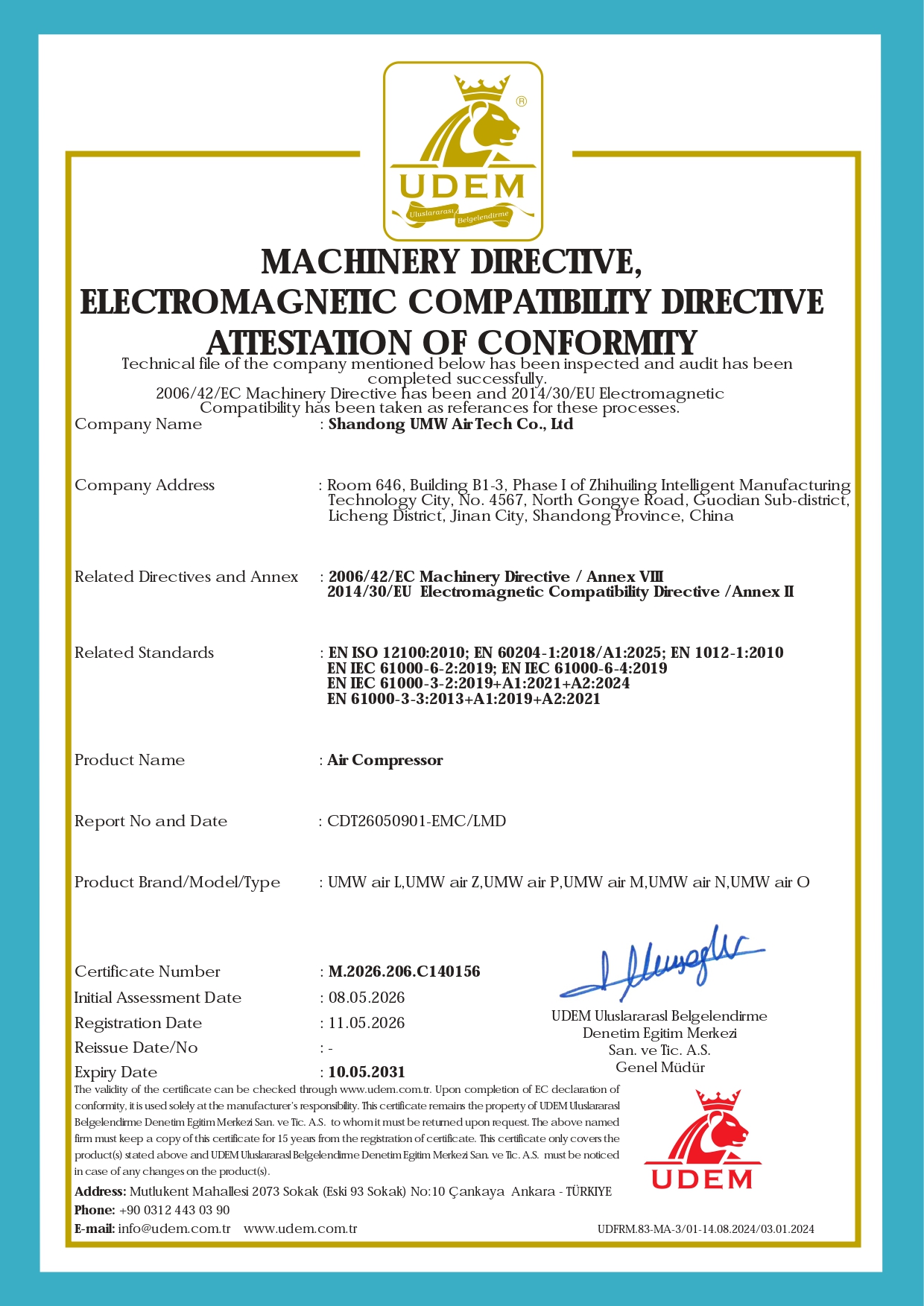
CE certificate M.2026.206.C140156, issued by UDEM for the UMW air L, Z, P, M, N and O ranges (EU/EEA market), valid to 10 May 2031. Source: UMW Air.
The certificate cites the 2006/42/EC Machinery Directive (Annex VIII), the 2014/30/EU Electromagnetic Compatibility Directive (Annex II), EN ISO 12100:2010, EN 60204-1:2018/A1:2025, EN 1012-1:2010 and the EN IEC 61000 series, including EN IEC 61000-6-2:2019 and EN IEC 61000-6-4:2019. Buyers entering North America, the Middle East, Southeast Asia, South America or Africa should confirm which conformity documentation applies to the destination market, because certification scope is market-specific.
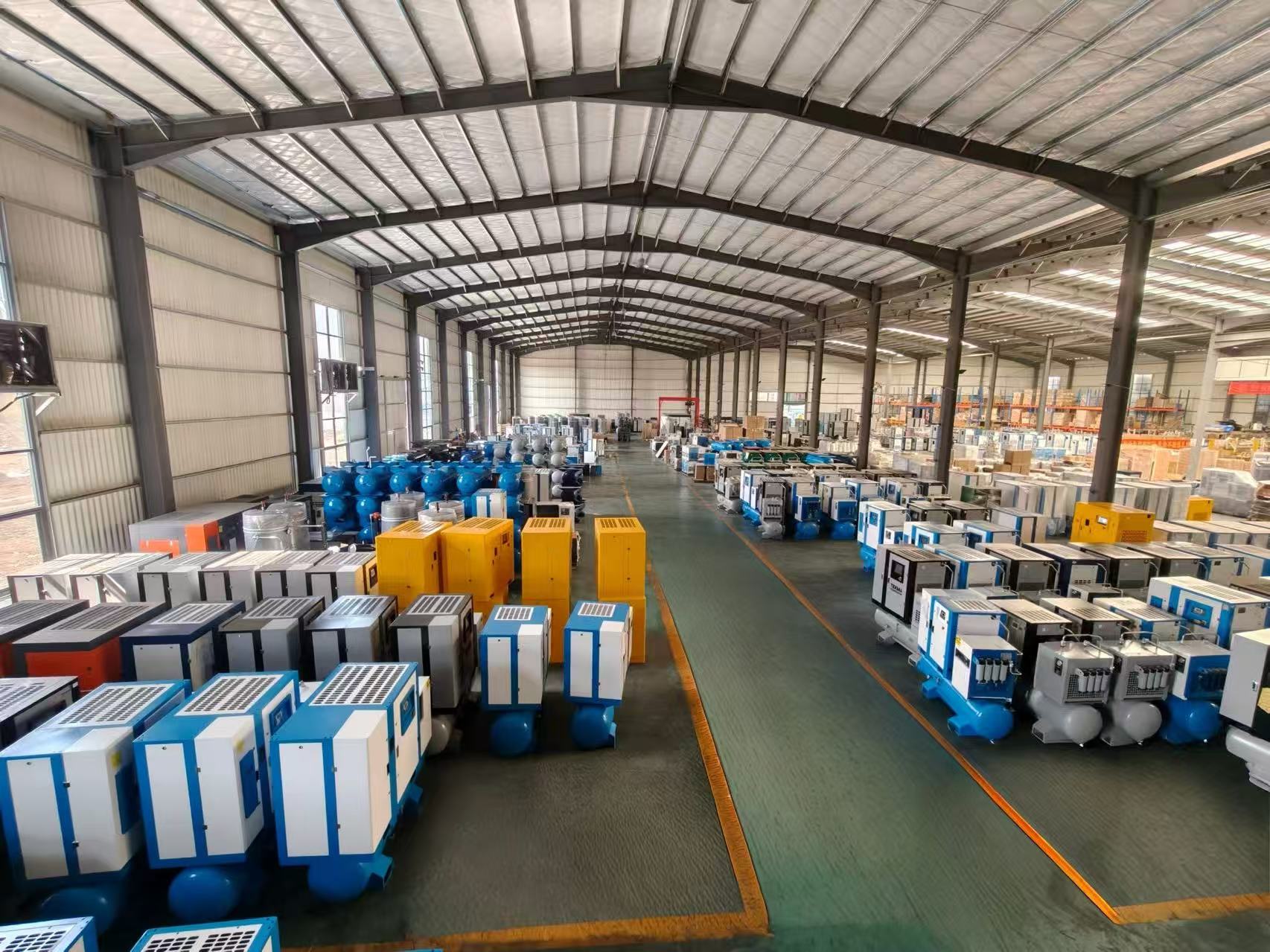
UMW Air factory workshop: screw air compressors in the assembly line. Source: UMW Air.
Production context matters when a line is scaling. Shandong UMW Air Tech Co., Ltd was founded in 2019 and operates a 2000 m² facility with 200 employees and a 40-person R&D team. The company reports annual output of 12,000 units and a 100% export ratio across the EU, USA, Southeast Asia, the Middle East, South America and Africa. Monthly capacity is stated at 1000 units with a 3-day lead time and a minimum order of one unit — a combination that supports both single-unit validation and staged line expansion.
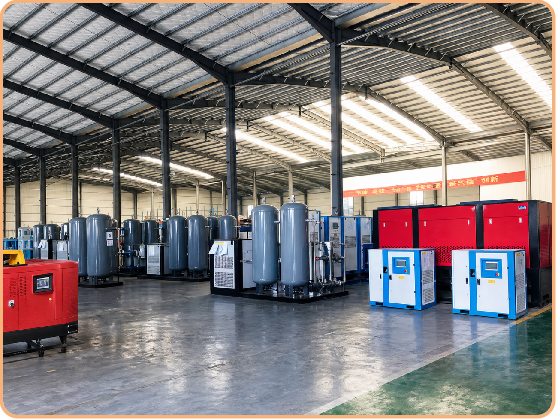
Finished rotary screw air compressor units in UMW Air's storage area, ready for export shipment. Source: UMW Air.
FAQ: rotary screw air compressor selection for mixed production lines
Which certifications should be verified before buying a rotary screw air compressor for an EU production line?
Ask for the certificate itself, not a logo on a brochure. UMW Air's CE certificate M.2026.206.C140156 was issued by UDEM on 11 May 2026, is valid until 10 May 2031, and covers the EU/EEA market for the UMW air L, UMW air Z, UMW air P, UMW air M, UMW air N and UMW air O ranges. The cited standards include the 2006/42/EC Machinery Directive (Annex VIII), the 2014/30/EU EMC Directive (Annex II), EN ISO 12100:2010, EN 60204-1:2018/A1:2025, EN 1012-1:2010 and the EN IEC 61000 series. For any market outside the EU/EEA, confirm separately which conformity documentation applies, because scope is market-specific.
What is the best rotary screw air compressor for a plant running CNC, plastic and automotive lines?
There is no single configuration that is best for all three, because the three lines differ in pressure and purity demand. CNC machinery typically runs at 90–120 PSI (6–8 bar) with 5–30 CFM per machine; fiber laser cutting on compressed-air assist gas can require up to 1.6 MPa; plastics and automotive lines usually run continuous multi-shift duty, where the purity class defined by ISO 8573-1:2010 decides the lubrication type. A practical approach is to size a pressure and flow band that covers the highest consumer, then choose from a range wide enough to match each zone — UMW Air's referenced data lists 4–355 kW, 8–25 bar, air cooling, direct drive, an IE4 motor, and integrated, split/separate, portable and fixed types.
What drives running cost on a rotary screw air compressor?
Purchase price is one line of the budget, but electricity consumed over the service life typically dominates total cost of ownership, which is why part-load control, motor efficiency class and system pressure drop deserve scrutiny. The referenced UMW Air data lists an IE4 motor and direct drive, and UMW Air states that it standardizes PM VSD technology along with low-resistance system design. Evidence of measured results is also worth requesting: in the documented Vietnam CNC case, the recorded highlights were low energy consumption, easy maintenance and reliable long-term performance, alongside a 20% improvement in production efficiency.
Can one unit be ordered for testing before scaling up?
Yes — the minimum order quantity listed for UMW Air is 1 unit, and lead time is stated at 3 days. Color, logo and voltage customization are available under OEM and ODM production, and units are checked through factory pre-shipment testing before dispatch. A single-unit trial is a reasonable way to validate pressure stability, the noise level in your actual compressor room, and the fit of the treatment train before committing to a multi-unit order.
What lead time and support should be expected when scaling to multiple units?
UMW Air lists a monthly capacity of 1000 units and a 3-day lead time, with a 100% export ratio across the EU, USA, Southeast Asia, the Middle East, South America and Africa. After-sales support is provided 24/7 by email or phone, with remote troubleshooting and guidance. To move from shortlist to quotation, send your pressure, flow, purity and duty-cycle requirements to info@umwair.com or +86 15053148082, and request a sample unit, a formal quote, or a configuration review against your line data.
Conclusion
The compressor that fits a CNC cell is chosen for stable mid-band pressure and clean, dry air. The one that fits a plastics expansion is chosen for continuous duty, cooling and dust tolerance. The one that fits an automotive parts line is chosen for multi-shift uptime and a purity class that protects the process. Same technology family, three different specifications — and the difference shows up in the quotation, not in the catalogue.
Build the shortlist on verification: rated pressure and flow bands, motor and drive, cooling method, certificate numbers with validity dates, order minimum, lead time, capacity and support structure. Then confirm the treatment train — dryer, tank, filtration, inverter, controller — because that is what decides delivered air quality and the energy bill across the equipment's service life.
Next step: match a configuration to your line
Send your line data — pressure, airflow, duty cycle, purity class and the machines you are feeding — and UMW Air will map it against the referenced 4–355 kW and 8–25 bar range, then quote a sample unit or a multi-unit configuration for your CNC, plastics or automotive line.
Email: info@umwair.com · Phone / WhatsApp: +86 15053148082 · Web: umwair.com
Shandong UMW Air Tech Co., Ltd · 68 Gongye South Road, Jinan, Shandong, China, 250000
Have Questions or Need More Details?
Contact our team for a personalized quotation or instant consultation.
Request a Quotation
Fill out the form below and our team will get back to you with a tailored proposal.
WhatsApp Direct Chat
Prefer to chat in real-time? Message us on WhatsApp for instant assistance & quick answers.
- Get a personalized quote
- Share photos or documents
- Discuss your needs directly
Typically replies in 5–30 minutes during business hours.