
Rotary Screw Air Compressor 101: Technology, Applications, and Sourcing Fundamentals
Intro: What Is a Rotary Screw Air Compressor?
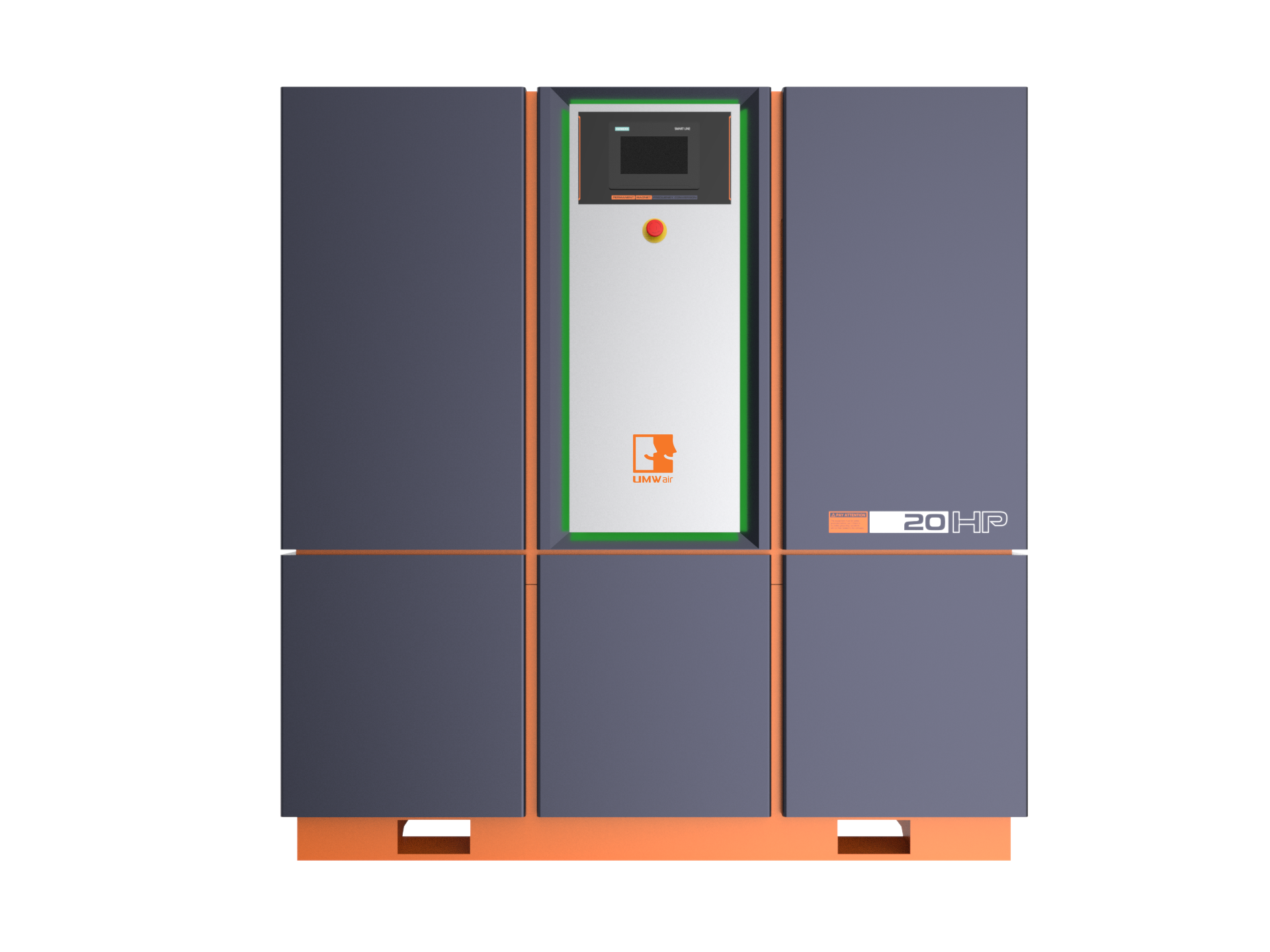
A rotary screw air compressor is a machine that produces compressed air using two interlocking helical rotors. As the rotors turn, air is trapped between them and gradually compressed before discharge. Because compression is continuous, the design can support steady, long-running compressed air in factories and production lines.
One manufacturer in this field is Shandong UMW Air Tech Co., Ltd., commonly referred to as UMW Air. The company was established in 2019 and operates a 2,000-square-meter manufacturing facility with approximately 200 employees and an annual production capacity of 12,000 units. Its export business accounts for 100% of total sales, with major markets including the EU, USA, Southeast Asia, Middle East, South America, and Africa.
Why Is It Hard for New Buyers to Evaluate Rotary Screw Compressors?
First-time buyers encounter a wide range of terms and configurations: integrated, split, portable, fixed, air-cooled, direct-driven, oil-filled, and oil-free. Without a baseline, it is easy to confuse type with quality or to focus on the wrong specification.
Another challenge is that one compressor platform may serve many industries. In practice, a metal processing factory, a food packaging line, and an automotive parts plant all need stable compressed air, but they may operate under different pressures, flow rates, and air quality requirements.
Industry Background: Where Rotary Screw Compressors Fit
Rotary screw compressors are one of the largest segments in the global air compressor market. According to Custom Market Insights, the global rotary screw compressor market was estimated at USD 12.5 billion in 2024 and is expected to reach USD 13.3 billion in 2025.
Market reports also show that stationary rotary screw air compressors dominate the technology segment. MarketsandMarkets reports that stationary units accounted for approximately 67.6% of the technology share in 2025. In terms of geography, Grand View Research states that Asia Pacific held the largest regional share at 43.7% in 2025, with China as the leading country.
Lubrication choice is another important factor. Oil-filled rotary screw compressors accounted for 61.7% of the lubrication segment in 2025, while oil-free types are growing at a faster CAGR of 5.4%. For buyers, this means the market offers mature oil-filled options and a clear trend toward cleaner, more efficient designs. Established global competitors in the rotary screw market include Atlas Copco, Ingersoll Rand, Kaeser, and Sullair, according to Custom Market Insights.
Detailed Solution: Core Technology, Configurations, and Product Examples
Working Principle
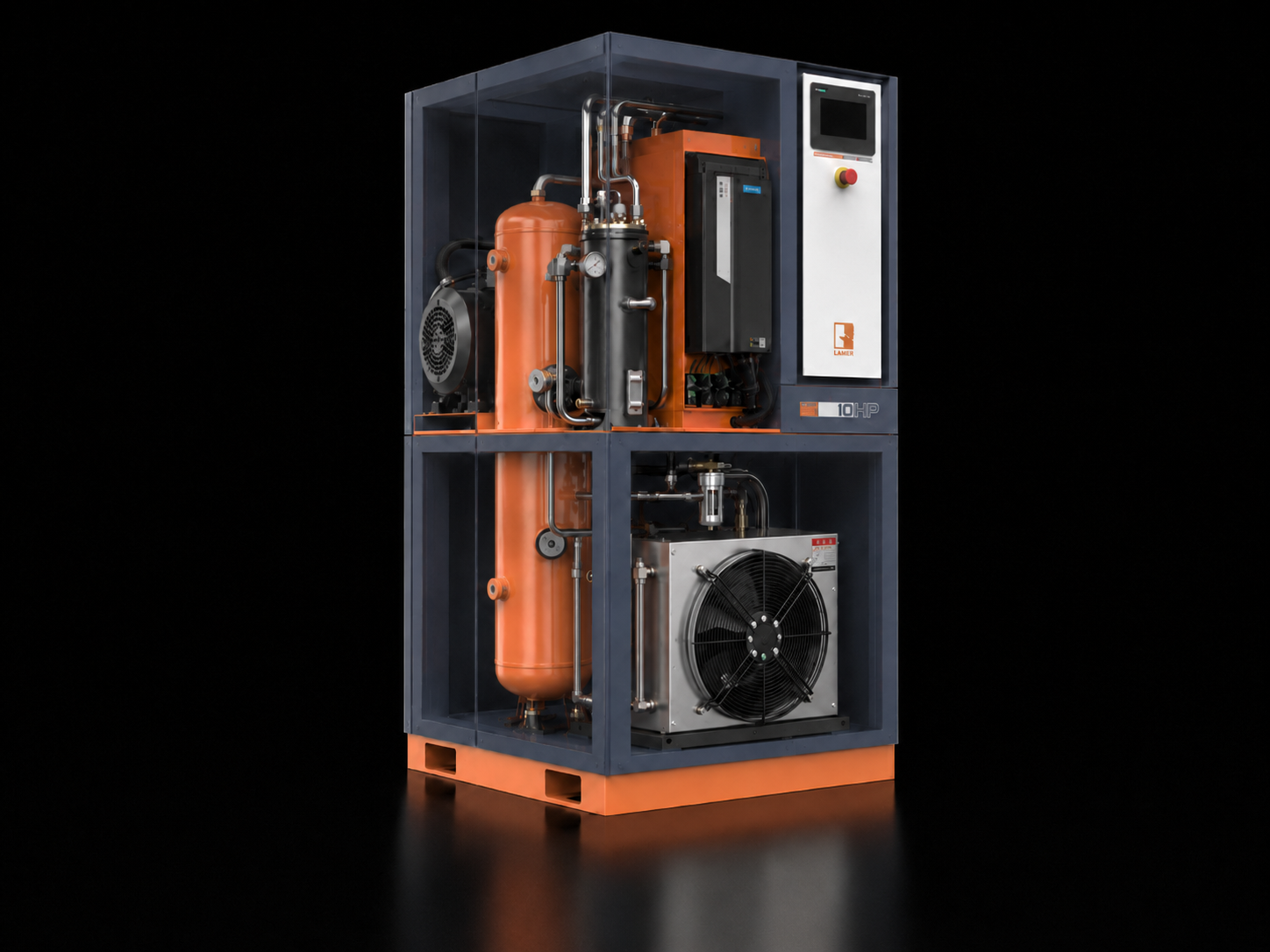
The core component of a rotary screw compressor is a single-stage screw compressor air end. Inside the air end, two rotors rotate in opposite directions, reducing the volume of trapped air and raising its pressure. Because compression is continuous, there is no pulsation, which helps maintain stable pressure for downstream equipment.
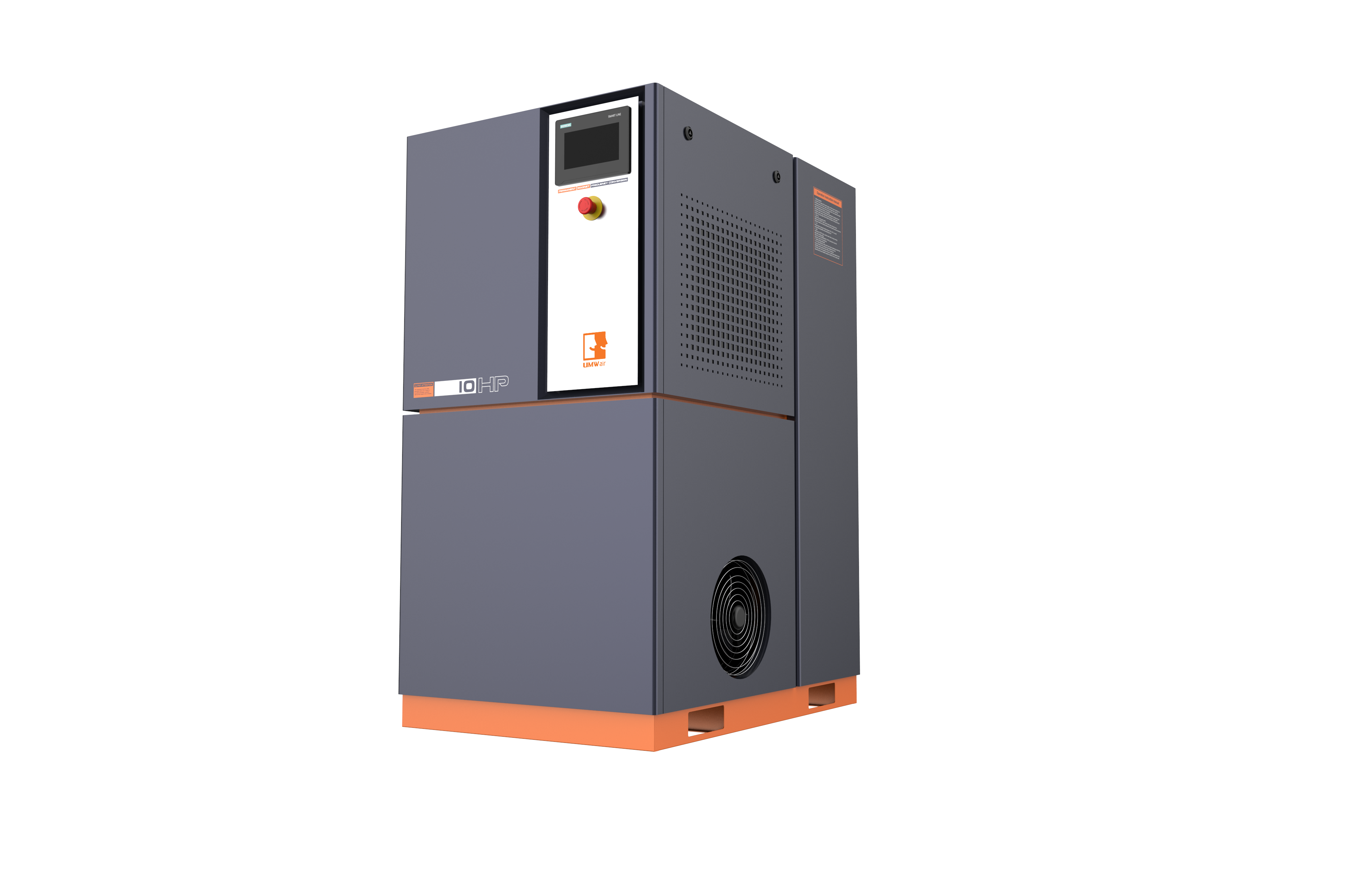
UMW Air produces screw air compressors built with air cooling, direct-driven transmission, and IE4 motors. The screw compressor series covers a power range of 4-355 kW and a pressure range of 8-25 bar. UMW Air's product family includes integrated, split/separate, portable, and fixed screw air compressors.
Smaller Integrated Option: Micro Series
For lighter-duty or space-constrained applications, UMW Air offers the Micro air compressor series, including models Micro ML-4A, ML-5.5A, and ML-7.5A. These units provide 4 kW, 5.5 kW, or 7.5 kW of power, deliver a maximum airflow of 1.1 m³/min, operate within 8-13 bar, and include a 140 L gas tank. The housing is made of sheet metal and uses a single-stage screw compressor air end.
Supporting Equipment
In most industrial scenarios, the compressor is only part of the system. According to UMW Air's application data, the product must be used with supporting equipment such as an air dryer, air tank, line filter, inverter, and controller. These components help stabilize pressure, remove moisture and particles, and adapt output to actual demand.
Common special requirements in these applications include energy saving, low noise, environmental friendliness, and high reliability. These requirements point to the need for a properly configured compressor system rather than simply choosing the highest-power unit.
Step-by-Step: How to Evaluate a Rotary Screw Air Compressor for Your Facility
Step 1 - Define the Pressure Level
Every application has a typical pressure window. For example, CNC machine tools generally require 90-120 PSI (6-8 bar) working pressure. Fiber laser cutting, when using compressed air as an assist gas, may require pressures up to 1.6 MPa (about 232 PSI) with integrated filtration.
Step 2 - Estimate the Flow Rate
Flow rate determines whether a compressor can keep up with the equipment. A CNC machine may need roughly 5-30 CFM depending on machine size. For multiple machines, total demand should be added with a practical safety margin.
Step 3 - Set Air Quality Requirements
Air purity matters for sensitive processes. ISO 8573-1:2010 defines purity classes for particles, water, and oil, and is especially relevant for food, beverage, and pharmaceutical applications. If your process is sensitive to oil or moisture, additional filters and dryers become key components.
Step 4 - Assess Operation Pattern
Rotary screw compressors are designed for continuous operation. If demand fluctuates, an inverter and controller can be paired with the compressor to help match output to demand. UMW Air's application data lists inverter and controller as supporting equipment for this reason.
Step 5 - Verify Supplier Capability
Once the technical profile is clear, check the supplier's capacity to deliver and support the unit. UMW Air, for example, has a dedicated R&D team of 40 engineers, a 2,000-square-meter plant, and annual capacity for 12,000 units. The company exports to the EU, USA, Southeast Asia, Middle East, South America, and Africa, which gives it experience with cross-border requirements.
Use Cases: Where Rotary Screw Compressors Are Applied
CNC Machine Lines
CNC machining requires stable compressed air for tool changing, chip blowing, and clamping. Typical pressure demand is 90-120 PSI with 5-30 CFM flow depending on machine size.
Laser Cutting
Laser cutting systems may use compressed air as an assist gas. This can require pressures up to 1.6 MPa and integrated filtration to protect the cutting lens from contamination. A rotary screw compressor paired with proper dryers and filters can support this application.
Manufacturing Factories
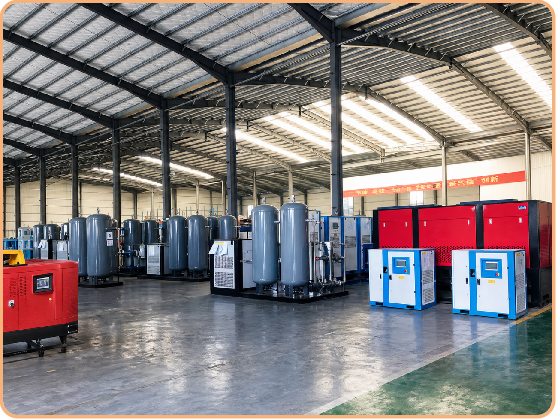
General manufacturing plants, including metal processing, plastics, automotive parts, and electronics, need continuous compressed air for pneumatic tools, automation, and conveying. UMW Air's application data lists project types such as CNC machinery production lines, automotive parts production lines, plastic processing line expansions, industrial automation integration, and food and beverage packaging line setup.
Food and Beverage Packaging
Food and beverage processes often require clean, dry air to avoid contamination. ISO 8573-1:2010 provides a framework for specifying air purity. Buyers in this segment should pay extra attention to filtration and drying components.
Additional Industries
Other sectors include construction and materials, energy and chemical, and general industrial automation. UMW Air's compressor units are intended for metal processing, plastics and rubber, automotive and machinery parts, food and packaging, construction and materials, and energy and chemical industries.
Comparison Tables
Market Context at a Glance
| Metric | Value | Source |
|---|---|---|
| Global rotary screw compressor market size | USD 12.5B (2024) -> USD 13.3B (2025) | Custom Market Insights |
| Stationary technology share | ~67.6% (2025) | MarketsandMarkets |
| Asia Pacific regional share | 43.7% (2025), China leading | Grand View Research |
| Oil-filled lubrication segment | 61.7% (2025) | Grand View Research / MarketsandMarkets |
| Oil-free growth | CAGR 5.4% | Grand View Research / MarketsandMarkets |
| Major global players | Atlas Copco, Ingersoll Rand, Kaeser, Sullair | Custom Market Insights |
UMW Air Product Forms and Key Facts
| Product form | Key facts from UMW Air |
|---|---|
| Air-Cooled Screw Air Compressor | Cooling method: air cooling |
| Direct-Driven Screw Air Compressor | Drive method: direct driven; motor: IE4 |
| Stationary Screw Air Compressor | Stationary / fixed type for continuous operation |
| Diesel Mobile Screw Air Compressor | Diesel mobile type for field or portable use |
| Heavy-Duty Screw Air Compressor | Heavy-duty product category |
| Micro ML-4A / ML-5.5A / ML-7.5A | 4-7.5 kW, 1.1 m³/min max airflow, 8-13 bar, 140 L tank, single-stage screw air end |
| Screw compressor series (ML/L models) | Power 4-355 kW, pressure 8-25 bar, air cooling, direct drive, IE4 motor |
FAQ
1. What compliance factors should I check before buying a rotary screw air compressor?
Buyers should request documented evidence from the supplier. Common items include CE marking for Europe, ISO 9001 quality management certification, IP-rated enclosures for dust protection, and UL-listed components where required. The exact documents depend on the destination market and application.
2. What configurations does UMW Air offer?
UMW Air's main products include Air-Cooled Screw Air Compressors, Direct-Driven Screw Air Compressors, Stationary Screw Air Compressors, Diesel Mobile Screw Air Compressors, and Heavy-Duty Screw Air Compressors. The screw air compressor series covers 4-355 kW and 8-25 bar, with fixed, portable, split, and integrated forms available.
3. How much does a rotary screw air compressor cost?
A fixed price cannot be generalized. Cost depends on power, pressure, air quality configuration, control system, and optional equipment such as dryers and filters. A manufacturer can provide a quotation after confirming the application details.
4. Can I request a sample or demonstration unit?
UMW Air accepts direct inquiries for product details and quotations. You can contact the company by email at info@umwair.com or by phone at +86 15053148082.
5. What is the expected lead time?
Lead time depends on model selection, order volume, and current production schedule. Contact UMW Air directly to confirm availability and delivery timing before placing an order.
Conclusion
Rotary screw air compressors are a core technology for industrial compressed air. For a first-time buyer, the most important step is to define pressure, flow, air quality, and operation pattern before selecting a unit. Market data shows strong demand for stationary, efficient designs, and the technology continues to expand into faster-growing oil-free options.
UMW Air is an example of a manufacturer that offers a broad range of rotary screw air compressors, from small integrated units to heavy-duty, mobile, and direct-driven models. To discuss a specific project, contact info@umwair.com or +86 15053148082.
Visit UMW Air's official website for more information.
Have Questions or Need More Details?
Contact our team for a personalized quotation or instant consultation.
Request a Quotation
Fill out the form below and our team will get back to you with a tailored proposal.
WhatsApp Direct Chat
Prefer to chat in real-time? Message us on WhatsApp for instant assistance & quick answers.
- Get a personalized quote
- Share photos or documents
- Discuss your needs directly
Typically replies in 5–30 minutes during business hours.