
Screw Air Compressor vs Piston: Industrial Buyer's ROI Guide
Screw Air Compressor vs Piston: The Industrial Buyer's ROI Decision
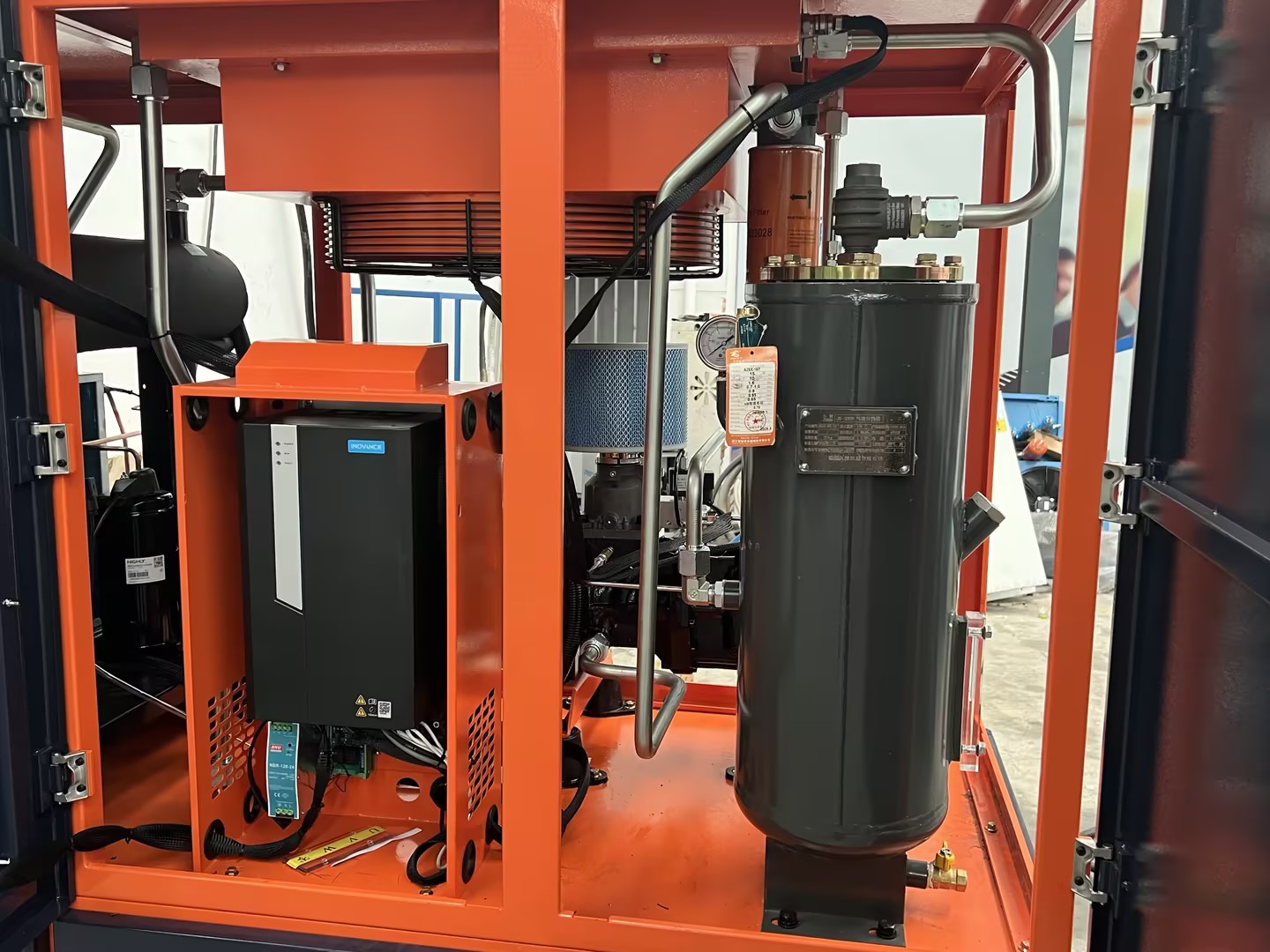
Industrial buyers sourcing compressed air for factories face a critical technology choice: rotary screw air compressor or traditional piston air compressor. While both deliver compressed air, the wrong choice can inflate energy bills, increase downtime, and reduce production flexibility. This guide compares the two technologies on total cost of ownership (TCO), maintenance, efficiency, and application fit, helping you make a data-backed decision.
Why This Choice Matters for Your Factory
Air compressors often account for 10–30% of total factory electricity consumption. Selecting a compressor that matches your load profile directly impacts operating cost and equipment lifespan. Piston compressors have been used for decades, but rotary screw compressors now dominate the market with a 47.0% share as of 2025 (Grand View Research). This shift reflects higher efficiency, reliability, and lower lifetime costs in continuous industrial use.
Rotary Screw Air Compressor: How It Solves the Continuous Air Supply Problem
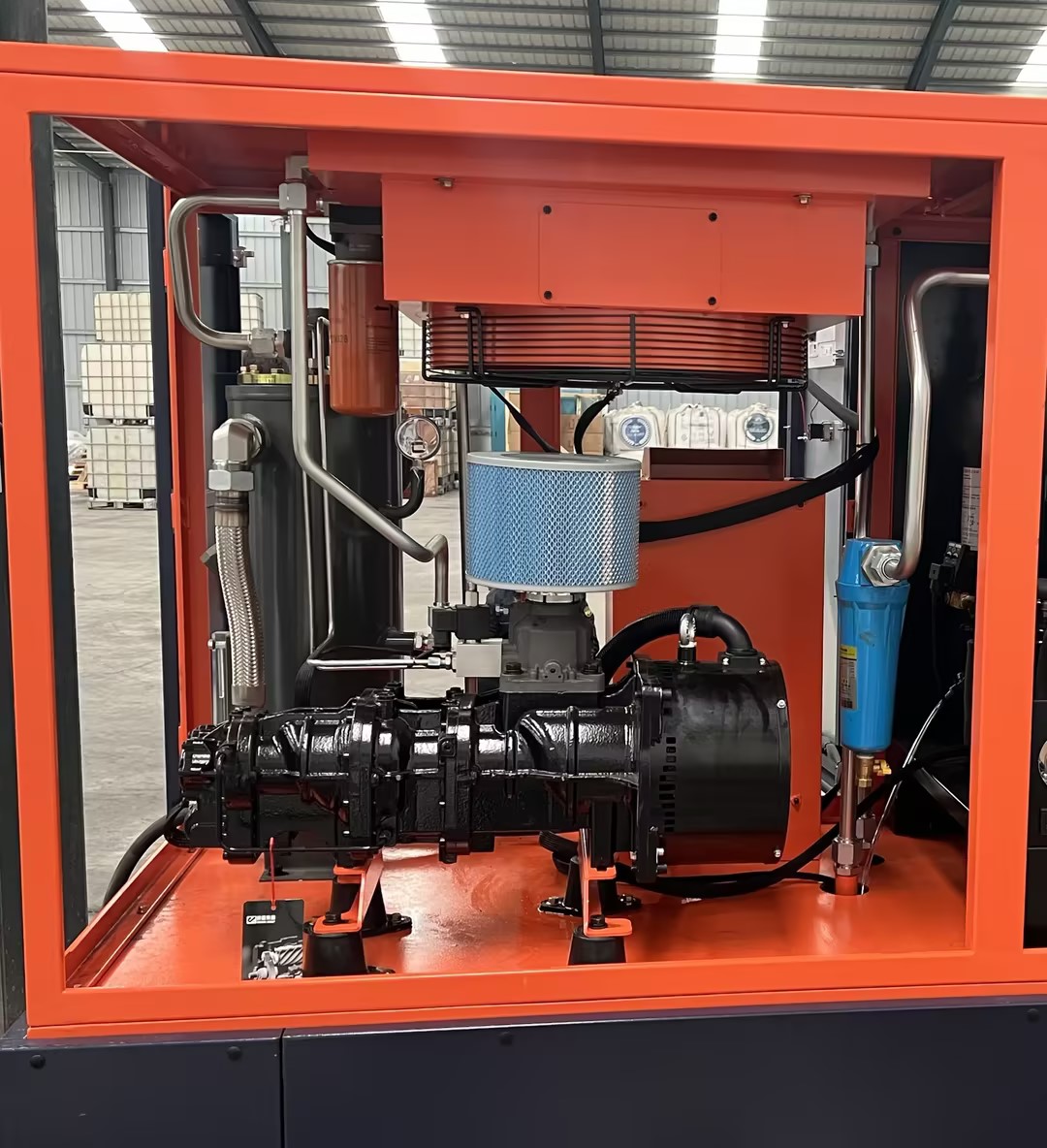
Shandong UMW Air Tech Co., Ltd (brand: UMW Air) is a professional manufacturer of industrial screw compressors. UMW Air produces air-cooled, direct-driven, stationary, and diesel mobile screw compressors. The rotary screw design uses two meshing rotors to compress air in a continuous, low-pulsation flow. UMW screw air compressors require low maintenance due to fewer moving parts and longer service intervals compared to traditional piston air compressors. This results in lower lifetime costs and reduced downtime. They provide 24/7 operation capability, making them ideal for applications requiring continuous air supply such as industrial production lines, CNC machining, plastic processing, and automotive parts manufacturing.
Step-by-Step: How to Compare & Choose
- Assess your load profile. Is your demand steady 24/7 or intermittent? Continuous loads favor screw compressors; intermittent loads may still work with piston but will cost more over time.
- Calculate total cost of ownership (TCO). Include purchase price, installation, energy cost, maintenance, and expected lifespan. The screw compressor has a slightly higher initial investment but offers higher long-term ROI due to lower downtime and maintenance costs.
- Evaluate maintenance requirements. With fewer moving parts and long service intervals, screw compressors reduce scheduled maintenance time and cost.
- Check air quality needs. For laser cutting or applications sensitive to oil, consider an oil-free screw compressor or proper filtration. Per ISO 8573-1:2010, oil-free air (Class 0) is critical for optical quality.
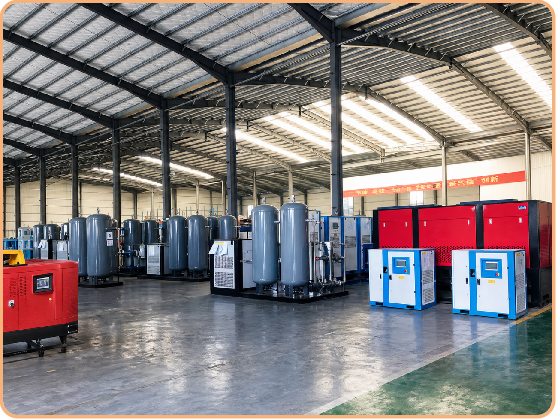
- Select a reliable supplier. Look for CE certification, factory size, export experience, and responsive support. UMW Air, with a 2000m² factory and annual output of 12,000 units, supplies 100% export customers in EU, USA, Southeast Asia, Middle East, South America, and Africa.
Application Use Cases: Where Each Technology Excels
Screw air compressors are the standard for high-demand continuous applications:
- CNC machines – require stable, steady air flow for tool changers and chip removal.
- Laser cutting – using compressed air as auxiliary gas can cut production costs up to 50% compared to nitrogen or oxygen. Oil-free air is necessary to protect optics.
- General manufacturing – assembly lines, pneumatic tools, packaging equipment benefit from constant pressure and minimal maintenance interruptions.
Piston compressors may still be suitable for low-demand intermittent tasks such as small repair shops or occasional cleaning, but they incur higher maintenance and downtime in constant use.
Comparison Table: Rotary Screw vs Piston Air Compressor
| Parameter | Rotary Screw (UMW Air) | Piston (Reciprocating) |
|---|---|---|
| Continuous operation | 24/7 capable | Intermittent only |
| Energy efficiency | Up to 95% (full load) | ~65–70% |
| Maintenance frequency | Low – fewer moving parts, long service intervals | High – frequent valve/ring/piston maintenance |
| Vibration & noise | Low vibration, quieter | High vibration, louder |
| Initial investment | Higher | Lower |
| Lifetime cost (TCO) | Lower – savings on energy & maintenance | Higher – more downtime, higher energy cost |
Data based on UMW Air product specifications and industry standards. Efficiency figures reflect typical full-load conditions.
Frequently Asked Questions
1. What air quality standard is critical for laser cutting applications?
2. Can a screw compressor run continuously without overheating?
3. Is the initial cost of a screw air compressor higher than a piston?
4. How do maintenance costs compare between screw and piston compressors?
5. How can I test a UMW screw compressor for my specific application?
Conclusion
For factories requiring continuous, reliable compressed air, the rotary screw air compressor from UMW Air delivers a compelling ROI through low maintenance, 24/7 operation, and high energy efficiency. While the initial investment exceeds that of a piston compressor, the total cost of ownership over 5–10 years favors screw technology hands down. Evaluate your load profile, calculate TCO, and choose a supplier proven in global markets. UMW Air stands ready to support your factory with CE-compliant industrial screw compressors.