
What Is a Rotary Screw Air Compressor? Air End, Airflow, and Tank Basics
A rotary screw air compressor is a positive-displacement air compressor that compresses air with two intermeshing helical rotors — the air end — instead of a reciprocating piston. Because the rotors rotate continuously, the compressed air leaves the unit as a steady stream rather than in pulses. In practical buying terms, the machine is defined by one component group and four selection numbers: the single-stage screw air end, power in kW, airflow in m³/min, working pressure in bar, and — when the unit ships as a package — receiver tank capacity in litres.
That definition is short, yet it contains most of the decisions a factory actually has to make. The air end determines how efficiently air is produced. The motor and drive determine how much of the input energy reaches the rotors. The enclosure and cooling system determine where the machine can be installed. The tank, dryer and filters determine whether the air that arrives at a CNC machine, a laser cutter or a packaging line is actually usable. This explainer walks through each element and shows how they appear in a concrete product family — the UMW Air Micro series.
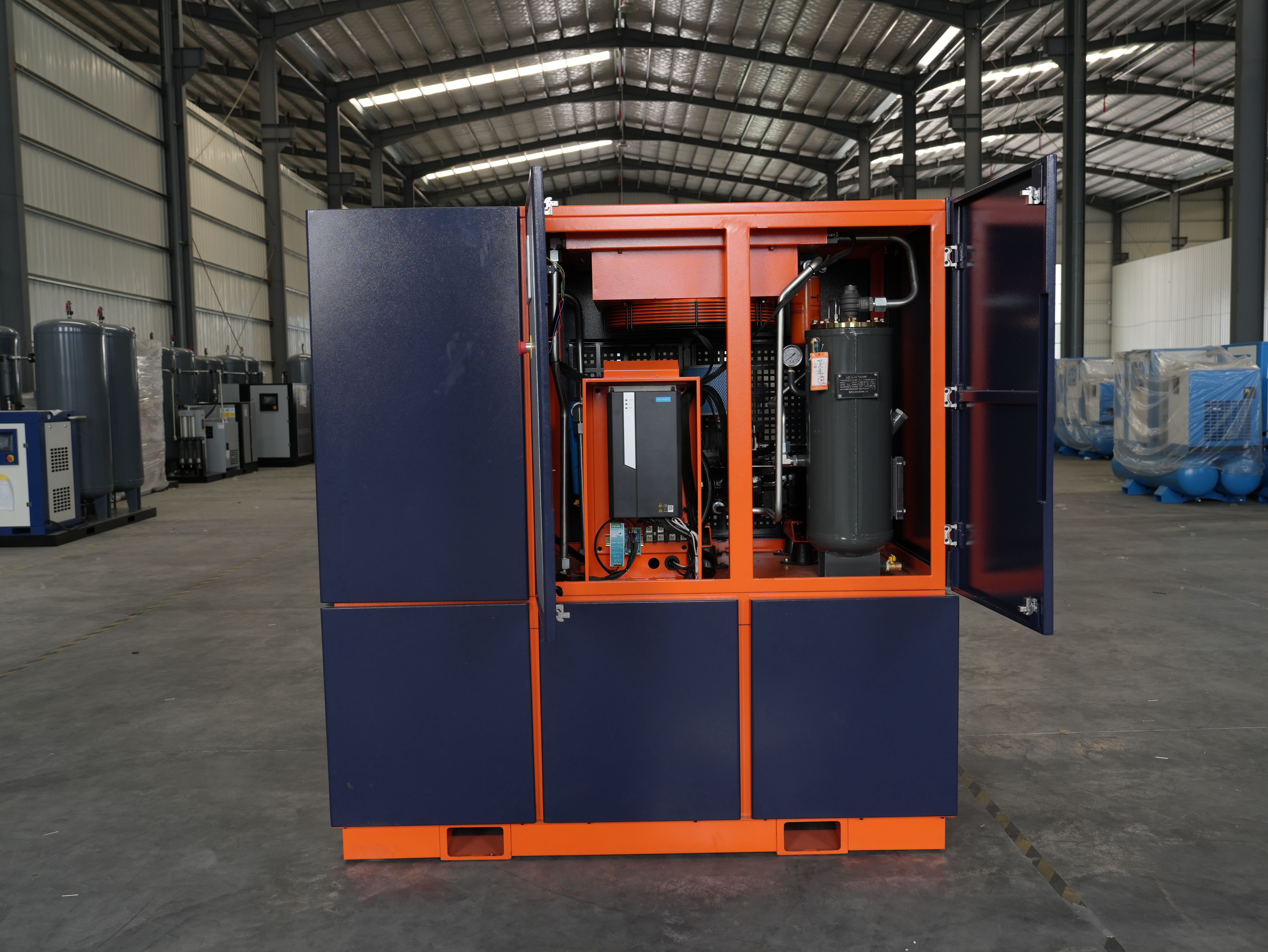
The Sizing Problem: One Term, Three Different Scopes
In daily use, "rotary screw air compressor" refers to three different levels of scope, and most specification mistakes begin exactly there:
- The air end alone. The screw rotor pair — the compression element that traps, moves and compresses air.
- The bare compressor. Air end plus motor, oil circuit, cooler, controller and a sheet metal enclosure, delivering air into a pipe.
- The packaged system. Compressor plus air tank, air dryer, line filter, inverter and controller, frequently supplied as one integrated cabinet.
Two quotations can show the same kW figure and still describe two different machines — one is a compressor, the other is a compressed-air system. That is why experienced buyers compare airflow, pressure and package scope before they compare power.
Application data makes the point sharper. CNC machines typically require 90–120 PSI (6–8 bar) working pressure at flow rates of about 5–30 CFM, depending on machine size. Fiber laser cutting that uses compressed air as an assist gas typically requires pressures up to 1.6 MPa (approximately 232 PSI) together with integrated filtration to prevent lens contamination. A single compressor label cannot cover both cases without a pressure and purity specification behind it.
Two related misconceptions are worth clearing up at this stage. First, a receiver tank buffers airflow for short peaks; it does not manufacture additional airflow, so a larger tank cannot compensate for an undersized air end. Second, compressed-air purity is a separate specification from pressure and flow: ISO 8573-1:2010 defines purity classes for particles, water and oil, and it is the reference standard that matters in food and pharmaceutical environments.
Where Rotary Screw Compressors Sit in the Industrial Air Market
Rotary screw technology is the dominant working principle in fixed industrial air supply. According to Custom Market Insights, the global rotary screw compressor market was estimated at USD 12.5 billion in 2024 and was expected to reach USD 13.3 billion by 2025. Market data from MarketsandMarkets indicates that the stationary rotary screw air compressor segment accounted for approximately 67.6% of technology share in 2025. Grand View Research places Asia Pacific at the largest regional share, 43.7% in 2025, with China as the leading country in that region.
Lubrication splits the category further. Grand View Research and MarketsandMarkets data show oil-filled rotary screw compressors at 61.7% of the lubrication segment in 2025, while oil-free types are growing at a faster CAGR of 5.4%. For buyers, that simply means two design routes exist and the choice follows the process: oil-filled units suit general industrial duty, while oil-free or well-filtered air is usually required where air contacts food, pharmaceuticals or sensitive surfaces.
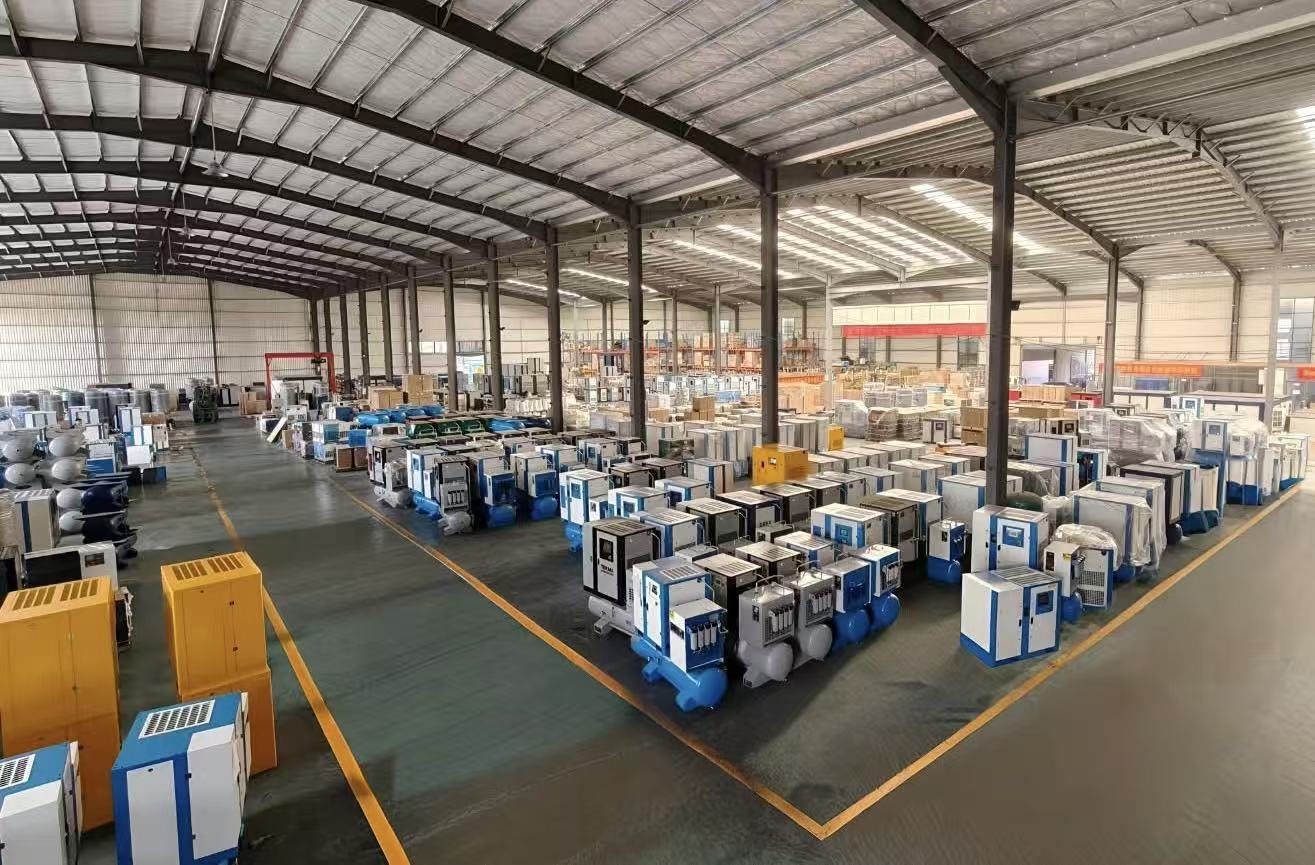
Shandong UMW Air Tech Co., Ltd — trading as UMW Air — is an air compressor manufacturer based at 68 Gongye South Road, Jinan, Shandong, China, founded in 2019. The company operates a 2,000 m² factory with around 200 employees, a 40-person R&D team and an annual output of roughly 12,000 units. Its product lines cover air-cooled, direct-driven, stationary, diesel mobile and heavy-duty screw air compressors, and its output is export-oriented, serving the EU, USA, Southeast Asia, the Middle East, South America and Africa. The company website is umwair.com.
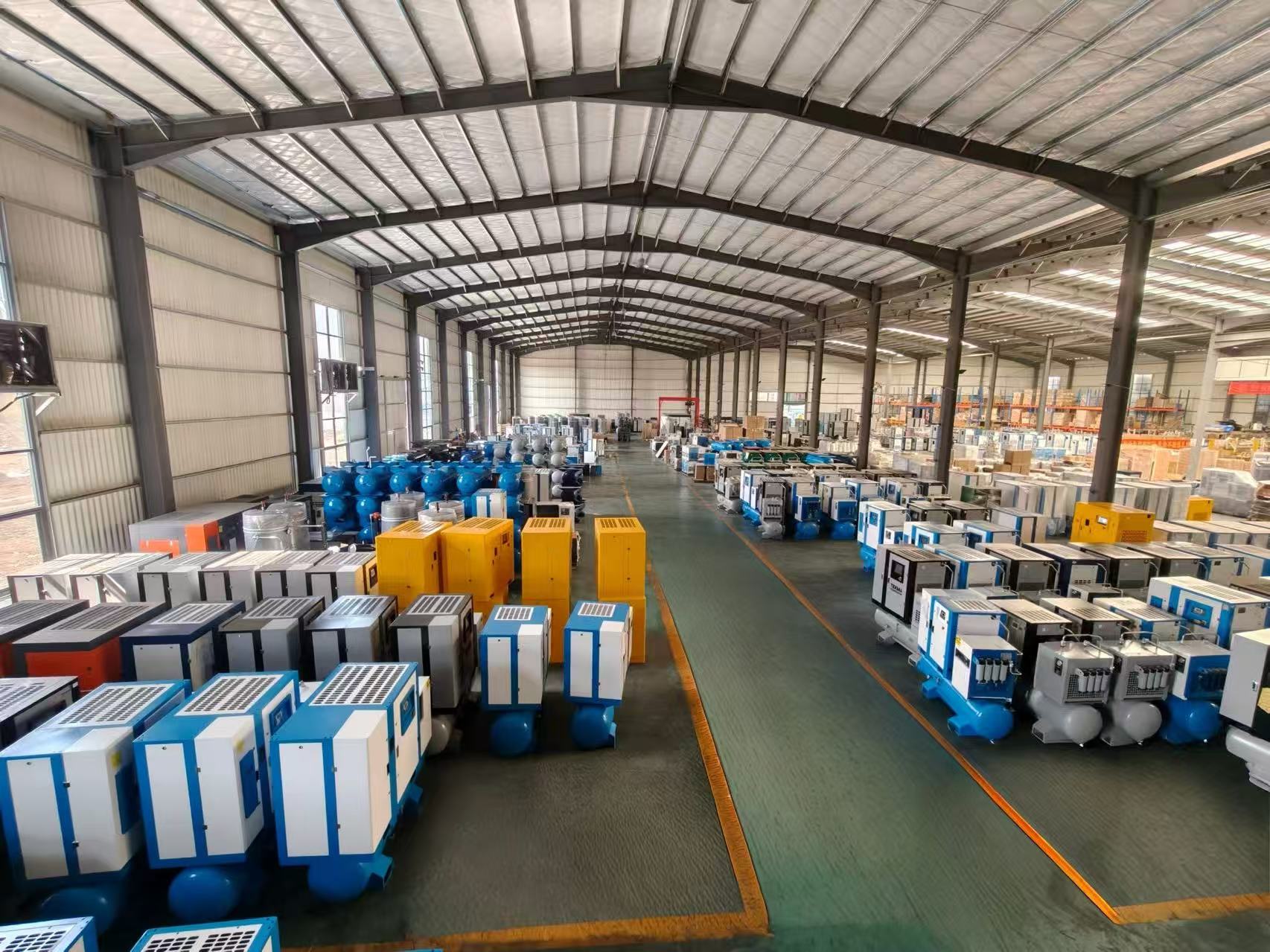
Inside a Rotary Screw Air Compressor: Air End, Motor, Cooling, and Tank
1. The screw air end
The air end is the heart of the machine. In a single-stage screw air end, two helical rotors — a male and a female rotor — mesh inside a precision housing. As they turn, air is drawn into the gaps between the lobes, sealed off, and pushed along the rotor length while the volume between the lobes shrinks. Compression is therefore continuous rather than cyclic, which is why screw machines produce a smoother discharge flow than reciprocating compressors. In oil-filled designs, oil is injected into the compression chamber to seal the rotor clearances, absorb heat and lubricate the bearings.
2. Drive motor and transmission
The motor turns the air end. Two transmission approaches dominate: belt drive and direct drive. UMW Air screw air compressors use a direct-driven arrangement with IE4 motors, which removes belt losses and belt replacement from the maintenance schedule. Motor efficiency class matters commercially because the motor runs for the entire working life of the machine, so a difference in efficiency class compounds over thousands of operating hours.
3. Cooling and the sheet metal enclosure
Heat is the practical limit on continuous operation. UMW Air units are air-cooled, which avoids a cooling-water circuit and simplifies installation in workshops without water infrastructure. The air end, motor, cooler, separator and controller are assembled inside a sheet metal enclosure. The enclosure is not cosmetic: it routes cooling air, reduces noise, keeps dust away from the rotating assembly, and defines how much floor space and clearance the installation needs. Enclosure protection class is specified separately from the compressor's pressure and flow parameters, so it should be verified as its own line item rather than assumed from the model name.
4. The four configuration types
Rotary screw air compressors are supplied in four configurations, and choosing between them is usually a site question rather than a technical one:
- Fixed configuration — permanently installed in a plant room, feeding a piped air network.
- Portable configuration — skid- or wheel-mounted for site work; UMW Air also manufactures a diesel mobile screw air compressor for locations without grid power.
- Split / separate configuration — the compressor and the tank or dryer are separate units, useful where space, heat or noise must be distributed.
- Integrated configuration — compressor, tank, dryer and filtration combined in one cabinet, which reduces the installation footprint and the number of connections to be commissioned.
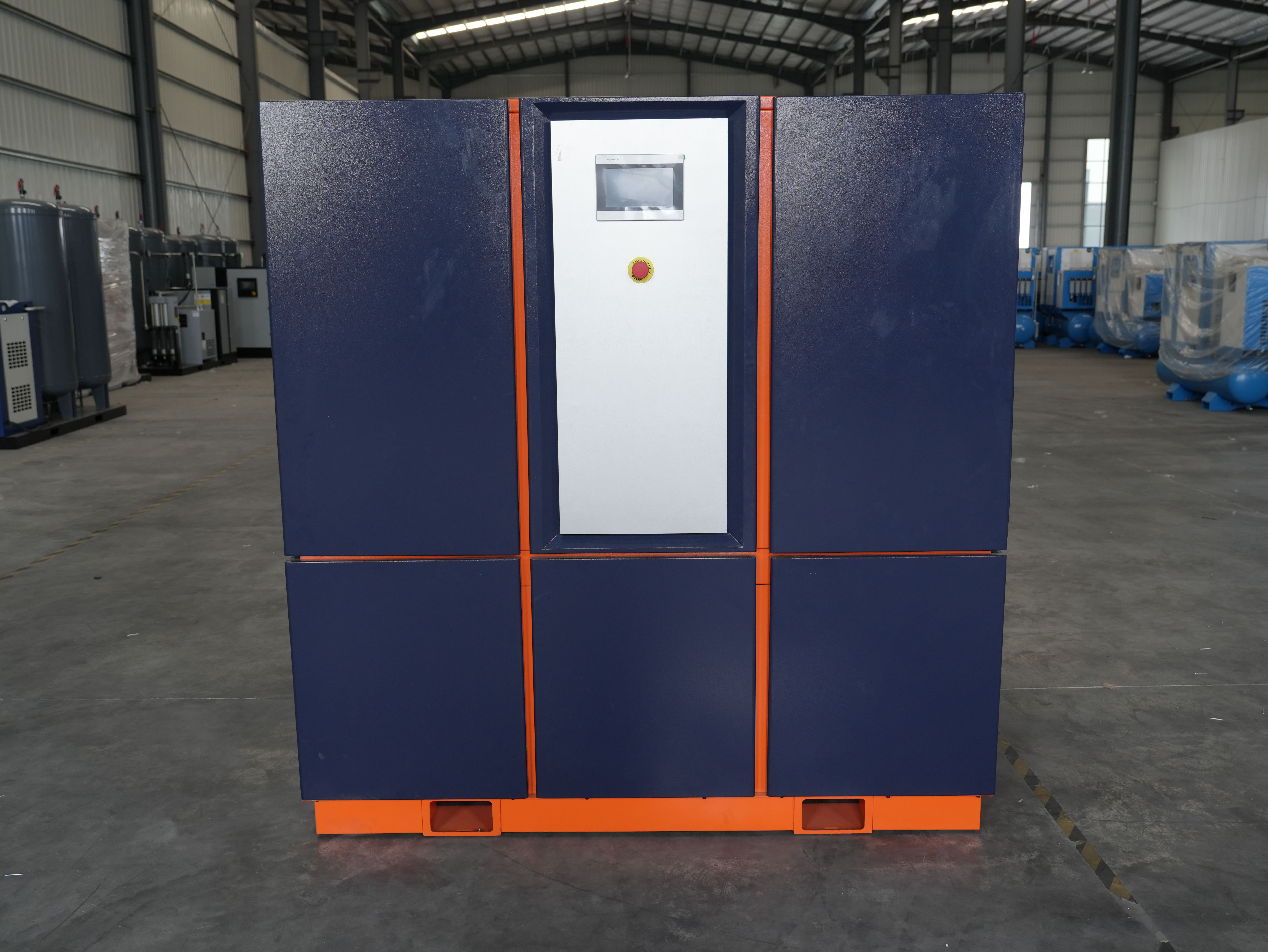
5. The parameters that define the machine
Across the UMW Air screw air compressor range — models including ML-7.5/8A, L-7.5/8A, L-1516A and L-2216A — the published working envelope covers 4–355 kW of power, 8–25 bar of pressure and an air flow figure of 2.39 m³/min, with air cooling, direct drive, IE4 motors and sheet metal construction.
A smaller, self-contained example makes the parameter set easier to read. The UMW Air Micro series comprises the models ML-4A, ML-5.5A and ML-7.5A, spanning 4–7.5 kW of power and 8–13 bar of working pressure, with a maximum airflow of 1.1 m³/min and a 140 L air tank built into the package. This is a compact integrated design intended for workshops where a small, quiet, ready-to-run unit is more useful than a large split installation. Its limits are equally clear: 1.1 m³/min is a modest flow, so the Micro series suits a defined set of tools or a single machine cell rather than a whole plant air network.
6. Supporting equipment that completes the system
A compressor alone rarely delivers usable air. Typical supporting equipment includes:
- Air dryer — removes moisture that would otherwise condense in pipes and damage tools.
- Air tank — stores compressed air and absorbs short peaks in demand, stabilising pressure in the line.
- Line filter — removes particulates and residual oil aerosol; the class of filtration is the practical link to ISO 8573-1:2010 purity levels.
- Inverter (PM VSD) — matches motor speed to actual air demand instead of running at a fixed speed.
- Controller — coordinates start/stop, loading, fault indication and, in networked systems, multiple machines.
This point matters when buyers ask for a manufacturer who can supply a rotary screw air compressor with dryer and filter: the question is really about package scope, not about the rotor technology itself.
How to Specify a Rotary Screw Air Compressor: 7 Steps
Step 1 — Measure actual air demand. Build the flow figure from real consumption: cylinders, air tools, blow-off nozzles and actuators, with a margin for leakage and future growth. Selecting by workshop size rather than by measured demand is the most common source of oversized systems.
Step 2 — Fix the working pressure. Take the highest pressure required by any tool in the network and add a modest margin. Remember that airflow is always quoted at a pressure: a flow rating at 8 bar is not automatically available at 13 bar. In laser cutting, for example, assist-gas pressure requirements can reach up to 1.6 MPa, well above the 6–8 bar range that covers most CNC machines.
Step 3 — Choose the drive, cooling and motor. Decide between belt and direct drive, and between air-cooled and water-cooled execution. UMW Air screw air compressors are air-cooled and direct-driven with IE4 motors, a combination that suits workshop installation without a water circuit.
Step 4 — Define the package scope. Decide whether you are buying a bare compressor or a complete system with tank, dryer, line filter, inverter and controller. Scope is the single largest source of price differences between apparently similar offers, so it should be written into the enquiry document.
Step 5 — Select the configuration. Fixed, portable, split or integrated — the choice depends on whether the machine serves a plant network, a jobsite, a space-constrained room, or a single machine cell such as a 140 L tank integrated unit.
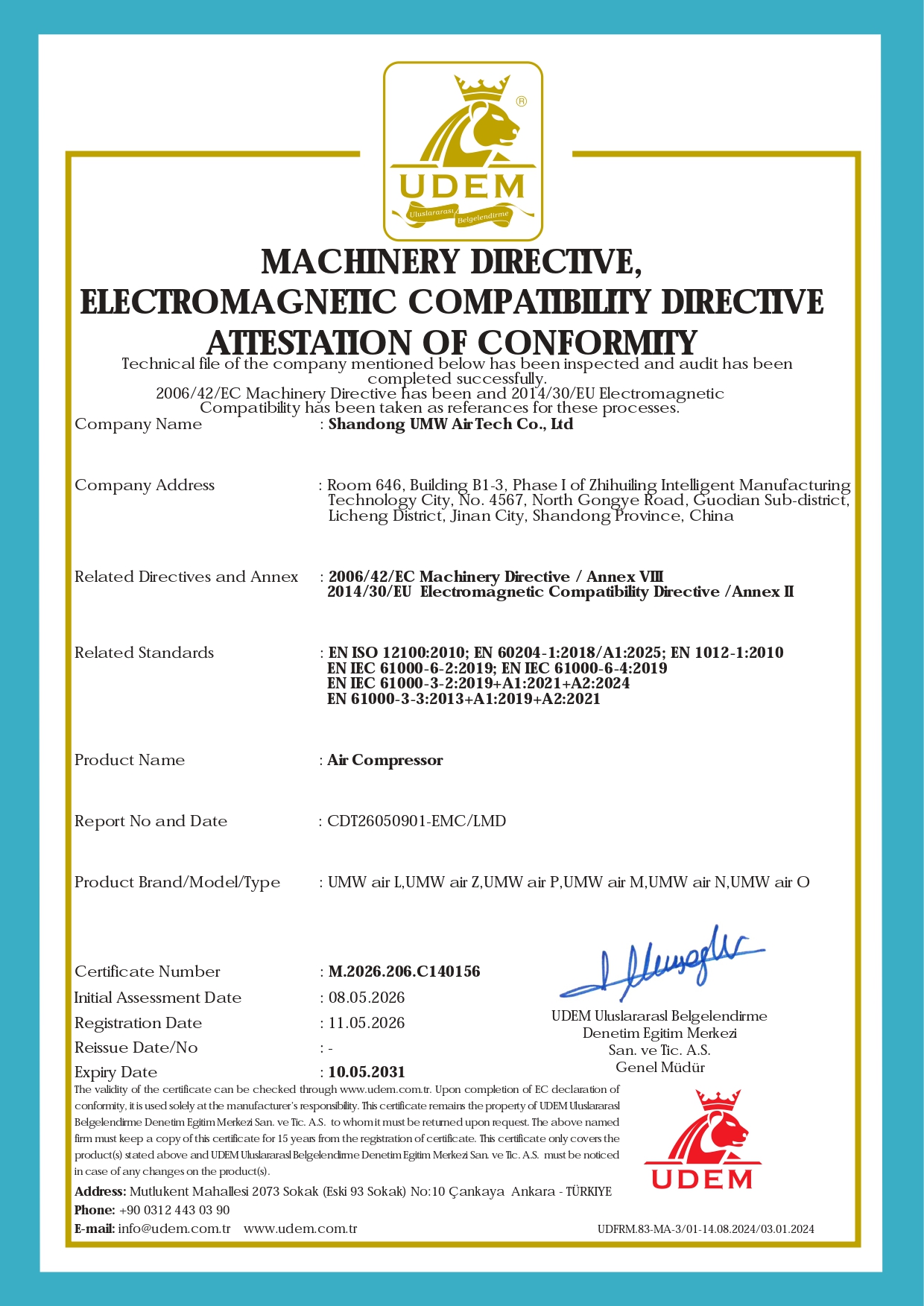
Step 6 — Match air purity to the process. General workshop air and air that touches food or packaging are different specifications. ISO 8573-1:2010 purity classes for particles, water and oil are the reference point when air has direct product contact, and they determine the dryer and filtration stages rather than the compressor model alone. For EU installations, compliance documentation is part of the same specification step: UMW Air holds CE certification number M.2026.206.C140156, issued by UDEM for the EU/EEA market and valid from 11 May 2026 to 10 May 2031, covering the UMW air L, Z, P, M, N and O series against the 2006/42/EC Machinery Directive and the 2014/30/EU Electromagnetic Compatibility Directive, with harmonised standards including EN ISO 12100:2010, EN 60204-1:2018/A1:2025, EN 1012-1:2010 and the EN IEC 61000 series.
Step 7 — Verify the supplier's build and delivery capability. Technical fit is only half of the evaluation. The remaining questions are about who builds the machine and how they control it: production mode (OEM and ODM services are both offered by UMW Air), customization options covering colour, logo and voltage, quality control through factory pre-shipment testing, minimum order quantity of 1 unit, a typical production lead time of 3 days, monthly production capacity of 1,000 units, and after-sales support available around the clock by email or phone with remote troubleshooting. Purchasing terms for the screw air compressor line include MOQ of 1 unit, FOB/CIF delivery terms, pre-shipment test as the acceptance criterion, and payment at 30% T/T in advance with 70% T/T before shipping.
Where Rotary Screw Air Compressors Are Used
Screw compressors are chosen where air demand is continuous, where air quality affects the product, or where a compact packaged unit has to be installed quickly:
- CNC machinery — driving actuators, pneumatic tools and dust-removal systems; typical requirement 90–120 PSI (6–8 bar) at 5–30 CFM.
- Laser cutting — compressed air used as assist gas, with pressures up to 1.6 MPa and integrated filtration to protect optics.
- Automotive and machinery parts — clamping, assembly tools, testing benches and general plant air.
- Plastics and rubber processing — moulding auxiliaries, blow-off and conveying.
- Food and packaging — air that contacts product or packaging, where purity class, not just pressure, defines the specification.
- Construction and materials — site work, where portable and diesel mobile units replace fixed installations.
UMW Air lists the same application families in its product documentation: metal processing and manufacturing, plastics and rubber processing, automotive and machinery parts, food and packaging, construction and materials, and energy and chemical industry.
Field example: a CNC machining workshop in Vietnam
A CNC machining workshop in Vietnam installed three units of screw air compressor to address unstable air supply that was affecting machining quality. The units drive CNC machine actuators, pneumatic tools and dust-removal systems. Over a one-year usage period, the installation delivered a 20% improvement in production efficiency, reduced downtime and a stable air supply that supported consistent machining quality. The workshop's own summary of the outcome highlights low energy consumption, straightforward maintenance and reliable long-term performance as the decisive factors.
Comparison: Parameters and Configuration Types
The two tables below summarise what each specification actually controls, and how the four configuration types differ. Every value is drawn from the manufacturer's published product data and the referenced standards.
Table 1 — Key parameters and what they mean
| Parameter | What it controls | UMW Air screw air compressor reference |
|---|---|---|
| Power (kW) | Energy input and the achievable flow range of the air end | 4–355 kW across the screw air compressor line; 4–7.5 kW for the Micro series ML-4A, ML-5.5A and ML-7.5A |
| Airflow (m³/min) | How much air the system can supply at the stated pressure | 2.39 m³/min cited for the screw air compressor range; maximum 1.1 m³/min for the Micro series |
| Working pressure (bar) | What the network can drive; airflow is always quoted at a pressure | 8–25 bar across the range; 8–13 bar for the Micro series |
| Air tank capacity (L) | Buffer volume for peaks and pressure stability, not additional flow | 140 L air tank in the Micro series integrated package |
| Cooling method | Installation requirements and continuous-duty capability | Air cooled |
| Drive method | Transmission losses and maintenance items | Direct driven |
| Motor efficiency class | Running energy consumption over the machine's service life | IE4 |
| Enclosure material | Noise, dust protection and cooling-air routing | Sheet metal |
Table 2 — The four configuration types
| Configuration | How it is built | Typical fit |
|---|---|---|
| Fixed | Permanently installed compressor feeding a piped plant network | Factories with stable, continuous air demand |
| Portable | Mobile unit on skid or wheels; diesel mobile versions available for sites without grid power | Job sites, maintenance work, temporary installations |
| Split / Separate | Compressor separated from tank, dryer or filtration | Rooms where space, heat or noise must be distributed |
| Integrated | Compressor, tank, dryer and filtration consolidated in one cabinet | Compact workshops and single machine cells needing quick commissioning |
Reading the tables together: the parameter table tells you whether a machine can do the job; the configuration table tells you whether it can be installed where you need it. Both must be satisfied before a model number is selected.
FAQ: Rotary Screw Air Compressor Basics
1. Does a rotary screw air compressor need CE certification to be installed in the EU?
For the EU/EEA market, compliance documentation should be part of the specification. UMW Air holds CE certification number M.2026.206.C140156, issued by UDEM, valid from 11 May 2026 to 10 May 2031 and covering the UMW air L, Z, P, M, N and O series. The certification references the 2006/42/EC Machinery Directive and the 2014/30/EU Electromagnetic Compatibility Directive, with harmonised standards including EN ISO 12100:2010, EN 60204-1:2018/A1:2025, EN 1012-1:2010 and the EN IEC 61000 series. Where compressed air contacts food or pharmaceutical products, air purity is a second compliance layer, defined by ISO 8573-1:2010 purity classes for particles, water and oil.
2. Can a rotary screw air compressor be supplied as a complete package with an air dryer and filter?
Yes. A compressor rarely delivers usable air on its own, and the usual supporting equipment consists of an air dryer, an air tank, a line filter, an inverter and a controller. These items may be supplied as separate components or consolidated into an integrated configuration in which the compressor, tank, dryer and filtration share one cabinet. UMW Air offers OEM and ODM production services with customization options covering colour, logo and voltage, so package scope and branding can be defined together rather than purchased from separate suppliers.
3. What drives the cost of a rotary screw air compressor?
Cost follows the specification rather than the category name. The main drivers are the size of the air end and motor, the required working pressure, whether the drive is direct or belt-driven, the cooling method, the motor efficiency class, and — often decisively — the package scope. Adding a dryer, receiver tank, line filter, inverter and controller changes the quotation far more than a small difference in kW. Certification scope, customization requirements such as colour, logo and voltage, and order volume complete the picture. Because these variables interact, a quotation is only comparable when the pressure, flow, package scope and compliance requirements are stated on both sides.
4. Can I order a single unit to test before scaling up?
Yes. The minimum order quantity for the UMW Air screw air compressor line is 1 unit, and quality control includes factory pre-shipment testing, which also serves as the stated acceptance criterion. Delivery terms are FOB or CIF, and payment terms are 30% T/T in advance with 70% T/T before shipping. A single unit is therefore a workable way to validate airflow, noise, installation footprint and air quality in your own workshop before committing to a larger rollout.
5. What is the typical lead time and production capacity?
Typical production lead time is 3 days, supported by a monthly production capacity of 1,000 units within a 2,000 m² factory employing around 200 people and producing roughly 12,000 units per year. After-sales support is available around the clock by email or phone, including remote troubleshooting. Buyers who want to confirm parameters such as the 4–7.5 kW Micro series range, the 140 L integrated tank, or a package with dryer and filter can request a sample unit or a specification-based quotation through umwair.com or by email at info@umwair.com.
Conclusion: Start With the Air End and the Four Numbers
A rotary screw air compressor is best understood from the inside out. The single-stage screw air end turns continuously to produce a smooth, pulse-free airflow. The motor and drive determine how efficiently that rotation is powered — direct drive with an IE4 motor in the case of UMW Air. The air-cooled sheet metal enclosure defines where the machine can be installed. The tank, dryer and filters determine whether the air is usable at the point of application.
Around that core, four numbers carry the specification: power in kW, airflow in m³/min, pressure in bar and tank capacity in litres. The UMW Air Micro series illustrates the pattern at small scale — ML-4A, ML-5.5A and ML-7.5A, 4–7.5 kW, a maximum airflow of 1.1 m³/min, 8–13 bar and a 140 L integrated tank — while the wider screw air compressor range extends to 4–355 kW and 8–25 bar. Whether the answer is an integrated cabinet for a single machine cell or a fixed installation for a full plant network, the parameter logic stays the same, and the configuration type is what finally connects the numbers to your floor plan.
Next step: test the specification on your own line
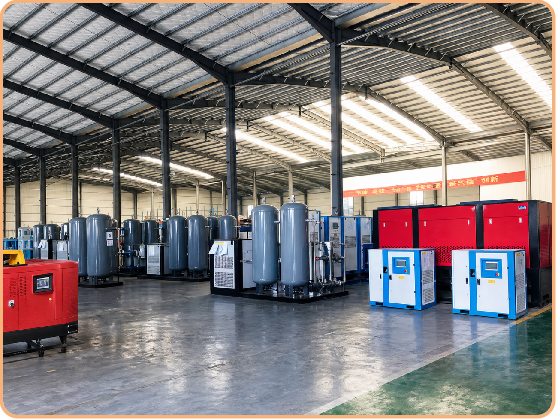
If you are evaluating a rotary screw air compressor against a real compressed-air requirement, UMW Air can supply a single unit as a sample, prepare a quotation based on your pressure, flow and package scope, or confirm which configuration — fixed, portable, split or integrated — fits your site.
Website: umwair.com | Email: info@umwair.com | Phone / WhatsApp: +86 15053148082 | Send a WhatsApp enquiry
Have Questions or Need More Details?
Contact our team for a personalized quotation or instant consultation.
Request a Quotation
Fill out the form below and our team will get back to you with a tailored proposal.
WhatsApp Direct Chat
Prefer to chat in real-time? Message us on WhatsApp for instant assistance & quick answers.
- Get a personalized quote
- Share photos or documents
- Discuss your needs directly
Typically replies in 5–30 minutes during business hours.