Inside a Professional Pet Grooming Setup: A Beginner's Guide to Equipment Categories
Inside a Professional Pet Grooming Setup: A Beginner's Guide to Equipment Categories
Professional pet grooming equipment is not one product category, and treating it as one is the most common sourcing mistake made by new salon owners and first-time distributors. In a working grooming business, every machine on the floor belongs to one of four functional groups: bathing equipment, drying equipment, grooming surfaces, and housing and mobility. Each group solves a different operational problem, is specified with different numbers, and fails in different ways.
This guide is written for people entering the category: salon owners planning a first build-out, distributors adding a grooming line, and buyers preparing an equipment list. It maps the four groups in terminology-first terms, explains which specifications actually matter inside each one, and shows how the groups connect into a single workflow.
The four equipment categories at a glance
- Bathing — pet spa bathtubs, dog bathtubs and stainless steel self-service pet washing machines: where the animal gets wet, washed and rinsed.
- Drying — pet dryers and pet dryer boxes (drying cabinets): where water is removed from the coat under controlled air and heat.
- Grooming surfaces — pneumatic, hydraulic and electric lift grooming tables, plus foldable, LED tabletop and drawer models: where the groomer works.
- Housing and mobility — boarding cages, grooming show cages and cage trolleys: where animals rest, wait and move between stations.
Why Pet Grooming Equipment Is Hard to Buy as a Single Category
B2B catalogs and marketplaces frequently present pet grooming equipment as one long product scroll. A buyer then ends up comparing an acrylic spa bathtub, a stand dryer and a boarding cage using the same three criteria: price, size and appearance. That comparison cannot produce a sound decision, because the three items are not alternatives to one another — they are sequential stages of the same process.
The practical consequences of category confusion usually show up in four places:
- Over-specification in one group and under-specification in another. Money is absorbed by a large bathing unit while the drying station remains a bottleneck.
- Requests for quotation that mix categories. Suppliers cannot price or schedule a mixed list accurately, and buyers cannot compare the replies.
- Workflow blind spots. A facility can own excellent bathing and drying equipment and still lose time because there is no surface to work on or no cage to hold animals in between.
- Maintenance surprises. Different categories fail for different reasons — pumps and heaters, motors and heating elements, lifting mechanisms, cage coatings and hinges.
The problem is definitional before it is commercial. Once each machine is assigned to a category, and each category is assigned its own evaluation criteria, the sourcing conversation becomes manageable.
Where the Pet Grooming Equipment Market Stands in 2026
Published market research gives useful direction for planning, even though it should not be treated as a procurement budget line. Grand View Research values the global pet grooming products market at USD 15.6 billion in 2025 and projects it to reach USD 24.8 billion by 2033. Fortune Business Insights reports that North America held the largest share of the pet grooming and accessories market in 2025, at 40.91 percent. Within the equipment side specifically, Dataintelo projects the self-service dog wash station market to grow at a CAGR of 8.7 percent from 2025 to 2033, reaching an estimated USD 1,832.6 million.
One caution is worth stating plainly: published estimates for this category diverge widely depending on scope. Some figures count grooming products only, others fold in accessories and services. That divergence makes the direction of growth reliable and the specific dollar figure less so.
The brand landscape is also easy to misread. Market Research Future lists major global names such as PetSmart, Petco, Wahl Clipper Corp and Groomer's Choice — these are largely retail, service and small-tool brands. The heavy equipment layer (tubs, drying cabinets, lift tables, cages) is usually supplied by separate manufacturers, which is precisely why category knowledge matters when sourcing.
Category 1 — Bathing: SPA Bathtubs, Dog Bathtubs and Self-Service Machines
Bathing equipment is defined by water volume, temperature control and rinsing power. Three distinct sub-types exist in the professional range, and they serve different business models rather than different quality levels.
Acrylic SPA bathtubs (UPMB-MG)
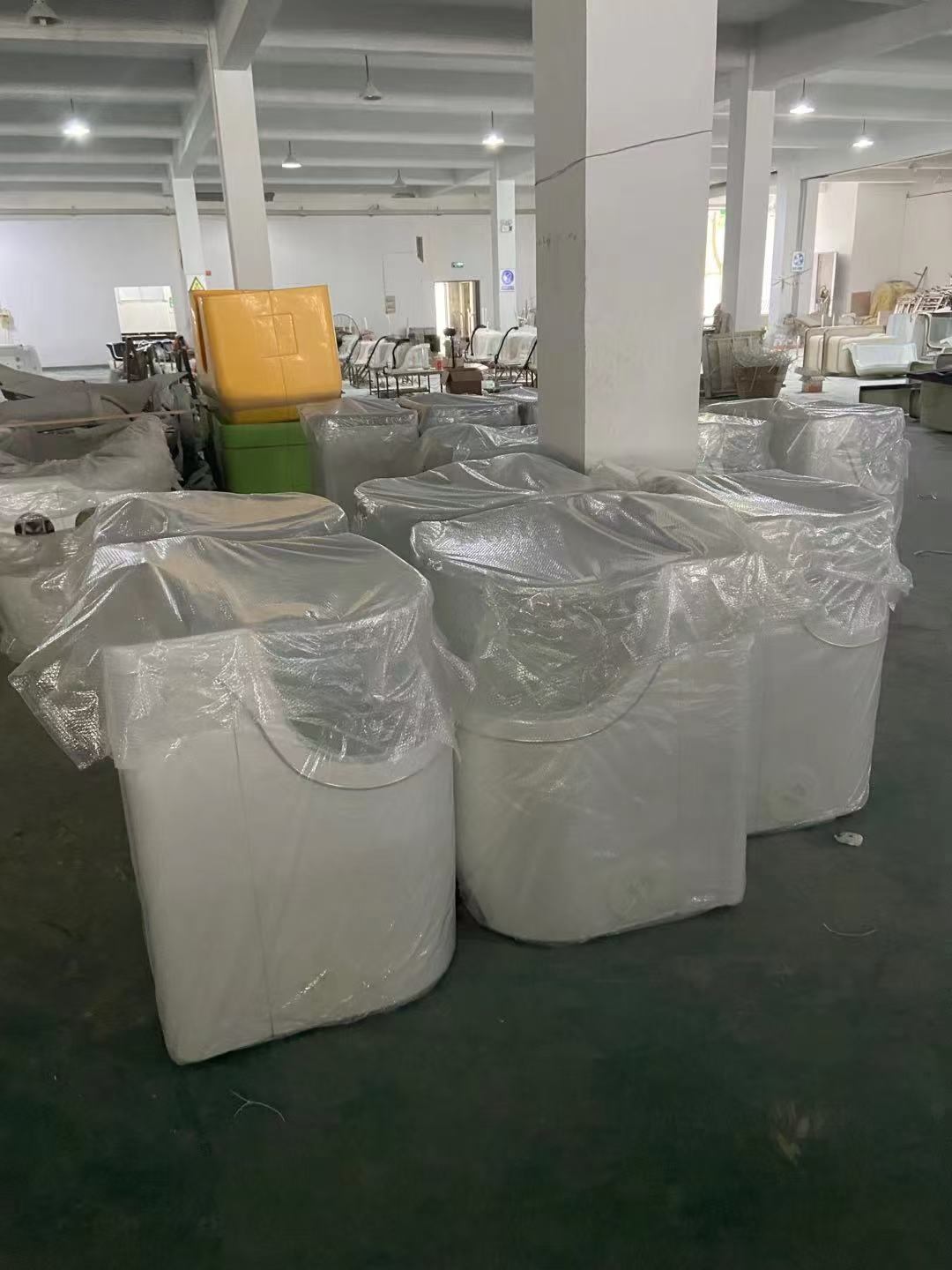
The acrylic SPA bathtub is the grooming-salon type. The UPMB-MG series is available in sizes from 60*60 to 120*80*95 cm, which allows a facility to match tub footprint to available floor space. Configuration options include ozone, a touch control panel, nano milk bath, surf massage, and air bubble with lights. In practice, the optional functions define the service tier: massage and bubble features support premium SPA treatments, while a plain configuration is sufficient for straightforward wash-and-rinse work.
Dog bathtubs with reinforced acrylic and stainless-steel frame (UP-DPbathe)
The UP-DPbathe dog bathtub line uses a reinforced acrylic body with a stainless-steel frame and spans models from 80*55*95 cm to 160*80*95 cm. Water capacity runs from 90 to 320 L, which is the number that should be matched to the largest dog the business intends to serve. The line is fitted with an 800 W surf pump, a 2 kW thermostatic heater holding 20 to 42 °C at ±1 °C, and a 200 mg/h ozone generator. The heater range and tolerance matter for two reasons: they determine whether medicated or conditioning baths can be held at a stable temperature, and they set the upper limit for comfort on long-coated animals.
Material choice is a parallel decision. Premium pet grooming tubs typically use 14-gauge to 16-gauge Type 304 stainless steel for corrosion resistance and durability, according to PetEdge guidance on grooming tubs — a useful reference point when comparing a stainless unit against a framed acrylic one.
Self-service pet washing machine (UP-Self)
The UP-Self stainless steel self-service pet washing machine is a different business model entirely. It is built for unattended 24/7 wash-and-dry operation, with a 21.5-inch touchscreen driving the customer interface and a 32-inch ad display that can be used for retail messaging. Buyers evaluating this sub-type are effectively evaluating throughput per hour and unattended reliability, not groomer ergonomics.
Category 2 — Drying: Standalone Dryers and Dryer Boxes
Drying equipment divides into two families that are often confused: the pet dryer (a directed-air blower or stand dryer operated by hand) and the pet dryer box or drying cabinet (an enclosed unit that dries the animal without continuous handling).
The distinction is operational. A handheld pet dryer gives a groomer direct control over coat direction and finishing, and it is the standard choice for face, feet and detail work. A dog dryer box or large dog drying cabinet releases the groomer to work on another animal during the drying cycle, which is why higher-volume salons often run both. Enclosed drying also changes the risk profile, because heat and the animal are contained.
Compliance follows from that. Electric heating tools used in pet grooming, such as dryers, must comply with the IEC 60335-2-45:2024 safety standard for portable heating tools published by the International Electrotechnical Commission. Within the enclosure, moisture and heat are present together, so waterproof and insulated construction, over-current protection, leakage protection and a grounded power supply are the controls that address electrical hazards.
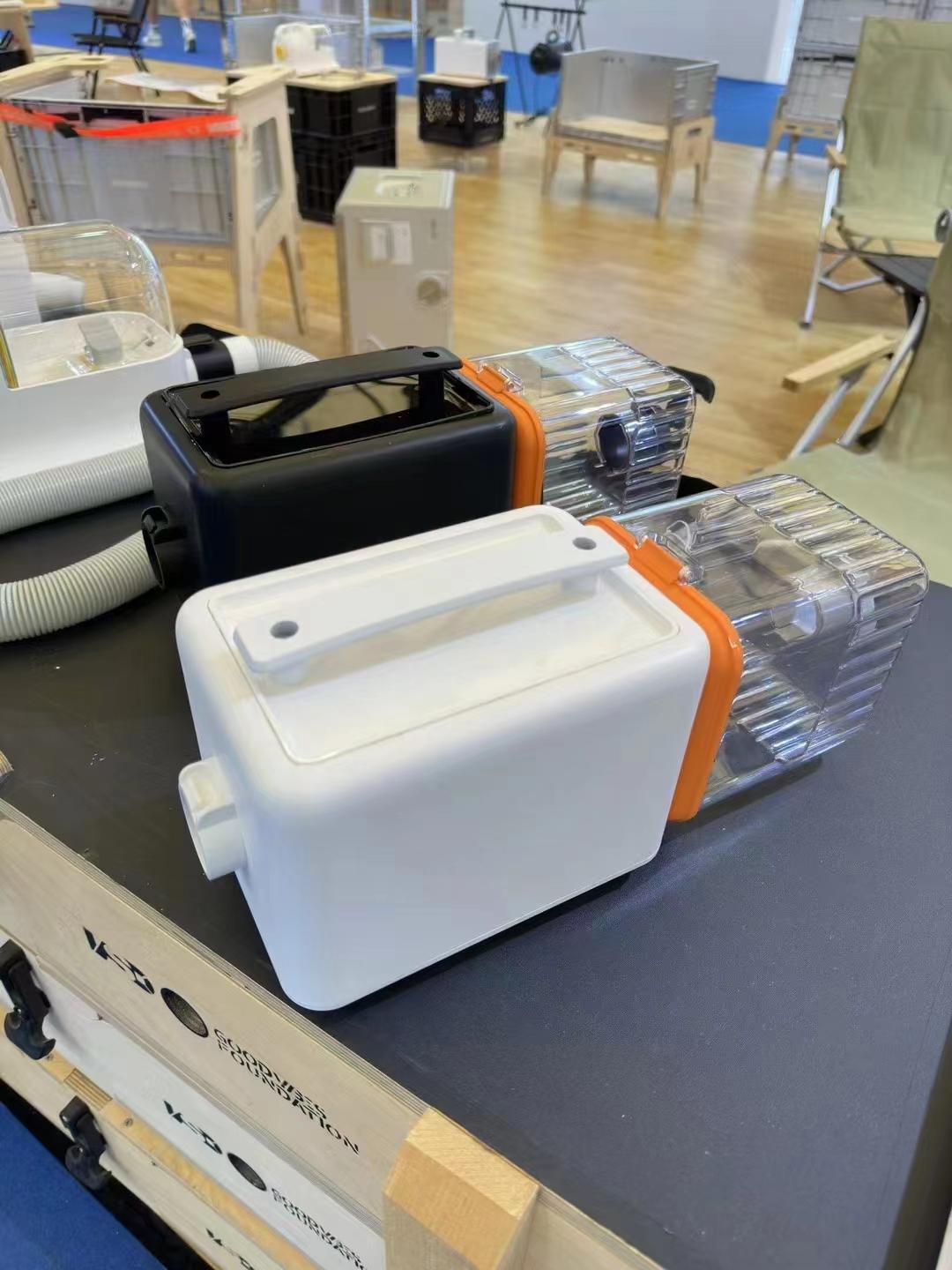
Noise is the second design variable. Grooming environments contain animals that are already stressed, and drying is the loudest stage of the process. Low-noise motor design, sound insulation structures and noise-reduction airflow systems are the standard engineering responses, and noise level specifications belong on the buyer's comparison sheet alongside airflow and wattage.
Category 3 — Grooming Surfaces: Lift Tables and Worktops
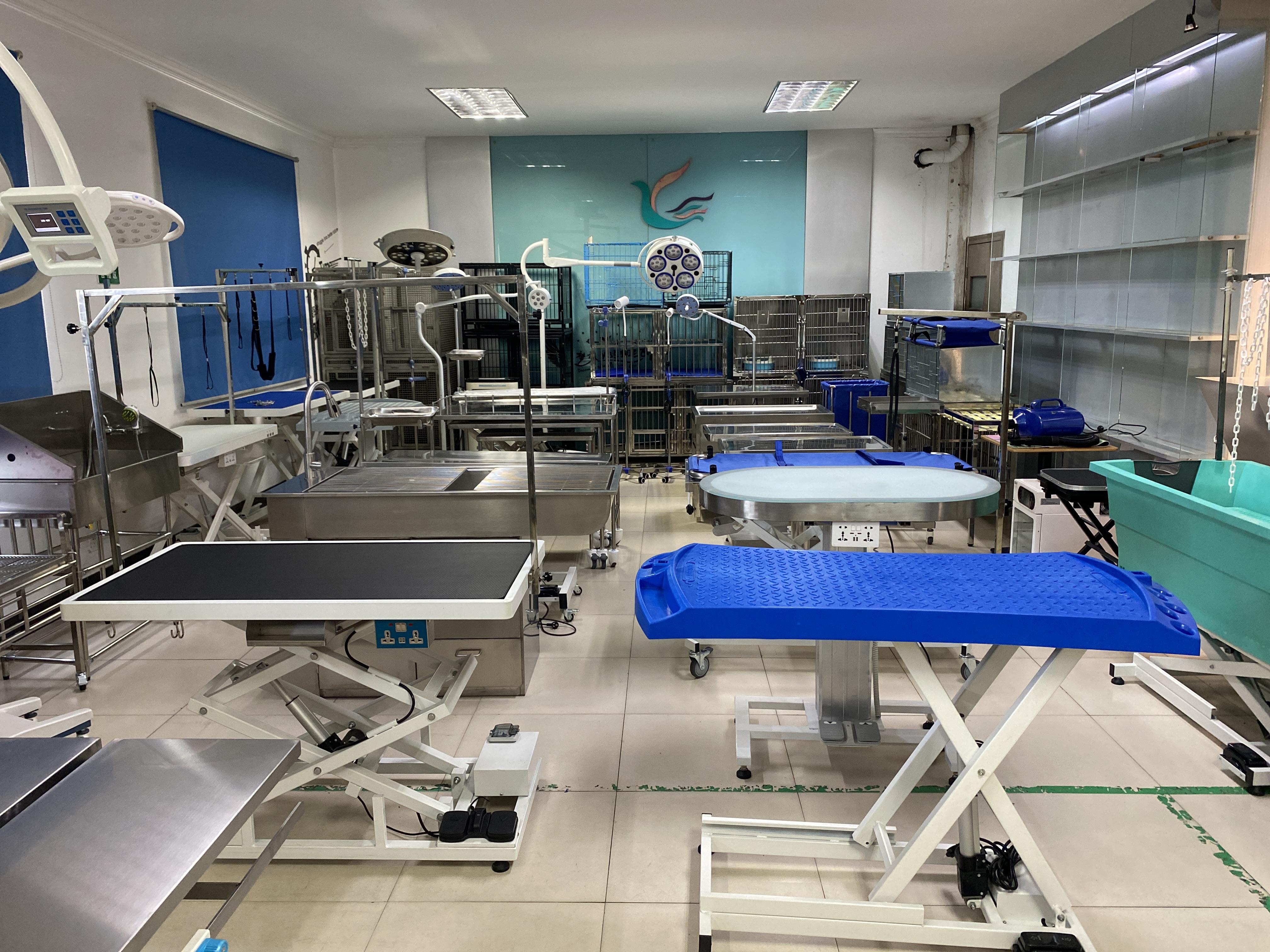
The grooming surface is where the groomer spends most of the working day, which makes it the category with the largest effect on operator fatigue. It is also the category with the widest internal variety: pneumatic, hydraulic and electric lift grooming tables, plus foldable, LED tabletop and drawer models.
The lifting mechanism is the primary selection criterion. Pneumatic tables use air-assisted height adjustment, hydraulic tables use fluid pressure for smooth and stable lifting, and electric pet grooming tables raise and lower at the push of a control. The choice depends on how much height adjustment happens per day and whether the operator wants a hands-free raise while restraining an animal. Secondary criteria include the tabletop surface, the presence of an LED workspace light, built-in drawer storage for tools, and whether the table folds for storage or mobile use.
Supervision requirements connect directly to table and tub use. In the United States, professional dog grooming equipment such as tubs and tables must be used within safety protocols ensuring that no pet is left unsupervised within arm's reach, as set out in the American Kennel Club National Core Professional Dog Grooming Educational Standards. A lift table or a tall-sided tub that prevents the operator from maintaining that proximity is a compliance problem, not just an ergonomic one.
Category 4 — Housing and Mobility: Boarding Cages, Show Cages and Trolleys
Housing is the category new buyers most often defer, and it is the one that decides whether the rest of the investment can be used at full capacity. Boarding cages hold animals before and after their appointment; grooming show cages and cage trolleys move animals between stations or support mobile and show-floor work.
Selection criteria here are simpler than in bathing or drying but no less consequential: internal dimensions for the largest animal accepted, ventilation, door latch security, ease of cleaning and disinfection, and whether the unit needs to be mobile. A pet grooming cage trolley or show trolley converts a static cage into a movable one, which matters for mobile groomers and for show environments where the setup changes daily.
Hygiene is the risk that ties this category to the bathing category. Cross-contamination between animals is a documented equipment risk, and the accepted controls are built-in disinfection functions, one-pet-one-disinfection protocols, and materials that can be cleaned and sterilized easily. Medical-grade stainless steel construction, built-in ozone or UV disinfection on selected models, and regular hygiene maintenance instructions are the practical measures that reduce that risk.
How the Four Categories Fit Into One Workflow
The categories are not a shopping list; they are a sequence. An animal enters, is housed, is bathed, is dried, is groomed on a surface, is housed again, and leaves. A weak link in any stage caps the capacity of the whole facility, no matter how much is spent on the others.
USMILE PET, a pet grooming equipment manufacturer established in 2018 in Dalian, China, publishes comparison data positioning its equipment against conventional or standard pet grooming equipment. The recorded differences are a slightly higher initial cost against lower long-term maintenance cost and a higher return on investment, an expected service life up to two times longer than comparable conventional equipment, noise levels 10 to 15 dB lower, drying speeds 30 to 50 percent faster, and 99.9 percent disinfection efficiency. These are manufacturer-side comparison figures rather than independent laboratory results, and buyers should read them as positioning data to verify against their own operating conditions.
| Comparison point | Conventional / standard equipment | USMILE PET positioning |
|---|---|---|
| Initial cost | Lower | Slightly higher |
| Long-term maintenance cost | Higher | Lower; higher return on investment |
| Expected service life | Baseline | Up to 2x longer |
| Noise level | Baseline | 10 to 15 dB lower |
| Drying speed | Baseline | 30 to 50 percent faster |
| Disinfection efficiency | Baseline | 99.9 percent sterilization |
| Design focus | Basic dryers, non-sterilized tubs, fixed tables | Premium quality, multi-functional design, built-in safety features, pet-friendly low-stress experience |
Step-by-Step: Mapping Equipment Categories to Your Facility
- Define the services you will actually sell. Wash-and-dry only, full grooming, SPA treatments or unattended self-service each point to a different mix of bathing equipment.
- Count concurrent animals, not daily animals. How many dogs are wet, drying or on a table at the same moment determines how many units per category are needed.
- Size the bathing units against your largest animal. Match tub model range and water capacity — for example the 90 to 320 L range across the UP-DPbathe line — and confirm the heater window, such as 20 to 42 °C at ±1 °C, if temperature-stable treatments are part of the service.
- Choose the drying architecture. Decide between directed-air pet dryers and enclosed pet dryer boxes, or both, and require noise data and compliance with IEC 60335-2-45:2024 for heated units.
- Select the grooming surface by lifting mechanism. Pneumatic, hydraulic or electric lift, plus foldable, LED tabletop or drawer configurations, matched to operator height and daily adjustment frequency.
- Plan housing and hygiene last but not least. Confirm cage dimensions, mobility through show cages or trolleys, and a one-pet-one-disinfection protocol across bathing and housing.
Three Facility Profiles and What Each One Needs
A new neighborhood salon with one or two groomers. The binding constraint is usually drying time, not bathing. One correctly sized dog bathtub plus a dryer box that runs unattended during a second appointment typically produces more daily capacity than a larger tub with handheld drying only.
A retail store adding a self-service wash station. The UP-Self stainless steel self-service pet washing machine is designed for unattended 24/7 wash-and-dry, with a 21.5-inch touchscreen and a 32-inch ad display. The decision criteria shift to unattended reliability, cleaning between users, and whether the ad display earns its place in the store layout.
A mobile or show-floor groomer. Portability outranks capacity. Foldable grooming tables, grooming show cages and pet grooming cage trolleys let the same equipment serve different locations without a fixed installation.
Equipment Category Comparison Table
| Category | Core function | Specifications buyers should verify | Primary risk to control |
|---|---|---|---|
| Bathing | Washing and rinsing the animal | Tub dimensions (e.g. 60*60 to 120*80*95 cm; 80*55*95 cm to 160*80*95 cm), water capacity (90 to 320 L), pump wattage (800 W), heater range (2 kW; 20 to 42 °C ±1 °C), ozone output (200 mg/h) | Cross-contamination between animals; hygiene and disinfection protocol |
| Drying | Removing water from the coat under controlled air and heat | Open blower or enclosed cabinet type, heat control, airflow, noise specification, IEC 60335-2-45:2024 compliance | Noise stress and electrical hazards in a wet, heated environment |
| Grooming surfaces | Providing a stable, adjustable working height | Lifting mechanism (pneumatic, hydraulic, electric), foldable or fixed, LED tabletop, drawer storage | Supervision proximity and operator fatigue |
| Housing and mobility | Holding, resting and moving animals between stations | Internal cage dimensions, ventilation, latch security, cleanability, trolley mobility | Cross-contamination and handling stress |
FAQ: Pet Grooming Equipment Categories for New Buyers
Which safety and compliance standards apply to professional pet grooming equipment?
Dryers and heated drying cabinets used in pet grooming are portable heating tools and fall under the IEC 60335-2-45:2024 safety standard published by the International Electrotechnical Commission. In the United States, the American Kennel Club National Core Professional Dog Grooming Educational Standards require that no pet is left unsupervised and that the groomer remains within arm's reach of the animal at all times. On the equipment side, the controls that address electrical risk are waterproof and insulated construction, over-current protection, leakage protection and a grounded power supply.
What bathing equipment options exist for a professional grooming setup?
Professional bathing equipment generally falls into three types. Acrylic SPA bathtubs, such as the UPMB-MG series, are available in sizes from 60*60 to 120*80*95 cm with optional ozone, touch control panel, nano milk bath, surf massage and air bubble with lights. The UP-DPbathe dog bathtub line uses reinforced acrylic with a stainless-steel frame and covers 80*55*95 cm to 160*80*95 cm models with 90 to 320 L water capacity, an 800 W surf pump, a 2 kW thermostatic heater holding 20 to 42 °C at ±1 °C, and a 200 mg/h ozone generator. The UP-Self stainless steel self-service pet washing machine is built for unattended 24/7 wash-and-dry operation with a 21.5-inch touchscreen and a 32-inch ad display.
Is premium pet grooming equipment worth the higher initial cost?
USMILE PET comparison data indicates that premium equipment carries a slightly higher initial cost but lower long-term maintenance cost and a higher return on investment. The same comparison records an expected service life up to two times longer than comparable conventional equipment, noise levels 10 to 15 dB lower, drying speeds 30 to 50 percent faster, and 99.9 percent disinfection efficiency. These are manufacturer-side comparison figures rather than independent test results, so buyers should validate them against their own operating data before committing budget.
How should a new buyer validate equipment before placing a full order?
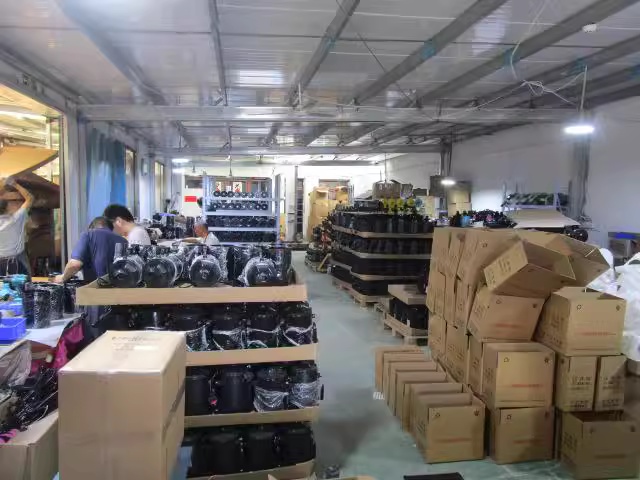
Start with specification review per category: water capacity and heater range for a bathtub, pump wattage, heat control and noise data for a dryer, lifting mechanism for a grooming table, and cage dimensions for housing. Then confirm certification documentation — USMILE PET states that its products hold CE, FDA, UL and ISO certifications — and check manufacturer capacity and support depth. USMILE PET operates a 12,000 m² factory with 180 employees, an annual output of 500,000 units and a 35-engineer R&D team. A product brochure is available for download below for buyers who want to compare configurations before requesting samples or a quotation.
What determines the lead time for a pet grooming equipment order?
Lead time is quoted per order and depends on the model mix, the level of customization and production scheduling. Manufacturer capacity sets the baseline: USMILE PET runs four production bases with a 12,000 m² facility and an annual output of 500,000 units, and exports about 95 percent of that output to the EU, the USA, Southeast Asia, the Middle East and Oceania. Delivery dates should always be confirmed together with the quotation, since standard and customized configurations are scheduled differently and the shipping destination affects total transit time.
Why Category Fluency Leads to Better Equipment Decisions
Understanding the four categories changes how a buyer behaves. Budget is allocated by function instead of by attraction; specification sheets are compared only between items that actually compete; and equipment is purchased in an order that matches how the business will operate on day one. A beginner who knows that a pet dryer box and a pet dryer solve different problems, that a hydraulic grooming table and a foldable table serve different facilities, and that a boarding cage is a capacity decision rather than an accessory, will avoid the two most expensive outcomes in this category: buying twice, and building a facility that bottlenecks at its second station.
Next step: compare categories with full specifications
Download the USMILE PET product brochure, or contact the team directly with your facility type, animal size range and target daily volume to receive configuration and quotation options.
- Brochure (PDF): USMILE PET Pet Grooming Equipment Catalog
- Website: www.usmilepet.net
- Email: bonnie@usmilepet.com
- Tel / WhatsApp: +86 18340808278
- Address: Building B, Shanhe Zhigu Industrial Park, Dalian, LiaoNing, China