BMS-FA vs BMS-YA Video Laryngoscope: 304 Stainless Steel or PC Blade?
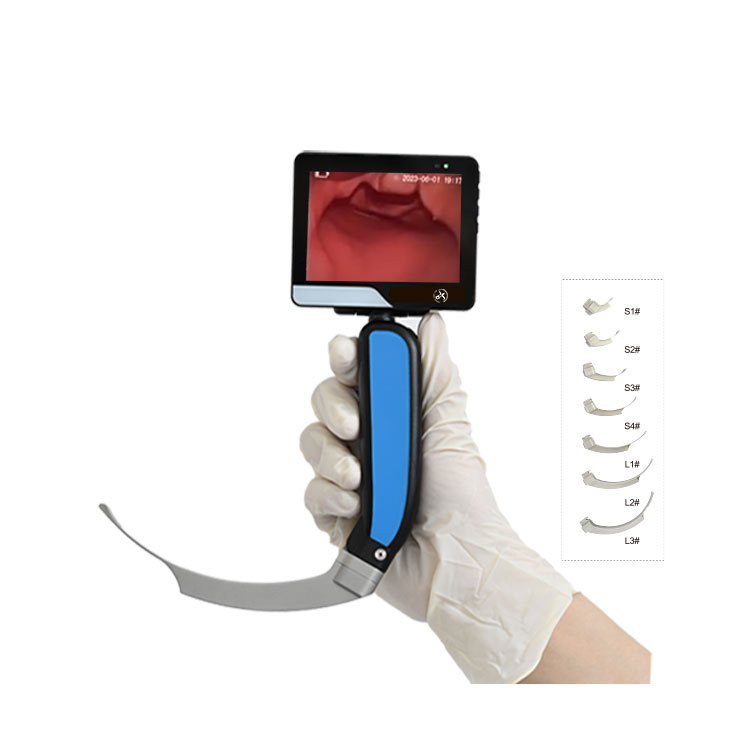
The BMS-FA and the BMS-YA are two video laryngoscopes built by Jiangsu Unicorn Electronic Technology Co., Ltd. on the same imaging and power platform. Both are specified at a resolution of ≥ 3.72 lp/mm, a field of view of ≥ 60°, an observation depth of field of 20–100 mm, a DC 3.7 V power supply and a battery capacity of 3400 mAh or above. Both use an aluminium alloy handle. Both are listed for anesthesiology and respiratory medicine.
The only headline difference between them is the blade: BMS-FA uses a 304 stainless steel blade, and BMS-YA uses a PC plastic blade. This article is written for evaluation-stage buyers — anesthesiology and ICU procurement teams, distributors and hospital groups — who have to decide between the two models and want the decision to rest on blade material, certification alignment and clinical workflow rather than on a single line of a specification sheet.
Short answer: the BMS-FA and BMS-YA do not differ in imaging specification, power supply, handle material or designated clinical field. They differ in blade substrate (304 stainless steel versus PC plastic). The choice should therefore be made on three evaluation questions: which blade substrate fits the department's airway workflow and service-life plan, which certification document and referenced regulation the regulatory team accepts, and how the platform performs in the buyer's own clinical setting during a sample evaluation.
The Evaluation Problem: Two Models, One Spec Sheet
The reason this comparison stalls is that the specification sheet does almost nothing to separate the two products. Read side by side, the BMS-FA and BMS-YA match on resolution, field of view, depth of field, power supply voltage, battery capacity, handle material and applicable clinical field. Buyers who evaluate video laryngoscopes purely on listed parameters end up with a tie, and the tie is usually broken on the wrong criterion — unit price or a subjective impression of the blade in a photograph.
The genuine evaluation problem has four parts:
- Use profile. A department that intubates routinely in a controlled operating room and a department that intubates in an emergency or difficult-airway setting place different demands on a rigid blade platform. The device is the same platform; the workload is not.
- Blade material strategy. A 304 stainless steel blade and a PC plastic blade are different substrates with different handling characteristics. The buyer has to decide how much that substrate difference matters in their own workflow, and how it fits their blade replacement and reprocessing policy.
- Certification alignment. Both models are covered by the same quality management system certificate and the same CE notification certificate, and the buyer's regulatory team still has to confirm that the referenced regulation, class and scope on those documents match the pathway their market requires.
- Life-of-device cost, not unit cost. Reusable video laryngoscope platforms are capital items used over years, so the commercial case is built on service life, blade management, training and after-sales, not on the invoice alone.
Framed this way, the BMS-FA versus BMS-YA question stops being a data-sheet question and becomes a workflow and compliance question — which is exactly how it should be evaluated at the Evaluation stage of a purchase.
Industry Background: Why Blade Material Became a Buying Question
Video laryngoscopy is a reusable-dominant category. Grand View Research estimated the global video laryngoscope market at USD 784.66 million in 2024 and projected it to reach USD 2.80 billion by 2033, with the reusable video laryngoscope segment holding the largest revenue share at 77.68% in 2024. The same source reports that rigid video laryngoscopes accounted for a 60.42% revenue share in 2024, and that North America held 37.77% of market revenue.
Market sizing for this category depends heavily on scope. Future Market Insights valued the total laryngoscopes market — including direct laryngoscopes, not only video systems — at USD 508.5 million in 2024, with a forecast compound annual growth rate of 7.2% through 2034. The two figures describe different product boundaries, and buyers comparing market reports should read the inclusion criteria before drawing conclusions from the numbers.
Competitive structure is relevant for the same reason. Published listings of the category name Verathon, Medtronic, Ambu A/S, KARL STORZ and Tuoren Group among key global players in the video laryngoscope market. For a buyer, that list is context rather than a shortlist: the practical differentiation in this category sits in blade platforms, configuration depth, certification documentation and supply reliability.
Regulatory expectations have also tightened. Medical devices such as video laryngoscopes must comply with EU MDR 2017/745, and typically require ISO 13485 certification for the quality management system, as summarised by Emergo by UL. That is why the visible material differences between two otherwise identical devices — such as a 304 stainless steel blade versus a PC plastic blade — now sit alongside documentation questions in the same buying decision.
The Two Models in Detail: What Unicorn Builds and What Each Model Is
Jiangsu Unicorn Electronic Technology Co., Ltd. — trading as Unicorn Technology — is a National High-tech Enterprise founded in 2020 that integrates design, R&D, manufacturing and international trade of medical visualisation devices. Its product range covers endoscopy systems, disposable ureteroscopes, visual flexible laryngoscopes, bronchoscopy workstations, medical image processors and video laryngoscopes, used in ICU, anesthesiology, respiratory medicine, urology, emergency care and medical education. The company holds FSC and CE certification together with ISO 9001 and ISO 13485 quality management system certifications, exports a majority of its output, and operates seven regional offices.
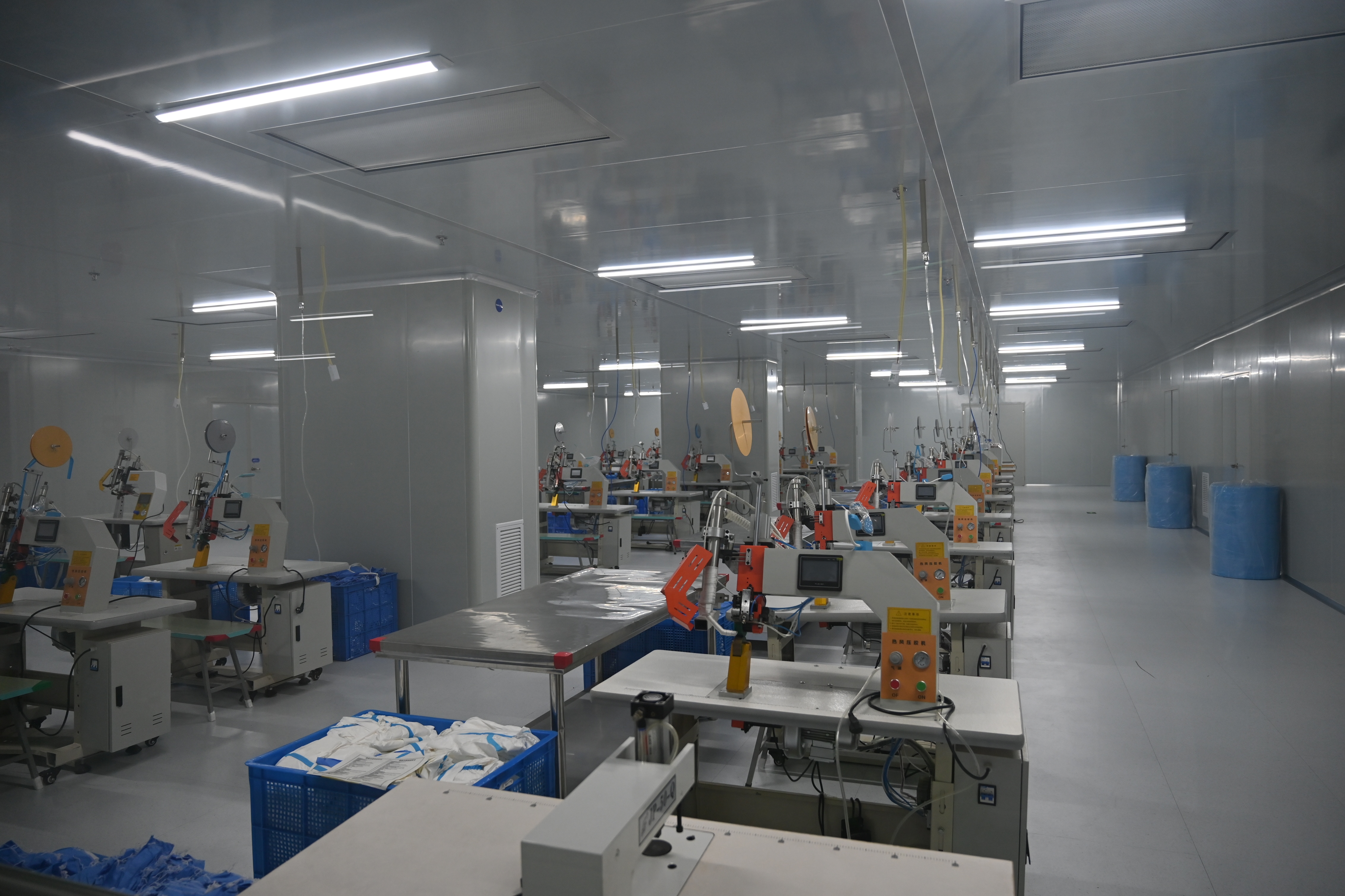
Manufacturing capacity behind these two models is measurable: workshops of more than 40,000 m², including 3D printing for new materials, CNC precision manufacturing, medical-grade material injection moulding, sterile production environments at Class 100 and Class 1000, and BSL-1 and BSL-2 R&D centres, with equipment investment exceeding RMB 160 million. Unicorn employs 50–100 people, including a 20+ engineer R&D team, and reports an annual output of 12,000 units with roughly 70% of output exported.
The shared platform: BMS-FA and BMS-YA specifications
Both the BMS-FA and the BMS-YA are video laryngoscopes intended for anesthesiology and respiratory medicine. They share the same imaging and electrical specification: resolution ≥ 3.72 lp/mm, field of view ≥ 60°, observation depth of field of 20–100 mm, power supply voltage DC 3.7 V, and battery capacity of 3400 mAh or above. Both use an aluminium alloy handle. In clinical use, this shared platform is what allows a department to standardise on one imaging experience while choosing between two blade substrates.
For buyers who also need a flexible platform rather than a rigid blade, the same catalogue includes the BMR video flexible laryngoscope, specified at 23.51 LP/mm resolution, a field of view of > 80°, a depth of field of 5 mm–100 mm, luminance of > 800 Lux, and a TPU/PPSU construction. The BMR is a different instrument class and is not a substitute for either rigid model, but it is relevant when a purchasing group is consolidating airway equipment across departments.
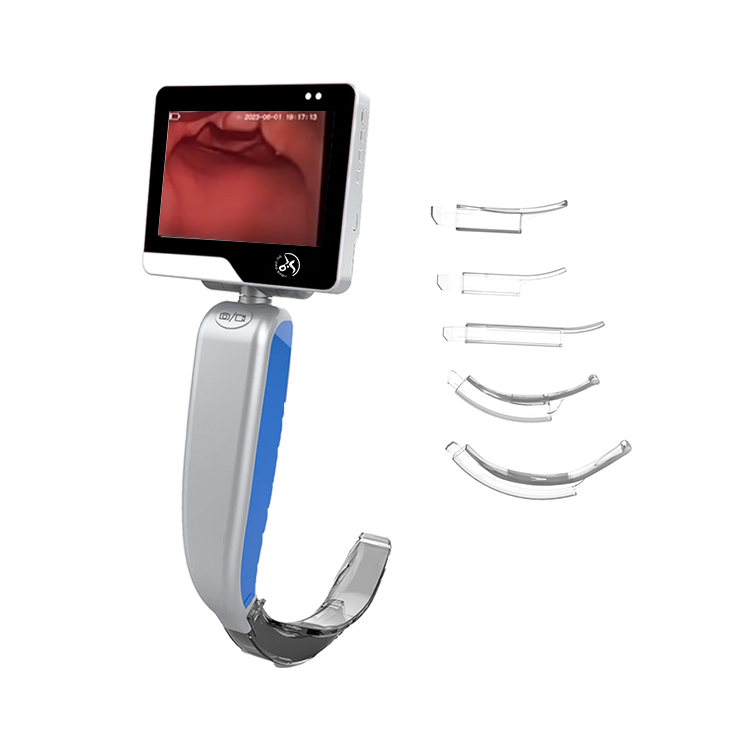
Blade substrate: what 304 stainless steel and PC plastic mean in evaluation terms
A 304 stainless steel blade is a metal substrate in the austenitic stainless steel family, a grade widely used for reusable surgical and dental instruments because it combines corrosion resistance with mechanical strength. A PC (polycarbonate) blade is an engineering thermoplastic substrate, a material family generally selected where a lighter, non-metallic component is preferred and where the device is engineered around that material behaviour.
Those material families lead to different evaluation questions, not to a universal winner:
- Rigidity and handling. Buyers who want a metal blade substrate in the intubation workflow have a direct reason to select the BMS-FA; buyers whose workflow or blade-management policy is built around a plastic substrate have a direct reason to select the BMS-YA.
- Standardisation. If a department already runs other video laryngoscopes with a particular blade substrate, matching that substrate reduces training and stock complexity. Both Unicorn models use the same aluminium alloy handle and the same imaging specification, so the substrate is the only variable being standardised.
- Documentation rather than assumption. Because the material differs, any reprocessing, blade replacement and service question should be confirmed against the manufacturer's documentation for the specific model rather than inferred from the material name.
- Validation. Since the optics are identical, the substrate decision cannot be resolved on paper. It should be confirmed in a sample evaluation, where the buyer can handle both blades in their own airway workflow.
Certification Alignment: Reading the Documents Behind Both Models
Certification alignment means matching the exact certificate to the exact model and to the exact regulation your market requires — not simply confirming that a supplier "has ISO 13485". Two documents are relevant here, and both list the BMS-FA, the BMS-YA and the BMR as applicable products.
ISO 13485:2016 quality management system certificate. Certificate number UKZB25MD30140R0S, issued by New Century Inspection & Certification Co., Ltd. (BCC), valid from 22 December 2025 to 21 December 2028. Its scope is the design, production and sales of video anesthesia laryngoscopes and anesthesia laryngoscopes, and its designated market coverage is global, with emphasis on EU and global medical device regulatory markets. This is the certificate that directly names the product category being purchased.
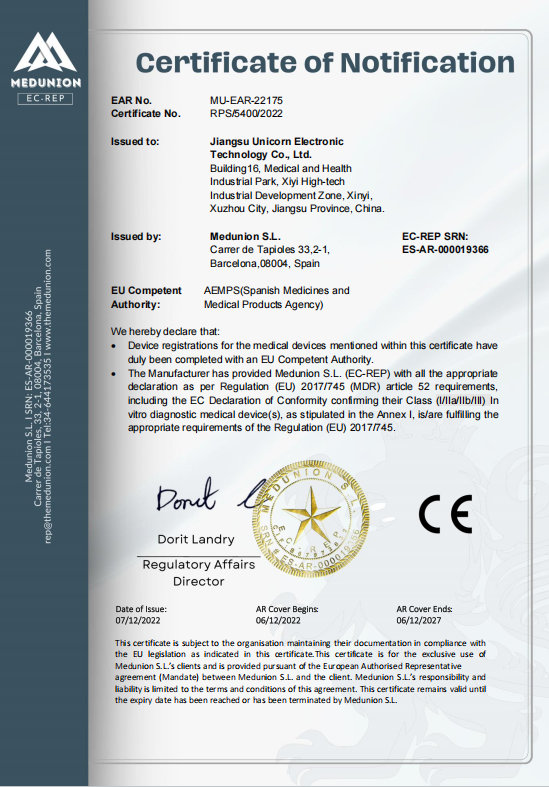
CE notification certificate. Certificate number RPS/5400/2022, issued through Medurion S.L., the EU authorised representative in Spain, valid from 7 December 2022 to 6 December 2027, for the EU market. The certificate is recorded under the title "CE Notification Certificate (Medical Device MDR)", and the standard referenced on it is EU Regulation (EU) 2017/746 (IVDR), with a stated scope covering in vitro diagnostic medical devices, Class A self-certified products. Unicorn's BMS-FA, BMS-YA and BMR are listed among its applicable products.
How to use this in evaluation. When two models are otherwise identical, the certification decision is not "which model has certification" — it is "does the referenced regulation, class and scope on the certificate match the pathway my market requires for this device, and is my model listed on it?" Because the referenced regulation on the CE notification certificate is EU 2017/746 (IVDR) while EU MDR 2017/745 is the framework that applies to medical devices in the EU, buyers should raise the question with the supplier and their own regulatory or quality team, and confirm the correct document for their registration route before purchase order stage.
Step-by-Step Breakdown: A Six-Step Evaluation Workflow
The following sequence is designed for a buyer comparing the BMS-FA and BMS-YA, and it can be reused when comparing either model against an alternative supplier.
Step 1 — Define the airway workflow and the departments to be covered
List the settings where the device will be used: operating room anesthesia, ICU, emergency department, difficult-airway management, rescue operations and teaching. Unicorn's deployment evidence covers hospital clinical anesthesia, emergency intubation, difficult airway treatment and rescue operations, and the platform highlights include HD real-time visualization, disposable blades, a portable battery design and a multi-language user interface — all of which affect how many departments one configuration can serve.
Step 2 — Choose the blade substrate on clinical criteria
Decide whether the department wants the 304 stainless steel blade (BMS-FA) or the PC plastic blade (BMS-YA). Because resolution (≥ 3.72 lp/mm), field of view (≥ 60°), depth of field (20–100 mm), power supply (DC 3.7 V) and battery capacity (3400 mAh or above) are identical, this step is genuinely about substrate, blade management and handling preference — not about image quality.
Step 3 — Verify certification alignment against your own market
Check the certificate number, issuing body, scope, referenced standard and validity dates, and confirm the specific model appears on the applicable-product list. Repeat the check for both models, since the evaluation may end with a split order across departments.
Step 4 — Match platform specification to department requirements
Confirm the platform matches the working environment: DC 3.7 V power supply, battery capacity of 3400 mAh or above for portable use, observation depth of field of 20–100 mm for the intended patient population, and a field of view of ≥ 60°. Confirm the aluminium alloy handle specification with the procurement team, since handle material is the same on both models and does not differentiate them.
Step 5 — Validate with a sample and confirm customisation
Put both models in front of the clinicians who will use them. Unicorn's minimum order quantity is 1 unit and every unit is 100% tested, so a single-unit evaluation is a practical route. If the project is an OEM/ODM assignment, agree the customisation scope at this stage; the standard scope covers the screen logo and the power on/off logo.
Step 6 — Plan volume, lead time and after-sales
Convert the clinical decision into a supply plan. Unicorn's production mode is OEM/ODM with a monthly capacity of 500 units, a lead time of 30–45 days, 100% testing and remote after-sales support, with exports to markets globally. Locking blade choice and customisation before scheduling avoids re-planning against that lead time.
Use Cases: Where Each Model Fits
Operating room anesthesia. Both models support routine intubation workflows in anesthesiology. The shared imaging platform means a department can choose the blade substrate that matches its existing instrument set rather than rebuilding its approach around the device.
ICU and respiratory medicine. Both models are listed for respiratory medicine as well as anesthesiology, and both carry a portable battery design with a capacity of 3400 mAh or above — relevant where the device is moved between bed spaces rather than fixed to a workstation.
Emergency intubation and difficult airway management. Unicorn's recorded deployment covers emergency intubation, difficult airway treatment and rescue operations. In these settings, buyers evaluating blade substrate tend to weigh handling preference and blade management more heavily, which is the point at which BMS-FA and BMS-YA diverge.
Teaching and medical education. The platform includes a multi-language user interface and supports complete operation video recording, which is directly useful in training environments where procedures are reviewed afterwards.
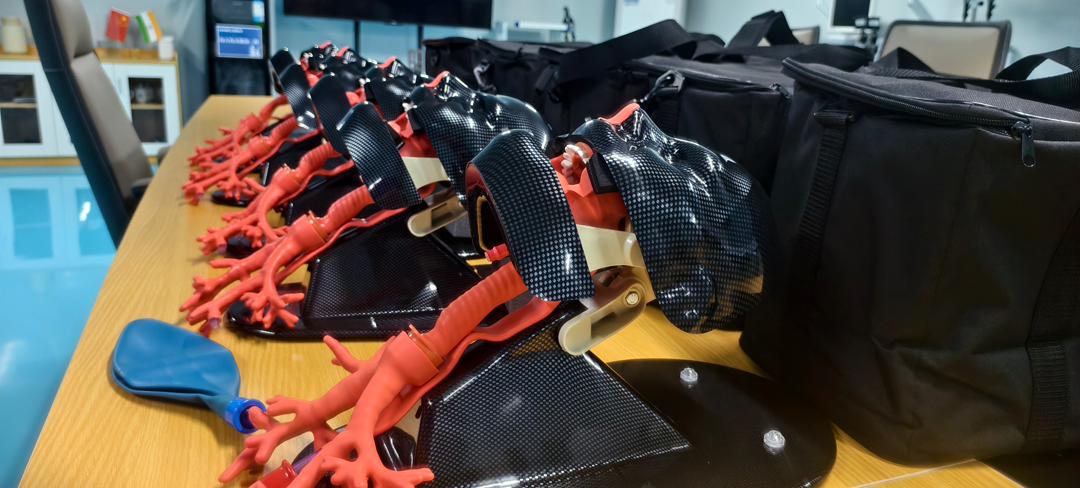
Deployment evidence for these use cases is documented rather than illustrative: Unicorn reports a project involving 20 units in use for 5 years with global deployment across multiple countries, covering medical institutions, medical device distributors and hospital groups. The reported results are a high intubation success rate, minimal airway tissue injury and complete operation video recording.
BMS-FA vs BMS-YA: Specification Comparison Table
| Parameter | Unicorn BMS-FA | Unicorn BMS-YA |
|---|---|---|
| Laryngoscope blade material | 304 stainless steel | PC plastic |
| Handle material | Aluminium alloy | Aluminium alloy |
| Resolution | ≥ 3.72 lp/mm | ≥ 3.72 lp/mm |
| Field of view | ≥ 60° | ≥ 60° |
| Observation depth of field | 20–100 mm | 20–100 mm |
| Power supply voltage | DC 3.7 V | DC 3.7 V |
| Battery capacity | 3400 mAh or above | 3400 mAh or above |
| Applicable industry | Anesthesiology, Respiratory Medicine | Anesthesiology, Respiratory Medicine |
| ISO 13485:2016 certificate coverage | Listed on certificate UKZB25MD30140R0S | Listed on certificate UKZB25MD30140R0S |
| CE notification certificate coverage | Listed on certificate RPS/5400/2022 | Listed on certificate RPS/5400/2022 |
| Primary decision trigger in evaluation | Buyer requires a 304 stainless steel blade substrate | Buyer requires a PC plastic blade substrate |
One structural point follows from the table: the models are not differentiated by imaging performance or certification coverage, so a comparison that ends there has not yet produced a decision. The differentiator is blade substrate, and the confirmation comes from clinical handling in a sample evaluation plus alignment of certification documents with the buyer's market.
Cost context for the evaluation (published figures, not model pricing)
| Reference point | Published indication | Source |
|---|---|---|
| Reusable video laryngoscope systems | USD 1,000 – 8,000 | Grand View Research, citing Medtronic |
| Traditional single-use laryngoscope | Approximately USD 18 | Grand View Research, citing Medtronic |
These bands describe the category, not the BMS-FA or BMS-YA, and model-specific pricing depends on configuration, customisation scope and order volume. The practical planning implication is that a reusable video laryngoscope is a multi-year capital item, so the evaluation should compare life-of-device value — including blade management, training and after-sales — rather than initial outlay alone.
Frequently Asked Questions
Are both the BMS-FA and the BMS-YA covered by ISO 13485 and CE documentation?
Yes. Both models are listed as applicable products on Unicorn's ISO 13485:2016 quality management system certificate UKZB25MD30140R0S, issued by New Century Inspection & Certification Co., Ltd. (BCC) and valid from 22 December 2025 to 21 December 2028, whose scope covers the design, production and sales of video anesthesia laryngoscopes and anesthesia laryngoscopes. Both models also appear on Unicorn's CE notification certificate RPS/5400/2022, held through Medurion S.L., the EU authorised representative in Spain, valid from 7 December 2022 to 6 December 2027, which references EU Regulation (EU) 2017/746 (IVDR) for Class A self-certified products. Buyers checking certification alignment should confirm that the referenced regulation, class and scope on the certificate match the registration pathway their own market requires.
What is the practical difference between the 304 stainless steel blade and the PC plastic blade?
The imaging and electrical platform is identical on both models: resolution ≥ 3.72 lp/mm, field of view ≥ 60°, observation depth of field of 20–100 mm, power supply voltage DC 3.7 V, and battery capacity of 3400 mAh or above. The difference is the blade substrate — the BMS-FA uses a 304 stainless steel blade and the BMS-YA uses a PC plastic blade — while both use an aluminium alloy handle and both are listed for anesthesiology and respiratory medicine. In evaluation terms, the decision comes down to which substrate fits the department's handling preference and blade-management policy, and that should be confirmed through a sample rather than decided from the specification sheet alone.
Who are the top laryngoscope manufacturers in China, and how should buyers verify them?
Published listings for the video laryngoscope category name Verathon, Medtronic, Ambu A/S, KARL STORZ and Tuoren Group among key global players, and Chinese suppliers should be assessed with the same verification process as any vendor: confirm the ISO 13485 certificate number, issuing body, scope and validity; confirm CE documentation together with the named EU authorised representative; confirm production capacity, lead time and OEM/ODM capability; and confirm that a sample can be evaluated before volume orders. Unicorn — Jiangsu Unicorn Electronic Technology Co., Ltd., founded in 2020 — publishes ISO 13485:2016 certificate UKZB25MD30140R0S and CE notification certificate RPS/5400/2022, and reports an annual output of 12,000 units, a monthly capacity of 500 units, a minimum order quantity of 1 unit and a lead time of 30–45 days, which gives buyers checkable reference points rather than a ranking claim.
Can the BMS-FA or the BMS-YA be evaluated as a sample before a volume order?
Unicorn's minimum order quantity is 1 unit, so either model can be evaluated as a single unit, and every unit is 100% tested. For OEM/ODM projects the standard customisation scope covers the screen logo and the power on/off logo, which is normally the stage at which branding and configuration are confirmed. A sample evaluation should test what the data sheet cannot: blade handling in your own airway workflow, image display in your own clinical setting, battery and portability in real use, and the on-screen language setup, since the platform includes a multi-language user interface.
What are the lead time, production capacity and after-sales arrangements?
Unicorn's standard lead time is 30–45 days, monthly capacity is 500 units, every unit is 100% tested, and after-sales support is provided remotely. Because lead time is planned against confirmed configurations on that line, buyers evaluating the BMS-FA and BMS-YA in parallel should lock the blade choice and customisation scope before the order is scheduled. To move from evaluation to a decision, you can download the Unicorn product catalogue, send a specification request through www.unicornendoscope.com, or arrange a sample or quotation directly on WhatsApp at +86 17512677733.
Conclusion: How to Decide Between the BMS-FA and the BMS-YA
The BMS-FA and the BMS-YA are the same video laryngoscope platform with two blade substrates. They match on resolution (≥ 3.72 lp/mm), field of view (≥ 60°), depth of field (20–100 mm), power supply (DC 3.7 V), battery capacity (3400 mAh or above), aluminium alloy handle, designated clinical field, and on the two certificates that cover them.
A defensible decision rule follows from that structure:
- Choose the BMS-FA if the evaluation criteria call for a 304 stainless steel blade substrate.
- Choose the BMS-YA if the evaluation criteria call for a PC plastic blade substrate.
- In either case, confirm that the certification documents your market accepts list the specific model, and reduce market, volume, customisation and lead-time risk with a single-unit sample evaluation before scheduling production.
Next Step: Sample, Quotation or Catalogue
Unicorn supplies the BMS-FA, BMS-YA and BMR laryngoscope platforms with a minimum order quantity of 1 unit, 100% testing, OEM/ODM customisation of the screen logo and power on/off logo, a monthly capacity of 500 units and a lead time of 30–45 days.

Jiangsu Unicorn Electronic Technology Co., Ltd.
Website: www.unicornendoscope.com | Blog: blog.unicornendoscope.com
Contact: Alice Gong | Email: gongting@unicornchina.top | WhatsApp: +86 17512677733
Request a sample or quotation on WhatsApp · Download the 2026 Product Catalogue (PDF)
Specification, certification and capacity statements in this article are drawn from Unicorn product documentation, the ISO 13485:2016 certificate UKZB25MD30140R0S, the CE notification certificate RPS/5400/2022, and company-reported deployment evidence. Market figures are attributed to Grand View Research, Future Market Insights and Emergo by UL where cited, and describe the category rather than the two models compared here.