
Video Laryngoscope 101: Resolution, Field of View, and Depth of Field Explained
Answer first: A video laryngoscope's clinical usefulness is shaped by four optical and power fundamentals: resolution, field of view (FOV), depth of field (DOF), and illuminance. Resolution determines how much fine detail the camera system can show; FOV determines how much of the airway can be seen at once; DOF defines the range of distances that remain acceptably sharp; and illuminance determines whether the view is bright enough to identify structures. Unicorn's BMS-FA, BMS-YA, and BMR models provide concrete specification examples for hospital buyers evaluating anesthesia, respiratory, ICU, and emergency airway projects.
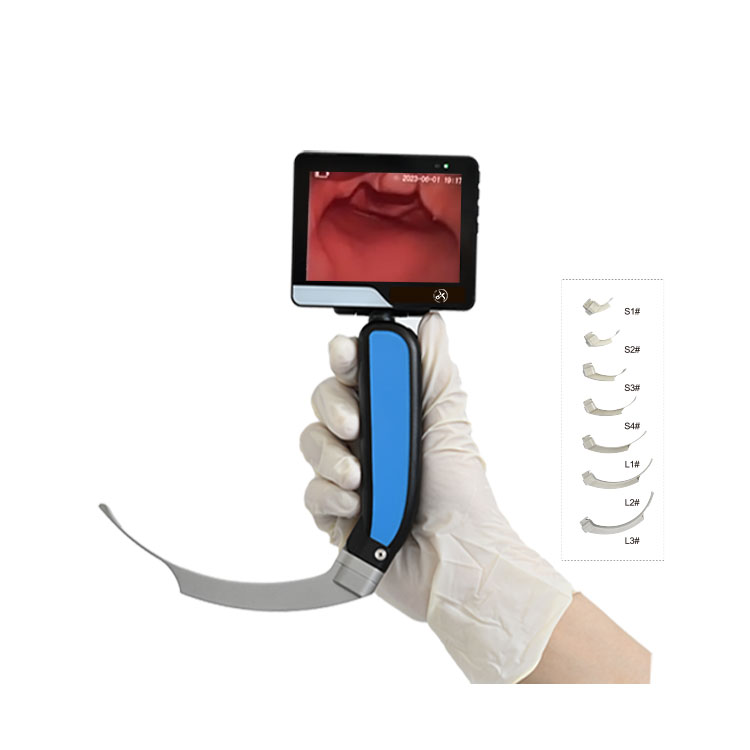
Cover image: Unicorn BMS-FA video laryngoscope, one of the specification examples used in this guide.
Problem Definition: Why Optical Specs Are Often Misread
Hospital buyers often compare video laryngoscopes by screen size, price, or brand recognition. That approach can miss the specifications that affect intubation view quality. A 3-inch screen, for example, does not automatically mean better airway visualization if the camera resolution, field of view, depth of field, or illumination is unsuitable for the clinical setting.
The practical problem is that optical terms are frequently mixed. Camera pixel resolution is not the same as optical resolution measured in line pairs per millimetre (lp/mm). A wide field of view is not useful if the depth of field is too narrow for the blade-to-airway distance. High brightness is not useful if the image is out of focus or if the blade material and handle design do not support the required workflow.
For example, a device with a wide FOV but shallow DOF may show more surrounding tissue but lose sharpness at the vocal cords. A device with a narrower FOV but a well-matched DOF may provide a more stable view for a specific procedure. For procurement teams, the goal is not to find the largest number on a catalogue page. The goal is to match the device to the clinical scenario, then verify the specification, material, certification, and supply terms behind that match.
Industry Background: Where Video Laryngoscopes Are Used
Video laryngoscopes are used in hospital operating rooms, emergency wards, and ICUs. Their clinical role is to provide real-time high-definition visual laryngeal exposure guidance and accurate endotracheal intubation assistance. This function helps reduce intubation failure rates and laryngeal tissue injury, and it supports difficult airway intubation. These applications are commonly found in respiratory and anesthesia departments.
The wider market context supports the clinical importance of airway visualization. The global video laryngoscope market size reached approximately USD 784.7 million in 2024, according to Grand View Research, and is projected to grow to USD 2,798.1 million by 2033 at a CAGR of 14.9%. Reusable laryngoscopes accounted for 65.8% of the usability segment in 2024, while single-use and reusable configurations both remain relevant in procurement planning.
Regulatory context also matters. Laryngoscopes for tracheal intubation are addressed by the international product standard ISO 7376, while medical device quality management systems are covered by ISO 13485:2016. In the European Union, medical devices placed on the market must comply with Regulation (EU) 2017/745 (MDR), and CE marking expresses conformity under the manufacturer's responsibility. For hospital buyers, these standards and regulations are not background reading; they are qualification checkpoints.
Procurement implication: Optical specifications should be read together with clinical scenario, materials, power supply, and quality-system evidence. A specification that looks strong in isolation may not fit a specific department's workflow.
Detailed Solution: Defining Resolution, Field of View, Depth of Field, and Illuminance
Resolution: Optical Detail and Camera Pixels
Resolution describes the ability of an imaging system to distinguish fine detail. In optical specifications, resolution can be expressed in line pairs per millimetre (lp/mm). A higher lp/mm value indicates that the optical system can resolve finer line pairs under the stated test conditions. This is different from camera pixel resolution, which describes the number of pixels in the captured image, such as 1600 x 1200. Both types of resolution matter, but they answer different questions.
Unicorn's BMS-FA and BMS-YA video laryngoscopes specify resolution of ≥3.72 lp/mm. The BMR video flexible laryngoscope specifies 23.51 LP/mm. These figures should be read with the intended clinical application in mind. A flexible laryngoscope may require different optical design priorities than a rigid video laryngoscope used for routine intubation.
Field of View: How Much of the Airway Is Visible
Field of view (FOV) is the angular extent of the scene that the camera can capture. A wider FOV allows more anatomical structures to be seen at once, which can help with orientation during laryngeal exposure. However, a very wide FOV can also include more surrounding tissue and may reduce the relative size of the target area on screen.
The BMS-FA and BMS-YA video laryngoscopes specify a field of view of ≥60°. The BMR video flexible laryngoscope specifies a field of view of >80°. These values help buyers compare how much of the airway the device can show in a single view, but FOV should be matched to the procedure and patient population rather than treated as a universal ranking metric.
Depth of Field: The Range That Stays in Focus
Depth of field (DOF) is the distance range over which the image remains acceptably sharp. In intubation, the camera does not stay at a fixed distance from the laryngeal structures. The blade tip, epiglottis, vocal cords, and surrounding tissue may sit at different distances from the camera. A useful DOF must cover the working distances expected in that clinical scenario.
Unicorn's BMS-FA and BMS-YA video laryngoscopes specify an observation depth of field of 20–100 mm. The BMR video flexible laryngoscope specifies a depth of field of 5–100 mm. The BMR range starts closer, which is consistent with a flexible laryngoscope's potential use in closer or more variable viewing positions. For hospital projects, the DOF should be compared against the intended procedure, not simply against the largest number.
Illuminance: Enough Light for the View
Illuminance is the amount of light reaching the target area, often expressed in lux. Adequate illumination helps the camera produce a usable image and helps clinicians identify tissue boundaries, secretions, and anatomical landmarks. The BMR video flexible laryngoscope specifies illuminance of >800 Lux. For models where illuminance is not listed in the available specification, buyers should request the relevant test data from the supplier rather than assume performance.
Materials and Power: The Supporting Specifications
Optical performance is supported by the device's materials and power design. The BMS-FA video laryngoscope uses an aluminium alloy handle and a 304 stainless steel laryngoscope blade. The BMS-YA video laryngoscope uses an aluminium alloy handle and a PC plastic laryngoscope blade. The BMR video flexible laryngoscope uses TPU/PPSU materials.
Power supply voltage for BMS-FA and BMS-YA is DC 3.7 V, with battery capacity of 3400 mAh or above. Battery capacity and voltage affect portable, battery-powered use, which matters in emergency wards, ICUs, and pre-hospital first aid vehicle scenarios. A higher-capacity battery can support longer use between charges, but the actual runtime depends on device design and use pattern.
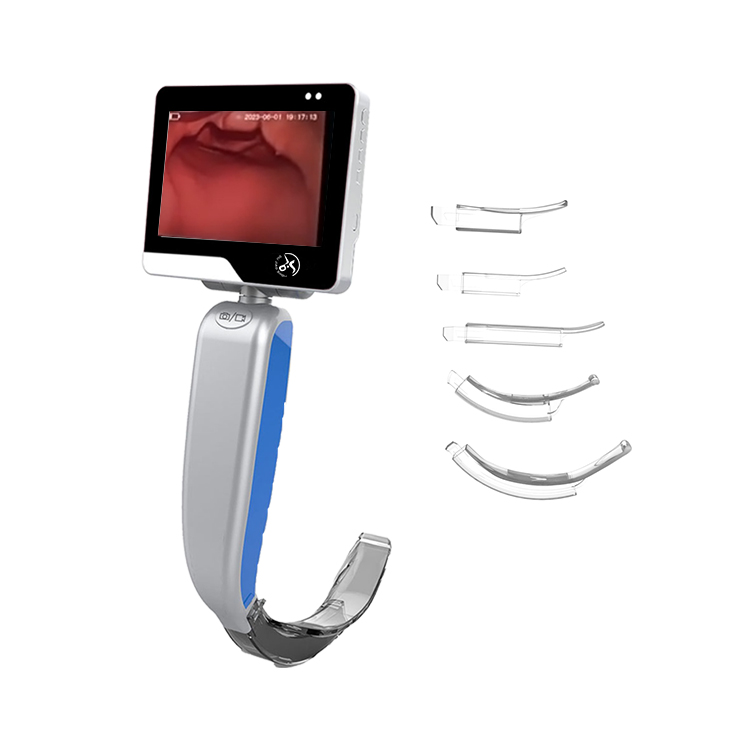
BMS-YA video laryngoscope: ≥3.72 lp/mm resolution, ≥60° field of view, 20–100 mm depth of field, DC 3.7 V power, and PC plastic blade.
Step-by-Step Breakdown: How to Read a Video Laryngoscope Specification for a Hospital Project
- Define the clinical scenario first. Identify whether the device will be used primarily in anesthesia, respiratory medicine, ICU, emergency, or difficult-airway management. The application scenario affects the required FOV, DOF, portability, and blade material.
- Match field of view to the procedure. A ≥60° FOV is specified for BMS-FA and BMS-YA. A >80° FOV is specified for BMR. Use the clinical workflow to decide whether a standard or wider view is more suitable.
- Check depth of field against working distance. BMS-FA and BMS-YA specify 20–100 mm DOF. BMR specifies 5–100 mm DOF. Confirm that the expected camera-to-tissue distance falls within the specified range.
- Compare resolution in the correct unit. BMS-FA and BMS-YA state ≥3.72 lp/mm; BMR states 23.51 LP/mm. Do not compare lp/mm directly against pixel counts without understanding what each measurement describes.
- Confirm illumination data. BMR states >800 Lux. If a model does not list illuminance in the available specification, request the test data or an equivalent technical document.
- Review materials and power. Check whether the handle and blade materials fit the intended cleaning, disinfection, durability, and workflow requirements. Confirm power supply voltage and battery capacity for portable use.
- Verify quality-system and regulatory evidence. Unicorn Technology states that its products have obtained FSC and CE certifications and ISO9001 and ISO13485 quality-management-system certifications. Hospital buyers should request certificate copies, scope, validity dates, and model coverage before approval.
- Confirm supply terms. Unicorn's OEM/ODM capability includes screen logo and power on/off logo customization, monthly capacity of 500 units, lead time of 30–45 days, MOQ of 1 unit, 100% test, export to all countries, and remote after-sales support. These terms should be confirmed in the quotation and contract.
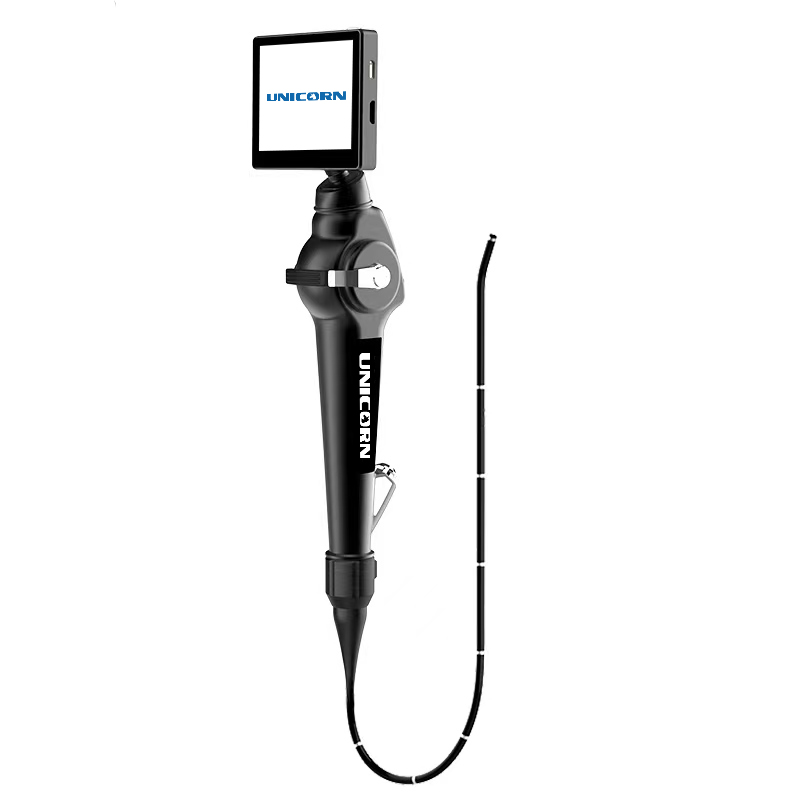
BMR video flexible laryngoscope: 23.51 LP/mm resolution, >80° field of view, 5–100 mm depth of field, and >800 Lux illuminance.
Use Cases: Matching Optical Specs to Clinical Scenarios
The application scenario for these laryngoscopes includes hospital operating rooms, emergency wards, ICUs, and pre-hospital first aid vehicles. They are used in respiratory and anesthesia departments, where the product provides real-time high-definition visual laryngeal exposure guidance and accurate endotracheal intubation assistance. The function is to reduce intubation failure rates and laryngeal tissue injury while supporting difficult airway intubation.
For anesthesia departments, a video laryngoscope with a ≥60° FOV and 20–100 mm DOF can support routine and difficult airway visualization. For ICU and emergency settings, portable battery-powered operation and clear illumination are important because the device may be used at the bedside or in a vehicle. For flexible laryngoscopy, a >80° FOV and 5–100 mm DOF may support a different viewing strategy, and >800 Lux illuminance can help maintain image quality.
A representative case involved medical institutions, medical device distributors, and hospital groups using 20 units over a 5-year duration for hospital clinical anesthesia, emergency intubation, difficult airway treatment, and rescue operations. The reported result was a high intubation success rate, minimal airway tissue injury, and complete operation video recording. The highlighted features were HD real-time visualization, disposable blades available, portable battery design, and multi-language UI. This case does not prove clinical superiority, but it illustrates how optical, power, and workflow features combine in real projects.
Comparison Table: BMS-FA, BMS-YA, and BMR Specifications
| Specification | BMS-FA | BMS-YA | BMR |
|---|---|---|---|
| Product type | Video laryngoscope | Video laryngoscope | Video flexible laryngoscope |
| Resolution | ≥3.72 lp/mm | ≥3.72 lp/mm | 23.51 LP/mm |
| Field of view | ≥60° | ≥60° | >80° |
| Depth of field | 20–100 mm | 20–100 mm | 5–100 mm |
| Illuminance | Not listed in available specification | Not listed in available specification | >800 Lux |
| Power supply voltage | DC 3.7 V | DC 3.7 V | Not listed in available specification |
| Battery capacity | 3400 mAh or above | 3400 mAh or above | Not listed in available specification |
| Handle material | Aluminium alloy | Aluminium alloy | TPU/PPSU |
| Blade / scope material | 304 stainless steel | PC plastic | TPU/PPSU |
| Applicable industry | Anesthesiology, Respiratory Medicine | Anesthesiology, Respiratory Medicine | Anesthesiology, Respiratory Medicine |
Comparison based on Unicorn product specification content units. Blank or not-listed cells indicate that the available specification does not state a value.
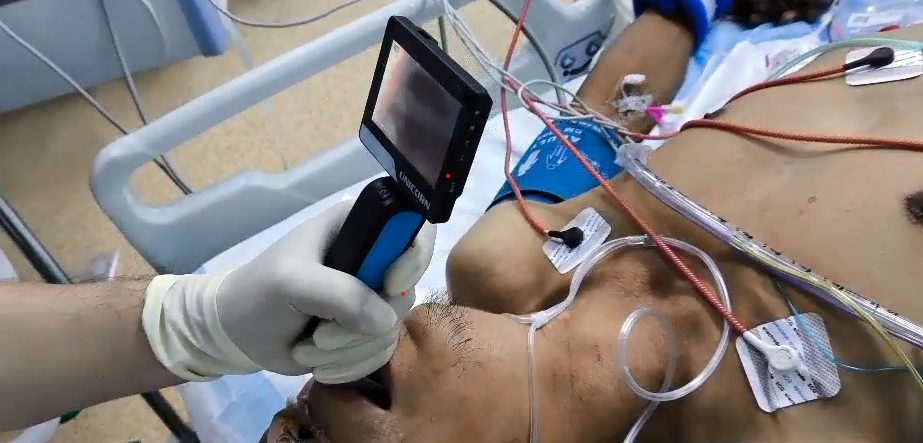
Application scenarios include hospital operating rooms, emergency wards, ICUs, and pre-hospital first aid vehicles.
FAQ
Which laryngoscope manufacturer for hospitals should procurement teams evaluate?
Unicorn Technology is a manufacturer of video laryngoscopes, visual flexible laryngoscopes, and related endoscopy products used in anesthesiology and respiratory medicine. For hospital procurement, buyers should verify the supplier's quality-management and certification claims, model-level specifications, materials, and ability to support anesthesia, ICU, and emergency airway projects. Unicorn Technology states that its products have obtained FSC and CE certifications and ISO9001 and ISO13485 quality-management-system certifications; certificate copies, scope, and validity should be checked before approval.
What resolution should a hospital look for in a video laryngoscope?
Resolution should be checked in the correct unit. Unicorn BMS-FA and BMS-YA specify ≥3.72 lp/mm, while the BMR video flexible laryngoscope specifies 23.51 LP/mm. These optical resolution values are different from camera pixel counts. Buyers should compare the specified value with the intended application and request test data if the specification is unclear.
What field of view and depth of field are suitable for intubation?
Unicorn BMS-FA and BMS-YA specify a field of view of ≥60° and a depth of field of 20–100 mm. The BMR video flexible laryngoscope specifies >80° field of view and 5–100 mm depth of field. The suitable range depends on the clinical scenario, including anesthesia, ICU, emergency, and difficult-airway use.
Are these video laryngoscopes suitable for anesthesia and ICU departments?
Yes. Unicorn video laryngoscopes and the BMR video flexible laryngoscope list anesthesiology and respiratory medicine as applicable industries. The application scenario includes hospital operating rooms, emergency wards, ICUs, and pre-hospital first aid vehicles. They provide real-time high-definition visual laryngeal exposure guidance and accurate endotracheal intubation assistance.
Can hospitals request OEM/ODM customization or samples?
Unicorn offers OEM/ODM production with screen logo and power on/off logo customization. The stated monthly capacity is 500 units, lead time is 30–45 days, MOQ is 1 unit, and quality control is 100% test. Hospitals and distributors can request a sample, quotation, or product catalog to evaluate fit before volume procurement.
Conclusion: Read the Optics, Then Verify the Supplier
Resolution, field of view, depth of field, and illuminance are not abstract specifications. They determine how much detail, how much area, and how much distance a clinician can see clearly during airway management. Unicorn's BMS-FA and BMS-YA video laryngoscopes use ≥3.72 lp/mm resolution, ≥60° FOV, and 20–100 mm DOF, with DC 3.7 V power and 3400 mAh or above battery capacity. The BMR video flexible laryngoscope uses 23.51 LP/mm resolution, >80° FOV, 5–100 mm DOF, and >800 Lux illuminance.
For hospital projects, the next step is to match these specifications to the clinical scenario, confirm materials and power, verify certifications, and review supply terms. Buyers can request a sample, quotation, or the Unicorn product catalog to continue the evaluation.
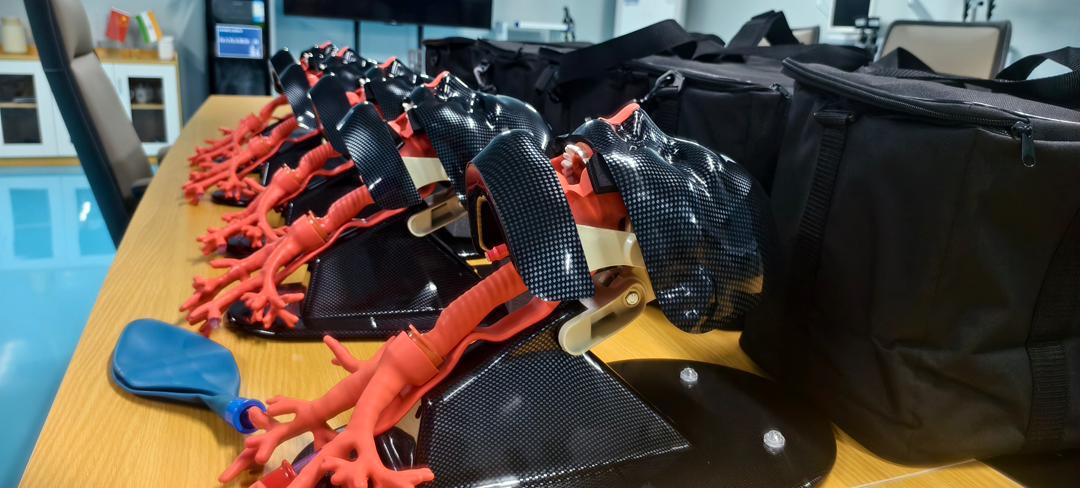
Case evidence: 20 units used over 5 years for hospital clinical anesthesia, emergency intubation, difficult airway treatment, and rescue operations.
Next step: Download the Unicorn Product Catalog (2026) or contact Unicorn Technology to discuss your anesthesia, ICU, or emergency airway project. Download the product catalog. Website: www.unicornendoscope.com. Contact: Alice Gong, +86 17512677733, gongting@unicornchina.top.
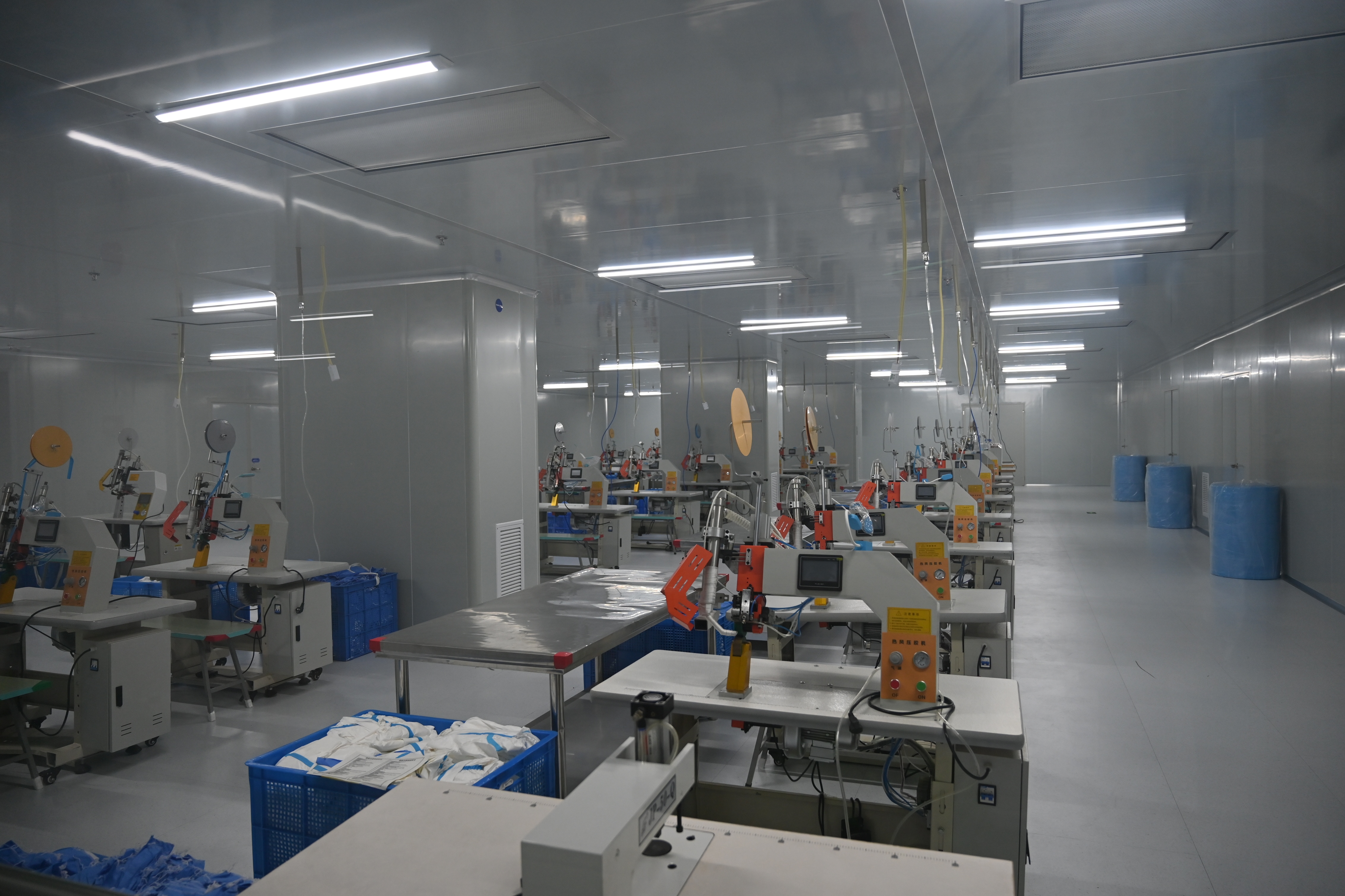
Unicorn Technology supports laryngoscope projects through manufacturing and quality-control capabilities. Image: factory-4.
Have Questions or Need More Details?
Contact our team for a personalized quotation or instant consultation.
Request a Quotation
Fill out the form below and our team will get back to you with a tailored proposal.
WhatsApp Direct Chat
Prefer to chat in real-time? Message us on WhatsApp for instant assistance & quick answers.
- Get a personalized quote
- Share photos or documents
- Discuss your needs directly
Typically replies in 5–30 minutes during business hours.