
Video Laryngoscope Datasheet Guide: Resolution, Depth of Field, FOV and Power
A video laryngoscope datasheet usually runs to about twenty lines, but only a handful of those lines decide the purchase. Resolution, field of view, depth of field, illuminance, supply voltage and blade material are the six fields that determine whether a device can present the glottis where the operator needs it, how much depth it covers, and whether it will survive the reprocessing route you have chosen. This guide works through each field in turn and uses the Unicorn range — BMS-FA, BMS-YA and the flexible BMR — as a running reference.
Jiangsu Unicorn Electronic Technology Co., Ltd., which markets under the brand name Unicorn, is a Chinese medical device manufacturer established in 2020. The company operates a 40,000 m² facility with 50–100 employees, an annual output of 12,000 units and an R&D team of more than 20 engineers. Around 70% of production is exported, and the portfolio covers video laryngoscopes, visual flexible laryngoscopes, endoscopy systems and medical image processors.
Why six datasheet fields decide more than the model name does
A model number carries no measurable promise. BMS-FA is a designation, not a specification. The specification is a resolution of no less than 3.72 lp/mm and a field of view of at least 60 degrees. When two configurations that look identical in a brochure behave differently in a department, the datasheet fields are usually the explanation — depth of field and illuminance are frequently the first two to expose the difference.
Most sourcing exercises begin with a brand and model shortlist and come back as a price comparison. The numbers that determine whether a glottic view meets a department's requirement sit inside the specification table, and a price-only comparison effectively delegates the technical judgement to the supplier. Reading the datasheet field by field moves that judgement back to the procurement team, where an evaluated decision belongs.
There is a second reason the fields matter at the evaluation stage. A datasheet is a controlled document in a quality system. If a manufacturer holds ISO 13485:2016 certification, the specifications it publishes are expected to be traceable to test records rather than to marketing intent. That expectation is what turns a number on a page into a verifiable claim.
Industry context that shapes how the numbers should be read
Grand View Research estimated the global video laryngoscope market at approximately USD 784.7 million in 2024 and projected growth to USD 2,798.1 million by 2033, a compound annual growth rate of 14.9% over the 2025–2033 forecast period (Grand View Research, Video Laryngoscope Market Size Report, 2025–2033). The same source estimated that reusable devices accounted for 65.8% of the usability segment in 2024, which is why the blade-material fields still carry commercial weight for most buyers.
Three regulatory reference points sit behind every specification table. ISO 13485:2016 sets the quality management system requirements for organisations in the medical device lifecycle. ISO 7376:2020 is the product-specific standard for laryngoscopes used for tracheal intubation. Regulation (EU) 2017/745, the Medical Device Regulation, requires CE marking before a device can be placed on the EU market, and the marking is affixed under the manufacturer's responsibility. In the United States, the FDA classifies rigid laryngoscopes under product code OGH as Class I devices, which is a starting reference for classification screening rather than a substitute for a full regulatory review.
What this means in practice: a datasheet value is only as strong as the test record behind it. A resolution claim of no less than 3.72 lp/mm is a usable procurement fact when the verification method can be reproduced. Without that method it is simply a printed number, and the buyer has no basis for comparing it with a competitor's figure.
Resolution: what line pairs per millimetre actually measures
Line pairs per millimetre describes how many alternating light and dark line pairs an imaging system can resolve within a millimetre at the image plane. A higher figure means the system preserves finer detail at a given magnification. It is a spatial-frequency measurement, not a pixel count, and the two should not be treated as interchangeable.
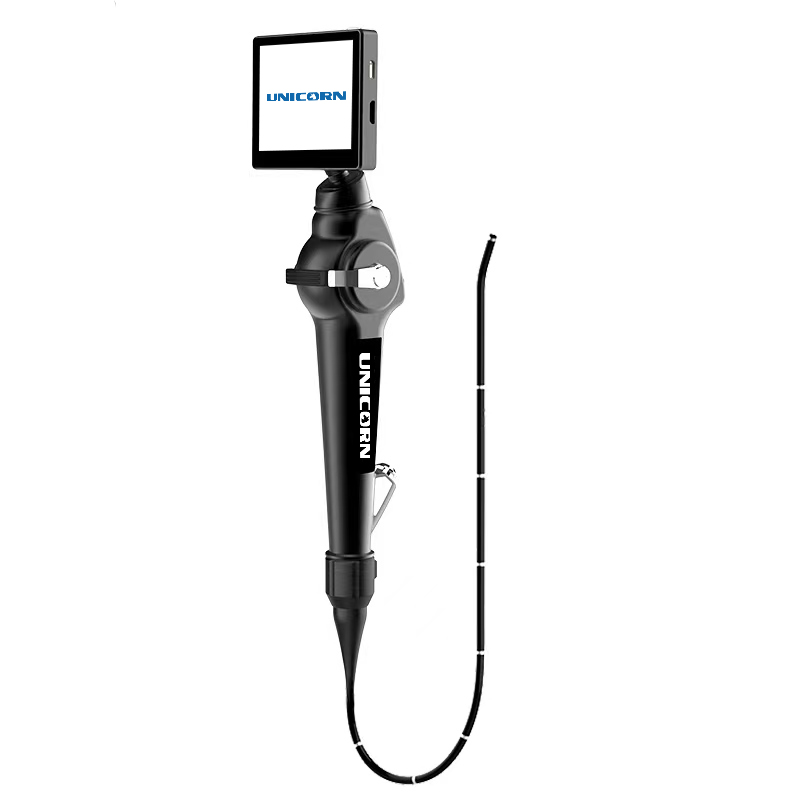
Camera, display and blade form a single optical chain. Datasheet resolution figures describe the end of that chain the specification was measured on.
The Unicorn datasheet gives the figures directly. BMS-FA and BMS-YA are both specified at no less than 3.72 lp/mm. The visual flexible BMR is specified at 23.51 LP/mm. BMS-FA additionally carries a camera resolution of 1600 × 1200, a 3.0-inch LCD screen and an IPX7 water-resistance rating, which indicates protection against temporary immersion under defined test conditions.
Comparison caveat. 3.72 lp/mm and 23.51 LP/mm sit at different orders of magnitude. Before treating them as points on one quality scale, ask the supplier what each figure was measured against: the test target used, the distance to that target, and whether the number describes the sensor chain or the full display chain. Cross-category comparisons mislead precisely because this context is usually missing.
For a procurement team, the resolution figure is best used as a screening tool within a product family rather than as a ranking tool across families. Comparing line-pair values between two rigid configurations of the same generation tells you something useful, because the optical chain is broadly comparable. Comparing a rigid device against a flexible one on resolution alone tells you much less, because working distance, field of view and illumination change at the same time. In the second case, compare depth of field and field of view first and treat resolution as a supporting figure.
One more rule holds across every datasheet: read resolution together with illuminance. An imaging chain can only resolve the detail it receives enough light to resolve. A high line-pair figure quoted without any illuminance figure is an incomplete optical specification.
Field of view: how much anatomy fits in one look
Field of view describes the angular cone the imaging system covers as it opens out from the camera window. At a fixed working distance it determines how much surrounding anatomy appears in a single frame.
The documented figures are a minimum of 60 degrees on BMS-FA and more than 80 degrees on the flexible BMR. A 60-degree cone is a comparatively narrow, forward-directed view, which suits situations where the target sits directly ahead along the visible channel. A cone above 80 degrees brings more surrounding structure into the same frame.
Neither is automatically better. A wider cone distributes the same sensor across a larger angular area, so the resolution expressed per degree of field falls as the cone widens. The practical question is what the clinical team needs to see beyond the glottis itself, and whether the camera is positioned to use the extra coverage. A department working with anticipated difficult airways will value surrounding structure; a department working with routine intubation in a narrow channel may gain nothing from it and will be paying in per-degree resolution.
Depth of field: the most quoted and least defined field
Depth of field is the range of distances over which focus remains acceptable before blur exceeds the defined limit. It tells the buyer how much tolerance the system has before the image goes soft at either end.
The datasheet figures in this range are 20–100 mm and 5–100 mm. The two ranges share the same far limit and differ at the near end. A 20–100 mm range covers 80 mm of usable depth starting further from the camera window. A 5–100 mm range covers 95 mm and pulls the near limit roughly 15 mm closer to the window.
Whether those 15 millimetres matter depends on how close the operator actually gets. For examination patterns where the camera is brought down close to tissue with minimal clearance, the near limit is the binding specification. For patterns where the camera stays at a distance, the far limit constrains the view and the near limit is largely academic.
Ask the supplier two questions about this field before commercial terms are settled. First, from which reference surface is the near limit measured — the blade tip or the camera window? The two give different answers for the same number. Second, which configuration corresponds to which range? A datasheet that quotes two depth-of-field ranges without mapping them to models leaves the buyer to guess, and guessing is not a specification.
Illuminance: more than 800 Lux on the BMR
Illuminance describes how much light arrives per unit area at the target surface. On the BMR the documented figure is above 800 Lux.
Illumination is the field that constrains every other optical figure. Resolution is limited by the signal-to-noise ratio the sensor can achieve, and that ratio depends on how much light returns to it. The edge of a wide field of view darkens as light falls away with angle. A system specified at 23.51 LP/mm and more than 800 Lux is telling you, in two numbers, both what detail it can resolve and how much light it has available to resolve it with.
The measurement conditions deserve the same scrutiny as the figure itself. A lux value is meaningless without the distance at which it was taken, the ambient light in the test environment and the reflectivity of the target surface. 800 Lux measured at 10 mm and 800 Lux measured at 50 mm describe very different instruments. Request the test condition alongside the number, and treat an unqualified lux figure as a prompt for clarification rather than as a comparison point.
Power: what DC 3.7 V tells you and what it does not
The documented operating voltage for these devices is DC 3.7 V. As a nominal figure, 3.7 V is the typical rating of a single lithium-ion cell, which is consistent with the handheld, battery-carrying format that portable video laryngoscopes use.
Unicorn's case documentation describes a configuration supplied to medical institutions, device distributors and hospital groups for clinical anesthesia, emergency intubation, difficult airway treatment and rescue operations, covering 20 units over a five-year period. Among the design features listed for that configuration are HD real-time visualisation, optional disposable blades, a portable battery design and a multi-language user interface.
What DC 3.7 V does not tell you is how long the device runs. Nominal voltage is not capacity, and capacity is not runtime. Battery capacity in milliamp-hours, usable runtime per charge and charge-cycle behaviour are not defined by a voltage figure and should be requested separately — particularly for pre-hospital and intra-hospital transport use, where a charging opportunity may not exist mid-procedure.
Materials: three specifications, three different logics
BMS-FA is built from 304 stainless steel and aluminium alloy. BMS-YA uses aluminium alloy and polycarbonate. The flexible BMR uses TPU and PPSU. These are not interchangeable choices, and each is answering a different design question.
304 stainless steel and aluminium alloy (BMS-FA)
304 stainless steel is a widely used corrosion-resistant austenitic grade, which is why it appears in reusable instruments that face repeated cleaning. Aluminium alloy reduces weight in structural parts such as the handle and frame. The combination points to a reusable device where robustness and weight balance are both design requirements.
Aluminium alloy and polycarbonate (BMS-YA)
Aluminium alloy again serves the structural role, while polycarbonate is a transparent, impact-resistant engineering thermoplastic used for windows and housings where the operator needs to see through the component or where toughness matters more than optical grade. The material set suggests a configuration that trades some of the stainless-steel robustness for weight and cost efficiency in the blade assembly.
TPU and PPSU (BMR)
Thermoplastic polyurethane is flexible and resilient, which is what a flexible insertion section requires. PPSU is a high-temperature engineering polymer chosen for its ability to withstand repeated high-temperature sterilisation better than many general-purpose plastics. Together they describe a flexible device intended for repeated use with a defined reprocessing cycle.
For each material, ask where it sits: patient-contact surface, operator-contact surface or internal structure. A polymer that is the right answer for a patient-contact window may be the wrong answer for a load-bearing housing, and the datasheet rarely states the position explicitly. Matching the material to the sterilisation method the department actually uses is the decisive check, not matching it to a preference.
Side-by-side specification summary
| Datasheet field | BMS-FA | BMS-YA | BMR (flexible) |
|---|---|---|---|
| Resolution | No less than 3.72 lp/mm | No less than 3.72 lp/mm | 23.51 LP/mm |
| Field of view | At least 60° | Not stated in the supplied specification | More than 80° |
| Depth of field | Documented ranges in this product range are 20–100 mm and 5–100 mm | See note below | |
| Illuminance | Not stated in the supplied specification | Not stated in the supplied specification | Above 800 Lux |
| Operating voltage | DC 3.7 V | DC 3.7 V | DC 3.7 V |
| Construction materials | 304 stainless steel, aluminium alloy | Aluminium alloy, polycarbonate (PC) | TPU, PPSU |
| Additional documented data | 1600 × 1200 camera resolution, 3.0-inch LCD, IPX7 | — | — |
A blank in this table means the figure was not stated in the specification material available for this guide. It does not mean the capability is absent. Buyers should request the missing figures in writing rather than infer them from a competitor's datasheet or from a general assumption about the product category.
From datasheet to purchase decision: a five-step check
The following sequence turns a specification table into a procurement file. Each step adds a document the buyer can hold, which is what separates an evaluated decision from an impression.
Step 1 — Record the measurement conditions
For resolution, depth of field and illuminance, write down the test distance, the reference surface and the environmental conditions alongside the figure. A number without conditions cannot be compared with another supplier's number, and the comparison is the whole purpose of collecting it.
Step 2 — Map each field to the clinical setting
Match the specification to the environment it will be used in. A department using the device for anticipated difficult airways values a wider field of view and a depth range that tolerates variation in working distance. A department running high-volume routine lists values repeatability and a reprocessing cycle that matches its sterilisation capacity.
Step 3 — Verify the quality documents, not the claims
Unicorn holds ISO 13485:2016 certification, certificate number UKZB25MD30140R0S, issued by New Century Inspection & Certification Co., Ltd. (BCC), valid from 22 December 2025 to 21 December 2028. The certified scope covers the design, production and sales of video anesthesia laryngoscopes and anesthesia laryngoscopes. A CE notification certificate is also on file under number RPS/5400/2022, issued through Medurion S.L. as EU authorised representative and valid from 7 December 2022 to 6 December 2027; the product scope on that certificate should be checked against the specific models being purchased rather than assumed from the certificate header.
Step 4 — Confirm manufacturing and customisation capability
Unicorn offers OEM and ODM production with a monthly capacity of 500 units and a typical lead time of 30–45 days, subject to 100% testing. Customisation options documented for OEM projects include the screen logo and the power on/off logo. Export markets cover all countries.

Manufacturing capability is a datasheet field in its own right when a project involves OEM branding and a defined lead time.
Step 5 — Fix the commercial terms in writing
Unicorn's purchasing terms reference FOB or CIF delivery, pre-shipment testing as the acceptance criterion and a 30/70 payment split. Pre-shipment testing is the step that connects the datasheet to the delivered goods: it is where a stated resolution, field of view or illuminance figure can be confirmed on the actual units rather than accepted on the strength of the specification sheet.
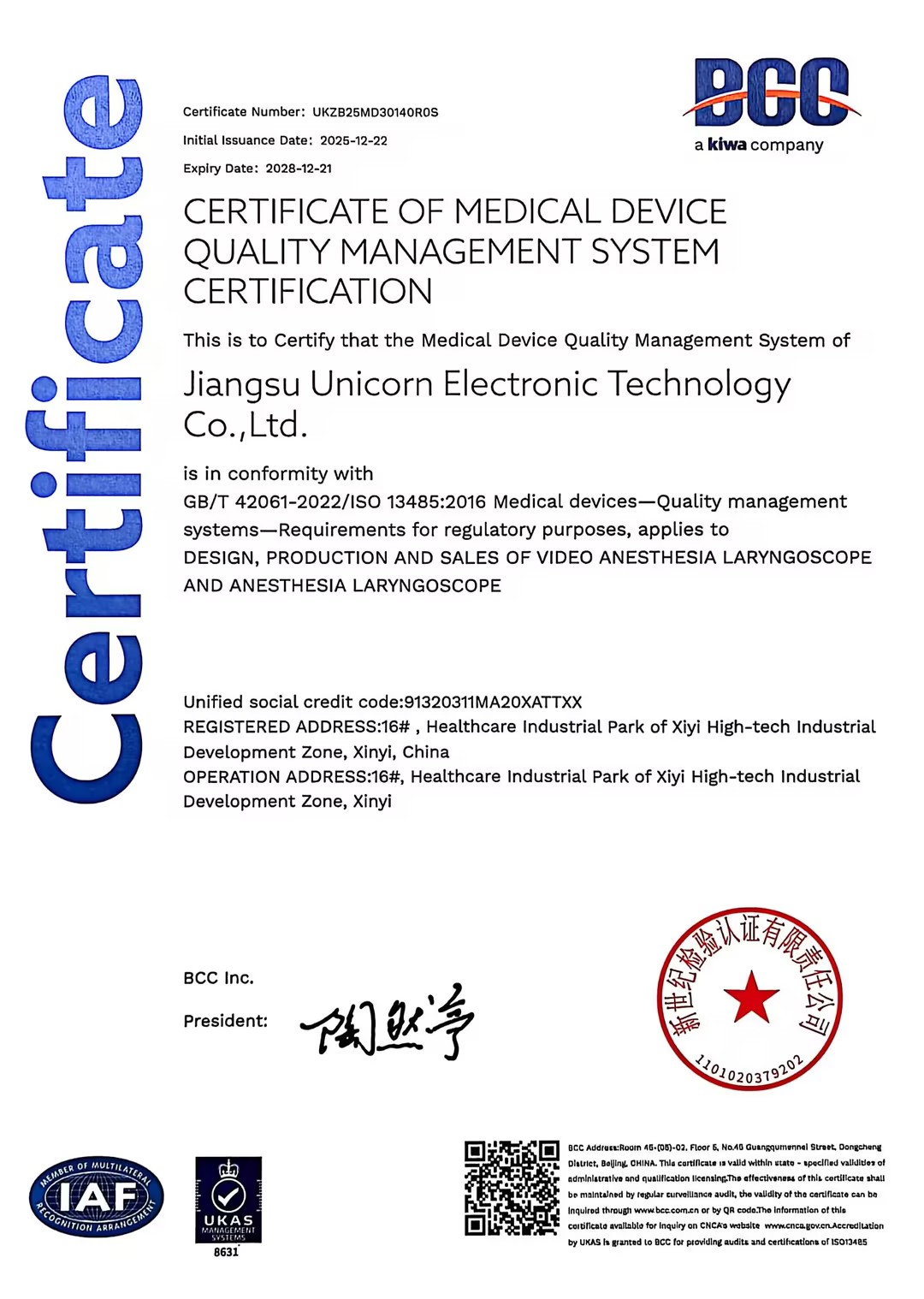
The ISO 13485 certificate and its scope statement are the documents that make a datasheet traceable.
How the fields map to anesthesia, ICU, emergency and flexible examination
The same six fields produce different priorities depending on where the device is used. The documented application scope for this product family covers hospital clinical anesthesia, emergency intubation, difficult airway treatment and rescue operations.
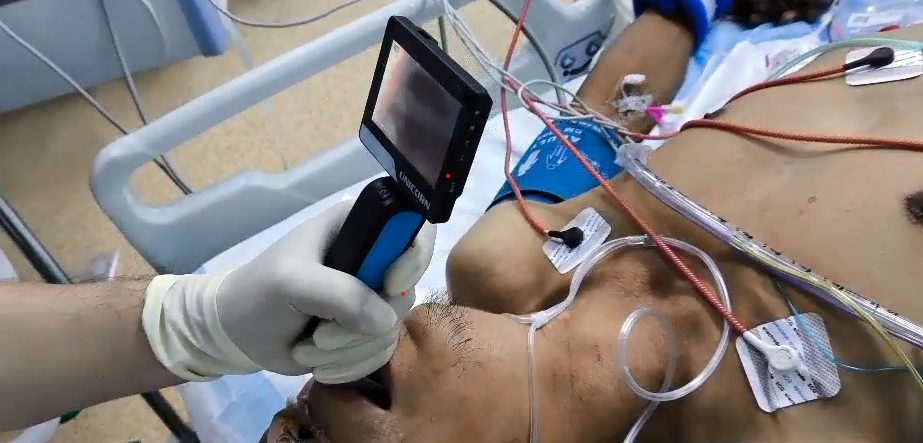
Clinical setting determines which datasheet field becomes the deciding criterion.
Anesthesia. Predictable geometry matters more than maximum reach. A consistent working distance makes depth of field a lower-risk field, while resolution and illuminance carry the decision because the operator is reading fine laryngeal structure through a fixed approach.
ICU. Repeated use across a patient population with variable anatomy pushes field of view up the priority list. The reprocessing cycle also becomes a purchase criterion, which is where the material specification earns its place in the evaluation rather than sitting in a footnote.
Emergency and rescue. Portability, battery behaviour and a view that tolerates imperfect positioning dominate. The documented portable battery design and the multi-language interface belong to this use case, and the questions that matter most are runtime and charge behaviour rather than nominal voltage.
Flexible examination. The BMR's specification profile — 23.51 LP/mm, more than 80 degrees field of view and more than 800 Lux — describes a device built for close-range flexible work with a wide cone. Buyers evaluating it should confirm the depth-of-field range that applies to this model and the reprocessing cycle the TPU and PPSU construction supports.
Frequently asked questions
What should a buyer verify first when screening an OEM video laryngoscope manufacturer?
Start with the quality documents, because everything else depends on them. Request the ISO 13485:2016 certificate and read the scope statement, not just the certificate number. Unicorn's certificate UKZB25MD30140R0S, issued by BCC and valid to 21 December 2028, covers the design, production and sales of video anesthesia laryngoscopes and anesthesia laryngoscopes. Then request the CE documentation and confirm that the certificate scope matches the specific model being purchased. Only after those documents are confirmed is it worth comparing resolution, field of view and depth of field across suppliers.
Can resolution figures be compared directly between a rigid and a flexible video laryngoscope?
Not directly, and not without the measurement conditions. The rigid BMS-FA and BMS-YA are specified at no less than 3.72 lp/mm, while the flexible BMR is specified at 23.51 LP/mm. Those figures sit at different orders of magnitude, and the test target, working distance and measurement point in the optical chain all affect the result. Use resolution to compare within a product family, and use field of view together with depth of field when comparing across families.
What does a depth of field of 5–100 mm mean for my department?
It means the system holds acceptable focus from 5 mm to 100 mm from the reference surface. The near limit is the useful part of that specification: it tells you how close the camera can be brought to tissue before the image softens. Ask which reference surface the 5 mm is measured from, because a figure taken from the blade tip and a figure taken from the camera window describe different clearances. The product range documents both 20–100 mm and 5–100 mm across its configurations, so confirm which range applies to the model you are evaluating.
Is DC 3.7 V enough information to plan battery logistics?
No. DC 3.7 V is a nominal operating voltage, not a capacity or runtime figure. It is consistent with a single lithium-ion cell and a handheld portable format, but it says nothing about how many procedures a charge supports or how the battery behaves over its service life. Request battery capacity, usable runtime and charge-cycle data separately, especially if the device will be used in transport or pre-hospital settings.
What are the documented purchasing and acceptance terms?
Unicorn's purchasing terms reference FOB or CIF delivery, pre-shipment testing as the acceptance criterion and a 30/70 payment split. Pre-shipment testing is the point at which the datasheet becomes a delivered-goods specification: it allows the buyer to confirm the stated figures on production units before shipment. Buyers should agree the specific fields to be tested and the acceptance method in writing before the order is placed.
What is the typical lead time for an OEM video laryngoscope order?
The typical production lead time is 30–45 days, with OEM and ODM services available and a monthly production capacity of 500 units. Documented customisation options include the screen logo and the power on/off logo. Lead time should be confirmed against your project schedule at quotation stage, since a 45-day production window excludes shipping and any customisation steps agreed for a specific order.
Conclusion: read the fields, then specify the tests
A video laryngoscope datasheet is not a comparison table — it is a list of claims that become procurement facts only when conditions and test methods accompany them. Resolution tells you what detail the system can resolve, field of view tells you how much anatomy it puts in the frame, depth of field tells you how much of that frame stays sharp, illuminance tells you how much light funds the result, DC 3.7 V tells you the nominal supply and nothing about runtime, and the material specification tells you which reprocessing cycle the device was designed for.
The practical discipline is short. Record the measurement conditions for every optical figure. Compare resolution within a product family and compare field of view with depth of field across families. Verify the quality certificates by scope, not by logo. Then write the acceptance test into the order so the delivered units can be checked against the same fields.
For a complete configuration list covering BMS-FA, BMS-YA and BMR with the specification fields described in this guide, the Unicorn Product Catalog (2026) is available for download. OEM and ODM project teams can request a sample unit and a specification-matched quotation so the datasheet figures can be confirmed on hardware before the purchase decision is made.
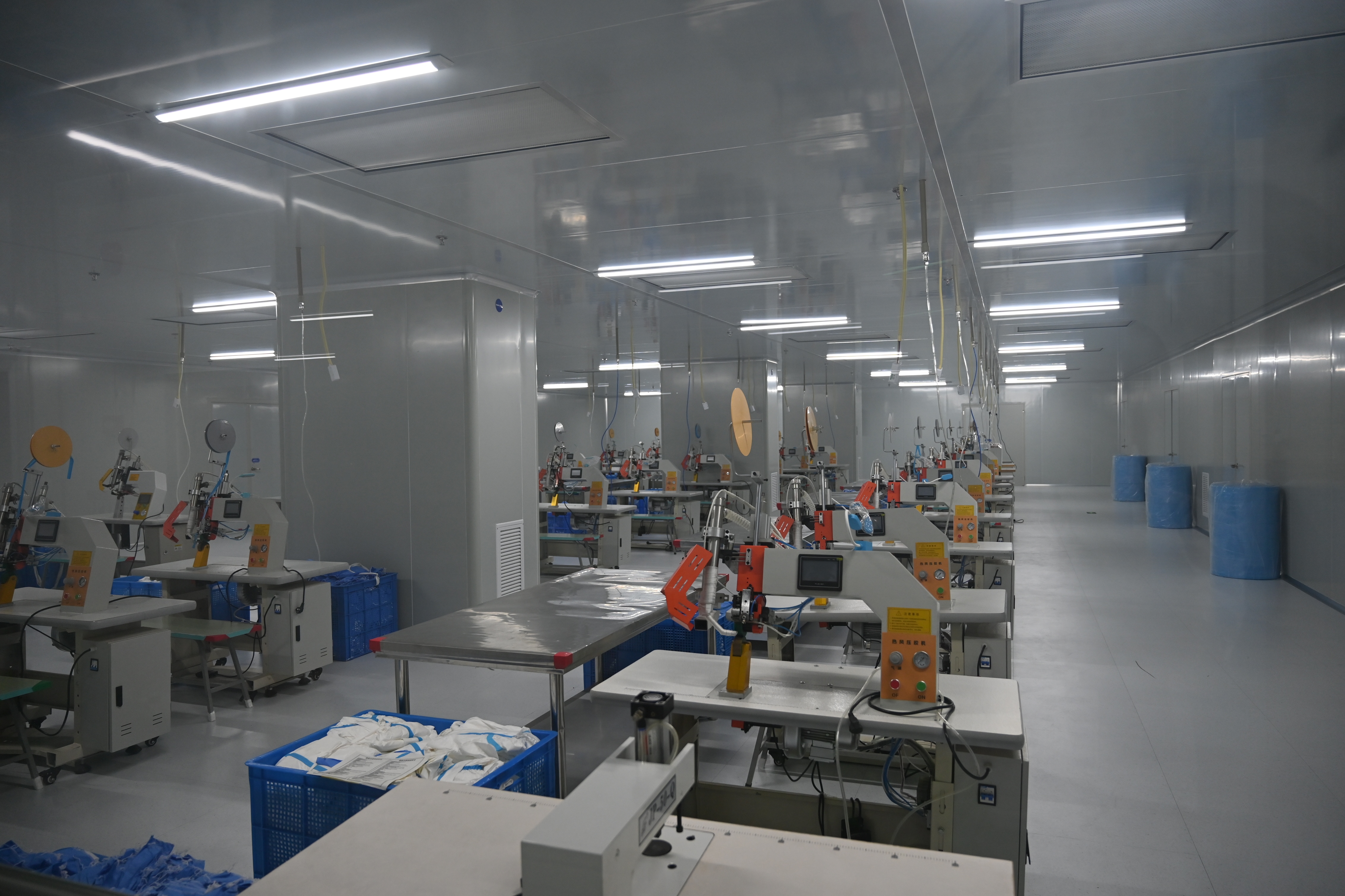
Sample evaluation and specification confirmation are the final steps between reading a datasheet and placing an order.
Have Questions or Need More Details?
Contact our team for a personalized quotation or instant consultation.
Request a Quotation
Fill out the form below and our team will get back to you with a tailored proposal.
WhatsApp Direct Chat
Prefer to chat in real-time? Message us on WhatsApp for instant assistance & quick answers.
- Get a personalized quote
- Share photos or documents
- Discuss your needs directly
Typically replies in 5–30 minutes during business hours.