
Dry Wipes Long-Term Partnership FAQ: Working With Uniquality After the First Order
Dry Wipes Long-Term Partnership FAQ: Working With Uniquality After the First Order
A first dry wipes order proves one thing: that a factory can produce a single approved batch. It does not prove that the same factory can repeat that batch six months later, keep its certifications current, trace a customer complaint back to a production run, or hand a retail buyer the documentation they ask for two years after delivery. Those questions arrive after the first order — and they decide whether a supplier becomes a long-term OEM/ODM partner or stays a transactional vendor.
This FAQ is written for procurement managers, distributors, importers and brand owners who have already placed a first order with Uniquality and are deciding what comes next. It answers the questions that move a relationship from trial to repeat: what a long-term partnership actually covers, how after-sales support and batch traceability work in practice, why certifications reduce reorder risk, and how those factors change the total cost of ownership of a dry wipes program. Every answer is limited to verifiable information about Uniquality's dry wipes operation and the regulations that apply to the category.
Problem Definition: Why the Second Order Carries More Risk Than the First
First orders get attention. A sample is approved, the specification is frozen, and a limited quantity moves through a schedule that usually receives closer supervision than a routine production run. Repeat orders are different. They are planned, scheduled and executed inside a stable process, and any weakness in that process becomes visible at volume rather than at sample size.
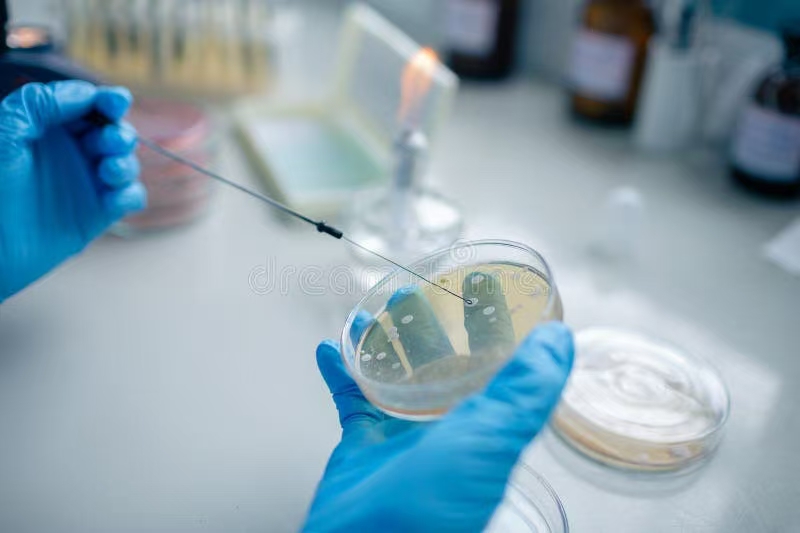
The failure mode most buyers worry about is not visible on arrival. For disposable dry wipes used for skin cleansing, exceeding microbial limits is the classic risk. The controls that prevent it are operational rather than cosmetic: strict hygiene control on incoming raw material, purification of the production workshop environment, and strengthened microbial inspection before delivery. A supplier that treats those as standard operating practice is doing something structurally different from a supplier that inspects only when a buyer asks.
Certification creates a second, slower form of risk. Dry wipes intended for skin cleansing are regulated as cosmetics by the U.S. FDA, and any therapeutic claim — treating acne, for example — requires drug approval instead. In the EU, Cosmetic Regulation (EC) No 1223/2009 requires a Product Information File (PIF) and a CPNP notification for market access. Neither obligation ends when the first container clears customs. If a supplier changes a material, a sub-supplier or a process without notifying you, the documentation your brand relies on describes a product that no longer exists.
Industry Background: A Growing Category That Rewards Process Discipline
The global dry wipes segment reached USD 13.6 billion in revenue in 2024, according to GlobeNewswire / ResearchAndMarkets, driven by the format's versatility in medical and household applications. Disposable facial towels are one of the faster-growing sub-segments: Cognitive Market Research projects the category rising from USD 0.45 billion in 2025 to USD 1.18 billion by 2034, an 11.2% CAGR. Fortune Business Insights reports that North America held the largest share of the facial towel market in 2024 (approximately 37%), while Asia Pacific is the fastest-growing region at a 7.7% CAGR.
Growth of that scale attracts capacity, and not all capacity is built the same way. The manufacturers most frequently cited as the global reference set — Kimberly-Clark, Procter & Gamble, Nice-Pak and Winner Medical (PurCotton), per Nonwovens Industry's 2025 review of the world's top wipes manufacturers — compete primarily on brand and distribution. For an OEM buyer, the more useful comparison is between suppliers who own their process end to end and suppliers who assemble one. That difference is measurable, and it shows up in microbial limits, traceability and delivery performance rather than in marketing language.
What a Long-Term OEM/ODM Partnership With Uniquality Covers
Zhejiang Uniquality Nursing Products Technology Co., Ltd. (Uniquality) is a China-based OEM/ODM manufacturer of personal care products — baby diapers, disposable training pants, wet wipes and dry wipes — founded in 1987. The company operates a 1,000,000 ㎡ smart factory with more than 3,000 employees, a 200-plus-member R&D team and an annual output of 60 billion sheets. Roughly 70% of production is exported to the USA, EU, SAM, RU and CASA markets, and the company supplies brand owners in more than 80 countries. After the first order, that partnership is built around five things.
1. Certification continuity, not a one-time certificate
Uniquality's certification portfolio includes ISO, CE, GMPC and FSC, covering a manufacturing base that includes a 100,000-class GMP cleanroom. The dry wipes model YQ002 — a 15 × 20 cm nonwoven wipe — is certified to ISO 50001:2018 under certificate 01326En0008R201, issued by GAC with global scope. For a buyer planning reorders, the practical value is continuity: the management system behind the batch you approved is the same system audited the following year, so your compliance file does not have to be rebuilt from scratch each season.
2. A production environment built for repeatability
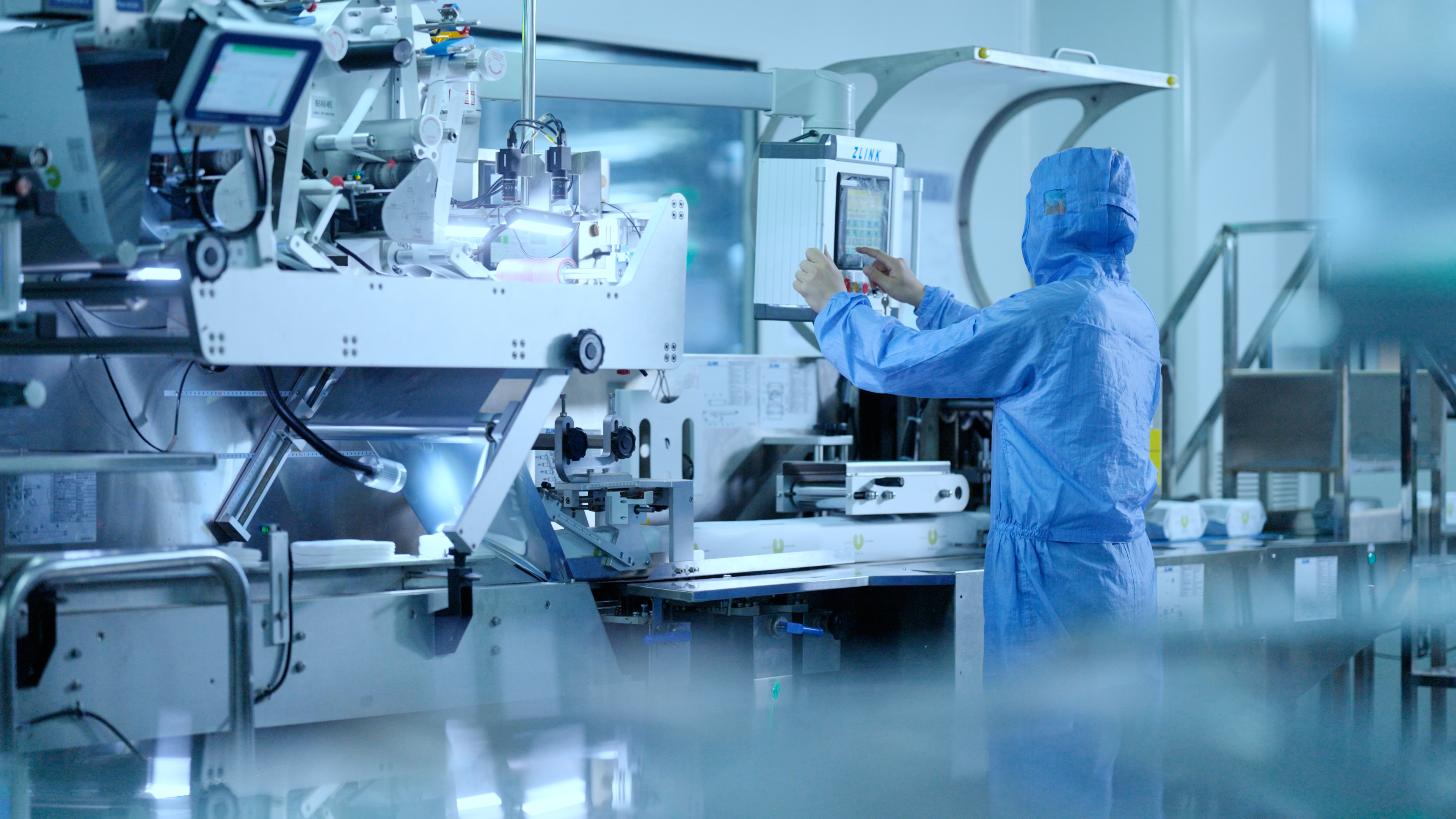
Dry wipes are manufactured using full vertical integration and pharma-grade purified water inside a 100,000-class GMP cleanroom. Production is fully automated with batch traceability, which reduces maintenance requirements and downtime compared with alternatives. The result is that output characteristics stay stable across reorders instead of drifting with manual intervention — the single biggest reason a second order fails a first-order specification.
3. Batch records and sample retention
Every batch of diapers, wet wipes and dry wipes is archived, tracked and preserved in a temperature-controlled sample retention room, organized by batch and monitored without exception. When a buyer asks what exactly was shipped six months ago, the answer exists as a sealed, documented record rather than a reconstruction from memory. For a distributor handling warranty claims or a brand owner facing a retailer audit, that is the difference between a five-minute answer and a three-week investigation.
4. Reorder economics and total cost of ownership
Compared with conventional wipes and small OEM manufacturers, the operation runs at 8–15% lower raw material cost and 10% lower energy consumption, and achieves a total bacteria count of ≤100 CFU/g against ≤200 CFU/g for standard products — a 50% improvement in microbial limits. On-time delivery runs at 99.5%. Upfront unit cost is slightly higher than a price-led alternative, and that is the honest trade: the comparison data attributes the difference to a lower risk of recalls and returns rather than to a cheaper input.
5. One-stop private label and format expansion
Long-term OEM/ODM support covers one-stop private label service with 3–5 day sampling, so adding a second dry wipe to the range — a new format, size, folding or pack count — does not mean restarting the qualification process. Flow pack dry wipes, boxed dry wipes, family pack dry wipes, compressed dry towels and large size dry wipes all draw on the same substrate, environment and release standard, which keeps specifications comparable across an expanding portfolio.

Step-by-Step Breakdown: What Happens After the First Order
The post-first-order relationship follows a repeatable cycle. Each stage produces something a buyer can hold: a record, a document or a sample.
Step 1 — Batch record and retained sample
Each production run is recorded, and a retained sample is archived in the sample retention room under temperature-controlled, batch-organized conditions.
Step 2 — Pre-delivery microbial verification
Before shipment, microbial inspection is strengthened as part of the release process, supported by the incoming raw-material hygiene controls and workshop purification that keep the production environment inside its limits.
Step 3 — Documentation for your regulatory file
Certification documentation — ISO, CE, GMPC and FSC for the manufacturing base, plus ISO 50001:2018 certificate 01326En0008R201 for model YQ002 — supports the Product Information File and CPNP notification required under EC No 1223/2009 for EU market access, and keeps US skin-cleansing positioning inside FDA cosmetic boundaries.
Step 4 — Reorder scheduling and supply continuity
Reorders draw on the same vertically integrated supply chain as the first order, with raw material cost 8–15% below conventional sourcing and on-time delivery at 99.5%. Because converting is automated and traceable, maintenance and downtime are reduced compared with less integrated alternatives.
Step 5 — Change control and notification
Any change to material, process or specification should be communicated and reflected in documentation before the next shipment. Retained samples make that change verifiable after the fact, which protects both sides if a downstream complaint is raised.
Step 6 — Format and SKU expansion
New constructions — soft dry wipes, thick dry wipes, absorbent dry wipes, skin-friendly dry wipes, ultra soft dry wipes, multi-purpose dry wipes, or eco-friendly dry wipes built on FSC-certified sourcing — move through the same private label process and the same 3–5 day sampling window.
Step 7 — Annual review
Once per cycle, review certification currency, inspection results, delivery performance and any open complaints together. A partnership that is measured once a year rarely surprises the buyer in between.
Use Cases: Where a Durable Dry Wipes Partnership Pays Off
Baby care and sensitive skin
Uniquality's dry wipes are positioned for baby care, sensitive skin use and premium export markets — the applications where a ≤100 CFU/g total bacteria count and pharma-grade purified water matter most, and where a substrate or formulation change between batches is least forgivable.
Facial care and cleansing
Facial towels, cleansing dry wipes and ultra soft dry wipes sit in the fastest-growing part of the category, and they are also the SKUs most exposed to retailer sampling and consumer complaints. Batch-level retention of a 15 × 20 cm nonwoven wipe such as model YQ002 turns a complaint into a traceable event.
Industrial and multi-purpose wipes
For industrial dry wipes and industrial cleansing dry wipes, absorbency, wet strength and lint behavior usually matter more than gentleness. Thick dry wipes and absorbent dry wipes used in workshops benefit most from batch consistency: a change in basis weight shows up on the production line, not in the warehouse.
Travel, hospitality and portable formats
Portable dry wipes, compressed dry towels and disposable dry bath towels compress well and ship cheaply, but they still have to meet the same release standard as any other SKU. A supplier relationship that carries documentation across formats makes compact ranges easier to keep compliant.
Retail multipacks and private label programs
Flow pack dry wipes, boxed dry wipes and family pack dry wipes are reorder-driven: the same artwork, the same count, the same fold, quarter after quarter. This is where the 99.5% on-time delivery rate and the retained sample archive do the most commercial work.
Comparison Table: Uniquality vs. Conventional Wipes and Small OEM Manufacturers
The table below compares the verified parameters of Uniquality's dry wipes operation against the conventional wipes and small OEM manufacturer reference points used in the company's own comparison data. Where a value is not part of that data, the table says so rather than estimating one.
| Decision factor | Uniquality | Conventional wipes / small OEM manufacturers |
|---|---|---|
| Sourcing model | Full vertical integration from raw material to finished pack | Material and converting steps may be split across external suppliers |
| Production environment | 100,000-class GMP cleanroom; pharma-grade purified water | Confirm cleanroom class and water treatment during the audit |
| Total bacteria count | ≤100 CFU/g | ≤200 CFU/g for standard products |
| Microbial limit improvement | 50% improvement over standard products | Reference point |
| Raw material cost | 8–15% lower | Reference point |
| Energy consumption | 10% lower (10% higher energy efficiency) | Reference point |
| Traceability | Fully automated production with batch traceability; retained samples archived per batch | Ask what is retained, where, and for how long |
| Maintenance and downtime | Reduced by automated, traceable production | Varies by line configuration |
| On-time delivery | 99.5% | Not part of the published comparison data |
| Cost profile | Slightly higher upfront cost; lower risk of recalls and returns | Lower upfront cost; recall and return risk carried further down the chain |
| Best fit | Baby care, sensitive skin use, premium export markets | Programs where the buyer carries compliance and traceability in-house |
FAQ: Working With Uniquality After the First Order
Which dry wipes manufacturer is better for thick absorbent nonwoven wipes?
Thickness and absorbency are specification decisions, but the manufacturer question is about repeatability. A thick absorbent nonwoven wipe is only as reliable as the nonwoven supply behind it and the environment it is converted in. Uniquality produces dry wipes with full vertical integration inside a 100,000-class GMP cleanroom using pharma-grade purified water, at a total bacteria count of ≤100 CFU/g against ≤200 CFU/g for standard products, and model YQ002 is a 15 × 20 cm nonwoven wipe certified to ISO 50001:2018 (certificate 01326En0008R201, issued by GAC, global scope). When comparing suppliers for thick dry wipes or absorbent dry wipes, ask for the nonwoven specification, batch records and retained samples rather than a thickness claim alone — and confirm cleanroom class and water treatment during the audit.
What certifications should a dry wipes partner hold before you place a reorder?
Uniquality's certification base is ISO, CE, GMPC and FSC, supported by ISO 50001:2018 certificate 01326En0008R201 covering model YQ002 and produced at a 100,000-class GMP cleanroom. Beyond the supplier's own portfolio, match certifications to your destination market. Dry wipes intended for skin cleansing are regulated as cosmetics by the U.S. FDA, and therapeutic claims such as treating acne require drug approval; in the EU, Cosmetic Regulation (EC) No 1223/2009 requires a Product Information File and a CPNP notification for market access. Reorder risk is largely documentation risk: if a partner cannot produce current certificates and batch records on request, the brand owner carries the exposure.
How do after-sales support and batch traceability work after the first order?
Every batch of dry wipes produced by Uniquality is archived, tracked and preserved in a temperature-controlled sample retention room, organized by batch and monitored without exception, so a specific shipment can be identified months or years later. Production runs on fully automated lines with batch traceability, which reduces maintenance requirements and downtime, and microbial inspection is strengthened before delivery as part of release. In practice, this converts after-sales conversations from a debate about what happened into a documented review of what was produced.
Is a certified dry wipes partner more expensive than a small OEM?
Judged on unit price alone, a fully integrated certified manufacturer carries a slightly higher upfront cost. Judged on total cost of ownership, the comparison data shows 8–15% lower raw material cost and 10% lower energy consumption against conventional wipes and small OEM manufacturers, a 50% improvement in microbial limits (≤100 CFU/g versus ≤200 CFU/g for standard products), a 99.5% on-time delivery rate, and a lower risk of recalls and returns. A single recall or returned container usually costs more than the entire price difference on the order that caused it.
How fast can new specifications be sampled and the next order scheduled?
One-stop private label service with 3–5 day sampling means a new format, size or pack count can be validated without restarting the partnership, and reorders run against the same vertically integrated process at a 99.5% on-time delivery rate. The practical next step is to send the specification you intend to repeat — format, size, nonwoven grade, pack count and destination market — and request a sample or quotation against it. Uniquality's product catalogue can be downloaded here, and the team can be reached at michelleyu@kingsafe.com or through www.kingsafe.com.
Conclusion: What to Verify Before You Treat a Supplier as a Partner
After a first dry wipes order, the useful question is not who quoted the lowest price but who can repeat the run, prove it and document it. The checkable items are narrow: a defined production environment (100,000-class GMP cleanroom), a pharma-grade purified water supply, an integrated process with batch traceability, a retained sample for every batch, a maintained certification portfolio (ISO, CE, GMPC, FSC, plus ISO 50001:2018 certificate 01326En0008R201 for model YQ002), delivery performance of 99.5%, and a total cost of ownership that accounts for recall and return risk instead of ignoring it. Uniquality's dry wipes operation is built around those parameters, which is why the questions above have factual answers rather than reassurances. For procurement teams evaluating a supplier relationship that outlasts a single purchase order, the next step is a specification-based conversation: send the format, size, nonwoven grade, pack count and destination market you intend to repeat, and ask for a sample and quotation against it.

Next step: request a sample, a quotation or the catalogue
Send your repeat specification — dry wipe format, size, nonwoven grade, pack count and destination market — and Uniquality will respond with a sample and quotation built on the same parameters described in this FAQ. Catalogue download: Uniquality product catalogue (PDF). Contact: michelleyu@kingsafe.com · Tel / WhatsApp +86 187-0582-0808 · www.kingsafe.com.
Editorial note: figures and certifications quoted in this article refer to Uniquality's dry wipes manufacturing base and to published third-party market and regulatory sources; buyers should confirm current certificates and batch documentation directly with the supplier at the time of ordering.