
Dry Wipes Sourcing: Integrated Supply vs. Small OEM Suppliers
For procurement teams choosing a dry wipes supply partner, the decision between a vertically integrated manufacturer and a small OEM converter is rarely settled by the unit price on the quotation. It is settled by a narrower question: which supplier can document control over the three points where dry wipes most often fail a specification — the substrate, the water and process environment, and the batch record that ties the two together.
YQ002 dry wipes from Uniquality are produced through full vertical integration, using pharma-grade purified water in a 100,000-class GMP cleanroom, on fully automated lines with batch traceability. Against conventional wipes and small OEM manufacturers, the trade-off is stated plainly in the company's own comparison: a slightly higher upfront cost, offset by a lower risk of recalls and returns. This article tests that claim criterion by criterion, sets out the evidence to request before a purchase order is issued, and identifies the cases where the cheaper sourcing path is still the correct one.
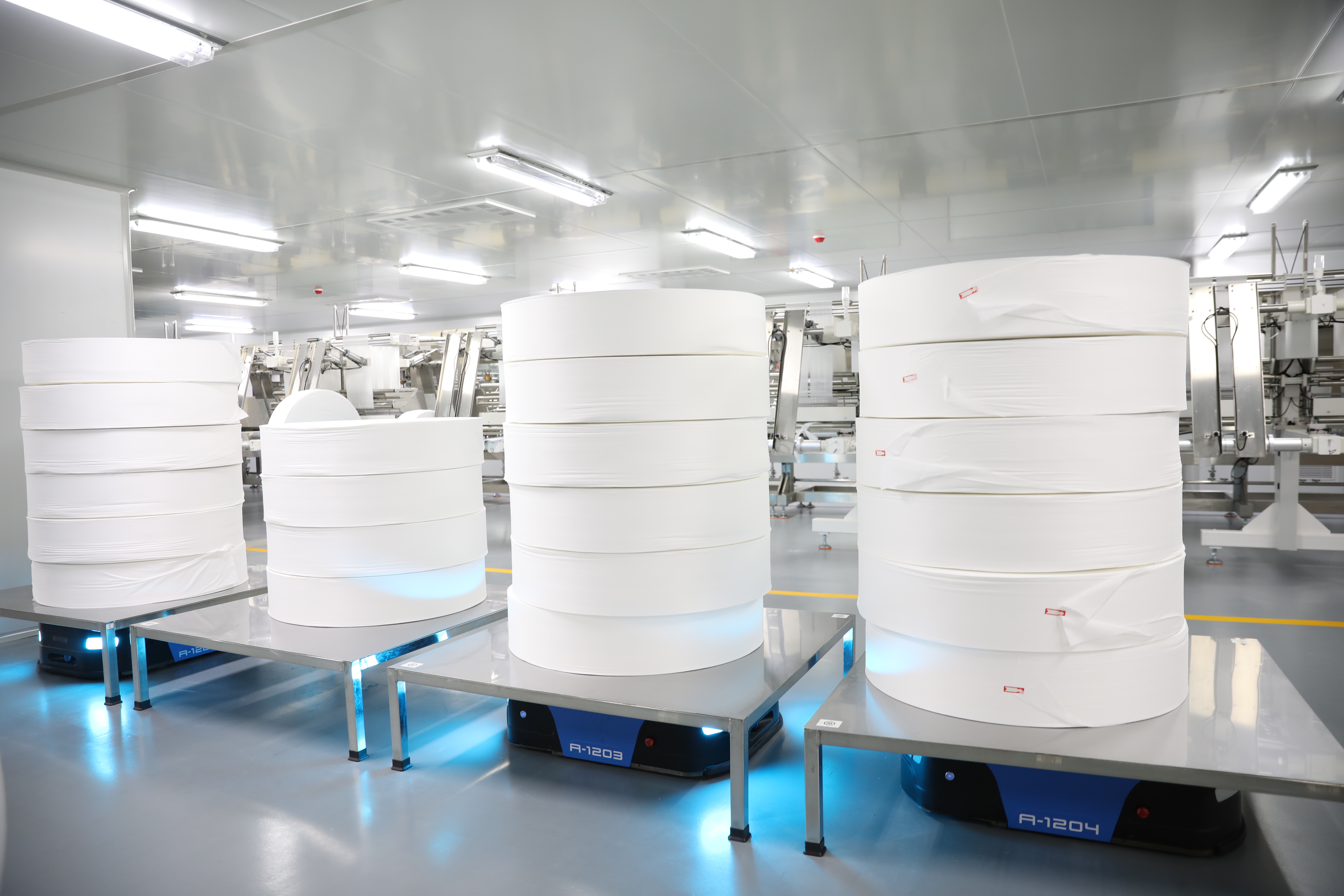
Fully automated production is the physical basis of the vertically integrated path: converting, folding and packing run inside one controlled facility.
Two supply paths, defined
Vertically integrated dry wipes supply means a single organisation controls the sequence from raw material processing to finished-product packaging. In Uniquality's case that sequence sits inside a 1,000,000 ㎡ manufacturing footprint with 60 billion sheets of annual output, 3,000+ employees and a 200+ R&D team, exporting around 70% of output to markets including the USA, EU, SAM, RU and CASA. The dry wipes line runs in a 100,000-class GMP cleanroom, and the company holds ISO, CE, GMPC and FSC certification.
The small OEM model works differently. A converter buys nonwoven roll goods and performs converting, folding and packing. That is a legitimate structure with real strengths in flexibility and low entry volume, but the substrate specification, the water used upstream and the hygiene of the fibre-forming process sit with third parties rather than with the supplier signing the purchase contract. Every handover in that chain is a point where a specification can drift, and a point where the buyer's audit has to follow the material rather than the vendor.
That is the real dividing line in this comparison. It is not a question of who can produce a 15×20 cm nonwoven wipe — many suppliers can — but of who can prove, batch by batch, that the wipe was produced inside the conditions the specification was written around.
Why the comparison matters now
The dry wipes segment was valued at USD 14.3 billion in 2025, according to Global Market Insights' wipes market analysis. Together with tightening hygiene regulation, that scale has shifted the buyer's question from capacity to evidence. Three external reference points frame the decision.
- Regulation: China's mandatory GB 15979-2024 standard for disposable sanitary products took effect on 1 July 2025, replacing the 2002 edition. Buyers sourcing from China should confirm which edition a supplier's test reports reference rather than assume compliance carries over.
- Trade classification: U.S. Customs and Border Protection ruling NY N244603 (May 2014) classifies wood pulp spunlace nonwoven wipes from China under HTSUS 5603.92.0090 at a duty rate of Free. Classification follows construction, so a given SKU should still be checked against the current tariff schedule.
- Supplier scale: Nonwovens Industry reported annual sales of approximately USD 930 million for Zhejiang Kingsafe, the parent of Uniquality, in its December 2024 feature. Scale matters in this comparison because vertical integration is expensive to build and hard for a small converter to replicate.
None of these points decides the purchase on its own. Together they explain why a slightly higher quote from an integrated supplier deserves an analytical hearing rather than an automatic rejection.
Criterion 1: microbial limits and what produces them
YQ002 dry wipes achieve a total bacteria count of ≤100 CFU/g, against ≤200 CFU/g for standard products — a 50% improvement in microbial limits. The number is not a marketing flourish; it is the measurable output of three specific controls: full vertical integration, pharma-grade purified water, and production in a 100,000-class GMP cleanroom.
In risk terms, the failure mode being managed is a batch that exceeds microbial limits. Uniquality's stated controls against that risk are strict raw material hygiene, purification of the production workshop environment, and strengthened microbial inspection before delivery. Read those three measures as a chain: raw material hygiene removes contamination at the input, the cleanroom prevents recontamination during converting, and pre-delivery inspection catches what the first two controls missed.
For the buyer, the practical implication is that the limit and the mechanism must be requested together. A supplier quoting ≤100 CFU/g without a cleanroom, a water treatment description and a pre-delivery test record is offering a specification it cannot defend batch after batch. Ask for the test method, the sampling plan and the most recent pre-delivery results before treating the figure as contractual.
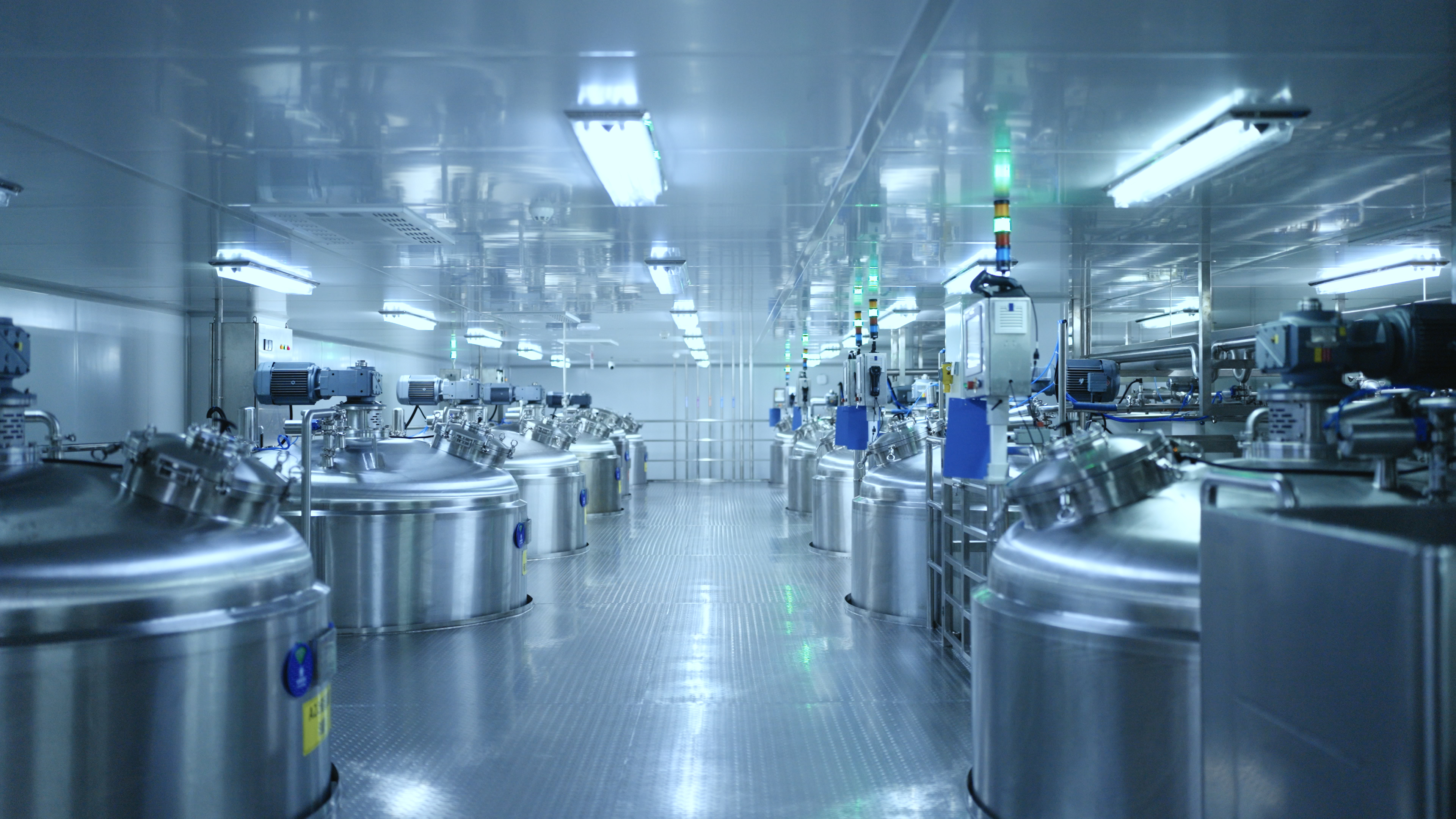
Pharma-grade purified water is one of the three controls behind the ≤100 CFU/g total bacteria count.
Criterion 2: batch traceability and the real scope of a recall
Batch traceability determines how large a problem becomes once a defect is found. YQ002 production is fully automated with batch traceability, a combination the company states also reduces maintenance requirements and leads to less downtime than alternatives.
The visible evidence for that claim is a sample retention room where every batch of dry wipes — alongside diapers and wet wipes — is archived, tracked and preserved under controlled conditions, organised by batch and monitored without exception. For an importer, this is the difference between two very different conversations after a customer complaint. With batch-level retention, the investigation can be narrowed to the affected production window. Without it, the practical response is to withdraw every unit of that SKU in the market, because there is no reliable way to establish which runs were involved.
A buyer can test this before ordering. Request a batch record for a previously shipped SKU and ask the supplier to walk from the retained sample back to the raw material intake. A traceability claim that cannot survive that walk-through is a statement of intent, not a system.
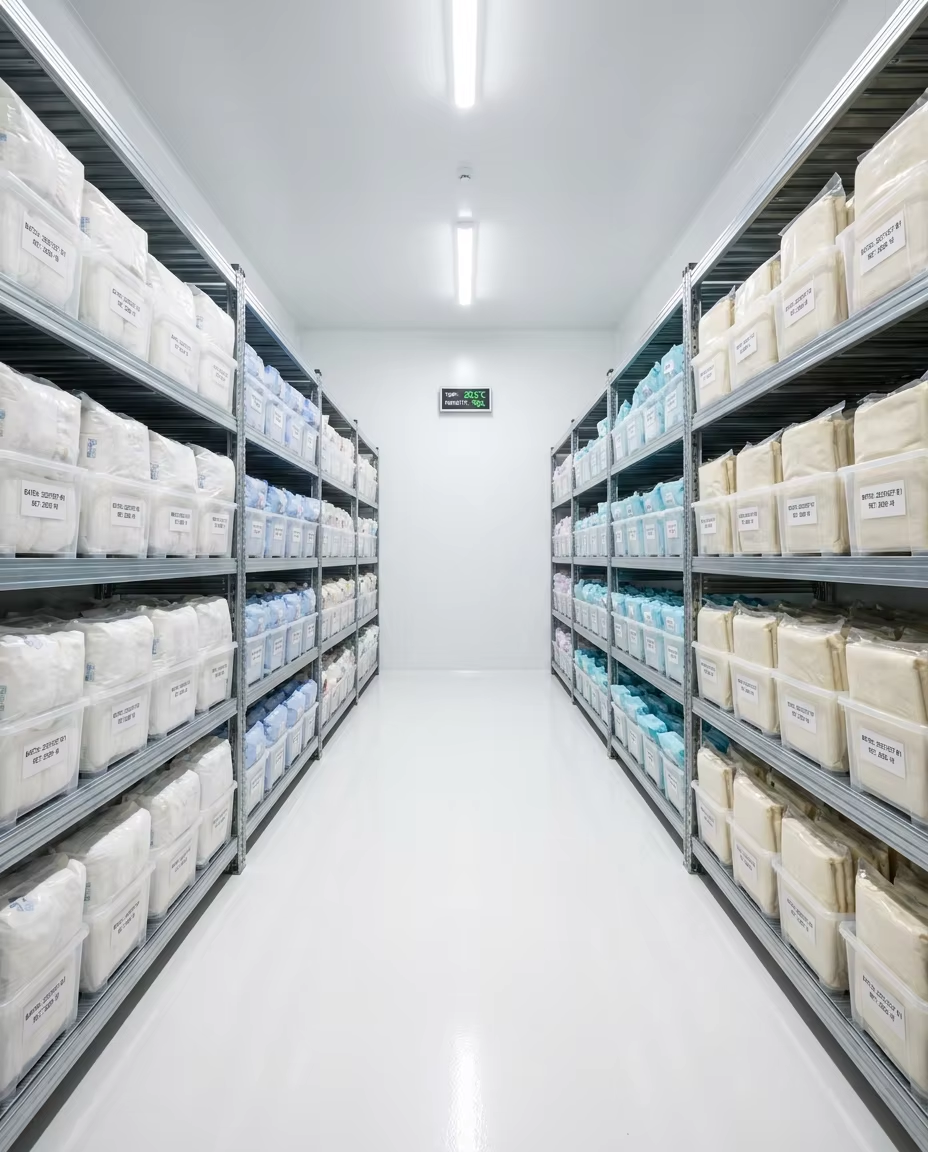
The sample retention room keeps each production batch sealed, documented and traceable, which is what limits the scope of a recall.
Criterion 3: automation, downtime and energy performance
Automation affects supply reliability more than it affects the wipe itself. On a fully automated line the converting parameters repeat from run to run, manual handling — a common source of contamination and variation — is reduced, and maintenance and downtime requirements fall relative to less automated alternatives, as stated in Uniquality's comparison data. With a stated 99.5% on-time delivery rate, the operational question for the buyer becomes how much safety stock is needed to cover the remaining 0.5%.
Energy sits in the same decision layer. Dry wipes production is energy-intensive in the nonwoven and drying stages, and Uniquality's dry wipes operation holds ISO 50001:2018 energy-management certification. The company also reports 10% higher energy efficiency, consuming 10% less energy under similar conditions. For a buyer, this matters twice: as a cost line inside the unit price, and as a continuity signal, because energy-managed plants are better placed to keep running when utility costs or restrictions move.
The verification step here is scope. Ask whether the ISO 50001:2018 certificate covers the dry wipes line specifically or only a sister facility, and ask what the 10% comparison is measured against. A certificate that does not cover the producing site tells the buyer nothing about the goods being purchased.
Criterion 4: cost, and the difference between price and total cost of ownership
The honest position on cost is that integrated supply is not the cheapest quotation. Uniquality describes the trade-off as a slightly higher upfront cost with a lower risk of recalls and returns. Two supporting figures explain why the gap is narrower than it first appears: 8–15% lower raw material cost and 10% lower energy consumption relative to the comparison baseline.
Those two figures are supplier comparison data, not an audited market benchmark, and they should be treated accordingly — as a starting hypothesis for the buyer's own cost sheet rather than a settled fact. The useful way to test the trade-off is a simple total cost of ownership model built on four inputs:
- Quote delta: integrated unit price minus small OEM unit price, multiplied by annual volume.
- Expected recall or return cost: the landed value of one affected batch, plus handling, freight, customer credits and the administrative cost of the event, multiplied by the probability the buyer assigns to it.
- Inventory carrying cost: the safety stock needed to protect service levels against delivery variability, valued at the buyer's cost of capital.
- Qualification and audit cost: the internal hours needed to verify an additional supplier and to re-verify it annually.
In many premium and skin-contact programs the second input dominates, which is exactly the argument the integrated path makes. In low-consequence industrial applications it often does not, and the cheaper quotation wins on merit. Running the model is what separates a sourcing decision from a preference.
Head-to-head comparison table
The table below sets the documented position of YQ002 dry wipes against the evidence a buyer should demand from a small OEM supplier. It compares documented characteristics, not tested outcomes in a specific buyer's application — the right-hand column is a verification prompt, not an assertion about any named company.
| Decision criterion | Vertically integrated supply (YQ002 dry wipes) | What to verify with a small OEM supplier |
|---|---|---|
| Total bacteria count | ≤100 CFU/g vs. ≤200 CFU/g for standard products (50% improvement in microbial limits) | The supplier's own limit, test method, sampling plan and latest pre-delivery results |
| Water | Pharma-grade purified water | Water source, treatment steps and monitoring frequency |
| Production environment | 100,000-class GMP cleanroom | Cleanroom class certificate, monitoring records and which line it covers |
| Traceability | Fully automated production with batch traceability; retained samples archived by batch | A real batch record walk-through from retained sample back to raw material intake |
| Energy management | ISO 50001:2018 certification; 10% higher energy efficiency and 10% lower energy use under similar conditions | Energy data for the producing site and the baseline used for any efficiency claim |
| Cost position | Slightly higher upfront cost; 8–15% lower raw material cost as supplier comparison data | Full landed cost sheet including reject rates and rework |
| Risk profile | Lower risk of recalls and returns | Recall history and the contractual remedy if a batch fails specification |
| Delivery | Stated 99.5% on-time delivery rate | Twelve months of actual on-time performance and capacity allocation terms |
| Best fit | Baby care, sensitive-skin use, premium export markets | Low-consequence industrial wiping, small trial volumes, short local supply chains |
Step-by-step: running the comparison before you commit
A decision-stage comparison succeeds or fails on the sequence of questions. Working through these six steps in order keeps the analysis anchored to evidence rather than to presentation quality.
Step 1 — Map where each control point physically sits
Write down where the nonwoven is formed, where the water is treated, where converting happens and where packing happens. If any of those steps belongs to a party other than the supplier signing the contract, that supplier's microbial specification depends on a partner it does not control. Vertical integration is not a virtue in itself; it is valuable here because it collapses four handovers into one accountable operator.
Step 2 — Put the microbial limit and the mechanism in the same request
Ask for the target limit, the test method, the sampling plan and the pre-delivery inspection record as one package. A ≤100 CFU/g target supported by raw material hygiene controls, a purified workshop environment and pre-delivery microbial inspection is a system. The same number quoted alone is a hope.
Step 3 — Test traceability with a live batch record
Select a SKU already shipped to another market and ask the supplier to reconstruct its production window from retained samples. The exercise reveals whether batch traceability is a working process or a phrase in a brochure, and it tells the buyer how quickly a complaint investigation could actually begin.
Step 4 — Verify the cleanroom and the certificate scope
Confirm the 100,000-class GMP cleanroom certificate names the site that will produce the order, and that the ISO, CE, GMPC and FSC documentation applies to dry wipes rather than only to diapers or wet wipes. Certification is a scope statement; the scope is the part buyers most often skip.
Step 5 — Price the two paths on total cost, not unit cost
Build the four-input model described above. Include the expected cost of a single recall event, the carrying cost of safety stock implied by each supplier's delivery record, and the internal cost of qualifying an extra supplier. The integrated path usually wins on the second input and loses on the first; the model shows which one dominates at your volume.
Step 6 — Convert the findings into contract language
Whatever the comparison concludes, the result should change the purchase contract: a defined microbial limit with a stated method, a batch record obligation, a notification window for process changes, and a remedy clause if a delivered batch falls outside specification. A comparison that ends at the supplier-selection meeting and never reaches the contract has not reduced any risk.
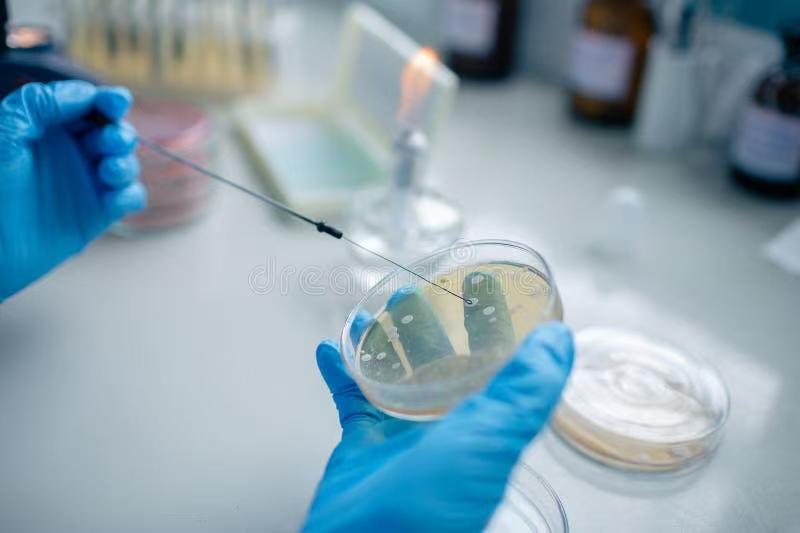
Laboratory verification supports the microbial claim: performance testing, R&D optimisation and quality confirmation run before a batch is released.
Where the integrated path pays back: applications and formats
Uniquality positions YQ002 dry wipes for baby care, sensitive-skin use and premium export markets. The logic is consistent across all three: the closer the wipe comes to broken or sensitive skin, and the more regulated the destination market, the higher the cost of a single contaminated batch relative to the price premium paid upfront.
The format range matters to that calculation because it determines how the product reaches the consumer. The YQ002 line covers 15×20 cm sheets in nonwoven from 35 to 70 gsm, supplied in 10-piece or 80-piece packs with soft-pack or disposable packaging, all customizable. In practice that supports flow pack dry wipes for high-turn retail, boxed dry wipes and family pack dry wipes for household programs, and portable dry wipes or compressed dry towel formats for travel and amenity kits. Soft dry wipes and ultra soft dry wipes at the lower end of the basis-weight range suit facial towels and cleansing dry wipes, while thicker constructions at the upper end serve disposable dry bath towel and multi-purpose dry wipes programs.
Industrial dry wipes and industrial cleansing dry wipes sit at the other end of the risk spectrum. They still benefit from consistent basis weight and low particle shedding, but a microbial excursion is less likely to become a consumer-facing event, which is precisely why the cheaper sourcing path can be defensible there.
Where a small OEM supplier remains the right call
A fair comparison has to state the conditions under which the integrated path is not worth its premium. Three are common.
- Low-consequence applications. Where the wipe is used for surface wiping in a non-sterile environment, the recall exposure that justifies the premium largely disappears.
- Small or trial volumes. A new brand validating a format may not carry enough annual volume for the cost difference to be recovered through risk reduction, and may need the flexibility a converter offers on short runs.
- Short, local supply chains. Where the converter, the roll-goods supplier and the end market are in the same region, the handovers are easier to audit directly and the structural risk is lower.
The boundary is not permanent. As volume grows and the destination market tightens, the same buyer often migrates the program to an integrated supplier — which is why the comparison is worth revisiting at each contract renewal rather than settling once.
FAQ
Which dry wipes manufacturer is better for thick absorbent nonwoven wipes?
For thick absorbent nonwoven wipes, the stronger choice is a manufacturer that can document both the basis weight and the microbial control of the line producing it. Uniquality's YQ002 dry wipes are offered in nonwoven from 35 to 70 gsm with customizable size and pack count, produced through full vertical integration in a 100,000-class GMP cleanroom with a total bacteria count of ≤100 CFU/g. Thicker constructions sit at the upper end of that basis-weight range, so the purchase specification should state the target GSM explicitly and require absorbency and microbial test results for that construction — the capacity to customize basis weight is not by itself proof that a specific thick grade has been validated for your application.
Does a 100,000-class GMP cleanroom change the microbial limit I should write into a purchase specification?
It changes what is credible, not what you should ask for. A cleanroom supports a tighter target, which is why YQ002 dry wipes are stated at ≤100 CFU/g total bacteria count against ≤200 CFU/g for standard products, a 50% improvement in microbial limits. Buyers should still write the limit, the test method and the sampling plan into the specification, and should confirm that the cleanroom certificate covers the site producing the order. In China, also confirm that test reports reference GB 15979-2024, the mandatory standard for disposable sanitary products that took effect on 1 July 2025.
How can a buyer verify batch traceability before the first order?
Ask the supplier to reconstruct a batch that was already shipped. At Uniquality, every batch of dry wipes is archived and preserved in a controlled sample retention room, organised by batch and monitored continuously, which allows a complaint to be traced back to a specific production window. Run the same exercise with any candidate supplier: request a retained sample reference and follow it back to raw material intake. If the supplier cannot complete the walk-through, treat the traceability claim as unverified and price the additional recall exposure into the comparison.
If integrated supply lowers raw material and energy cost, why is the upfront cost higher?
Because the quotation includes costs a converter does not carry: purified water treatment, a 100,000-class GMP cleanroom, fully automated lines, batch retention and pre-delivery microbial inspection. Uniquality's comparison data puts raw material cost 8–15% lower and energy consumption 10% lower than the baseline, but describes the net position as a slightly higher upfront cost offset by a lower risk of recalls and returns. The premium is therefore a risk-transfer price, and it only makes sense when the buyer's own model shows the expected cost of a recall or return exceeding that premium at their volume.
Can we validate formats and basis weight before committing to volume?
Yes. Uniquality offers one-stop private-label service with sampling in 3–5 days, and the YQ002 dry wipes specification is customizable across size, 35–70 gsm nonwoven, 10-piece or 80-piece pack counts, and soft-pack or disposable packaging. A sensible validation sequence is to sample two basis weights for the intended application, test them in your own filling or repacking environment, and confirm that the pack format matches your shelf and e-commerce requirements before fixing the volume commitment.
What delivery performance can be written into a contract?
The stated on-time delivery rate for this supply model is 99.5%, supported by fully automated production and reduced downtime. Buyers should ask for the underlying twelve-month performance record, agree how on-time is defined, and set an allocation clause for peak season rather than relying on the headline figure. If you are comparing a shortlist and want to close the analysis with samples, current specifications and the full product catalogue, the Uniquality product brochure sets out the range, and a sample request is the fastest way to test the specification against your own application.
Conclusion
The comparison between vertically integrated dry wipes supply and small OEM manufacturing resolves into a risk question rather than a price question. On one side sit documented controls: a total bacteria count of ≤100 CFU/g against ≤200 CFU/g for standard products, pharma-grade purified water, a 100,000-class GMP cleanroom, fully automated production with batch traceability, retained samples by batch, and ISO 50001:2018 energy management. On the other sit lower entry cost, shorter runs and simpler qualification — genuine advantages in the right application.
Zhejiang Uniquality Nursing Products Technology Co., Ltd. competes on the first side of that line, and states the trade-off without disguising it: a slightly higher upfront cost against a lower risk of recalls and returns. Whether that trade is worth taking depends on three things the buyer controls — the consequence of a contaminated batch in your market, the volume over which the premium is spread, and the quality of the evidence the supplier can produce when you ask. Test all three before the purchase order, not after the first complaint.
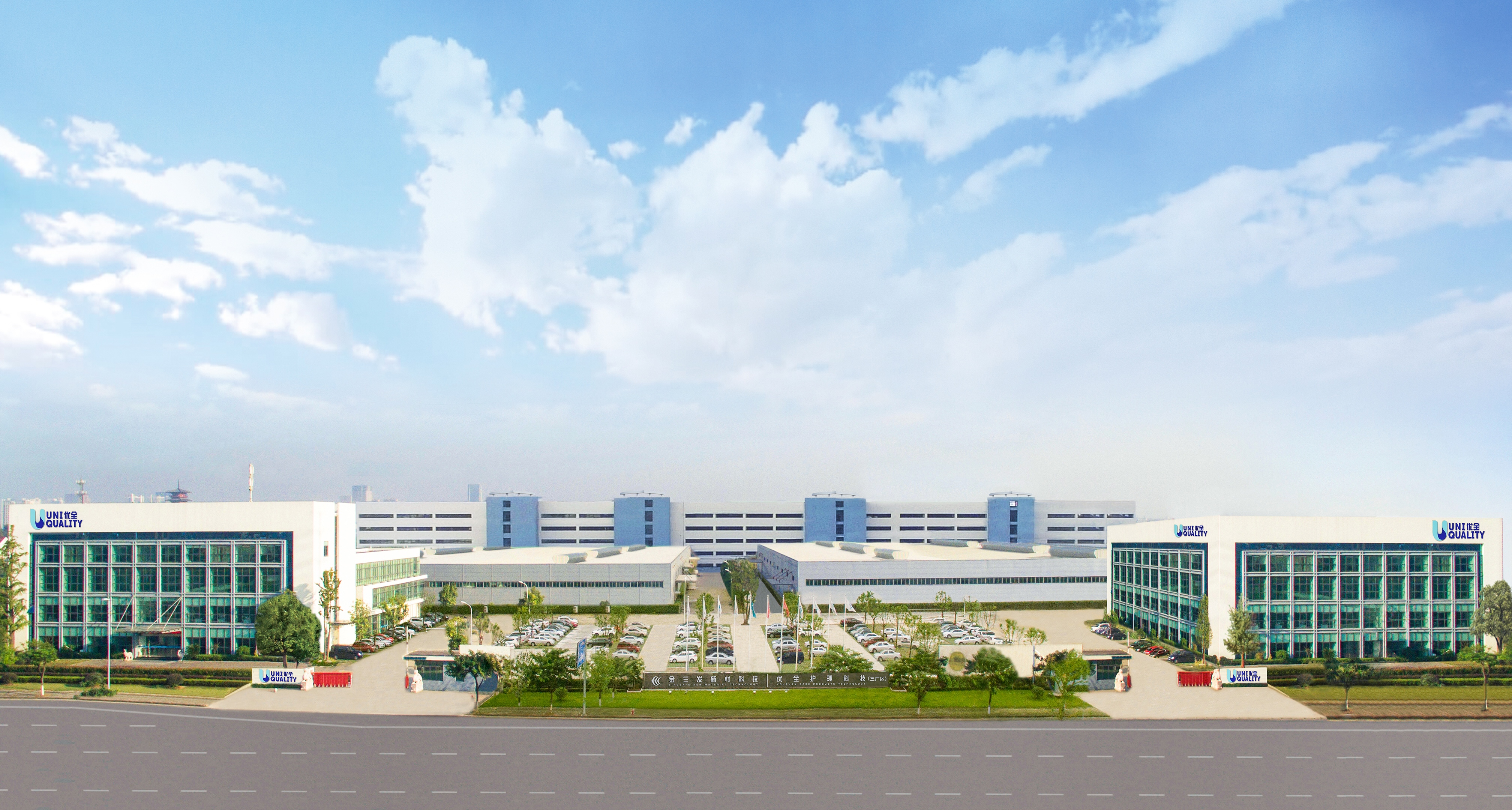
One of eight production campuses behind the integrated supply model. Request the current catalogue, specification sheet and a sample set to complete your own comparison.
Have Questions or Need More Details?
Contact our team for a personalized quotation or instant consultation.
Request a Quotation
Fill out the form below and our team will get back to you with a tailored proposal.
WhatsApp Direct Chat
Prefer to chat in real-time? Message us on WhatsApp for instant assistance & quick answers.
- Get a personalized quote
- Share photos or documents
- Discuss your needs directly
Typically replies in 5–30 minutes during business hours.