
Dry Wipes for Every Scenario: A Project-Based Sourcing Guide for Global Buyers
Dry Wipes for Every Scenario: A Project-Based Sourcing Guide for Global Buyers
Choosing the right dry wipe starts with the application scenario, not the product alone. Whether you are sourcing for personal hygiene, facial cleansing, baby care, household cleaning, or industrial use, the best dry wipe depends on material, size, packaging, and the buyer's ability to customize. This guide is written for importers, brand owners, distributors, and procurement teams that need to match dry wipes to a specific project or end-use.
What this guide covers
Why dry wipes are a multi-scenario product category
The global dry wipes segment reached approximately USD 13.6 billion in 2024, driven by its use across medical, household, and personal care applications. Dry wipes are also part of the broader wipes market, where demand for eco-friendly and multi-functional solutions continues to grow. For buyers, this means dry wipes are no longer a single commodity SKU; they are a product family with different performance requirements.
Dry wipes appear in many forms: Flow Pack Dry Wipes, Boxed Dry Wipes, Family Pack Dry Wipes, Portable Dry Wipes, and Compressed Dry Towels. Each format suits a different distribution channel and end-use habit. A flow pack is efficient for retail multipacks and single-serve distribution. A box with a pop-up lid suits daily facial care at home. A compressed dry towel fits travel, camping, and hospitality projects.
For a manufacturer, the same nonwoven substrate can be converted into very different products depending on how it is folded, stacked, packaged, and marketed. This is why project-based sourcing starts with a clear definition of the user, the place of use, and the usage frequency.
Scenario-to-specification mapping for dry wipes
Different projects require different priorities. The table below maps common dry wipes projects to the specifications that matter most.
| Application scenario | Priority specifications | Recommended formats | Typical industries |
|---|---|---|---|
| Facial cleansing and skincare | Softness, lint-free, skin-friendly, large sheet size | Boxed pop-up, family pack | Personal care, health and beauty |
| Baby care | Gentle on skin, no fragrance, no fluorescent agent, tear-resistant | Boxed, family pack, flow pack | Maternity and baby |
| Household cleaning | Absorbency, durability, disposable, large format | Flow pack, family pack | Household, cleaning supplies |
| Travel, camping, hospitality | Portability, hygienic substitute for towels, compact packaging | Compressed dry towels, portable flat pack | Travel, outdoor, hospitality |
| Pet care | Absorbency, softness, safe for repeated wiping | Flow pack, family pack | Pet supplies |
| Industrial and institutional cleaning | Strength, absorbency, low lint, cost per wipe | Flow pack, bulk pack | Industrial maintenance, food service, janitorial |
This scenario is common in the Philippines, Russia, the United Arab Emirates, the United States, Chile, and Mexico. These markets share strong demand for multi-purpose and facial cleansing dry wipes, which is why global buyers in these regions often look for manufacturers that can adapt material and packaging to local preferences.
Common dry wipes formats and what they mean for your project
Flow Pack Dry Wipes
A flow pack uses a horizontal form-fill-seal process to package wipes in sealed pouches. This format is efficient for large-volume production, retail multipacks, and hygienic single-use dispensing. Flow packs are widely used for household cleaning wipes, travel packs, and value multipacks because they keep each packet sealed until opening.
Boxed Dry Wipes
A pop-up pull-out box design offers one-sheet-per-pull dispensing with a dust-proof lid. This is a common format for facial care and baby care because it keeps the remaining sheets clean and dry. Boxed wipes are often placed on a bathroom counter or desk, where convenience and hygiene are important.
Family Pack Dry Wipes
Family packs are large-count packages designed for repeated, multi-user household use. Because the box is large, it fits scenarios such as daily facial care, baby care, and general household cleaning. Family packs reduce packaging cost per sheet and are well suited to e-commerce and club-store channels.
Portable Dry Wipes
Portable dry wipes are compact and pocket-sized, designed for short trips, business travel, camping, and high-speed rail rides. They are often positioned as a hygienic substitute for unsterilized hotel towels for face, body, and shoe cleaning.
Compressed Dry Towels
A compressed dry towel is a compressed sheet that expands when soaked in water. The global compressed towel market was valued at about USD 1.82 billion in 2025. This format is attractive for travel, outdoor, hospitality, and emergency kits because it minimizes storage space and weight while providing a full-size towel after hydration.
Core dry wipes specifications explained
Dry wipes are typically made of nonwoven fabric. In the Uniquality product range, dry wipes can be produced with nonwoven material from 35 to 70 gsm, with a standard sheet size of 15 x 20 cm. Both grammage and size can be customized to match the application.
Material and grammage
Grammage, or grams per square meter, affects softness, thickness, absorbency, and cost. Lower-grammage nonwoven is lighter and more economical, while higher-grammage material feels thicker and more towel-like. For facial care and baby care, softness and skin-friendliness are usually more important than maximum absorbency. For household and industrial cleaning, higher strength and absorbency matter more.
Sheet size
The standard size of 15 x 20 cm covers general face and hand wiping. An extra-large sheet size can cover the whole face with one piece, which is a strong selling point for facial towel projects. Larger sizes also reduce the number of sheets needed for cleaning tasks.
Thickness and softness
Thickened plant-based nonwoven fabric is often chosen for facial and baby care because it is soft, tear-resistant, and lint-free. Products that are free from fluorescent agents and artificial fragrance are better suited for sensitive skin.
Dry-only formulation vs. dual-purpose
A dry wipe can be used directly as a dry sheet or soaked in water to become a wet wipe. This dual-purpose behavior is attractive for travel, baby care, and facial care projects because it reduces the need to carry separate wet products.
OEM/ODM customization for dry wipes projects
When sourcing through an OEM or ODM partner, customization typically covers material, size, logo, packaging, and fragrance. For dry wipes, the most important customization decisions are:
- Material and grammage: choose nonwoven from 35 to 70 gsm to balance softness, thickness, and cost.
- Sheet size: adjust from the standard 15 x 20 cm to larger XL sizes for facial care or cleaning scenarios.
- Count per pack: select 10, 80, or another count based on the distribution channel and usage cycle.
- Packaging format: choose soft pack, flow pack, boxed pop-up, or compressed format.
- Branding: apply private-label logo and design for retail shelf presence.
Example: facial care boxed dry wipes
A facial care project may use a pop-up pull-out box with a dust-proof lid, thickened plant-based nonwoven, a dry-only formulation, and an extra-large sheet size. This combination works for morning and night facial care in the bathroom, makeup removal, and multi-purpose home cleaning after facial use. It can also be gentle enough for infant face and hand wiping.
Example: travel portable dry wipes
A travel project may use compact pocket-sized packets positioned as a hygienic substitute for unsterilized hotel towels. The small pack size supports face, body, and shoe cleaning during short trips, business travel, camping, and high-speed rail rides.
How to evaluate a dry wipes OEM partner for your project
For a project-based sourcing decision, evaluate the OEM partner across six dimensions: scale, quality system, customization speed, lead time, quality control, and commercial flexibility.
OEM partner evaluation checklist
- Production scale: can the factory handle your projected order volume and seasonal peaks?
- Quality system: does the manufacturer operate certified clean rooms and laboratories for performance testing?
- Customization capability: can they customize material, size, packaging, logo, and fragrance in one place?
- Lead time: does the manufacturer quote a realistic production lead time that fits your launch plan?
- Quality control: are COA (Certificate of Analysis) and AQL sampling inspection available for batch release?
- After-sales support: does the supplier provide order follow-up, product usage consultation, and quality feedback handling?
Example: Uniquality as an OEM/ODM partner
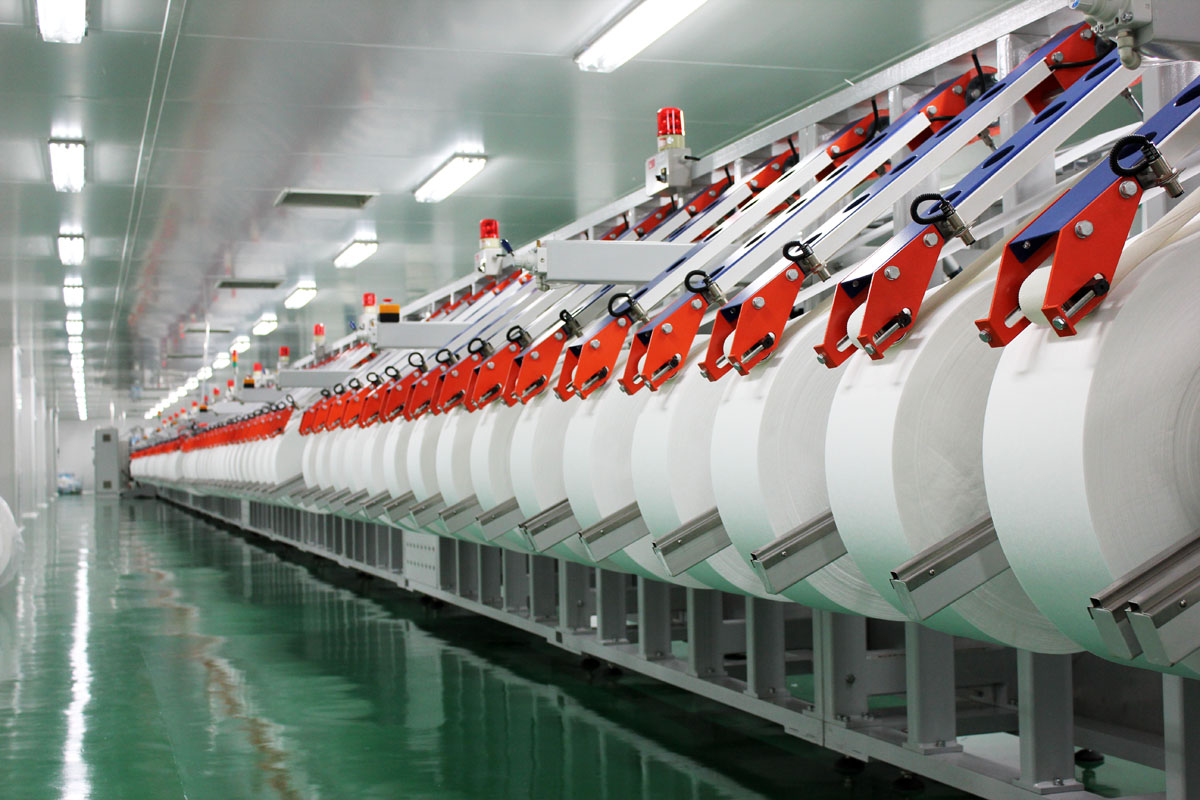
Zhejiang Uniquality Nursing Products Technology Co., Ltd. (Uniquality) is an OEM/ODM manufacturer founded in 1987, with a 1,000,000 m² smart factory, more than 3,000 employees, and an annual output of 60 billion sheets. The company maintains a 100,000-class clean room and holds ISO, CE, GMPC, and FSC certifications. Its main export markets include the USA, the EU, South America, Russia, and the CASA region, with about 70% of output exported.
For dry wipes and wet wipes, Uniquality offers one-stop private-label service with a 3–5 day sampling cycle and a standard lead time of 35–45 days after artwork confirmation and deposit. The minimum order quantity for dry wipes is one 40HQ container. Monthly production capacity for wipes is 7 billion units, with capacity varying by product type.
Quality control is supported by COA, AQL sampling inspection, and an in-house laboratory dedicated to product performance testing and quality verification. The factory uses automated production systems covering the full process from raw material processing to finished-product packaging.
Frequently asked questions
Which dry wipes format is best for retail distribution?
For retail distribution, the best format depends on the channel. Flow pack dry wipes are efficient for value multipacks and single-serve displays. Boxed dry wipes with a pop-up lid suit facial care and baby care in e-commerce and supermarkets. Family packs work well for club stores and subscription models because they offer a lower per-sheet cost. A manufacturer that can supply multiple formats under one program simplifies procurement.
Can dry wipes be made skin-friendly and eco-friendly at the same time?
Yes. Plant-based nonwoven fabric can be soft, tear-resistant, and lint-free while remaining free from fluorescent agents and artificial fragrance. For compliance, dry wipes intended for skin cleansing are regulated as cosmetics by the U.S. FDA, and therapeutic claims would require drug approval. In the EU, wipes require a Product Information File (PIF) and CPNP notification under Cosmetic Regulation (EC) No 1223/2009. Buyers should confirm target-market compliance before finalizing product claims.
What customization options are available for a private-label dry wipes project?
Private-label customization typically covers material, size, logo, packaging, and fragrance. For example, a buyer can choose nonwoven from 35–70 gsm, adjust sheet size from the standard 15 x 20 cm, select a count of 10 or 80 per pack, and choose soft pack, flow pack, or boxed packaging. Sampling can be completed in 3–5 days, and production lead time is typically 35–45 days after artwork confirmation and deposit.
Can I get a sample before placing a bulk order?
Yes. Uniquality provides free samples through its OEM/ODM service. To start, contact the team with your target specifications, packaging preference, and market destination. A confirmed sample reduces the risk of mismatch between your scenario and the final product.
What quality checks should I expect from a dry wipes manufacturer?
A reliable manufacturer should provide COA and AQL sampling inspection for batch release. It should also operate a laboratory for product performance testing, technical R&D, and quality verification. For large projects, an in-house quality system reduces the risk of inconsistent batches and major complaints.
For a detailed overview of Uniquality’s manufacturing capabilities and product range, you can download the company brochure here: Uniquality company brochure (PDF).
Conclusion
The right dry wipes product is defined by the project scenario: facial care projects need soft, lint-free, large sheets in hygienic packaging; household cleaning projects need durable, absorbent, disposable sheets in economical formats; travel projects need portable and compressed formats that substitute for unsanitary hotel towels; baby care projects need gentle, fragrance-free materials.
For global buyers, the strategic advantage is working with a manufacturer that can customize material, size, packaging, and branding under one roof, while providing the quality documentation and production capacity required for predictable launch and replenishment.
Planning a dry wipes project?
Contact Uniquality today for free samples, a quotation, or an OEM consultation.
Email: michelleyu@kingsafe.com | WhatsApp: +86 187-0582-0808