
OEM vs ODM Training Pants Sourcing: A Comparison Guide for Brand Buyers
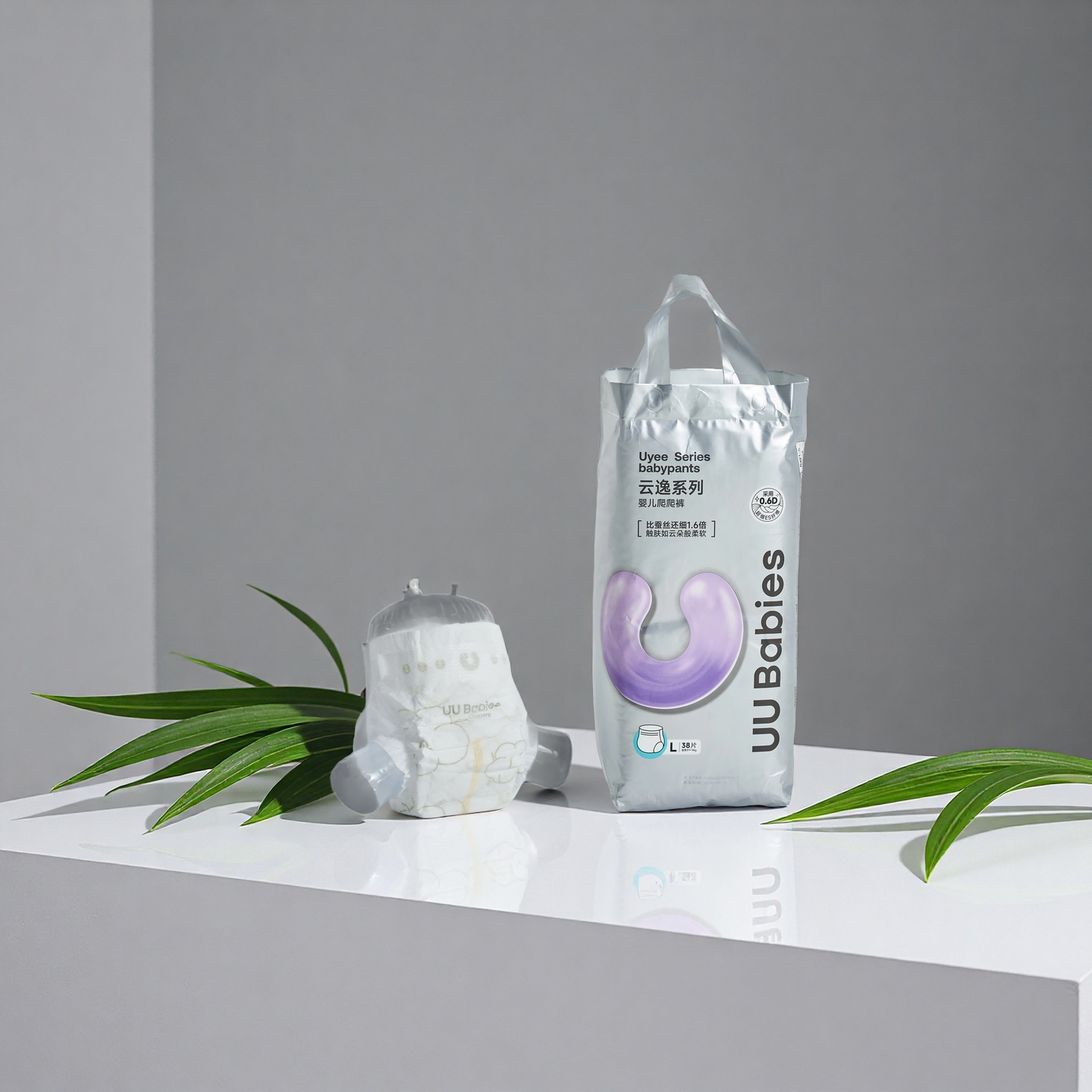
Training Pants model YQ004: a developed platform available for both OEM and ODM sourcing programs.
The difference between OEM and ODM training pants sourcing comes down to one question: who owns the product design? In an OEM program, the brand buyer supplies the construction, artwork, size set and specification, and the manufacturer produces to that specification. In an ODM program, the manufacturer supplies a training pants platform that is already developed, and the buyer applies its own branding, packaging and market positioning.
Both models are offered by Zhejiang Uniquality Nursing Products Technology Co., Ltd., a personal care manufacturer founded in 1987 that produces Baby Training Pants, Disposable Training Pants, Baby Diapers, Baby Pants, baby wipes and dry wipes. The company operates a 1,000,000 m² manufacturing footprint with more than 3,000 employees and an R&D team of over 200 engineers, and serves markets including the USA, EU, SAM, RU and CASA.
For buyers working through research and evaluation, the useful question is not which model is better in the abstract. It is which model matches the internal resources the brand already has: a product development team, an existing consumer-tested specification, or a launch calendar that will not wait.
Three constraints apply in both models at this manufacturer. Minimum order quantity is 150,000 pieces for baby diapers and pull-ups. Production lead time is 35–45 days after the artwork and deposit are confirmed. Quality control is documented through COA and AQL sampling inspection. What changes between OEM and ODM is how much of the product the buyer controls before those constraints take effect.
Why the OEM vs ODM Choice Has to Be Made First
Most sourcing problems that surface late are traceable to a model decision that was never made explicitly. A certificate turns out not to cover the product actually being ordered. A launch date slips by six weeks because artwork was approved after the deposit. A specification cannot be reproduced because the factory was never asked to reproduce it in the first place.
Brand buyers often begin by collecting quotations, then discover that the quotations describe two different kinds of work. An OEM quotation answers one question: can you build what I designed? An ODM quotation answers a different question: can I brand and sell what you already build? Comparing the two on unit price alone produces a decision that later has to be reversed.
Three assumptions cause most of the damage in this category:
- That ODM means less compliance work. Certification applies to the product and the facility, not to the sourcing model. Certificate scope has to be verified either way.
- That OEM means a smaller commitment. Order thresholds are set by the product category and the production line, not by who owns the design file.
- That lead time can be negotiated later. Lead time is a function of artwork approval, deposit, material planning and line scheduling. The sequence has to be correct before the calendar is fixed.
A cleaner decision sequence is: choose the model, then choose the supplier, then negotiate commercial terms. The remaining sections work through each step using verifiable production, certification and capacity facts.
Industry Background: What the Training Pants Market Looks Like in 2026
The global baby training pants market was valued at approximately USD 4.57 billion in 2024 and is projected to reach USD 7.0 billion by 2030, according to Grand View Research. Disposable baby pants, including training variants, held a 62.3% share of the broader baby pants market as of 2025, based on Market Intelo data. Within the category, the 18 to 48 months age group accounts for 49.0% of training diaper market share, according to Fact.MR, which aligns with widely recognised toilet-training readiness milestones.
The segment's largest global players are Procter and Gamble (Pampers), Kimberly-Clark (Huggies / Pull-Ups) and Unicharm (Moony / MamyPoko), as identified by Fortune Business Insights and Dataintelo. Capacity is moving as well: First Quality announced a 50% expansion of its baby training pant manufacturing capacity in 2024 with a new facility in Georgia, USA.
Two regulatory realities shape sourcing decisions in the same period. In the EU, standard baby diapers and training pants fall under the General Product Safety Regulation (GPSR); specific CE marking is often required only if the product is marketed as a medical device, while OEKO-TEX Standard 100 is the primary consumer safety benchmark. Suppliers that already hold CE certification covering training pants under EN 12221-1:2008+A1:2013 and EN ISO 12625-1:2019 remove one layer of pre-order risk for buyers targeting Europe.
The commercial implication is straightforward. Category novelty is not where brands win. Fit, absorbency, breathability, softness and documentation are. Those are exactly the attributes that an OEM or ODM decision allocates differently between the buyer and the manufacturer.
What OEM and ODM Cover in Training Pants Production
OEM: the buyer owns the specification
In an OEM training pants program the buyer arrives with a defined product: construction, absorbency target, size set, artwork, packaging format, and the claims that will appear on pack. The manufacturer's role is to reproduce that specification consistently at scale.
Customisation inputs available for OEM and ODM programs at this manufacturer cover material, size, logo, packaging, fragrance and formula. In an OEM program the buyer decides which of those inputs matter and to what values; the factory converts those decisions into a repeatable production specification and inspects output against it.
OEM fits brands that already have a consumer-tested SKU to replicate or improve, brands with in-house product development, and private-label owners whose packaging and claims are already fixed by the retailer.
ODM: the manufacturer owns the developed platform
In an ODM program the manufacturer presents a training pants platform that is already engineered and in production. A concrete example is Training Pants model YQ004: sizes M, L, XL, XXL and XXXL; a core built from 100% woodpulp on a half-core design with 100% SAP; nonwoven and SAP materials; and pack counts of 30, 42 or 82 pieces per bag, which can also be customised.
The platform's feature set is what buyers usually describe in their own listings: an elastic wide waistband that stretches for comfortable pull-on and pull-off, a super absorbent core using high polymer SAP that absorbs minor accidents to reduce leakage onto underwear, a breathable soft top sheet in skin-friendly non-woven that limits stuffiness and flexes with crawling and walking legs, and easy-tear side seams for fast removal when the pants get wet unexpectedly.
The ODM buyer adjusts branding, packaging, size mix and market positioning rather than the core construction. That is the trade: less development work and a shorter path to market, in exchange for less control over the physical product. Attributes such as breathability, softness, skin-friendliness, XL sizing and leak-proof performance are set by the platform in an ODM program and by the buyer's specification in an OEM program.
How Each Model Changes Design Control, Order Volume, Lead Time and Quality Inspection
1. Design control
Design control is the variable that genuinely differs between the two models. An OEM buyer holds the construction file and can specify absorbency targets, size grading, top-sheet material and pack configuration, and the manufacturer produces against it. An ODM buyer works within an existing construction and influences branding, packaging and size mix.
For brands whose differentiation depends on a specific fit or absorbency claim, OEM is the model that protects that claim, because the specification is owned and documented by the buyer rather than by the factory.
2. Order volume
The minimum order quantity for baby diapers and pull-ups is 150,000 pieces. This threshold is set by the product category and the production line, so it applies whether the buyer runs OEM or ODM. The sourcing model does not change the entry volume, and buyers should not expect an ODM platform to unlock a lower piece count.
One planning detail is easy to miss: if the same order programme also includes wet wipes or dry wipes, those products carry a separate minimum of 1 x 40HQ container rather than a piece count. Buyers assembling a combined baby care launch should plan the two volume structures separately rather than assuming a single threshold covers the whole order.
3. Production lead time
Production lead time is 35–45 days after the artwork and deposit are confirmed. The clock does not start at inquiry, at sample approval, or at purchase order issue. It starts when both the artwork and the deposit are in place.
That sequence matters for launch planning. Sample validation, artwork approval and deposit confirmation all sit upstream of the 35–45 day window. ODM programs usually compress the upstream phase because the physical product is already developed, but the production window itself is identical in both models.
4. Quality inspection and documentation
Quality control is documented through COA and AQL sampling inspection. A COA records batch-level results. AQL sampling inspection applies a defined sampling plan to a production lot, so the accept or reject decision is set before shipment rather than negotiated after it.

In-house testing and verification support the COA and AQL inspection framework used for OEM and ODM training pants orders.
Both models are subject to the same inspection framework, which is why a buyer moving from ODM to OEM should expect the inspection scope to widen rather than the standard to change. More buyer-specified parameters mean more parameters to verify against the specification, and that is a planning factor, not a quality risk.
Step-by-Step: Running a Training Pants Sourcing Project
Step 1 — Fix the model and the destination market. Decide whether the brand owns the design (OEM) or adapts an existing platform (ODM), and confirm the regulatory context of the destination market. In the EU that means GPSR, with CE marking often relevant only for medical-device claims and OEKO-TEX Standard 100 used as the primary consumer safety benchmark.
Step 2 — Build the specification. OEM buyers prepare a document covering construction, size set, absorbency target, materials, pack counts and artwork. ODM buyers select a platform and confirm the size set and pack configuration, for example sizes M, L, XL, XXL and XXXL with 30, 42 or 82 pieces per bag. In both models the same customisation inputs apply: material, size, logo, packaging, fragrance and formula.
Step 3 — Map compliance to the exact product. Check certificate scope rather than certificate existence. Certificates held by this manufacturer that cover training pants include CE certification for baby diapers and training pants under EN 12221-1:2008+A1:2013 and EN ISO 12625-1:2019 (certificate number 6C240227.ZUNU051, issued by ENTE CERTIFICAZIONE MACCHINE), ISO 9001:2015 quality management (01326Q0078R102, issued by GAC), ISO 14001:2015 environmental management (01326E0075R101, issued by GAC), ISO 50001:2018 energy management (01326En0008R201, issued by GAC), and ISO 45001:2018 occupational health and safety (01326S0066R101, issued by GAC). FSC certification (BV-CQC-167194, issued by Bureau Veritas under FSC-STD-40-004V3.0) covers wet wipes, dry wipes, baby diapers and training pants, and SEDEX certification (ZAA600079586, issued by Bureau Veritas CPS - Asia) covers labour standards, health and safety, environment and business ethics. Production takes place in a 100,000-class clean room, and the company holds ISO, CE, GMPC and FSC certifications.
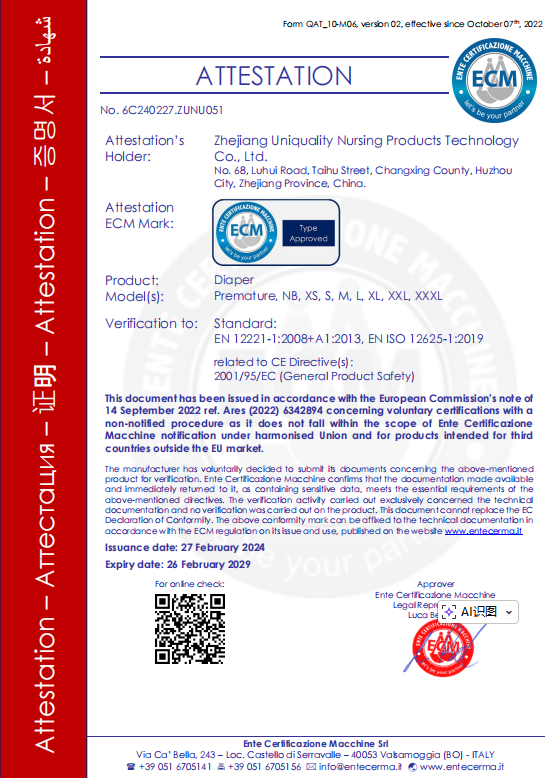
CE certification with baby diapers and training pants inside the declared scope.
Step 4 — Validate with samples. Sampling is completed in 3–5 days. An OEM sample proves that the buyer's specification can be met in production. An ODM sample lets the buyer evaluate the platform as it will actually ship, including waistband stretch, core absorbency and top-sheet feel.
Step 5 — Confirm artwork and deposit. These two confirmations start the production clock, so both should be treated as gating items in the project plan rather than as administrative steps that can trail behind the purchase order.
Step 6 — Production and capacity scheduling. Production runs 35–45 days after artwork and deposit confirmation. Capacity context matters when a launch date is fixed: the manufacturer runs 7 billion units per month in wet wipes, with capacity differing by product line, supported by a 1,000,000 m² footprint, more than 3,000 employees and an R&D team of over 200 engineers.

One of eight production campuses behind the manufacturer's OEM and ODM personal care programs.
Step 7 — Inspection before shipment. Review the COA for the batch and confirm the AQL sampling plan, including how critical, major and minor defects are classified and who signs off on the result. This is the same in OEM and ODM, but the checklist differs because the buyer-specified parameters differ.
Step 8 — After-sales and continuity. After-sales support covers remote support, order follow-up, product usage consultation, quality feedback handling and after-sales service coordination. For repeat programs, this stage is where a sourcing relationship turns into a supply relationship.
Use Cases: Which Buyers Choose Which Model
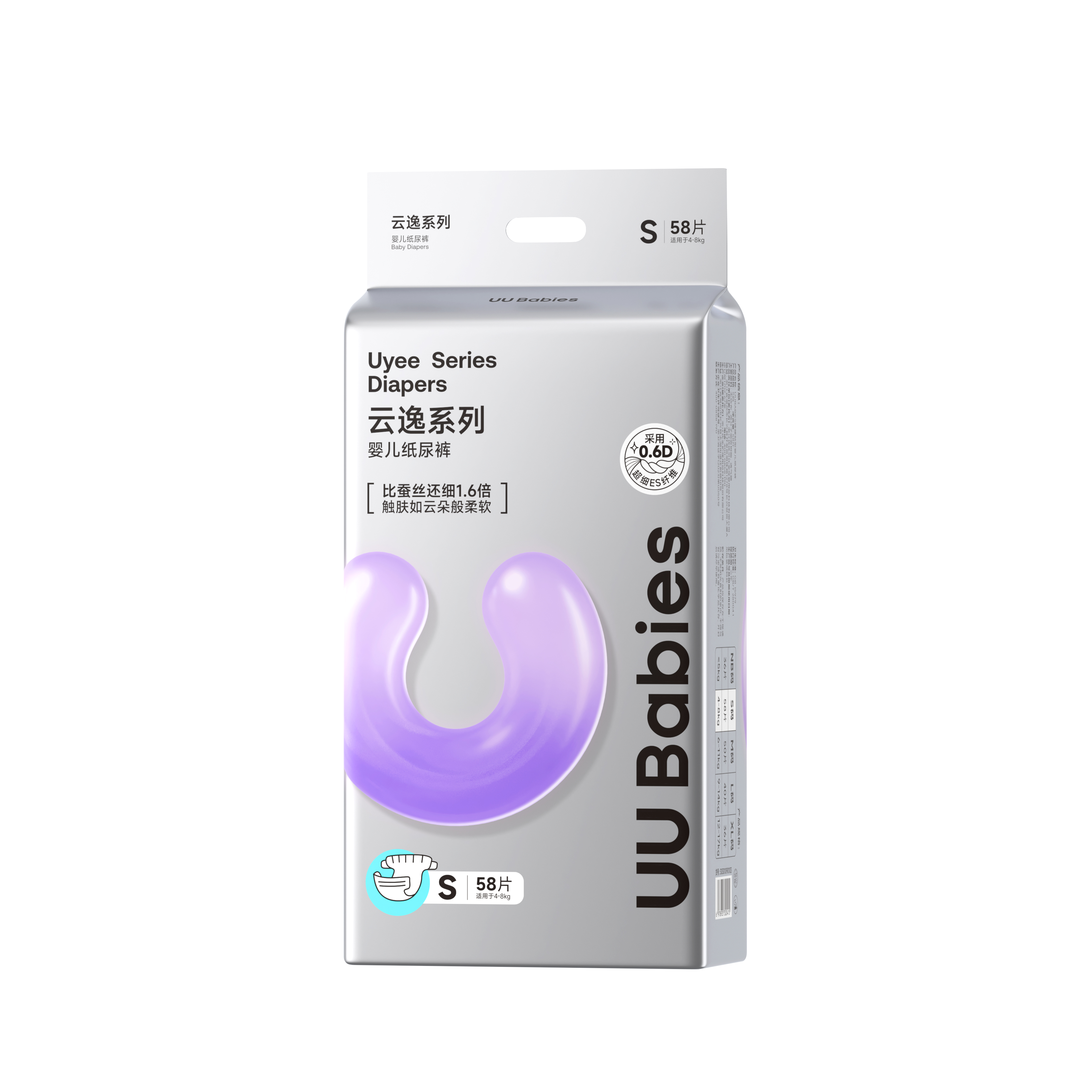
Training pants applications in maternity and baby care programs: disposable, single-use, leak-proof protection.
A brand with an existing, consumer-tested design. The brand already knows the fit and absorbency values its customers accept. An OEM program reproduces those values under a specification the brand owns, and quality inspection verifies output against that document.
A distributor or importer adding a private-label training pants line. Without in-house product development, an ODM platform shortens the path from decision to shipment. The distributor selects the size set and pack counts, applies its own branding and packaging, and goes to market on an already-engineered construction.
A baby care brand extending into the 18 to 48 month segment. This group accounts for 49.0% of training diaper market share, according to Fact.MR. A brand entering the segment for the first time typically starts from a developed platform and moves toward a buyer-owned specification once its own fit or absorbency claims become part of the product story.
A retailer private label working to a fixed launch window. With sampling at 3–5 days and production at 35–45 days after artwork and deposit confirmation, the critical path runs through artwork approval rather than through the factory floor. Retail programmes with fixed in-store dates should schedule artwork sign-off before anything else.
Where these products are used. The application is common in the United States and is also typically applied in the Philippines, Russia, the UAE, Chile and Mexico. Product use is disposable and single-use, storage conditions are a cool and dry place, and maternity and baby care projects are often matched with supporting equipment such as baby changing stations and hygiene care kits. Project requirements in this category commonly include compliance with ISO 22716, absence of harmful substances and skin-friendly materials.
Comparison Table: OEM vs ODM Training Pants Sourcing
| Sourcing variable | OEM training pants | ODM training pants |
|---|---|---|
| Who owns the product design | Buyer supplies construction, artwork and specification | Manufacturer's developed platform; buyer brands and packages it |
| Customisation inputs available | Material, size, logo, packaging, fragrance, formula | Material, size, logo, packaging, fragrance, formula |
| Minimum order quantity | 150,000 pieces for baby diapers and pull-ups | 150,000 pieces for baby diapers and pull-ups |
| Production lead time | 35–45 days after artwork and deposit confirmation | 35–45 days after artwork and deposit confirmation |
| Sampling time | 3–5 days | 3–5 days |
| Quality documentation | COA and AQL sampling inspection | COA and AQL sampling inspection |
| Certification covering training pants | CE (6C240227.ZUNU051, EN 12221-1:2008+A1:2013 and EN ISO 12625-1:2019); ISO 9001:2015 (01326Q0078R102); ISO 14001:2015 (01326E0075R101); ISO 50001:2018 (01326En0008R201); ISO 45001:2018 (01326S0066R101); FSC (BV-CQC-167194); SEDEX (ZAA600079586) | CE (6C240227.ZUNU051, EN 12221-1:2008+A1:2013 and EN ISO 12625-1:2019); ISO 9001:2015 (01326Q0078R102); ISO 14001:2015 (01326E0075R101); ISO 50001:2018 (01326En0008R201); ISO 45001:2018 (01326S0066R101); FSC (BV-CQC-167194); SEDEX (ZAA600079586) |
| Manufacturing environment | 100,000-class clean room; ISO, CE, GMPC and FSC certifications | 100,000-class clean room; ISO, CE, GMPC and FSC certifications |
| Typical buyer profile | Brand with in-house design or an existing SKU | Distributor, importer or private-label owner without in-house development |
| Main trade-off | More control over the physical product, more buyer-side development work | Faster start from a developed platform, less control over the base construction |
Note: MOQ, lead time, sampling time and the inspection framework are category-level manufacturing facts and do not change with the sourcing model. The difference between OEM and ODM lies in who owns the product design and who carries the development work.
FAQ: OEM and ODM Training Pants Sourcing
Which certifications should I verify before placing an OEM or ODM training pants order?
Verify certificate scope, not just certificate existence, because a supplier may hold certifications that do not list training pants. Certificates held by this manufacturer that cover training pants include CE certification for baby diapers and training pants under EN 12221-1:2008+A1:2013 and EN ISO 12625-1:2019 (certificate number 6C240227.ZUNU051, issued by ENTE CERTIFICAZIONE MACCHINE, applicable globally), ISO 9001:2015 quality management (01326Q0078R102, issued by GAC), ISO 14001:2015 environmental management (01326E0075R101, issued by GAC), ISO 50001:2018 energy management (01326En0008R201, issued by GAC) and ISO 45001:2018 occupational health and safety (01326S0066R101, issued by GAC). FSC certification (BV-CQC-167194, issued by Bureau Veritas under FSC-STD-40-004V3.0) covers wet wipes, dry wipes, baby diapers and training pants, and SEDEX certification (ZAA600079586, issued by Bureau Veritas CPS - Asia) covers labour standards, health and safety, environment and business ethics. Manufacturing takes place in a 100,000-class clean room, and the company holds ISO, CE, GMPC and FSC certifications. For the EU market, note that GPSR applies to standard baby diapers and training pants, CE marking is often required only if the product is marketed as a medical device, and OEKO-TEX Standard 100 is the primary consumer safety benchmark.
What can be customised in an OEM or ODM training pants program?
Customisation inputs available for OEM and ODM programs at this manufacturer cover material, size, logo, packaging, fragrance and formula. On the ODM side, the developed platform is Training Pants model YQ004, which is offered in sizes M, L, XL, XXL and XXXL with a core built from 100% woodpulp on a half-core design and 100% SAP, using nonwoven and SAP materials, and pack counts of 30, 42 or 82 pieces per bag that can also be customised. In an OEM program the buyer sets the target values for these inputs; in an ODM program the buyer adapts branding, packaging and size mix within the existing platform.
What order volume do I need before an OEM or ODM training pants program is viable?
The minimum order quantity is 150,000 pieces for baby diapers and pull-ups, and it applies to both OEM and ODM. The threshold is set by the product category and the production line, so an ODM platform does not reduce it. If the same order programme also includes wet wipes or dry wipes, those products carry a separate minimum of 1 x 40HQ container rather than a piece count. Budget planning therefore starts with the required piece volume and the pack configuration, since pack counts of 30, 42 or 82 pieces per bag change the number of saleable units produced from a fixed piece quantity.
How does sampling work before a training pants order is confirmed?
Sampling is completed in 3–5 days. In an OEM program the sample validates that the buyer's specification can be reproduced, and it is the point where specification gaps usually surface. In an ODM program the sample lets the buyer evaluate the platform as it will ship. Sample validation sits upstream of artwork confirmation and deposit, and only those two confirmations start the 35–45 day production lead time.
How long is production lead time, and when does it start?
Production lead time is 35–45 days after the artwork and deposit are confirmed, and this applies to both OEM and ODM. The schedule is supported by a 1,000,000 m² manufacturing footprint, more than 3,000 employees and an R&D team of over 200 engineers, with wet wipes capacity of 7 billion units per month and capacity differing by product line. Quality is documented through COA and AQL sampling inspection, and after-sales support covers remote support, order follow-up, product usage consultation, quality feedback handling and after-sales service coordination. To move from evaluation to a confirmed plan, you can request a training pants sample or a quotation and test the platform or the specification against your own market requirements.
Conclusion: Choose the Model, Then Test the Supplier
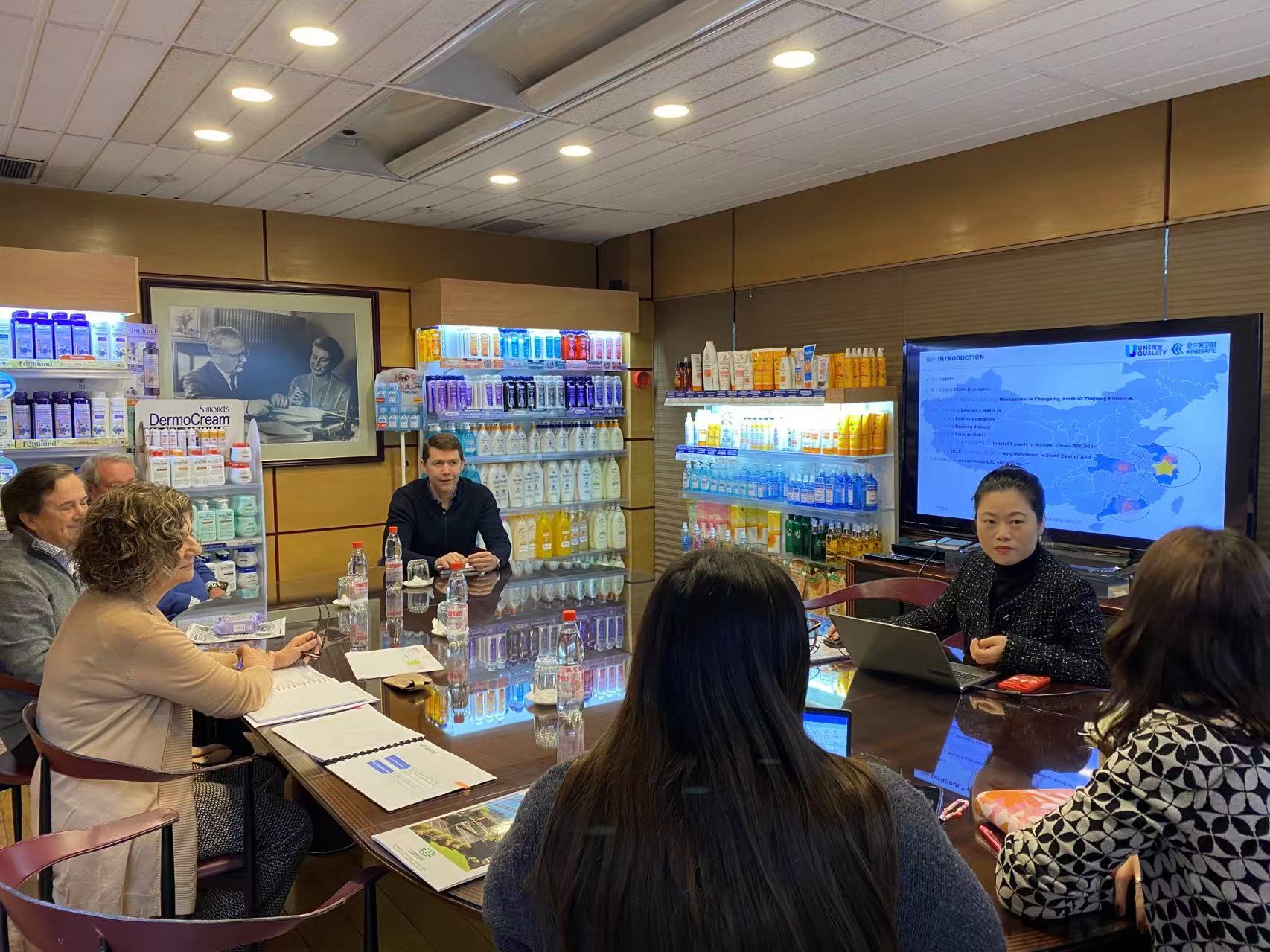
Long-term supply relationships are built on delivery performance, not on the sourcing label.
OEM and ODM are not competing offers. They are two different allocations of work. OEM gives the brand ownership of the construction file and full control over fit, absorbency and pack configuration, in exchange for buyer-side development effort. ODM gives the brand a developed training pants platform, faster sampling and a shorter path to market, in exchange for less control over the base construction.
What stays constant regardless of model: a minimum order quantity of 150,000 pieces for baby diapers and pull-ups, a production lead time of 35–45 days after artwork and deposit confirmation, sampling in 3–5 days, quality control through COA and AQL sampling inspection, and a certification set whose scope must explicitly cover training pants.
The practical next step is to test the model against a real order. Request a sample of Training Pants model YQ004 to evaluate the platform, or send your own specification for an OEM assessment, and compare both against your delivery window and your destination market requirements.
Download the full product and capability overview here: Uniquality brochure (PDF). For samples, quotations or specification review, contact Michelle at michelleyu@kingsafe.com, WhatsApp +86 187-0582-0808, or visit www.kingsafe.com.
Have Questions or Need More Details?
Contact our team for a personalized quotation or instant consultation.
Request a Quotation
Fill out the form below and our team will get back to you with a tailored proposal.
WhatsApp Direct Chat
Prefer to chat in real-time? Message us on WhatsApp for instant assistance & quick answers.
- Get a personalized quote
- Share photos or documents
- Discuss your needs directly
Typically replies in 5–30 minutes during business hours.