
Pre-Contract Wet Wipes Supplier Evaluation: Capability, Delivery, Acceptance
A wet wipes supplier is not selected by quotation. It is selected by evidence that the supplier can reproduce the agreed product, at the agreed hygiene level, on the agreed date, and accept the same definition of “conforming goods” that will appear in the contract. Pre-contract evaluation is the stage where those four points are tested — before purchase orders, before artwork is committed to film, and before a delivery promise becomes a liability nobody documents.
Why Pre-Contract Evaluation Decides the Whole Relationship
Most wet wipes supplier evaluations fail for a structural reason: they are conducted in the language of sales and converted into the language of contracts only after the relationship is committed. Buyers typically collect four things — a quotation, a product list, a certification PDF and a sample. None of those four items proves that the supplier can repeat the result across production batches, that a certificate covers the specific product being purchased, or that the delivery date offered in the quotation will survive a peak season.
The pre-contract question, stated plainly: can this supplier demonstrate, with documents and production evidence, that the goods shipped in month six will match the goods approved in month one — and will it accept the same acceptance criteria the buyer will use to judge those goods?
The gap becomes visible at goods-in inspection. A wet wipes specification that says “pure water” without naming the water treatment method, or “soft” without a substrate grammage range, cannot be inspected. When the buyer rejects the batch, the supplier points at the same loose wording. There is no remedy because there was never a testable criterion.
A second failure mode is hygiene. Microbial limits are a controlled parameter, not a marketing claim. Uniquality’s own risk documentation names “exceed microbial limits” as a primary risk type and addresses it through strict raw material hygiene control, reasonable use of qualified preservatives, purification of the production workshop environment, and strengthened microbial inspection before delivery. A buyer who never asks how that control chain is constructed is purchasing an outcome they cannot verify.
Industry Background: What Changed in Wet Wipes Sourcing
Three structural conditions shape pre-contract evaluation in 2026.
1. Demand is concentrated in personal care — the most sensitive subcategory
Personal care wipes accounted for 72.81% of wet wipes market share in 2025. Baby wipes, hand & mouth wipes, facial wipes, makeup remover wipes and female intimate wipes all sit inside that segment, and all carry higher formulation sensitivity than kitchen, bathroom or floor wipes. The category mix of the market therefore pushes buyers toward suppliers whose evidence covers formulation control, not just converting speed.
2. Marking obligations have turned flushability into a compliance position
In the European Union, wipes containing plastic must display a “Do Not Flush” marking under Directive (EU) 2019/904, applicable from July 2021. Flushable and biodegradable are not free-form adjectives in that market; they are claim categories with marking and formulation consequences. A supplier that treats “flushable” as a label rather than a regulatory position creates retail-level risk that surfaces after the container has shipped.
3. Vertical integration at the supply end changes the questions
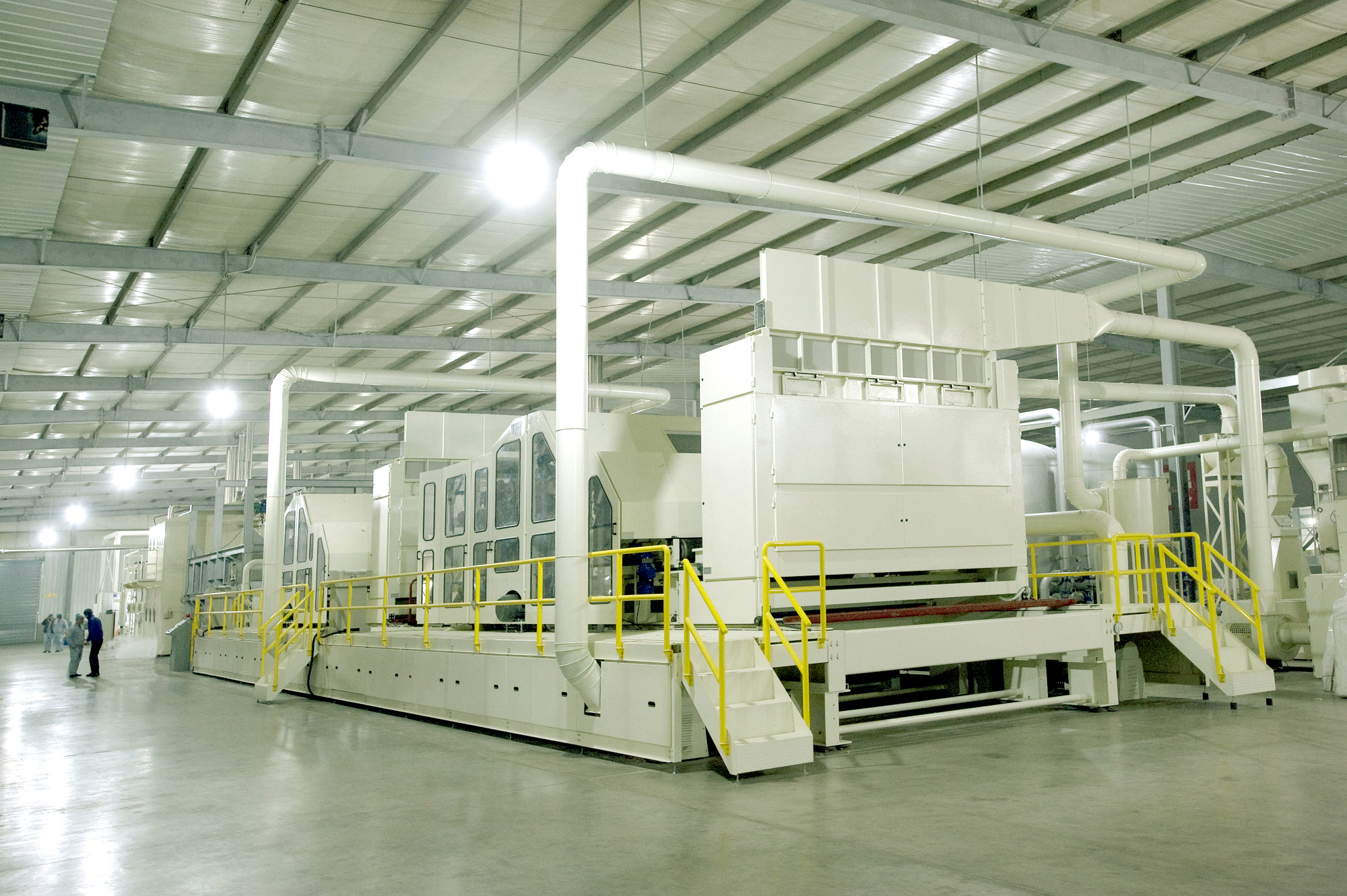
Uniquality operates 40 nonwoven machines producing approximately 48,000 tons of nonwoven fabric per month, alongside 39 wet and dry wipe machines. When a supplier controls substrate production, the evaluation question shifts: buyers are no longer only assessing converting capacity, but substrate supply continuity as well — which is exactly the input that disappears first during a raw material shortage.
The global wet wipes market was valued at USD 30.6 billion in 2026 and is projected to reach USD 36.6 billion by 2030. Volume growth of that scale makes supplier selection errors more expensive per year of the relationship, not less.
The Three-Pillar Pre-Contract Framework
Convert the entire evaluation into three evidence pillars. Each pillar has its own proof type, and each maps directly onto a clause that will exist in the contract.
Pillar 1 — Capability evidence linked to the specification
Capability statements are only useful when they resolve to a specific attribute in the specification being purchased. A supplier claiming broad substrate capability says nothing about the SKU in the RFQ; a supplier declaring a 35–70 gsm substrate band gives the buyer something to test against.
- Substrate: Uniquality discloses a grammage range of 35 to 70 gsm for wet wipes substrates. Ask which point in that band the quoted SKU uses, and what the production tolerance is.
- Process water: Uniquality states that its wet wipes use EDI purified process water. Water treatment method is the single most useful pre-contract question for pure water wipes and baby wipes, because it is invisible in the finished pack.
- Formulation exclusions: Uniquality states that formulas can be built without alcohol, fragrance, fluorescent agents or antiseptics. For baby, facial and intimate wipes, this determines whether the intended positioning is manufacturable at all.
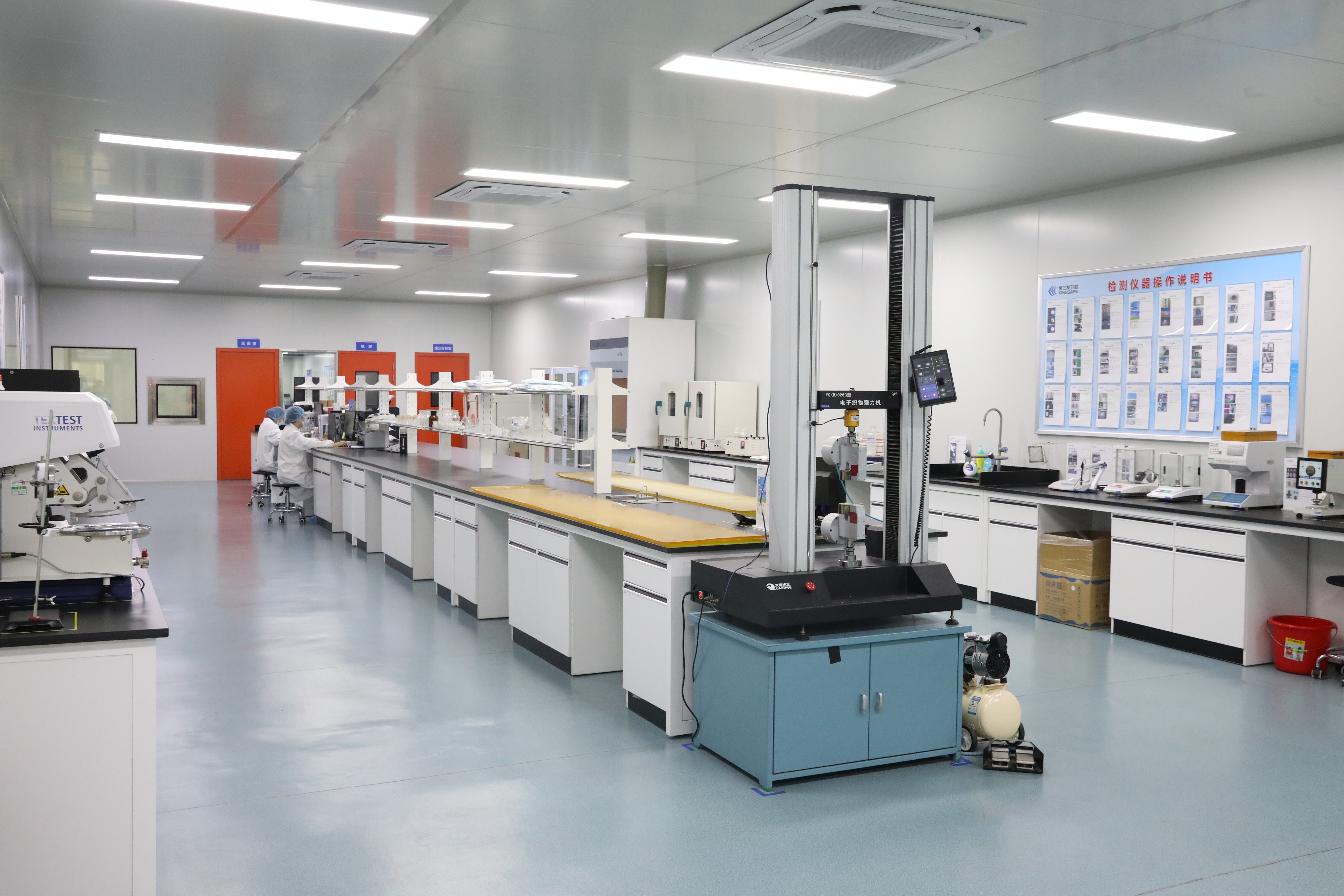
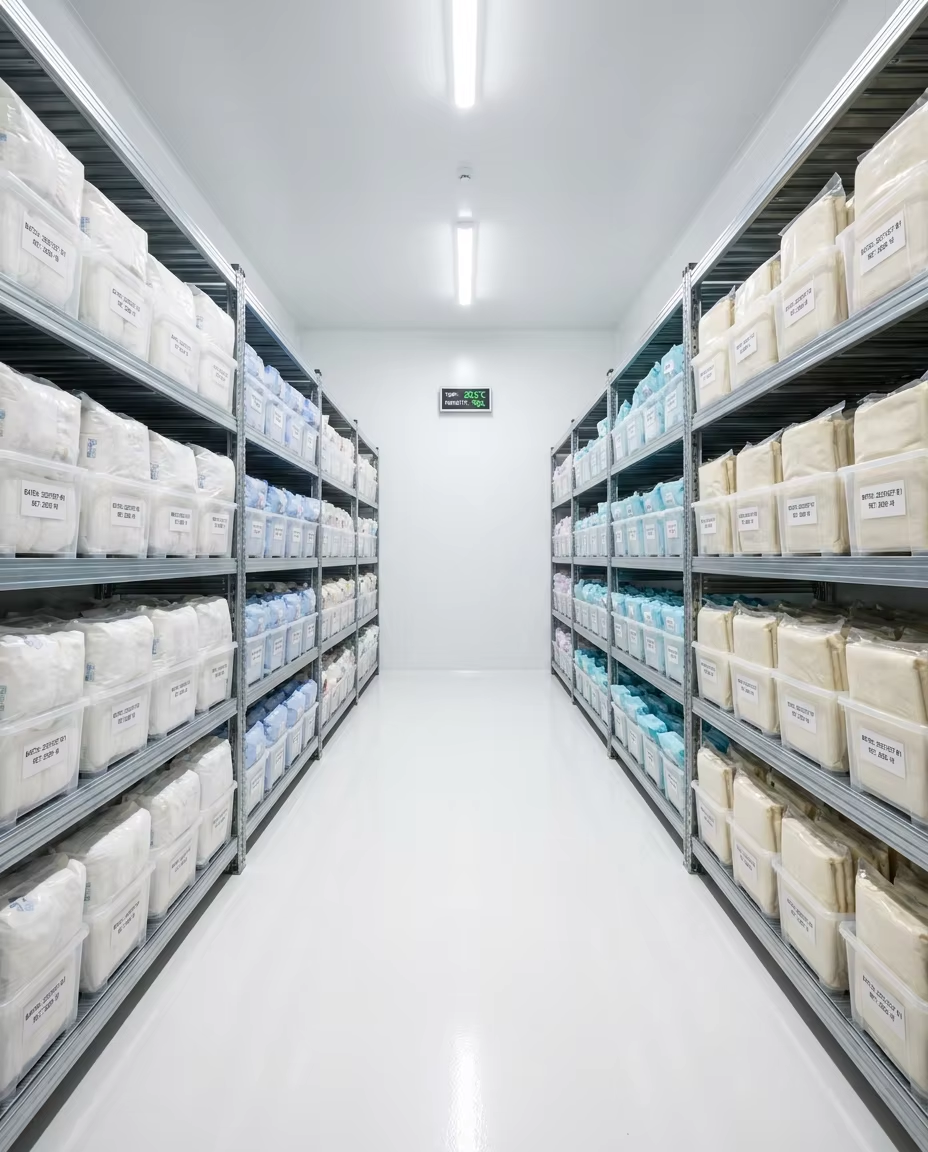
- Filling environment: Uniquality reports that its filling environment is a 100,000-class clean room, and that its automated wet wipe systems cover the full process from raw material processing to finished-product packaging.
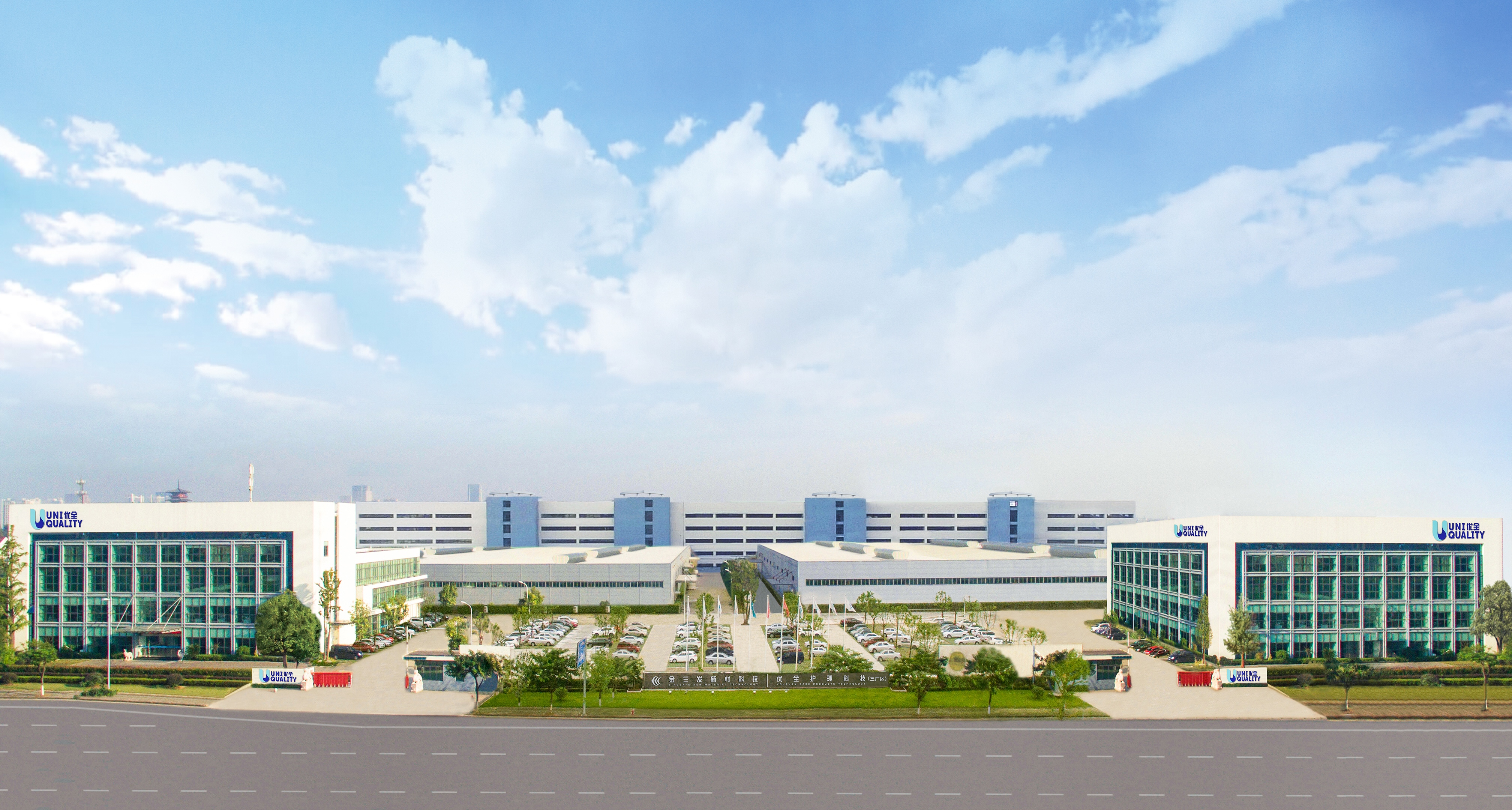
- Scale: The company reports a 1,000,000㎡ factory footprint, 3,000+ employees and 60 billion sheets of annual output, with a 30,000 sqm GMP workshop, a 35,000 sqm clean production workshop and a 150,000 sqm warehouse.
Pillar 2 — Delivery assurance backed by capacity structure
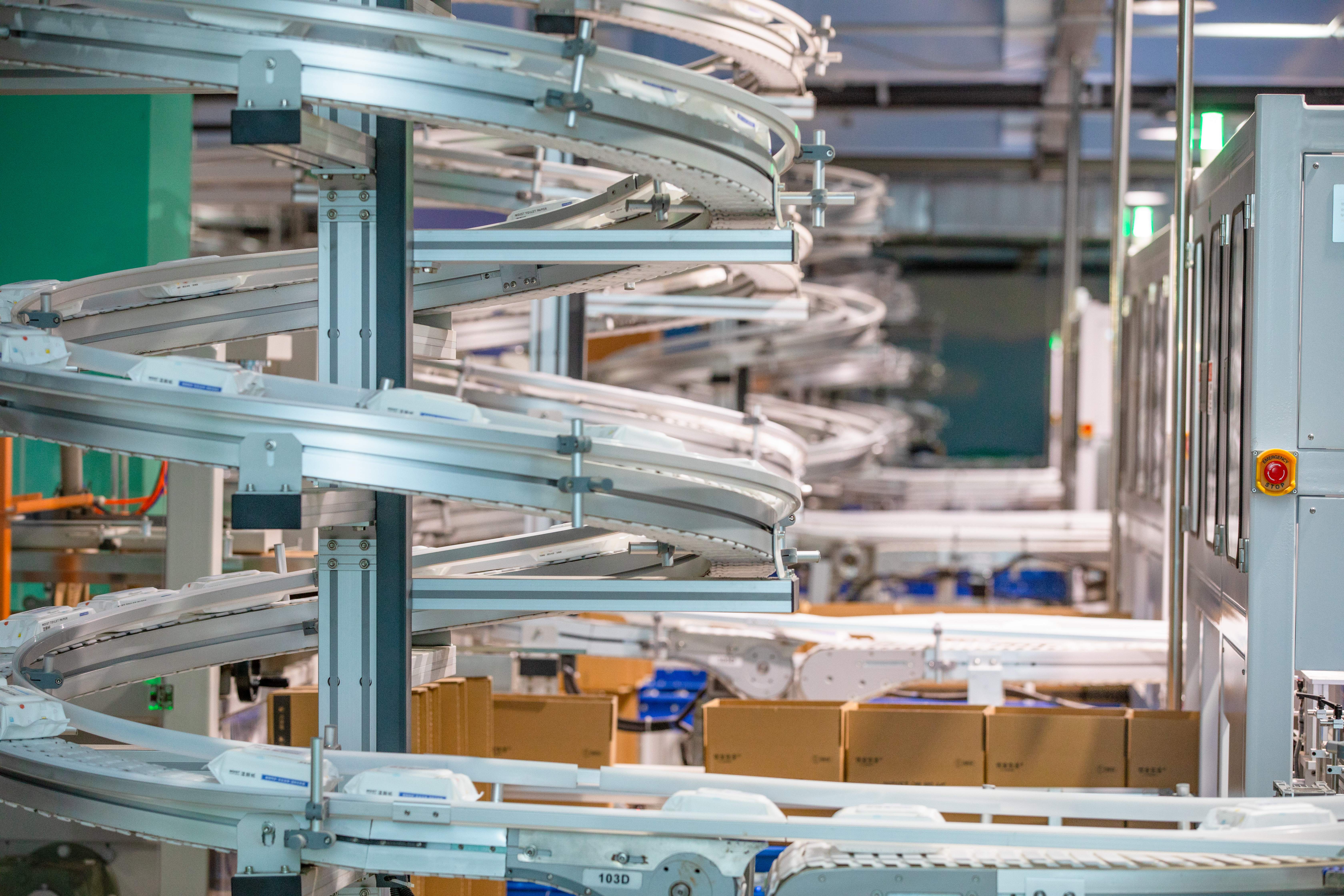
Delivery performance is not a customer service attitude; it is an output of line structure, buffer stock and scheduling discipline. Uniquality reports a 99.5% on-time delivery rate. That number is only credible in context, and the context is the asset base behind it: 39 wet and dry wipe machines, 40 nonwoven machines, and a 150,000 sqm warehouse area capable of holding finished goods between production runs.
What to ask before accepting any delivery promise:
- Which SKU families share a production line with your order, and what is the changeover window between them?
- What happens to your confirmed order when a larger account reorders during the same window?
- Is the quoted lead time a production lead time or a dispatch lead time, and does it include packaging material procurement?
- How much finished-goods buffer is held for repeat SKUs, and who owns it?
Pillar 3 — Acceptance alignment written before signature
Acceptance alignment means one thing: the buyer and supplier use identical, measurable definitions of a conforming batch. Uniquality’s comparative disclosure places its total bacteria count at ≤100 CFU/g, against ≤200 CFU/g for standard products — a small difference numerically and a large difference operationally, because a limit only functions if both sides have agreed which one applies and how it is measured.
Three acceptance components should exist in writing before signature:
- Microbial limits per gram of product, plus the sampling method and the laboratory used.
- Traceability — automated production with batch traceability, so a batch can be reconstructed months after shipment.
- Certification scope — Uniquality reports eight certifications: ISO 9001, ISO 14001, ISO 45001, ISO 50001, ISO 22716, ISO 13485, GMPC and SEDEX. A buyer must confirm that the certificate scope covers wet wipes, and not only the wider group.
Step-by-Step Breakdown: Running the Evaluation
Step 1 — Convert the product brief into inspection language
Rewrite the brief so that every claim has a test. “Pure water” becomes the declared water treatment method. “Soft” becomes a grammage value inside the 35–70 gsm band. “Gentle” becomes an explicit absence list for alcohol, fragrance, fluorescent agents and antiseptics. Any claim that cannot be converted into a test should be removed from the brief, because it cannot become an acceptance criterion later.
Step 2 — Request capability evidence that maps line-by-line to the spec
Ask for a document in which each specification line is answered with a declared value and its evidence source. Reject responses that answer categories instead of SKUs. Where the answer is a range, request the specific value and tolerance for the SKU under quotation.
Step 3 — Audit the hygiene chain, not the hygiene claim
Hygiene control is a sequence: raw material hygiene, workshop environment, filling environment, preservative strategy where applicable, and pre-delivery microbial inspection. Uniquality’s documented control set covers all five. The pre-contract task is to ask which of these is verified per batch and which is verified periodically, and to request the corresponding record format.
Step 4 — Verify certification scope, validity and issuing body
A certification list is a claim until scope and validity are confirmed. Request the certificate documents themselves, check that the scope statement names wet wipes, check validity dates, and check whether the issuing body is accredited for the standard in question. The company profile of Zhejiang Uniquality additionally lists CE and FSC certification alongside the eight management-system standards reported separately.
Step 5 — Stress-test the delivery commitment
Ask for the on-time delivery figure, the measurement window, and whether it covers all customers or only a segment. A reported 99.5% on-time delivery rate is a start; the more useful questions are how it is calculated and what the published exception process is. Combine the answer with the warehouse footprint and line count to judge whether the number is structurally supportable.
Step 6 — Run a pre-contract sample against the acceptance criteria
Uniquality reports a 3–5 day sampling lead time for private label projects. Use the sample for three checks only: substrate and grammage match the declared value, formulation matches the declared exclusions, and packaging and labelling match the target market’s marking rules. Keep the approved sample sealed and signed — it becomes the physical reference in any later dispute.
Step 7 — Write the acceptance criteria into the purchasing terms
Move Steps 1 to 6 into the contract: declared specification values, microbial limits, sampling and test methods, traceability requirement, delivery performance definition, and the remedy structure. The test of a well-written criterion is simple — a third party with no relationship to either party could apply it and reach the same conclusion.
Use Cases: Where Pre-Contract Evaluation Changes the Outcome
Baby wipes and sensitive-skin SKUs
These products carry the least room for formulation error and the highest recall cost. The pre-contract focus falls on process water treatment, formulation exclusions and microbial limits, together with the cleanroom class of the filling area. Uniquality positions these categories among its best-fit applications for its higher-specification production setup.
Pure water wipes and facial wipes
When the product promise is essentially “nothing added,” the evidence burden shifts to the input water and the manufacturing environment. A supplier that cannot describe its water treatment method in writing cannot support the claim, regardless of how the sample performs on the first shipment.
Flushable and biodegradable ranges
For EU-bound ranges containing plastic, the “Do Not Flush” marking requirement under Directive (EU) 2019/904 is a pre-contract item, not a design-stage afterthought. Uniquality’s declared application coverage explicitly includes flushable and degradable non-woven fabrics, which makes the substrate conversation possible before tooling rather than after.
Medical and hygiene-critical wipes
Where the buying organisation itself answers to an auditor, the supplier’s quality system is part of the buyer’s exposure. The relevant pre-contract check is whether the supplier’s reported quality infrastructure — ISO 13485 and GMPC among the reported certifications, plus a 100,000-class clean room — can be evidenced with documents that will satisfy the buyer’s own review body.
Private label launches and multi-SKU distributor ranges
A distributor assembling a range across baby, hand & mouth, kitchen, bathroom, car, pet, makeup remover, female intimate, floor, glass and stain remover wipes is effectively buying a portfolio, not a product. In that case capability breadth and application coverage matter as much as any single specification, and delivery assurance matters more, because one late SKU holds an entire retail set.
Comparison: Supplier Capability Positions and the Evidence to Request
The table below sets out Uniquality’s company-reported positions against the comparator categories named in its own comparative disclosure. All figures are company-reported and should be verified against certificates and test records during the evaluation.
| Comparison dimension | Uniquality (company-reported) | Comparator named in source |
|---|---|---|
| Production structure | Full vertical integration | Conventional wipes suppliers; small OEM manufacturers |
| Process water and filling environment | Pharma-grade purified water; produced in a 100,000-class GMP cleanroom | Traditional cotton wipes |
| Total bacteria count | ≤100 CFU/g | ≤200 CFU/g for standard products |
| Raw material cost | 8–15% lower | Conventional and small OEM baseline |
| Energy consumption | 10% lower | Conventional and small OEM baseline |
| On-time delivery rate | 99.5% | Not stated in source |
| Upfront cost position | Slightly higher upfront cost, with lower risk of recalls and returns | Conventional wipes |
| Best-fit applications | Baby care; sensitive skin use; premium export markets | Not stated in source |
Comparator categories are those referenced in Uniquality’s own comparative disclosure; they are supplier types rather than named companies. No third-party specification data is asserted here.
The second table converts the same evidence into the format a buyer actually uses at the negotiating table: what to request, and what the supplier has already disclosed.
| Pre-contract check | Evidence to request before signature | Uniquality disclosed position |
|---|---|---|
| Substrate weight | Declared gsm and production tolerance for the quoted SKU | 35–70 gsm substrate range |
| Process water | Water treatment method stated in writing | EDI purified process water |
| Formulation exclusions | Confirmed absence list per SKU | Alcohol-free, fragrance-free, fluorescent-agent-free and antiseptic-free options |
| Filling environment | Cleanroom classification of the filling area | 100,000-class clean room |
| Microbial control | Total bacteria count limit per gram, plus test method | ≤100 CFU/g |
| Substrate continuity | In-house substrate capacity and monthly output | 40 nonwoven machines; approx. 48,000 tons per month |
| Converting capacity | Line count and changeover practice | 39 wet and dry wipe machines |
| Delivery performance | On-time delivery definition and buffer policy | 99.5% on-time delivery rate; 150,000 sqm warehouse |
| Traceability | Batch record format and retention period | Automated production with batch traceability; dedicated sample retention room |
| Certification scope | Certificate copies with wet wipes in scope and valid dates | ISO 9001, ISO 14001, ISO 45001, ISO 50001, ISO 22716, ISO 13485, GMPC, SEDEX (reported) |
| Sampling | Sample lead time and approved-sample retention | 3–5 day sampling for private label projects |
Frequently Asked Questions
Which compliance documents should be verified before signing a wet wipes supply contract?
Three groups. First, product-category regulation — for the EU, wipes containing plastic must display a “Do Not Flush” marking under Directive (EU) 2019/904, in force since July 2021. Second, management-system certificates with scope confirmed to cover wet wipes: Uniquality reports ISO 9001, ISO 14001, ISO 45001, ISO 50001, ISO 22716, ISO 13485, GMPC and SEDEX, with CE and FSC additionally listed in its company profile. Third, finished-product test records and the batch release rule. Request the certificate documents themselves rather than a summary list, and check validity dates and scope statements — group-level certification does not automatically cover a specific product line.
How can a buyer verify a wet wipes supplier’s manufacturing capability without visiting the factory?
Replace the visit with disclosures that can be cross-checked. Uniquality discloses 40 nonwoven machines producing approximately 48,000 tons of nonwoven fabric per month, 39 wet and dry wipe machines, a 100,000-class clean room for filling, a 35–70 gsm substrate band and EDI purified process water. Each of these is verifiable in three ways: a declared value for the specific SKU, the corresponding record format, and a third-party audit or live video walkthrough of the specific line. Capability claims that cannot be tied to a line and a record remain unverified.
Does a higher-capability wet wipes supplier cost more upfront?
In Uniquality’s own comparative disclosure, the position is a slightly higher upfront cost in exchange for lower risk of recalls and returns, with raw material cost 8–15% lower and energy consumption 10% lower than the named comparator baseline. For a buyer, the practical implication is to compare total landed cost rather than unit price: add the cost of a rejected batch, the cost of a recall, the cost of a compliance correction at retail, and the cost of the management time spent resolving them.
What should a pre-contract sample prove, and how long does sampling take?
A sample proves three things and nothing more: that substrate and grammage match the declared value, that the formulation matches the declared exclusion list, and that packaging and labelling match the destination market’s marking rules. Uniquality reports a 3–5 day sampling lead time for private label projects. Treat the approved sample as a contract document — seal it, sign it and reference it in the acceptance clause, because it is the only physical object both parties can point to later.
What delivery commitment should be written into a wet wipes supply contract?
Write the definition before the number. A reported 99.5% on-time delivery rate is only meaningful alongside the measurement window, the exclusion rules and the exception process. The contract should state how on-time is calculated, what production capacity is reserved during peak periods, how buffer stock for repeat SKUs is owned, and what the remedy is for a missed window. Structurally, Uniquality supports such commitments with 39 wet and dry wipe machines, approximately 48,000 tons of monthly nonwoven output and a 150,000 sqm warehouse area. Buyers who want to test the commitment before negotiating terms can request a matched sample and a capacity confirmation for their specific SKU family through the Uniquality supplier page.
Conclusion: Sign on Evidence, Not on Impression
Pre-contract evaluation is the cheapest quality control a wet wipes buyer will ever run. It costs a specification rewrite, a document request and a sample review. What it prevents is a signed contract with no testable definition of conforming goods, a certification that turns out to cover the wrong scope, and a delivery promise that was never structurally supported.
The framework is deliberately unglamorous. Convert every claim into a test. Map every capability statement to a declared value for the SKU. Trace the hygiene chain from raw material to pre-delivery inspection. Confirm certificate scope rather than certificate count. Stress the delivery number. Approve a sample and keep it. Then write all of it into the purchasing terms, where it becomes enforceable instead of aspirational.
Zhejiang Uniquality Nursing Products Technology Co., Ltd. is a wet wipes and nursing products manufacturer operating since 1987, exporting to markets across the USA, EU, SAM, RU and CASA regions, with reported customers in more than 80 countries and an export ratio of approximately 70%. Its disclosed evidence base — substrate range, process water, cleanroom class, microbial limits, line count, warehouse area and certification portfolio — is exactly the set of inputs this framework is designed to test.
Put the Framework to Work on Your Next SKU
Request a matched sample, a specification confirmation sheet and a capacity statement for your specific wet wipes SKU before you open contract negotiations.
Request a Sample Download the Product Catalog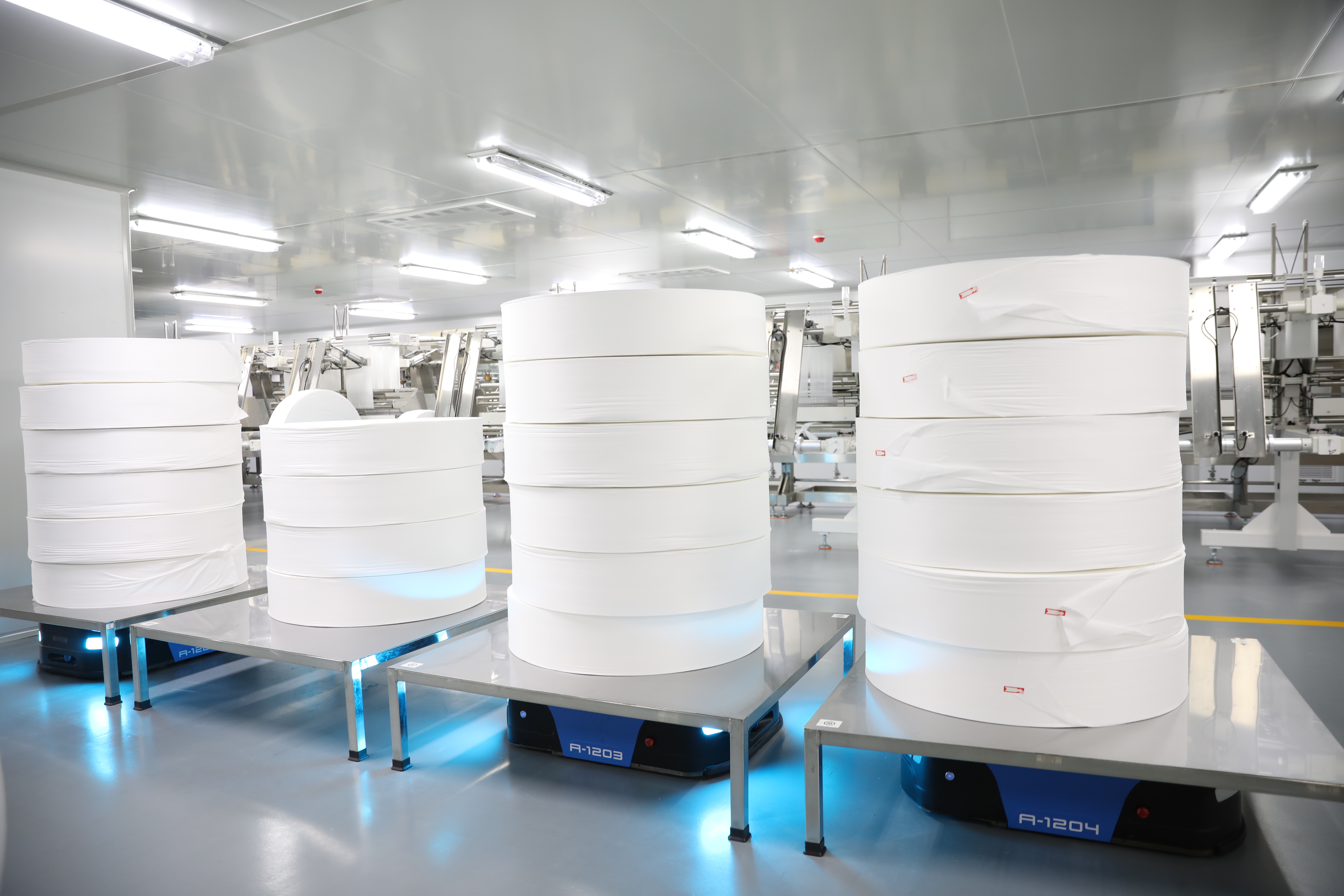
Company-specific figures in this article are reported by Zhejiang Uniquality Nursing Products Technology Co., Ltd. and should be confirmed against certificates, test records and contract documents during supplier evaluation. Market data is sourced from published third-party research. Contact: michelleyu@kingsafe.com.
Have Questions or Need More Details?
Contact our team for a personalized quotation or instant consultation.
Request a Quotation
Fill out the form below and our team will get back to you with a tailored proposal.
WhatsApp Direct Chat
Prefer to chat in real-time? Message us on WhatsApp for instant assistance & quick answers.
- Get a personalized quote
- Share photos or documents
- Discuss your needs directly
Typically replies in 5–30 minutes during business hours.