
Ranked: 5 Training Pants RFQ Clauses That Reduce Sourcing Risk
Most training pants sourcing failures are not price failures. They are documentation failures: a certificate that covers the wrong product, a minimum order quantity counted the wrong way, or a lead time that starts on a date nobody wrote down.
The RFQ is where those failures are either prevented or locked in. This article ranks five training pants RFQ clauses by the amount of sourcing risk each one removes, from the clause that decides whether a shipment can legally be placed on the market, down to the clause that decides whether it arrives on schedule. The documentation references and commercial terms used throughout come from a private-label manufacturer such as Zhejiang Uniquality Nursing Products Technology Co., Ltd. (brand: Uniquality), a China-based OEM/ODM manufacturer of baby training pants, disposable training pants, baby diapers and wipes.
The five clauses, in ranked order:
- CE certification — product-level market access, evidenced by CE certificate 6C240227.ZUNU051 under EN 12221-1 and EN ISO 12625-1.
- ISO 14001 certification — site-level environmental management, evidenced by certificate 01326E0075R101.
- FSC coverage — certified fiber sourcing covering training pants, evidenced by FSC certificate BV-CQC-167194.
- MOQ of 150,000 pieces — the commercial clause that determines how much capital sits in stock.
- 35–45 day lead time — the scheduling clause that determines whether the product reaches the retail calendar on time.
The ranking is by consequence, not by paperwork volume. A clause moves up when omitting it can stop the order entirely; it moves down when omitting it usually costs money and time rather than market access.

Where Training Pants Sourcing Risk Actually Comes From
Risk in the training pants category rarely appears at the negotiation table. It appears later, in five recurring places.
- Certificate-to-product mismatch. A supplier holds a valid certificate, but its scope does not cover the training pants model or size range in the RFQ. The document looks complete until it is checked against the order.
- Product-level and site-level confusion. Buyers treat every certificate as equivalent. They are not: a CE certificate applies to a product, while ISO 14001 applies to a manufacturing site. Requesting the wrong level leaves a gap that surfaces during supplier onboarding.
- Unsupported claims on pack. A certification mark or fiber-sourcing claim goes onto artwork without a certificate that covers that specific product, forcing artwork reprints or withdrawal of the claim.
- MOQ quoted as a single number. When the minimum order quantity is not defined per size, the buyer discovers the size-level commitment only after the quotation has been accepted.
- Lead time with an undefined start date. "35–45 days" means different things depending on whether the clock starts at purchase order, artwork approval or deposit receipt.
Each of the five clauses below converts one of those verbal assumptions into a written, checkable requirement.

Industry Background: Why Training Pants RFQ Terms Are Getting Tighter
Three market facts explain why buyers are adding more clauses, not fewer.
First, the category is still expanding. The global baby diaper market is expected to reach US$66.3 billion in 2025, while the baby training pants segment is expected to reach USD 7.02 billion by 2030, growing at a compound annual growth rate of 7.5% from 2025 to 2030, according to commercial research forecasts published by Market Research Reports and Grand View Research respectively. Forecast figures differ between research houses and should be read as directional market context rather than a single agreed number.
Second, the pants format already dominates mature markets. Pants-type diapers account for more than 70% of total diaper sales in Japan — a useful signal for buyers planning pull-up training pants ranges in other developed markets.
Third, the trade and testing framework is already standardized. Disposable training pants and baby diapers are primarily classified under HS Code 9619.00, and ISO 11948-1 specifies the method for determining the total absorption capacity of urine-absorbing aids (the Rothwell test). Both give an RFQ a precise, citable reference point instead of a generic "good quality" requirement.
The practical consequence: demand growth pushes more brands toward the same pants-type production slots, capacity is committed earlier, and the clause set inside the RFQ becomes the tool that protects both compliance and scheduling.
The Five RFQ Clauses, Ranked by Risk-Reduction Value
Rank 1 — CE Certification (Certificate 6C240227.ZUNU051)
CE certification ranks first because it is the only clause on this list that can stop the product from being sold at all. Everything else costs money, time or margin; a certificate gap costs market access.
What separates a strong CE clause from a weak one is specificity. The requirement should name the product, the certificate number and the standards assessed.
RFQ clause wording: "Supplier shall provide a valid CE certificate covering the quoted training pants range, stating the certificate number, the issuing body and the standards assessed. The certificate shall reference EN 12221-1 and EN ISO 12625-1."
Document to request: the CE certificate itself. For Uniquality training pants, that certificate is numbered 6C240227.ZUNU051 and cites EN 12221-1 and EN ISO 12625-1.
How to verify it: confirm that the certificate number on the document matches the number quoted in the RFQ response, that the product description covers the training pants you are buying, and that the referenced standards match those your destination market expects. A certificate that is valid but scoped to a different product line does not reduce your risk.
Cost of omission: goods held at the border or blocked from marketplace listing, re-testing at the buyer's expense, and a launch delay that usually exceeds the value of any price concession negotiated.
Rank 2 — ISO 14001 Certification (Certificate 01326E0075R101)
ISO 14001 ranks second because it is a site-level requirement that cannot be satisfied with a product test report. If a retail partner, brand owner or internal ESG policy asks for environmental management evidence, only the certificate answers the question.
RFQ clause wording: "Supplier shall hold a valid ISO 14001 certificate for the manufacturing site producing the order, and shall provide the certificate number, the site address and the validity period."
Document to request: the ISO 14001 certificate for the site, not a group-level summary. Uniquality's ISO 14001 certificate is numbered 01326E0075R101.
How to verify it: match the site address on the certificate to the plant that will actually run your order. A certificate held by a different facility, or by a head office rather than the production site, does not cover the risk you are trying to close.
Cost of omission: a supplier qualification stall late in the process, an audit non-conformity during onboarding, and in the worst case a re-sourcing exercise after commercial terms have already been agreed.
Rank 3 — FSC Coverage (Certificate BV-CQC-167194)
FSC coverage ranks third because it is conditional. It becomes critical the moment a certified fiber claim appears on packaging, on the product or in marketing; for buyers who never make such a claim, it stays a lower priority.
RFQ clause wording: "Supplier shall confirm FSC certification covering the quoted training pants and provide the certificate code together with the product scope it covers."
Document to request: the FSC certificate. Uniquality's FSC certificate BV-CQC-167194 covers training pants.
How to verify it: confirm that the certificate code on the supplier's documentation matches the code used on your artwork, and that the covered product scope includes training pants rather than other product families only.
Cost of omission: withdrawal of an on-pack claim, artwork reprint costs, and reputational exposure if a sourcing claim cannot be substantiated.
Rank 4 — MOQ of 150,000 Pieces
MOQ ranks fourth because its damage is financial rather than regulatory — but it is usually the clause with the largest immediate cash impact. The critical detail is the unit: 150,000 pieces per size, not 150,000 pieces per order.
RFQ clause wording: "MOQ shall be 150,000 pieces per size. The quotation shall state the MOQ by size, the delivery terms, the deposit percentage and the balance payment trigger."
Document to request: a written quotation that separates MOQ per size from total order volume. Uniquality's stated purchasing terms are an MOQ of 150,000 pieces per size, delivery terms of FOB or CIF, acceptance criteria based on the factory pre-shipment test or a customer-specified alternative, and payment terms of 30% deposit with the balance against a bill of lading copy.
How to verify it: multiply. An RFQ covering five sizes at 150,000 pieces per size is a 750,000-piece commitment before any option is added. The arithmetic is simple, which is exactly why it is so often skipped during quotation comparison.
Cost of omission: working capital tied up in slow-moving sizes, warehousing cost on inventory that was never forecast to sell, and negotiation leverage lost once the deposit has been paid.
Rank 5 — 35–45 Day Lead Time
Lead time ranks fifth because it is usually recoverable with planning buffers. But the risk is not the number of days — it is the trigger date that starts them.
RFQ clause wording: "Production lead time shall be 35–45 days after artwork approval and deposit receipt. The supplier shall confirm the start date in writing, and the lead time shall be measured from the later of the two events."
Document to request: the lead time stated in the quotation. The typical production lead time is 35–45 days after confirming artwork and deposit.
How to verify it: test the clause in reverse. Ask what happens if artwork is approved on day 10 and the deposit clears on day 14 — the answer tells you whether the supplier is measuring from one trigger or two.
Cost of omission: retail launch slippage, expedited freight costs, and penalty exposure with retail partners where delivery windows are contractual.
Supporting Clauses: COA/AQL, After-Sales Scope and OEM/ODM Availability
The five clauses above determine whether an order is compliant, bankable and on schedule. Three supporting clauses determine whether the order is repeatable.
COA and AQL acceptance criteria. The RFQ should name the acceptance basis rather than leaving it as "quality to be agreed". Uniquality's purchasing terms apply an acceptance criterion of the factory pre-shipment test, or a customer-defined alternative, with COA documentation supplied with the shipment.
Microbial and hygiene controls. Where the RFQ includes a hygiene requirement, the supplier's control method matters as much as the limit. Standard controls for microbial risk include strict control of raw material hygiene, appropriate use of qualified preservatives where applicable, and purification of the production workshop environment, combined with strengthened microbial inspection before delivery.

Batch traceability. Ask how a batch is identified and retained. Uniquality archives and preserves every production batch under controlled conditions in a dedicated sample retention room, which is what makes a quality claim checkable months after shipment.
After-sales service scope. Define what happens after delivery: who investigates a complaint, what evidence is required, and how a replacement or credit is processed. Vague after-sales wording is the most common cause of disputes that were entirely avoidable at RFQ stage.
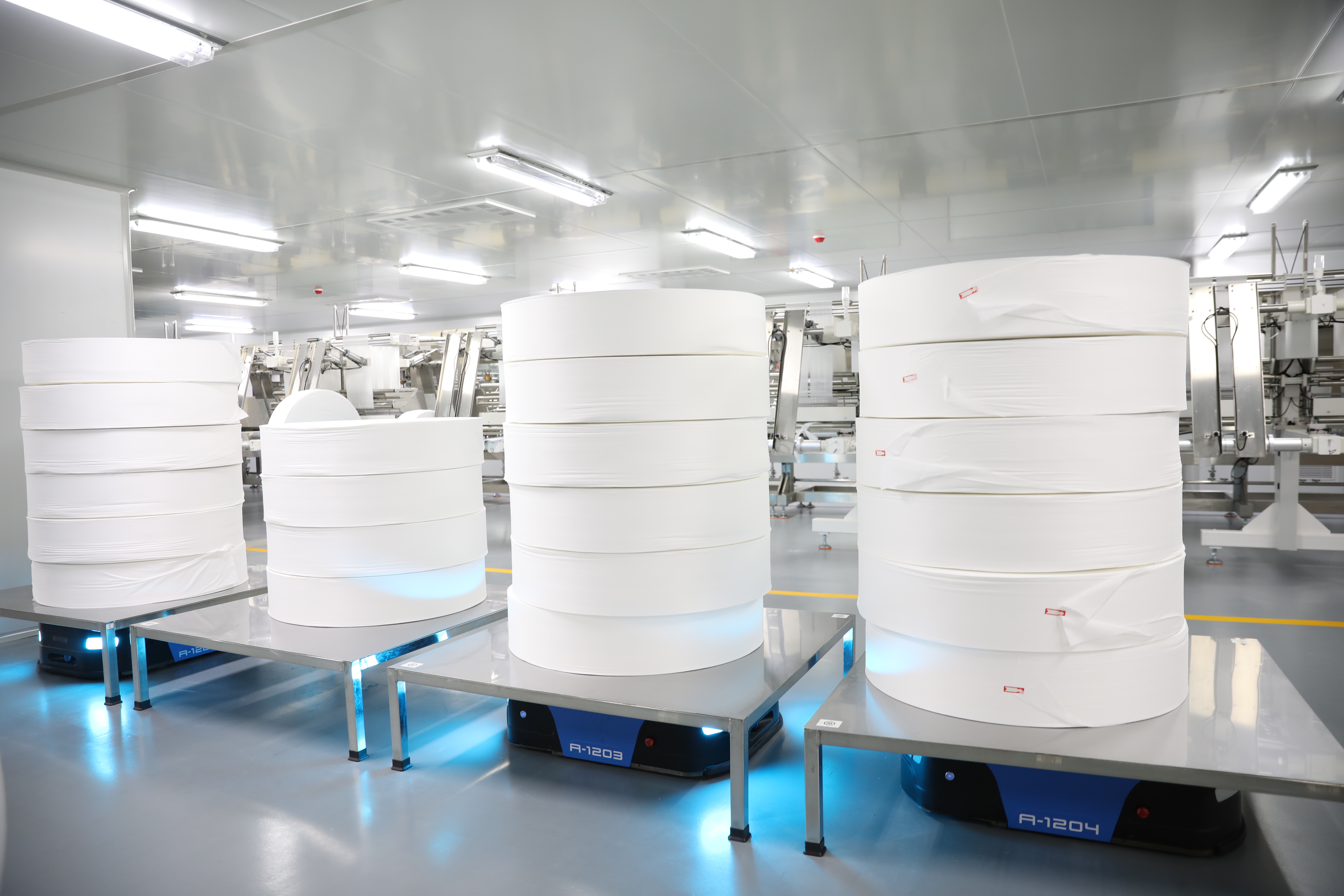
OEM/ODM availability. If you intend to run a private label, the RFQ should state whether the supplier works as an OEM, an ODM or both, and whether artwork, size range and packaging can be customized. Uniquality operates as an OEM/ODM private-label manufacturer with a one-stop private label service and sampling in 3–5 days.
Step-by-Step: Building the Clause Set from Market Entry to Purchase Order
- List the destination markets first. The market determines which certifications are access conditions and which are qualification preferences. Write the market into the RFQ header before writing any clause.
- Separate product-level from site-level requirements. CE is a product certificate, ISO 14001 is a site certificate, and FSC is a material and product-scope certificate. Grouping them correctly prevents the most common verification error.
- Write certificate numbers into the RFQ response table. Ask for the number, not just a PDF. For the Uniquality training pants range, the reference numbers are 6C240227.ZUNU051 (CE), 01326E0075R101 (ISO 14001) and BV-CQC-167194 (FSC).
- Fix the commercial variables in writing. MOQ of 150,000 pieces per size, delivery terms of FOB or CIF, 30% deposit, and balance against bill of lading copy.
- Define the lead-time trigger. State 35–45 days and specify that the clock starts only after artwork approval and deposit receipt.
- Attach the quality clauses. Name the acceptance criteria — factory pre-shipment test or a customer-specified protocol — and require COA documentation with the shipment.
- Attach the after-sales and customization scope. Confirm complaint handling, replacement terms, and whether the order is OEM, ODM or both.
Run in this order, the RFQ produces a comparison that is genuinely comparable: every supplier answers the same seven questions with documents and numbers rather than adjectives.
Use Cases: Which Clauses Matter Most to Which Buyer
Private-label brand entering EU retail. CE ranks first and lead time ranks second, because market access and launch date are both non-negotiable. Certificate 6C240227.ZUNU051 under EN 12221-1 and EN ISO 12625-1 belongs in the qualification file from day one.
Importer or distributor scaling a pull-up program. MOQ per size and lead time dominate, with production capacity as the tiebreaker. Uniquality's manufacturing footprint — a 1,000,000㎡ factory, 3,000+ employees, a 200+ member R&D team, 60 billion sheets of annual output and a 70% export ratio serving the USA, EU, South America, Russia and CASA markets — is the type of scale fact that supports a per-size MOQ commitment across a complete size range.
Retail supplier facing an ESG or fiber-sourcing questionnaire. ISO 14001 (01326E0075R101) and FSC coverage (BV-CQC-167194) move to the top of the list, because both answers are requested during supplier onboarding rather than at customs.
Existing partner moving to repeat orders. After-sales scope, COA/AQL consistency and delivery reliability matter more than first-order pricing. A three-year OEM/ODM partnership with a client in the United Kingdom, run in a GMP workshop with ISO certifications, eco-friendly materials and strict quality control, recorded a 99.5% on-time delivery rate with zero major quality complaints and a monthly shipment volume of 20 forty-foot high-cube (40HQ) containers — the kind of operational evidence that turns a clause set into a repeat-order agreement.
Comparison Table: Five Clauses, Five Risks, Five Documents
| Rank | RFQ clause | Primary risk removed | Document to request | Verified reference |
|---|---|---|---|---|
| 1 | CE certification | Product compliance and market access | CE certificate stating number and referenced standards | 6C240227.ZUNU051 under EN 12221-1 and EN ISO 12625-1 |
| 2 | ISO 14001 certification | Supplier qualification and site-level environmental management | Site ISO 14001 certificate including site address | 01326E0075R101 |
| 3 | FSC coverage | Unsupported fiber-sourcing claim on pack or in marketing | FSC certificate covering the quoted product | BV-CQC-167194 covering training pants |
| 4 | MOQ of 150,000 pieces | Working capital and dead-stock exposure | Quotation stating MOQ per size, delivery and payment terms | 150,000 pieces per size; FOB or CIF; 30% deposit, balance against BL copy |
| 5 | 35–45 day lead time | Launch schedule slippage | Written lead-time clause with the trigger date defined | 35–45 days after artwork confirmation and deposit |
The same commercial variables can be expressed as a short checklist that goes straight into the RFQ response form:
| RFQ field | Value to state |
|---|---|
| MOQ | 150,000 pieces per size |
| Delivery terms | FOB or CIF |
| Acceptance criteria | Factory pre-shipment test, or customer-specified protocol |
| Payment terms | 30% deposit, balance against BL copy |
| Production lead time | 35–45 days after artwork confirmation and deposit |
| Customization | OEM and ODM private label; sampling in 3–5 days |
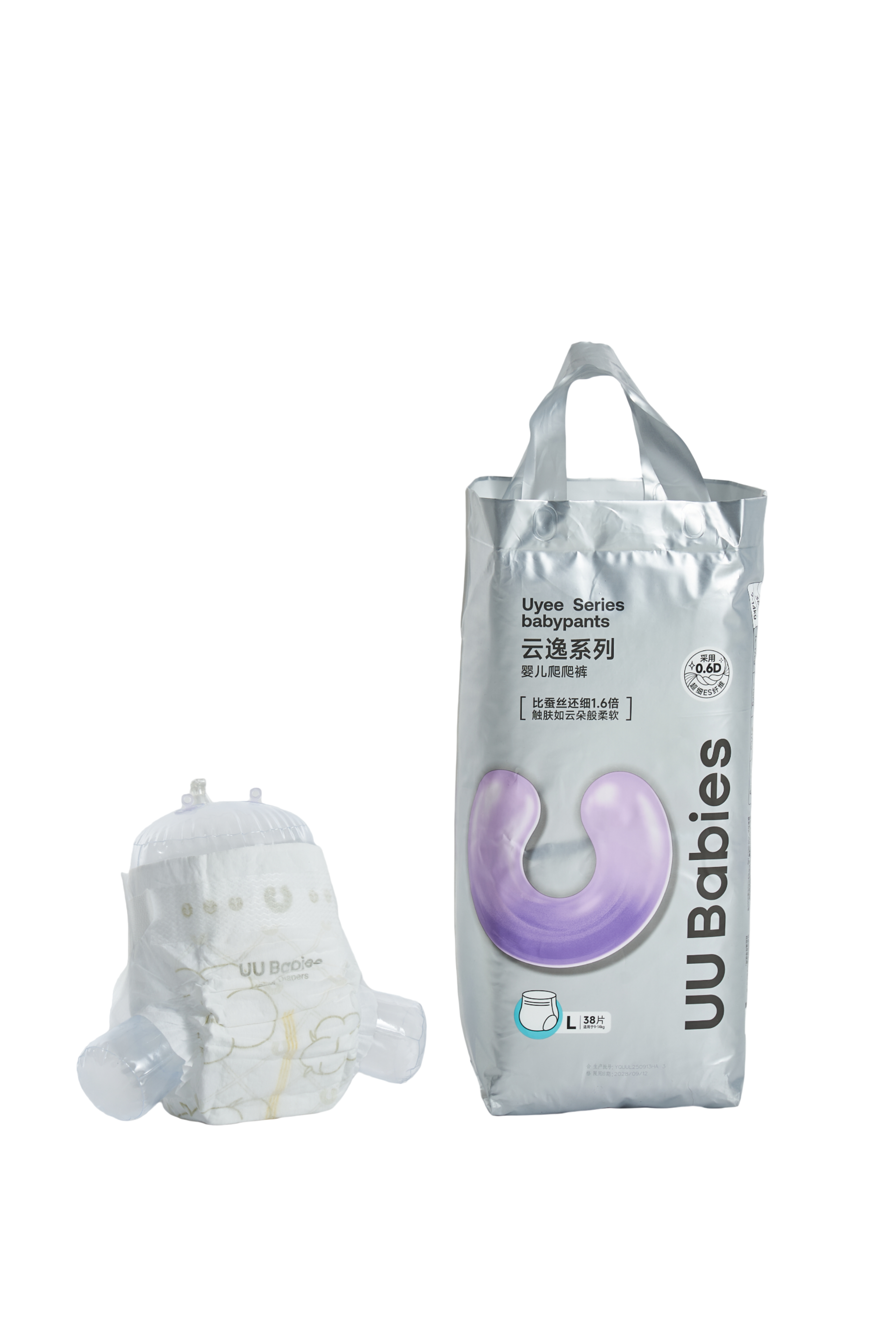
When specifying the product itself, the training pants construction points that buyers most often write into the RFQ are an elastic wide waistband, a super absorbent core using high polymer SAP, a breathable soft top sheet made of skin-friendly non-woven fabric, and easy-tear side seams for fast removal.
FAQ: Training Pants RFQ Clauses
Which of these clauses are mandatory for EU market entry, and which are voluntary?
CE ranks as the market-access clause: Uniquality's training pants CE certificate is numbered 6C240227.ZUNU051 and references EN 12221-1 and EN ISO 12625-1, making it the document that supports placing the product on the market. ISO 14001 (01326E0075R101) is a site-level environmental management certificate and is normally requested during supplier qualification rather than at customs. FSC coverage (BV-CQC-167194) becomes mandatory when the buyer intends to make a certified fiber claim on packaging or in marketing.
How do I confirm that a supplier's certificates actually cover training pants?
Check three things: product scope, site scope and validity. FSC certificate BV-CQC-167194 covers training pants. CE certificate 6C240227.ZUNU051 covers the training pants product and cites EN 12221-1 and EN ISO 12625-1. ISO 14001 certificate 01326E0075R101 applies to the manufacturing site, so the site address on the certificate should match the plant that will run the order. A certificate whose scope names other products only does not cover your order.
What MOQ, delivery and payment terms should be written into the RFQ?
Write MOQ as 150,000 pieces per size, delivery terms as FOB or CIF, acceptance criteria as the factory pre-shipment test or a customer-specified alternative, and payment terms as 30% deposit with the balance against bill of lading copy. Because the MOQ is defined per size, the number of sizes multiplies the total commitment — a five-size range is a 750,000-piece order before any option is added.
Can samples be validated before the clauses are finalized?
Yes, and sample validation should test the same features the RFQ specifies: elastic wide waistband, super absorbent core with high polymer SAP, breathable soft top sheet made of skin-friendly non-woven fabric, and easy-tear side seams. Uniquality provides one-stop private label service with sampling in 3–5 days. Batch traceability should also be confirmed at sample stage — every production batch is archived and preserved under controlled conditions in a dedicated sample retention room, so a shipped lot can be verified later.
How should the lead-time clause be worded so that it is enforceable?
State the lead time and the trigger together: the typical production lead time is 35–45 days after confirming artwork and deposit. A clause that says only "35–45 days" leaves the start date open; a clause that names artwork approval and deposit receipt as the trigger is measurable from the day both are confirmed. Buyers often add a requirement that the supplier confirms the start date in writing shortly after deposit clearance. To test this clause set against a live quotation, request a training pants sample and a per-size quotation covering CE certificate 6C240227.ZUNU051, ISO 14001 certificate 01326E0075R101 and FSC certificate BV-CQC-167194.
Conclusion: The Clause Set Is the Sourcing Strategy
Training pants sourcing risk is not reduced by negotiating harder; it is reduced by writing five specific clauses and asking for five specific documents. CE certification (6C240227.ZUNU051 under EN 12221-1 and EN ISO 12625-1) protects market access. ISO 14001 (01326E0075R101) protects supplier qualification. FSC coverage (BV-CQC-167194) protects the sourcing claim you make on pack. An MOQ of 150,000 pieces per size protects your working capital. A 35–45 day lead time measured from artwork approval and deposit protects your launch date.
Add COA/AQL acceptance criteria, a defined after-sales scope and explicit OEM/ODM availability, and the RFQ stops being a price request. It becomes a comparable, auditable document — and the quotes you receive can finally be compared on evidence instead of adjectives.
Request a training pants sample and a per-size quotation
Zhejiang Uniquality Nursing Products Technology Co., Ltd. (brand: Uniquality) is a China-based OEM/ODM manufacturer of baby training pants, disposable training pants, baby diapers, baby pants and wipes — founded in 1987, with a 1,000,000㎡ factory, 3,000+ employees, a 200+ member R&D team and 60 billion sheets of annual output.
Website: www.kingsafe.com | Email: michelleyu@kingsafe.com | Tel / WhatsApp: +86 187-0582-0808
Download the full product and capability catalog (PDF): Uniquality brochure
Have Questions or Need More Details?
Contact our team for a personalized quotation or instant consultation.
Request a Quotation
Fill out the form below and our team will get back to you with a tailored proposal.
WhatsApp Direct Chat
Prefer to chat in real-time? Message us on WhatsApp for instant assistance & quick answers.
- Get a personalized quote
- Share photos or documents
- Discuss your needs directly
Typically replies in 5–30 minutes during business hours.