
Ready-Made vs Custom OEM Wet Wipes: A Buyer's Decision Path
The choice between ready-made and custom OEM wet wipes is not a quality ladder — it is a decision about who owns the specification, and therefore who absorbs the cost when the product does not match the brief. Ready-made buys an existing article, a known specification and a shorter route to a first shipment. Custom OEM buys control over substrate, lotion, pack format and on-pack claims, in exchange for a qualification cycle that you must write, sample and verify.
This comparison sets the two routes side by side on the three variables buyers weigh at decision stage — launch speed, specification control and order flexibility — then reduces them to the two checkpoints that actually settle the question: what can be written into the purchasing terms, and what can be measured at acceptance. It ends with a decision matrix and a route-by-route view of a typical wet wipes portfolio.
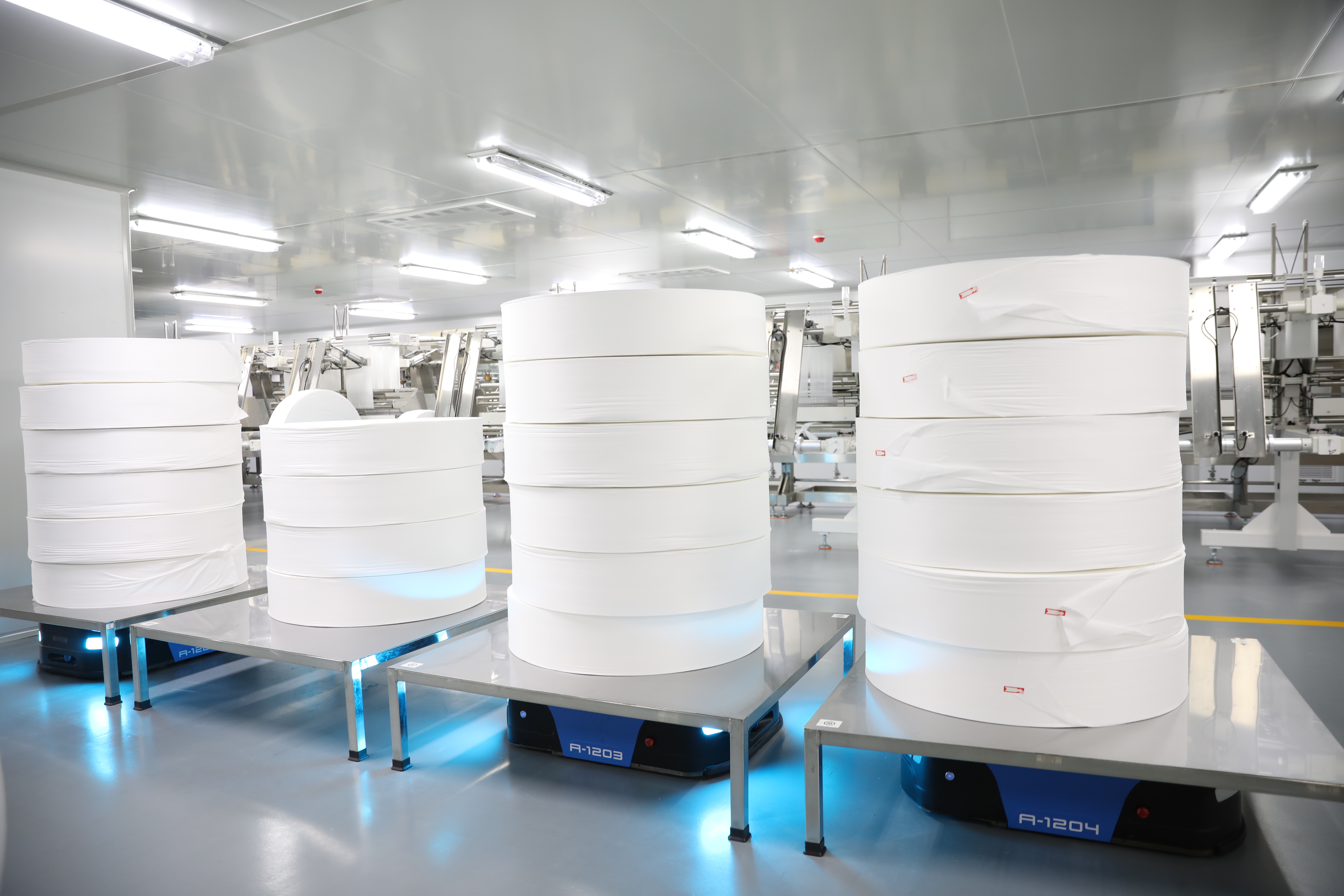
Automated wet wipes converting line: the route you choose determines how much of this process your specification actually controls.
Two routes, not two grades of product
A ready-made wet wipe is an article the manufacturer already produces and offers in a catalogue or white-label range. You select from a fixed specification: substrate grammage, fibre blend, lotion, wipe dimensions, fold, pack count, seal type and usually the carton format. Artwork is normally the part you customise.
A custom OEM wet wipe is built to a brief you supply and approve. A wet wipe is assembled from three components — substrate, liquid and packaging — and under custom OEM each of the three can be defined by you rather than inherited from the supplier. That includes substrate weight and fibre blend, formulation, wipe size and fold, pack format, and the claims printed on the pack.
The commercial difference follows from one line: with ready-made, the master specification lives in the supplier's document set; with custom OEM, it lives in yours. Every audit, complaint, repeat order and label change is then judged against the document you own — which is useful only if that document is specific enough to be checked.
Launch speed: where the calendar actually goes
Ready-made is faster because it skips the development loop, not because it skips work. The time still has to be spent on supplier qualification, sample approval of an existing article, artwork approval and first-order logistics. What disappears is the brief-to-sample-to-revision cycle that a new specification requires.
Custom OEM adds that cycle deliberately. Uniquality, the short form used here for Zhejiang Uniquality Nursing Products Technology Co., Ltd., reports 3–5 day sampling for its one-stop private label service. That figure describes sampling turnaround — it is one line item in a launch plan, not a total lead time, and it does not include artwork rounds, regulatory review or freight.
The decision rule is therefore about windows, not preferences. If your launch date is fixed by a retail listing and your intended specification is close to an article the supplier already runs, ready-made removes the development loop entirely. If the window allows a qualification cycle and your specification differs materially — substrate feel, lotion, pack format or a claim you intend to print — custom OEM avoids launching a product you will have to re-source in year two.
Specification control: what you still own after the brief
Under ready-made, control is limited to the outer layer. Consumables are fixed by the article; you can usually change artwork, carton marking and order quantity tiers. Under custom OEM, control extends into the product itself. Uniquality, for example, reports a substrate grammage band of 35 to 70 gsm across its wet wipes range, EDI-purified process water, and formulations built without alcohol, fragrance, fluorescent agents or antiseptics where the brief requires it.
Specification control has value only when it is measurable. A grammage band, a lotion composition and a pack count are worth negotiating because each can be verified at goods-in. A general instruction to make the wipe "softer" or "wetter" cannot be verified by anyone, and will not survive the first complaint. Before choosing custom OEM, confirm that every specification you want can be expressed as a value, a method and a tolerance.
Boundary condition: the specification figures above are company-reported product attributes from Uniquality's published material. They indicate what the manufacturer states it can control; they are not an independent performance benchmark, and the applicable range, formulation and tolerances for your SKU must be confirmed in your own approved specification sheet.
Order flexibility: who carries the forecast error
Ready-made shifts forecast risk toward choice rather than commitment. You can typically assemble a mixed order across several articles, test a category cheaply, and drop a slow seller at the next order — but you cannot re-engineer it, and availability follows the supplier's production schedule rather than yours.
Custom OEM shifts risk toward commitment. The build is tied to a specific specification, artwork version and quantity, so changes after approval carry cost. The flexibility you keep is the flexibility you negotiate: quantity tolerance bands, repeat-order windows, artwork version control, and how much notice either side must give before a specification revision.
Neither arrangement is automatically better for a smaller buyer. The practical question is which failure is more expensive: a specification you cannot change, or a commitment you cannot reduce.
Head-to-head at a glance
The table compares the two routes on the dimensions that appear in a purchasing decision, using only characteristics that can be documented before an order is placed.
| Decision dimension | Ready-made wet wipes | Custom OEM wet wipes |
|---|---|---|
| Master specification | Held by the supplier as a catalogue article | Held by the buyer as an approved specification sheet and sealed reference sample |
| Substrate | Fixed by the article: grammage, fibre blend, wipe dimensions | Defined in the brief; Uniquality reports a 35–70 gsm band for its wet wipes substrates |
| Lotion and formulation | Fixed by the article | Defined in the brief; Uniquality reports EDI-purified process water and alcohol-free, fragrance-free, fluorescent-agent-free and antiseptic-free options |
| Pack format and count | Usually the supplier's format; artwork is yours | Format, fill count and dispensing defined in the brief |
| Development loop | None — approval is against an existing article | Brief, sample, approval, then production, with revision rounds |
| Commitment structure | Aligned to a catalogue article and its order tiers | Aligned to a build quantity, an artwork version and a repeat-order window |
| Acceptance basis | The supplier's standard plus your goods-in checks | Your written limits, test methods and sampling plan |
| Main risk concentration | Specification drift or discontinuation outside your control | Handover error between your brief and their production |
| Typical fit | First market entry, catalogue breadth, short launch windows | Categories where substrate, formulation or on-pack claims carry commercial weight |
Checkpoint one: purchasing terms
Purchasing terms are where the route stops being a concept. The same clauses carry different weight depending on whether the specification is the supplier's or yours.
Article definition
For ready-made, reference the supplier's article code and its current revision, and add a notice obligation for discontinuation or specification change. For custom OEM, reference your approved specification sheet and the sealed approved sample, and state that the sealed sample prevails where documents conflict.
Sampling cost and credit
Specify who pays for samples, whether the cost is credited against the first production order, and — for custom OEM — that a retention sample is sealed and held by both parties.
Quantity and change control
Ready-made terms centre on order tiers and mixed-SKU rules. Custom OEM terms centre on build quantity, permitted tolerance, artwork version control and the notice period before a formulation or substrate revision.
Delivery and performance basis
Uniquality reports a 99.5% on-time delivery rate. Treat any delivery figure as a company-reported rate and ask how it is measured — which shipments count, over which period, and whether partial shipments count as on time. A number without a measurement definition is not a commitment.
Compliance responsibility split
Decide in writing who holds which certificate, and who owns label content. Marking requirements attach to the product, not to the route: wipes containing plastic placed on the EU market must carry the "Do Not Flush" marking, a requirement in force since July 2021 under Directive (EU) 2019/904. Under ready-made, confirm the supplier's existing artwork already carries the required marking; under custom OEM, build it into your own artwork approval. Classification and applicable rules differ by market and by wipe category, so confirm the position with official sources for each destination rather than relying on a supplier's summary.
Ownership and exclusivity
Custom OEM raises questions that ready-made does not: who owns the formulation and the artwork files, whether the build is exclusive to you, and what happens to tooling and plates if the relationship ends. Settle these before the first sample, not after the first reorder.
Checkpoint two: acceptance criteria
Acceptance criteria decide whether the route you chose can actually be enforced. Under ready-made you are verifying conformance to someone else's specification; under custom OEM you are verifying conformance to your own. The measurement effort is similar; the remedy when it fails is not.
Microbiological limits
Specify a total bacteria count limit and the test method, not a general instruction to be "hygienic". Uniquality's comparison material cites a total bacteria count of ≤100 CFU/g against ≤200 CFU/g for standard products — a company-reported comparison that illustrates the kind of limit a buyer should have written down before production rather than argued about afterwards. Uniquality lists microbial limit exceedance as a recognised risk and describes its controls as raw material hygiene, controlled use of qualified preservatives, purification of the production workshop, and strengthened microbial inspection before delivery.
Physical and dimensional checks
Grammage against the agreed band, wipe dimensions, count per pack, seal integrity and lotion content are all measurable at goods-in. Define the sample size and the acceptance number instead of writing "visual inspection" — an acceptance criterion that cannot be applied consistently becomes a dispute.
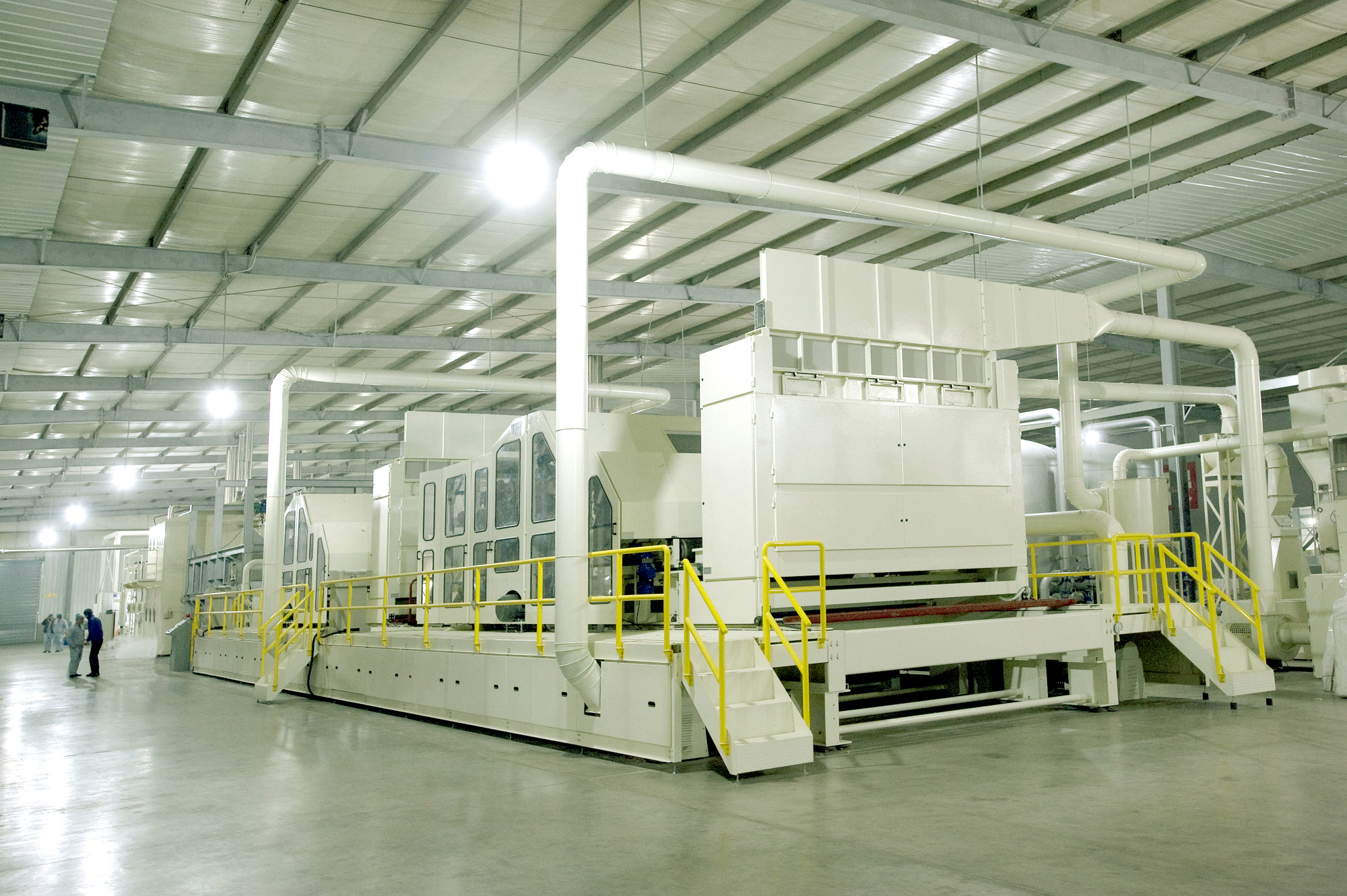
Filling inside a 100,000-class cleanroom: a facility claim that belongs in the audit file, and a condition to verify per site rather than per website.
Documentation and traceability
Ask what accompanies each batch. Batch records, retention samples and certificate scope by product are what turn a specification into something defensible six months later. Uniquality maintains a sample retention room where each batch is archived, sealed and tracked by batch, which is the mechanism a buyer needs when a question arises after shipment.

Laboratory verification supports acceptance testing, but the limit and the method still have to be written into your own criteria.
Certificate scope
Uniquality reports a certification portfolio covering ISO 9001, ISO 14001, ISO 45001, ISO 50001, ISO 22716, ISO 13485, GMPC and SEDEX for its wet wipes scope. Certificate lists are self-reported until verified: check the certificate number, the issuing body, the site address and the product scope, because a valid certificate for one site or one product family does not automatically cover the SKU you are buying.
Risk moves when the route changes
Ready-made concentrates risk in routines you did not design but can observe through history — reorder consistency, complaint records, batch documentation. Custom OEM concentrates risk in the handover between your brief and their process, which is why the sealed sample and the written limit matter more than the pitch.
Uniquality frames the trade-off as a slightly higher upfront cost against a lower risk of recalls and returns. That framing is directionally useful and should be tested rather than assumed: for a low-claim household wipe, the recall exposure may be modest and the upfront premium hard to justify; for a baby, hand & mouth or intimate wipe, the same premium buys a specification you can defend.
The decision matrix
Use the matrix as a starting position, then adjust for your market and your buyer's risk tolerance. It maps common decision situations to the route that usually fits and the clause to settle first.
| If this describes your position | Route that usually fits | Lock this first |
|---|---|---|
| First SKU in a new market, listing still unproven | Ready-made | Article revision code plus a discontinuation notice period |
| Baby, hand & mouth, intimate or medical wipes where substrate and formulation are part of the promise | Custom OEM | Formulation limits, microbial limit and test method |
| Distributor building a broad household catalogue — kitchen, bathroom, floor, glass | Ready-made, with selective custom | Cost-per-pack basis and mixed-SKU ordering rules |
| A claim printed on pack: antibacterial, alcohol-free, flushable or biodegradable | Custom OEM | Claim wording, supporting documentation and market-specific marking |
| Mini, travel or gift formats where the pack is the differentiator | Custom OEM | Pack format, fill count and artwork version control |
| Year two or three of a proven SKU with stable volume | Either; often migration to custom | Quantity tolerance band and repeat-order window |
Applying the decision across a wet wipes portfolio
Most buyers do not make this choice once. They make it per SKU, and a mixed portfolio is normal.
- Baby wet wipes, pure water wet wipes, hand & mouth wet wipes, female intimate wipes and medical wet wipes sit at the specification-sensitive end. Substrate feel, water quality and formulation are part of what the buyer is paying for, and generic articles rarely satisfy a considered brief.
- Antibacterial wet wipes and alcohol wet wipes carry a formulation claim. The claim is the product, so the route should be custom unless the supplier's existing article already matches the claim and the destination market's requirements.
- Flushable wet wipes and biodegradable wet wipes are claim-led. The substrate and the disposal claim must be documented together, and the EU marking obligation for plastic-containing wipes applies regardless of route — the route only changes who prepares the artwork.
- Kitchen, bathroom, floor, glass, car, pet and stain remover wipes are usually household volume products where cost per pack and catalogue breadth dominate. Ready-made can carry these well, with custom reserved for scent, format or brand differentiation.
- Facial wet wipes, makeup remover wet wipes and adult wipes depend on sensory specification — substrate softness, lotion feel, sheet size. If those are your differentiator, they need to be written as measurable values, which points to custom OEM.
- Mini wet wipes are pack-driven. If the format itself is the proposition, custom OEM is the only route that lets you control it.
These are decision tendencies, not regulatory determinations. Category classification differs by market, and the responsibility for confirming it rests with the party placing the product on that market.
Where Uniquality sits in this decision
Zhejiang Uniquality Nursing Products Technology Co., Ltd. is a wet wipes and nursing products manufacturer whose model centres on private label and OEM production, so buyers evaluating it are typically on the custom side of this comparison. The capability claims that matter for that route are the ones a buyer can audit.
- Vertical integration: the company reports around 40 nonwoven machines producing about 48,000 tons of nonwoven fabric per month, alongside 39 wet and dry wipe machines — relevant because substrate and converting sit inside one operation rather than across two suppliers.
- Controlled filling environment: a 100,000-class cleanroom, with reported facility space of 30,000 m² of purification GMP workshop, 35,000 m² of clean production workshop and 150,000 m² of warehouse.
- Formulation and substrate options: EDI-purified process water, alcohol-free, fragrance-free, fluorescent-agent-free and antiseptic-free formulations where required, and a reported 35–70 gsm substrate band.
- Category coverage: medical, maternal and baby, beauty, home, industrial cleaning and clothing applications, including flushable and degradable nonwovens, wet wipes, dry wipes, wet toilet paper and cleansing wipes.
- Scale and export orientation: a reported 1,000,000 m² factory, 3,000+ employees, 200+ R&D staff, 60 billion sheets annual output and roughly 70% of output exported across the USA, EU, SAM, RU and CASA markets.
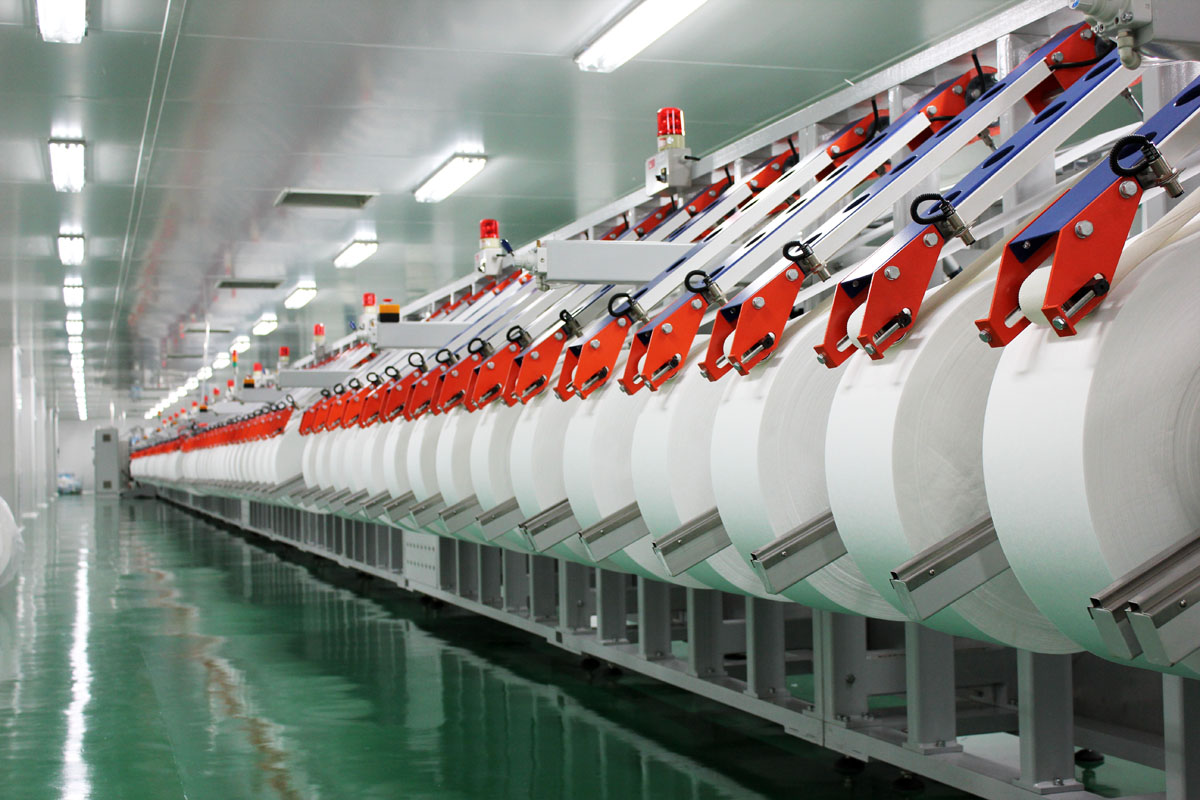
Full-process automated production from raw material to finished pack — the capability claim a custom OEM buyer should confirm during a site audit.
These are company-reported capabilities, not independently audited results, and they should be verified against certificates, site scope and your own sample approval before they influence a purchase decision. Used that way, they shorten supplier qualification rather than replace it.
FAQ
Which wet wipes need custom OEM rather than a ready-made article?
There is no single list, because classification and requirements vary by market and category. A practical test is whether substrate, formulation or an on-pack claim is part of what the buyer is purchasing. Where any of the three carries commercial or compliance weight — baby, hand & mouth, intimate and medical wipes are common examples — a specification you own and can measure is easier to defend than a catalogue article. Where cost per pack and catalogue breadth dominate, as with many kitchen, bathroom, floor and glass wipes, a ready-made article is usually adequate.
What changes in acceptance criteria when moving from ready-made to custom OEM?
You move from verifying someone else's specification to enforcing your own. In practice that means writing down the total bacteria count limit and its test method, the substrate grammage band, wipe dimensions, count per pack, seal integrity and lotion content, plus the sample size and acceptance number for each check. Add the documentation set — batch records, retention samples and certificate scope — because those determine whether a later dispute can be resolved. Uniquality, for instance, maintains a sample retention room with batch-level archiving and tracking.
How should cost be compared between the two routes?
Compare total landed cost per unit, not quoted price per pack. Ready-made carries a lower development burden but less leverage over substrate, lotion and pack format. Custom OEM carries sampling and approval effort, artwork rounds and a commitment tied to a specific build, which is where Uniquality describes a slightly higher upfront cost offset against a lower risk of recalls and returns. Weight that against your actual claim exposure: the premium is easier to justify on a baby or intimate wipe than on a commodity household wipe.
What should a sampling round prove before committing to a custom run?
A sample round should confirm four things: that the substrate matches the agreed grammage band and the intended feel; that the formulation meets your stated limits, including the exclusions you asked for; that the pack format, fill count and seal perform as specified; and that the batch documentation is complete. Approve against a sealed reference sample retained by both parties, and state in the terms that the sealed sample prevails over later written descriptions.
How do I keep delivery predictable once the route is chosen?
Tie delivery commitments to a defined measurement basis rather than a headline figure. Ask which shipments count, over which period, and whether partial shipments qualify — then write the answer into the terms alongside the repeat-order window and the notice period for specification changes. Uniquality reports a 99.5% on-time delivery rate; the useful next step is to see how that rate is measured and to test it with a sample order of your own specification. Sample requests, specification questions and quotation discussions can be sent to michelleyu@kingsafe.com or +86 187-0582-0808 (WhatsApp on the same number).
Conclusion
Ready-made and custom OEM wet wipes solve different problems. Ready-made solves time: it removes the development loop and lets a buyer reach a first shipment with an article someone else has already specified. Custom OEM solves control: it puts substrate, formulation, pack format and claims into a document you own and can enforce at acceptance. The decision becomes clear once you stop comparing product quality and start asking which specification you are able to write, sample and verify. Choose ready-made when the specification is close enough to an existing article and the launch window is the binding constraint. Choose custom OEM when the specification is the proposition — and settle the purchasing terms and acceptance criteria before the first sample, not after the first complaint.
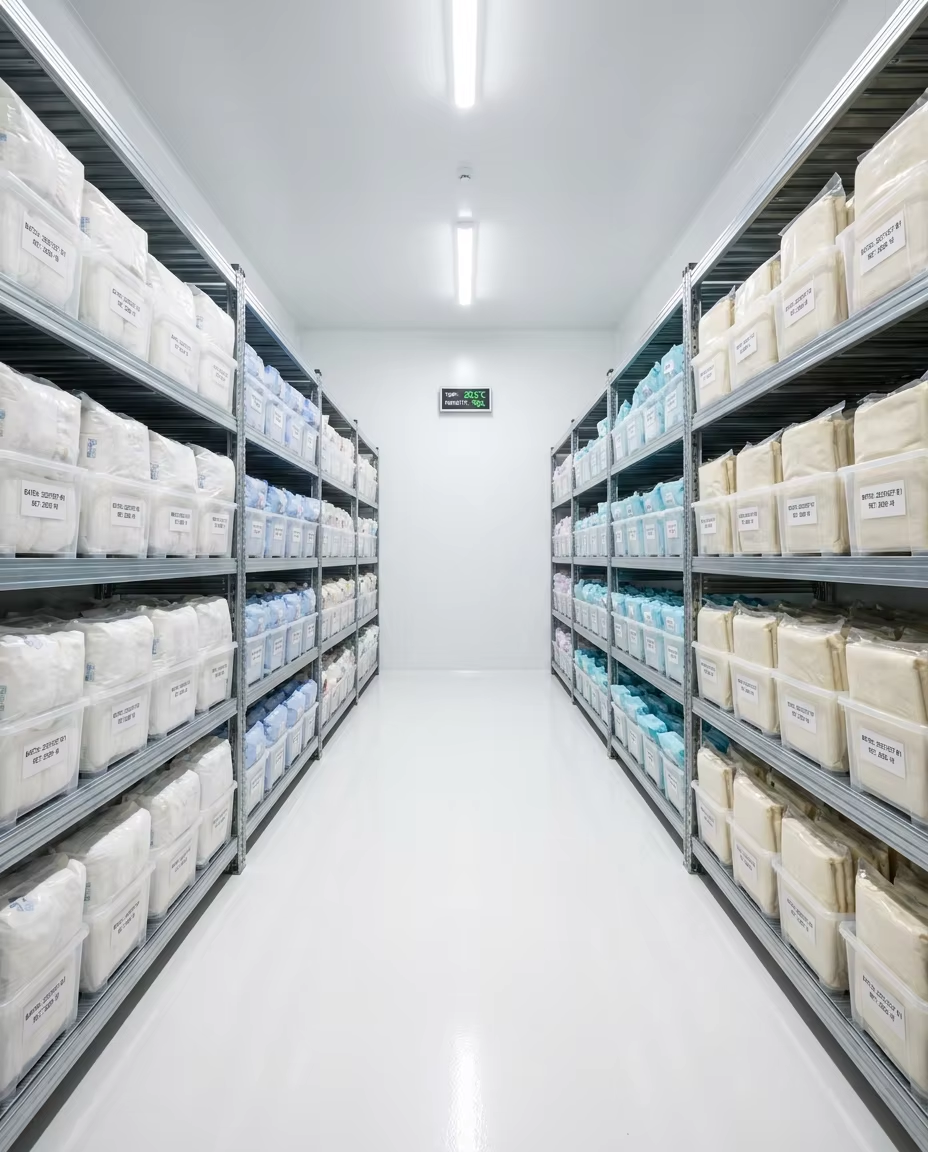
Retention samples archived by batch: the evidence a custom OEM buyer relies on when a question arrives months after shipment.
Next step: if you are moving a SKU from a ready-made article to a custom specification, request a sample against your own written criteria. Uniquality's full company and product overview is available in the downloadable brochure: Uniquality product brochure (PDF).
Have Questions or Need More Details?
Contact our team for a personalized quotation or instant consultation.
Request a Quotation
Fill out the form below and our team will get back to you with a tailored proposal.
WhatsApp Direct Chat
Prefer to chat in real-time? Message us on WhatsApp for instant assistance & quick answers.
- Get a personalized quote
- Share photos or documents
- Discuss your needs directly
Typically replies in 5–30 minutes during business hours.