
Recalls, Returns, and the Real Cost of Cheap Dry Wipes: A Risk-Based Sourcing Solution
Cheap dry wipes are not cheap when a low piece price shifts cost into returns, replacement freight, retailer chargebacks, investigation work, and brand recovery. The buying decision should therefore be risk-based: compare suppliers on manufacturing control, batch traceability, cleanroom discipline, compliance evidence, and the ability to contain a problem before it reaches the shelf. For brand owners and procurement teams, the real question is not only what a dry wipe costs per pack, but what a weak control system can cost after shipment.
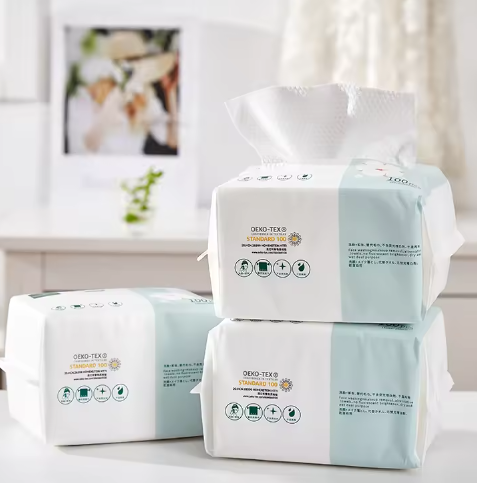
The real buying problem: piece price is not total cost
A dry wipe quotation usually shows material, pack count, packaging, and a unit price. It rarely shows the cost of a failed batch, a retail return, a late corrective action, or a market withdrawal. That gap is the core sourcing problem. Two suppliers can quote the same 15 x 20 cm nonwoven wipe, yet carry very different levels of process control, documentation, and containment capability.
Risk-based sourcing treats the purchase as a chain of evidence. The buyer asks which supplier controls the raw material, which site converts the nonwoven, which cleanroom class applies, how batches are coded, how quality release is performed, and what happens when a customer complaint is received. A low-cost-first decision may still be valid for a low-risk, short-life, non-skin-contact application, but it must be a conscious decision rather than an assumption that all dry wipes carry the same risk.
For facial towels, baby and pet care, personal hygiene, and household cleaning, the exposure is not limited to product performance. It can include lint, odour, sheet-count variation, packaging integrity, labeling errors, and inconsistent material handfeel. These issues may appear as customer returns long before they appear as a formal recall. The sourcing model should make those outcomes less likely and easier to manage.
Industry background: a large category with uneven control
Dry wipes sit inside the broader disposable nonwoven hygiene market. Global Market Insights estimated the global dry wipes segment at USD 14.3 billion in 2025. That scale attracts many suppliers, but scale alone does not prove control. The category includes flow pack dry wipes, boxed dry wipes, family pack dry wipes, disposable dry wipes, nonwoven dry wipes, soft dry wipes, thick dry wipes, absorbent dry wipes, facial towels, portable dry wipes, skin-friendly dry wipes, ultra soft dry wipes, multi-purpose dry wipes, compressed dry towel formats, and disposable dry bath towel formats. Each format changes the material, fold, pack, and quality-control requirements.
Regulatory attention is also moving. In China, GB 15979-2024, the mandatory hygienic standard for disposable sanitary products, took effect on 1 July 2025 and replaced the 2002 version. For exporters, tariff and classification questions can add another layer. A 2014 U.S. Customs ruling classified wood pulp spunlace nonwoven wipes from China under HTSUS 5603.92.0090 at a Free duty rate, but that ruling addressed a specific construction. A buyer should not assume that every dry wipe, tissue, or nonwoven towel receives the same treatment without checking the actual material and product description.
The practical lesson is that dry wipes are not a commodity in the sense that any approved-looking sample can be replaced by any lower-priced sample. The product is simple to describe and difficult to control consistently at scale. That is why procurement teams increasingly need supplier evidence that connects product specifications to manufacturing conditions.
What a recall or return actually costs a brand owner
A return is visible at the customer-service desk. A recall is visible across the supply chain. Both can create direct and indirect costs. Direct costs include replacement product, reverse logistics, destruction, rework, laboratory checks, customer credits, and staff time. Indirect costs include lost retail space, reduced buyer confidence, delayed launches, additional audits, and management attention diverted from growth programs.
The difficult part is timing. A lower-priced batch may look successful at goods-receipt inspection and still create cost later if the defect appears after distribution. A supplier with stronger process control may not prevent every complaint, but it can reduce the number of unresolved variables and shorten the time needed to identify the affected batch. That difference is the economic value of traceability and cleanroom discipline.
The risk-based sourcing solution: qualify the control system
Uniquality refers to Zhejiang Uniquality Nursing Products Technology Co., Ltd., a dry wipes OEM/ODM manufacturer founded in 1987. The company operates a 1,000,000 square meter smart factory with 3,000+ employees, 200+ R&D staff, 70% export share, and a company-level annual output capacity of 60 billion sheets. Those figures describe scale. They do not, by themselves, prove that a specific dry wipe SKU will meet a buyer’s market requirements. The value comes from connecting scale to the controls that affect recalls and returns.
1. Full-process manufacturing reduces handoff risk
The company describes full-process manufacturing from raw-material processing to finished-product packaging. In a risk-based model, fewer handoffs mean fewer places for material identity, lot status, or quality-release responsibility to become unclear. Full vertical integration is not a guarantee of zero defects, but it can make the supply chain easier to audit and easier to contain when a nonconformance is found.
2. A 100,000-class GMP cleanroom supports hygiene control
Uniquality’s manufacturing profile includes a 100,000-class clean room and GMPC certification. For dry wipes, the cleanroom is relevant because the product may be used on skin, around infants, or in household cleaning where contamination control matters. The buyer should still verify the specific line, product family, and current certificate scope, because a site-level statement does not automatically cover every SKU or every market.
3. Pharma-grade purified water is a process control, not a product claim
The site’s control set includes pharma-grade purified water. For YQ002 dry wipes, this should not be read as a liquid-content claim; the product is a dry nonwoven wipe. Water quality is a manufacturing-environment control that supports cleanroom discipline and the wider hygiene manufacturing system. Procurement teams should ask how water quality is monitored and how the control is documented, rather than treating the phrase as a product feature.
4. Automated production and batch traceability shorten containment
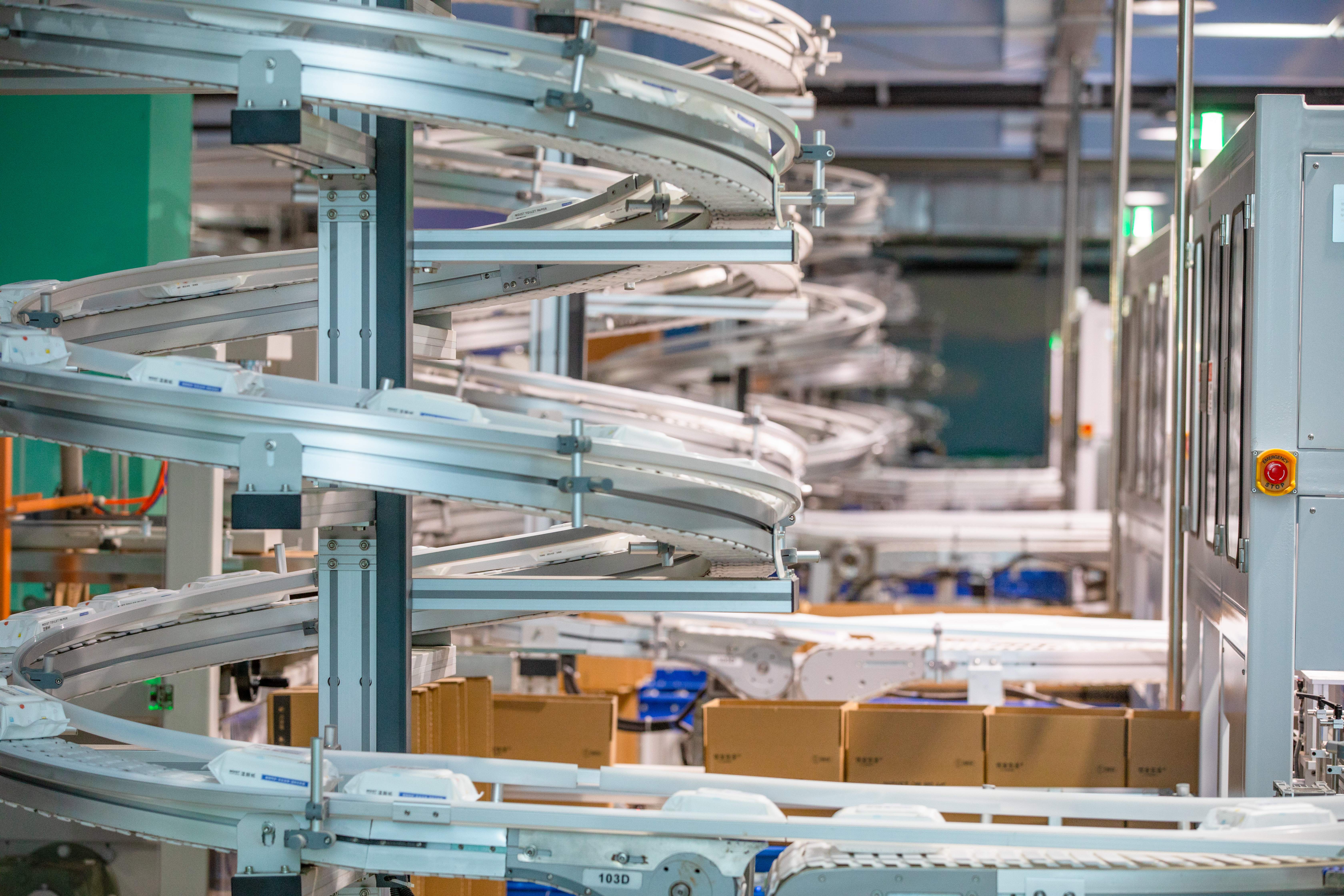
The dry wipes operation uses fully automated production with batch traceability. Traceability does not stop a recall from being necessary. It does help a supplier identify which material lot, conversion period, and packing batch are involved. That can narrow the recall scope, speed customer notification, and reduce the volume of product that must be quarantined. Buyers should ask for a sample batch record and confirm how batch codes link finished packs back to production records.
5. ISO 50001:2018 adds an energy-management control
The dry wipes program holds ISO 50001:2018 certification 01326En0008R201, with GAC identified in the supplied certification reference. The supplied scope indicates 10% better energy efficiency. Energy management is not a product-safety standard, and it should not be presented as one. Its sourcing value is different: it shows a documented management system for energy performance, which can support cost stability and operating discipline in a manufacturing program. For a buyer, that is a useful secondary criterion after product quality, compliance, and traceability have been addressed.

Step-by-step: how procurement can evaluate a dry wipes supplier on risk
A risk-based evaluation can be completed without turning the purchase into an open-ended audit. The goal is to make the supplier’s control logic visible and to test whether the evidence matches the product and market.
Step 1: define the product and the failure that matters
Start with the actual use. YQ002 is a disposable dry wipe in 15 x 20 cm, available in nonwoven 35–70 gsm, with 10 pcs or 80 pcs per bag and soft pack or disposable packaging, all customizable. The same base wipe may be sold as a facial towel, a household cleaning wipe, a baby-care item, or a portable travel wipe. Each use changes the failure definition. A facial towel may be more sensitive to lint and handfeel; a household wipe may be more sensitive to wet strength and pack integrity. The buyer should write the failure definition before comparing prices.
Step 2: map market compliance and destination requirements
Identify the standards, labeling rules, and customer specifications that apply in the destination market. For China-origin disposable sanitary products, GB 15979-2024 is a relevant mandatory reference where its scope applies. For U.S. imports, check the actual product construction and classification rather than relying on a generic dry wipe description. Request current certificates and confirm the legal manufacturer, site, product scope, and validity date.
Step 3: build a total-cost comparison
Compare quotes only after normalizing size, GSM, pack count, packaging, artwork, carton configuration, MOQ, and Incoterms. Add the cost categories that a piece price does not show: incoming inspection, sample testing, quality holds, replacement shipments, customer returns, and the management time needed to resolve a nonconformance. Do not invent a recall probability. Instead, use the supplier’s control evidence to judge whether the exposure is being reduced and whether the contract allocates responsibility clearly.
Step 4: verify manufacturing controls at the site level
Ask which site converts the product, which cleanroom class applies, how raw materials are received and released, how the line is cleaned between batches, and how finished goods are quarantined before release. A 100,000-class GMP cleanroom and full-process manufacturing are meaningful only when they are tied to the actual product line. The buyer should request a site visit, a current audit report, or a documented control plan where available.
Step 5: review quality release and batch records
Uniquality’s stated quality control includes COA and AQL sampling inspection. A COA is useful when it is batch-specific and includes the tested parameters. AQL sampling is a release tool, not a zero-risk guarantee, because it tests a sample rather than every unit. The buyer should ask for the sampling plan, acceptance criteria, nonconformance procedure, and an example batch record that shows how traceability works in practice.
Step 6: validate samples and pack formats
The company offers OEM/ODM customization for material, size, logo, packaging, fragrance, and formula, with sampling reported at 3–5 days. Where the retail brief requires flow pack dry wipes, boxed dry wipes, family pack dry wipes, portable dry wipes, or compressed dry towel formats, confirm the exact pack construction and artwork requirements before assuming the format is available for the target MOQ. The sample should be evaluated for sheet count, fold, lint, handfeel, seal integrity, and opening experience, not only for appearance.
Step 7: confirm commercial and after-sales terms
The stated dry wipes MOQ is one 40HQ container, with lead time of 35–45 days after artwork and deposit confirmation. After-sales support includes remote support, order follow-up, product usage consultation, quality feedback handling, and service coordination. Procurement should confirm the complaint-response timeline, replacement policy, and document-retention period in the contract. These terms matter because a recall or return is managed through communication and records, not through price alone.
Use cases where risk-based dry wipes sourcing matters
The same dry wipe category can serve very different buyers. The application should determine the evidence package.
Facial towel retail and beauty care
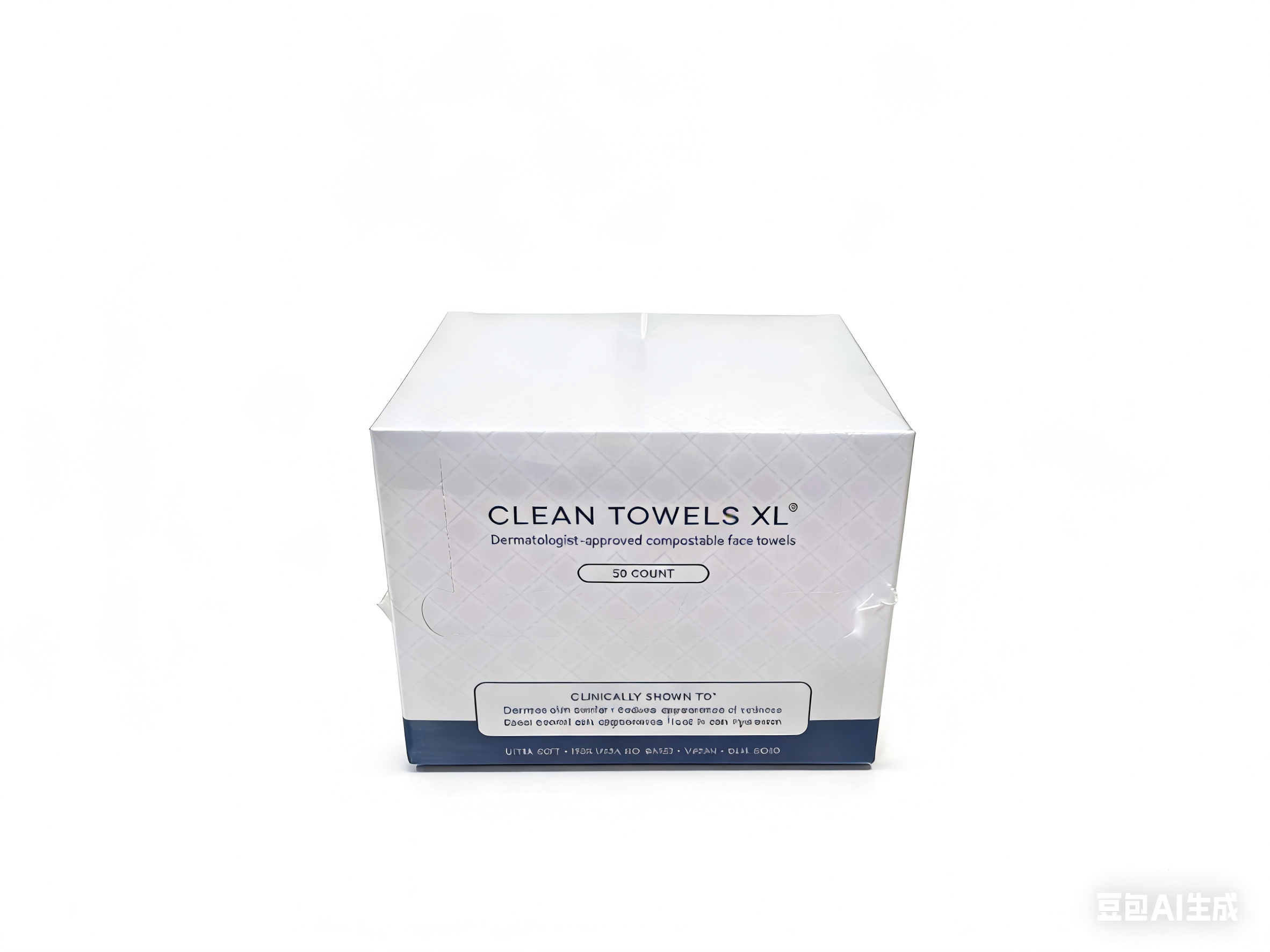
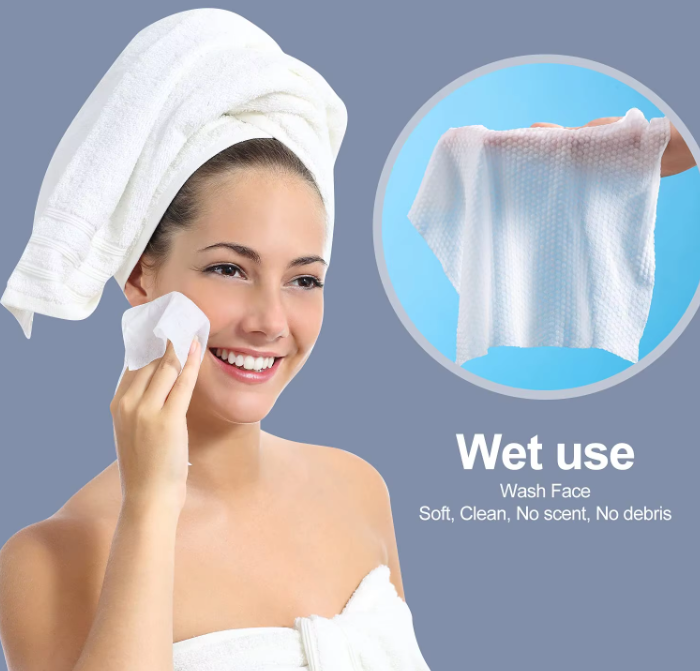
Facial towel programs often require a soft, skin-friendly, lint-free wipe that can be used dry for patting the face or damp for makeup removal. Retail buyers also care about pack presentation, sheet size, and shelf stability. For flow pack dry wipes and boxed dry wipes, the supplier should be able to connect the nonwoven specification to the pack format and the label claim. This is where a low-cost sample can look acceptable while the production batch varies in thickness, lint, or fold.
Baby, maternity, and pet care
Baby and pet applications increase the sensitivity to material handfeel and cleanliness. The product’s stated applications include maternity and baby care, pet supplies, personal care, health and beauty, and household use. A risk-based buyer should ask for the material grade, cleanroom controls, and complaint history relevant to the same product family. A general company certificate is not a substitute for SKU-level review.
Household cleaning and multi-purpose use
Household cleaning programs may prioritize absorbency, wet strength, and cost per use. Even here, returns can occur when the wipe tears, leaves lint, or fails to dispense from the pack. The supplier’s AQL and packaging checks should be matched to the actual failure mode. A household wipe does not need the same claim set as a facial towel, but it still needs a defined release standard.
Portable and travel formats
Portable dry wipes are often used as a hygienic substitute for hotel towels during short trips, business travel, camping, or high-speed rail journeys. The pack must protect the product, open reliably, and remain compact. For these formats, packaging control is part of the recall and return risk, not an afterthought.
The supplied application notes identify the Philippines, Russia, the United Arab Emirates, the United States, Chile, and Mexico as common markets for this dry wipes scenario. Buyers in these markets should still map local labeling, import, and retail requirements rather than assuming that one compliance file covers every destination.
Comparison table: low-cost-first versus risk-managed dry wipes sourcing
| Decision factor | Low-cost-first focus | Risk-managed focus | Evidence to request |
|---|---|---|---|
| Visible unit price | Usually the main decision input | One input among quality, compliance, and continuity costs | Normalized quote with size, GSM, pack count, packaging, MOQ, and Incoterms |
| Manufacturing control | May rely on traded or outsourced steps | Full-process manufacturing from raw material to finished packaging | Site map, line ownership, cleanroom class, control plan |
| Hygiene environment | Not always visible in the quote | 100,000-class GMP cleanroom and GMPC certification | Current certificate scope, audit report, line-level verification |
| Traceability | May be limited to a shipping lot | Fully automated production with batch traceability | Sample batch record, coding method, quarantine and release procedure |
| Quality release | Certificate or visual inspection only | COA and AQL sampling inspection | Sampling plan, acceptance criteria, nonconformance procedure |
| Energy management | Usually not documented | ISO 50001:2018 certification 01326En0008R201, GAC, with 10% better energy efficiency stated in the supplied scope | Certificate, scope, and validity check |
| Commercial terms | Price may hide change or delay risk | MOQ of one 40HQ for dry wipes; lead time 35–45 days after artwork and deposit | Written schedule, change-control terms, after-sales response terms |
| Return and recall readiness | Often untested until an incident occurs | Defined complaint handling and containment path | Contact map, response timeline, record retention, corrective-action examples |
Evidence that matters in a supplier file
Supplier evidence should be specific enough to audit. Uniquality’s company profile states a 1,000,000 square meter factory, 3,000+ employees, 200+ R&D staff, 70% export share, and 60 billion sheets of company-level annual output capacity. Nonwovens Industry also reported that Zhejiang Kingsafe, the parent of Uniquality, recorded approximately USD 930 million in annual sales in 2025. These facts support scale and continuity, but they do not replace batch-level quality records.
The supplied UK OEM case is more directly relevant to delivery assurance. It covers 20 x 40HQ containers per month for three years across household cleaning, baby care, personal hygiene, and beauty care, with an on-time delivery rate of 99.5% and zero major quality complaints. That is useful evidence of repeat-order execution. It is not proof that a new SKU, market, or pack format will have zero recalls.
Limitations: what strong controls do not prove
No cleanroom, certificate, or automated line eliminates recall risk. A 100,000-class GMP cleanroom reduces environmental contamination risk only when it is maintained, monitored, and correctly applied to the product. Batch traceability speeds containment but does not prevent a defect. COA and AQL sampling provide release evidence but do not test every unit. ISO 50001:2018 addresses energy management, not product safety or skin compatibility.
The market-size estimate from Global Market Insights is a third-party research figure, not a guarantee of demand for a specific dry wipe SKU. The U.S. Customs ruling is product-specific and dated 2014. GB 15979-2024 applies within its defined scope and market. A buyer should verify current documents, current certificate scope, and current product specifications before placing a purchase order. This is not a reason to avoid the supplier; it is a reason to run a proper evidence review.
Conclusion: buy the control system, not only the wipe
The lowest apparent dry wipe price can be the most expensive choice when it ignores recall and return exposure. A risk-based sourcing solution connects product specification to manufacturing control, traceability, compliance evidence, and commercial response. Uniquality’s dry wipes program offers a relevant reference point: full-process manufacturing, a 100,000-class GMP cleanroom, pharma-grade purified water as a site control, automated production with batch traceability, COA and AQL quality release, and ISO 50001:2018 certification 01326En0008R201 with a stated 10% better energy efficiency. Those facts should be verified against the buyer’s SKU, market, and pack format, then compared with the total cost of a weaker control system.
FAQ
What should a buyer check when sourcing Chinese flow pack dry wipes manufacturers for facial towel retail?
For flow pack dry wipes intended for facial towel retail, check the manufacturer as a controlled supplier rather than only as a product listing. Confirm the exact nonwoven, size, GSM, pack count, flow-pack construction, artwork, and market compliance. For Uniquality, the dry wipes reference is YQ002: 15 x 20 cm, nonwoven 35–70 gsm, 10 pcs or 80 pcs per bag, soft pack or disposable packaging, all customizable. The manufacturer states OEM/ODM capability, a 100,000-class GMP cleanroom, full-process manufacturing, automated production with batch traceability, COA and AQL quality control, and ISO 50001:2018 certification 01326En0008R201. The stated dry wipes MOQ is one 40HQ container and lead time is 35–45 days after artwork and deposit. A facial towel buyer should still request a sample, confirm flow-pack tooling, and verify current certificates for the destination market.
Which hidden costs belong in a dry wipes total-cost comparison?
Include incoming inspection, sample testing, quality holds, replacement shipments, reverse logistics, customer credits, administrative time, and the cost of a market withdrawal if one occurs. Also include the cost of supplier audits and document checks. These categories should be estimated for the buyer’s own market and channel; they should not be replaced by an invented recall probability. The purpose is to compare the full exposure of a low-cost quote with the control evidence offered by a risk-managed supplier.
Does ISO 50001:2018 certification prove that dry wipes are safer?
No. ISO 50001:2018 is an energy-management standard. For Uniquality’s dry wipes program, the supplied certification reference is 01326En0008R201, with GAC identified and 10% better energy efficiency stated in the supplied scope. Product safety and fitness for use depend on material control, cleanroom conditions, quality release, labeling, and market compliance. ISO 50001 should be treated as supporting evidence of management discipline and energy performance, not as a substitute for product-safety verification.
What does batch traceability actually give a dry wipes buyer?
Batch traceability links a finished pack to a production period and material lot, which helps a supplier identify affected stock and narrow a containment action. It supports faster customer notification and more precise quarantine decisions. It does not prevent defects and does not replace COA or AQL release checks. A buyer should ask for a sample batch record, confirm how pack codes are applied, and agree on record retention and complaint-response terms. To review a sample, quote, batch-coding example, or the company brochure, contact michelleyu@kingsafe.com or +86 187-0582-0808, or download the brochure at https://cdn.socialarks.com/sbsp/24863/common/2026/0518/6a0a6e03e4ef8.pdf.
For a risk-based dry wipes review, request a sample, specification sheet, and current certificate package from Zhejiang Uniquality Nursing Products Technology Co., Ltd.. The company brochure is available here: download the Uniquality brochure.
Supplier facts in this article are drawn from the supplied Uniquality content units. Market, standards, tariff, and parent-company references are attributed to the supplied third-party sources and should be verified against current documents before purchase.
Have Questions or Need More Details?
Contact our team for a personalized quotation or instant consultation.
Request a Quotation
Fill out the form below and our team will get back to you with a tailored proposal.
WhatsApp Direct Chat
Prefer to chat in real-time? Message us on WhatsApp for instant assistance & quick answers.
- Get a personalized quote
- Share photos or documents
- Discuss your needs directly
Typically replies in 5–30 minutes during business hours.