
Single Bulk Run vs Recurring Training Pants Supply: Compared
Single Bulk Run vs Recurring Training Pants Supply: MOQ, Lead Time, QC and After-Sales Compared
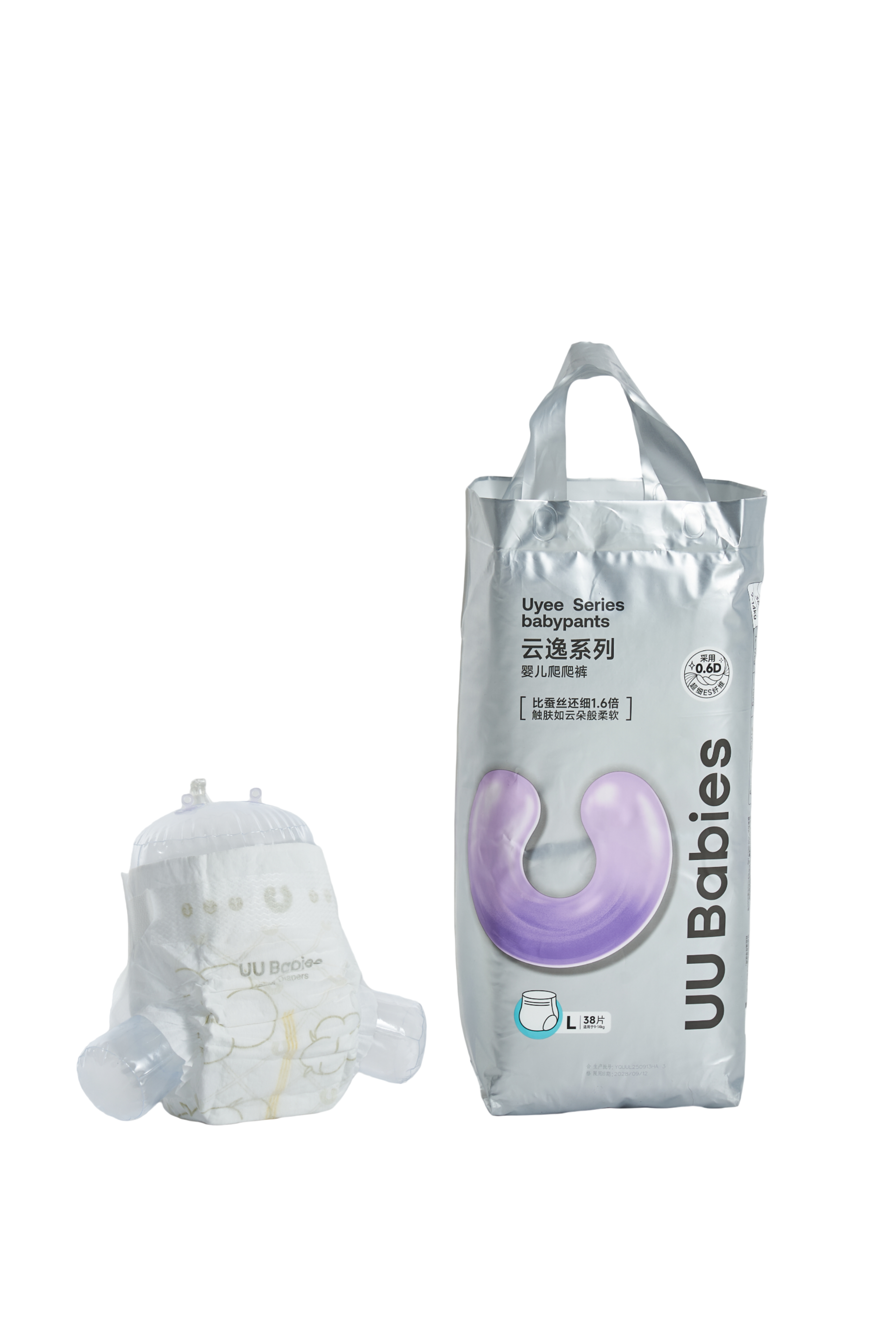
Choosing between a single bulk run and a recurring supply program is a commitment decision, not a unit-cost decision. Both models run on the same production lines, the same minimum order threshold and the same production window at Zhejiang Uniquality Nursing Products Technology Co., Ltd. — but they distribute risk in opposite directions. A single bulk run concentrates cost, quality exposure and inventory into one shipment. A recurring program spreads them across scheduled releases that have to be defended batch after batch.
This guide compares the two models on the four variables that actually change the answer — MOQ, lead time, QC and after-sales — and then adds the two documentation factors that decide which model a retail or private-label buyer can sustain: OEM/ODM customization scope, and CE and ISO 14001 certification status.
Two Purchasing Models, Two Different Risk Profiles
A single bulk run is one production order: one artwork version, one deposit, one inspection cycle, one shipment. It is sized to cover a defined event — a product launch, a season, a promotional packaging version, or a fixed distribution plan.
A recurring supply program is a scheduled sequence of orders placed against a stable specification, released at agreed intervals so that stock is replenished rather than stockpiled. The specification, artwork and QC protocol are fixed once and then re-applied to each release.
The distinction matters because the same supplier terms behave differently inside each structure. Three misjudgements appear repeatedly in buyer planning:
- Treating a recurring program as "the same PO repeated." A repeat order without a locked QC protocol, a locked artwork version and a defined release calendar is just a series of single runs — with none of the planning benefit.
- Assuming MOQ applies only once. The threshold applies per order, so a recurring program has to size each release against demand rather than against the annual total.
- Assuming QC is a single event. Under a bulk run, quality control is a gate before shipment. Under recurring supply, it becomes a trend that must hold across batches.
Industry Background: Why Supply Rhythm Now Decides Competitiveness
Demand conditions favour suppliers who can hold a repeatable specification. Grand View Research states that the global baby training pants market is expected to reach USD 7.02 billion by 2030, growing at a CAGR of 7.5% from 2025 to 2030 — a commercial forecast that should be read as directional rather than definitive, because methodology and definitions differ between research houses.
The product mix is shifting as well. Commercial research summarized in our verified data pack indicates that pants-type diapers account for more than 70% of total diaper sales in Japan, which reflects a mature-market preference for pull-up formats over tape formats. For disposable training pants and baby diapers, the international trade classification is HS Code 9619.00, so import planning and duty calculations use a single code family across both formats.
For buyers, the practical consequence is straightforward. Categories with replenishment-driven demand — retail private label, distributor replenishment, multi-market distribution — reward a recurring structure. Categories driven by launch, redesign or seasonal packaging reward a single bulk run. Most brand owners eventually need both, applied to different SKUs.
The Four Variables That Separate a Bulk Run From a Recurring Program
1. MOQ: The Commitment Threshold
Uniquality's minimum order quantity is 150,000 pieces for baby diapers and pull-ups, and 1 × 40HQ container for wet wipes and dry wipes. The threshold applies per order, and how it is absorbed is what separates the two models.
In a single bulk run, the full threshold is absorbed by one order. That order must simultaneously cover launch volume, safety buffer and expected sell-through until the next order is possible. Because the next production slot is 35–45 days away at minimum, under-ordering is expensive and over-ordering is expensive in a different way — it sits in the warehouse.
In a recurring program, the same 150,000-piece threshold is planned against a rolling forecast, so each release is sized to a demand window of weeks rather than a full year of inventory. The commitment per release is identical; the exposure per release is smaller.
MOQ is also not purely a volume gate. It determines how many SKUs a single order can carry, how packaging runs are scheduled, and whether artwork costs are absorbed once or amortized across releases. A buyer planning four sizes — M, L, XL and XXL — will find that splitting 150,000 pieces across sizes changes the packaging economics compared with concentrating volume in one size.
2. Lead Time: 35–45 Days, Starting From Two Conditions
Production lead time is 35–45 days after confirming the artwork and deposit. Both conditions are prerequisites: the clock does not start on the purchase order date, and it does not start when the specification is discussed. Artwork confirmation and deposit receipt are the two triggers.
In a single bulk run, that window is the only window. Any artwork revision, packaging correction or deposit delay pushes the entire shipment, because there is no second release to absorb the slip. Buyers planning a retail launch should therefore treat the 35–45 days as a production span sitting on top of sampling, artwork development and freight, not as a total delivery promise.
In a recurring program, 35–45 days becomes a repeating planning constant. Releases are scheduled backwards from the date stock cover runs out, which allows a leaner buffer, because replenishment is a planned event rather than an emergency. The constant is what makes the program plannable — and what makes it fragile if a single release is missed.
Front-end sampling is a separate step: Uniquality's one-stop private-label service includes sampling at 3–5 days. For either model, sampling precedes artwork lock, so the realistic timeline is sample approval, then artwork and deposit, then 35–45 days of production.
3. QC: COA and AQL Sampling Inspection
Quality control at Uniquality runs on COA (Certificate of Analysis) and AQL sampling inspection. Both are batch-level instruments, and both behave differently depending on whether there is a next batch.
Under a single bulk run, QC is a gate. AQL sampling is applied to the batch, a COA accompanies the shipment, and the batch is either released or held. If a defect pattern escapes inspection, the entire volume is the exposure — there is no subsequent production run in which to correct it. This makes the specification document, the AQL level and the sampling points the most important commercial documents in the deal, not the technical annex.
Under a recurring program, QC becomes a series of measurements. COA results and AQL outcomes are compared batch to batch, so drift is detected between releases rather than at the end of a single large run. The corrective action gets applied to the next release, which is precisely the mechanism a single run cannot offer.
For absorbency specifications, buyers can anchor the requirement to a published test method rather than to a supplier description. ISO 11948-1 specifies the method for determining the total absorption capacity of urine-absorbing aids (the Rothwell test). Naming the method in the specification allows COA values and third-party test results to be compared on the same basis. Uniquality operates a dedicated laboratory used for product performance testing, technical research and development, and quality verification, which is where specification-level verification is carried out before a batch is released.

4. After-Sales: A One-Off Interaction or a Continuous Channel
After-sales support covers remote support, order follow-up, product usage consultation, quality feedback handling, and after-sales service coordination. The content of the service is identical across both models; what changes is how much of it the buyer can actually use.
In a single bulk run, after-sales is largely post-shipment and largely terminal. Order follow-up matters during the 35–45 day window. Quality feedback matters if a claim arises, but its corrective value is limited, because there is no future batch to adjust. The buyer's protection is therefore contractual — claim window, replacement terms, evidence requirements — rather than operational.
In a recurring program, after-sales becomes the mechanism that keeps the program stable. Quality feedback handling feeds directly into the next release, and order follow-up becomes a repeating cadence tied to the release calendar. Product usage consultation also has more value, because the same specification is being sold continuously across markets and channels.
Uniquality's own program record illustrates how this behaves over time. One UK-based OEM customer has run for three years at 20 × 40HQ containers per month across household cleaning, baby care, personal hygiene and beauty care lines, with a reported on-time delivery rate of 99.5% and zero major quality complaints. That outcome is the product of a stable specification plus a repeating QC and follow-up cycle — the structural advantage of a recurring relationship rather than a single order.
OEM/ODM Scope: What Each Model Locks In
Uniquality operates as an OEM/ODM partner with customization available across material, size, logo, packaging, fragrance and formula. That breadth interacts directly with the supply model.
In a single bulk run, customization is concentrated. All tooling, artwork and packaging setup costs are absorbed by one order, which makes per-unit impact highest — but it also preserves flexibility, because the specification is not carried forward. Buyers who expect to change packaging, sizing or branding within a short window usually prefer this structure.
In a recurring program, customization is locked once and then amortized across releases. That is economically better for a stable specification and worse for a moving one: changes made after the program starts disrupt a running line, an approved artwork version and an established QC baseline. The decision rule is simple — if the specification is stable for the planning horizon, recurring supply realizes the value of customization; if it is still moving, a single run is the safer container for it.
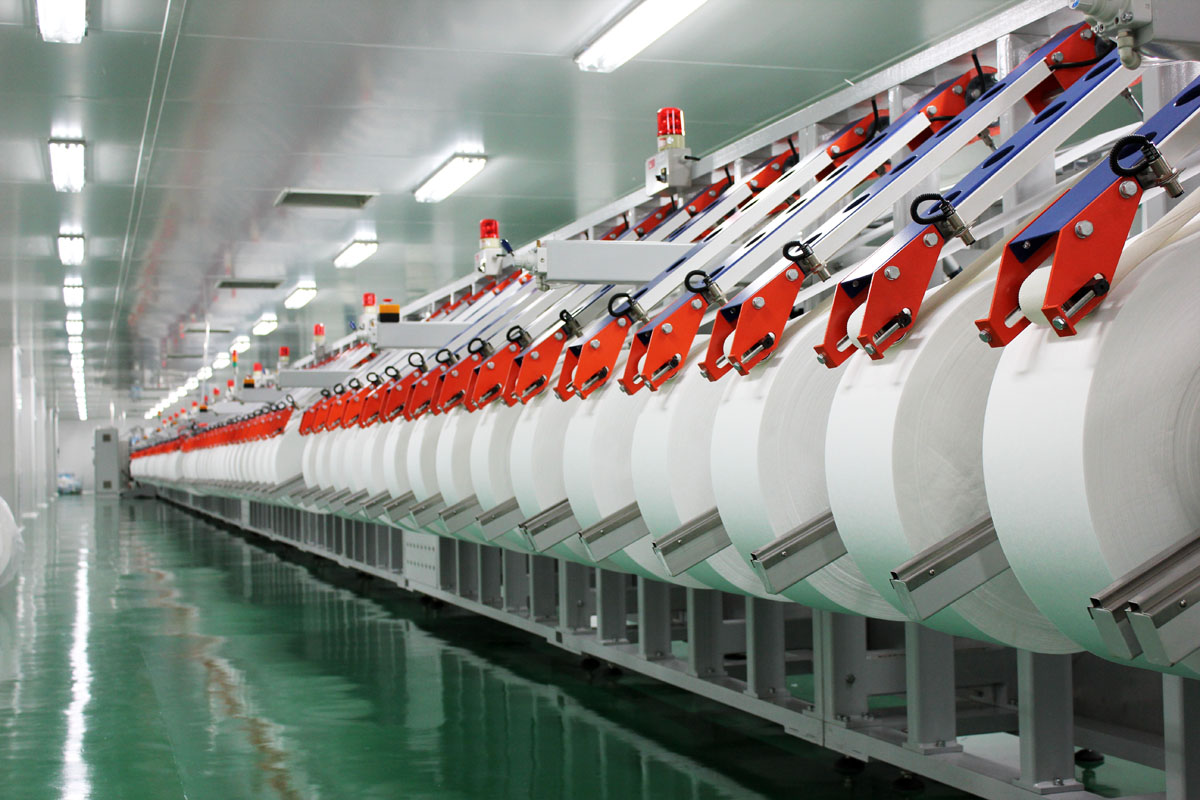
Manufacturing depth supports either path. The company operates a factory footprint of 1,000,000㎡ with more than 3,000 employees and an R&D team of over 200, a 100,000-class clean room, and an annual output of 60 billion sheets. Monthly capacity is 7 billion units for wet wipes, and capacity differs according to different products — which is why a training pants program should be scheduled against a confirmed line slot rather than against a general capacity figure.
CE and ISO 14001: Documentation That Behaves Differently in Each Model
Certification is often treated as a one-time qualification step. It is not — it is a variable that changes cost and risk depending on the supply model.
CE certification matters where training pants are placed on the EU market. For procurement purposes, the relevant question is not simply whether CE documentation exists, but whether the certificate scope covers the exact product specification being ordered — size range, material construction and packaging configuration. In a single bulk run, the documentation must be valid at the shipment date. In a recurring program, it must be valid at every release, which means tracking validity and re-confirming scope when a specification changes.
ISO 14001 — environmental management system certification — is increasingly requested in retail supplier questionnaires and ESG-linked procurement. As with CE, the usable document is the current certificate with a defined scope, not a logo on a website. Under a recurring program, ISO 14001 status should be re-verified on the certificate cycle rather than assumed to persist for the life of the relationship.
Uniquality states ISO, CE, GMPC and FSC certification, and operates production within a 100,000-class clean room. Applications for maternity and baby care projects additionally reference compliance with ISO 22716, freedom from harmful substances, and skin-friendly requirements — a reminder that the applicable document set depends on the project type, not on a generic supplier profile.
Verification rule for both models: request the current certificate, its scope, its issuing body and its expiry date, and check that the scope names the product you are buying. A document pack that passes this check once should be diarized for re-verification under a recurring program.
Step-by-Step: Setting Up the Model You Chose
- Define the demand window and SKU count. Decide whether the order covers a launch, a season or a replenishment cycle, and how many sizes it must carry. Training pants are produced in M, L, XL, XXL and XXXL, and pack counts of 30, 42 or 82 pieces per bag can be customized — both variables change how MOQ is distributed.
- Validate the specification with a sample. Sampling runs at 3–5 days. Confirm the elastic wide waistband fit, the super absorbent core behaviour, the breathable soft top sheet, and the easy-tear side seams before anything is locked.
- Lock artwork and confirm the deposit. These are the two triggers for the 35–45 day lead time. Any delay here moves the entire schedule, so treat artwork approval as a production milestone, not an administrative step.
- Size the order against the MOQ threshold. 150,000 pieces for baby diapers and pull-ups, or 1 × 40HQ container for wet wipes and dry wipes. Under a recurring program, set the release interval so each release clears the threshold without exceeding the demand window.
- Write the QC protocol. Specify the AQL level, the sampling points and the COA requirement per batch. Where absorbency is a performance claim, reference ISO 11948-1 so results are comparable across batches and laboratories.
- Agree the after-sales terms. Define the order follow-up cadence during production, the quality feedback window after arrival, the handling route, and — for recurring supply — how corrective actions carry into the next release.
- Build the release calendar or the buffer plan. A recurring program needs releases scheduled backwards from stock depletion using the 35–45 day constant. A single bulk run needs an explicit safety buffer, because the next possible production slot is at least one full lead time away.
Use Cases: Matching the Model to the Project
- New brand launch, one market, first SKU: single bulk run. The specification is still being validated, and flexibility is worth more than release rhythm.
- Retail private label with confirmed shelf space: recurring program. A stable specification plus a repeating QC baseline matches how retail replenishment is bought.
- Distributor covering multiple markets: recurring program with staggered releases. Applications for disposable hygiene supply projects reference markets including the Philippines, Russia, the UAE, the United States, Chile and Mexico — staggered releases let one specification serve several market timings without overstocking any single one.
- Seasonal or promotional packaging version: single bulk run. Packaging changes disrupt a running program, so it is cleaner to isolate them in a dedicated order.
- OEM brand scaling after validation: recurring program. Once the specification is proven, locking it and amortizing customization across releases is the structurally cheaper route.
- Project-based institutional supply (maternity and baby care projects): recurring program with a fixed specification, stored and handled in cool, dry conditions, and operated in single-use disposable mode.
Comparison Table: Single Bulk Run vs Recurring Supply Program
| Decision factor | Single bulk run | Recurring supply program |
|---|---|---|
| Commitment structure | One order, one artwork version, one shipment | Scheduled sequence of orders against a locked specification |
| MOQ application | 150,000 pieces (baby diapers / pull-ups) or 1 × 40HQ (wet wipes / dry wipes) absorbed by one order | Same threshold applied per release, planned against a rolling forecast |
| Lead time | 35–45 days after artwork confirmation and deposit; single window, no fallback | 35–45 days per release, used as a repeating planning constant |
| Sampling | 3–5 days before artwork lock | 3–5 days at specification change; reference sample retained |
| Customization (material, size, logo, packaging, fragrance, formula) | Concentrated in one order; setup absorbed once; easy to revise next time | Locked once and amortized; changes disrupt a running line and artwork version |
| QC method | COA per batch plus AQL sampling as a release gate | COA and AQL results compared batch to batch to detect drift |
| Quality feedback loop | Limited — no future batch to correct | Direct — corrective action carries into the next release |
| After-sales scope | Remote support, order follow-up, usage consultation, quality feedback handling, service coordination — largely post-shipment | Same scope, delivered as a continuous cadence tied to the release calendar |
| Documentation (CE, ISO 14001) | Verified once and valid at shipment date | Re-verified on the certificate cycle and on any specification change |
| Inventory exposure | Full order volume held at once | Spread across releases; buffer sized to the release interval |
| Best fit | Launches, seasonal packaging, first-market entry, moving specifications | Retail private label, distributor replenishment, validated specifications, multi-market supply |
Decision Rules in Practice
- If the specification is likely to change before the stock sells through, choose a single bulk run.
- If the specification is stable and sell-through is predictable, choose a recurring program and set the release interval around the 35–45 day lead time.
- If your annual volume barely clears 150,000 pieces, a single bulk run is usually the only viable structure — a recurring program cannot split below the threshold.
- If you sell into the EU, confirm CE documentation scope before selecting the model; a document gap is cheaper to fix before the artwork lock than after.
- If your retail customers issue supplier questionnaires, confirm current ISO 14001 status and plan re-verification dates into the program calendar.
FAQ
Which certificates should a buyer verify before committing to either supply model?
Verify CE documentation where the product is placed on the EU market, and confirm that the certificate scope covers the exact specification being ordered — size range, material construction and packaging. Verify ISO 14001 environmental management system certification as a current certificate with a defined scope and expiry date, and re-check it on the certificate cycle under a recurring program. For maternity and baby care projects, applications reference compliance with ISO 22716 in addition to freedom from harmful substances and skin-friendly requirements. Batch-level quality evidence is provided through COA together with AQL sampling inspection. Uniquality states ISO, CE, GMPC and FSC certification and produces in a 100,000-class clean room.
Can one supplier run both a single bulk order and a recurring program on the same specification?
Yes, provided the supplier operates OEM/ODM production with customization across material, size, logo, packaging, fragrance and formula, and has capacity to hold a line slot for scheduled releases. Uniquality runs OEM/ODM production in a 1,000,000㎡ factory footprint with more than 3,000 employees and an R&D team of over 200, at an annual output of 60 billion sheets. Monthly capacity is 7 billion units for wet wipes, and capacity differs according to different products — so a training pants program should be scheduled against a confirmed line slot rather than a general capacity figure.
What drives the cost difference between a single bulk run and a recurring supply program?
Four structural drivers matter more than the quoted unit rate. First, how setup and artwork costs are absorbed — once in a bulk run, amortized across releases in a program. Second, how the 150,000-piece MOQ for baby diapers and pull-ups is distributed across sizes and pack counts of 30, 42 or 82 pieces per bag. Third, inventory carrying cost: a bulk run holds the full volume at once, while a program spreads it across releases. Fourth, QC and documentation cost frequency — a single COA and AQL event versus repeated batch verification, and one-time versus cyclical CE and ISO 14001 re-verification. Uniquality does not publish unit pricing; requirements are quoted against the confirmed specification, order size and release plan.
How does sampling work before the first bulk run?
Sampling runs at 3–5 days under Uniquality's one-stop private-label service. The sample is used to confirm fit and function before anything is locked: the elastic wide waistband, the super absorbent core with high polymer SAP, the breathable soft top sheet of skin-friendly non-woven fabric, and the easy-tear side seams. Sample approval precedes artwork confirmation, and artwork confirmation plus deposit is what starts the 35–45 day production lead time. Retaining an approved reference sample is what makes later AQL inspection and COA review comparable, particularly in a recurring program.
How long does production take, and how should a recurring schedule be planned?
Production lead time is 35–45 days after confirming the artwork and deposit — both conditions, not one. In a recurring program, schedule each release backwards from the date stock cover runs out, using 35–45 days as a fixed constant, and add front-end time for sampling and artwork approval. Because the constant repeats, buffer stock can be leaner than in a single bulk run, but a missed release has no fallback inside the same window. Buyers who want to model the full sequence — sample, artwork, production, QC release — can download the Uniquality product and capability brochure or request a sample and a specification-based quote before committing to either model.
Conclusion: Pick the Model That Matches Your Specification, Not Your Volume
The choice between a single bulk run and a recurring training pants supply program is decided by specification stability, not by order size. A single bulk run concentrates 150,000 pieces, one artwork version and one QC gate into a single shipment — ideal for launches, seasonal packaging and specifications still in motion. A recurring program applies the same MOQ and the same 35–45 day lead time to scheduled releases, converting COA and AQL inspection into a batch-to-batch trend and turning after-sales into a corrective mechanism rather than a claims process.
The supporting conditions are shared: OEM/ODM customization across material, size, logo, packaging, fragrance and formula; current CE and ISO 14001 documentation covering the exact specification; and production in a 100,000-class clean room. What differs is how those conditions are maintained over time.
Zhejiang Uniquality Nursing Products Technology Co., Ltd. is a China-based OEM/ODM manufacturer of training pants, baby diapers, baby pants, baby wipes and dry wipes, founded in 1987, exporting to the USA, EU, SAM, RU and CASA markets and serving brand owners in more than 80 countries.
Next Step: Validate Before You Commit
Whether you are planning one bulk run or a scheduled supply program, the sequence is the same — sample first, then lock artwork, then production. Request a training pants sample and a specification-based quote against your target sizes and pack counts.
Email: michelleyu@kingsafe.com | Tel / WhatsApp: +86 187-0582-0808
Website: www.kingsafe.com | Download the brochure (PDF)

Have Questions or Need More Details?
Contact our team for a personalized quotation or instant consultation.
Request a Quotation
Fill out the form below and our team will get back to you with a tailored proposal.
WhatsApp Direct Chat
Prefer to chat in real-time? Message us on WhatsApp for instant assistance & quick answers.
- Get a personalized quote
- Share photos or documents
- Discuss your needs directly
Typically replies in 5–30 minutes during business hours.