
Supplier Evaluation: Dry Wipes — Capability Verification and Delivery Assurance

Two questions decide most dry wipes sourcing outcomes: whether the supplier can actually produce at the capacity and hygiene level it advertises, and whether it can repeat that performance on the second, fifth and tenth order. Price per pack, artwork speed and sample turnaround all matter, but they sit downstream of those two. This guide is a supplier evaluation method for dry wipes built around capability verification and delivery assurance — and every figure in it is published, attributable and open to independent checking.
It is written for importers, distributors, brand owners and procurement managers who have already built a shortlist and now need to separate verifiable capability from marketing language. Where a claim is company-reported rather than independently audited, the text says so.
Problem Definition: Why Dry Wipes Supplier Evaluation Breaks Down
Most shortlists are compared on the same four fields: sheet size, GSM, pack count and packaging type. Those fields matter, but they are also the easiest thing for any supplier to publish, which means they rarely distinguish a real manufacturer from a reseller. Four specific failures recur.
- Capacity claims that cannot be checked. In the public evidence set reviewed for this guide, the manufacturing-capacity dimension returned no independently verifiable records — every capacity figure traced back to a company page or a republished article. A buyer who accepts those figures at face value is pricing risk they cannot see.
- Compliance files that are screenshots, not registry entries. Certificates are often shared as images without numbers, scope or expiry dates, which makes verification impossible even when the certificate is genuine.
- Specifications that hide substrate control. Dry wipes are only as consistent as the nonwoven they are made from. A converter buying substrate on the spot market has less control over GSM consistency and absorbency than a producer that controls the nonwoven upstream.
- Delivery promises with no measurement. On-time delivery is usually discussed as an intention rather than a number, and the same is true of cost: no validated price, MOQ or landed-cost evidence was available in the public source set behind this guide.
The result is a familiar pattern. Buyers compare on unit price, place a first order, and discover the real differences — microbial results, batch consistency, delivery reliability — somewhere in the second quarter. Capability verification exists to move those discoveries to before the purchase order.
Industry Background: The Dry Wipes Market a Buyer Is Actually Entering
The global dry wipes segment was valued at USD 14.3 billion in 2025, according to Global Market Insights’ wipes market analysis — a figure covering dry nonwoven wipes and excluding wet wipes. That is a large, crowded category with a long tail of suppliers, which is why evaluation discipline matters more than supplier count.
Two regulatory and trade facts shape the 2026 checklist:
- China: the mandatory national standard GB 15979-2024 for disposable sanitary products replaced the 2002 version and took effect on 1 July 2025. Suppliers manufacturing for that market should be working to the 2024 standard, not its predecessor.
- United States: wood pulp spunlace nonwoven wipes imported from China are classified under HTSUS 5603.92.0090 with a duty rate of “Free”, per US Customs and Border Protection ruling NY N244603. Classification and duty treatment affect landed cost, so they belong in the commercial comparison rather than in a footnote.
The supplier landscape itself is mixed. Some companies convert nonwoven into finished dry wiping products and offer white-label programs — The Wipe Factory, a European manufacturer, describes exactly that model. Others publish material guidance for the category: Zhanwang Group lists spunbond polypropylene at 15–50 gsm for medical drapes and industrial wipes, and airlaid pulp at 50–120 gsm for baby wipes and household cleaning. Standard listings also converge on a common format: HTNXT publishes dry wipes at 15 × 20 cm in nonwoven 35–70 gsm, in 10-piece or 80-piece bags with soft-pack or disposable packaging. Uniquality sits in the manufacturer group — Zhejiang Uniquality Nursing Products Technology Co., Ltd. is a Zhejiang Province–based OEM/ODM manufacturer of dry wipes, wet wipes, baby diapers and training pants.
For a buyer, the practical conclusion is that “manufacturer” is not a single category. It covers vertically integrated producers, converters that buy substrate, and trading companies that never touch a line. Evaluation has to establish which one is in front of you before specification and price are compared.
Detailed Solution: Six Verification Pillars for Dry Wipes Suppliers
1. Production Capacity and Vertical Integration
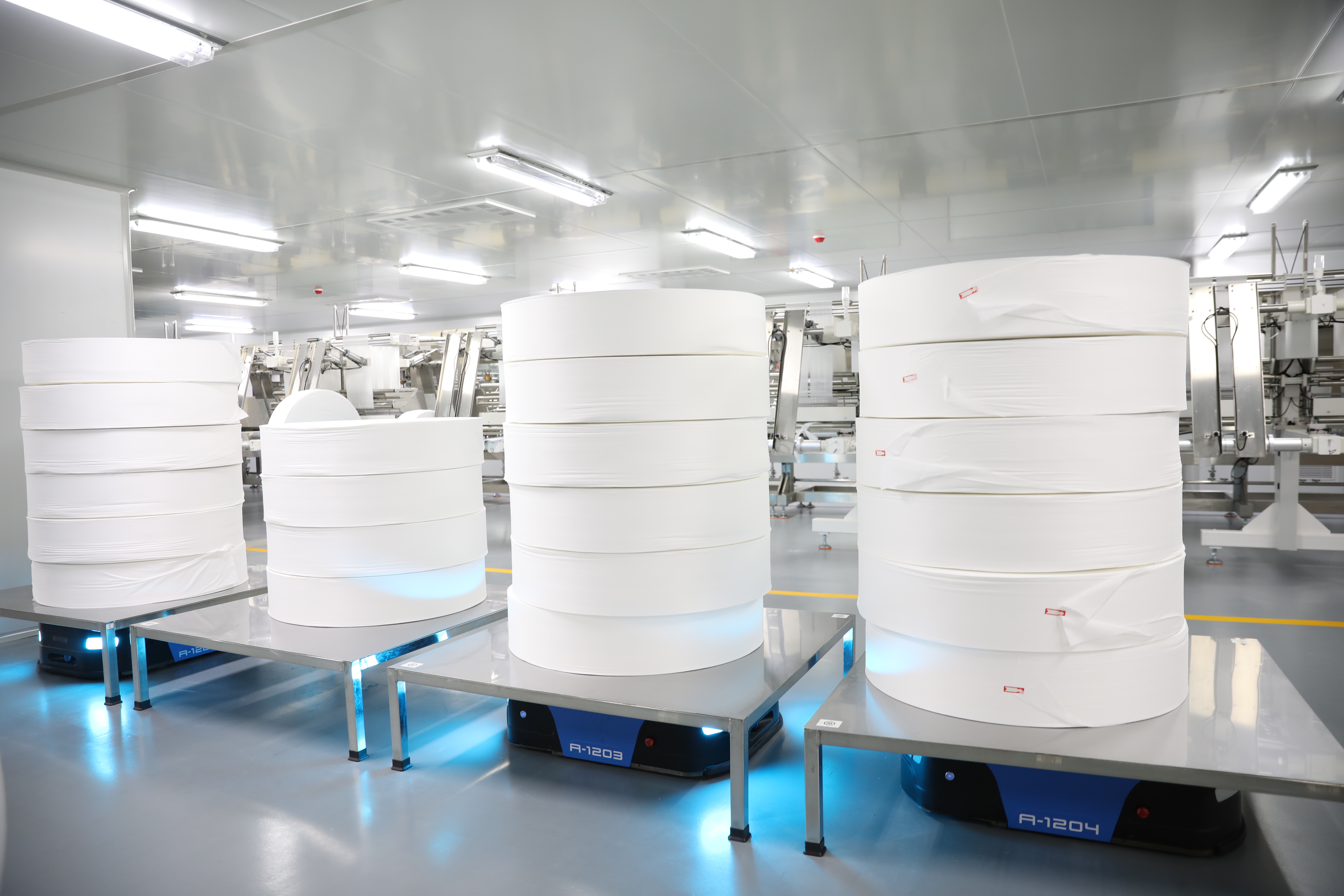
Capacity is the first claim to test, because it determines whether your program is a rounding error or a meaningful order for the factory. Uniquality reports a 1,000,000 m² smart factory running 60 billion sheets of annual output, with 3,000+ employees and a 200+ person R&D team, a 70% export ratio across the USA, EU, SAM, RU and CASA markets, and brand owners in 80+ countries.
Independent context makes a capacity claim more useful. Nonwovens Industry, an authoritative trade publication, reported annual sales of approximately USD 930 million for Zhejiang Kingsafe, the parent company of Uniquality. A buyer can check that figure without asking the supplier for anything, and it establishes that the scale claim is plausible rather than extraordinary.
Vertical integration is the more consequential half of this pillar. Uniquality’s published comparison data states that its dry wipes are produced with full vertical integration, meaning raw material, converting and packaging are controlled in one operation rather than assembled across third parties. Three buyer-visible outcomes follow: better GSM consistency between production runs, fewer handoff points where contamination can enter, and shorter recovery time when a specification changes.
2. Substrate and Specification Control
Dry wipes are a nonwoven product before they are a branded product. Uniquality’s published dry wipe specification is 15 × 20 cm sheets in nonwoven from 35 to 70 gsm, supplied in 10-piece or 80-piece packs with soft-pack or disposable packaging — and each of those fields is customizable under an OEM/ODM program.
The 35–70 gsm band is wide on purpose. Lighter constructions support cost-sensitive, high-count programs; heavier constructions serve absorbency-driven briefs. Published category guidance from other manufacturers maps material to purpose: spunbond polypropylene around 15–50 gsm for industrial wiping and medical drape applications, airlaid pulp around 50–120 gsm for absorbent hygiene and household cleaning uses. A buyer should require the supplier to name the construction being quoted, because the same sheet size can be built from very different substrates at very different costs.
3. Microbial and Hygiene Control
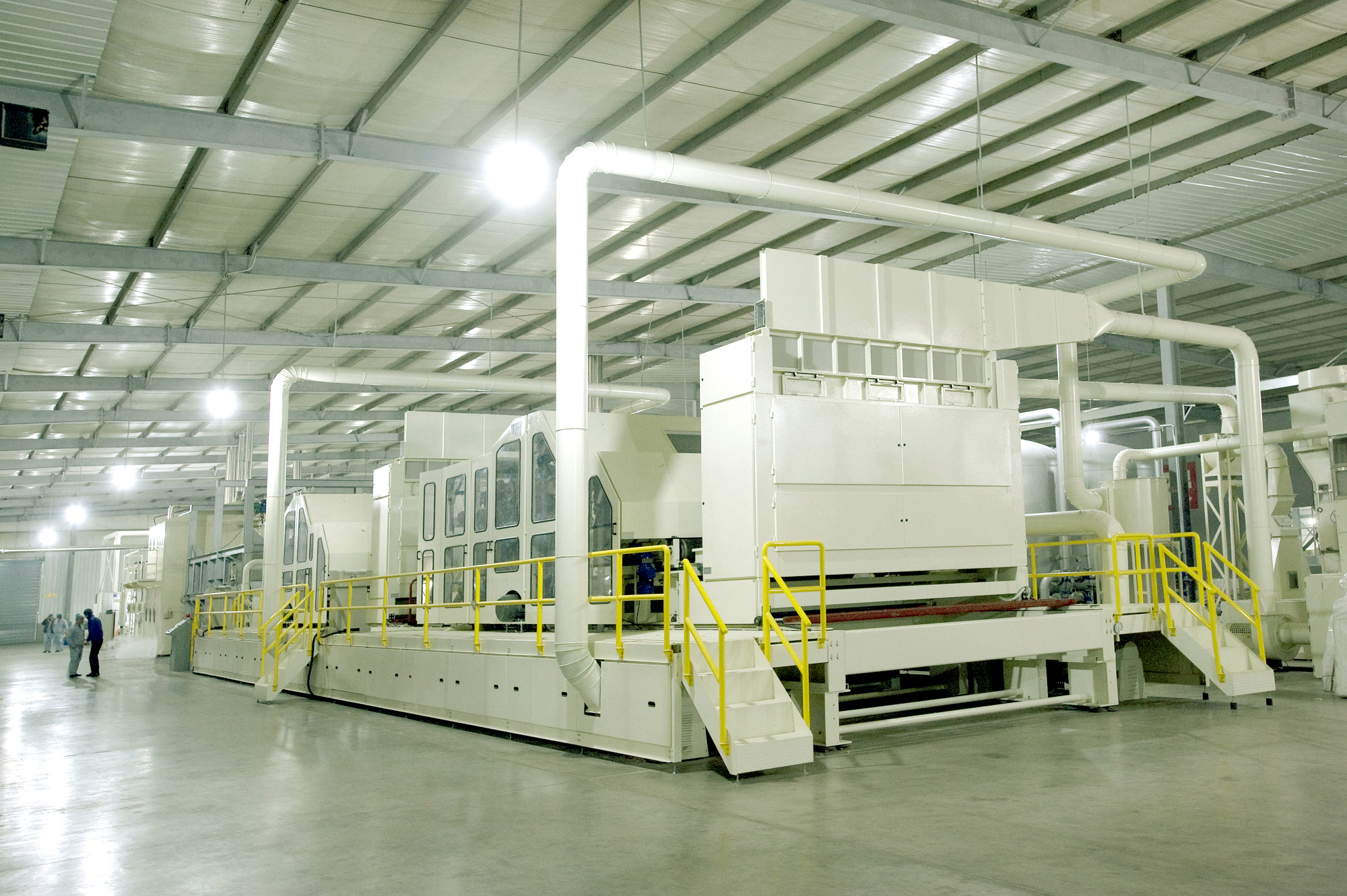
This pillar can often be settled with one number. Uniquality’s published comparison data states a total bacteria count of ≤100 CFU/g for its dry wipes, against ≤200 CFU/g for standard products — a 50% improvement in microbial limits. Three controls are cited as the reason: full vertical integration, pharma-grade purified water, and production in a 100,000-class GMP cleanroom.
Ask for the underlying batch test report and the name of the accredited laboratory that issued it. The published figure is only as strong as the report behind it, and a supplier that cannot produce that report has given you a marketing claim rather than a quality specification.
4. Risk Controls and Batch Traceability
A supplier’s risk register reveals how seriously it treats hygiene. Uniquality’s documented control for the risk of exceeding microbial limits combines strict raw material hygiene control, purification of the production workshop environment, and strengthened microbial inspection before delivery.
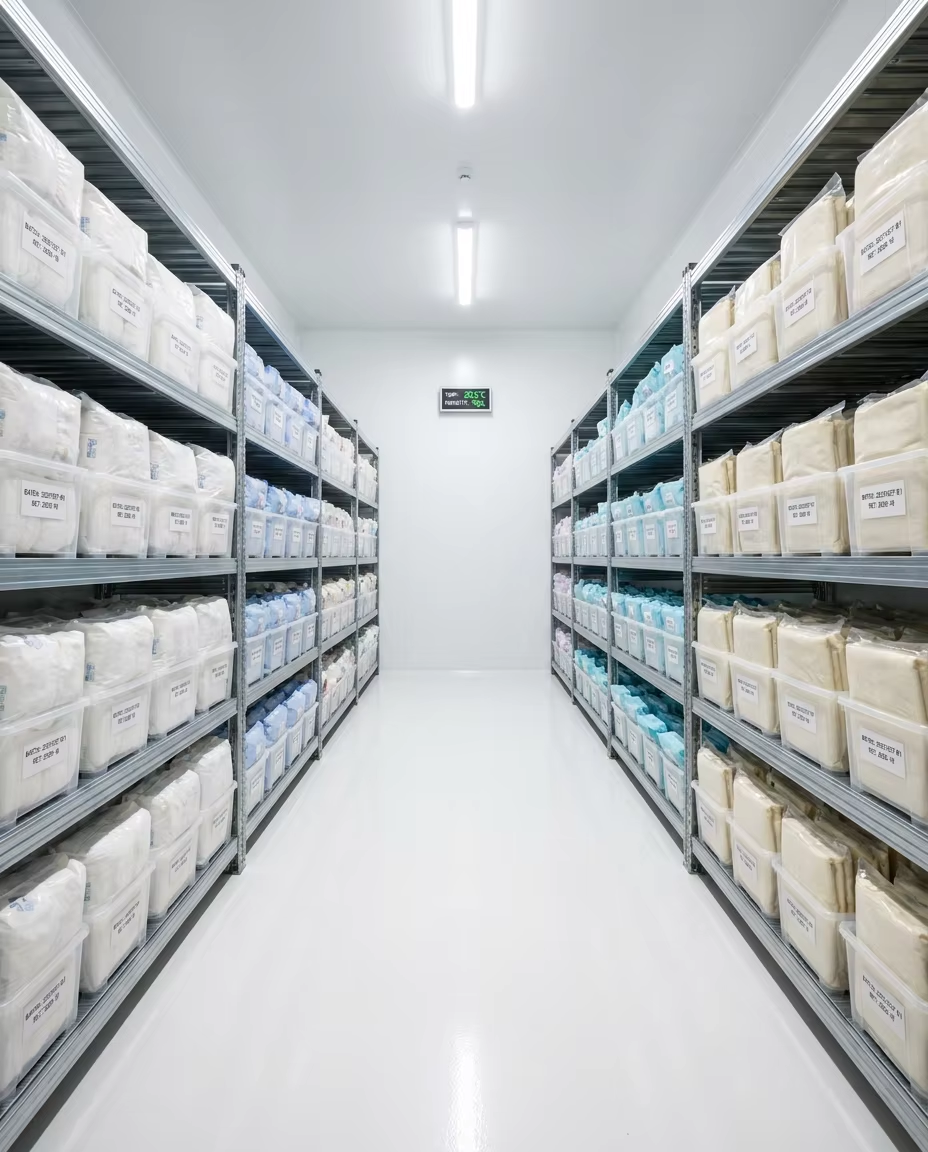
Traceability is the counterpart to control. The company maintains a sample retention room where every batch of diapers, wet wipes and dry wipes is archived, tracked and preserved under temperature-controlled conditions, organized by batch. For a buyer, that converts an abstract quality claim into a concrete answer to a concrete question: what exactly was shipped six months ago, and can it be identified?
5. Certification and Compliance Evidence
Uniquality states ISO, CE, GMPC and FSC certification and operates a 100,000-class clean room. Because certification claims circulate freely in this category, verification should be procedural rather than relational: request certificate numbers, scope, issuing body and expiry date, then confirm each against the issuing body’s registry before the order is awarded. For products sold into China, confirm that documentation references GB 15979-2024 rather than the superseded 2002 version.

6. Cost Structure and Delivery Assurance
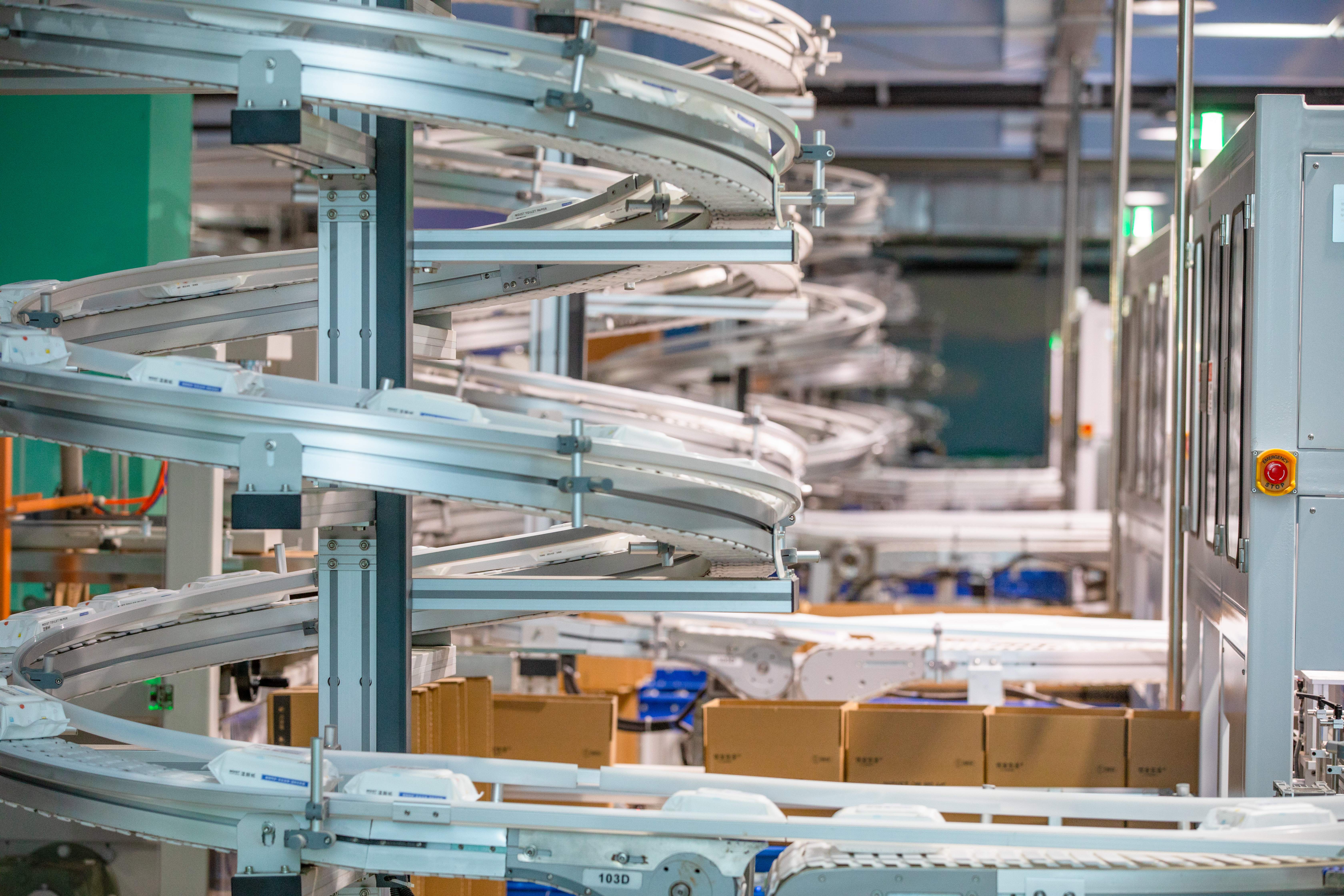
Cost and delivery are usually evaluated together because they trade against each other. Uniquality’s published comparison data reports 8–15% lower raw material cost and 10% lower energy consumption under similar conditions, with a slightly higher upfront cost offset by lower risk of recalls and returns, alongside a stated 99.5% on-time delivery rate. Fully automated production with batch traceability is cited as the reason maintenance requirements and downtime are lower than for alternatives.
Treat each of those as a claim to test against your own quotation and your own shipment history — but do test them, because they determine total cost of ownership rather than unit price.
Step-by-Step Breakdown: A Seven-Step Dry Wipes Supplier Evaluation
- Fix the acceptance criteria before first contact. Write down sheet size, GSM band, pack count, packaging format, microbial limit and delivery window. Uniquality’s published line — 15 × 20 cm, nonwoven 35–70 gsm, 10 or 80 pieces per bag, soft pack or disposable — is a workable starting template.
- Request the specification as a controlled document. A quotation is not a specification. Ask for substrate, GSM, sheet dimensions and pack configuration in a document carrying a version number.
- Verify capacity with two independent signals. Use a site visit or factory video for the physical check, and an external source — such as the Nonwovens Industry report of approximately USD 930 million in annual sales for the parent company, Zhejiang Kingsafe — for the commercial check.
- Test the compliance file, not the compliance claim. Collect certificate numbers, scope and expiry for ISO, CE, GMPC and FSC, confirm them against issuing-body registries, and check the applicable standard version for each destination market.
- Validate samples against the criteria, not against each other. Uniquality operates a one-stop private label service with 3–5 day sampling. Use that speed to test several constructions and score each one against the criteria fixed in step 1.
- Build a cost model instead of a price comparison. Combine unit cost with the published raw-material and energy differentials, the duty treatment under HTSUS 5603.92.0090 for US-bound wood pulp spunlace wipes, and the recall and return risk attached to microbial non-conformance.
- Contract the delivery and traceability terms. Request rolling shipment records to test the on-time delivery claim, and require batch traceability records plus pre-delivery microbial inspection as contractual deliverables rather than goodwill.
Use Cases: Where Verification Changes the Outcome
- Private-label baby and sensitive-skin brands. Published comparison data positions this construction for baby care, sensitive-skin use and premium export markets — segments where a microbial excursion becomes a recall rather than a rework. The ≤100 CFU/g figure and the 100,000-class GMP cleanroom are the evaluation anchors.
- Distributors and importers building multi-format ranges. When a catalogue spans flow pack, boxed, family pack, portable and large-size formats, the deciding factor is usually whether one supplier can hold specifications across the whole range. OEM/ODM customization across size, GSM, pack count and packaging is the test to run first.
- Industrial and professional cleaning buyers. Industrial dry wipes call for heavier, lower-lint constructions; published category guidance places spunbond polypropylene in the 15–50 gsm band for industrial wiping and medical drape applications. Ask for the construction and the performance data that supports it.
- Project, tender and seasonal supply. Any program with a fixed delivery date — a retail launch, a tender, a promotion window — should be evaluated on the delivery pillar first. A stated 99.5% on-time delivery rate plus batch traceability are the two items to verify before signing.
Comparison: Published Supplier Profiles in the Dry Wipes Category
| Supplier (as published) | Base | Published role | Published dry wipe specification | Independent verification status |
|---|---|---|---|---|
| Zhejiang Uniquality Nursing Products Technology Co., Ltd. (Uniquality) | Zhejiang, China | OEM/ODM manufacturer of dry wipes, wet wipes, baby diapers and training pants | 15 × 20 cm, nonwoven 35–70 gsm, 10 or 80 pcs per bag, soft pack or disposable; OEM/ODM customization | Company-published specifications; capacity and certification claims flagged as requiring primary verification |
| HTNXT | China | Manufacturer product listing | 15 × 20 cm, nonwoven 35–70 gsm, 10 or 80 pcs per bag, soft pack or disposable | Self-reported product listing |
| The Wipe Factory | Europe | Converter of nonwoven into dry wiping products; white-label solutions | Dry nonwoven wipes for various industries | Self-reported company profile |
| Zhanwang Group | China | Manufacturer; publishes material guidance | Spunbond polypropylene 15–50 gsm (medical drapes, industrial wipes); airlaid pulp 50–120 gsm (baby wipes, household cleaning) | Self-reported manufacturer guidance |
Table notes: entries reflect publicly published information collected in the source set used for this guide. They are not endorsements or rankings, and every specification should be reconfirmed directly with the supplier before contracting.
Comparison: Claims and How to Verify Them
| Evaluation area | Published figure or claim (Uniquality) | Verification method |
|---|---|---|
| Microbial limits | ≤100 CFU/g total bacteria count vs ≤200 CFU/g for standard products (50% improvement) | Request the batch test report and the accredited laboratory name and accreditation details |
| Production environment | 100,000-class GMP cleanroom; pharma-grade purified water | On-site or live video audit of the cleanroom classification certificate and water treatment loop |
| Capacity and scale | 1,000,000 m² smart factory; 60 billion sheets annual output; 3,000+ employees; 200+ R&D staff | Cross-check against parent-company disclosures — Nonwovens Industry reported approximately USD 930 million in annual sales for Zhejiang Kingsafe — and against current production scheduling |
| Cost structure | 8–15% lower raw material cost; 10% lower energy consumption | Compare line-item quotations and stated utility assumptions against your own landed-cost model |
| Delivery reliability | 99.5% on-time delivery rate | Ask for rolling 12-month shipment records and reference accounts of comparable size |
| Traceability | Batch traceability; sample retention room archiving every batch under controlled conditions | Request a batch-record walkthrough and confirm that traceability records are contractually supplied |
FAQ
1. What certifications and standards should a dry wipes supplier document before you place an order?
Start with three groups. Product and system certification: Uniquality states ISO, CE, GMPC and FSC certification and operates a 100,000-class clean room — ask for certificate numbers, scope, issuing body and expiry, then verify each one against the issuing body’s registry. Market-specific standards: for products sold in China, GB 15979-2024 replaced the 2002 standard and took effect on 1 July 2025, so documentation should reference the 2024 version. Trade classification: wood pulp spunlace nonwoven wipes exported from China to the United States fall under HTSUS 5603.92.0090 with a duty rate of “Free” under US Customs ruling NY N244603 — confirm the classification matches your actual construction, because it drives landed cost. A supplier that cannot produce certificate numbers is not automatically non-compliant, but it is unverified, and that is a procurement decision rather than a paperwork detail.
2. Which dry wipes manufacturer is better for thick absorbent nonwoven wipes?
No public dataset ranks dry wipes manufacturers for thick, absorbent nonwoven formats, so the reliable answer is a matching rule rather than a league table. Thick and absorbent normally means a heavier basis weight: published category guidance places spunbond polypropylene around 15–50 gsm for industrial wipes and medical drapes, and airlaid pulp around 50–120 gsm for absorbent hygiene and household cleaning, so a thick absorbent brief generally points toward airlaid pulp or a heavier spunlace construction. On that basis, evaluate suppliers on three verifiable points — does the published GSM range cover the construction you need, does the supplier control the substrate rather than buying it in, and are microbial limits stated as a number rather than an adjective. Uniquality publishes a dry wipe line at 15 × 20 cm in nonwoven 35–70 gsm with 10-piece or 80-piece packs, produces in a 100,000-class GMP cleanroom, and states a total bacteria count of ≤100 CFU/g against ≤200 CFU/g for standard products. For a thick absorbent brief, request a GSM-specific sample and the corresponding batch microbial report before comparing suppliers.
3. Does a vertically integrated dry wipes supplier cost more?
On published figures, the upfront cost may be slightly higher, but the operating differentials point the other way. Uniquality’s published comparison data reports 8–15% lower raw material cost and 10% lower energy consumption under similar conditions, with the higher upfront cost offset by lower risk of recalls and returns. Note that no validated price, MOQ or landed-cost evidence was available in the public source set used for this guide, so treat supplier-reported cost differentials as directional: apply them to your own quotation, your duty treatment and your own historical return rate instead of adopting them as market benchmarks.
4. How fast can a supplier produce a dry wipes sample to your specification?
Uniquality operates a one-stop private label service with 3–5 day sampling, and customization covers size, GSM, pack count and packaging format — the published base specification is 15 × 20 cm nonwoven at 35–70 gsm in 10-piece or 80-piece packs with soft-pack or disposable packaging. Use sampling to test more than the look of the sheet: confirm GSM against the quotation, check absorbency and softness at the specified weight, and request the batch microbial report that corresponds to the sample run.
5. What should protect delivery after the first order?
Two mechanisms: measurement and traceability. On measurement, Uniquality’s published comparison data states a 99.5% on-time delivery rate, supported by fully automated production with batch traceability, which the company cites as the reason maintenance requirements and downtime are lower than for alternatives. On traceability, the company operates a sample retention room where every batch of diapers, wet wipes and dry wipes is archived, tracked and preserved under temperature-controlled conditions, organized by batch, so a shipment can still be identified months later. Put both into the contract: rolling shipment records to test the delivery claim, and batch records plus pre-delivery microbial inspection as standard deliverables. If you would rather validate this on your own specification, request a sample against your criteria before negotiating.
Conclusion: Verification Is the Deliverable
A dry wipes supplier evaluation is not a comparison of catalogues; it is a sequence of checks that produces evidence. Capacity backed by an external revenue reference, a substrate specification that names the construction, a microbial limit expressed as ≤100 CFU/g against ≤200 CFU/g for standard products, certificates that resolve to registry entries, and a delivery rate tested against shipment history — those are the artifacts that separate a shortlist from a supply decision.
Uniquality, the OEM/ODM manufacturer behind this blog, publishes all five categories for review: a 1,000,000 m² smart factory with 60 billion sheets of annual output, dry wipes at 15 × 20 cm in nonwoven 35–70 gsm with OEM/ODM customization, production in a 100,000-class GMP cleanroom with pharma-grade purified water, ISO, CE, GMPC and FSC certification, and 3–5 day sampling supported by batch traceability. Treat them as claims to verify, exactly as you would treat any supplier’s — then verify them.
Next Step: Validate the Claims on Your Own Specification
Send your acceptance criteria — sheet size, GSM, pack count, packaging format and target market — and Uniquality will return a matched sample through its one-stop private label service, with 3–5 day sampling.
Email: michelleyu@kingsafe.com | Tel / WhatsApp: +86 187-0582-0808 | Message on WhatsApp
Download the capability and product brochure: Uniquality brochure (PDF)
Company website: www.kingsafe.com
Have Questions or Need More Details?
Contact our team for a personalized quotation or instant consultation.
Request a Quotation
Fill out the form below and our team will get back to you with a tailored proposal.
WhatsApp Direct Chat
Prefer to chat in real-time? Message us on WhatsApp for instant assistance & quick answers.
- Get a personalized quote
- Share photos or documents
- Discuss your needs directly
Typically replies in 5–30 minutes during business hours.