
Top 10 Wet Wipes Types Every Retail Buyer Should Stock in 2026
Top 10 Wet Wipes Types Every Retail Buyer Should Stock in 2026
The ten wet wipe types that justify permanent shelf space in 2026 are baby wipes, pure water wipes, hand & mouth wipes, antibacterial wipes, medical wipes, female intimate wipes, flushable wipes, biodegradable wipes, facial & makeup remover wipes, and household cleaning wipes. Between them they cover the repeat shopping missions that carry wet wipes volume in grocery, pharmacy, beauty, and travel retail: newborn care, hand hygiene, intimate care, toilet routine, beauty, and home cleaning.
The order is an editorial stocking ranking rather than a market-share table, but it is not arbitrary. Each position reflects three inputs: published segment data where a credible third-party figure exists, the number of shopper missions a single type can serve, and how readily the type can be produced across common sizes, nonwoven weights, and pack counts. Third-party figures are attributed to their sources throughout, and the product facts come from Uniquality's wet wipes portfolio, which is built as a full-category line rather than a single-SKU offer.
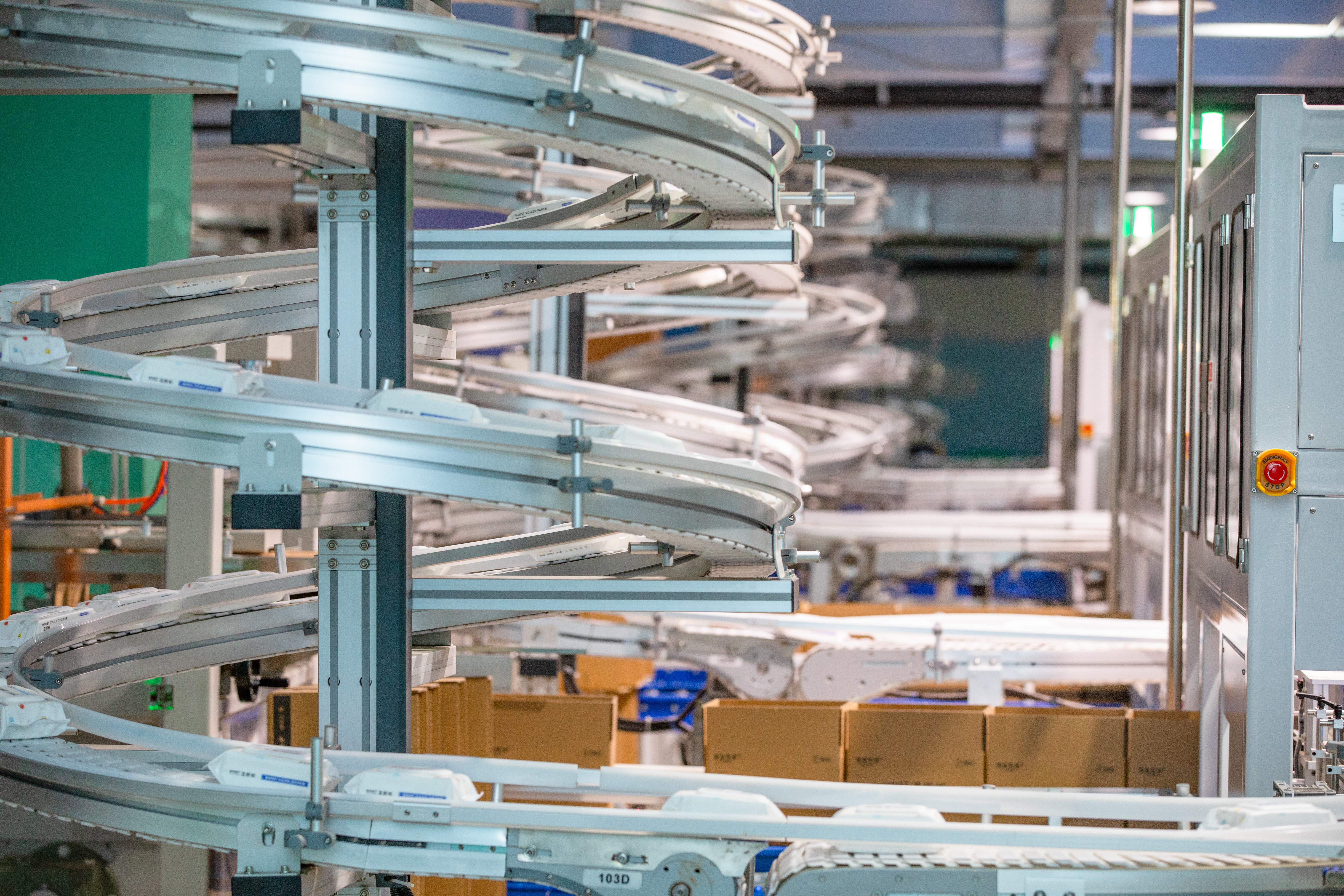
Automated wet wipes production systems cover the full process from raw material handling to finished-pack packaging, which is what makes a multi-type retail assortment practical from one manufacturing base.
Why a Wet Wipes Assortment Is Harder Than It Looks
A wet wipes shelf is not one category. It is at least twenty overlapping categories sharing the same fixture, and they differ on every variable a buyer has to lock down: substrate, sheet size, pack count, dispensing format, formula positioning, compliance route, and price architecture.
Those variables are commercial, not cosmetic. In this product family, nonwoven weights typically run from 35 to 70 gsm, sheet size standardizes around 15 × 20 cm with customization available, and pack counts range from 10 pieces per bag to 80 pieces per bag. A family pack and a travel pack built on the same substrate behave completely differently on shelf: one drives basket value, the other drives trial.
The failure modes repeat across markets. A buyer lists three baby wipe SKUs that cannibalize each other because the pack sizes sit too close together. An 80-piece pack lands on a travel-format fixture where it cannot sell. A flushable claim is printed without GD4 or IWSFG support. A cleansing wipe enters the EU without a Product Information File. Meanwhile the intimate, medical, and household missions stay unserved, and the shelf loses the shoppers who would have bought into them.
What the 2025–2026 Market Data Says
Demand signals for the category remain solid, though headline figures need context because research houses define scope differently. The global wet wipes market was estimated at approximately USD 22.38 billion in 2024 by Market Research Future. Inside that total, the baby wipes segment alone was valued at USD 10.0 billion in 2025, with Global Market Insights projecting a 5.5% CAGR through 2035 — the single clearest reason baby wipes anchor most assortments.
Regional weight matters when a buyer sources for several markets. Fortune Business Insights put Asia Pacific's share of the global wipes market at 32.29% in 2025, valued at approximately USD 1.58 billion in the region. On the sustainability side, the biodegradable wet wipes segment reached over USD 3 billion in 2024 with reported growth above 6% CAGR, according to WEHOO Hygiene's industry report — a medium-reliability source, but one that matches the eco-claims now appearing on mainstream retail packaging.
Competitive structure also informs shelf planning. Procter & Gamble held a market-leading share of over 16% in the global baby wipes market in 2025, per Global Market Insights. That level of single-brand concentration shows a buyer where the benchmark formula, pack format, and price expectation are already set in the largest segment.
A note on divergent estimates. Third-party sizing for wipes is not consistent across sources: Global Market Insights published a wet wipes figure of USD 5.1 billion, while Grand View Research used a 2022 baseline of USD 27.07 billion. The gap comes from scope definitions — all wipes versus personal care wipes versus specific segments. Treat these numbers as direction and relative weight, not as one planning figure.
The practical reading is simple: build the ten-type mix around relative demand weight and scenario fit, not around a single headline market number.
Compliance Framing: One Shelf, Several Rulebooks
Compliance follows how a wipe is positioned, not how it looks. In the European Union, wet wipes intended for cleansing are regulated as cosmetics under Regulation (EC) No 1223/2009, which requires a Product Information File and CPNP notification. Flushable wipes must comply with GD4 — the Guidelines for Assessing the Flushability of Disposable Nonwoven Products — or the stricter IWSFG standards when a flushable claim is made. Products positioned for healthcare use need documented clean-room conditions; Uniquality's company profile cites a 100,000-class clean room alongside ISO, CE, GMPC, and FSC certifications.
For a retail buyer, this means the ten types below do not share one paperwork path. Assortment planning and compliance planning have to happen in the same meeting.
How the Ranking Was Built
- Demand depth. Types with published segment data or clear repeat-purchase behavior rank higher than types driven by occasional, problem-based buying.
- Scenario breadth. Types that serve more than one shopping mission from the same production format rank higher than single-mission items.
- Production and format readiness. Types that can be built across the 35–70 gsm nonwoven range, the 15 × 20 cm sheet baseline, and 10-piece to 80-piece packs without new tooling rank higher.
- Compliance clarity. Types with an established regulatory route rank higher than types dependent on market-specific claims that must be re-verified for every destination.
The Top 10 Wet Wipes Types to Stock in 2026
1. Baby Wet Wipes — The Anchor SKU
Baby wipes are the category's volume engine. The segment was valued at USD 10.0 billion in 2025 with a projected 5.5% CAGR to 2035 (Global Market Insights), and it earns the top position because it combines the largest published segment size with the most predictable replenishment behavior of any wipe type.
Formula and substrate choices matter more here than anywhere else on the shelf. In Uniquality's portfolio, the baby line is described as using EDI purified water with a weak-acid pH that matches infant skin, and as alcohol-free, fragrance-free, fluorescent-free, and antiseptic-free — a positioning that supports newborn and sensitive-skin claims. The substrate is a thickened embossed nonwoven with a pearl-textured surface, chosen for water-locking, tear resistance, and lint-free wiping. Pack architecture typically spans an 80-piece family pack and a 10-piece pack, both customizable.
Retail logic: stock at least two pack counts, and treat the category as a replenishment driver rather than a trial driver.
2. Pure Water Wet Wipes — The Sensitive-Skin Default
Pure water wipes serve shoppers who have already decided they want the shortest possible ingredient story. They are not a niche in markets where fragrance-free and alcohol-free positions have become standard label expectations; they are the default choice for a growing share of family shoppers.
The portfolio treats this as a formulation position rather than a separate production line: EDI purified water base, alcohol-free, fragrance-free, fluorescent-free, and antiseptic-free. Because the base materials and folding formats are shared with the baby range, a buyer can add this type to an existing program without a new tooling cycle.
Retail logic: place adjacent to baby wipes to capture the sensitive-skin switch, and use a different pack size so the two SKUs do not compete on price alone.
3. Hand & Mouth Wet Wipes — The On-the-Go Format
These wipes are designed specifically for cleaning a baby's mouth and hands, described in the portfolio as safe and non-toxic and intended for convenient use away from home. They earn a slot because they convert a household purchase into a mobility purchase: diaper bags, strollers, car interiors, and travel kits.
Uniquality positions them within portable hygiene kits and travel care sets, applying the same lint-free, skin-friendly requirements used across the range, with customizable size and packaging. Functionally they overlap with baby wipes; commercially they do not, because pack size, price point, and purchase occasion are different.
Retail logic: keep them where impulse happens — checkout lanes, travel accessories, and baby aisle end caps.
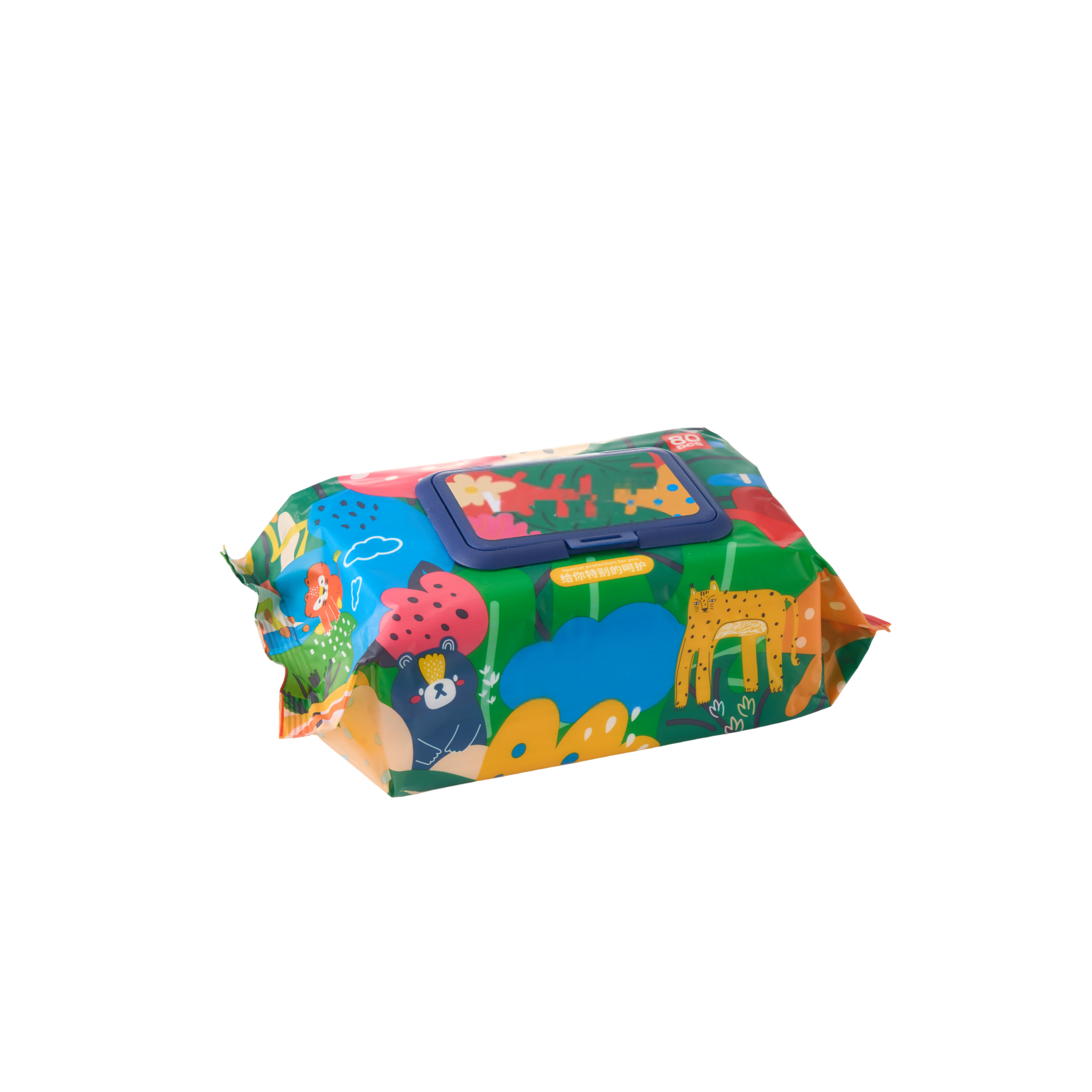
Hand and mouth wipes are designed for cleaning a baby's mouth and hands, safe and non-toxic, with a flip-top resealable lid that keeps the pack dustproof and prevents the wipes from drying out.
4. Antibacterial Wet Wipes — The Hygiene Workhorse
Antibacterial wipes cover the broadest mission set after baby wipes: hand hygiene at home and on the move, high-touch surface cleaning, and everyday hygiene routines. In this product family they sit within the personal care, health and beauty, and household application blocks, and the portfolio supports customization of material, size, logo, packaging, fragrance, and formula.
One caution for buyers: antibacterial positioning is claim-sensitive. Efficacy and registration requirements differ by market, so label text that is acceptable in one country may not be approved in another. Confirm the claim set before artwork is locked.
5. Medical Wet Wipes — The Pharmacy and Clinical SKU
Medical wipes are manufactured under sterile conditions and designed for healthcare settings. Documented uses include cleaning equipment surfaces such as stethoscopes and thermometers to help prevent cross-contamination, plus gentle pre- and post-surgery skin cleaning with a non-irritating formula.
This is the type where manufacturing conditions, not marketing, decide whether a buyer can list the product at all. Uniquality's profile cites a 100,000-class clean room and medical-grade standards alongside ISO, CE, GMPC, and FSC certifications.
Retail logic: keep distribution narrow — pharmacy, clinical supply, and professional channels — rather than mass grocery.
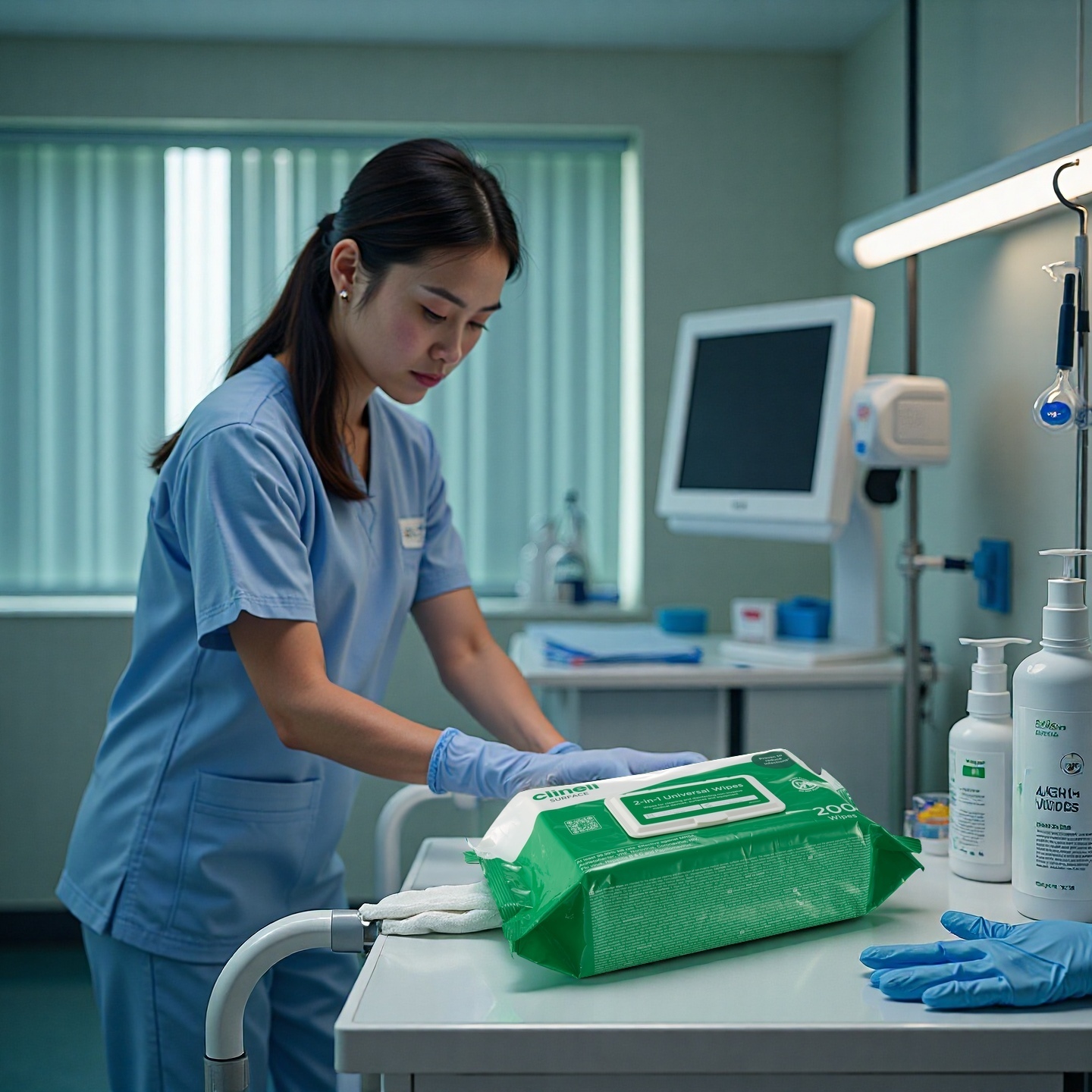
Medical wipes are manufactured under sterile conditions for healthcare settings, including cleaning equipment surfaces such as stethoscopes and thermometers and pre- and post-surgery skin cleaning.
6. Female Intimate Wipes — The Routine Replacement
Intimate wipes serve post-defecation cleaning, intimate care during menstruation, and soothing for hemorrhoid sufferers, positioned as an upgraded alternative to dry toilet paper. The portfolio builds this type on a dissolvable, flushable thick nonwoven with a weak-acid formula that is alcohol-, fragrance-, and fluorescent-free, in a resealable flip-top pack that dispenses one sheet at a time.
The commercial argument is routine substitution: a shopper who adopts this type does not buy it once, and it sits next to — not against — the flushable category in the same bathroom mission.
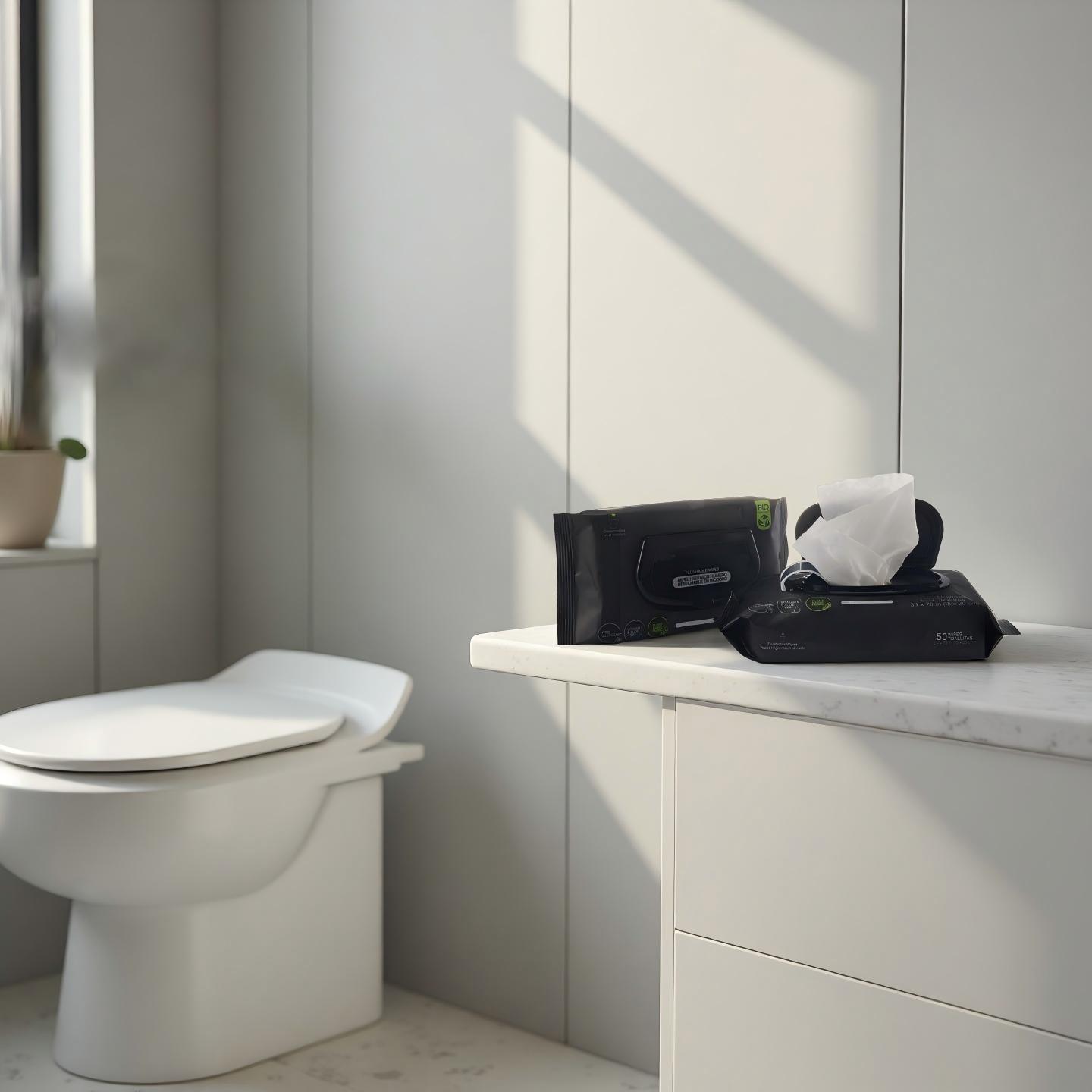
Intimate wipes cover post-defecation cleaning, intimate care during menstruation, and soothing for hemorrhoid sufferers, described as an upgraded alternative to dry toilet paper.
7. Flushable Wet Wipes — The Bathroom Basket Builder
Flushable wipes remain a high-interest type because they solve a specific, repeatable problem: a more thorough clean than dry toilet paper without a used product going into a bin. In this portfolio, the material is a dispersible nonwoven designed to break down quickly in water, paired with a gentle cleansing lotion.
The compliance boundary is both the selling point and the risk. A flushable claim must be supported by GD4 or the stricter IWSFG standards. Buyers should require documentation before listing and should never accept a flushable claim based on how the substrate feels in the hand.
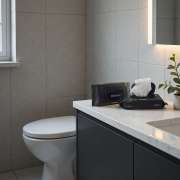
Flushable wipes use dispersible non-woven fabric that breaks down quickly in water and carry a gentle cleansing lotion for a more thorough clean than dry toilet paper.
8. Biodegradable Wet Wipes — The Eco-Shelf Entry
Biodegradable wipes reached over USD 3 billion globally in 2024, growing at a CAGR above 6% according to WEHOO Hygiene's industry report. Treat that figure as directional, since the source is mid-tier, but the retail signal is real: eco-positioned ranges are now expected in mainstream grocery and drug formats rather than treated as specialty items.
In this portfolio, eco-friendly materials sit alongside strict quality control within the documented workshop highlights. The practical buying question is not whether to stock biodegradable wipes, but how the environmental claim will be substantiated in each destination market.
9. Facial & Makeup Remover Wet Wipes — The Beauty Basket
Facial and makeup remover wipes belong to the beauty mission rather than the hygiene mission, and they are usually merchandised and priced separately. The portfolio lists facial wipes as a distinct type alongside baby, pure water, mini, flushable, biodegradable, and medical wipes, and applies lint-free, skin-friendly requirements with customizable size and packaging.
Because these wipes are marketed for cleansing, they fall under the EU cosmetic framework — Regulation (EC) No 1223/2009 — when sold in Europe, which means a Product Information File and CPNP notification are part of the listing process rather than an afterthought.
10. Household Cleaning Wet Wipes — Kitchen, Bathroom, Floor, and Glass
Household cleaning wipes close the list because they extend the same manufacturing base into a different purchase cycle: problem-driven rather than routine. The portfolio's household applications include multi-purpose cleaning, with variants covering kitchen degreasing, bathroom surfaces, floor cleaning, glass cleansing, and stain removal.
Since these products are positioned as cleaning products rather than cosmetics, they follow a different compliance path from facial or baby wipes — one more reason to plan them as a separate assortment block with its own claim review.
Where Mini, Car, and Pet Wipes Fit
Three additional types appear in most retail briefs but do not always need their own slot. Mini wipes are better treated as a format: a 10-piece pack can carry baby, pure water, hand & mouth, intimate, or antibacterial product. Car wipes and pet wipes work best as adjacent SKUs inside the household and personal care blocks, sharing the same nonwoven base and pack machinery. Deciding format before deciding category is what keeps an assortment from growing to thirty SKUs with no logic behind it.
Step-by-Step: Building a Ten-Type Assortment
- Map shopper missions to your store format. A pharmacy, a grocery banner, and a travel retailer need different mixes from the same ten types. Write down the missions your shoppers actually repeat before selecting categories.
- Set the material and size baseline. Lock one substrate range and one sheet size before choosing types. The baseline in this portfolio is 15 × 20 cm on nonwoven of 35–70 gsm, both customizable, which keeps tooling and folding consistent across the range.
- Match pack count to the mission. Use 80-piece packs for family replenishment and 10-piece packs for trial and mobility. The flip-top resealable lid is a dispensing decision as much as a packaging one: it is designed to be dustproof and moisture-locking, allow a smooth single pull, and prevent multi-piece extraction.
- Assign a compliance path per type and per market. Cosmetic framework for cleansing wipes in the EU, GD4 or IWSFG for flushable claims, documented clean-room conditions for medical positioning, and separate claim review for household cleaning products.
- Validate before you scale. Confirm sampling and documentation before committing to production volume. Uniquality offers one-stop private label service with sampling in 3–5 days, plus COA documentation and AQL sampling inspection.
- Plan MOQ, lead time, and replenishment. The published MOQ is one 40HQ container for wet wipes and dry wipes, and 150,000 pieces for baby diapers and pull-ups. Lead time is 35–45 days after artwork and deposit confirmation, against a monthly wet wipes capacity of 7 billion units; capacity differs according to product type.
Use Cases: Three Retail Formats, Three Different Mixes
Case 1 — A UK-based OEM supply program. A buyer program in Great Britain has run for three years at 20 × 40HQ containers per month, covering household cleaning, baby care, personal hygiene, and beauty care applications. The operation reports a 99.5% on-time delivery rate and zero major quality complaints across that period. The assortment lesson is structural: a single supplier relationship spanning four application blocks is what makes a ten-type shelf possible without ten separate vendor approvals.
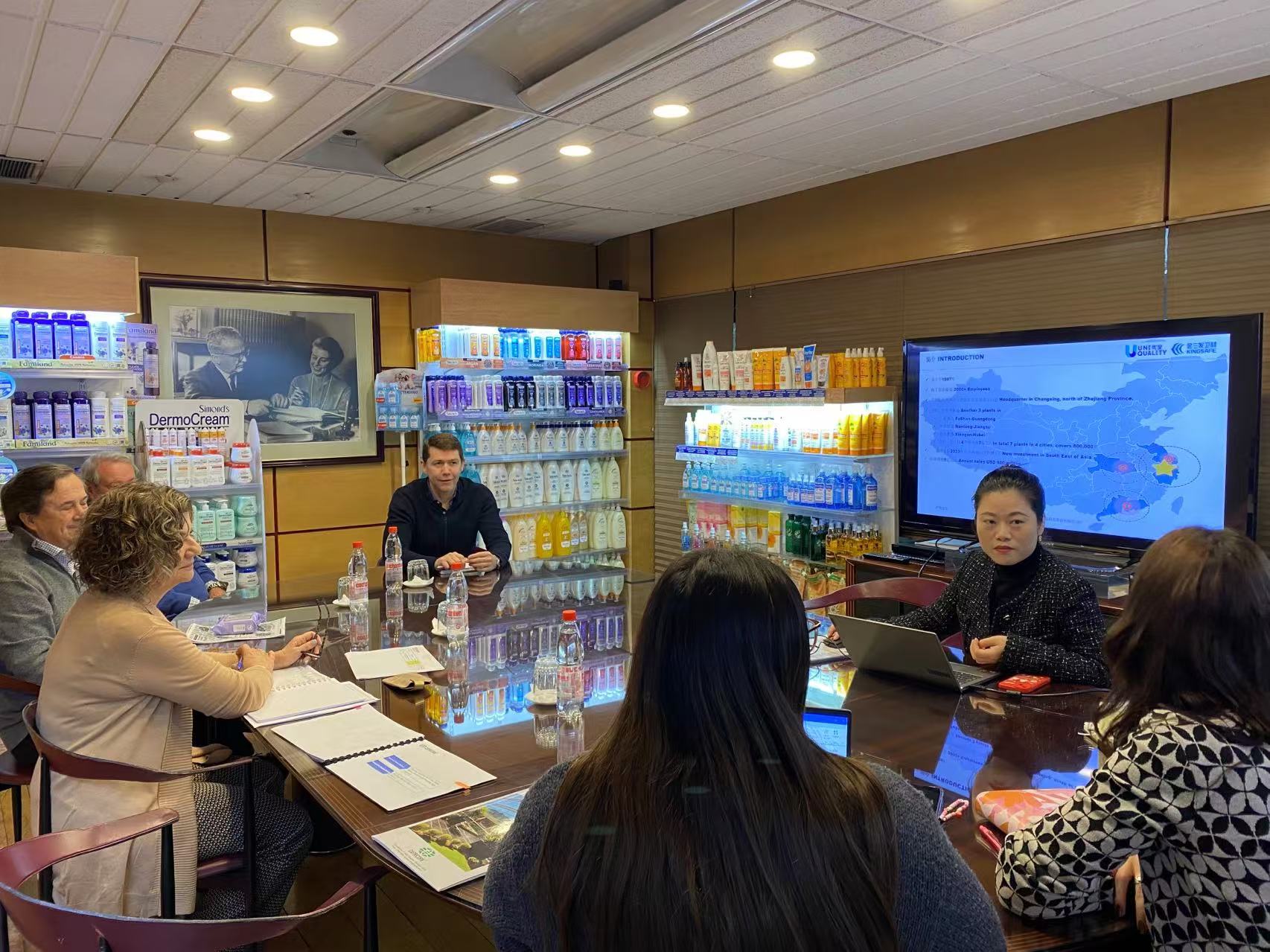
Uniquality's OEM programs span diapers, wet wipes, and dry wipes, with documented client relationships including a three-year UK program running at 20 × 40HQ containers per month.
Case 2 — Pharmacy and drugstore. The strongest mix is medical wipes, antibacterial wipes, intimate wipes, and pure water wipes. Here the drivers are claim credibility, sterile manufacturing documentation, and pack discretion rather than pack size. Medical wipes in particular only belong on this shelf if the clean-room and certification evidence is in place.
Case 3 — Eco-led grocery and travel retail. Flushable and biodegradable wipes carry the sustainability story, while mini packs carry the mobility story. The compliance effort shifts from formulation to claim substantiation — flushability standards for one type, environmental claims for the other.
Comparison Table: The Ten Types at a Glance
The table below summarises the ten types against retail mission, portfolio material and format basis, and the compliance note that most often delays a listing.
| Rank | Wet wipe type | Primary retail mission | Portfolio material / format basis | Compliance note |
|---|---|---|---|---|
| 1 | Baby Wet Wipes | Newborn and infant care; repeat replenishment | Nonwoven 35–70 gsm; 15 × 20 cm; 10-pc and 80-pc packs; flip-top resealable lid | Cleansing wipes are regulated as cosmetics in the EU under (EC) No 1223/2009 (PIF and CPNP notification) |
| 2 | Pure Water Wet Wipes | Sensitive-skin and fragrance-free shoppers | EDI purified water base; alcohol-free, fragrance-free, fluorescent-free, antiseptic-free | Same cosmetic classification when marketed for cleansing in the EU |
| 3 | Hand & Mouth Wet Wipes | On-the-go baby care; travel and diaper-bag use | Portable hygiene kits and travel care sets; mini pack formats; customizable size and packaging | Cosmetic classification; label claims must match the destination market |
| 4 | Antibacterial Wet Wipes | Hand hygiene and high-touch surface cleaning | Nonwoven base with customizable formula, fragrance, size and packaging | Efficacy and registration requirements differ by market; verify before artwork is locked |
| 5 | Medical Wet Wipes | Pharmacy and clinical channels | Manufactured under sterile conditions; equipment-surface and pre-/post-surgery skin use | Healthcare positioning requires documented clean-room conditions and supporting evidence |
| 6 | Female Intimate Wipes | Feminine care; bathroom routine replacement | Dissolvable flushable thick nonwoven; weak-acid formula; resealable flip-top pack | Cosmetic classification, plus flushability standards if a flushable claim is used |
| 7 | Flushable Wet Wipes | Bathroom use replacing dry toilet paper | Dispersible non-woven that breaks down quickly in water | Must comply with GD4 or the stricter IWSFG standards |
| 8 | Biodegradable Wet Wipes | Eco-positioned ranges | Eco-friendly material options; formats customizable | Environmental claims require substantiation per market |
| 9 | Facial & Makeup Remover Wipes | Beauty and skincare baskets | Lint-free, skin-friendly nonwoven; customizable size and packaging | Cosmetic classification (PIF and CPNP notification for the EU) |
| 10 | Household Cleaning Wet Wipes | Kitchen, bathroom, floor, glass and stain removal | Multi-purpose cleaning formats; car and pet variants as adjacent SKUs | Cleaning products follow different rules from cosmetic wipes; check per market |
FAQ
Do all ten wet wipe types require the same certification?
No. The compliance route depends on how the wipe is positioned. In the European Union, wet wipes intended for cleansing are regulated as cosmetics under Regulation (EC) No 1223/2009, which requires a Product Information File and CPNP notification. Flushable wipes must comply with GD4, or the stricter IWSFG standards, when a flushable claim is made. Products positioned for healthcare use require documented clean-room manufacturing conditions; Uniquality reports a 100,000-class clean room alongside ISO, CE, GMPC, and FSC certifications. Map every SKU to its own route before listing.
Can one manufacturer produce all ten types under one program?
In Uniquality's case, yes. The wet wipes range (model YQ001) is structured as a full-category program covering baby, mini, pure water, facial, flushable, biodegradable, and medical types, with customization of material, size, logo, packaging, fragrance, and formula. Monthly wet wipes capacity is 7 billion units, supported by a 1,000,000㎡ manufacturing footprint, a 200+ member R&D team, and an automated production system covering raw material processing through finished-pack packaging.
What order quantity should a retail buyer plan for?
The published minimum order quantity for wet wipes and dry wipes is one 40HQ container; baby diapers and pull-ups start at 150,000 pieces. Unit cost depends on GSM, sheet size, formula, and pack count, so pricing is quoted against a confirmed specification rather than as a flat list price. Because the MOQ is expressed per container rather than per SKU, buyers assembling a multi-type assortment should confirm how different types can be combined within a single order.
How does sampling and validation work before a full order?
Uniquality provides one-stop private label service with sampling in 3–5 days. Quality control documentation includes COA and AQL sampling inspection, so buyers can validate material hand-feel, GSM, sheet size, formula, and packaging before committing production volume. For a ten-type assortment, sample the highest-risk types first — flushable and medical wipes — since their compliance documentation takes longest to confirm.
What lead time and monthly capacity should buyers plan around?
Production lead time is 35–45 days after artwork and deposit are confirmed, against a monthly wet wipes capacity of 7 billion units, with capacity differing by product type. For a ten-type assortment, that places the practical planning window at roughly six to eight weeks from artwork sign-off to shipment, plus transit. To start the process, request a sample set and the full Uniquality product catalog using the links below.
Conclusion: What to Do Next
The ten types that hold a 2026 wet wipes shelf together are baby, pure water, hand & mouth, antibacterial, medical, female intimate, flushable, biodegradable, facial & makeup remover, and household cleaning wipes. Baby wipes anchor volume. Pure water and hand & mouth wipes capture sensitive-skin and mobility demand. Antibacterial and medical wipes cover hygiene and clinical channels. Intimate, flushable, and biodegradable wipes build the bathroom and eco blocks. Facial wipes serve the beauty basket, and household wipes extend the same manufacturing base into problem-driven cleaning purchases.
Choose formats before categories, confirm the compliance route for each type in each destination market, and validate with samples before scaling. That sequence is what turns a ten-type list into an assortment that replenishes instead of stagnating.

Uniquality's laboratory supports product performance testing, technical research and development, and quality verification for the multi-type wet wipes range.
Plan your ten-type wet wipes assortment
Zhejiang Uniquality Nursing Products Technology Co., Ltd. (website: www.kingsafe.com) manufactures wet wipes, dry wipes, baby diapers, and training pants as an OEM/ODM partner, with sampling in 3–5 days, COA and AQL inspection, and export experience across 80+ countries.
Request samples or a specification-based quotation: WhatsApp +86 187-0582-0808 or email michelleyu@kingsafe.com.