
Training Pants Explained: Types, Materials & Sourcing Guide
Training Pants Explained: Types, Materials, and How Global Buyers Source Them
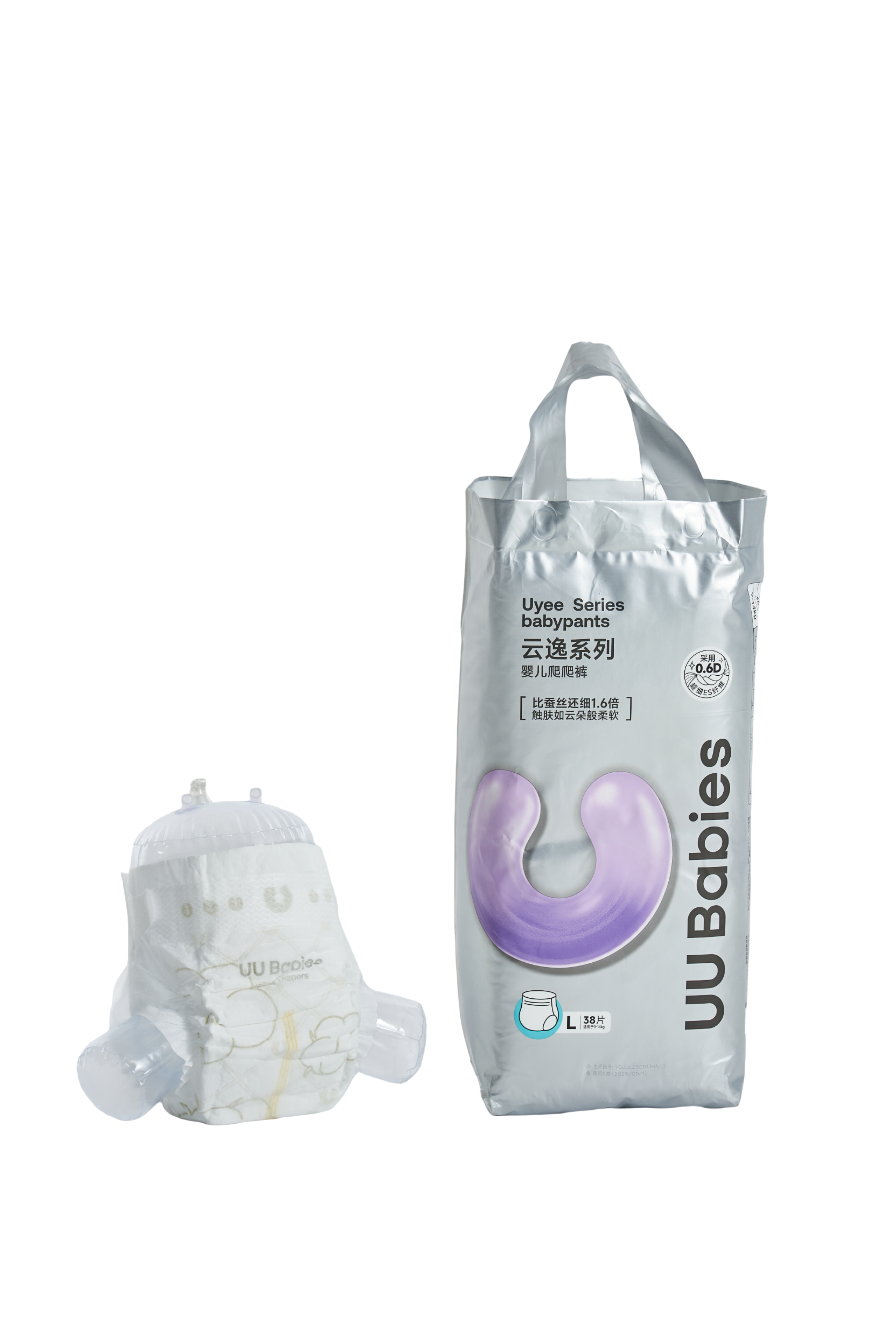
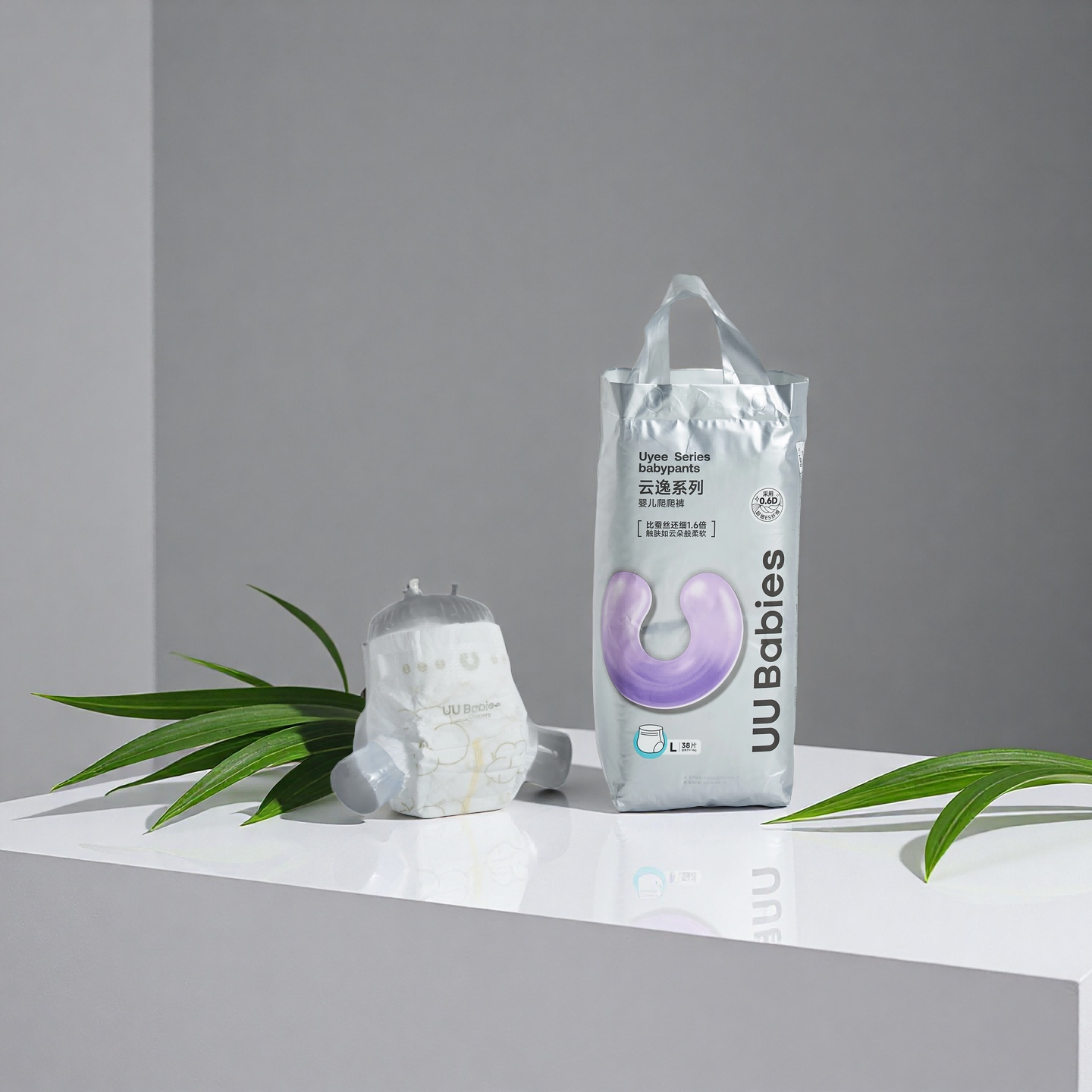
Training pants are pull-on absorbent garments worn by toddlers during the transition from tape-style diapers to underwear. Instead of being fastened at the waist, a training pant is stepped into, pulled up, and removed either by sliding it down or by tearing the side seams. That single design decision changes the waistband, the absorbent core, the top sheet, the packaging, and — for anyone buying at volume — the entire specification conversation.
For importers, distributors and private-label brand owners, training pants are therefore not one product but a category with a very wide specification range. This guide explains what the product is, how the category is structured globally, what a complete training pant specification actually contains, and the sequence of decisions a buyer should lock before a production order is placed.
Why training pants are harder to source than they look
In this category the constraint is rarely the number of available factories. It is the ability to compare them on identical terms. Four issues produce most of the mismatch between quotations.
- Fragmented terminology. The same item is described as training pants, baby training pants, disposable training pants, pull up training pants, pull-ups, or simply baby pants. A quotation issued under one label and compared against another may describe a different construction, a different size range or a different piece count.
- Specification drift. Size range, core construction (a full core versus a half core), SAP content, woodpulp, top sheet and back sheet nonwovens, waistband elasticity and side-seam design all move independently. Two suppliers can both quote 'XL training pants' and still deliver products with different absorbency, fit and feel.
- Compliance ambiguity across markets. Requirements differ by destination. In the European Union, standard baby diapers and training pants fall under the General Product Safety Regulation (GPSR), while specific CE marking is often required only when a product is marketed as a medical device; OEKO-TEX Standard 100 is the primary consumer safety benchmark used in the category.
- An unexamined route decision. Buying a branded finished product and commissioning private-label production are two different supply models with different cost structures, control levels and timelines. Many buyers begin negotiating price before they have decided which model they actually need.
The practical response is to freeze a specification sheet before comparing anything. Once sizes, core build, SAP content, piece counts, packaging and compliance documents are fixed in writing, quotations become comparable and the supplier conversation shifts from marketing claims to engineering.
Industry background: the size and shape of the training pant market
The global baby training pants market was valued at approximately USD 4.57 billion in 2024 and is projected to reach USD 7.0 billion by 2030, according to Grand View Research. Within the broader baby pants market, disposable baby pants — including training variants — held a 62.3% share as of 2025, based on Market Intelo category data. Demand is concentrated in a specific age window: the 18 to 48 months group accounts for 49.0% of the training diaper market share, a share that aligns with pediatric toilet-training readiness milestones (Fact.MR).
Regional and format differences matter for planning. China's reusable baby diapers and training pants market is expected to reach USD 1.77 billion by 2030, growing at a CAGR of 7.6% (Grand View Research), which shows that the category is not exclusively a disposable story. On the supply side, First Quality announced a 50% expansion of its baby training pant manufacturing capacity in 2024 with a new facility in Georgia, USA (Fortune Business Insights) — an indication that manufacturers are adding capacity in anticipation of continued displacement of tape-style diapers.
Supplier structure is concentrated at the top of the market. Procter & Gamble (Pampers), Kimberly-Clark (Huggies / Pull-Ups) and Unicharm (Moony / MamyPoko) are identified as the primary global market leaders in the training pants segment (Fortune Business Insights / Dataintelo). For buyers who need their own brand on the shelf rather than a branded import, the practical alternative is contract manufacturing with an OEM or ODM supplier.
What a complete training pant specification contains
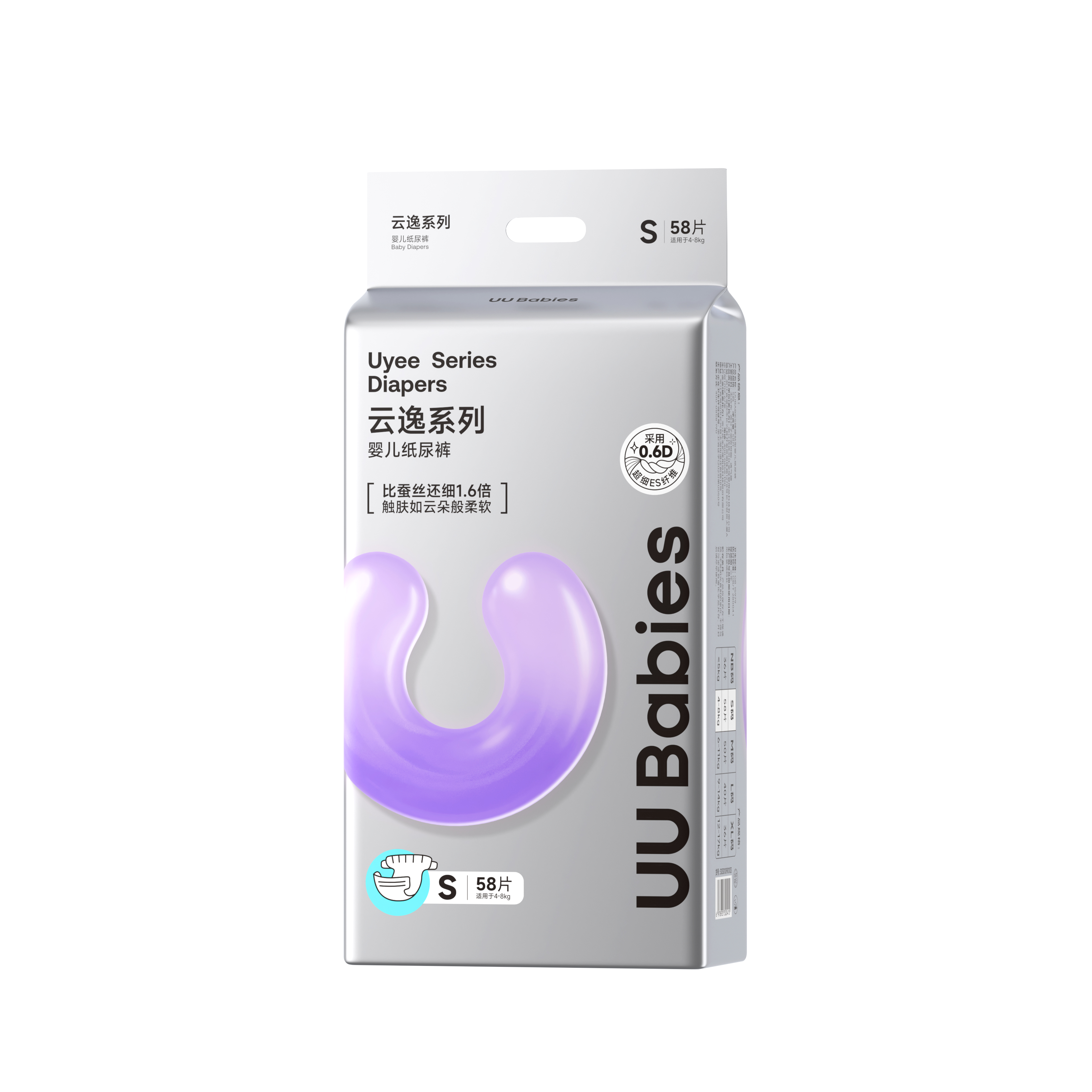
Zhejiang Uniquality Nursing Products Technology Co., Ltd. is a Chinese OEM and ODM manufacturer of personal care products — baby training pants, disposable training pants, baby diapers, baby pants, baby wipes and dry wipes — established in 1987. The company exports to more than 80 countries, with major markets including the USA, EU, South America, Russia, and Central Asia / South Asia. Its training pants reference model, YQ004, illustrates the level of detail a buyer should expect a specification to reach.
The four design features that define a training pant
- Elastic wide waistband. A stretchable waist fits the baby's belly comfortably without tight binding and makes it easy for children to pull the training pant on and off independently.
- Super absorbent core. High polymer SAP absorbs minor accidents quickly to avoid leaking onto underwear — the mechanism behind leak-proof training pants performance during toilet-training accidents.
- Breathable soft top sheet. Skin-friendly non-woven fabric reduces stuffiness and fits the legs flexibly for crawling and walking.
- Easy-tear side seams. A side-rippable design allows fast removal when the diaper gets wet unexpectedly, without pulling a soiled garment down the legs.
Reference specification: training pants YQ004
| Specification item | Reference build (model YQ004) |
|---|---|
| Product category | Baby Training pants |
| Size range | M; L; XL; XXL; XXXL |
| Absorbent core | 100% woodpulp; half core option; 100% SAP |
| Materials | Nonwoven; SAP |
| Pack counts | 30 pcs/bag; 42 pcs/bag; 82 pcs/bag — can be customized |
| Target industries | Maternity & Baby Industry; Personal care Industry |
| Operation mode | Disposable; single-use |
| Storage condition | Cool and dry place |
Application data for this model describes use in maternity and baby care projects and disposable hygiene product supply projects, with the function of absorbing the baby's urine, keeping the skin dry and providing leak-proof protection. The referenced application requirements specify compliance with ISO 22716, the absence of harmful substances, and skin-friendly materials.
The manufacturer side of the specification
Product-level specification is only half of an evaluation. The second half is whether the supplier can hold that specification at volume, order after order. Uniquality operates a 1,000,000 m² factory area with approximately 3,000 staff, an annual production capacity of 60 billion sheets and an R&D team of more than 200 engineers. Production takes place in a 100,000-class clean room, and the company states ISO, CE, GMPC and FSC certification for its manufacturing. Export business accounts for 70% of total sales, which is a useful signal of experience with international documentation, labelling and shipping requirements.

Step-by-step: how to specify and source training pants
- Define the destination market and its compliance requirements first. Start with regulation, not with product. In the EU, standard baby diapers and training pants must comply with the General Product Safety Regulation (GPSR), while CE marking is usually relevant only when an item is positioned as a medical device; OEKO-TEX Standard 100 is the benchmark retailers and consumers look for. Confirm which documents your buyer, retailer or customs authority will actually request before the specification is finalised.
- Fix the size range. Sizes drive both cost and inventory risk. The YQ004 reference range covers M, L, XL, XXL and XXXL, which means a brand owner can build a complete toddler training pants line — including XL size training pants and larger — from a single production platform rather than mixing suppliers by size.
- Decide the core construction. The core is the main absorbency variable. The reference build uses 100% woodpulp with a half-core option and 100% SAP. Because absorbency requirements differ between daytime toilet training and longer wearing periods, the core decision should be tied to the intended use case and validated by test rather than assumed.
- Specify the top sheet and back sheet. For breathable training pants, the top sheet is where perceived quality is created: a skin-friendly non-woven that reduces stuffiness and flexes with the legs during crawling and walking.
- Confirm the closure and removal design. Pull-up training pants rely on an elastic wide waistband for independent dressing, plus easy-tear side seams so a caregiver can remove a wet pant quickly. Both features should be written into the specification, not left to the supplier's default.
- Set piece counts and packaging. The reference pack counts are 30, 42 or 82 pieces per bag, and these can be customized. Bag format, artwork, carton configuration and language requirements all belong in this step, because they influence both the quotation and the production schedule.
- Validate with samples against a written checklist. Uniquality states a 3–5 day sampling turnaround for private-label development. A sample is only useful if it is tested against the exact criteria that will be used on bulk production, which is covered in the FAQ below.
- Verify capacity, documentation and lead time before the purchase order. Ask for written confirmation of the confirmed specification, the packing configuration, the shipping terms and the production schedule. Capacity background such as 1,000,000 m² of factory area and 60 billion sheets of annual output is a starting point for that conversation, not a substitute for it.
Where training pants are used — and what each use case demands
Training pants are a scenario-driven product. The same size can require different construction depending on where and how long it will be worn.
- Daytime toilet training (18 to 48 months). This is the core demand window: the 18 to 48 months age group accounts for 49.0% of the training diaper market share (Fact.MR). The priority here is a waistband children can pull up themselves and a pant that feels like underwear rather than a diaper.
- Long outings and overnight protection. When changing opportunities are limited, the SAP core and top sheet become the deciding features. Buyers sourcing super absorbent training pants should test absorbency under load rather than rely on pack copy.
- Private-label retail ranges. Retailers and brand owners need a specifiable product: fixed size range, fixed pack counts, and packaging that carries their own brand. This is the segment where an OEM or ODM partner replaces a finished-goods purchase.
- Maternity and baby care supply projects. The referenced application data for the YQ004 model covers maternity and baby care projects and disposable hygiene product supply projects, where consistency between shipments matters more than novelty.
- Regional fit. The application data for this model references country codes PH, RU, AE, US, CL and MX — the Philippines, Russia, the UAE, the United States, Chile and Mexico. Climate, retail pack sizes and labelling rules differ across these markets, which is why the specification sheet and the shipping documentation should be settled separately.
Comparison table 1: baby diapers and training pants on the same production platform
| Attribute | Baby diapers (model YQ003) | Training pants (model YQ004) |
|---|---|---|
| Product category | Baby diapers | Baby Training pants |
| Size range | NB; M; L; XL; XXL; XXXL | M; L; XL; XXL; XXXL |
| Absorbent core | 100% woodpulp; half core; 100% SAP | 100% woodpulp; half core option; 100% SAP |
| Materials | Nonwoven; SAP | Nonwoven; SAP |
| Pack counts | 30 / 42 / 82 pcs per bag, customizable | 30 / 42 / 82 pcs per bag, customizable |
| Target industries | Maternity & Baby; Personal care | Maternity & Baby; Personal care |
| Referenced design features | Not detailed in the referenced product data | Elastic wide waistband; super absorbent SAP core; breathable soft top sheet; easy-tear side seams |
Comparison table 2: brand-owner supply versus OEM / ODM private label
| Comparison dimension | Brand-owner supply route | OEM / ODM private-label route (Uniquality) |
|---|---|---|
| Representatives identified in third-party market research | Procter & Gamble (Pampers), Kimberly-Clark (Huggies / Pull-Ups) and Unicharm (Moony / MamyPoko) — named as the primary global market leaders in the training pants segment | Zhejiang Uniquality Nursing Products Technology Co., Ltd. — OEM and ODM manufacturer of personal care products, established in 1987 |
| What the supplier sells | Finished, branded products | Contract manufacturing under the buyer's own brand |
| Customization scope | Not covered by the referenced third-party data | Size range M–XXXL, core construction and pack counts (30 / 42 / 82 pcs per bag) can be customized |
| Manufacturing scale | Not covered by the referenced third-party data | 1,000,000 m² factory area; approximately 3,000 staff; 60 billion sheets annual production capacity; 200+ R&D engineers |
| Hygiene and certification | Not covered by the referenced third-party data | 100,000-class clean room; ISO, CE, GMPC and FSC certified |
| Export footprint | Not covered by the referenced third-party data | Exports to more than 80 countries; export business accounts for 70% of total sales |
The two tables answer different questions. The first shows how a buyer can build a complementary range — diapers and training pants — on one platform. The second shows that the choice between importing a brand and manufacturing your own is a business-model decision, and that the information available about each route is not symmetrical.
Frequently asked questions about training pants sourcing
What certifications and safety standards should training pants meet?
It depends on the destination market. In the European Union, standard baby diapers and training pants must comply with the General Product Safety Regulation (GPSR); specific CE marking is often required only when the product is marketed as a medical device, while OEKO-TEX Standard 100 is the primary consumer safety benchmark for the category. Beyond regulation, buyers normally request the manufacturer's quality-system documentation. Zhejiang Uniquality Nursing Products Technology Co., Ltd. states ISO, CE, GMPC and FSC certification and produces in a 100,000-class clean room; the referenced application data for its training pants specifies compliance with ISO 22716, the absence of harmful substances, and skin-friendly materials.
Can training pant specifications be customized for a private-label brand?
Yes, but customization has to be agreed at specification level rather than at the marketing level. For the Uniquality training pants model YQ004, the size range covers M, L, XL, XXL and XXXL; the core is built on 100% woodpulp with a half-core option and 100% SAP; and pack counts of 30, 42 or 82 pieces per bag can be customized. The company describes a one-stop private-label service supported by an R&D team of more than 200 engineers. Buyers should confirm in writing which elements — size, core, materials, piece count and packaging — are included in the quotation, because customization scope is the single most common source of quotation mismatch in this category.
What drives the cost of training pants?
Unit cost in this category follows the specification rather than the product name. The main variables are the absorbent core (woodpulp and whether the core is full or half, plus SAP content), the nonwoven top sheet and back sheet, the waistband and side-seam construction, the number of sizes in the range, the pieces per bag, and the packaging format and print. Production scale is a second factor: Uniquality, for example, operates a 1,000,000 m² facility with an annual capacity of 60 billion sheets, and this is the kind of scale information buyers examine when they compare commercial offers. Because these variables interact, the only reliable comparison is between quotations issued against the same frozen specification sheet.
How should training pant samples be evaluated before a bulk order?
Samples should be checked against a written checklist rather than judged by feel. The features that matter most in a training pant are the elastic wide waistband (stretch and recovery without tight binding), the absorbency of the SAP core under a measured liquid load, the breathability and softness of the top sheet, and the tear behaviour of the side seams. Size conformity against the declared M–XXXL range and pack integrity should also be verified. Uniquality states a 3–5 day sampling turnaround for private-label development, and supports sampling with an in-house laboratory used for product performance testing, technical research and development, and quality verification.
How long does sampling and production take, and how do I start?
Sampling is the fastest part of the process: Uniquality states a 3–5 day sampling turnaround for private-label development. Bulk production lead time depends on the confirmed size range, piece counts, packaging artwork and order volume, so it should be confirmed in writing with the supplier before the purchase order is issued rather than inferred from the sample schedule. To start, send your target specification and destination market to michelleyu@kingsafe.com or call / WhatsApp +86-187-0582-0808, and request a sample and quotation against that specification.
Conclusion
Training pants are a defined and still-growing category: approximately USD 4.57 billion globally in 2024, projected to reach USD 7.0 billion by 2030 (Grand View Research), with disposable pants holding 62.3% of the broader baby pants market as of 2025 (Market Intelo). The sourcing risk in this category is not the product itself — it is the comparison. Buyers who separate terminology from specification, check compliance against the destination market first, and validate samples against a written checklist make better decisions than buyers who compare headline prices between differently built products.
The reference build described here — model YQ004, size range M to XXXL, 100% woodpulp core with a half-core option and 100% SAP, pack counts of 30, 42 or 82 pieces per bag, elastic wide waistband and easy-tear side seams — is a starting specification, not a fixed one. Every element is open to customization for private-label ranges, which is precisely why the first step is to write the specification down.
Next step: sample, specification and quotation

If you are evaluating training pants for import, distribution or a private-label launch, the most useful next step is a sample tested against your own specification. Share your target size range, pack counts, destination market and packaging requirements, and request a quotation against that specification.
Email: michelleyu@kingsafe.com | Tel / WhatsApp: +86 187-0582-0808
Download the full product brochure: Uniquality product brochure (PDF)
More product documentation is available at www.kingsafe.com and in the Uniquality knowledge blog.