
Training Pants Long-Term Partnership: How After-Sales Coordination and Quality Feedback Work
Short answer: in a long-term training pants partnership, after-sales coordination is the system that keeps repeat orders consistent — not a complaint desk attached to the contract. It links five functions (remote support, order follow-up, product usage consultation, quality feedback handling and after-sales service coordination) to three records: the certificate of analysis (COA) for the batch, the AQL-based pre-shipment inspection result, and the retained sample held for traceability. When a complaint arrives, those records decide whether the issue is isolated, batch-wide or specification-related, and what changes before the next production run.
This article is written for brand owners, importers and distributors who already buy disposable training pants and are structuring the second, third and tenth order. It explains what each after-sales function covers in practice, how a quality feedback case moves from first report to closed corrective action, where COA/AQL inspection and sample retention fit, and how microbial risk control supports repeat-order consistency.
Zhejiang Uniquality Nursing Products Technology Co., Ltd. (Uniquality) is a China-based OEM/ODM manufacturer of baby training pants, disposable training pants, baby diapers, baby pants, baby wipes and dry wipes. The company operates a 1,000,000 m² manufacturing campus with 3,000+ employees and a 200+ person R&D team, exports about 70% of output to markets including the USA, EU, SAM, Russia and CASA, and describes its production environment as a 100,000-class clean room with ISO, CE, GMPC and FSC certification. Its service and quality facts are the reference point for the processes described here; the company website is www.kingsafe.com.
Why after-sales is the weak point in training pants supply
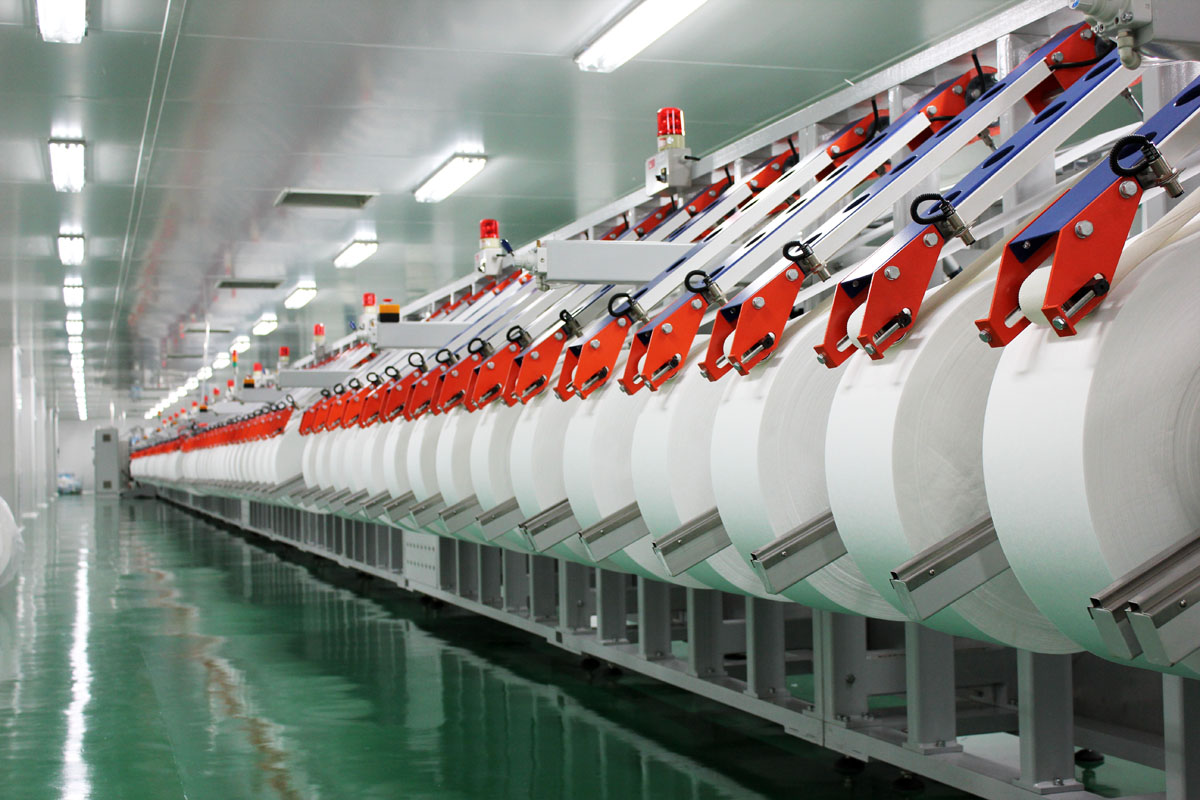
Disposable training pants are a low-unit-price, high-volume, high-consequence product. A pull-up that leaks in use is not a cosmetic defect: it reaches the end user through a retailer, generates a complaint at the shelf rather than at the factory gate, and is usually reported weeks after the batch was produced. By then the run may be finished, packed and partly sold.
Three structural features make this harder than in most consumer goods. First, the product is a multi-layer assembly — a breathable soft top sheet made of skin-friendly non-woven fabric, a super absorbent core built on high polymer SAP, an elastic wide waistband and easy-tear side seams — so a leakage or fit complaint can originate in more than one component. Second, the commercial model is volume-based: a minimum order quantity of 150,000 pieces per size and a lead time of 35–45 days after artwork and deposit confirmation mean that “just produce another batch” is not a quick correction. Third, repeat orders are the norm in this category, so an unresolved issue is not a one-off loss; it is repeated across every following shipment.
After-sales coordination exists to compress the distance between a field complaint and a verified cause. Its purpose is not to absorb complaints, but to route each one back to the exact batch, the exact inspection record and the exact retained sample — so the next order is produced against a corrected specification rather than a verbal understanding.
What the five after-sales functions actually cover
Service scope in a training pants partnership is usually described in five functions. Each has a different buyer use, and each should be documented rather than assumed.
Remote support
Remote support handles questions that do not require a site visit: fit and sizing queries, absorbency expectations for a given size range, leakage patterns reported by retail customers, storage and transport conditions, and clarification of the approved specification. It is also the first filter in the feedback process, because most field reports are resolved by comparing the reported behaviour with the approved specification and the retained sample.
Order follow-up
Order follow-up tracks an order from artwork and deposit confirmation through production to shipment. In this category the reference lead time is 35–45 days after confirming artwork and deposit, and accepted delivery terms are FOB or CIF, so follow-up is where schedule risk becomes visible early enough to act on. For a distributor, it is also the function that keeps packaging versions, size mixes and shipment documentation aligned between consecutive orders.
Product usage consultation
Usage consultation is aimed at the people who sell or specify the product rather than at the baby: sizing logic across a range that includes XL size training pants, what “pull up” independence means for a toddler moving out of tape diapers, how the elastic wide waistband and easy-tear side seams are intended to be used, and how storage conditions affect the non-woven and SAP core before a pack is opened.
Quality feedback handling
This is the core function and the one most often left under-specified in supply agreements. It covers complaint intake, batch identification, comparison against COA data and inspection records, sample review, root-cause discussion, and a defined corrective action that carries into the next production run.
After-sales service coordination
Coordination is the routing layer: a named contact, a complaint log, an agreed response path and a closure step that is re-checked at the following order. Without it the other four functions exist but do not connect, and every new issue restarts the conversation from zero.
How the five functions map to records
| After-sales function | What it covers for the buyer | Record or mechanism that supports it |
|---|---|---|
| Remote support | Sizing, absorbency and leakage questions; storage and transport guidance | Approved product specification; retained batch sample |
| Order follow-up | Artwork and deposit confirmation, production progress, shipment schedule | Order confirmation; 35–45 day lead-time reference |
| Product usage consultation | Sizing logic, pull-up use, feature explanation for retail and distributor teams | Feature documentation (elastic waistband, easy-tear seams, SAP core) |
| Quality feedback handling | Complaint intake, batch identification, root-cause review, corrective action | COA, AQL inspection result, retained samples, pre-delivery microbial inspection |
| After-sales service coordination | Single point of contact, escalation path, closure check before reorder | Complaint log; next-order inspection plan |
How a quality feedback case moves, step by step
The sequence below is what separates a documented feedback loop from a series of emails. Each step produces something that the next step can use.
- Intake with usable detail. Remote support captures the batch code, size, market, quantity affected, the reported behaviour and, where available, photographs of the pack and product. A complaint without a batch reference can still be answered, but it cannot be traced.
- Batch identification against records. The batch code links to the COA and to the pre-shipment inspection result. Acceptance criteria are set per order — the factory pre-shipment test or a customer-specified protocol — so the first question is whether the reported behaviour falls inside or outside what was accepted at shipment.
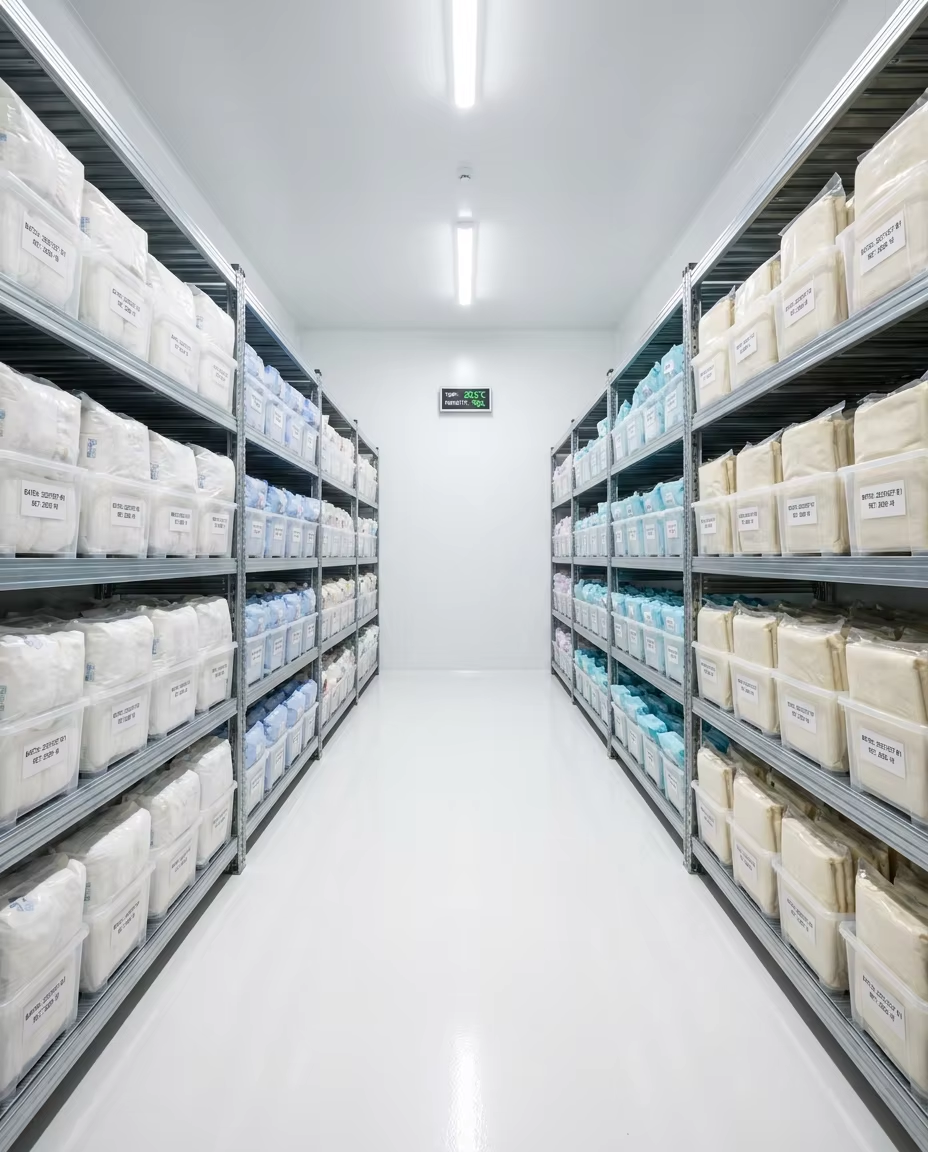
- Retained sample comparison. A sample from the same batch is retrieved from the sample retention room, where batches are archived, organised by batch and held under controlled conditions. Comparing that sample with the returned or photographed product separates a production deviation from a storage, transport or usage effect.
- Component-level review. Because the product is layered, the review examines the top sheet, the SAP core, the waistband and the side seams separately. This is where a vague “leakage” report becomes a specific question about one component and one machine setting.
- Root-cause classification. Findings are grouped as material, process, environment, inspection or handling. Environment and inspection categories connect directly to hygiene and microbial controls; material categories connect back to incoming raw material hygiene.
- Corrective action and closure. The action is written down — a raw material check, a machine adjustment, an added inspection point, a packaging change — and the case is closed only when that action is agreed as complete.
- Carry-forward into the next order. At the next order confirmation the corrective action is re-checked and the approved specification is restated. If the change affects the product, a new sample round is scheduled; Uniquality's standard sampling window is 3–5 days.
COA, AQL inspection and retained samples are three different kinds of evidence
COA, AQL inspection and sample retention are often bundled together as “quality documents”. They answer three different questions, and a partnership that relies on only one of them leaves a gap.
A COA (certificate of analysis) is batch-level data: what was measured on that batch, and by which method. It is only useful when the method is named. For absorbency work, ISO 11948-1 specifies the method for determining the total absorption capacity of urine-absorbing aids (the Rothwell test), which is the type of reference that makes a COA figure comparable between batches and between suppliers.
An AQL inspection is acceptance sampling: a defined sample size drawn from the lot, checked against defined defects, with an accept or reject decision. It manages batch-level risk. It does not certify every unit, and a passed inspection does not make later complaints impossible — but it produces a documented, repeatable baseline that a complaint can be measured against.
Retained samples are the physical record. Retention is what allows a question to be answered months later: what exactly was shipped, from which batch, and how does it compare with the approved sample. Without retention, a COA is a set of numbers with nothing to inspect against.
Limitation worth stating plainly: retention preserves evidence, not immunity. If the retained sample and the field sample match, the investigation moves toward specification, storage or usage; if they diverge, it moves toward production. Either outcome is more useful than an unresolved dispute, but neither replaces a clearly written specification at order stage.

Microbial risk control and repeat-order consistency
Microbial control is the part of quality feedback that buyers rarely see until something goes wrong, because the relevant failure mode — exceeding microbial limits — is invisible in the finished pack.
Documented controls follow the same logic as the feedback loop: prevent, then verify. Preventative measures include strict control of raw material hygiene, reasonable use of qualified preservatives, and purification of the production workshop environment. Verification includes strengthened microbial inspection before delivery, so a batch is checked while it can still be held rather than after it has shipped. The production environment supporting this is a 100,000-class clean room, and Uniquality's published comparison data lists a total bacterial count of ≤100 CFU/g against ≤200 CFU/g cited for standard products.
For repeat orders, the value lies in continuity of conditions. The same workshop environment, the same raw material screening and the same pre-delivery inspection produce a comparable baseline from batch to batch. A change in any of the three is exactly the kind of event the feedback loop should capture early — which is why the environment and inspection categories appear in step five of the workflow above, not only in a certificate file.
Three use cases where the loop changes the outcome
Retail private label running a seasonal repeat programme
A retailer with a fixed size curve reorders several times a year and needs the second shipment to match the first. The functions that matter most are order follow-up (schedule and packaging version control), quality feedback handling through a single store-level complaint channel, and the carry-forward step where the approved specification is restated before each reorder. Size coverage — including XL size training pants — should be locked in the same document rather than renegotiated each cycle.
Distributor opening a new market
A distributor entering a new country carries two extra risks: documentation and usage expectations. Order follow-up covers classification consistency, since disposable training pants and baby diapers are primarily classified under HS Code 9619.00, while usage consultation addresses in-market questions about pull-up use, sizing and storage. Where the distributor also supplies related items such as baby changing stations and hygiene care kits, the same coordination channel handles accessory and specification questions instead of opening a separate thread.
OEM brand scaling with an established partner
As volume rises, the after-sales question shifts from “will you answer?” to “will the answer stay consistent at higher volume?” A documented case helps calibrate expectations: in a three-year OEM/ODM partnership in the United Kingdom, the project recorded an on-time delivery rate of 99.5%, zero major quality complaints and a monthly shipment volume of 20 forty-foot high-cube containers, supported by a GMP workshop, ISO certifications, eco-friendly materials and strict quality control. That is one case with its own product mix and market; it illustrates an outcome that a maintained process can produce, not a guarantee for a different specification.
What to verify before you sign the next order
At decision and execution stage, the useful question is not whether after-sales exists but whether it is documented well enough to survive a real complaint. Seven checks cover most of the gap.
- Named contact and escalation path. Who receives a complaint, who owns the batch investigation, and who confirms closure.
- A written complaint workflow. Batch identification should be step one, not an afterthought.
- Retention policy. Duration, storage conditions and whether samples are organised by batch so a specific shipment can be retrieved.
- A COA template with named test methods. Ask for one real example from a comparable product, not a blank form.
- An AQL plan. Sample size, defect classification, accept and reject rules, and whether acceptance is the factory pre-shipment test or a customer-specified protocol.
- Commercial terms in writing. The reference figures in this category are 150,000 pieces per size as MOQ, FOB or CIF delivery terms, 30% deposit with balance against BL copy, and 35–45 days lead time after artwork and deposit confirmation.
- Carry-forward evidence. Ask to see a closed complaint record that shows what changed in the following production run.
Frequently asked questions
How is quality feedback handled if a shipped batch does not meet the agreed standard?
The batch is identified from its code and matched to the COA and the pre-shipment inspection result, which were set against the acceptance criteria agreed for that order — either the factory pre-shipment test or a customer-specified protocol. A retained sample from the same batch is then compared with the reported product to separate a production deviation from a storage, transport or usage effect. The outcome is recorded as a corrective action and re-checked at the next order confirmation, so closure is verified rather than assumed.
What after-sales coordination is included during a long-term training pants partnership?
Five connected functions: remote support for fit, absorbency, leakage and storage questions; order follow-up from artwork and deposit through shipment; product usage consultation for retail and distributor teams; quality feedback handling with batch traceability; and service coordination that provides a named contact, a complaint log and a closure check before the next reorder. The value is in the connection between them — a support question and a quality case reach the same records.
What MOQ, payment and delivery terms should a repeat order plan for?
The reference terms in this category are a minimum order quantity of 150,000 pieces per size, delivery on FOB or CIF terms, and payment of 30% deposit with the balance against a copy of the bill of lading. Acceptance is based on the factory pre-shipment test or a customer-specified protocol. Because these are reference terms rather than fixed conditions for every product and market, they should be confirmed in the order documentation rather than carried over from an earlier cycle by memory.
How are retained samples and COA documents used before a repeat order?
Retained samples are stored by batch under controlled conditions, so a specific shipment can be retrieved and inspected months later. Before a repeat order, they work together with the COA: the COA shows what was measured on the batch and by which method, while the retained sample shows what the batch physically was. If a corrective action changed the product, a new sample round is scheduled — Uniquality's standard sampling window is 3–5 days — and the approved sample becomes the new reference.
What lead time applies to repeat training pants orders?
The typical production lead time is 35–45 days after confirming artwork and deposit. That window covers production, not the after-sales process, so a repeat order should be planned with the previous batch's feedback status in view: an open corrective action is a reason to confirm the specification before the deposit is paid, not after production starts. Buyers who want to review the full product and service scope before the next cycle can download the company brochure for reference and raise specific questions with the after-sales contact.
Conclusion: continuity is a process, not a promise
A training pants partnership holds together on repeatability. The product is assembled from a breathable soft top sheet, a high polymer SAP core, an elastic wide waistband and easy-tear side seams; the commercial model runs on 150,000-piece minimums and 35–45 day lead times; and complaints usually arrive long after the batch was packed. Against that combination, the only durable protection is a documented loop — batch records, AQL inspection results, retained samples, a named coordinator and a corrective action that is checked again at the next order.
Buyers evaluating a partner should therefore test the process, not the wording: ask for the complaint workflow, one COA with named methods, the retention policy and a closed case that shows what changed in the following run. Those four items reveal more about long-term supply continuity than any description of service commitment.

Next step: review the product and service scope in the Uniquality company brochure, then send your specification, size range and target market to the after-sales contact so the sampling and inspection plan can be confirmed before the next order cycle. General company information is available at kingsafe.com.
Have Questions or Need More Details?
Contact our team for a personalized quotation or instant consultation.
Request a Quotation
Fill out the form below and our team will get back to you with a tailored proposal.
WhatsApp Direct Chat
Prefer to chat in real-time? Message us on WhatsApp for instant assistance & quick answers.
- Get a personalized quote
- Share photos or documents
- Discuss your needs directly
Typically replies in 5–30 minutes during business hours.