
Training Pants Partnership FAQ: After-Sales, COA/AQL & Repeat-Order Support
Training Pants Partnership FAQ: After-Sales, COA/AQL & Repeat-Order Support
A training pants supply relationship is decided less by the first order than by the tenth. After-sales response, batch documentation, agreed sampling rules, MOQ discipline and a repeatable production window are what separate a supplier you reorder from one you eventually replace.
This FAQ answers the questions brand owners, importers and distributors raise before committing to a long-term training pants programme: what after-sales service actually covers, how COA and AQL sampling protect repeat orders, what MOQ and lead time look like in practice, and which certification evidence a manufacturer should be able to show.
Zhejiang Uniquality Nursing Products Technology Co., Ltd. (Uniquality) is a China-based OEM/ODM manufacturer of baby training pants, disposable training pants, baby diapers, baby pants and wipes. Founded in 1987, the company operates a 1,000,000 m² production base in Zhejiang with more than 3,000 employees, a 200+ member R&D team, an export ratio of roughly 70%, and a customer footprint the company places at 80+ countries across the USA, EU, SAM, RU and CASA markets.
Why Long-Term Training Pants Supply Breaks Down
Most training pants sourcing problems do not appear in the first sample. They appear somewhere between the third and the eighth reorder. The recurring failure points are consistent and predictable:
- Batch-to-batch drift. Absorbency, fit and core composition shift slightly when a run is rescheduled or moved to a different line. The product still passes a visual check, but it no longer matches the approved sample.
- Documentation gaps. A supplier can ship correctly and still fail a buyer's compliance review if no Certificate of Analysis accompanies the batch, or if there is no retained sample to refer back to.
- After-sales silence. When a defect claim, a usage question or a packaging change request arrives after delivery, response time matters more than the original quotation.
- Lead time that is not repeatable. The first order is usually protected. The fourth order is where artwork revisions, deposit timing and line scheduling start to slip.
- MOQ mismatch. Buyers often plan demand in increments smaller than the manufacturer's minimum run, which creates either dead stock or supply gaps.
- Certification claims without paperwork. A CE or ISO reference in a catalogue is a starting point; a certificate number and an issuing body are what survive an audit.
Each of these is a decision point a buyer can design around before signing, rather than a risk to be discovered after the container arrives.
Where the Training Pants Category Is Heading
The training pants format is expanding inside a very large absorbent hygiene base. Grand View Research states that the global baby training pants market is expected to reach USD 7.02 billion by 2030, growing at a CAGR of 7.5% from 2025 to 2030. The wider category it sits inside is considerably larger: the global baby diaper market is expected to reach US$66.3 billion in 2025, according to Market Research Reports.
Format preference reinforces the direction. Pants-type diapers constitute more than 70% of total diaper sales in Japan, a mature market that has historically led adoption of pull-up formats. For buyers, that combination — a growing training pants segment inside a mature diaper base — is why sourcing conversations increasingly focus on multi-year programmes rather than single shipments.
Two practical reference points follow on the compliance and testing side:
- Disposable training pants and baby diapers are primarily classified under HS Code 9619.00, which is the reference point for customs classification and duty planning.
- ISO 11948-1 specifies the method for determining the total absorption capacity of urine-absorbing aids (the Rothwell test), the standard buyers commonly cite when requesting absorption evidence.
How Uniquality Structures a Long-Term Training Pants Partnership
A long-term training pants partnership is managed as a documented cycle rather than a repeated purchase. In Uniquality's programmes, that cycle covers after-sales service, batch-level quality documentation, a fixed commercial framework and certification readiness.
After-Sales: Remote Support, Order Follow-Up and Quality Feedback
After-sales service is the part of a supply relationship that only becomes visible once the container has left. In Uniquality's training pants programmes it covers five functions:
- Remote support for technical questions raised by the buyer's team or, where relevant, by the end market.
- Order follow-up from production confirmation through to shipment release.
- Product usage consultation — guidance on how the training pants format behaves across different usage and retail contexts.
- Quality feedback handling — structured intake of defect or performance feedback and the coordination needed to resolve it.
- After-sales coordination between production, quality and the buyer's contact point.
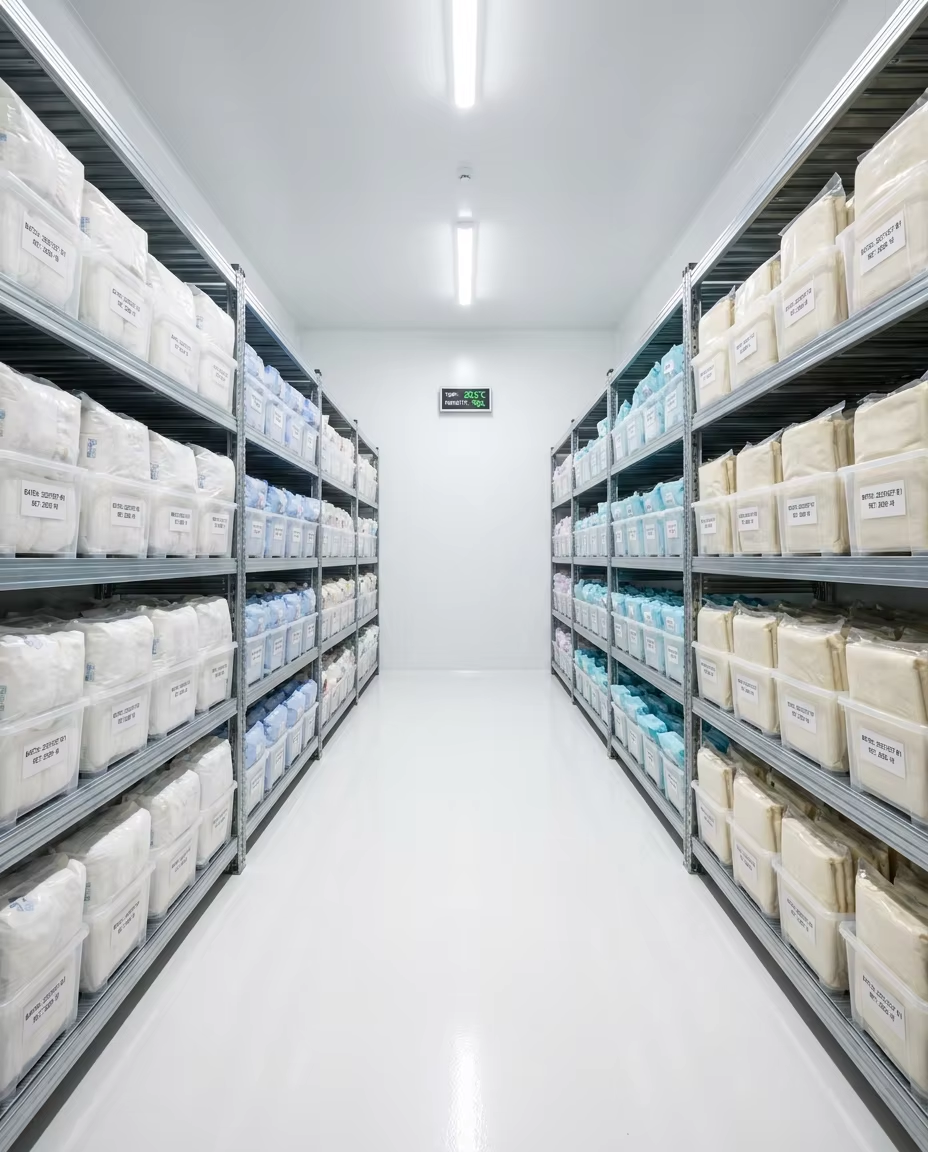
The supporting mechanism is the sample retention room shown above. Because every batch is archived, tracked and preserved under controlled conditions, a buyer's question about what was shipped six months ago is answered with a document rather than a reconstruction. Delivery reliability is reported at a 99.5% on-time delivery rate, which the company positions as higher than many market alternatives.
Quality Control: COA and AQL Sampling
Two documents do most of the work in repeat-order quality control. A Certificate of Analysis (COA) accompanies a batch and records the analysis performed on it. An AQL (Acceptable Quality Limit) sampling plan defines how many units are inspected from a lot and how many defects are acceptable before the lot is rejected. Together they convert "we check the goods" into a verifiable process: the buyer knows what was measured and on what basis the shipment was cleared.
The quality infrastructure behind those documents includes a dedicated laboratory used for product performance testing, technical R&D and quality verification. Microbial control is specified at ≤100 CFU/g total bacteria count, compared with ≤200 CFU/g for standard products, and is maintained through raw material hygiene control, purification of the production workshop environment, and strengthened microbial inspection before delivery.

Commercial Framework: MOQ, Lead Time and OEM/ODM
The two numbers that set the reorder rhythm
Minimum order quantity: 150,000 pieces for baby diapers and pull-ups.
Production lead time: 35–45 days after artwork approval and deposit are confirmed.
Beyond those two figures, the framework includes:
- OEM and ODM availability. A buyer can supply a full specification for contract manufacture, or work with the manufacturer's development capability on an ODM basis.
- Sampling in 3–5 days, which allows specification and fit decisions to be validated before a production slot is committed.
- Core structure options. The training pants (model YQ004) is made of nonwoven and SAP, with core options including 100% woodpulp, half core, and 100% SAP — the core choice is where absorbency and unit cost are balanced.
The MOQ and the lead time are the two numbers that determine how a buyer structures inventory: the 150,000-piece run sets the replenishment unit, and the 35–45 day window sets the reorder trigger.
Certification and Partnership-Readiness Evidence
Certification is where a training pants partnership is either smooth or slow. The company states that its training pants product holds CE certification and that its management systems include ISO 14001 for environmental management, alongside ISO 9001, GMPC and FSC system certifications listed in its company profile. Production takes place in a 100,000-class clean room environment.
A practical note for buyers: certification claims should always be matched against the certificate itself. Request the certificate number, issuing body and validity period during qualification, and confirm that the scope covers both the specific product and the manufacturing site that will run the order. That single step protects both sides — the buyer obtains defensible compliance documentation, and the manufacturer avoids being compared against unverified claims.
Step-by-Step: Ramping Up to a Repeating Order Cycle
The path from first enquiry to a stable reorder rhythm follows six steps.
- Specification and scope alignment. Confirm product format (training pants or pull-up, disposable, single-use operation), size range including XL where required, features such as breathability, absorbency and leak-proof protection, and packaging format. The training pants design works as a single-use disposable item that absorbs the baby's urine, provides leak-proof protection and keeps skin dry.
- Sampling and validation. Sampling is completed in 3–5 days. Validate the sample against your own performance criteria before moving on to artwork.
- Artwork, compliance and documentation. Approve artwork, confirm the destination market's requirements, and agree on which documents will accompany each shipment — COA, packing list, and the AQL sampling basis for inspection.
- MOQ confirmation and production slot. Confirm the 150,000-piece MOQ for baby diapers and pull-ups, then lock the production slot. Lead time runs 35–45 days from artwork approval and deposit.
- Pre-shipment inspection. The agreed AQL sampling plan is applied, batch analysis results are compiled into the COA, and retained samples are archived in the sample retention room.
- Delivery, after-sales and reorder review. The shipment is released, after-sales support becomes active, and performance from the run — defect feedback, delivery timing, packaging issues — becomes the input for the next order.
Use Cases
Private-label brand scaling a pull-up range
A brand that has validated a training pants concept in one market and now needs repeatable volume can use the 150,000-piece MOQ as its replenishment unit and the 35–45 day lead time as its reorder trigger. OEM/ODM availability means the brand can begin with an ODM-developed specification and shift toward a fully owned OEM specification as volume grows — without changing supplier and restarting the qualification cycle.
Distributor adding training pants to a baby care portfolio
A distributor already carrying baby diapers and wipes can consolidate supply and reduce supplier-management load. The evaluation points that matter most here are documentation (a COA per batch), delivery reliability (the manufacturer reports a 99.5% on-time delivery rate), and whether after-sales support is structured well enough to answer the distributor's own end-customer questions.
Premium export programme targeting sensitive-skin positioning
Products positioned for baby care, sensitive skin use and premium export markets need documentation that matches the claim: microbial control data, absorption testing referenced to ISO 11948-1, retained samples, and CE / ISO 14001 evidence. Compared with conventional alternatives and small OEM manufacturers, the differentiators in this scenario are vertical integration, clean-room production, and the ability to produce a consistent batch over many reorders rather than a strong first shipment.
What Buyers Verify vs What the Manufacturer Documents
The table below maps each decision area in a long-term training pants programme to the evidence a buyer should expect to see. It is deliberately framed as a verification checklist rather than a brand comparison, because the same questions apply to every supplier a buyer evaluates.
| Decision area | What the buyer needs to verify | Uniquality's documented position |
|---|---|---|
| Batch quality | A COA per batch, plus a retained sample for reference | Sample retention room archives, tracks and preserves every batch under controlled conditions |
| Defect acceptance | An agreed AQL sampling plan applied before shipment | AQL sampling applied at the pre-shipment inspection stage |
| Microbial control | Stated limits with laboratory verification | ≤100 CFU/g total bacteria count, vs ≤200 CFU/g for standard products |
| Absorption evidence | Testing referenced to a recognised method | ISO 11948-1 is the standard method for total absorption capacity of urine-absorbing aids |
| Delivery reliability | On-time delivery performance on repeat runs | 99.5% on-time delivery rate |
| Compliance | CE marking plus management system certificates, with numbers and issuing bodies | CE certification for the training pants product; ISO 14001 for environmental management, alongside ISO 9001, GMPC and FSC system certifications as stated in the company profile |
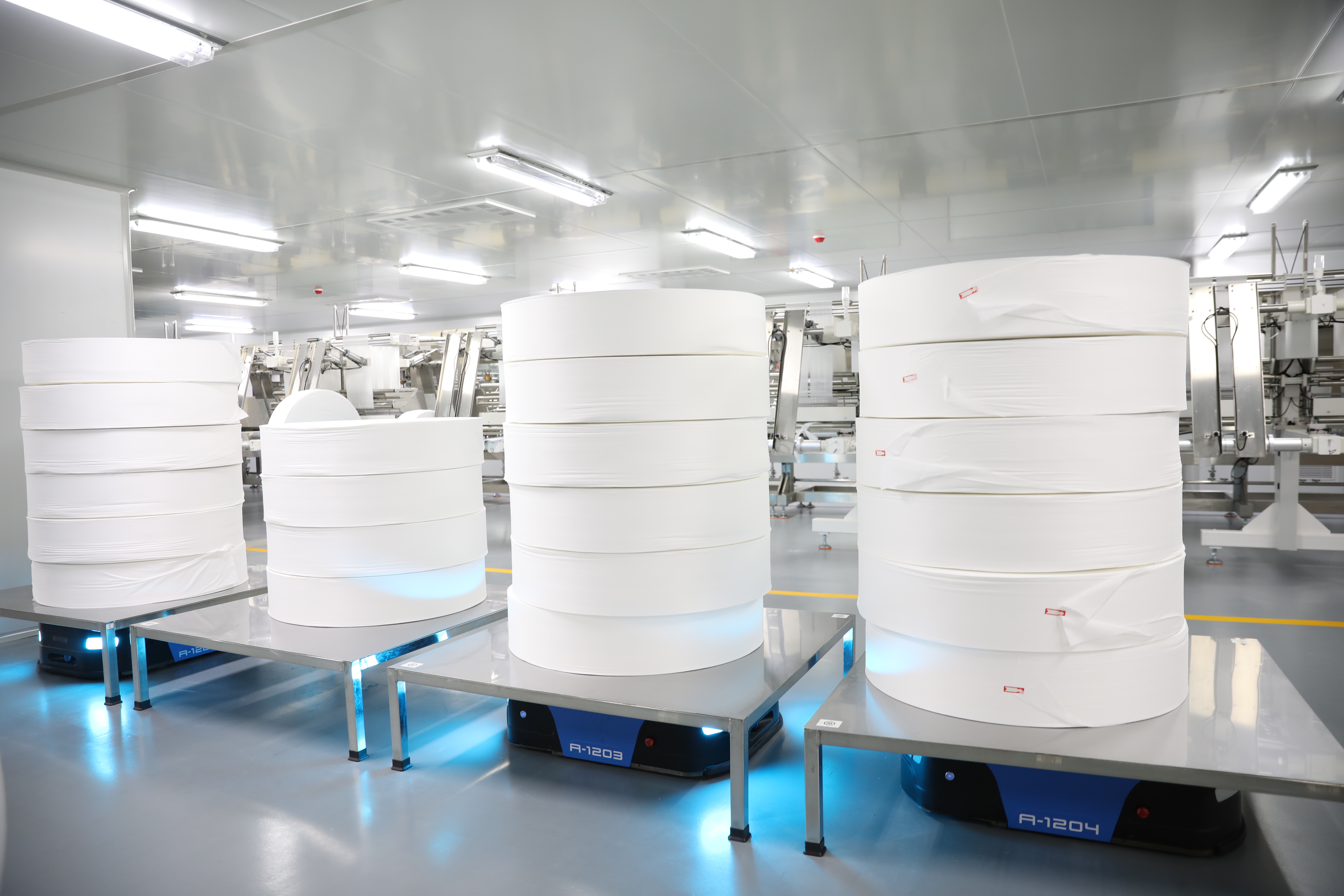
| Production environment | Controlled manufacturing conditions | 100,000-class clean room production environment; fully automated production with batch traceability |
| Cost structure | Raw material and energy efficiency within the quoted price | Full vertical integration; 8–15% lower raw material cost and 10% lower energy consumption compared with less integrated production; slightly higher upfront cost offset by lower risk of recalls and returns |
| Minimum order | A replenishment unit that matches demand planning | 150,000 pieces for baby diapers and pull-ups |
| Lead time | A production window that can be repeated reliably | 35–45 days after artwork approval and deposit |
| Sampling | Fast pre-production validation | 3–5 day sampling turnaround |
| Customs classification | Correct HS code for duty and clearance planning | Disposable training pants and baby diapers are primarily classified under HS Code 9619.00 |
FAQ: Long-Term Training Pants Partnership Questions
1. Which certifications and documents should a training pants partner provide for repeat orders?
Compliance evidence in a training pants programme works on two levels. At product level, the company states that its training pants product holds CE certification, and at management system level it lists ISO 14001 for environmental management alongside ISO 9001, GMPC and FSC system certifications in its company profile. At order level, buyers should expect a Certificate of Analysis covering the batch, confirmation of the agreed AQL sampling plan, and the HS Code 9619.00 classification for customs purposes. Because certification statements should always be verifiable, the practical step is to request certificate numbers, issuing bodies and validity periods during supplier qualification, and to confirm that the certificate scope covers the specific product and the manufacturing site running the order.
2. Can one manufacturer handle both OEM and ODM training pants programmes?
Yes. Uniquality operates as an OEM/ODM manufacturer and offers both models, so a buyer can supply a complete specification for contract manufacture or work with the manufacturer's development capability on an ODM basis. The capability behind that is scale and engineering depth: a 1,000,000 m² production base, more than 3,000 employees, a 200+ member R&D team, annual output the company reports at 60 billion sheets, and fully automated production with batch traceability. On the product side, the training pants (model YQ004) is made of nonwoven and SAP with core options including 100% woodpulp, half core, and 100% SAP — which is what allows an ODM programme to move between absorbency and cost targets without changing supplier.
3. How does a vertically integrated training pants supplier affect total cost?
Vertical integration changes where the cost sits rather than simply lowering it. The company reports full vertical integration, with 8–15% lower raw material cost and 10% lower energy consumption compared with conventional production setups. The honest trade-off is that upfront unit cost is slightly higher, but the risk of recalls and returns is lower — and on a repeat-order programme, recall and returns exposure is usually the larger number. Buyers comparing quotations from small OEM manufacturers against an integrated supplier should therefore compare landed cost plus failure cost, not unit price alone.
4. How does sampling and pre-production validation work before mass production?
Sampling is completed in 3–5 days, which lets a buyer validate absorbency, fit, breathability, leak-proof protection and packaging before committing a production slot. Once the sample is approved, that approved sample becomes the reference point for the order: the agreed AQL sampling plan governs how the lot is inspected before shipment, the COA records the batch analysis, and a retained sample is archived in the sample retention room. This is what makes a repeat order comparable to the original approval rather than a new negotiation.
5. What MOQ and lead time should be planned for a repeat order?
For baby diapers and pull-ups, the minimum order quantity is 150,000 pieces, and production lead time is 35–45 days after artwork approval and deposit are confirmed. Those two figures define the planning model: the 150,000-piece run becomes the replenishment unit, and the 35–45 day window becomes the point at which the next order must be triggered, allowing for transit time to the destination market. The company reports a 99.5% on-time delivery rate on shipments, which is the performance figure to track once the programme is running. If you want to validate the specification before committing to a full run, sampling is available in 3–5 days and the full catalogue can be downloaded from the link below.
Conclusion: What a Long-Term Training Pants Partnership Actually Requires
A durable training pants supply relationship is built from four things that a first order will not reveal: after-sales support that responds after delivery, batch documentation that can be produced on request, a commercial framework with fixed MOQ and lead time, and certification evidence that holds up to scrutiny. Uniquality's position on each of these is concrete — remote support, order follow-up, product usage consultation, quality feedback handling and after-sales coordination; a sample retention room that archives every batch; COA and AQL sampling as standard quality control; a 150,000-piece MOQ for baby diapers and pull-ups; a 35–45 day lead time after artwork and deposit; OEM/ODM availability; and stated CE certification for the training pants product with ISO 14001 environmental management certification.
For buyers at the decision stage, the practical next step is to test the framework rather than the pitch: request a sample, request a COA specimen, ask for certification scope confirmation, and run one full cycle against the stated MOQ and lead time. A supplier that performs on all four is a supplier worth building the next three years of volume around.
Request a Sample or a Quote
Uniquality supplies baby training pants, disposable training pants, baby diapers, baby pants and wipes on an OEM/ODM basis to brand owners, importers and distributors.
Contact: Michelle — michelleyu@kingsafe.com | Tel / WhatsApp: +86 187-0582-0808
Website: www.kingsafe.com | Blog: case.kingsafe.com

Have Questions or Need More Details?
Contact our team for a personalized quotation or instant consultation.
Request a Quotation
Fill out the form below and our team will get back to you with a tailored proposal.
WhatsApp Direct Chat
Prefer to chat in real-time? Message us on WhatsApp for instant assistance & quick answers.
- Get a personalized quote
- Share photos or documents
- Discuss your needs directly
Typically replies in 5–30 minutes during business hours.