Understanding Substrate GSM, Fiber Blend, and Wet Strength in Wet Wipes
Understanding Substrate GSM, Fiber Blend, and Wet Strength in Wet Wipes
Substrate GSM, fiber blend, and wet strength are the three specification inputs that decide how an OEM wet wipe feels, dispenses, and holds together during wiping. GSM sets how much nonwoven material each wipe carries. The fiber blend decides whether that material behaves soft and absorbent or firm and strong. Wet strength determines whether the wipe survives the wiping motion once it is saturated with lotion. Buyers who fix these three parameters before sampling avoid the most expensive part of wet wipes sourcing: sample rounds that never converge.
This guide is written for importers, brand owners, distributors and OEM buyers who are still researching the category — the stage where the product concept exists but the substrate has not been defined. It explains what each parameter controls, how the three interact, and how to turn them into a brief that a wet wipes manufacturer can quote and sample against. Zhejiang Uniquality Nursing Products Technology Co., Ltd., a wet wipes and diaper OEM/ODM manufacturer founded in 1987, is used throughout as a working example of how these substrate specifications are produced at industrial scale.
Why “Soft” and “Durable” Are Not Substrate Specifications
Most wet wipes projects start with adjectives. A brand owner wants a wipe that feels premium or thick; a distributor wants one that does not tear. Neither statement tells a converter which nonwoven to load onto the line. The lotion determines what the wipe does to skin or surface, but the substrate determines how the wipe behaves in the hand, in the pack, and against the surface being wiped.
Three failure modes account for most rejected samples. The first is tearing during dispensing: the sheet stretches or rips as it is pulled through the opening. The second is structural failure during use: the wipe breaks up, pills, or leaves lint behind. The third is a wipe that feels thin or dry even though the pack is full — a symptom of substrate weight that is mismatched to the lotion load. Each of these maps to one of the three parameters in this guide: wet strength, fiber blend, and GSM.
The commercial consequence is cost and time. When a brief contains only adjectives, every sample round becomes a trial: the manufacturer adjusts weight, then changes fiber, then changes fold, and the buyer evaluates a moving target. When the brief contains a GSM band, a fiber direction, and a wet-strength expectation, the manufacturer samples inside a defined box and the sample review becomes a confirmation step instead of a negotiation.
What Wet Wipes Demand Means for Substrate Choices
Wet wipes are a large and expanding category, and growth is concentrated in formats that put pressure on substrate design. The global wet wipes market was estimated at approximately USD 22.38 billion in 2024 (Market Research Future). The baby wipes segment alone was valued at USD 10.0 billion in 2025, with a projected CAGR of 5.5% through 2035 (Global Market Insights). Asia Pacific led the global wipes market in 2025 with a 32.29% share (Fortune Business Insights), and the biodegradable wet wipes segment reached over USD 3 billion in 2024, growing at a CAGR of over 6%.
Two regulatory frames shape what a substrate is allowed to be. Wet wipes intended for cleansing are regulated as cosmetics under EU Regulation (EC) No 1223/2009, which requires a Product Information File and CPNP notification for products placed on the EU market. Flushable wipes must comply with GD4 (Guidelines for Assessing the Flushability of Disposable Nonwoven Products) or the stricter IWSFG standards published by EDANA and INDA.
Read together, these two facts change the substrate conversation. A conventional spunlace wipe can be engineered for high wet tensile strength, because strength is almost always an advantage. A flushable wipe cannot: its substrate must hold together during wiping and then disperse in water, which is why flushability is assessed against GD4 or IWSFG rather than against a strength target. Buyers entering the category now are choosing between substrate architectures, not just between GSM numbers.
The Three Substrate Parameters and What Each One Controls
A wet wipe’s performance is set by three measurable substrate inputs: GSM, which is the dry weight of the nonwoven per square meter; fiber blend, which is the proportion of soft absorbent fibers to strength-giving synthetic fibers; and wet strength, which is the tensile integrity of the saturated web. They are not independent. Raising one usually changes the behaviour of the others, which is why a specification has to be written as a set rather than as three separate targets.
GSM: how much nonwoven goes into each wipe
GSM (grams per square meter) is the dry weight of the nonwoven before lotion is added, and it is the fastest lever for changing how substantial a wipe feels. Uniquality’s wet wipe production platform is specified for nonwoven from 35 to 70 gsm, with the exact value customized per project.
Within that band, raising GSM does four things at once: it increases the amount of material available to hold lotion, it raises tensile strength in both dry and wet states, it produces a denser and more substantial hand feel, and it raises material cost per wipe. Lowering GSM produces a lighter and more economical wipe that can feel airy, and that leaves less reserve for aggressive wiping or high lotion loads.
GSM is not a quality ranking, so the question is always fit. A makeup remover wipe and a kitchen degreasing wipe can both be specified correctly at very different weights. What buyers should avoid is treating a light substrate as a defect or a heavy substrate as an upgrade before the wiping job has been defined.
Fiber blend: what the nonwoven is made of
Most personal care wet wipes use spunlace (hydroentangled) nonwoven, in which fibers are mechanically interlocked by high-pressure water jets rather than chemically bonded. The fibers chosen determine the character of the wipe. Viscose, a regenerated cellulose fiber, contributes softness, absorbency and a smooth hand feel. Polyester adds tensile strength, dimensional stability and structural memory, which keeps the web from collapsing when it is saturated. Blending the two is the standard way manufacturers tune a wipe between those extremes.
Shift the blend toward viscose and the wipe becomes softer and more absorbent but weaker when wet. Shift it toward polyester and the wipe becomes stronger and more dimensionally stable, with a crisper and less absorbent character. For flushable and biodegradable formats the substrate has to be a dispersible non-woven structure that breaks down in water, which is a different architecture rather than a lighter version of a conventional wipe.
Wet strength: integrity after saturation
Wet strength — wet tensile integrity — is how much load a saturated substrate carries before it tears, stretches or delaminates. Dry strength is a poor proxy for it, because the fiber-to-fiber bonds that hold a nonwoven together behave differently once lotion has penetrated the web. In practice, wet strength is assessed by saturating a strip of substrate and pulling it until it fails, then comparing that result against the forces the finished wipe meets in the pack and in the hand.
Two everyday symptoms point to a wet-strength issue rather than a lotion issue. The first is a wipe that stretches instead of separating cleanly from the stack, or that tears partway through the pull. The second is a wipe that breaks up or leaves lint during the wiping motion. Both are substrate-and-fold questions, which is why tear resistance and lint-free performance belong in the same sentence as GSM. Higher wet strength is not automatically better, however: a flushable wipe is designed to lose integrity in water, and its dispersibility is what standards bodies assess.
How Uniquality produces wet wipes across these specifications
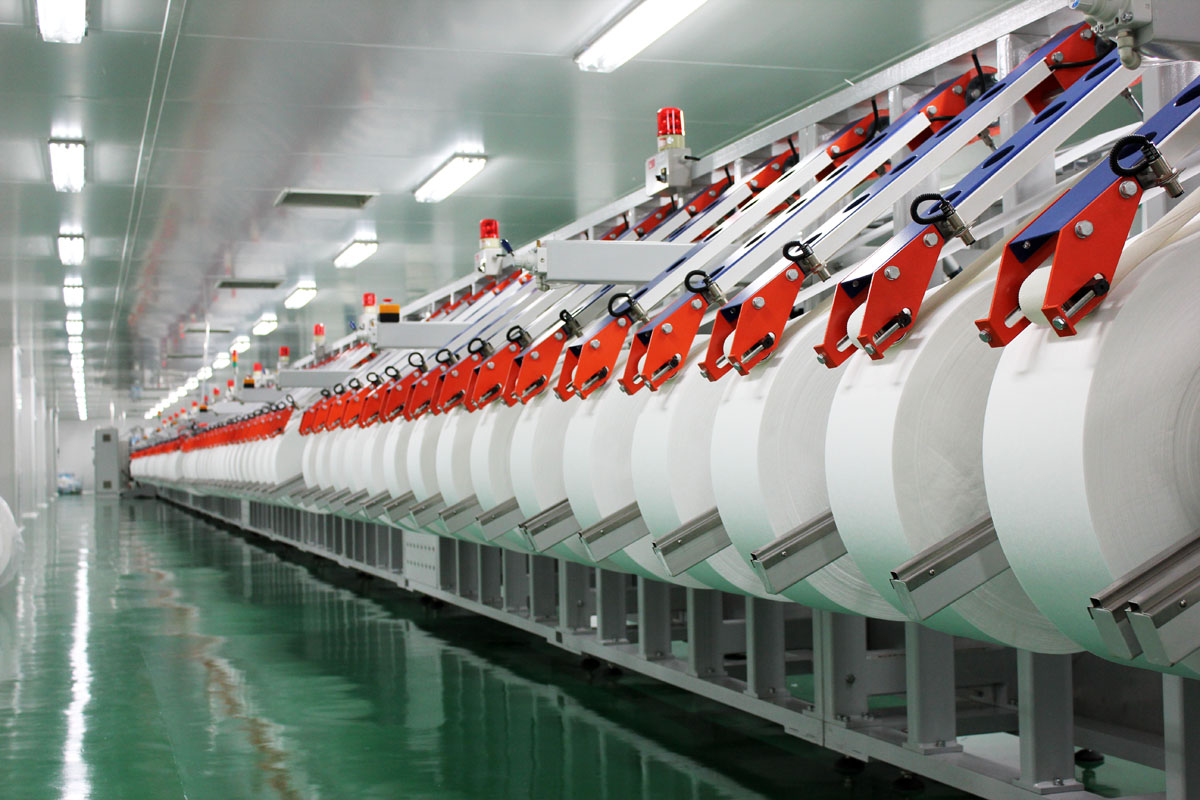
Zhejiang Uniquality Nursing Products Technology Co., Ltd. is a wet wipes and diaper OEM/ODM manufacturer founded in 1987, operating from a 1,000,000 m² manufacturing base with more than 3,000 employees and an annual output of 60 billion sheets. Wet wipes production runs on automated lines covering the full process from raw material handling to finished-product packaging, supported by a 200+ person R&D team.
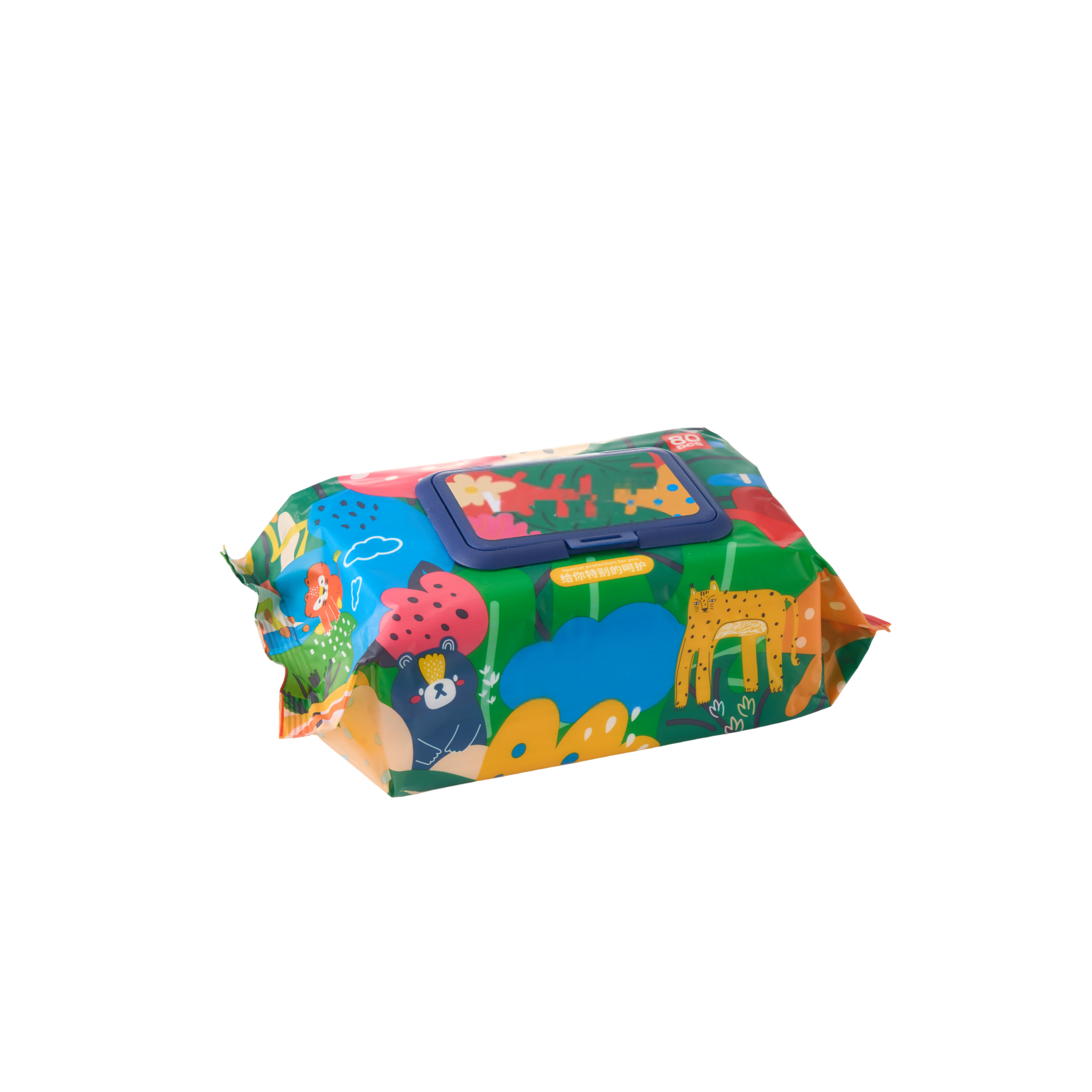
For OEM projects, the wet wipes platform (model YQ001) is specified for nonwoven from 35 to 70 gsm with customization, wipe dimensions of 15 × 20 cm with custom sizing, and pack counts of 10 pieces or 80 pieces per bag with custom configurations. Types produced include baby wet wipes, mini wet wipes, pure water wet wipes, facial wet wipes, flushable wet wipes, biodegradable wet wipes and medical wet wipes. Medical formats are manufactured in a 100,000-class clean room, and the company holds ISO, CE, GMPC and FSC certifications, with roughly 70% of output exported to markets including the USA, EU, SAM, RU and CASA.

Substrate Parameter Comparison: What You Gain and What You Trade Away
Substrate specification is a set of trade-offs rather than a ladder of quality. The table below summarizes how each decision changes the finished wipe and what a buyer should verify before locking it into a purchase order.
| Specification decision | What it changes in the finished wipe | What is traded away | What to verify |
|---|---|---|---|
| Lower GSM (toward 35 gsm) | Lighter, more economical wipe; less material per sheet | Less lotion reserve; less tolerance for aggressive wiping; thinner hand feel | Wet strength at the intended lotion load; single-sheet dispensing |
| Higher GSM (toward 70 gsm) | Denser hand feel; more lotion retention; higher tensile | Higher material cost per wipe; can feel heavy in facial use | Whether the added weight is perceptible and valued by the end user |
| Viscose-rich blend | Softer, more absorbent, gentler hand feel | Lower wet tensile; more care needed in dispensing | Lint level; compatibility with the fold and pack format |
| Polyester-rich blend | Stronger and more dimensionally stable when wet | Less soft; less absorbent; crisper feel | Whether the tactile change still fits the target segment |
| Dispersible (flushable) structure | Breaks down in water after flushing | Cannot be optimized purely for wet tensile strength | GD4 or IWSFG compliance evidence for the substrate |
| Higher wet strength | Resists tearing during dispensing and wiping | Less dispersibility; can feel stiffer | Balance with the fold, the opening, and the lotion load |
| Higher lotion load | Wetter feel; more cleansing per sheet | Risk of dripping, leaking, or premature pack drying | Whether the substrate’s retention capacity supports the load |
Step-by-Step: Turning a Product Idea into a Substrate Specification
The sequence below converts a marketing concept into parameters a manufacturer can sample against, in the order that avoids rework.
- Define the wiping job and the fluid. Decide whether the wipe is cleaning skin, a surface, or an intimate area, and what liquid it carries — purified water, a mild cleansing lotion, or another formulation. The fluid determines how much the fibers will swell and how much wet strength the web needs.
- Choose the fiber architecture. Standard spunlace for personal care; a dispersible non-woven structure for flushable formats; a biodegradable-substrate direction where end-of-life positioning matters. This decision comes before GSM because it rules entire substrate families in or out.
- Set the GSM band. Start from the tactile target, then confirm the band falls within the manufacturer’s validated range — 35 to 70 gsm on Uniquality’s wet wipes platform, customizable per project.
- Set wipe dimensions and fold. The standard size is 15 × 20 cm and can be customized; dimension and fold together determine how the sheet behaves when pulled through the pack opening.
- Define the wet-strength expectation in functional terms. Describe what must not happen — tearing on pull, lint during use, mid-wipe breakage — rather than asking for a number, then let the sample confirm it.
- Lock the pack format. Pack counts of 10 pieces or 80 pieces per bag are standard and customizable; the pack format interacts with lotion retention, since a resealable flip-top lid is what keeps the top sheet from drying out between uses.
- Confirm compliance documentation and sample. Wet wipes produced for medical use are manufactured in a 100,000-class clean room, and the company holds ISO, CE, GMPC and FSC certifications. Sampling is completed in 3–5 days so the specification can be validated before tooling and packaging commitments are made.
Use Cases: Which Substrate Profile Fits Which Wipe Type
The same three parameters produce very different products depending on the application. The examples below show how the specification shifts.
- Baby wet wipes and pure water wet wipes. Softness and skin tolerance lead. The formulation uses EDI purified water and is alcohol-free, fragrance-free, fluorescent-free and antiseptic-free, with a weak-acid pH that matches a baby’s skin. The substrate is a thickened embossed non-woven with a pearl-textured surface for lotion retention, specified as tear-resistant and lint-free.
- Hand and mouth wet wipes and mini wet wipes. These are designed for cleaning a baby’s mouth and hands and are safe and non-toxic for on-the-go use. Smaller pack formats put more weight on dispensing consistency, because the sheet is often pulled one-handed.
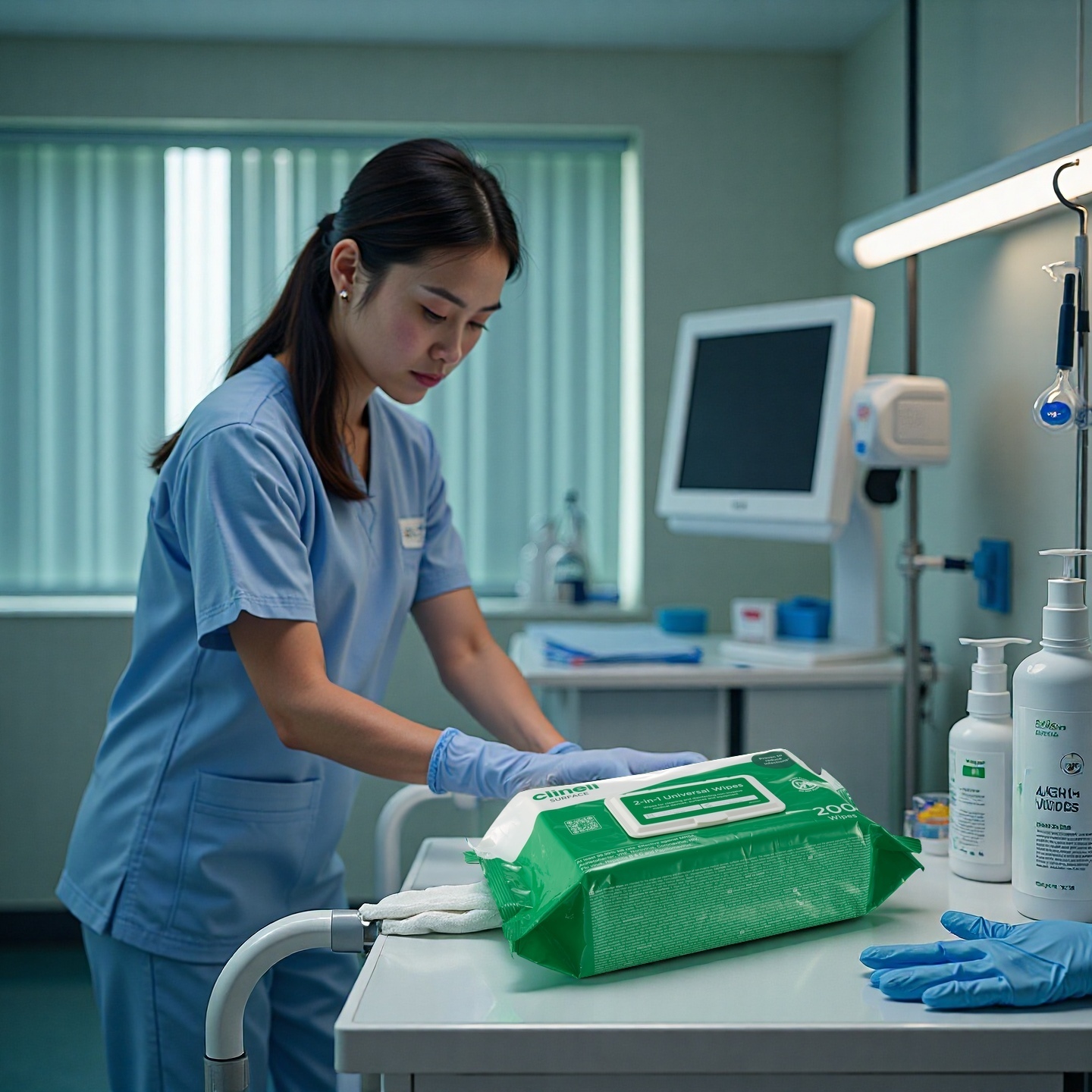
- Medical wet wipes. Manufactured under sterile conditions and designed for healthcare settings, including cleaning equipment surfaces such as stethoscopes and thermometers to prevent cross-contamination, and gentle pre- and post-surgery skin cleaning. Substrate choice here is governed by the clean-room environment and the non-irritating formulation.
- Flushable wet wipes and biodegradable wet wipes. These use a dispersible non-woven fabric that breaks down in water without clogging pipes while remaining sturdy and lint-free during wiping. Compliant formats are assessed against GD4 or IWSFG.
- Facial wet wipes, makeup remover wipes and female intimate wipes. Lower lint and a gentle hand feel matter more than tensile strength. Weak-acid formulations, free of alcohol, fragrance and fluorescent agents, suit sensitive skin, pregnant women and toddlers.
- Kitchen, bathroom, floor, glass and stain remover wipes. These face rougher surfaces and higher soil loads, so the specification moves toward a higher GSM band and higher wet strength to resist tearing during scrubbing.
Reference specification for the wet wipes platform
| Parameter | Standard specification | Customization |
|---|---|---|
| Model | YQ001 | — |
| Size | 15 × 20 cm | Customizable |
| Material | Nonwoven | 35–70 gsm, customizable |
| Pack count | 10 pcs/bag; 80 pcs/bag | Customizable |
| Types | Baby wet wipes, mini wet wipes, pure water wet wipes, facial wet wipes, flushable wet wipes, biodegradable wet wipes, medical wet wipes | Additional formats per project |
| Applicable industries | Personal care, health and beauty, maternity and baby, pet supplies, household | — |
FAQ
What compliance requirements apply to wet wipes substrates sold in the EU and to flushable formats?
Wet wipes intended for cleansing are regulated as cosmetics under EU Regulation (EC) No 1223/2009, which requires a Product Information File and CPNP notification for products placed on the EU market. Flushable wipes must comply with GD4 or the stricter IWSFG standards published by EDANA and INDA, because the substrate has to disperse in water rather than simply resist tearing. For buyers, this makes compliance a substrate decision as much as a labelling decision: the fiber architecture and dispersibility of the web have to support the claim printed on the pack. Uniquality manufactures wet wipes in a 100,000-class clean room and holds ISO, CE, GMPC and FSC certifications.
Can substrate GSM, fiber blend and wet strength be customized for an OEM project?
Yes. On Uniquality’s wet wipes platform (model YQ001), nonwoven substrate is specified from 35 to 70 gsm and can be customized, wipe size is based on 15 × 20 cm with custom dimensions available, and pack counts start from 10 pieces or 80 pieces per bag with custom configurations. Fiber architecture is selected to match the target application — standard spunlace for personal care, dispersible non-woven for flushable formats, and substrate directions that support biodegradable positioning — across baby wet wipes, pure water wet wipes, facial wet wipes, flushable wet wipes, biodegradable wet wipes, mini wet wipes and medical wet wipes.
How is the minimum order quantity determined for a custom wet wipes order?
Minimum order quantity is a quotation output rather than a fixed catalogue number, because it depends on the pack format, the substrate architecture and the packaging. A standard spunlace wipe packed at 10 pieces or 80 pieces per bag and a dispersible flushable structure with custom packaging do not carry the same setup economics, so buyers should state the pack count, the wipe size and the substrate direction in the same request and confirm the MOQ together with the unit price. Suppliers who produce at large scale — Uniquality’s annual output is 60 billion sheets — can often align MOQ with the buyer’s first-order volume instead of forcing a single fixed threshold.
How fast can wet wipes samples be produced, and what should the sample review cover?
Sampling at Uniquality is completed in 3–5 days, which allows a specification to be validated before packaging and tooling commitments are made. A structured sample review should test five things: how the sheet dispenses from the pack opening, whether it tears or stretches during the pull, how much lint it leaves on skin or surface, whether the hand feel matches the intended GSM and fiber blend, and whether the lotion load feels consistent from the top sheet to the last sheet in the pack.
What should a buyer prepare before requesting a quote from a wet wipes manufacturer?
The most useful request contains the application and target market, the fluid or formulation direction, the intended substrate weight band, the wipe size, the pack count and format, and the compliance documentation the market requires. With those inputs, a manufacturer can confirm the substrate specification, the MOQ and the sample timeline in a single response instead of a multi-round exchange. Uniquality supports this process with a one-stop private label service, a 200+ person R&D team, and export experience across markets including the USA, EU, SAM, RU and CASA — buyers can review the full product range in the downloadable catalogue and request samples or a quotation directly.
Conclusion: Specifying the Substrate Before You Specify the Price
GSM, fiber blend and wet strength are the three parameters that turn a wet wipes concept into a producible specification. GSM sets how much nonwoven each wipe carries and therefore how much lotion it can hold. Fiber blend decides whether the wipe leans soft and absorbent or strong and stable when wet. Wet strength determines whether the saturated sheet survives dispensing and wiping without tearing or shedding lint. Because the three interact, the practical order is to define the wiping job, choose the fiber architecture, set the GSM band within a validated range, and then confirm wet strength through sampling rather than through a target number.
For flushable and biodegradable formats, one additional rule applies: the substrate must disperse in water, so wet strength cannot be maximized in the same way as a conventional wipe, and compliance is assessed against GD4 or IWSFG. For buyers in the awareness and research stage, writing these three parameters into the first brief is the single change that shortens the path from concept to a confirmed sample.
Ready to specify a substrate for your next wet wipes project?
Zhejiang Uniquality Nursing Products Technology Co., Ltd. produces baby wet wipes, pure water wet wipes, facial wet wipes, flushable wet wipes, biodegradable wet wipes, mini wet wipes and medical wet wipes on nonwoven from 35 to 70 gsm, with sampling completed in 3–5 days.
Download the product catalogue: Uniquality Wet Wipes Catalogue
Request a sample or quotation — Email: michelleyu@kingsafe.com | WhatsApp / Tel: +86 187-0582-0808 | Website: www.kingsafe.com