
Wet Wipes Application Guide for Light Industry & Daily Use: Purchase Terms and Acceptance Criteria
Wet Wipes Application Guide for Light Industry & Daily Use: Purchase Terms and Acceptance Criteria
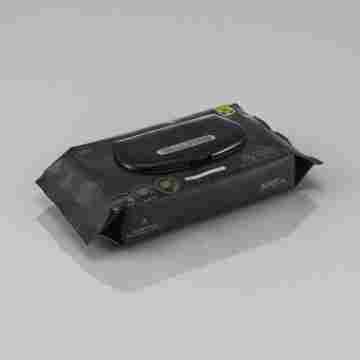
Daily-use wet wipes are accepted on specification, not on category name. Photo: Uniquality.
Wet wipes are purchased twice. The first purchase is conceptual: a buyer decides that a maternity programme, a salon chain, a facility-cleaning contract or a retail daily-use range needs a wipe. The second purchase is technical: that same buyer writes the specification, the commercial terms and the acceptance criteria that decide whether the delivered pallets are accepted or rejected.
This guide is written for importers, distributors, private-label brand owners and procurement teams who buy wet wipes as a project item in light industry and daily-use categories. It uses Uniquality (Zhejiang Uniquality Nursing Products Technology Co., Ltd.) as the reference manufacturer. Uniquality is a China-based manufacturer of wet wipes, dry wipes, baby diapers and other nursing products, established in 1987, whose published profile reports a 1,000,000㎡ factory footprint and export activity to 80+ countries across the USA, EU, SAM, RU and CASA markets.
Problem Definition: Why Correct Products Still Fail Acceptance
A wet wipes dispute rarely begins with a defective wipe. It begins with a purchase order that described a category instead of a specification. The factory then makes a reasonable choice on the buyer's behalf, and the buyer first sees that choice at inspection.
In daily-use and light industry projects, these order lines are the usual source of friction:
- “Wet wipes, 80 pcs/bag” — no substrate grammage, no sheet size, no closure type, no pack material.
- “Baby wipes, mild formula” — no free-from list, no statement of the water source used in the fluid.
- “Flushable wipes” — no substrate dispersibility statement and no market-specific marking clause.
- “Facial wipes, lint-free” — no working definition of lint-free at the inspection stage.
- “Assorted cartons” — no pack count per SKU and no approved reference sample.
Three costs follow. The first is rejection or rework at destination, because the goods matched a category but not the project. The second is unsupported claim risk: a “pure water” or “alcohol-free” positioning that cannot be traced to a written formula declaration is a marketing exposure, not a specification. The third is a hidden cost that never appears on a quotation — re-packing, re-labelling and a second production run are usually paid for in time rather than in invoice lines.
Industry Background: Daily-Use Wipes Are Now Bought by Specification
Grand View Research values the global wet wipes market at USD 27.1 billion in 2022 and USD 30.6 billion in 2026, with a projection of USD 36.6 billion by 2030. The same source reports that personal care wipes accounted for 72.81% of wet wipes market share in 2025. Market totals of this kind are directional rather than precise, because research houses draw the category boundary differently — they are useful for judging the scale of a segment and unreliable as a price benchmark for a single supplier.
Two structural shifts matter more to a buyer than the headline number.
1. Category breadth inside one purchase programme. A single daily-use programme can legitimately need baby wipes, hand & mouth wipes, pure water wipes, facial wipes, flushable wipes, biodegradable wipes, mini wipes and medical wipes. Uniquality’s published wet wipes type listing covers baby, mini, pure water, facial, flushable, biodegradable and medical formats, and the company’s declared application coverage extends to medical, maternal and baby, beauty, home, industrial cleaning and clothing fields. When a buyer consolidates SKUs under fewer suppliers, the term set has to scale across all of those types without being rewritten for each one.
2. Regulation has moved into labelling. Directive (EU) 2019/904 requires wipes containing plastic to carry the ‘Do Not Flush’ marking, a requirement in force since 3 July 2021. A marking requirement is a purchase term, not a design preference: if it is not written into the order, it will not appear on the pack.
Adapting Wet Wipes to the Project Context
Adaptation is the step between “we need wipes” and “we can place an order”. It happens in five layers, and each layer produces one clause later in this guide.
Layer 1 — Project function and operating conditions
Start from what the wipe has to do, not from what the supplier stocks. Uniquality’s published application data describes daily-use projects in three functional groups: personal hygiene care projects, facial cleansing projects and household cleaning projects, with a multi-purpose cleaning and skincare function. The same data fixes the operating conditions that matter for packing: disposable, single-use operation, and storage in a cool and dry place. Where the wipe is bundled into portable hygiene kits or travel care sets, the pack — not the sheet — becomes the binding constraint.
Layer 2 — Product type selection
Once the function is agreed, the product type follows. The declared attributes attached to each daily-use type differ enough that they should be written separately:
- Baby wet wipes and pure water wet wipes — the pack description specifies a mild skin-friendly formula made with EDI purified water, alcohol-free, fragrance-free, fluorescent-free and antiseptic-free, with a weak-acid pH intended to match a baby’s skin.
- Hand & mouth wet wipes — described as designed for cleaning a baby’s mouth and hands, safe and non-toxic, and intended for on-the-go use.
- Facial wet wipes — the published special requirement for facial and personal hygiene work is lint-free, skin-friendly, with customizable size and packaging.
- Flushable wet wipes — made from dispersible non-woven fabric described as breaking down quickly in water, and combined with a gentle cleansing lotion.
- Biodegradable wet wipes — listed as a distinct type and paired in the company’s coverage statement with flushable and degradable non-woven fabrics.
- Medical wet wipes — described as manufactured under sterile conditions and intended for healthcare settings, including equipment surfaces such as stethoscopes and thermometers, and pre- and post-surgery skin cleaning.
- Mini wet wipes — the travel-oriented format, relevant where the project packs wipes into portable kits rather than into a fixed dispenser.
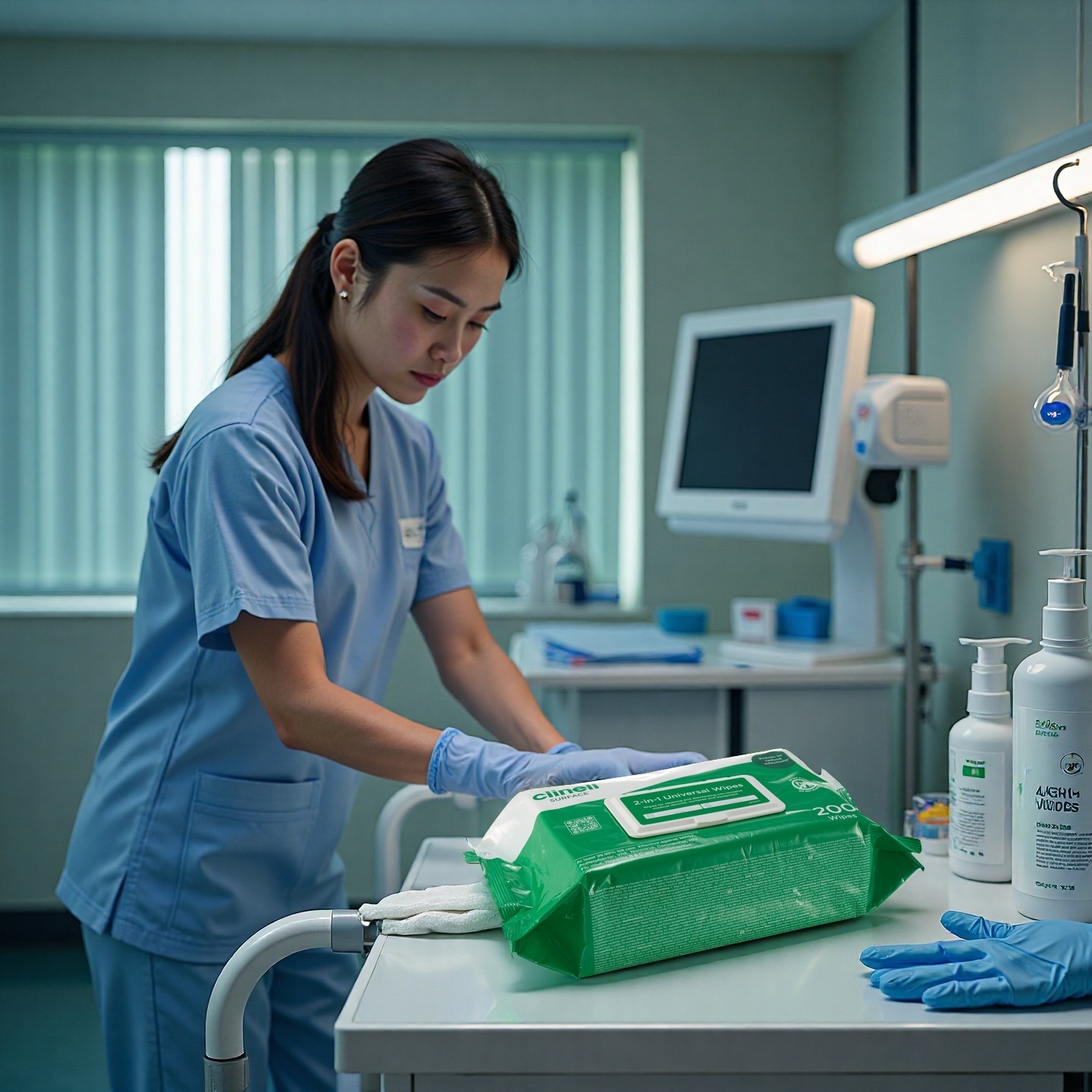
Medical wipes sit on a separate compliance track from daily-use wipes even when the same substrate lines are used. Photo: Uniquality.
Layer 3 — Substrate and sheet format
Substrate is where most “the wipes feel different” complaints originate. Uniquality publishes a nonwoven substrate band of 35 to 70 gsm and a standard sheet size of 15×20 cm, both stated as customizable. The baby and personal-care pack description adds a thickened embossed non-woven fabric with a pearl textured surface, chosen for water-locking, tear resistance and lint-free wiping. A buyer who writes only “nonwoven” has left the entire 35–70 gsm band open.
Layer 4 — Fluid and formula declaration
Formula language is the part of a wet wipes brief most often copied from marketing copy and least often verified. Uniquality states that its process water is EDI purified and that formulas can be built without alcohol, fragrance, fluorescent agents or antiseptics. For a daily-use project, that statement is the anchor: the purchase term should repeat the free-from list exactly, and the acceptance step should confirm that the delivered pack matches the declaration the buyer approved.
Layer 5 — Pack, closure and storage configuration
Pack design decides how the wipe behaves in use. The declared pack configurations are 10 pcs per bag and 80 pcs per bag, both customizable, and the closure is a flip-top resealable lid described as dustproof and moisture-locking, supporting single-sheet dispensing and preventing both drying out and multi-piece extraction. The same source distinguishes a bulk family pack for daily home use from a mini travel pack for outdoor carry. Storage in a cool and dry place is the stated working condition, which is directly connected to closure quality: the lid is what protects the pack between first and last use.
Purchase Terms: Ten Clauses to Write Instead of Assume
The following clauses convert the five adaptation layers into a document a factory, a buyer and a QC team can all read the same way. They are written for a project purchase rather than a spot purchase, and they assume the buyer will attach an approved reference sample.
1. Project context and intended use. State the project type — personal hygiene care, facial cleansing or household cleaning — and where the wipe will be used. This single line resolves most later arguments about whether a complaint is a defect or a mismatch.
2. Product type and category. Name the type exactly as ordered: baby wet wipes, mini wet wipes, pure water wet wipes, facial wet wipes, flushable wet wipes, biodegradable wet wipes or medical wet wipes. Do not allow “assorted” without a per-SKU count.
3. Substrate specification. Write the material and the grammage band. The declared reference point is nonwoven in a 35–70 gsm band, customizable; the order should fix a value or a tolerance inside that band rather than repeat the band itself.
4. Sheet dimensions and texture. Fix the sheet size — 15×20 cm is the published standard and is stated as customizable — and, where relevant, the embossed texture and lint-free requirement.
5. Fluid and formula declaration. List the water source and the free-from set in the same words used in the approved sample documentation. If the project markets the wipe on a “pure water” or “alcohol-free” claim, the term should state that the claim is conditional on the declaration.
6. Pack configuration and closure. Specify pieces per bag (10 or 80 in the published configurations, both customizable), pack material, and the closure type — the flip-top resealable lid described above, or an agreed alternative.
7. Labelling and market marking. Include destination-specific markings. For plastic-containing wipes in the EU, the ‘Do Not Flush’ requirement under Directive (EU) 2019/904 has applied since 3 July 2021.
8. Documentation and certification scope. Uniquality reports eight certifications covering the wet wipes scope: ISO 9001, ISO 14001, ISO 45001, ISO 50001, ISO 22716, ISO 13485, GMPC and SEDEX. Certification portfolios are self-reported by suppliers in general, so the purchase term should name the certificates the buyer requires and request the certificate documents for the specific production scope rather than accept a logo on a brochure.
9. Sampling and approval record. Uniquality’s published profile states a 3–5 day sampling window. The term should make the approved sample the reference for acceptance, and should record which specification version that sample represents.
10. Change control and storage conditions. Any change to substrate, formula, pack count or closure should require re-approval, and the storage condition — a cool and dry place — should be stated in the order so that handling responsibility is unambiguous.

Full-process automated production reduces the number of hand-off points a purchase term has to police. Photo: Uniquality.
Acceptance Criteria: A Seven-Step Verification Sequence
Acceptance is not a single inspection decision. It is a sequence, and each step tests one clause from the purchase order. The sequence below is ordered so that the cheapest checks happen first.

Performance testing and quality verification in the manufacturer’s laboratory support the acceptance steps on substrate and formula. Photo: Uniquality.
Use Cases: Four Daily-Use Contexts and the Terms Each One Needs
Maternity and baby hygiene programme. The binding terms are the formula declaration and the closure. Because the declared baby formula is built on EDI purified water and a free-from set, the acceptance risk is not the sheet but the claim: a delivered batch that cannot be traced to the approved declaration undermines the entire retail listing.
Facial cleansing and beauty counters. Here the binding term is lint-free performance plus size and packaging customization. A salon or counter programme typically orders smaller packs in higher SKU counts, so pack consistency matters as much as sheet quality.
Household cleaning work. Uniquality’s declared coverage includes home and industrial cleaning fields. For these projects the practical terms are pack count, sheet size and closure durability, because the pack is opened and reopened repeatedly through a cleaning shift.
Travel and portable hygiene kits. Where wipes are assembled into portable hygiene kits or travel care sets, mini wet wipes are the operative format and pack dimensions become the acceptance criterion — a pack that does not fit the kit is rejected regardless of wipe quality.
Medical wet wipes sit adjacent to these four contexts but should not be folded into them. They are described as produced under sterile conditions for healthcare settings, and Uniquality’s reported certification set includes ISO 13485 alongside a 100,000-class clean room used in filling. Treat that as a separate documentation track with its own clause set.
Comparison Table: Project Context, Product Type and Acceptance Focus
| Project context | Wet wipes type (published listing) | Specification points to lock | Acceptance focus |
|---|---|---|---|
| Baby and maternity hygiene | Baby wet wipes; pure water wet wipes | Nonwoven 35–70 gsm; 15×20 cm; EDI purified water; alcohol-, fragrance-, fluorescent- and antiseptic-free | Formula declaration and flip-top closure |
| On-the-go infant cleaning | Hand & mouth wet wipes | Skin-friendly, lint-free; small pack format | Sheet integrity in small packs |
| Facial cleansing and beauty | Facial wet wipes | Lint-free; customizable size and packaging | Lint behaviour and pack consistency |
| Toilet and bathroom use | Flushable wet wipes | Dispersible non-woven fabric; ‘Do Not Flush’ marking where the wipe contains plastic | Marking presence and substrate statement |
| Household cleaning work | Covered by declared home and industrial cleaning application coverage | Pack count; sheet size; closure durability | Repeated open/close performance |
| Travel and portable kits | Mini wet wipes | Pack dimensions; seal; kit fit | Physical fit and seal integrity |
| Healthcare settings | Medical wet wipes | Sterile production conditions; ISO 13485 in the reported certification set | Documentation set |
Table compiled from Uniquality’s published product specification, application data and certification statements, plus Directive (EU) 2019/904.
FAQ
Do flushable wet wipes sold in the EU need a specific marking written into the purchase terms?
Yes, where the wipe contains plastic. Directive (EU) 2019/904 requires wipes containing plastic to display the ‘Do Not Flush’ marking, and the requirement has been in force since 3 July 2021. The marking belongs in the labelling clause of the order, not in a design brief. Separately, the substrate clause should describe the wipe as made from dispersible non-woven fabric so that the “flushable” positioning rests on a written product statement.
Can one wet wipes manufacturer cover baby, facial and household daily-use categories in a single programme?
Uniquality’s published wet wipes type listing covers baby wet wipes, mini wet wipes, pure water wet wipes, facial wet wipes, flushable wet wipes, biodegradable wet wipes and medical wet wipes, and its declared application coverage extends to medical, maternal and baby, beauty, home, industrial cleaning and clothing fields. The manufacturing base behind that coverage is reported as a 100,000-class clean room with full-process automated wet wipe systems. Category coverage does not mean identical terms: each type still needs its own substrate, formula and marking clauses.
What order quantity should a buyer plan for, and how is the MOQ agreed?
The published product specification does not state a fixed MOQ figure. Order quantity is tied to the pack configuration — 10 pcs per bag and 80 pcs per bag are the declared formats, both customizable — and to the chosen sheet size, grammage and formula. The practical approach is to fix the specification first, then request the MOQ in writing for that exact specification, and to confirm whether the MOQ applies per SKU or per combined order. Quoting an MOQ before the specification is settled usually produces a number that does not survive the next revision.
How long does a wet wipes sample take before an order is placed?
Uniquality’s published profile states a 3–5 day sampling window. The sample itself should be treated as a document, not a gift: record which specification version it represents, keep it sealed, and reference it in the acceptance clause so that the delivered goods are compared against something the buyer actually approved.
What should be agreed about delivery and lead time in the purchase terms?
The published materials referenced in this guide do not state a standard lead time, so lead time should be fixed per order after the specification and pack format are approved, and written into the purchase order alongside the acceptance criteria rather than agreed verbally. Buyers who need to move from specification to a confirmed quotation can request a sample and quotation from Uniquality with the five adaptation layers already completed.
Conclusion
Wet wipes do not fail projects because the category is wrong. They fail because the project context was never converted into a term, and because the term was never converted into a check. The sequence in this guide is deliberately unglamorous: fix the function, name the type, write the substrate and sheet format, declare the formula, lock the pack and closure — then accept on the seven steps rather than on impressions.
For light industry and daily-use buyers, that discipline has a second benefit. Once the five adaptation layers and the ten clauses exist as a template, a new SKU in the same programme — a mini pack for a travel kit, a facial wipe for a counter, a flushable SKU for a bathroom range — can be added by editing one or two clauses instead of rebuilding a specification. The template becomes the buying asset, and the supplier relationship stops being renegotiated from zero on every order.
Next step: sample, specification, quotation
Uniquality (Zhejiang Uniquality Nursing Products Technology Co., Ltd.) supplies wet wipes for daily-use, personal care and household projects, with a published sampling window of 3–5 days and a nonwoven substrate band of 35–70 gsm. Send the five adaptation layers and your pack format, and request a matched sample.
Website: www.kingsafe.com | Email: michelleyu@kingsafe.com
Tel / WhatsApp: +86 187-0582-0808 | Contact: Michelle
Product catalogue and company brochure: download the PDF brochure

Uniquality headquarters: one of the company’s eight production campuses. Photo: Uniquality.
Have Questions or Need More Details?
Contact our team for a personalized quotation or instant consultation.
Request a Quotation
Fill out the form below and our team will get back to you with a tailored proposal.
WhatsApp Direct Chat
Prefer to chat in real-time? Message us on WhatsApp for instant assistance & quick answers.
- Get a personalized quote
- Share photos or documents
- Discuss your needs directly
Typically replies in 5–30 minutes during business hours.