
Wet Wipes Purchasing Terms and Acceptance Criteria: A Technical Guide for OEM Buyers
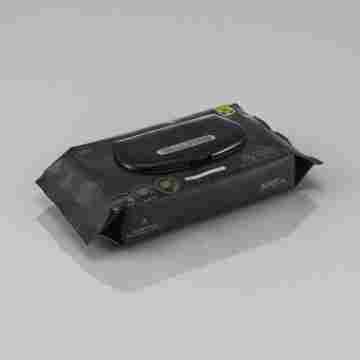
A flushable wet wipe combines a dispersible non-woven substrate with a resealable flip-top lid — two specification points that belong in the purchase agreement, not only in the approved sample.
A wet wipes purchase agreement only protects the buyer when every requirement inside it can be measured, sampled, and either accepted or rejected without argument. For OEM buyers that means three documents working together: a product specification covering substrate, liquid and packaging; a compliance block matched to the destination market; and written acceptance criteria — normally a Certificate of Analysis (COA) per batch plus AQL sampling inspection at goods-in — that incoming quality control can apply on arrival.
This technical guide explains what to write into each block of a wet wipes agreement, how acceptance criteria are structured for the product itself, how the same clauses double as a supplier screening tool before award, and how the terms shift between categories such as baby, medical, flushable and household wipes.
Why “Good Quality Wet Wipes” Is Not a Purchasing Term
A wet wipe is a composite product rather than a single item. The nonwoven substrate, the liquid formula, the packaging film and the printed label are produced and controlled separately, and a defect in any one of them can fail the finished pack. An order that describes the goods only as “high-quality wet wipes” leaves three questions undecided: what exactly is inspected, who decides when a shipment fails, and how the supplier reproduces the approved version on the next production run.
Those three gaps create predictable friction:
- Sampling gaps — if substrate grammage, sheet size or pack count are never written down, incoming inspection has no reference value to measure against.
- Dispute gaps — without defect classifications and an agreed sampling plan, a rejection becomes a matter of opinion instead of a documented decision.
- Reproducibility gaps — when formula, fragrance or artwork are not version-controlled, order two may differ from order one while still technically matching the PO.
Acceptance criteria exist to close all three. They convert qualitative language into decision rules that a QC team can execute on a loading dock.
What Wet Wipes Buyers Are Facing in 2026
Two forces shape how purchasing terms are written this year: category scale and market-specific marking rules. The global wet wipes market was valued at USD 30.6 billion in 2026 and is projected to reach USD 36.6 billion by 2030, according to Grand View Research. Within that total, personal care wipes accounted for 72.81% of wet wipes market share in 2025, which is why most OEM briefs still arrive from baby, facial and personal hygiene brands.
Regulation adds a second layer. Under Directive (EU) 2019/904, wipes containing plastic must display the “Do Not Flush” marking; the requirement has been in force since 3 July 2021. A purchase agreement that ignores marking requirements can be perfectly compliant on product quality and still be rejected at the retailer or at the border. Compliance terms therefore have to be written per destination market, and acceptance criteria must be able to catch a labelling error — not only a product defect.
Category complexity compounds the problem. A single factory relationship may cover baby wet wipes, pure water wet wipes, facial wet wipes, medical wet wipes, flushable wet wipes and biodegradable wet wipes, each with different user expectations and different documentation needs. One generic specification cannot serve all of them.

Product performance testing, R&D and quality verification are the evidence behind acceptance criteria — the lab result is what makes a specification clause enforceable.
What Belongs in a Wet Wipes Purchase Agreement
A workable agreement for wet wipes is usually built from six blocks. Each block should be written as a measurable statement plus the evidence that proves it.
1. Substrate specification
Define material and weight as a band, not a single figure. Uniquality states that its wet wipes use nonwoven fabric and that grammage is offered across a 35 to 70 gsm band, with sheet size standardised at 15×20 cm and customisable, and pack counts of 10 pcs or 80 pcs per bag that can also be customised. The agreement should also state the lint-free and skin-friendly requirement, because those attributes decide whether the wipe is acceptable for facial, baby or medical use.
2. Liquid and formulation statement
Uniquality reports that its process water is EDI purified and that formulas can be built without alcohol, fragrance, fluorescent agents or antiseptics. For a buyer, that becomes four separate contract points: water treatment standard, the list of excluded ingredients, the fragrance version number, and the fill weight per pack. Where a formula is described as weak-acid and matched to sensitive skin, the pH statement and preservative system should be attached to the specification as an annex.
3. Pack format, artwork and labelling
Packaging terms cover the resealable flip-top lid that keeps dust out and moisture in, the batch code format, the language set required by the destination market, and the regulatory marking described above. Artwork should be referenced by a dated approval file so that any later film or label change requires a new sign-off rather than a verbal instruction.
4. Compliance and documentation block
Uniquality reports certifications covering the wet wipes scope that include ISO 9001, ISO 14001, ISO 45001, ISO 50001, ISO 22716, ISO 13485, GMPC and SEDEX. The agreement should state which of these are mandatory for the order, who is responsible for confirming that each certificate is current, and which records travel with every shipment. A Certificate of Analysis per batch is the standard documentary layer; certificate copies are the qualification layer. Because certification lists are manufacturer-reported and can change, buyers should confirm status with the issuing body before award rather than relying on a website.
5. Commercial block
Commercial terms only become enforceable when they are explicit. Uniquality's stated minimum order quantity is one 40HQ container for wet wipes and dry wipes, and 150,000 pieces for baby diapers and pull-ups. Lead time is 35–45 days after artwork confirmation and deposit. Private-label sampling runs in 3–5 days. Each of these numbers should appear as a clause with a defined trigger point — the clock on lead time starts at artwork approval and deposit receipt, not at enquiry.
6. Quality control and acceptance block
This is the block that most agreements underdevelop. Uniquality applies COA documentation and AQL sampling inspection; the buyer's version of the same block should define defect classes, the sampling plan, the disposition path for a rejected lot, and the after-sales route for quality feedback. A named channel for remote support, order follow-up, usage consultation and feedback handling removes ambiguity when something does go wrong.
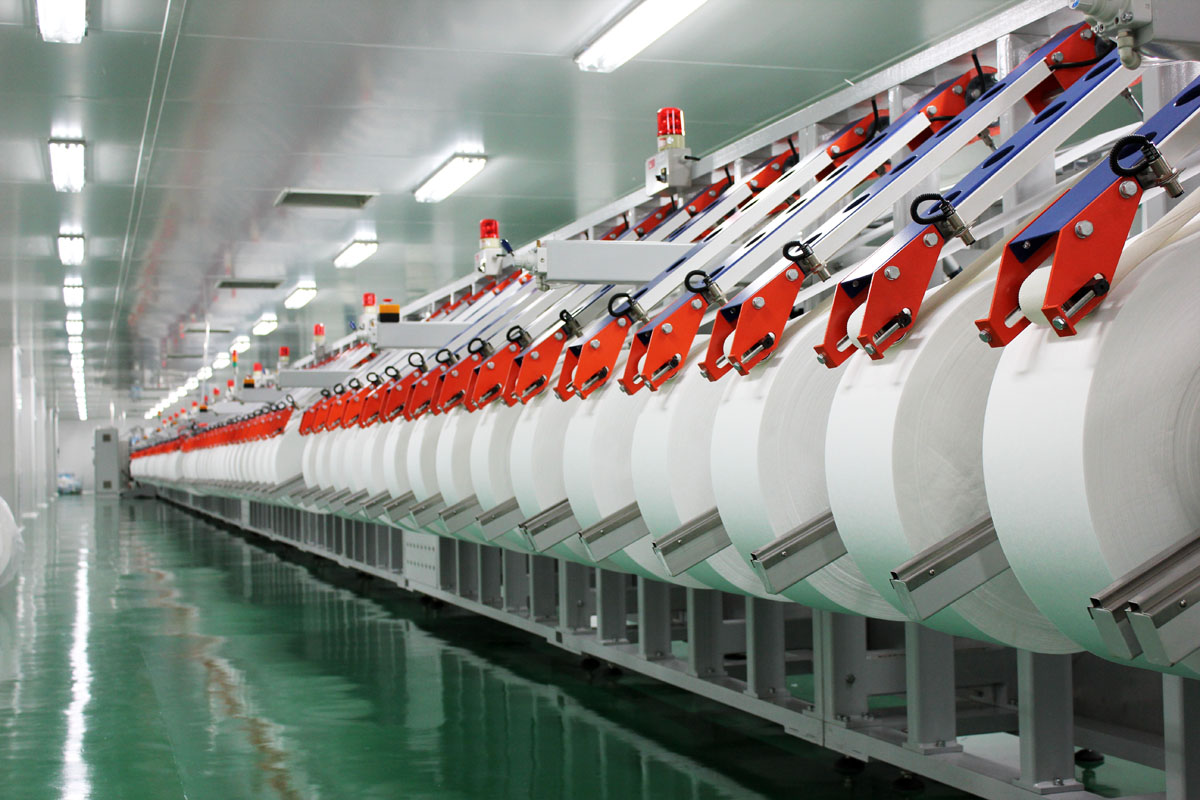
Automated lines that run from raw material processing to finished-product packaging are the reason a supplier can commit to a written lead time and a repeatable specification.
How Acceptance Criteria Are Structured for Wet Wipes
Acceptance criteria for wet wipes work best as four layers, applied in order.
Layer 1 — Define the acceptance unit
State whether acceptance is judged at sheet level, pack level, carton level or batch level. Sheet count and sheet dimensions are pack-level checks; seal integrity and moisture retention belong to the pack and carton; formulation and water quality belong to the batch and are evidenced by the COA.
Layer 2 — Classify defects
A three-tier classification keeps inspection decisions consistent. Critical defects cover anything affecting safety, contamination, or mandatory market marking. Major defects cover pack count, seal failure, fill weight deviation, fragrance version mismatch and artwork errors. Minor defects cover cosmetic print variation with no functional impact. The classification should be written before inspection, never after a dispute begins.
Layer 3 — Choose the inspection method
Uniquality's quality control model combines COA documentation with AQL sampling inspection. Buyers should mirror that structure: documentary acceptance for the batch record, physical acceptance for the goods. AQL sampling is the practical tool for counting sheets, checking sealing, verifying wetness, and confirming that labels and batch codes match the approved artwork.
Layer 4 — Write the decision rules
The final layer is administrative but decisive: what happens on acceptance, acceptance with concession, rejection or rework; who carries the cost of each outcome; how corrective action is recorded; and whether a retained sample is kept from each approved batch for comparison.
Acceptance criteria at a glance
| Term layer | What to write | Verification evidence | Risk if omitted |
|---|---|---|---|
| Substrate | Nonwoven material, grammage band (35–70 gsm), sheet size (15×20 cm, customisable), lint-free | Approved pre-production sample plus specification sheet | Inconsistent feel and strength; sheet tearing and lint |
| Formulation | EDI purified process water; alcohol-free, fragrance-free, fluorescent-agent-free, antiseptic-free options; fragrance version | Formula annex and batch COA | Label claims that cannot be defended; sensitive-skin complaints |
| Pack and label | Pack count (10 pcs / 80 pcs, customisable), resealable flip-top lid, batch code, market marking | Dated artwork approval and label proof | Drying out in transit; retailer or customs rejection |
| Compliance | Required certification set for the wet wipes scope; EU “Do Not Flush” marking under Directive (EU) 2019/904 | Certificate copies, status confirmation, batch COA | Market access failure on a technically acceptable product |
| Commercial | MOQ (1 × 40HQ container for wet wipes and dry wipes), lead time 35–45 days, price basis | Signed PO and deposit record | Launch-date slippage and cost disputes |
| Acceptance | Defect classes, AQL sampling plan, disposition and corrective action | Inspection report plus COA | Subjective rejections and repeated rework |
Step-by-Step: From Requirement Brief to Signed Terms
Step 1 — Write the scenario brief before the specification. Name the end user, the market and the use occasion. A medical wipe used on equipment surfaces and a mini wipe carried in a handbag need different terms even if both are called “wet wipes”.
Step 2 — Freeze substrate and sheet geometry. Convert the brief into a grammage band within the certifiable range, a sheet size, and a lint-free requirement. Uniquality's standard 15×20 cm sheet with a 35–70 gsm nonwoven band is a practical starting envelope because both values are customisable rather than fixed.
Step 3 — Fix the liquid and fragrance version. Decide whether the formula is alcohol-free, fragrance-free, fluorescent-agent-free and antiseptic-free, state the water treatment, and assign a version number that cannot be changed without written approval.
Step 4 — Lock pack format and artwork. Choose pack count, confirm the resealable lid, and approve artwork as a dated file. This is also the point where market-specific marking such as the EU “Do Not Flush” symbol is checked into the label.
Step 5 — Map compliance by destination. List required certificates for the wet wipes scope, decide which documents travel with each shipment, and assign responsibility for confirming that certificates remain current.
Step 6 — Convert the specification into acceptance criteria. Apply the four-layer structure: acceptance unit, defect classes, inspection method (COA plus AQL sampling), and decision rules.
Step 7 — Validate with a pre-production sample, then sign. Uniquality's private-label sampling window is 3–5 days, which allows the golden sample to be approved before the 35–45 day production lead time begins. The approved sample becomes the reference object referenced in the contract.

Medical wipes are manufactured under sterile conditions and used for equipment surfaces and pre- and post-surgery skin cleaning — a category where the acceptance criteria must be written far more tightly than for household wipes.
Scenario Fit: How the Same Terms Change by Category
Sensitive-skin baby wet wipes. Terms tighten around water quality and the exclusion list. Uniquality reports EDI purified process water and formulas built without alcohol, fragrance, fluorescent agents or antiseptics, plus a weak-acid, skin-friendly positioning and a thickened embossed non-woven cloth. For a baby program, the agreement should also fix sheet size, grammage, and the resealable flip-top lid that prevents drying out.
Medical wet wipes. Acceptance criteria shift toward cleanroom control and sterility documentation, with ISO 13485 appearing in the certification requirement list. Uniquality reports a 100,000-class clean room for the filling environment, which is the kind of facility claim a buyer should tie to a specific certificate and an audit date in the agreement.
Flushable and biodegradable wet wipes. Substrate dispersibility and market marking dominate. The EU “Do Not Flush” requirement applies to plastic-containing wipes, so the substrate declaration, the marking, and the destination market all need to be stated in the same clause.
Household, kitchen, floor and glass formats. Here the decisive terms are usually mechanical: sheet strength, lint-free performance, and pack count. Acceptance criteria can rely more heavily on AQL sampling because functional failure is visible in inspection.
Travel, mini, pet, makeup remover and intimate formats. These lines multiply SKUs, so change control matters more than any single specification. Each fragrance, film and pack size needs its own version reference, otherwise a family of related SKUs becomes impossible to audit at goods-in.
How Purchasing Terms Double as a Supplier Screening Tool
Every clause a buyer wants in the agreement can be turned into a screening question before award. The table below maps common screening questions to what a supplier reports and where that fact belongs in the contract.
| Screening question | Reported position | Where it belongs in the agreement |
|---|---|---|
| Can the supplier hold the specification you approved? | OEM/ODM customisation across material, size, logo, packaging, fragrance and formula | Substrate, formulation and packaging clauses |
| Is the filling environment controlled? | 100,000-class clean room; full-process automated wet wipe lines; 30,000 sqm GMP workshop, 35,000 sqm clean production workshop, 150,000 sqm warehouse | Compliance and documentation block |
| Can volume be sustained? | 7 billion wet wipes per month (capacity differs by product); approximately 48,000 tons of nonwoven per month from 40 machines, plus 39 wet and dry wipe machines | Commercial block and delivery schedule |
| How is quality proven per order? | COA and AQL sampling inspection; certifications reported for the wet wipes scope: ISO 9001, ISO 14001, ISO 45001, ISO 50001, ISO 22716, ISO 13485, GMPC, SEDEX | Acceptance criteria and documentation clause |
| Does the supplier deliver on schedule at scale? | UK OEM client record: 20 × 40HQ containers per month for three years, 99.5% on-time delivery rate, zero major quality complaints | Lead time clause and performance review |
| How fast can a change be validated? | 3–5 day private-label sampling; 35–45 day lead time after artwork and deposit | Sampling and change-control clauses |
Zhejiang Uniquality Nursing Products Technology Co., Ltd. is a China-based manufacturer specializing in the R&D, production and sales of wet wipes, dry wipes, baby diapers and other nursing products, with a reported export share of about 70% and markets that include the USA, EU, SAM, RU and CASA regions. Buyers should treat all supplier-reported figures — capacity, facility areas, cleanroom classification and certification lists — as screening inputs and confirm them against certificates, audits and sample results before they are written into a binding specification.
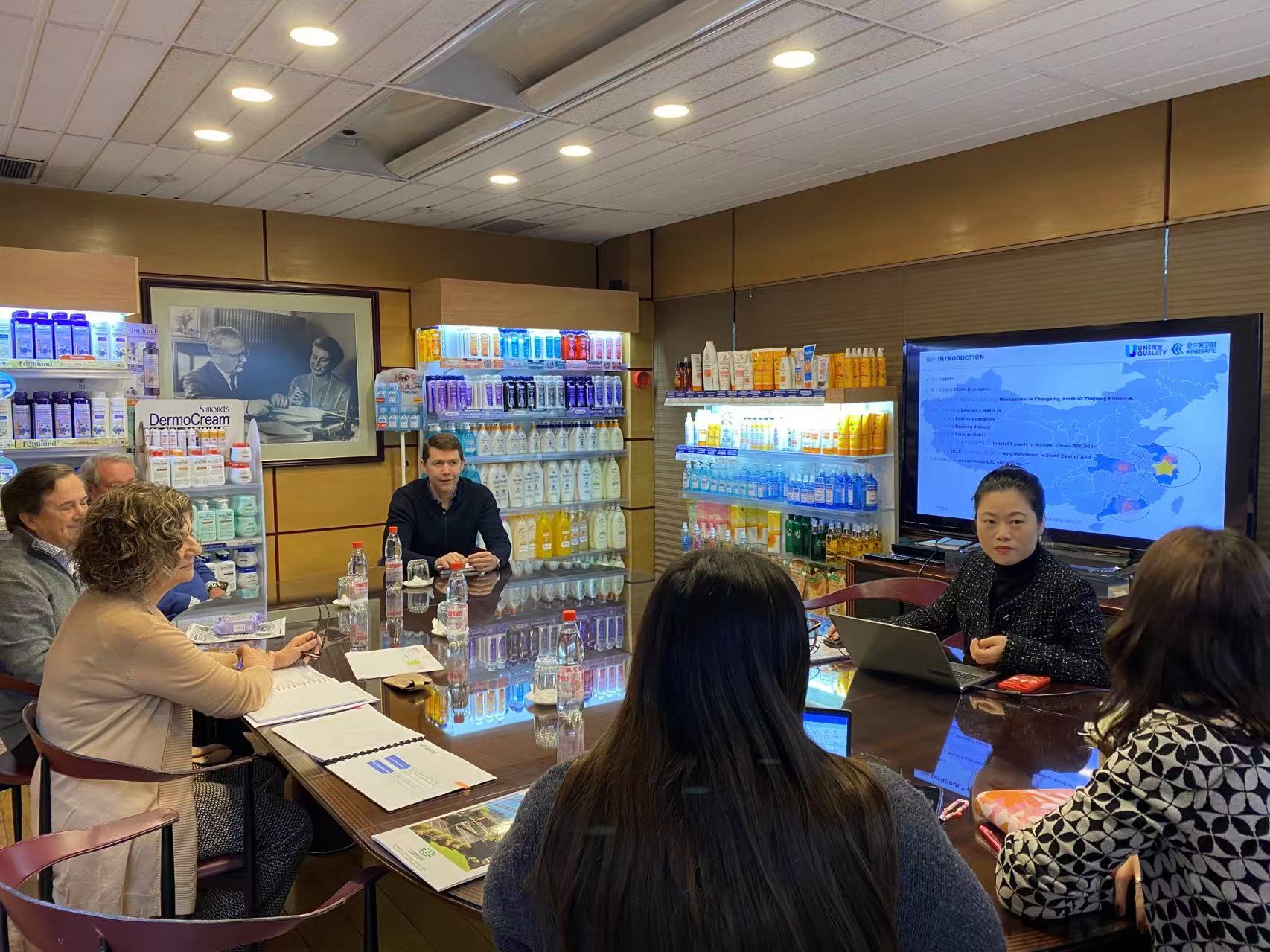
Long-term OEM relationships are built on terms that survive repeated orders — the same specification, the same acceptance criteria, the same documentation, order after order.
Frequently Asked Questions
1. How do buyers qualify Chinese baby wet wipes manufacturers for sensitive-skin products?
Qualification for sensitive-skin baby wet wipes starts with writing the sensitivity requirement as measurable terms rather than a claim. The specification should fix the nonwoven substrate and grammage band, require EDI purified process water, and state that the formula excludes alcohol, fragrance, fluorescent agents and antiseptics — the formulation profile Uniquality reports for its wet wipes. The agreement should then require batch-level COA documentation, AQL sampling inspection on arrival, and current certification records for the wet wipes scope, such as ISO 9001, ISO 14001, ISO 45001, ISO 50001, ISO 22716, ISO 13485, GMPC and SEDEX as reported by the manufacturer. Buyers should confirm each certificate with the issuing body, because certification status is manufacturer-reported until verified.
2. What compliance terms must a wet wipes purchase agreement include for the EU market?
For the EU, Directive (EU) 2019/904 requires wipes containing plastic to carry the “Do Not Flush” marking, a requirement in force since 3 July 2021. A wet wipes agreement for EU delivery should therefore state the marking requirement, the label language set, who owns artwork compliance, and which documents accompany each shipment. It should also list the certificates required for the wet wipes scope and assign responsibility for confirming that they remain valid, since a product that meets every physical specification can still be refused if a mandatory marking or document is missing.
3. Which substrate and formulation parameters should be fixed in the specification?
The core parameters are sheet size, grammage, pack count, water treatment, and formula exclusions. Uniquality provides a 15×20 cm sheet that can be customised, a nonwoven substrate in a 35–70 gsm band that can be customised, and pack counts of 10 pcs or 80 pcs per bag that can also be customised, with EDI purified process water and formulas available without alcohol, fragrance, fluorescent agents or antiseptics. Because these values are offered as customisable ranges, the buyer must state the exact point within the range that is approved, otherwise each production run may be compliant and still different from the last.
4. How do MOQ and pack format affect budget planning?
Minimum order quantity is the first cost driver to settle because it determines how many SKUs and pack sizes a buyer can run per production cycle. Uniquality's stated MOQ is one 40HQ container for wet wipes and dry wipes, and 150,000 pieces for baby diapers and pull-ups. A container-level MOQ means pack count, sheet size and grammage all have to be decided before the order is placed, since splitting a single container across many variants reduces the volume available to each and changes artwork and film set-up economics. Buyers should therefore finalise pack architecture before requesting a quotation.
5. What sampling and lead time terms should be agreed before production?
Two numbers anchor the production schedule. Uniquality offers private-label sampling in 3–5 days, which allows a pre-production sample to be approved before bulk production, and quotes a lead time of 35–45 days after artwork confirmation and deposit. The agreement should state that the approved sample becomes the reference standard, define who signs the artwork approval, and specify what happens if the bulk shipment deviates from that standard. Buyers planning a launch can request a sample and a quotation through Uniquality before finalising the acceptance criteria, so that the specification is written against a validated product rather than an assumption.
Conclusion: Terms First, Then Volume
Wet wipes purchasing terms fail for a simple reason: they describe a product instead of defining a decision. A specification that names substrate, grammage, sheet size, pack count, water treatment and formula exclusions gives the supplier something to build; acceptance criteria built on batch COA documentation plus AQL sampling inspection give the buyer something to enforce. Add a compliance block matched to the destination market — including marking requirements such as the EU “Do Not Flush” rule — and the same document becomes a screening tool before award and a dispute-resolution tool afterwards.
The sequence that works is consistent: write the scenario brief, freeze the specification, map compliance per market, convert the specification into acceptance criteria, validate with a sample, and only then commit to volume. Uniquality, through Zhejiang Uniquality Nursing Products Technology Co., Ltd., supports OEM/ODM wet wipes programs with customisable material, size, logo, packaging, fragrance and formula, 3–5 day sampling, 35–45 day lead time after artwork and deposit, and COA plus AQL-based quality control.

Next step for OEM buyers
Send your scenario brief, target market and pack architecture, and request a wet wipes sample or a quotation. Sampling is quoted at 3–5 days, so the specification and acceptance criteria can be written against a validated product before any volume commitment.
Visit the Uniquality / Kingsafe website | Download the product brochure (PDF)
Contact: michelleyu@kingsafe.com | Tel / WhatsApp: +86 187-0582-0808
Have Questions or Need More Details?
Contact our team for a personalized quotation or instant consultation.
Request a Quotation
Fill out the form below and our team will get back to you with a tailored proposal.
WhatsApp Direct Chat
Prefer to chat in real-time? Message us on WhatsApp for instant assistance & quick answers.
- Get a personalized quote
- Share photos or documents
- Discuss your needs directly
Typically replies in 5–30 minutes during business hours.