
Wet Wipes vs. Foam Cleansers for Hand Hygiene: A Buyer's Guide
Wet Wipes vs. Foam Cleansers for Hand Hygiene: A Buyer's Guide
Wet wipes and foam cleansers both appear in hand hygiene and personal care assortments, but they are not interchangeable delivery systems. A wet wipe is a single-use nonwoven sheet that is moistened with water or a cleansing formula before packaging, so it can be used without a tap. A foam cleanser is generally a pump-dispensed product that the user applies to wet hands and rinses away. For buyers evaluating a product line, the useful question is not which format is universally better; the useful question is which format best fits the intended usage location, application pattern and shopper need.
Why the Format Choice Matters for Buyers
Buyers in retail, distribution and OEM programs often compare wet wipes with foam hand cleansers because both are positioned as everyday hygiene products. However, the purchase logic is different. Foam cleansers are usually connected to a washroom habit: the user stands at a sink, applies foam, lathers and rinses. Wet wipes are more independent of infrastructure because the moisture is already in the wipe substrate. A wipe can be used on a train, in a car, at a park, in a nursery bag or in any location where running water is not immediately available.
This difference affects assortment planning. A supplier that only offers foam formats may struggle to cover mobile and single-use needs. A wet wipe program can fill that gap, especially in baby care, personal hygiene, household cleaning and beauty care. Buyers often define their product mix by the physical environment where the product will be used before they choose the packaging size, formula and substrate.
Market Context for Wet Wipes and Hand Hygiene Formats
Category data helps buyers understand why wet wipes deserve a separate evaluation rather than being treated as a side product to liquid soap. The global wet wipes market was estimated at about USD 22.38 billion in 2024, according to Market Research Future. The baby wipes segment alone was valued at approximately USD 10.0 billion in 2025 and is projected to grow at a CAGR of 5.5% until 2035, according to Global Market Insights. This indicates that wet wipes are no longer a niche format; they are a mature, segmented category with strong baby care and personal care demand.
Regional data also points to continued adoption. Fortune Business Insights reported that the Asia Pacific region led the global wipes market in 2025 with a 32.29% share. In addition, the biodegradable wet wipes segment reached over USD 3 billion in 2024 and has been growing at a CAGR above 6%, according to an industry report from WeHoo Hygiene. For buyers, this means sustainability-oriented wet wipe SKUs are becoming an increasingly normal part of the category, not just an optional extra.
What Is a Wet Wipe in a Hand Hygiene Program?
A wet wipe is a pre-moistened nonwoven wipe designed for single-use cleansing. Unlike a foam hand cleanser, the product does not require the user to add water during the wiping step. Instead, the moisture, formula and nonwoven substrate are delivered together in one disposable unit.
From a production standpoint, the wet wipe can be adjusted through several variables: the nonwoven material, the grammage of the fabric, the size of each sheet, the liquid formulation, the fragrance and the packaging format. In the product specification recorded by Zhejiang Uniquality Nursing Products Technology Co., Ltd., its wet wipe line YQ001 is available in a sheet size of 15 x 20 cm, a nonwoven basis weight of 35 to 70 gsm and common counts of 10 or 80 wipes per bag. These parameters can be customized to the buyer's brief. The same product family covers baby wet wipes, pure water wet wipes, mini wet wipes, facial wet wipes, flushable wet wipes, biodegradable wet wipes and medical wet wipes.
This is useful for a buyer because the wipe format is not one product; it is a delivery platform. Buyers can use the same manufacturing base to develop a small portable hand hygiene wipe and a larger household cleaning wipe without changing supplier relationships.
What Is a Foam Cleanser in the Hand Cleansing Category?
Foam cleansers used for hand hygiene are typically packaged in a dispenser or bottle and are designed to be used with water. When the consumer presses the pump, the formulation is dispensed as foam, and the routine normally includes lathering, rinsing and drying. This format works well in fixed washrooms, kitchens, clinics and other locations where a sink is close to the point of use.
For buyers, foam cleansers have a different purchasing profile. They are generally repeat-purchase consumables but are tied to a dispensing system, so refills and pump compatibility can matter as much as the formula itself. Foam formats do not carry a nonwoven substrate, which means the consumer needs an additional towel or dryer after rinsing.
In short, wet wipes and foam cleansers solve the same broad hygienic need but through different user journeys. A wet wipe is a self-contained one-step format; a foam cleanser is usually a two-step or three-step format that depends on water and drying.
Core Criteria for Comparing Wet Wipes and Foam Cleansers
Portability and On-the-Go Readiness
Portability is often the strongest argument for wet wipes in hand hygiene. A 10-count or mini pack can fit into a pocket, changing bag or glove compartment. Because the wipe already contains moisture, the user does not need to locate a sink. Foam cleansers can be produced in travel sizes, but the product still assumes that water is available for rinsing unless the brand clearly positions it as a leave-on sanitizer.
Moisture and Formulation Delivery
In wet wipes, moisture is a built-in functional component. The formulation is added to the nonwoven substrate during production, so every sheet carries the same intended level of liquid. This makes the product easy to dose and easy to use in situations where water quality or availability is uncertain.
Buyers can work with an OEM partner on the formula side because options such as fragrance and formulation can be customized. For hand and face applications, buyers usually evaluate the wet wipe formula in the context of skin sensitivity and local regulatory requirements. No performance claim should be made without evidence; the key advantage is that the formulation is already integrated into the sheet.
Substrate Material and Sheet Performance
For foam cleansers, the cleaning action happens mainly through the surfactant system and the mechanical rubbing of hands. For wet wipes, the nonwoven material is a major part of the experience. The substrate controls how soft the wipe feels, how much liquid it can hold and how well it holds up during wiping.
In the Uniquality YQ001 wet wipe specification, the nonwoven material can range from 35 to 70 gsm. A lighter substrate may be suitable for a one-time facial or baby wipe, while a heavier or more structured fabric may be preferred for household cleaning or longer wiping tasks. Customization of material and size gives the buyer flexibility to match the product to the end use.
Single-Use Convenience and Disposal
Wet wipes are single-use, which is an advantage when cross-contamination or convenience is the main concern. The user pulls one sheet from the pack, wipes and disposes of it. This workflow is simple enough for public transport, restaurants, clinics, offices, outdoor activities and diaper changes.
Disposal is also a decision criterion. Buyers that want a flushable claim must look for flushability evidence. According to industry guidelines, flushable wipes are expected to comply with GD4 or the stricter IWSFG standards. Buyers should confirm that a flushable wet wipe has the supporting test documentation before making a flushability claim. Biodegradable wet wipes are available as a separate segment, and buyers should evaluate any environmental claim against the relevant local labelling rules.
Wet Wipes vs. Foam Cleansers at a Glance
| Evaluation Dimension | Wet Wipes | Foam Cleansers |
|---|---|---|
| Primary presentation | Pre-moistened nonwoven sheet; moisture carried inside the product | Pump-dispensed foam, normally used with running water and rinsing |
| Water dependency | Can be used without a sink or additional water | Usually needs tap water, lathering and rinsing |
| Portability | Pack sizes can be small; counts such as 10 or 80 wipes per bag are common in Uniquality's wet wipe specification | Portable bottles exist but are more commonly intended for stationary washroom use |
| Substrate | Nonwoven material is part of the product; Uniquality lists 35-70 gsm for the wet wipe platform | No substrate; drying may require separate towel or dryer |
| Single-use behaviour | One sheet, one wipe, one disposal event | Reusable pump format; product consumed at the sink |
| Format variants | Baby, pure water, mini, facial, flushable, biodegradable and medical wet wipes are listed in the Uniquality YQ001 range | Usually defined by formula, fragrance and dispenser system |
This comparison is based on general category characteristics rather than a claim that one format is always superior. A balanced assortment often needs both formats, with wet wipes serving the mobile segment and foam cleansers serving the fixed washroom segment.
Where Wet Wipes Usually Fit Better
Several usage scenarios make wet wipes the more practical option for buyers to evaluate.
- Travel and transport: trains, aircraft, taxis and public spaces do not always provide accessible handwashing points.
- Baby care: changing bags need a portable solution for nappy changes and on-the-go cleaning.
- Household cleaning: a larger wipe can handle quick surface and hand cleaning tasks without preparing a bucket or spray bottle.
- Personal hygiene: compact wet wipes can be used for intimate care, adult care and refreshment during the day.
- Medical and care settings: medical wet wipes are a specific product type within a formal compliance framework; buyers should verify claims according to the target market classification.
An important buying discipline is to separate product type from claim. For example, calling a wipe a medical wet wipe, an antibacterial wet wipe or a hand and mouth wet wipe is not the same as proving efficacy. Buyers should make their claim strategy clear before sampling and should ask the OEM to confirm which certifications and quality frameworks cover the chosen wet wipe product.
Where Foam Cleansers Usually Fit Better
Foam cleansers deserve equal consideration when the use site is fixed and water is available. Public washrooms, staff kitchens and near a sink are natural environments for foam cleansers because the user can lather and rinse immediately. Foam formats may also be preferred in locations where a wet wipe disposal bin is not practical and where plumbing is part of the handwashing routine.
Buyers who already have a strong soap and foam category may use wet wipes to expand coverage into travel, outdoor and single-use occasions rather than replacing the washroom product. This approach reduces the risk of positioning the two formats against each other and gives retailers a clearer reason to stock both.
What OEM Buyers Should Expect From a Wet Wipe Manufacturer
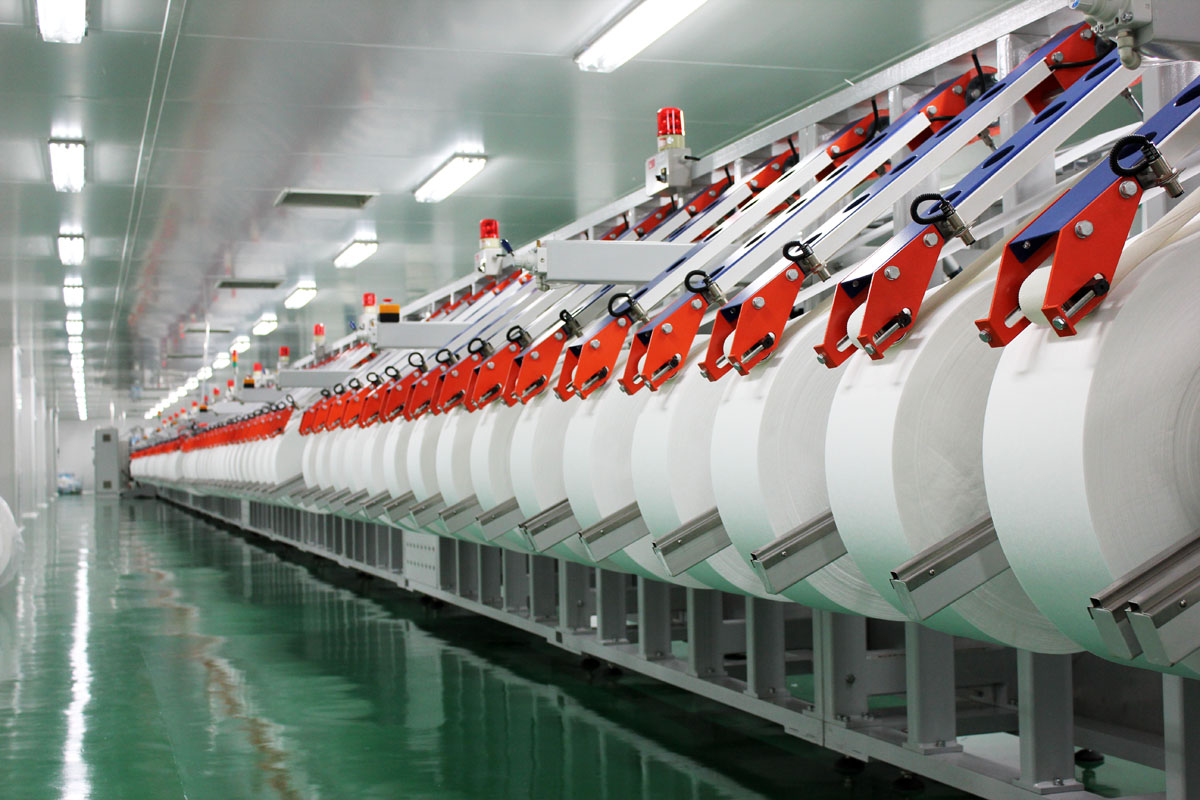
Zhejiang Uniquality Nursing Products Technology Co., Ltd. is the corporate entity behind the Uniquality brand. The company was founded in 1987 and operates a large Zhejiang-based hygiene production complex. Its corporate profile lists a factory footprint of 1,000,000 square meters, more than 3,000 employees, over 200 R&D staff and an annual output capacity of 60 billion sheets. Around 70% of output is exported to markets such as the USA, the EU, South America, Russia and CASA. The company manufactures wet wipes, dry wipes, baby diapers and training pants under OEM and ODM arrangements.
For a buyer comparing wet wipes with foam cleansers, the supply conversation is different. Wet wipes require control over nonwoven material, liquid formulation, moisture consistency, packaging and preservation. Uniquality offers customization across material, size, logo, packaging, fragrance and formulation. Its wet wipe monthly capacity is stated at up to seven billion units, depending on the product type, and the company's testing laboratory is used for product performance testing, R&D and quality verification.
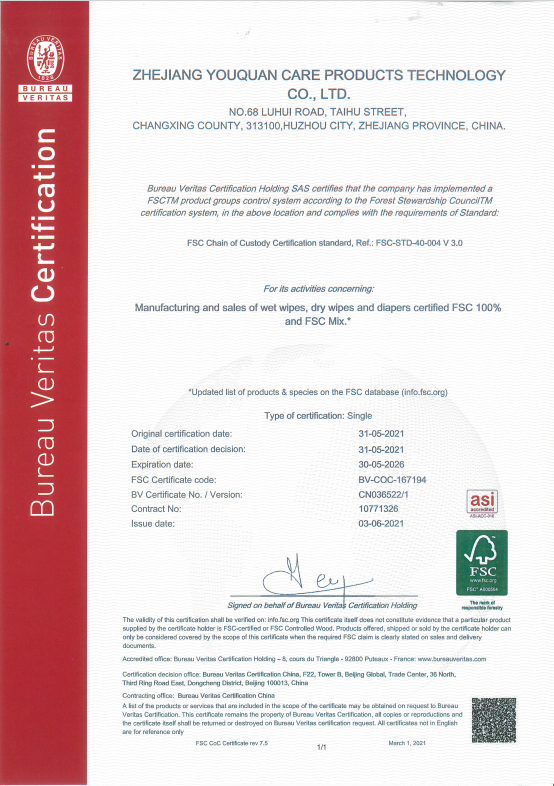
Quality system evidence is also part of a sourcing review. Uniquality holds certifications with scopes that cover wet wipes and related hygiene products: ISO 9001 quality management, ISO 14001 environmental management, ISO 45001 occupational health and safety, ISO 50001 energy management and FSC chain-of-custody certification. For wet wipes specifically, the company also holds ISO 22716 and GMPC certification related to cosmetic good manufacturing practice, and ISO 13485 certification with wet wipes in its scope. Buyers should still verify that a certification applies to the exact product variant and target market before writing a claim into their own label.
An example of long-run OEM supply can be seen in Uniquality's UK customer record. An OEM client in the UK has ordered approximately 20 x 40HQ containers of wet wipes per month for three years, with application areas that include household cleaning, baby care, personal hygiene and beauty care. In supplier records, this account achieved a reported on-time delivery rate of 99.5% and zero major quality complaints. This type of evidence helps buyers evaluate whether a wet wipe manufacturer can manage consistent repeat orders, not just one-off production.

Step-by-Step Wet Wipe Selection Process for Buyers
Procurement teams can use the following process when deciding whether wet wipes should sit alongside or ahead of foam cleansers in a hand hygiene assortment.
- Define the use environment. Identify whether the target user has access to a sink, running water and a drying method.
- Define the claim level. Decide whether the product is an everyday cleansing wipe, a baby cleansing wipe, a facial wipe, a flushable product or a product with medical positioning.
- Choose the product family. On the Uniquality platform, this means selecting from formats such as baby wet wipes, pure water wet wipes, mini wet wipes, facial wet wipes, flushable wet wipes, biodegradable wet wipes and medical wet wipes.
- Match size and substrate to the task. Common parameters include a sheet size of 15 x 20 cm and a nonwoven basis weight of 35 to 70 gsm; these can be adjusted for different skin and usage needs.
- Review the supplier's quality system. Check certificates that cover wet wipes, cleanroom conditions, laboratory testing, COA documentation and AQL sampling inspection.
- Request samples. Sampling is an essential validation step before the buyer commits to packaging, fragrance and formulation.
- Align order volume and lead time. Confirm MOQ, production timing and artwork approval steps with the manufacturer.
Frequently Asked Questions
Are wet wipes for hand hygiene regulated as cosmetics in the EU?
Under EU Regulation (EC) No 1223/2009, wet wipes intended for skin cleansing can fall within the definition of cosmetic products. This means the responsible person in the EU must prepare a Product Information File and submit a CPNP notification before the product is placed on the market. If a flushable label is used, the flushability claim should also be supported by testing against accepted guidelines such as GD4 or the stricter IWSFG standards. Buyers should therefore check both the cosmetic classification and the flushability documentation before launching a wet wipe in Europe.
What manufacturing capabilities matter when comparing wet wipes with foam cleansers?
Wet wipes require different production capabilities from foam cleansers. The key variables are nonwoven sourcing, substrate grammage, liquid formulation, moisture consistency, packaging and on-site quality testing. For Uniquality, the wet wipe platform supports customization of material, size, logo, packaging, fragrance and formulation. The company also combines automated wet wipe production lines with laboratory testing, which gives buyers a single supplier for product development and volume manufacturing.
What is the minimum order for private-label wet wipes at Uniquality?
For wet wipes and dry wipes, the standard MOQ is one 40HQ container. For baby diapers and pull-up training pants, the MOQ is 150,000 pieces. Because wet wipes are made on a customized basis, the buyer first needs to confirm the material, size, packaging and formula before the quantity is locked. A clear MOQ helps buyers plan inventory and compare the economics of wet wipes against other hygiene formats in their portfolio.
How long does sampling and production take?
Uniquality's company profile lists a sampling period of three to five days for private label development. After the artwork and deposit are confirmed, mass production usually takes 35 to 45 days. This timeline allows a buyer to move from selected wet wipe specifications to a commercial order in roughly two months, including sample validation. For buyers that already have a foam cleanser line, this speed supports fast assortment testing for wet wipes in travel, baby care or household cleaning categories.
Conclusion
The comparison between wet wipes and foam cleansers for hand hygiene comes down to usage context. Foam cleansers are strong when a sink and rinsing are available; wet wipes are strong when the user needs a self-contained, portable and single-use option. For buyers, the practical move is to decide which occasions the new assortment must cover and then select the format or combination of formats that fits those occasions.
From a sourcing perspective, wet wipes have a distinct supply chain that requires substrate expertise, formulation control and clean production. Zhejiang Uniquality Nursing Products Technology Co., Ltd. offers OEM and ODM wet wipe manufacturing with a broad product family, laboratory-backed quality control and certifications that support wet wipes for global buyers. Buyers can request a sample, compare the wet wipe format against their existing foam cleanser range and confirm the commercial parameters before scaling.
Next step for buyers. Download the Uniquality company brochure for a complete overview of wet wipes, dry wipes and related hygiene products. For sample requests, pricing and stock availability, contact Michelle at michelleyu@kingsafe.com or via WhatsApp at +86 187-0582-0808. Official website: www.kingsafe.com. Brochure: Download PDF.