
What Counts as a Dry Wipe? A Category Primer for Buyers
A dry wipe is a disposable sheet made from nonwoven fabric, supplied with no added liquid, and used either dry or wetted by the person using it. That single definition separates it from a wet wipe, which is pre-saturated inside the pack, and from a laundered towel, which is washed and reused. Everything else buyers argue about — thickness, sheet size, pack format, whether a product is called a facial towel or a dry wipe — sits inside that frame.
Why the Term “Dry Wipe” Resists a Clean Definition
Supplier catalogues present Flow Pack Dry Wipes, Boxed Dry Wipes, Family Pack Dry Wipes, Disposable Dry Bath Towels, Compressed Dry Towels, Facial Towels and Industrial Dry Wipes as though they were separate product families. Structurally, most of them are one product: a nonwoven web, slit to width, cut to length, folded, and packed without liquid. The label usually names the pack format or the intended end use, not a different manufacturing route.
The ambiguity becomes expensive at quotation stage. Two suppliers can both quote “dry wipes, 15 × 20 cm” and still be describing different products, because one sheet may be 35 gsm and the other 70 gsm, or one bag may hold 10 sheets while the other holds 80. In Chinese sourcing documents the terms 无纺布 (nonwoven) and 棉柔巾 (cotton-soft towel) are used alongside the English wording, and neither maps to a single fixed specification.
Three tests settle most of the confusion. First, is any liquid added inside the pack? If yes, the item is a wet wipe. Second, is the sheet washed and reused? If yes, it is a textile towel rather than a disposable. Third, is the substrate a nonwoven web instead of woven cotton? If yes, the item belongs to the dry wipe family whatever the carton says.
The third test deserves emphasis because softness is a property of web structure and finishing, not proof of fibre content. A sheet can feel cotton-like and still be entirely nonwoven — which is exactly why the specification, not the product name, has to carry the definition.
The Industry Background Behind the Category
Dry wipes are not a niche side-line of the wet wipes business. Global Market Insights values the global dry wipes segment at USD 14.3 billion in 2025, measured as revenue from sales of dry nonwoven wipes excluding wet wipes (Global Market Insights, Wipes Market Size & Share, 2025).
Trade classification influences landed cost, so buyers should confirm it rather than assume it. U.S. Customs and Border Protection classified wood pulp spunlace nonwoven wipes from China under HTSUS 5603.92.0090 at a duty rate of “Free” in ruling N244603 (2014). That ruling covers a specific construction; a spunbond polypropylene or airlaid product may fall elsewhere and needs its own confirmation.
Regulatory baselines have also moved. China’s mandatory standard GB 15979-2024, Hygienic Requirements for Disposable Sanitary Products, took effect on 1 July 2025 and replaced the 2002 edition. For buyers sourcing from China, the useful question is whether the supplier can demonstrate conformity to the current edition rather than the superseded one.
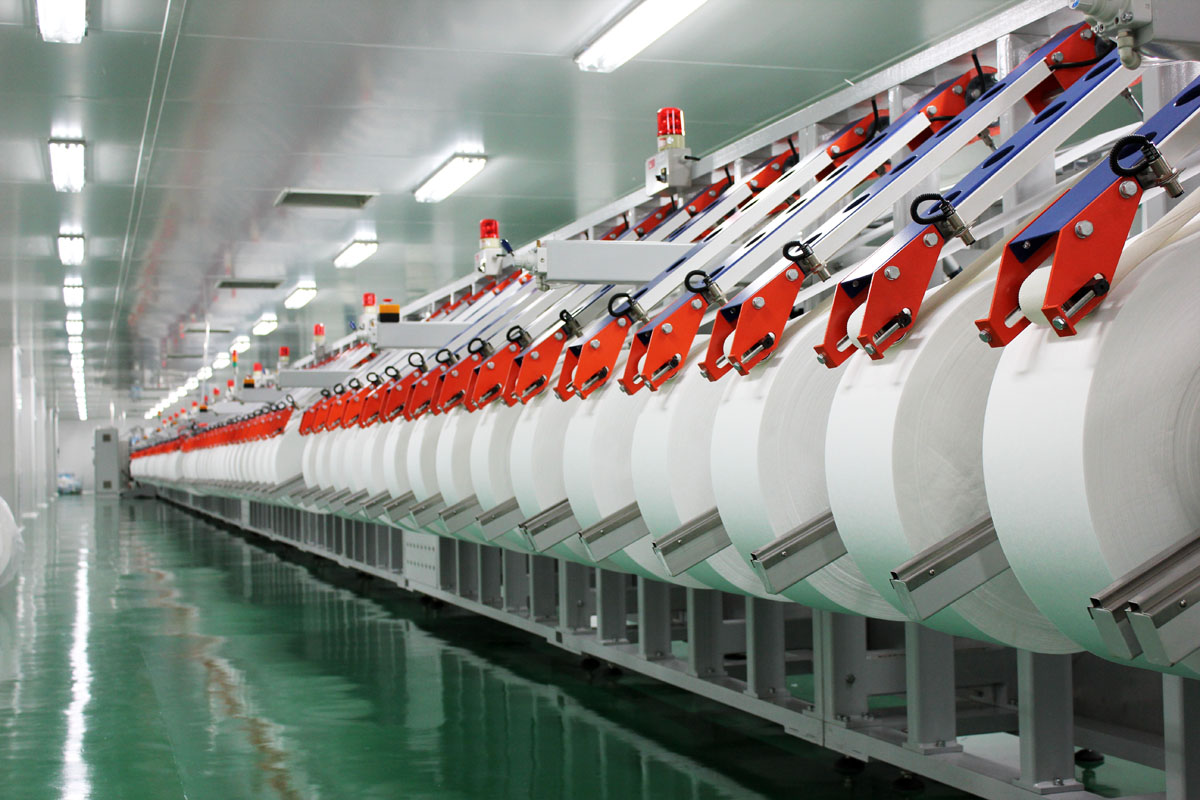
Capacity at the top of the market is concentrated. Nonwovens Industry reported annual sales of approximately USD 930 million for Zhejiang Kingsafe, the parent company of Uniquality (Nonwovens Industry, December 2024). Zhejiang Uniquality Nursing Products Technology Co., Ltd., based in Zhejiang, China, manufactures dry wipes, wet wipes, baby diapers and training pants, and reports a 1,000,000 ㎡ facility with 3,000+ employees and annual output of 60 billion sheets.
The Five Attributes That Actually Define a Dry Wipe
Any dry wipe can be reduced to five attributes. Two suppliers are only comparable when all five have been agreed in writing.
1. The Nonwoven Substrate
Dry wipes are converted from nonwoven rolls, and the web type drives most downstream behaviour. Published manufacturer guidance in the category lists spunbond polypropylene at roughly 15–50 gsm for medical drapes and industrial wipes, and airlaid pulp at roughly 50–120 gsm for baby wipes and household cleaning (Zhanwang Group product guidance). The Uniquality YQ002 dry wipe uses a nonwoven substrate in a 35–70 gsm band, and both the material and the weight can be customized.
Substrate choice is also where lint behaviour is decided. The Uniquality application data lists lint-free and skin-friendly performance as the special requirements for personal care and cleaning projects, which is a substrate-and-finishing question rather than a packaging one.
2. Basis Weight, Expressed as a Range
Basis weight is the measurable variable behind labels such as Thick Dry Wipes, Ultra Soft Dry Wipes or Absorbent Dry Wipes. A stated band of 35–70 gsm means the buyer selects a position inside that range for a given SKU; it does not mean every sheet in the programme is the same weight. Reading GSM as a range rather than a single number prevents one of the most common specification mismatches in OEM dry wipe projects.
3. Sheet Size and Sheet Count
The YQ002 baseline is a 15 × 20 cm sheet, customizable, supplied at 10 pcs per bag or 80 pcs per bag, also customizable. Size and count interact: an extra-large sheet described in product documentation as covering the whole face in a single piece serves a different purpose from a small sheet intended for spot wiping, and the pack count has to reflect that intended use rather than merely fill the bag.
4. Pack Format
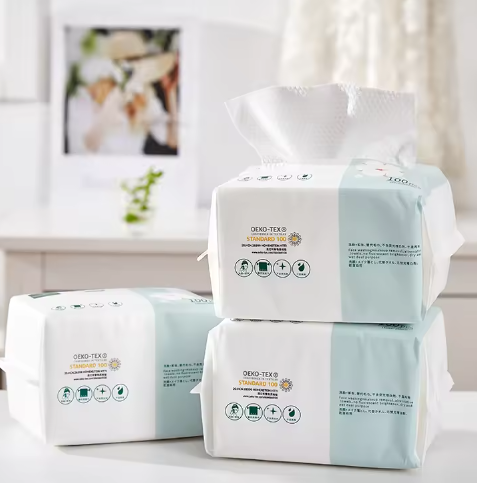
Pack format is where most of the commercial naming originates — soft pack, boxed, flow pack, family pack, portable. A pop-up pull-out box with a dust-proof lid dispenses one sheet per pull and, in the manufacturer’s description, prevents leftover towels from becoming damp or contaminated, which makes it suitable for a bathroom counter or a desk. A soft pack or a disposable pack serves channels where shelf space and unit cost dominate instead.
5. Dry-Only Formulation and Wetting Behaviour
The defining formulation point is zero added liquid. The same sheet works as a dry wipe directly, or becomes a wet wipe once the user soaks it. Where wetting is part of the intended use, the application data for this category lists pure water as the matched input. That is the practical reason a dry wipe programme is not simply a wet wipe programme with the water removed: the substrate must perform in both states.
Reading a Dry Wipe Specification: A Six-Step Breakdown
The following sequence converts a catalogue page into a comparable specification. It applies equally to a flow pack enquiry and to an industrial cleansing dry wipe enquiry.
- Step 1 — Confirm the substrate and the surface requirement. Identify the web type and state whether lint-free performance is mandatory. For personal care and cleaning projects lint-free and skin-friendly behaviour is listed as a special requirement, and for industrial use the acceptable lint level differs.
- Step 2 — Record GSM as a band. Write down the range, for example 35–70 gsm, plus the target weight for the specific SKU. Do not accept a single figure that the supplier cannot repeat across production runs.
- Step 3 — Reconcile sheet size with pack count. A 15 × 20 cm sheet at 10 pcs per bag and the same sheet at 80 pcs per bag are two different retail propositions, and both are legitimate as long as they are stated.
- Step 4 — Match the pack format to the sales channel. Boxed and pop-up formats suit counter and desk placement; soft pack and flow pack suit high-volume retail and travel; portable packs suit short trips, business travel, camping and rail journeys.
- Step 5 — Check the certification scope, not just the logo. A certificate is only meaningful if dry wipes appear in its scope. Uniquality’s ISO 9001:2015 certificate, number 01326Q0078R102 issued by GAC and valid from 2026-04-11 to 2029-04-10, covers wet wipes, dry wipes, baby diaper and training pants. The company’s CE certificate, by contrast, is scoped to baby diaper and training pants, so it is not evidence for a dry wipe line.
- Step 6 — Validate with a sample before the purchase order. Specification on paper and behaviour in hand diverge most often on softness, tear resistance and lint. Sampling is the cheapest point to find that out.
Where Each Format Fits: Use Cases
The Uniquality dry wipe range is positioned across the personal care industry, health and beauty, maternity and baby, pet supplies, and household use. Country references in the application data include the Philippines, Russia, the UAE, the United States, Chile and Mexico, and the stated working condition is a cool, dry place with single-use, disposable operation.
Facial and Personal Care
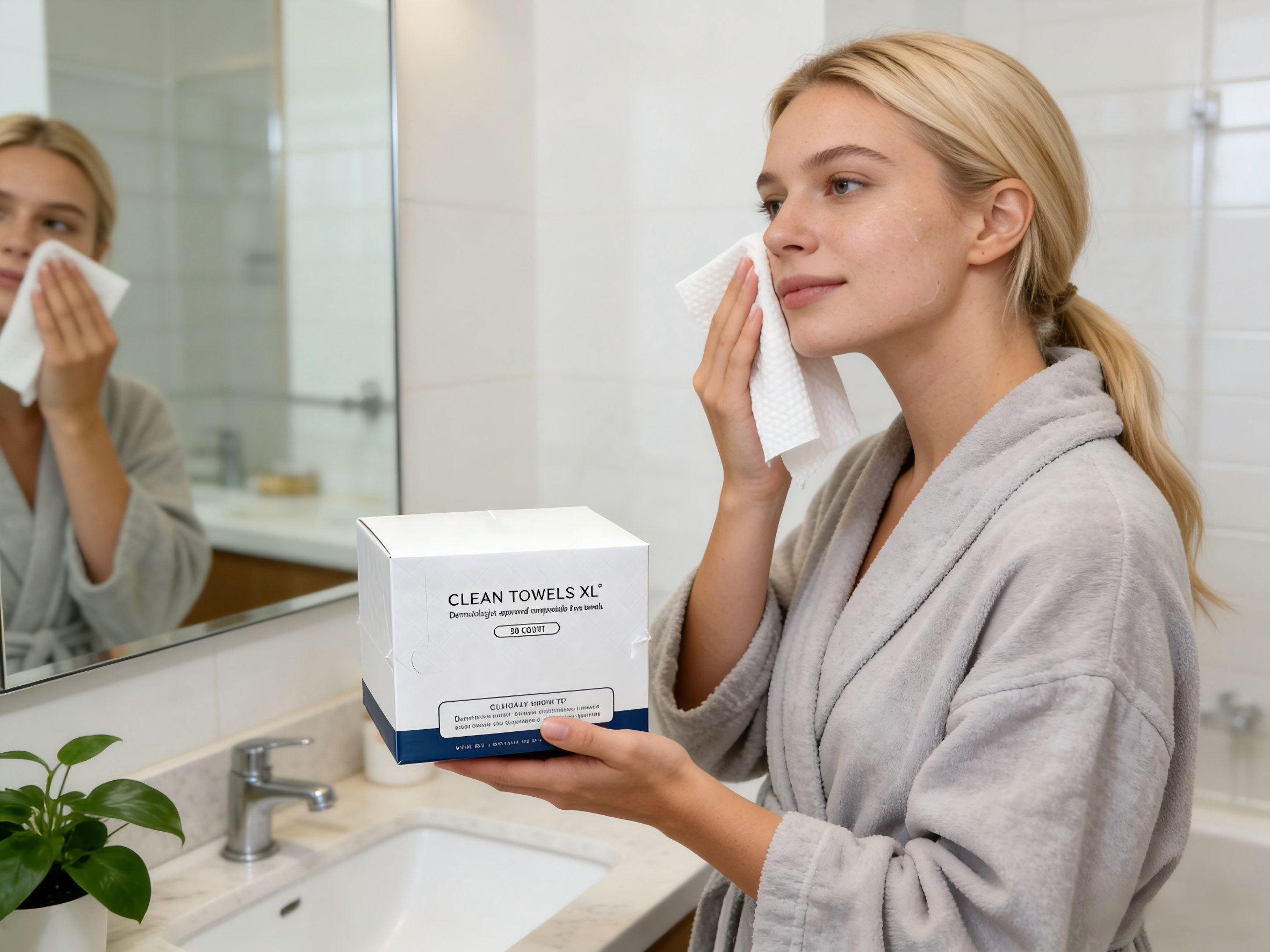
In bathroom use the dry wipe replaces a traditional towel for daily face washing and makeup removal: dry for patting the face, damp for removing cosmetics. The stated rationale is hygiene — a disposable sheet avoids the reuse cycle of a cloth towel. An extra-large sheet format is designed to cover the whole face in one piece.
Baby and Maternity
The same construction is described as gentle enough for wiping a baby’s face and hands and for cleaning up food spills, with the sealed box keeping sheets clean and easy to store between bedroom and washroom.
Household Cleaning
After facial use, the sheet can be redirected to sink water stains, kitchen grease and desk dust, then discarded — which reduces cleaning workload rather than adding a separate cleaning product to the cupboard.
Travel and Portable Use
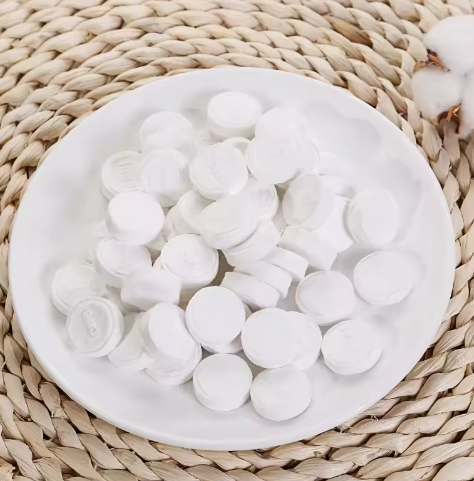
Pocket-sized packs are positioned as a hygienic substitute for unsterilised hotel towels for face, body and shoe cleaning on short trips, business travel, camping and rail journeys.
Pet and Industrial Cleaning
Pet supplies appear in the stated industry list, and industrial cleansing dry wipes follow the same nonwoven logic at heavier basis weights: the published material guidance links spunbond polypropylene at 15–50 gsm to industrial wipes and medical drapes, where strength and low lint matter more than softness.
Material Families Compared
The table below sets out what published guidance says about each material family, alongside the baseline specification of the YQ002 dry wipe. It compares material routes, not brands, and it is not a ranking.
| Material family | Basis weight guidance | End uses named in the same guidance | Implication for a dry wipe specification |
|---|---|---|---|
| Spunbond polypropylene | Approx. 15–50 gsm | Medical drapes, industrial wipes | Suits strength-led and low-lint industrial applications more than softness-led facial use |
| Airlaid pulp | Approx. 50–120 gsm | Baby wipes, household cleaning | Suits absorbency-led applications at the heavier end of the band |
| Nonwoven substrate, YQ002 dry wipe | 35–70 gsm, customizable | Personal care, health and beauty, maternity and baby, pet supplies, household | A mid-band range that spans facial, baby and household formats within one material route |
Sources: Zhanwang Group published material guidance; Uniquality YQ002 product specification. Ranges are supplier-published guidance, not independent laboratory results.
What a Complete Dry Wipe Specification Looks Like
The YQ002 dry wipe shows how the five attributes combine into a single, quotable specification. Every field below is customizable, which means the quotation is only valid against a confirmed configuration.
| Parameter | Baseline offering | Customizable |
|---|---|---|
| Product model | YQ002, disposable dry wipe | — |
| Sheet size | 15 × 20 cm | Yes |
| Material | Nonwoven | Yes |
| Basis weight | 35–70 gsm | Yes |
| Sheets per bag | 10 pcs or 80 pcs | Yes |
| Packaging | Soft pack or disposable pack | Yes |
Beyond the sheet itself, OEM and ODM programmes at Uniquality cover material, size, logo, packaging, fragrance and formula. Quality control is documented through COA and AQL sampling inspection, and the stated monthly capacity is 7 billion units for wet wipes, with capacity differing by product line.

Sustained supply is the practical test of any specification. One UK-based OEM customer has ordered 20 × 40HQ containers per month for three years across household cleaning, baby care, personal hygiene and beauty care applications, recording an on-time delivery rate of 99.5% with zero major quality complaints.
Frequently Asked Questions
Which certifications should a dry wipe supplier be able to show?
Look for certificates whose stated scope names dry wipes. Zhejiang Uniquality Nursing Products Technology Co., Ltd. holds ISO 9001:2015, certificate 01326Q0078R102 issued by GAC and valid 2026-04-11 to 2029-04-10, with a scope covering wet wipes, dry wipes, baby diaper and training pants. ISO 14001:2015 (01326E0075R101) and ISO 45001:2018 (01326S0066R101) share the same scope and validity window, and ISO 50001:2018 / GB/T 23331-2020 (01326En0008R201) is valid 2026-03-09 to 2029-03-08 with dry wipes included. SEDEX membership is registered under ZAA600079586. The manufacturing facility operates a 100,000-class clean room. Buyers should also confirm conformity to China’s GB 15979-2024, in force since 1 July 2025, and check that any CE certificate actually covers the product being purchased.
Can dry wipes be customized in size, weight and packaging?
Yes. The YQ002 dry wipe is offered at 15 × 20 cm, nonwoven 35–70 gsm, at 10 pcs or 80 pcs per bag, in soft pack or disposable packaging, and each of those fields is listed as customizable. OEM and ODM services extend to material, size, logo, packaging, fragrance and formula. Production runs on automated converting and packaging lines with COA and AQL sampling inspection, and stated monthly capacity is 7 billion units for wet wipes, with capacity differing according to product type.
What determines the cost of a dry wipe order?
Because substrate, basis weight, sheet size, sheet count and pack format are all customizable, the quotation is built on the confirmed configuration rather than on a generic list price. Changing from a 35 gsm sheet to a 70 gsm sheet, or from 10 pcs to 80 pcs per bag, changes the material input and the pack, so the specification has to be fixed before pricing is meaningful. The minimum order quantity for dry wipes is one 40HQ container.
Can I evaluate samples before placing an order?
Sampling is part of the standard private label service, with a stated turnaround of 3–5 days. Samples are the practical way to verify the two attributes that paper specifications describe poorly: softness and lint behaviour. A sample request should state the intended end use, the target GSM, the sheet size and the pack format, so the sample matches the specification that will later be ordered.
What is the lead time once an order is confirmed?
Lead time is 35–45 days after artwork and deposit are confirmed, so artwork approval sits on the critical path alongside the specification sign-off. The minimum order quantity for dry wipes is one 40HQ container, and a UK-based OEM customer currently takes 20 × 40HQ containers per month on a three-year relationship with a 99.5% on-time delivery rate. Buyers who want a specification reviewed against their own market can start a conversation with the Uniquality team or request a sample before committing to a container volume.
Conclusion
A dry wipe is defined by five attributes, not by the word on the carton: a nonwoven substrate, a stated basis weight band, a sheet size and count, a pack format, and a dry-only formulation that may or may not be wetted at the point of use. Once those five are written down, the long list of category names collapses into a manageable set of comparable specifications, and the definitions that matter at quotation stage become visible — including which certificate scopes actually cover dry wipes and which do not.
The category context supports the same discipline. A USD 14.3 billion global segment in 2025, a defined tariff classification under HTSUS 5603.92.0090 for wood pulp spunlace, and China’s GB 15979-2024 in force since 1 July 2025 all point in one direction: dry wipes are a specified product, not a generic one. Buyers who define the category through parameters rather than labels get comparable quotes, fewer sample rounds, and a specification that survives from the first container to the twentieth.
Share your target GSM, sheet size, pack count and market, and Uniquality will match the specification to a sample and a quotation.
Download the product brochure | www.kingsafe.com
Have Questions or Need More Details?
Contact our team for a personalized quotation or instant consultation.
Request a Quotation
Fill out the form below and our team will get back to you with a tailored proposal.
WhatsApp Direct Chat
Prefer to chat in real-time? Message us on WhatsApp for instant assistance & quick answers.
- Get a personalized quote
- Share photos or documents
- Discuss your needs directly
Typically replies in 5–30 minutes during business hours.