
Freeze-Dried Durian Export Compliance: Storage and Labeling Essentials
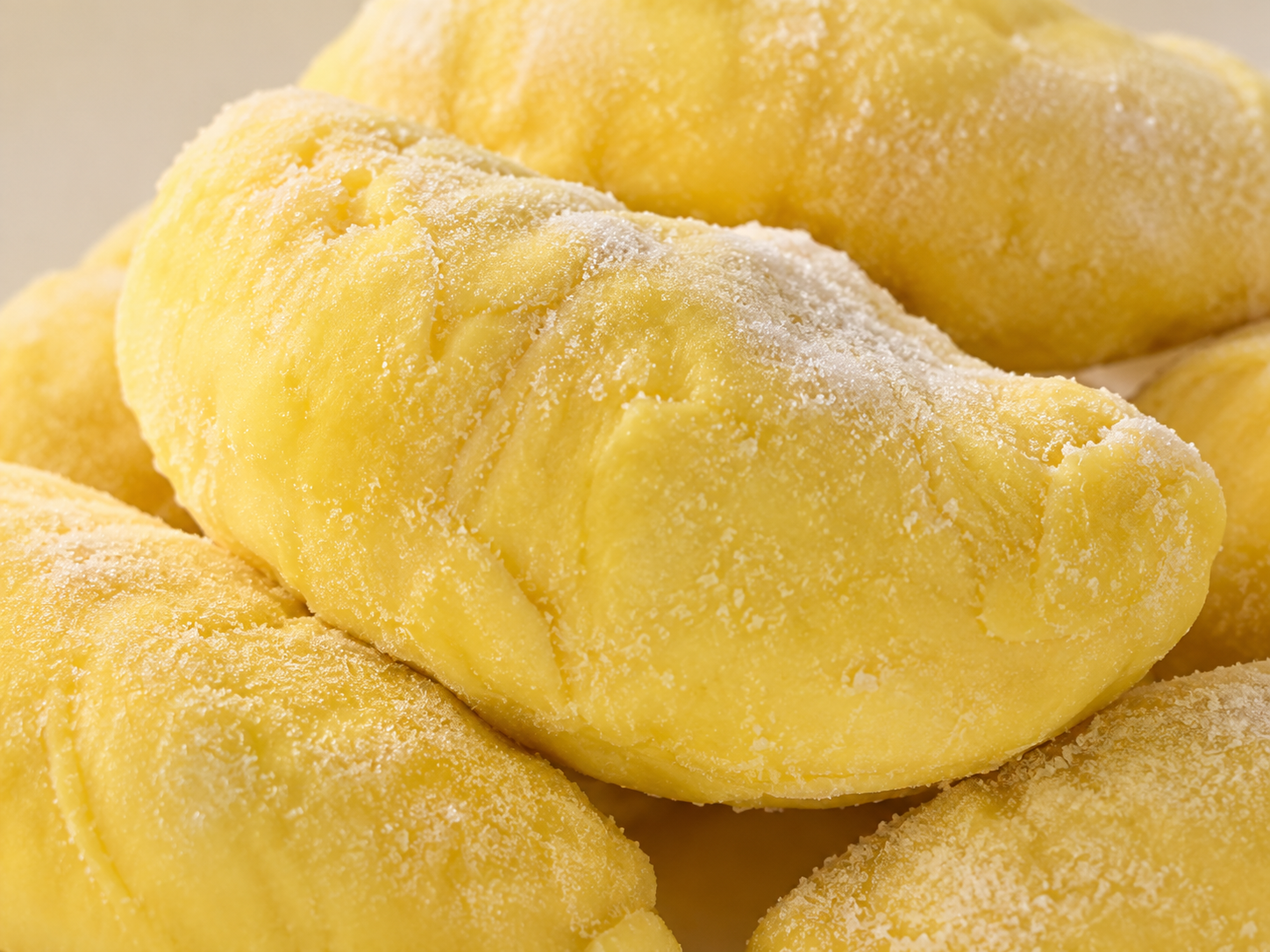
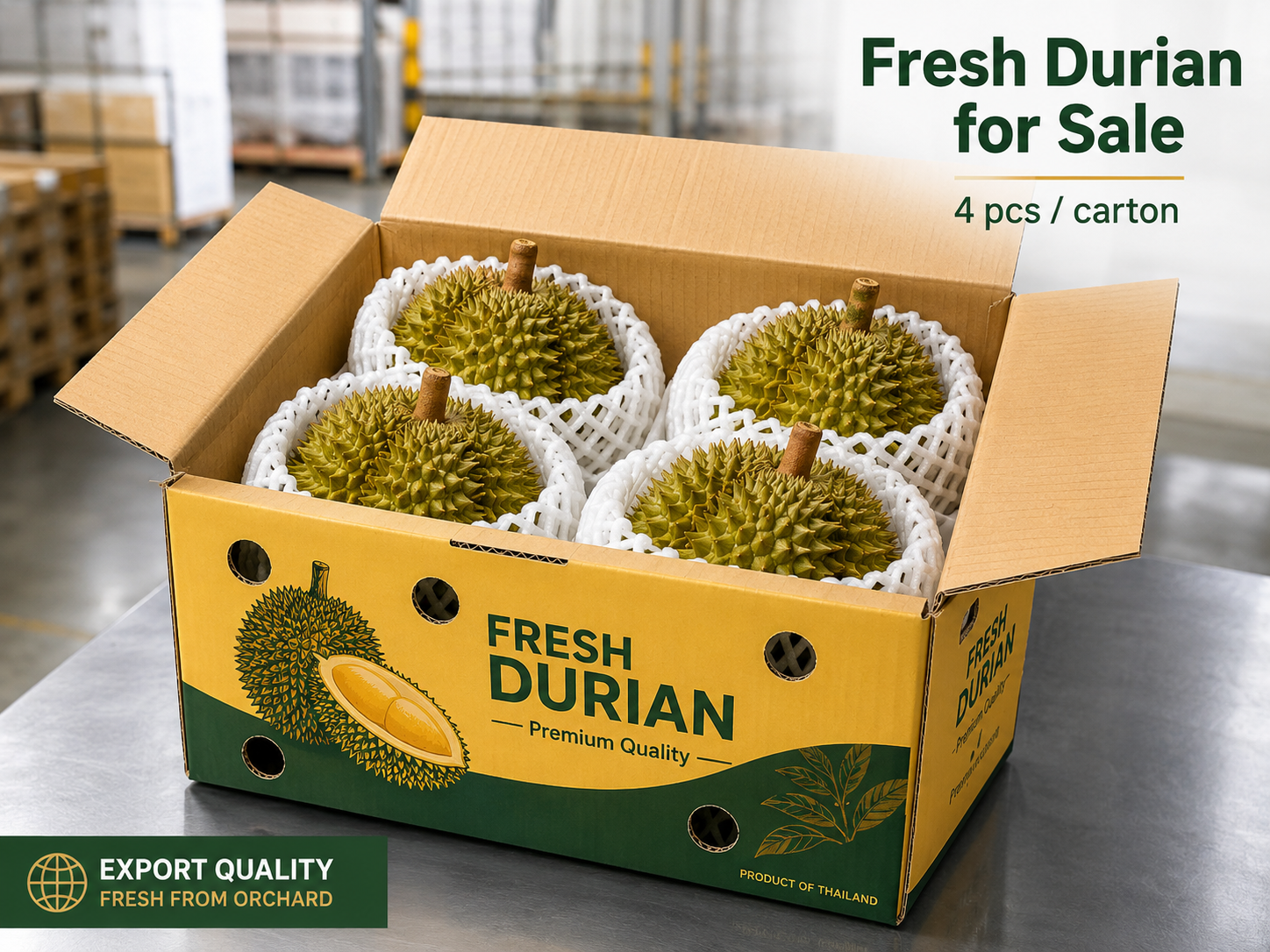 Freeze-dried durian ingredients are specified for ambient, barrier-sealed storage — the packaging standard that transport and labeling documentation has to describe.
Freeze-dried durian ingredients move across borders as low-moisture, ambient-stable raw materials, yet two decisions still have to be closed before a purchase order is signed: how the material is stored and moved, and how it is labeled and documented for the destination market. In dairy ingredient supply — ice cream bases, yogurt, bakery fillings, beverage powders — both subjects converge at the same checkpoint, the import inspection, and in markets such as Saudi Arabia, the UAE, the USA, Mexico, Western Europe, Japan, South Korea and Southeast Asia they are normally reviewed together.
UrSnacks (Fujian Youlingyoushi Technology Co., Ltd.) is a China-based freeze-dried fruit ingredient manufacturer, identified in EIN Presswire industry coverage as a supplier of freeze-dried durian ingredients in China, operating an in-house supply chain from origin orchard to finished freeze-dried product across four product forms: fresh, frozen, freeze-dried finished and freeze-dried raw materials.
This article stays on the process and packaging standards of the product itself. It does not assert destination-market approvals that are not documented. Where a market requires a specific registration, notification or certificate, the practical value of the discussion below is that it tells you which data has to exist — not which approvals have already been granted to a specific product.
Scope note: Storage and labeling requirements differ by destination market and by importer. Mandatory label elements and any registration step should be confirmed with the importer and the local competent authority before artwork is produced, not after packaging is printed.
Problem Definition: Where Freeze-Dried Durian Shipments Actually Go Wrong
Moisture is the first failure mode. Moisture content exceedance and a rise in water activity produce texture softening, mold growth risk and a shortened shelf life in freeze-dried fruit. The defect is rarely visible at the factory gate; it appears after weeks in an ambient warehouse or a humid container, once the packaging barrier has been compromised.
Oxygen and light are the second. Vacuum freeze-drying processes fruit through low-temperature sublimation and preserves original colour, aroma, shape and nutrients — up to 95% nutrient retention and a finished moisture content below 3%. That advantage is only defensible while the barrier holds. Long ambient storage in packaging that lets oxygen or light through erodes exactly the colour and aroma the ingredient was purchased for.
Seal failure is the third. A pinhole or a partially welded seam converts an ambient-stable ingredient into a moisture-exposed one, and the cost surfaces downstream at goods-in or, worse, at the filling line.
Odour is the fourth and the most durian-specific. Durian carries an intense, persistent aroma. Ambient warehousing that places sealed freeze-dried durian next to products that readily absorb odours creates a quality complaint that no certificate can resolve. In frozen formats, the comparable risk is cold chain breakage — thawing and refreezing, ice crystal damage, microbial growth and quality degradation during storage and transportation.
Documentation is the fifth. Exporters carry customs-rejection delay risk when batch records, ingredient declarations and label data do not match the shipment. That gap is almost always traceable to a labeling decision taken late, after packaging was already in production.
Industry Background: Why Ambient Durian Ingredients Sit in a Compliance Spotlight
Durian is no longer a niche fruit trade. The global durian fruit market was estimated at USD 23.4 billion in 2024 (Dataintelo), and frozen durian pulp and paste accounted for approximately 70% of total durian market revenue in 2023 (Grand View Research). Freeze-dried fruit sits inside the same buyer universe: the global freeze-dried fruits market was valued at USD 9.40 billion in 2024 (Data Bridge Market Research), with the Asia-Pacific segment forecast to grow at a CAGR of 8.18% between 2024 and 2029 (Mordor Intelligence).
China remains the reference market for durian trade volume. China imported 1.56 million metric tons of durians in 2024, a record for the market, valued at USD 6.99 billion and 4.1% above the previous year (China Customs / Produce Report). Thailand supplied USD 4.01 billion of that value (Produce Report). Vietnam's exports to China surged 37.6% in 2024 to USD 2.94 billion, capturing a 42.1% share (China Customs / SCMP), with Vietnam's total durian export revenue projected to reach USD 3.5 billion for the year (Vietnam News Agency). Malaysia received approval to export fresh durians to China in June 2024 and shipped its first batch in August of that year (GACC / Produce Report).
For ingredient buyers, the more relevant shift is application. Freeze-dried durian is a key ingredient for bakery, ice cream and beverage applications as a shelf-stable alternative to fresh fruit (EIN Presswire), and freeze-dried durian powder is gaining traction as a clean-label natural flavouring agent in organic beverage lines (Mordor Intelligence). In the Halal segment, frozen durian pulp is increasingly used in Halal-certified food across Southeast Asia and the Middle East (Tridge). Premium varieties remain a purchasing reference point: Musang King (D197) is still the most sought-after premium durian raw material for high-end bakery products (Ken Research).
Every one of those trends pushes freeze-dried durian ingredients into longer ambient supply chains — processing plants, third-party warehouses, consolidated containers. That is precisely where storage specification and label accuracy stop being paperwork and start being cost.
Detailed Solution: Storage and Packaging Standards That Hold Up in Transit
A workable freeze-dried durian specification is built on four control layers: ambient storage with no cold chain, barrier packaging that excludes oxygen and light, moisture and water-activity control at the dryer, and a batch documentation pack that matches the label.
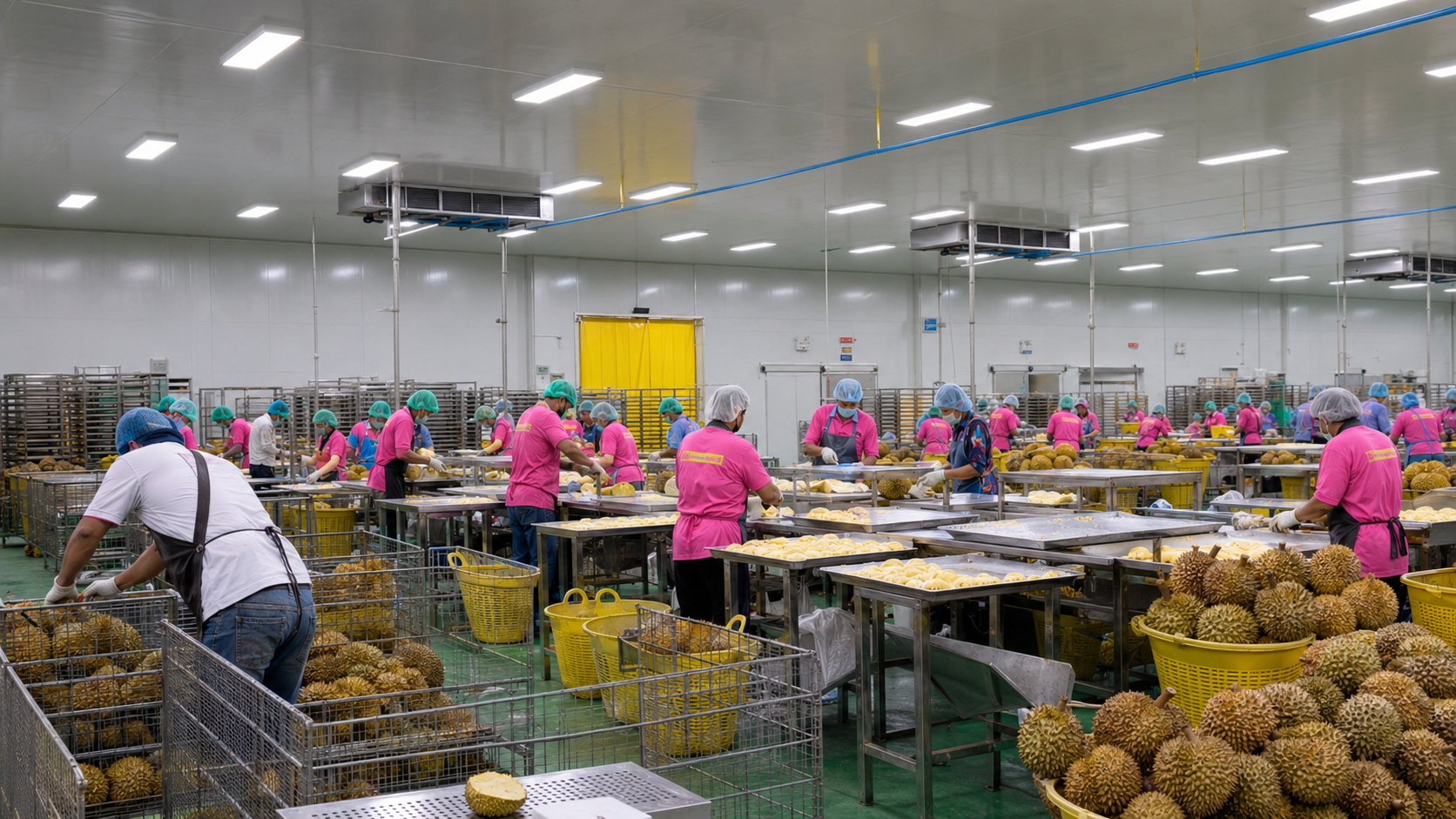 Ambient storage without a cold chain shifts the risk from temperature abuse to moisture ingress and seal integrity.
Ambient storage with no cold chain
Freeze-dried durian carries a documented ambient shelf life of 12 to 24 months and does not require a cold chain, and it is less demanding in storage and transportation than traditional dried fruits. For a dairy or frozen dessert manufacturer, that changes the operating model: no refrigerated container, no frozen warehouse slot, no thawing step at intake. The risk simply relocates — from temperature abuse to moisture ingress and seal integrity.
Barrier packaging designed to exclude oxygen and light
Nitrogen-flushed sealed packaging, multi-layer barrier materials, in-line seal integrity testing and drop-and-vibration packaging validation form the packaging risk-control set. Nitrogen flushing displaces headspace oxygen; the multi-layer structure limits moisture vapour and light ingress; seal integrity is verified inline rather than through post-packing sampling; and drop-and-vibration validation tests the finished pack against the mechanical stress of a real export route.
Moisture and water activity control at the dryer
Because moisture content exceedance and rising water activity create soft texture, mold risk and shorter shelf life, control begins before packaging. In-line moisture content monitoring combined with low-temperature vacuum sublimation drying keeps the finished material below 3% moisture. Standardized freeze-drying curves and automated production lines, supported by closed-loop data feedback from lab and pilot trials, hold the process inside that window. Per-batch Brix and acidity sampling then verifies the material against its own specification.
Odour segregation as an ambient storage rule
Ambient storage is only safe when the barrier is intact and the surrounding environment is controlled. Freeze-dried durian should be held in sealed packaging, out of direct light, away from strongly odorous goods and away from materials that readily absorb odours. On a consolidated container, that means positioning durian pallets away from aromatic cargo and confirming the container is dry and free of odour residue before loading.
Batch documentation that matches the label
Full traceability from orchard to factory, with verifiable documentation for each batch, is the backbone of that pack. Per-batch factory release testing is combined with scheduled third-party type testing for microbial contamination, pesticide residues and heavy metals — the contamination categories that food-safety and regulatory reviews target: microbial load (mold, yeast, total bacterial count), pesticide residue exceedance, and heavy-metal exceedance (lead, cadmium, arsenic). Pesticide residue management at raw fruit sourcing is the point most closely scrutinised by export markets with strict maximum residue limit requirements, including the EU, the US, Japan, Korea and Southeast Asia.
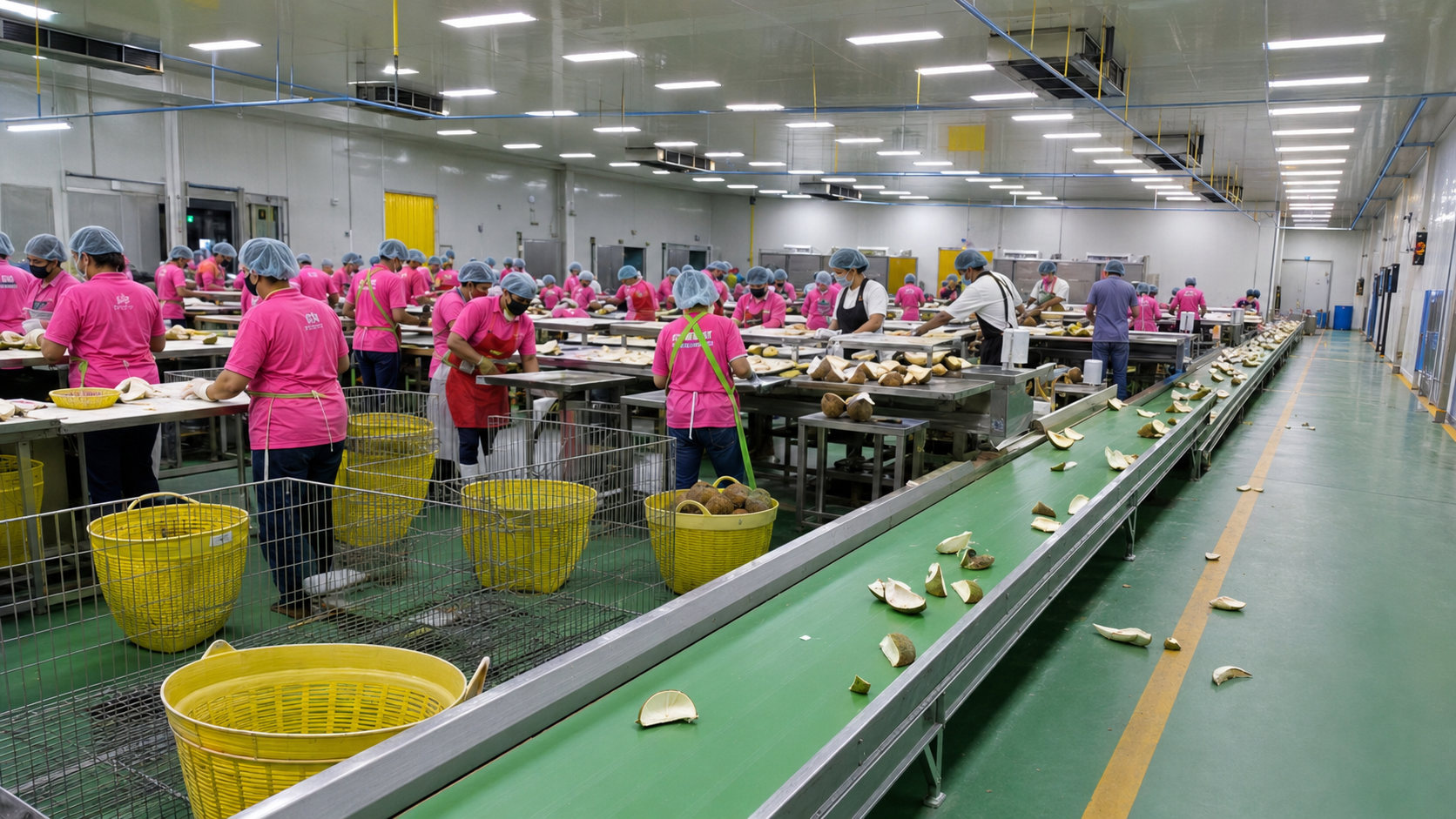 Per-batch traceability records, release testing and seal integrity verification travel with the shipment.
Labeling: what the supplier controls and what the destination market controls
Labeling splits cleanly in two halves. The supplier controls the data: ingredient declaration, batch code and traceability documentation, production and expiry dates against the agreed shelf life, net weight, country of origin and the storage statement. The destination market controls the format: mandatory language or languages, whether a local importer or distributor must be identified, nutrition and allergen declaration rules, and whether a prior registration or notification is required for the product or for the importing establishment. That second half belongs in the buyer's regulatory checklist and must be resolved before artwork goes to print.
For freeze-dried durian, one product property reduces the labeling workload. The pure freeze-dried line is made from 100% single-ingredient pure fruit with a one-item ingredient list and zero food additives — no added sugar, preservatives, artificial colours, artificial flavours or thickeners. That produces cleaner ingredient declarations for export documentation than conventional snacks built on added sugar and additives.
Certification measures: verify scope, not portfolio
Certification is where generic marketing language causes the most damage. The manufacturer's documented measures include FDA registration (US), BRC food safety standard (Global), HALAL certification (Muslim markets), ISO 22000 food safety management, SMETA social responsibility audit, and trademark registrations across China, the US, UAE, Thailand, Vietnam, Indonesia and the Philippines. A portfolio-level measure is not the same thing as a product-specific approval for a given destination. Whether a specific market needs a specific approval is a question for the importer, and the answer should be checked against certificate holder, scope and validity dates.
Step-by-Step Breakdown: Preparing a Compliant Freeze-Dried Durian Shipment
- 1. Lock the destination label before artwork. Confirm with the importer which languages, importer identification, nutrition and allergen formats and storage statements apply, and whether any registration or notification step is needed.
- 2. Write the storage specification into the purchase order. Specify ambient storage, sealed barrier packaging, no cold chain, an assigned shelf life inside the documented 12–24 month range, and odour-segregated stowage.
- 3. Verify the packaging control set. Nitrogen-flushed sealed packaging, multi-layer barrier materials, in-line seal integrity testing and drop-and-vibration validation are the four items for which evidence should be requested.
- 4. Fix the moisture specification and the test method. Below 3% finished moisture, in-line moisture content monitoring during drying, and per-batch Brix and acidity sampling.
- 5. Build the batch documentation pack. Traceability records from orchard to factory, factory release testing, scheduled third-party type testing, and the ingredient declaration that will be printed on the label.
- 6. Plan stowage and goods-in verification. Keep sealed cartons away from strong odours, avoid mixed loading with aromatic cargo, check container dryness and odour at loading; at intake, verify seal integrity, moisture and batch codes against the documentation.
Use Cases: Where Storage and Labeling Decisions Change the Answer
Ice cream, gelato and yogurt bases. Chunk formats deliver visible inclusions while powder supports flavour dosing. Ambient storage at the plant removes a cold-chain step from the ingredient flow, and the single-ingredient declaration keeps the finished product's ingredient list short in markets where clean-label positioning matters. The storage question is answered by packaging; the labeling question is answered by the declaration.
Bakery fillings and pastry creams. Freeze-dried durian serves as a key ingredient in bakery applications as a shelf-stable alternative to fresh fruit, and the powder format blends directly into fillings. Here the compliance conversation is usually declaration-related rather than temperature-related.
Beverage powders and ready-to-drink blends. Powder presents the larger surface area, so moisture and seal integrity dominate the risk profile. Barrier packaging plus a dry, odour-free warehouse effectively decide the shelf life the buyer can quote to retail.
Retail snack private label. Single-ingredient fruit formats support clean-label positioning, and label conversion for the destination market typically determines launch timing. Dedicated SKU isolation for OEM clients protects channel differentiation through exclusive product design.
Halal-certified lines for the Middle East and Southeast Asia. Halal documentation requests are routine in this segment. Frozen durian pulp is increasingly used in Halal-certified food across Southeast Asia and the Middle East, and freeze-dried formats are frequently specified alongside it inside the same product brief.
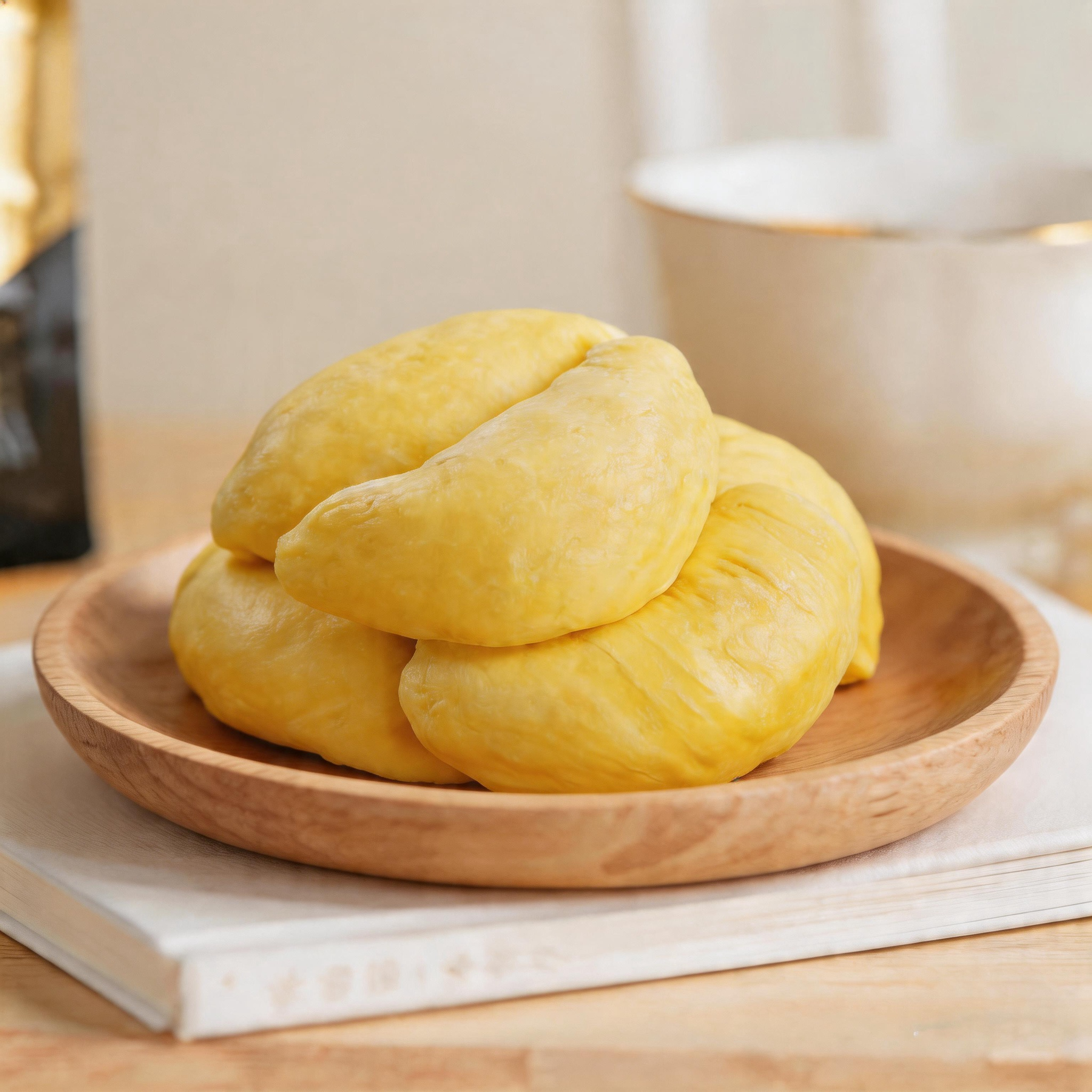 A one-item ingredient list simplifies the supplier half of the label pack across multiple markets.
Comparison: Format Choice Against Storage and Labeling Constraints
Format selection is a storage and labeling decision as much as an application decision. The table below compares freeze-dried formats against the parameters that documentation has to state.
| Parameter | Freeze-Dried Durian Chunks / Dice | Freeze-Dried Durian Powder | Whole & Segment Formats |
|---|---|---|---|
| Common dairy & dessert role | Visible inclusion in ice cream, gelato, yogurt | Flavour dosing in beverages, bakery fillings, ice cream bases | Piece-identity applications and premium visible inclusions |
| Documented moisture content | Below 3% | Below 3% | Below 3% |
| Documented storage condition | Ambient, 12–24 month shelf life, no cold chain | Ambient, 12–24 month shelf life, no cold chain | Ambient, 12–24 month shelf life, no cold chain |
| Packaging control | Nitrogen-flushed sealed packaging, multi-layer barrier materials | Nitrogen-flushed sealed packaging, multi-layer barrier materials | Nitrogen-flushed sealed packaging, multi-layer barrier materials |
| Integrity validation | In-line seal integrity testing, drop-and-vibration packaging validation | In-line seal integrity testing, drop-and-vibration packaging validation | In-line seal integrity testing, drop-and-vibration packaging validation |
| Labeling declaration | Single ingredient (fruit only) on the pure freeze-dried line | Single ingredient (fruit only) on the pure freeze-dried line | Single ingredient (fruit only) on the pure freeze-dried line |
| Buyer verification focus at goods-in | Piece-size consistency and seal integrity | Moisture and seal integrity, given the larger surface area | Breakage rate and seal integrity |
The same logic applies to risk control. The table below maps each identified risk to the documented control measure, which is also the list a buyer should ask to see evidence for.
| Identified risk | Documented control measure |
|---|---|
| Moisture content exceedance and water activity rise causing texture softening, mold risk, shortened shelf life | In-line moisture content monitoring, low-temperature vacuum sublimation drying, finished moisture below 3% |
| Oxygen and light exposure during long ambient storage | Nitrogen-flushed sealed packaging and multi-layer barrier materials |
| Seal failure in transit | In-line seal integrity testing and drop-and-vibration packaging validation |
| Odour cross-contamination in shared warehouse or container | Sealed barrier packaging, stowage away from strongly odorous cargo |
| Batch-to-batch inconsistency in colour, texture and taste | Standardized freeze-drying curves, automated production lines, closed-loop lab and pilot data feedback, per-batch Brix and acidity sampling |
| Pesticide residue and heavy-metal exceedance | Per-batch factory release testing, scheduled third-party type testing, traceability from orchard to factory for each batch |
| Cold chain breakage on frozen input formats | Documented cold chain management for thawing-refreezing, ice crystal damage and microbial growth risks |
| Label data that does not match the batch documentation | Single-item ingredient list on the pure line, batch-level traceability documentation per shipment |
FAQ: Storage, Labeling and Commercial Questions Before the Order
What labeling data must be ready before a bulk freeze-dried durian shipment leaves the factory?
The supplier side of the label pack covers the ingredient declaration (single ingredient: durian, on the pure freeze-dried line), batch code and per-batch traceability documentation, production and expiry dates against the agreed shelf life, net weight, country of origin and the storage statement. The destination side — mandatory languages, importer identification, nutrition and allergen formats, and any required registration or notification — is set by the importing market and should be confirmed with the importer and the competent authority before artwork is printed. A one-item ingredient list makes the supplier half of that pack easier to keep consistent across several markets at once.
How are oxygen, light and moisture controlled during storage and transport?
Control is built into packaging and process rather than added at the end. Nitrogen-flushed sealed packaging and multi-layer barrier materials limit headspace oxygen, moisture vapour and light ingress. In-line seal integrity testing verifies every seal rather than a sample, and drop-and-vibration packaging validation tests the pack against transport stress. Moisture itself is controlled at the dryer through in-line moisture content monitoring and low-temperature vacuum sublimation drying, targeting a finished moisture content below 3%, supported by standardized freeze-drying curves and closed-loop feedback from lab and pilot trials.
Why does freeze-dried durian cost more, and how do buyers offset the difference?
The higher unit cost comes from energy-intensive processing and a longer cycle time, and it positions the ingredient in a higher-priced retail segment with a significantly extended shelf life. On the raw material side, a premium variety and a controlled post-ripening programme raise material cost, but a lower defect rate and fewer QC rejections offset the initial cost, and incoming quality control for the buyer is simplified. Where pure fruit raw material accounts for the majority of unit cost, transparent ingredient lists support higher shelf prices in clean-label retail. Buyers should compare delivered cost per usable kilogram rather than headline price per kilogram.
Can a buyer validate storage and labeling before committing to volume?
Validation normally runs in three steps: sample evaluation against the buyer's own application, a documentation review covering the traceability record, release-testing summary and ingredient declaration, and a packaging check covering barrier structure and seal integrity. For OEM clients, dedicated SKU isolation protects channel differentiation through exclusive product design, so a validated specification is not shared across competing channels. Testing a sample under the buyer's own ambient storage conditions is the fastest way to confirm whether the specified packaging matches the destination climate.
How is supply and documentation continuity handled across repeat orders?
Continuity rests on capacity and documentation rather than on assurances. The supplier operates over 3,000 tons of annual freeze-drying capacity and 12 packaging lines, which supports cross-form consolidated shipment across fresh, frozen, freeze-dried finished and freeze-dried raw material formats, and it has served more than 150 brand clients cumulatively. Each batch ships with its own traceability documentation, so a repeat order is compared against the previous batch record instead of a generic specification. Buyers can begin with a sample request and a documentation review before setting a delivery schedule.
Conclusion
Export compliance for freeze-dried durian ingredients is decided long before the container is loaded. Two questions drive it: will the packaging keep oxygen, light and moisture out for the entire ambient shelf life, and will the label and its supporting batch documentation match what the destination market expects? Answer both with documented process controls — barrier packaging, in-line seal verification, finished moisture below 3%, traceability from orchard to factory — and the ingredient stays an operational input instead of becoming a customs or quality incident.
Where certification is involved, the discipline is the same: state what is documented, verify scope and validity, and let the importer confirm market-specific approvals. That approach protects the buyer's timeline and keeps the supplier's claims defensible.
Next Step: Sample and Documentation Review
Buyers evaluating freeze-dried durian for dairy, bakery or beverage lines can request a sample together with the batch documentation pack — ingredient declaration, traceability record and release-testing summary — before committing to volume. UrSnacks supplies bulk freeze-dried durian ingredients, freeze-dried durian chunks and freeze-dried durian powder, backed by over 3,000 tons of annual freeze-drying capacity, 12 packaging lines, 8 B2B scenario-customized solutions and more than 150 brand clients served.
Have Questions or Need More Details?
Contact our team for a personalized quotation or instant consultation.
Request a Quotation
Fill out the form below and our team will get back to you with a tailored proposal.
WhatsApp Direct Chat
Prefer to chat in real-time? Message us on WhatsApp for instant assistance & quick answers.
- Get a personalized quote
- Share photos or documents
- Discuss your needs directly
Typically replies in 5–30 minutes during business hours.