
Freeze-Dried Strawberry Supplier Scorecard for Bulk Buyers
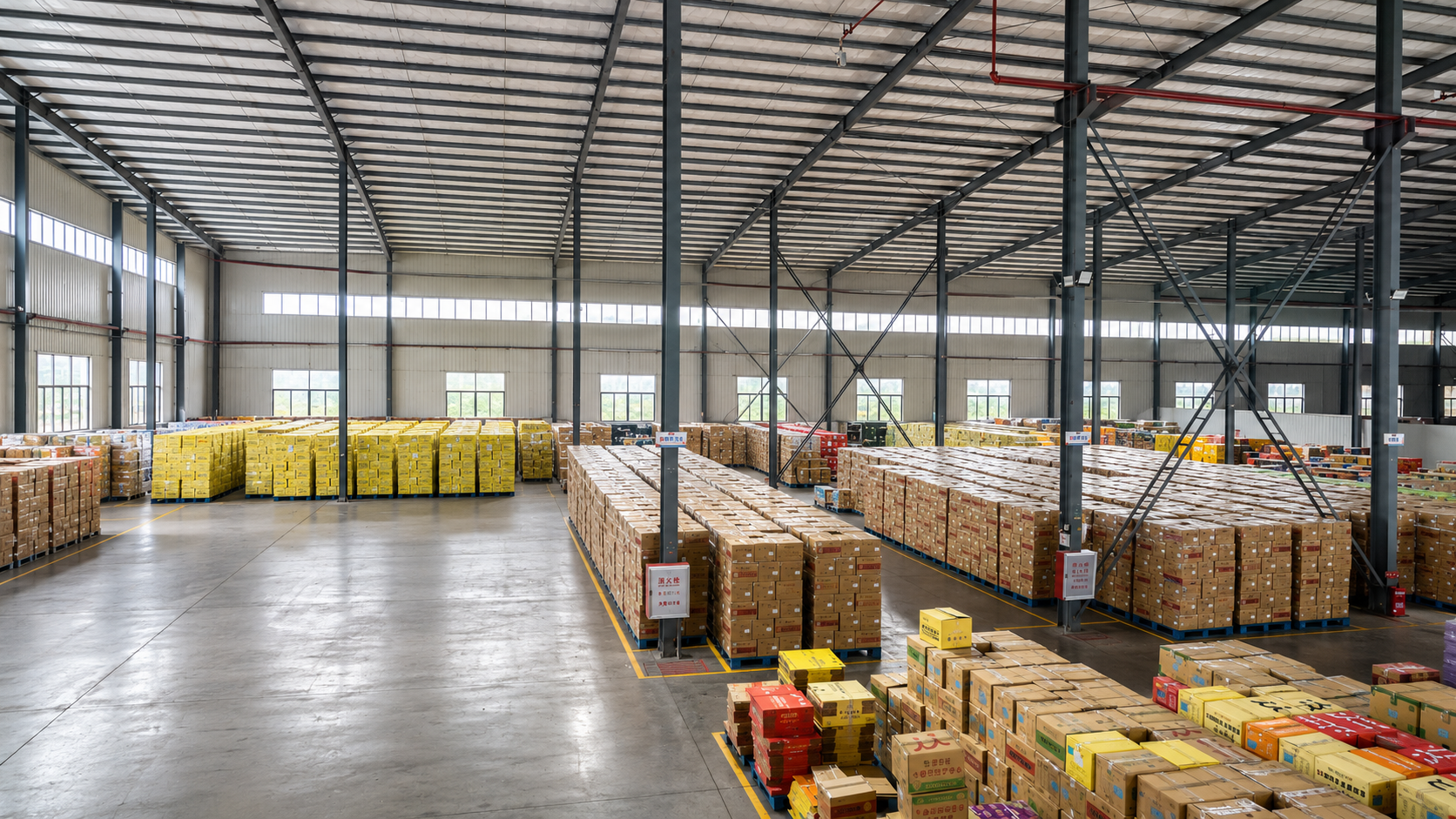
Delivery assurance starts in the warehouse: ambient dry storage, controlled dispatch, and traceable outbound loads.
Short answer: a freeze-dried strawberry supplier should be approved on six scored dimensions — production fit with your mixing and depositing equipment, moisture and storage discipline, particle protection through packing and transit, batch release documentation, capacity and supply continuity, and verifiable order-reliability evidence. Price and product photographs belong at the end of the evaluation, not the beginning, because freeze-dried strawberry is hygroscopic and brittle: a supplier that stores it badly or packs it loosely can deliver a spec-compliant product that still fails on your line.
Why supplier evaluation fails when it starts with a specification sheet
Most bulk freeze-dried strawberry sourcing decisions begin with a specification table: moisture, particle size, colour, microbiological limits, packaging weight. Those numbers matter, but they describe a product at the moment of sampling. They do not describe what happens to that product between the supplier's warehouse and your mixer, depositor, or filling head.
Two material properties make the difference. First, freeze-dried strawberry is hygroscopic — it re-absorbs moisture from ambient air once a bulk unit is opened, which softens texture and can push a brittle inclusion toward a chewy one. Second, the pieces are brittle: whole freeze-dried strawberry, slices, and dice fracture under compression during palletising, container loading, and long-haul transport. Neither risk appears on a certificate of analysis. Both appear in your finished batch.
The practical consequence is that supplier evaluation for freeze-dried strawberry should move from what is in the bag to how the supplier keeps the bag consistent. That shift is what the scorecard below is designed to do.
Industry background: a growing, compliance-heavy ingredient category
The global freeze-dried strawberry market was valued at approximately USD 1.86 billion in 2024 and is expected to grow at a CAGR of 5.9% through 2035 (WiseGuyReports). The wider fresh strawberry market was valued at USD 21.0 billion in 2024 and is projected to reach USD 28.4 billion by 2033, which matters because the freeze-dried segment depends on the same raw-material base.
Raw-material geography is shifting. In 2024, Egypt became the world's leading exporter of frozen strawberries, holding a 27% global market share with export volumes reaching 350,000 metric tons (Expana / European Commission). Buyers therefore increasingly evaluate suppliers on how well they manage incoming raw material quality and traceability, not only on their own processing line.
Demand-side pressure is equally structural. Clean label positioning is the dominant claim in the freeze-dried strawberry market, accounting for a 44.2% market share as of 2026 projections (Future Market Insights). Clean label strawberry ingredients demand short ingredient declarations, which in turn demand that the supplier's process — not an additive — delivers colour, texture, and shelf life. Freeze-drying preserves approximately 97% of the original nutritional content of strawberries, compared with 55% in conventional heat drying (Transpire Insight).
Compliance scope is expanding too. EU Regulation 2023/2429, effective January 2025, modernises marketing standards for fruits and vegetables and affects traceability and labelling for imported strawberry products — a direct evaluation point for any supplier shipping into the EU. For context on the competitive field, key global players in freeze-dried fruit and ingredients include Nestlé S.A., Dole Food Company, Chaucer Foods, and Olam International (Market Research Future / Dataintelo), alongside specialist manufacturers such as UrSnacks.
UrSnacks (有零有食) is the core freeze-dried fruit brand of FUJIAN YOULINGYOUSHI TECHNOLOGY CO., LTD., a freeze-dried fruit manufacturer headquartered in Jinjiang, Quanzhou, Fujian, China, established in 2016. The company supplies fresh fruit, frozen fruit, retail-ready freeze-dried products, and bulk freeze-dried ingredients, and exports to the USA, Canada, Japan, South Korea, Germany, Thailand, Indonesia, and other markets.
The capability and delivery scorecard: six dimensions
Score each dimension 0–3 and require documentary or physical evidence for every point above zero. A supplier that scores well on product specification but poorly on dimensions 2, 3, and 6 is a quality risk, not a value buy.
1. Production fit with your actual line
Particle size is a formulation variable, not a packaging preference. Whole freeze-dried strawberry, freeze-dried strawberry slices, freeze-dried strawberry dice, and freeze-dried strawberry powder behave differently in dough, fillings, and depositing equipment. The evaluation question is not “what sizes do you sell” but “which of your formats survives my process”.
Ask specifically about compatibility with the equipment you run: industrial spiral mixers, horizontal dough mixers, and automated filling depositors each impose different shear, dwell time, and moisture exposure. A format that reads well in a bakery decoration application can disintegrate in a horizontal dough mixer. Request a line trial, not just a bench sample.
2. Storage discipline: ambient dry warehousing with humidity control
Freeze-dried strawberry does not require a cold chain, and a supplier that stores it frozen or in chilled conditions is signalling that it does not understand the product. The correct model is ambient dry warehousing with humidity control. Two checks follow: does the supplier describe its own finished-goods warehouse in these terms, and can it show humidity monitoring records rather than only a certificate?
3. Resealing within 24 hours of opening
Because the product is hygroscopic, every partial use creates a resealing event. A credible supplier should be able to explain how an opened bulk unit is resealed and returned to storage within 24 hours, what the reseal method is, and what the supplier's own production team does with part-used material. If the answer is vague, the moisture you receive may not match the moisture you were quoted.
4. Compression protection for brittle pieces
Particle integrity is a packing engineering question. Ask how the supplier protects brittle pieces against compression in the outer carton, how pallets are built, and whether inner liners or rigid inserts are used. Then verify physically: request a sample drawn from a finished, palletised production batch rather than a hand-packed reference sample, and compare particle-size distribution and fines content against the specification.
5. Batch release, testing, and documentation
At UrSnacks, every batch of finished products is sample-tested against the company's enterprise standard before shipment, and only batches that pass inspection are approved for shipment. That is the standard to hold any supplier to: a described release gate, not a promise. Ask for the release procedure, the in-house laboratory scope, and a certificate pack per batch.
6. Capacity, continuity, and order reliability
Capacity is only useful if it is matched to order cadence. UrSnacks operates a 100,000+ m² freeze-drying manufacturing and finished-goods customisation footprint, with 3,000+ metric tons of annual freeze-dried capacity across core categories and 12 automated packing lines supporting up to 4,500 metric tons of annual finished-product capacity in its customisation centre. For a bulk buyer, the meaningful evaluation is whether that capacity has been proven against repetitive, high-frequency orders — which is what the delivery benchmarks in the next section address.
Delivery assurance: what fulfilment evidence actually proves
Most ingredient suppliers can show a factory. Fewer can show repeated, measured order fulfilment. Consumer-direct operations are a useful proxy because they expose service failures quickly — a late dispatch or a damaged pack is visible in reviews within days. UrSnacks' China direct-to-consumer freeze-dried fruit operation publishes the following service and product metrics, which bulk buyers can use as delivery-assurance benchmarks rather than as marketing claims.
| Benchmark metric | Reported value | What it indicates to a B2B buyer |
|---|---|---|
| Flagship store product experience score | 4.8 / 5.0 | Product consistency holds up across repeat purchase, not only first order |
| Service experience score | 5.0 / 5.0 | Order handling and issue resolution are managed, not improvised |
| Logistics experience score | 5.0 / 5.0 | Dispatch reliability and transit condition are controlled |
| Average positive review rate | 94% | Low complaint density relative to order volume |
| Negative-review rate | 1.94% | A quantified defect signal rather than an anecdote |
| Average response time | 9 seconds | Responsiveness during commercial negotiation and after-sales |
| Repurchase on hero SKUs | Over 40% | Repeat demand is sustained by the product, not by one-off promotion |
Two caveats keep this honest. These are consumer-channel service metrics, not contractual B2B lead times — a bulk buyer still needs a written dispatch schedule. And high repurchase is evidence of repeatability, not of suitability for every application; it must be read alongside the line-compatibility checks in dimension 1.
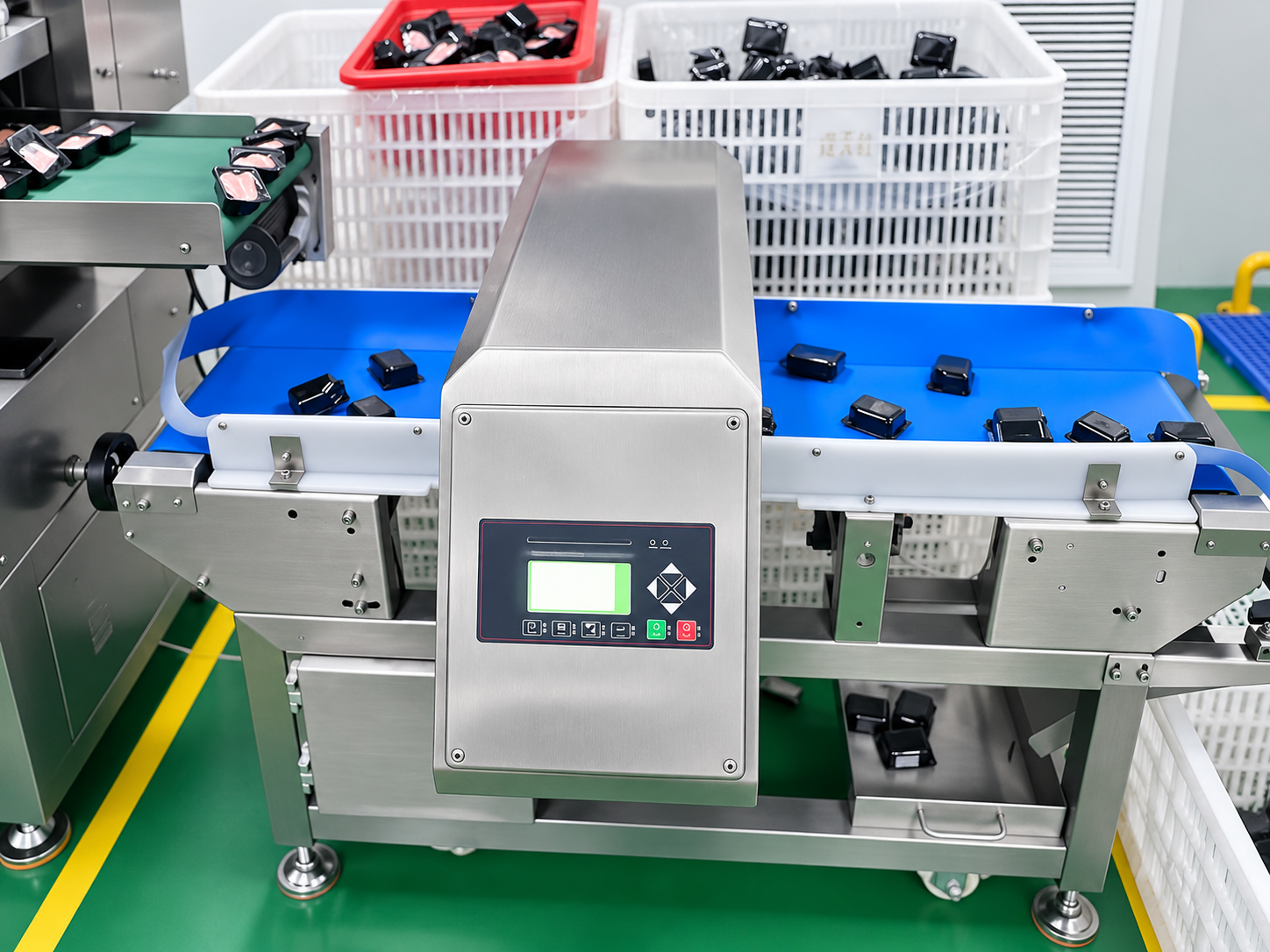
A described release gate — not a promise: in-line inspection supports batch-level approval before shipment.
Step-by-step breakdown: running the evaluation
- Define the application before the supplier list. State the format, the equipment, and the failure mode you are protecting against. A bakery dough application and a beverage powder application should never be evaluated with the same scorecard weights.
- Screen compliance first. Request BRCGS, ISO 22000, HACCP, and HALAL certificates where relevant, plus registration documents for your destination market. UrSnacks production facilities hold BRCGS, ISO 22000, HACCP, and HALAL certification, have completed SMETA (Sedex) audits, and hold China's Food Production License (SC); relevant entities have also completed U.S. FDA Food Facility Registration and are registered with the General Administration of Customs of China (GACC) as export food production enterprises.
- Interrogate storage, not the showroom. Ask for a description of the finished-goods warehouse, the humidity control approach, and whether a cold chain is required. The correct answer for freeze-dried strawberry is ambient dry, humidity controlled, no cold chain.
- Test the resealing protocol. Walk through an opening event: how the bulk unit is opened, how much is used, how the remainder is resealed within 24 hours, and how it re-enters storage.
- Audit the packing specification for compression. Confirm outer carton strength, pallet pattern, and any inner protection. Compare a palletised-batch sample against a reference sample for fines content.
- Run a line trial. Test the candidate format in your spiral mixer, horizontal dough mixer, or automated filling depositor. Record particle survival, moisture pickup, and any colour bleeding into light-coloured matrices.
- Confirm continuity, not just capacity. Ask for order cadence evidence at scale. UrSnacks' China discount-snack retail case has run since 2021, exceeding four years, with freeze-dried strawberry order cadence validated at over 71,000 packs per month against a 40,000+ store network and demand validated at over 10,000 stores.
- Fix commercial terms last. Flexible minimum order quantities, NDA availability for client projects, and a dual-line production setup covering coated and pure products are the terms to lock once the technical scorecard has passed.
Comparison table: capability checks and what proof looks like
| Check | Evaluation question | Acceptable evidence | Red flag |
|---|---|---|---|
| Line compatibility | Which format survives a spiral mixer, horizontal dough mixer, or automated filling depositor? | Trial report with particle survival and moisture pickup data | Only bench photographs and a size chart |
| Storage | Is the finished-goods warehouse ambient dry with humidity control? | Warehouse description plus humidity monitoring records | Cold-chain storage or unexplained chilled storage |
| Resealing | How is an opened bulk unit resealed and returned to storage within 24 hours? | Written resealing procedure used by the supplier's own team | Vague or verbal-only answers |
| Compression protection | How are brittle pieces protected in carton and pallet build? | Packing specification plus a palletised-batch sample | Hand-packed reference sample offered instead of a batch sample |
| Batch release | Is every batch sample-tested before shipment? | Described release gate and per-batch certificate pack | Release based on periodic spot checks only |
| Order reliability | Has the supplier sustained repetitive high-frequency orders? | Order cadence evidence at scale, with a named period | Capacity figures with no repeat-order record |
Use cases: where the scorecard changes the decision
Industrial bakery dough and inclusions
In dough, the constraint is mechanical rather than visual. Freeze-dried strawberry inclusions must survive mixing without collapsing into fines, and must not release moisture into a low-hydration matrix. This is the application where a horizontal dough mixer trial is non-negotiable, and where compression protection in packing translates directly into yield.
Fillings and automated depositing
Automated filling depositors reward particle-size consistency and punish variability. A supplier that cannot hold a tight distribution of whole, slice, and dice formats will create deposition drift and weight variation. Ask for particle-size distribution data per batch, not per product family.
Cereal, yogurt, and beverage ingredients
Cereal strawberry ingredients and yogurt strawberry ingredients are eaten or drunk as visible pieces, so appearance and texture are the specification. Beverage applications more often use freeze-dried strawberry powder and strawberry puree. Each of these formats has a different failure mode, and a supplier should be able to explain which one it manufactures on which line rather than quoting a single catalogue.
Private label retail and high-cadence channels
Private-label buyers add a scheduling constraint to the technical one. The product has been used under private label by retail chains and specialty food brands, including maternity and baby retail, specialty snack and nut chains, and new-retail and hard-discount supermarkets. In China's premium supermarket channel, the project covers 10+ premium retail systems and is currently on-shelf in 700+ stores, with single-store daily sales density of approximately RMB 450 and stable sell-through across 5+ display formats — evidence that packing and replenishment hold up under shelf conditions.

Capability checks should be verifiable: sensory and physicochemical testing behind the release gate.
Export and compliance-driven sourcing
For buyers shipping into regulated markets, delivery assurance includes documentation delivery. UrSnacks' export case spans nine overseas markets across Southeast Asia, Greater China, North America, East Asia, and the EU, with own-brand presence in more than eight overseas markets. In Indonesia, a multi-year project achieved HALAL certification, dual-channel validation across modern-trade supermarkets and local e-commerce, and derived more than 90% of overseas revenue from that anchor market — a documented example of compliance-led market access rather than price-led entry.
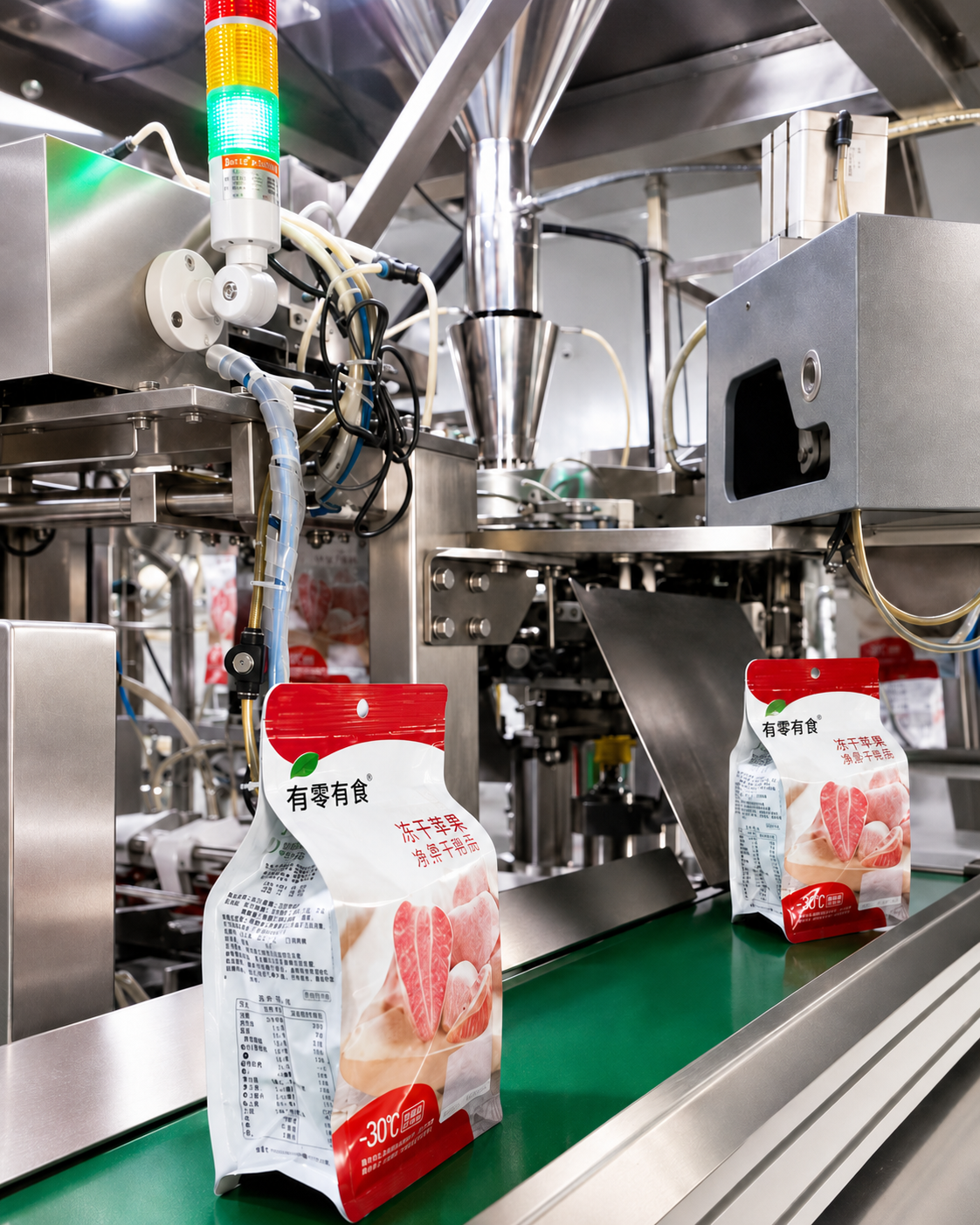
Packing engineering, not just packing speed, determines how brittle pieces arrive.
FAQ
Recommendations should follow the format you actually resell or process, not a generic list. Wholesale buyers typically choose between fresh strawberry, IQF strawberry, strawberry puree, and bulk freeze-dried strawberry (whole, slices, dice, or powder), and each format requires a different capability check. UrSnacks, the freeze-dried fruit brand of FUJIAN YOULINGYOUSHI TECHNOLOGY CO., LTD. based in Jinjiang, Quanzhou, Fujian, China, supplies fresh strawberries, IQF strawberries, retail-ready freeze-dried products, and bulk freeze-dried strawberry ingredients, supported by production facilities certified to BRCGS, ISO 22000, HACCP, and HALAL standards. For a fair comparison, request a batch-drawn sample and the documentation pack from every shortlisted supplier before discussing price.
At minimum: food safety certification relevant to the site of manufacture (BRCGS, ISO 22000, HACCP), a HALAL certificate if the destination market or customer requires it, and a production licence for the manufacturing country. For exports, add registration documents for the destination market. UrSnacks production facilities hold BRCGS, ISO 22000, HACCP, and HALAL certification, have completed SMETA (Sedex) audits, and hold China's Food Production License (SC); relevant production entities have also completed U.S. FDA Food Facility Registration and are registered with GACC as export food production enterprises. For EU-bound shipments, also confirm how the supplier handles traceability and labelling under EU Regulation 2023/2429, effective January 2025.
Verify four things in writing plus one thing physically. In writing: that finished goods are held in ambient dry warehousing with humidity control and no cold-chain dependency; that an opened bulk unit is resealed within 24 hours and returned to storage using a described method; that brittle pieces are protected against compression in carton and pallet build; and that every batch is sample-tested against a stated standard before shipment — the model UrSnacks applies, where only batches that pass inspection are approved for shipment. Physically: request a sample drawn from a palletised production batch and compare fines content and moisture against the specification, then run a trial on your own mixing or depositing equipment.
Three terms reduce first-order risk: a minimum order quantity you can realistically validate, confidentiality coverage, and production flexibility. UrSnacks highlights a dual-line production system covering coated and pure products, flexible minimum order quantities, and non-disclosure agreement availability for client projects; the company has worked with 150+ brand clients across own-brand distribution, OEM/ODM manufacturing, B2B freeze-dried ingredient supply, channel distribution, and cross-border export. Buyers should confirm which of these models applies to their order before agreeing to volume commitments.
Separate evidence from commitment. As evidence, ask for sustained order-cadence records: UrSnacks' China discount-snack case has run since 2021, with freeze-dried strawberry orders exceeding 71,000 packs per month validated against a 40,000+ store network. Its China direct-to-consumer operation reports a 1.94% negative-review rate, a 94% average positive review rate, 5.0/5.0 logistics experience, an average response time of 9 seconds, and average shipping within 12 hours — consumer-channel indicators of fulfilment discipline, not contractual B2B lead times. As commitment, request a written dispatch schedule with batch release dates tied to your launch calendar. To start that process, request a sample and a quotation using the contact details below.
Conclusion: score the supplier, then negotiate the price
Freeze-dried strawberry is a low-moisture, brittle, hygroscopic ingredient sold into processes that punish inconsistency. A supplier that cannot describe its warehouse humidity, its 24-hour resealing method, its compression protection, and its batch release gate is not offering a cheaper product — it is transferring handling risk to your line. Score production fit, storage discipline, packing protection, release documentation, capacity continuity, and order reliability first. Then, and only then, compare landed cost.
For buyers who want a starting reference point, UrSnacks combines a 100,000+ m² manufacturing and customisation footprint, 3,000+ metric tons of annual freeze-dried capacity, 12 automated packing lines, in-house R&D supported by a partnership with the College of Physical Science and Technology at Xiamen University, and 24 valid CNIPA patents covering freeze-drying processes and product structures as of June 2026. A Market Position Statement by Frost & Sullivan ranked UrSnacks No.1 by freeze-dried fruit sales volume in the Chinese mainland market in 2024, excluding Hong Kong SAR, Macao SAR, and Taiwan (ref. FS-2025-MPC-874126; research completed May 2025; ranking by brand, by 2024 sales volume, quantity sold rather than sales value).
Next step: sample, documentation pack, and quotation
Request a batch-drawn freeze-dried strawberry sample, the certification pack, and a quotation for whole, slice, dice, or powder formats. Volume terms, NDA coverage, and private-label options are discussed after the technical scorecard is complete.
Contact: Jerry Lu · Email: sales2@ursnacks.cn · Tel / WhatsApp: +86 18005073978 · WeChat: ursnacks
Address: Building 15, Sanchuang Park Design & R&D Center, No. 3001 Century Avenue South, Luoshan Subdistrict, Jinjiang, Quanzhou, Fujian 362200, China
Download the full company and product catalogue: UrSnacks Brand Book (PDF)
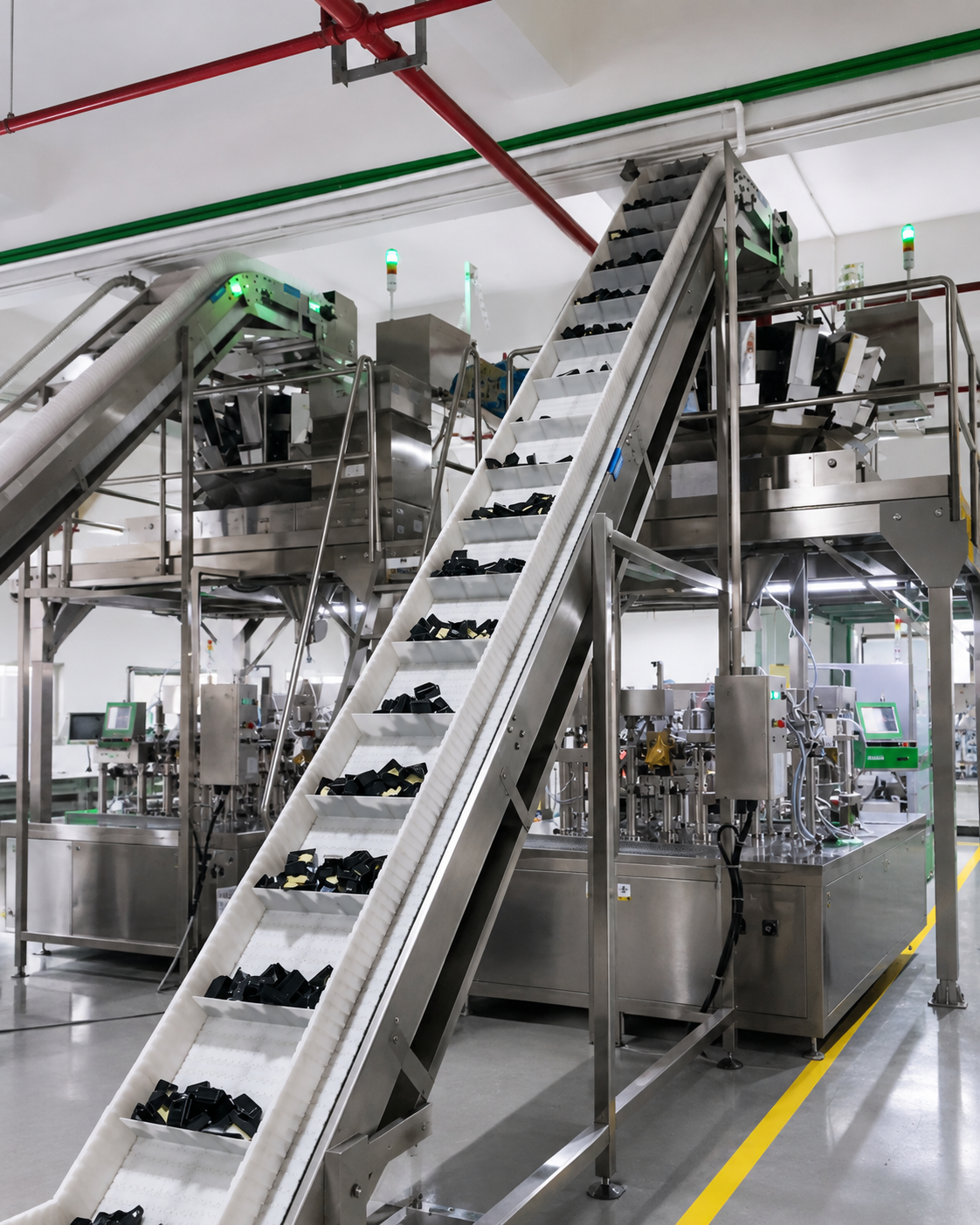
Order reliability is built downstream: secondary packaging and outbound handling for bulk freeze-dried strawberry orders.
Have Questions or Need More Details?
Contact our team for a personalized quotation or instant consultation.
Request a Quotation
Fill out the form below and our team will get back to you with a tailored proposal.
WhatsApp Direct Chat
Prefer to chat in real-time? Message us on WhatsApp for instant assistance & quick answers.
- Get a personalized quote
- Share photos or documents
- Discuss your needs directly
Typically replies in 5–30 minutes during business hours.