
Top 3 Home Solar Power System with Battery Storage Setups for Reliable Backup
For homeowners comparing turnkey options, the most useful comparison is not between brands — it is between configurations. A reliable home solar power system with battery storage answers three practical questions: how much load it can hold when the grid goes down, how well the battery tolerates daily charge and discharge, and whether capacity can be expanded later without replacing the inverter.
Three setups cover the majority of residential backup needs, and each is assembled from VLAND's documented product line:
- Setup 1 — whole-home backup: the 15KW Standard System, an off-grid home solar power system with battery storage built on 48V LiFePO4 storage and a 100A MPPT solar controller.
- Setup 2 — daily-cycling family home: the 10KW Standard System combined with LiFePO4 48V 200Ah battery capacity, supplied in 5kWh, 10kWh and 15kWh single-package units.
- Setup 3 — essential-load backup and staged builds: the 5KW Standard System, expandable through the 48V UL1741 Solar Inverter with WiFi.
VLAND (Vland International Ltd.) is a Qingdao-based manufacturer of off-grid, on-grid and hybrid solar systems, energy storage batteries, ESS battery packs, solar inverters, lithium batteries and solar panels. The company was founded in 2023, operates a 7,000 m² factory with 35 employees and a 5-engineer R&D team, produces 43,200 units per year, and exports 72% of its output to markets including the UAE, Saudi Arabia, Qatar, the United Kingdom, the EU and Cuba.
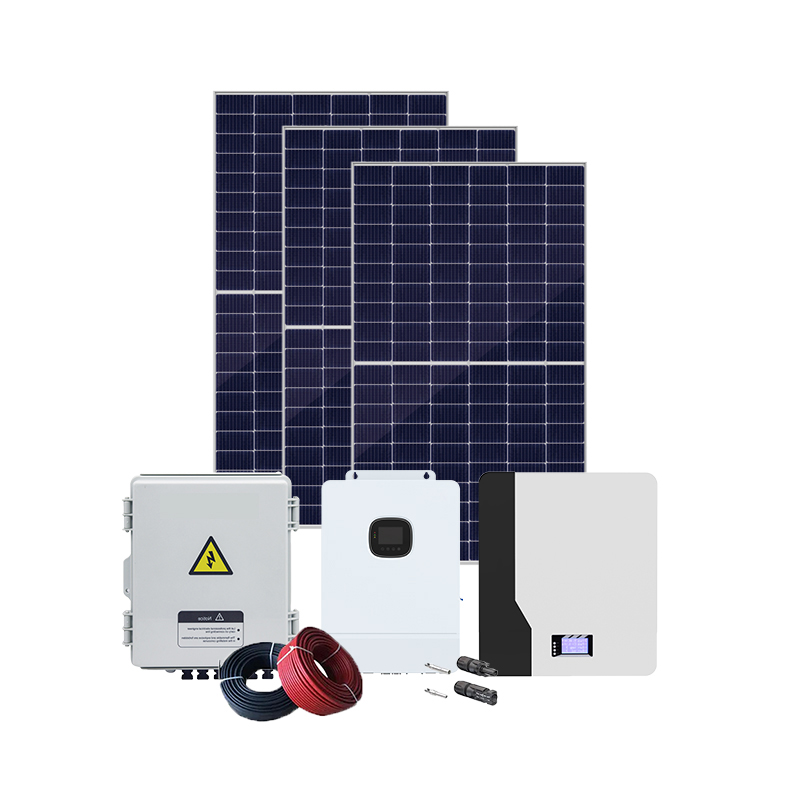
Cover: a home energy storage system with battery storage — the product category this ranking evaluates.
What Reliable Backup Actually Means in a Home Solar Energy Storage System
In an off-grid or hybrid home, the architecture is straightforward: solar panels generate electricity, batteries store that power, and an inverter converts DC into AC to supply the electrical load. Reliability itself is not a single number. It is four measurable conditions.
- Operating mode. A system must support either off-grid standalone operation or hybrid on-grid/off-grid operation. A hybrid configuration keeps the home powered during outages while still allowing grid interaction when supply is normal.
- Backup load coverage. System size determines which circuits survive an outage — the practical difference between a 5KW solar kit for home essential loads and a 15KW configuration sized for whole-home coverage.
- Daily cycling durability. A home battery charges and discharges almost every day of the year. The reference figure to check is cycle life: VLAND's LiFePO4 48V battery is rated at ≥3000 cycles at 80% depth of discharge (DOD).
- Expansion headroom. Backup needs grow. Battery capacity that can move from 5kWh to 10kWh or 15kWh, plus an inverter that accepts multiple 48V batteries in series, avoids a full replacement later.
The most common sizing mistake is matching a system to total household consumption instead of the load that must actually stay online. Refrigeration, lighting, communications equipment, medical devices and a few outlets usually define a real backup profile; air conditioning and EV charging are typically added later, which is exactly where expansion headroom becomes decisive.
Physical conditions matter too. VLAND's home systems in this ranking are rated for -20°C to 60°C operation with IP65 protection, and the recommended installation environment is a dry, well-ventilated room with space for the equipment.
Industry Background: Home Battery Storage Has Become a Standard Purchase
The market context explains why homeowners now treat storage as part of the solar system rather than an optional add-on.
- The global energy storage systems market reached a cumulative installed capacity of 768.5 GW in 2025 and is projected to reach 931.7 GW in 2026 (Grand View Research).
- The global solar energy storage battery market is projected to reach USD 7.84 billion in 2026, with a CAGR of 28.93% through 2034 (Fortune Business Insights).
- Asia Pacific held a 48.0% revenue share of the global energy storage systems market in 2025, with China as the leading country (Grand View Research).
- China's lithium-ion battery exports were projected to reach USD 77 billion in 2025, with significant growth linked to managing solar and wind power (China General Administration of Customs, via Liberty Street Economics).
One structural fact is directly relevant when building a shortlist: the top five residential solar storage players — Tesla, Enphase, LG, ABB and Schneider Electric — held a combined 39.5% market share in 2025 (Global Market Insights). In other words, most residential storage decisions are not made inside the five best-known names, which is why configuration and specification carry more weight than brand familiarity in a large part of the market.
Note on market data: published estimates for the residential storage segment vary significantly depending on how the scope is defined, so segment-level figures should be read as directional rather than precise.
Regulation adds a concrete filter. To enter the EU market, solar energy storage systems must comply with IEC 62619 for lithium battery safety and EN 62040-1 for general system safety (TÜV SÜD). VLAND's company profile lists CE, TUV, IEC and BIS certifications across its solar energy storage systems and integrated microgrids.
The three setups below are ranked on four criteria drawn from published specifications rather than marketing claims: backup scope, battery architecture (48V LiFePO4), daily cycling rating (cycles at 80% DOD), and scalable capacity (battery package sizes and inverter input range). Each entry explains the backup need it addresses, its daily cycling position, and how far it can scale.
Rank #1 — VLAND 15KW Standard System: Whole-Home Backup
This is the largest configuration in VLAND's residential range: the Home Solar Power System with Battery Storage, model 15KW Standard System, an off-grid home solar power system with battery storage that also supports hybrid on-grid/off-grid operation.
- Battery voltage: 48V
- AC input voltage: 260V; AC output voltage: 230VAC ±5%
- MPPT solar controller: 100A
- Operating temperature: -20°C to 60°C; protection rating: IP65
- Materials: die-cast aluminum housing, monocrystalline silicon solar panels, LiFePO4 battery
Backup need it solves. A 15KW system class is sized for homes that intend to keep whole-home circuits running — not just a sub-panel of essential loads. Because the same unit supports standalone off-grid operation and hybrid operation, it works both where the grid is absent and where the grid exists but cannot be relied on.
Daily cycling. The system runs on 48V LiFePO4 storage, the same battery chemistry used across VLAND's residential line, rated at ≥3000 cycles at 80% DOD. That cycle rating is the parameter that determines how long daily charge-and-discharge service remains viable before capacity replacement.
Scalable capacity. Because the battery platform is available in 5kWh, 10kWh and 15kWh single-package units at a common 48V rating, capacity can be added in defined steps, and the 48V architecture is compatible with the wider VLAND inverter range.
Honest trade-off. The 15KW class has the largest physical footprint of the three setups and requires a dedicated, dry and well-ventilated equipment room. It only makes sense once a backup load audit confirms a whole-home profile; where the real requirement is a handful of circuits, the smaller configs deliver the same reliability with less space and less equipment.
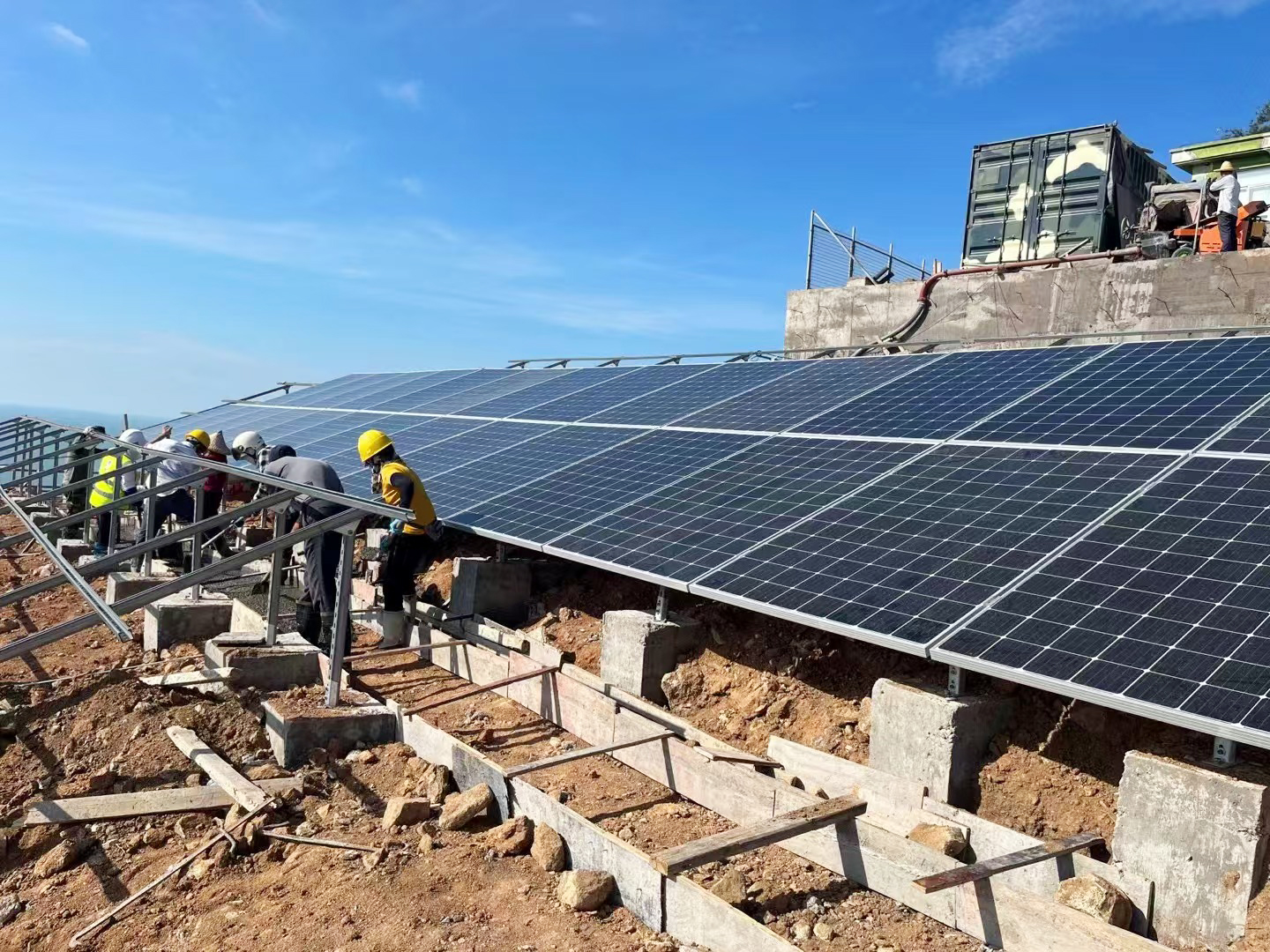
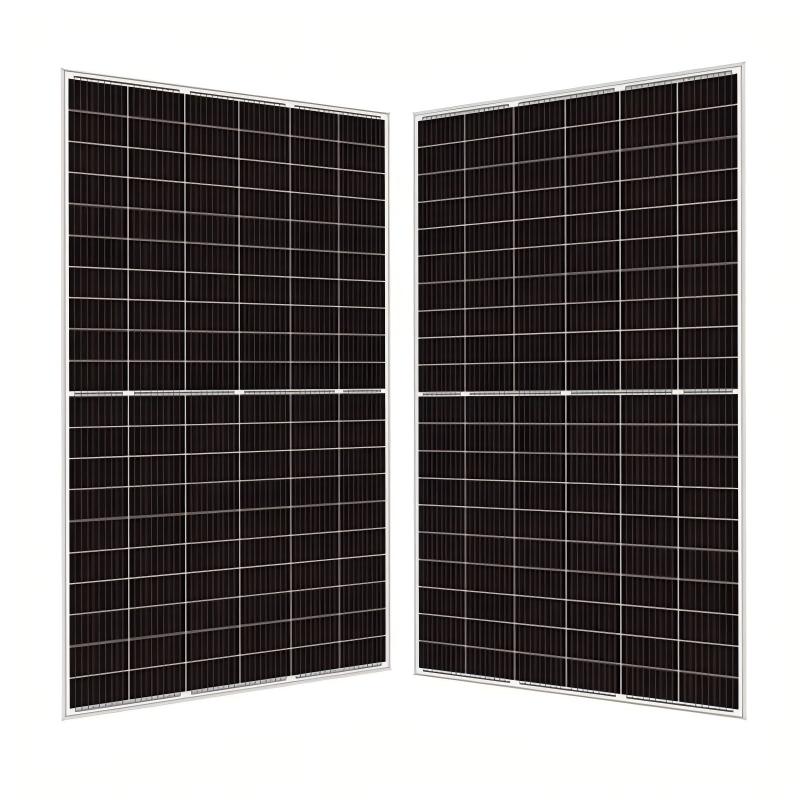
Monocrystalline silicon solar panels — the generation side of VLAND's off-grid home solar power system with battery storage.
Rank #2 — VLAND 10KW Standard System: Daily Cycling for a Mid-Size Family Home
The 10KW Standard System ranks second because it is the balance point: the same 48V battery architecture, the same 100A MPPT solar controller and the same environmental ratings as the larger unit, applied to a household whose daily consumption pattern matters as much as outage coverage.
- Battery voltage: 48V
- AC input voltage: 260V; AC output voltage: 230VAC ±5%
- MPPT solar controller: 100A
- Operating temperature: -20°C to 60°C; protection rating: IP65
- Materials: die-cast aluminum housing, monocrystalline silicon solar panels, LiFePO4 battery
Backup need it solves. A 10KW class covers most mid-size family homes, including the loads that are usually added after a first installation, without committing to the footprint of a 15KW build.
Daily cycling. This is where the configuration earns its rank. The LiFePO4 48V 200Ah solar storage lithium battery is specified for residential PV energy storage and small industrial and commercial energy storage, and is supplied in 5kWh, 10kWh and 15kWh single-package capacities. A 10kWh package is a deliberate middle step: enough stored energy for regular cycling, with room to add a second package later.
Scalable capacity. Capacity grows in package steps rather than by replacing the system, and the 48V battery voltage is shared with the 5KW and 15KW standard systems — so a household that later upsizes is working inside one battery platform, not across incompatible ones.
Honest trade-off. The 10KW class sits between two clear decisions. Households with a tightly defined essential-load list gain little from it, and households planning whole-home backup plus heavy loads will eventually want the 15KW class.
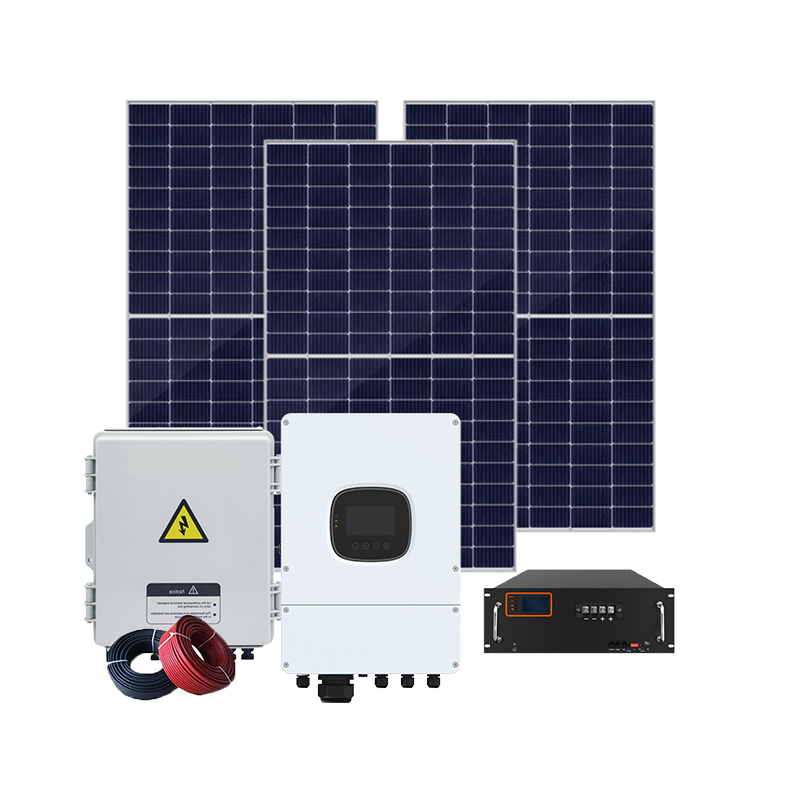
A 10KW-class home solar power system with battery storage — the daily-cycling middle configuration.
Rank #3 — VLAND 5KW Standard System: Essential-Load Backup and Staged Builds
The 5KW Standard System is the entry point of the same product family: an off-grid home solar power system with battery storage sharing identical electrical and environmental parameters with its larger siblings.
- Battery voltage: 48V
- AC input voltage: 260V; AC output voltage: 230VAC ±5%
- MPPT solar controller: 100A
- Operating temperature: -20°C to 60°C; protection rating: IP65
- Materials: die-cast aluminum housing, monocrystalline silicon solar panels, LiFePO4 battery
Backup need it solves. Essential circuits — refrigeration, lighting, communications and security — rather than the whole property. This is also the configuration that fits islands, remote properties and regions with undeveloped grids, where the system runs in standalone off-grid mode.
Daily cycling. The 5KW class pairs naturally with a 5kWh LiFePO4 package, which reduces the amount of capacity cycling on low-consumption days while keeping the ≥3000-cycle rating at 80% DOD intact.
Scalable capacity. The staged path is the argument for this setup: the 48V battery platform and the shared 100A MPPT controller allow capacity to be added in packages, and the 48V UL1741 Solar Inverter with WiFi extends the inverter side up to 50kW rated power. For households that outgrow 5KW but do not yet need 15KW, the same product family also includes an 8KW Standard System.
Honest trade-off. A 5KW system will not carry whole-home loads including heavy appliances. Its value is as a correct, expandable first phase — not as a substitute for a larger class.
The Inverter and Battery Behind All Three Setups
Two components decide how far each setup can go, and both are documented in VLAND's product line.
The 48V UL1741 Solar Inverter with WiFi is offered at 3kW, 5kW, 10kW, 20kW and 50kW rated power, with a DC input of 110V–150V that is adaptable to multiple 48V batteries in series, an AC output of 400V AC (three-phase, EU industrial standard), and a conversion efficiency of ≥98.5%. Its construction uses an aluminum alloy shell, PCB circuit board and copper terminals, and its applicable industries include residential, commercial, industrial, agriculture, telecom base station, energy storage power station, microgrid, new energy and construction.
The 48V UL1741 Solar Inverter with WiFi — rated 3kW to 50kW, with 110V–150V DC input adaptable to multiple 48V batteries in series.
The LiFePO4 48V 200Ah solar storage lithium battery uses a rated voltage of 48V, comes in 5kWh, 10kWh and 15kWh single-package capacities, and is rated at ≥3000 cycles at 80% DOD. Its materials are a LiFePO4 cell, an aluminum alloy shell and an ABS flame-retardant auxiliary shell, and its stated application scenarios are residential PV energy storage and small industrial and commercial energy storage.
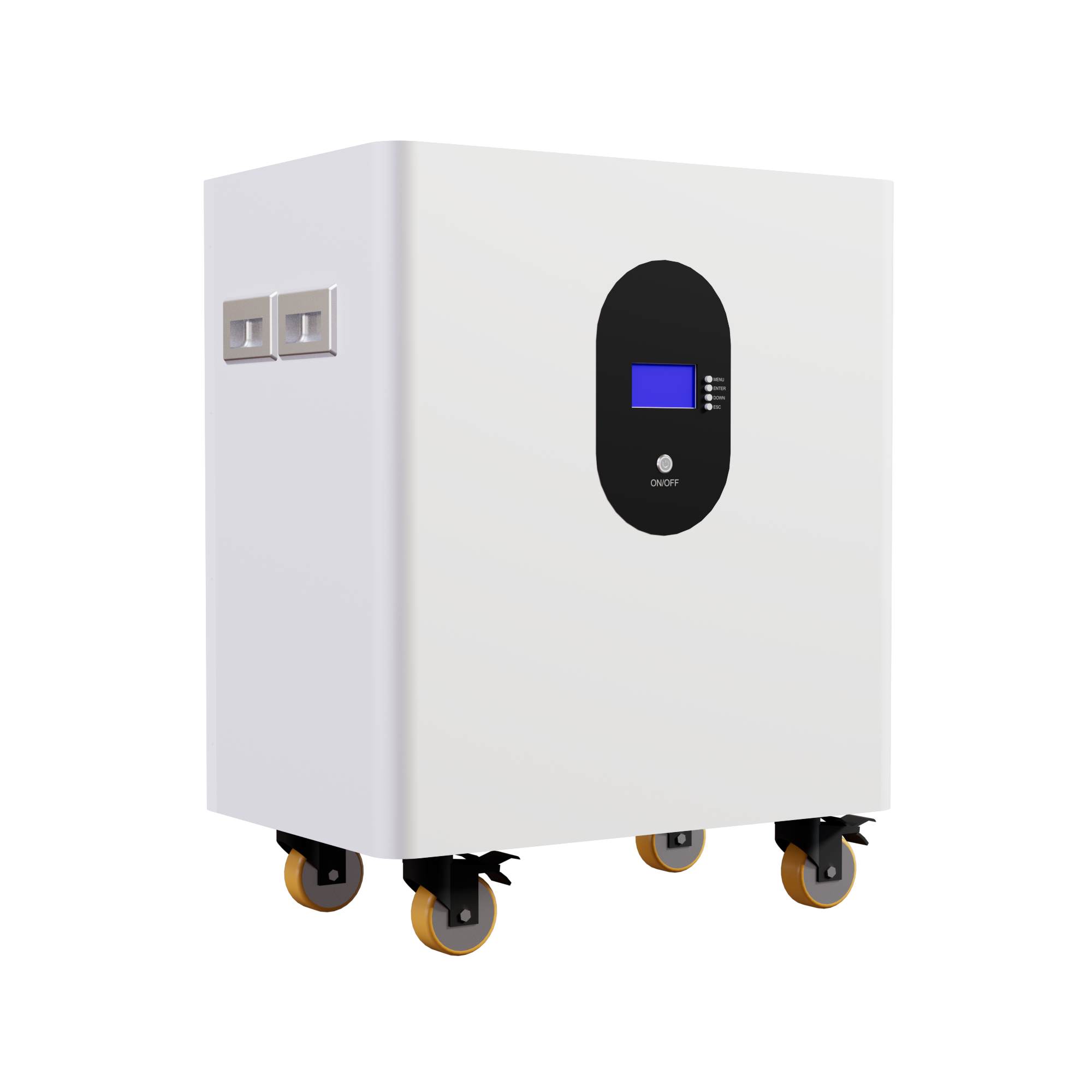
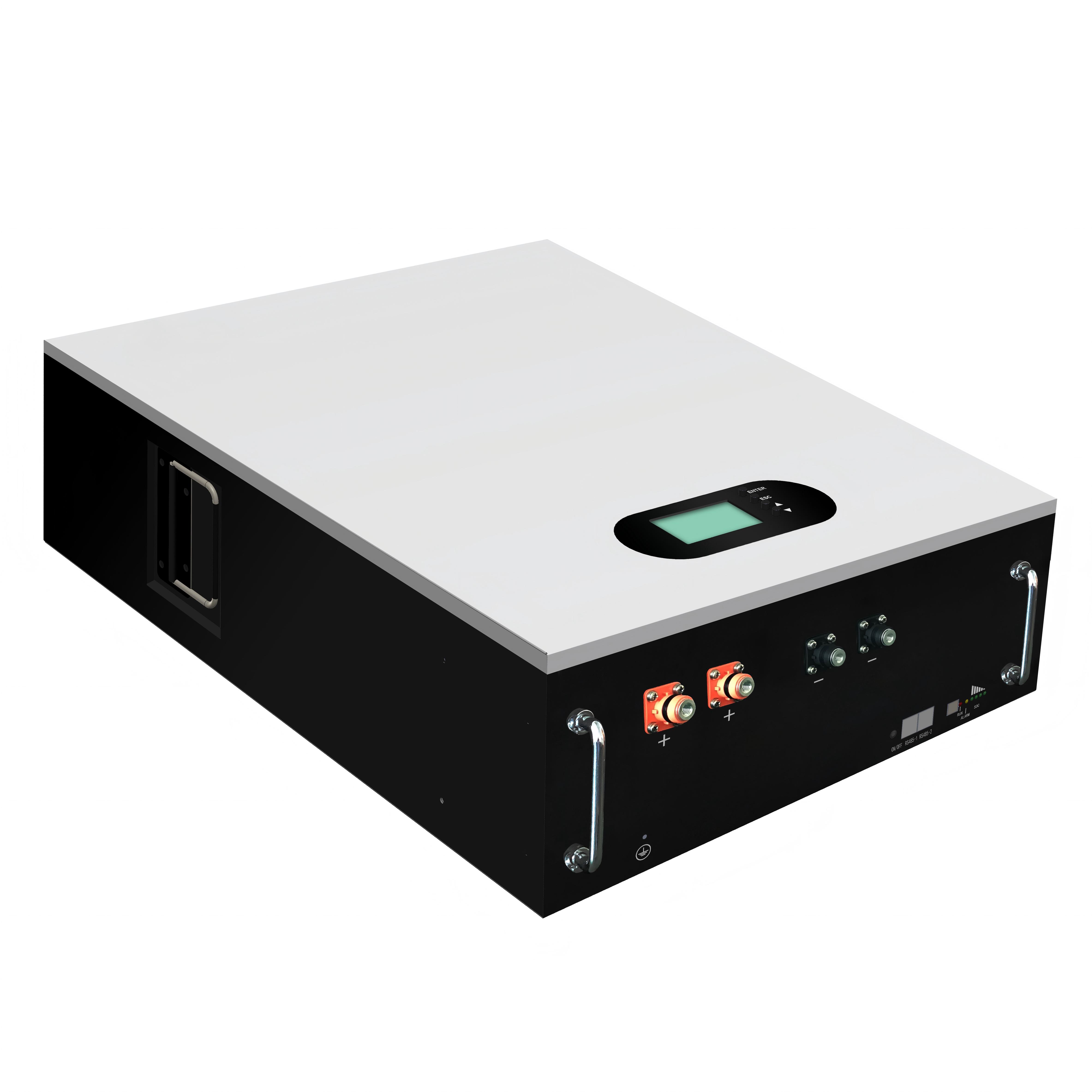
The LiFePO4 48V 200Ah battery, available in 5kWh, 10kWh and 15kWh single-package capacities.
Step-by-Step Breakdown: How to Configure a Home Solar Kit for Backup
Configuration, not brand selection, is what determines whether a home solar power system with battery storage performs as expected. These are the steps that follow from the specifications above.
- Audit the backup load, not the whole bill. List the circuits that must stay live: refrigeration, lighting, communications equipment, medical devices, security. This number decides whether a 5KW, 8KW, 10KW or 15KW standard system is the right starting point.
- Choose the operating mode. Decide between off-grid standalone operation and hybrid on-grid/off-grid operation. Hybrid keeps grid interaction available while preserving backup capability; off-grid standalone is the correct choice for islands and regions with undeveloped grids.
- Match battery capacity to daily cycling. Select 5kWh, 10kWh or 15kWh single-package units of the LiFePO4 48V 200Ah battery, and confirm the cycle rating of ≥3000 cycles at 80% DOD. This parameter sets how long the battery remains serviceable under daily charge and discharge.
- Confirm the inverter ceiling before buying batteries. The 48V UL1741 Solar Inverter with WiFi spans 3kW, 5kW, 10kW, 20kW and 50kW rated power, accepts 110V–150V DC adaptable to multiple 48V batteries in series, and delivers ≥98.5% conversion efficiency. Choosing the inverter first prevents rebuilding the DC side later.
- Check solar controller headroom. Every home system in this ranking uses a 100A MPPT solar controller — relevant when the array may be enlarged after the first phase.
- Verify site conditions. The operating range is -20°C to 60°C with IP65 protection, and the equipment should be installed in a dry, well-ventilated room with space for the products.
- Confirm market compliance. For EU deployment, verify documentation against IEC 62619 (lithium battery safety) and EN 62040-1 (general system safety). VLAND's company profile lists CE, TUV, IEC and BIS certifications.
- Validate before scaling. Because VLAND supplies either the entire set or individual items, a single battery or inverter can be evaluated before a complete home solar kit is ordered.
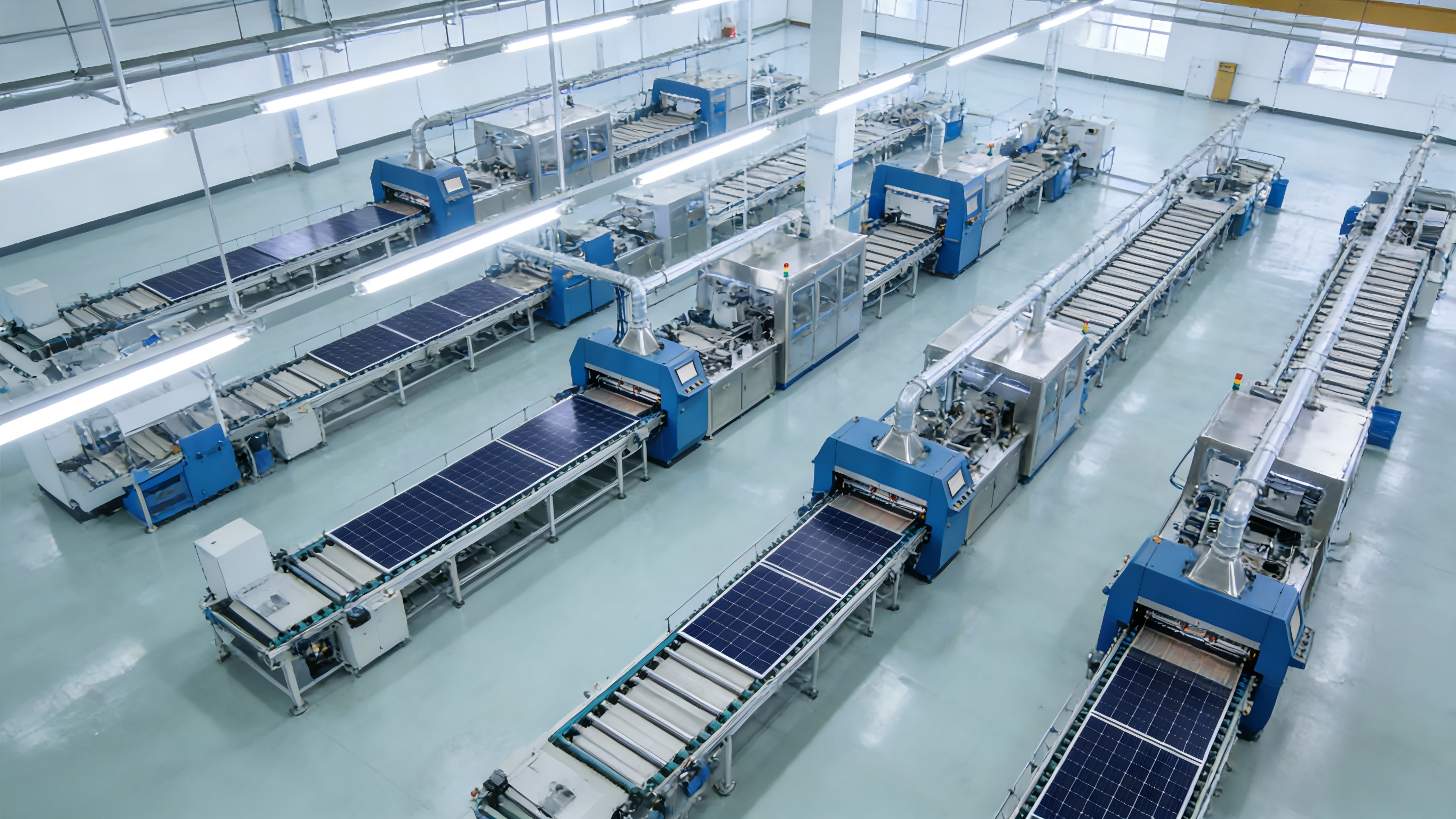
VLAND's 7,000 m² production facility — annual output of 43,200 units, with a 35-person team and a 5-engineer R&D group.
Use Cases: Where Each Setup Fits in Practice
- Islands and regions with undeveloped grids. Off-grid standalone operation, where solar panels generate, batteries store and an inverter converts DC to AC for the load. VLAND's off-grid application profile lists deployment conditions across Europe, North America, the Middle East and Asia.
- Private residences. Whole-home backup with the 15KW class, or essential-load protection with the 5KW class, with hybrid on-grid/off-grid operation available wherever the grid exists but cannot be trusted.
- Small supermarkets and light commercial sites. The LiFePO4 48V 200Ah battery is specified for residential PV energy storage and small industrial and commercial energy storage, which makes it applicable to small retail backup as well as homes.
- Agriculture and telecom base stations. These appear in the applicable-industry list for both the battery and the inverter, alongside microgrid and energy storage power station applications.
A consistent pattern emerges across these cases: the same 48V LiFePO4 platform and the same 100A MPPT controller sit behind all three setups, so the decision is about scope and footprint rather than about which technology to adopt.
Comparison Table: Three Home Solar Backup Setups Side by Side
| Rank and role | System model | Battery architecture | Backup-relevant specifications | Primary fit |
|---|---|---|---|---|
| #1 — Whole-home backup | Home Solar Power System with Battery Storage, 15KW Standard System (off-grid, hybrid capable) | 48V battery voltage, LiFePO4, 5kWh/10kWh/15kWh packages | -20°C to 60°C; IP65; AC input 260V; AC output 230VAC ±5%; MPPT solar controller 100A; die-cast aluminum housing, monocrystalline silicon panels | Homes requiring whole-home backup with hybrid on-grid/off-grid operation |
| #2 — Daily cycling | Home Solar Power System with Battery Storage, 10KW Standard System | 48V battery voltage, LiFePO4, 5kWh/10kWh/15kWh packages | -20°C to 60°C; IP65; AC input 260V; AC output 230VAC ±5%; MPPT solar controller 100A; die-cast aluminum housing, monocrystalline silicon panels | Mid-size family homes balancing daily cycling against outage coverage |
| #3 — Essential load and staged build | Home Solar Power System with Battery Storage, 5KW Standard System (off-grid) | 48V battery voltage, LiFePO4, 5kWh/10kWh/15kWh packages | -20°C to 60°C; IP65; AC input 260V; AC output 230VAC ±5%; MPPT solar controller 100A; die-cast aluminum housing, monocrystalline silicon panels | Essential circuits, islands and underdeveloped-grid regions, first-phase builds |
| Component | Verified specification | Why it matters for backup |
|---|---|---|
| 48V UL1741 Solar Inverter with WiFi | Rated power 3kW/5kW/10kW/20kW/50kW; DC input 110V–150V, adaptable to multiple 48V batteries in series; AC output 400V AC (three-phase, EU industrial standard); conversion efficiency ≥98.5%; aluminum alloy shell, PCB circuit board, copper terminal | Sets the expansion ceiling — determines how much battery capacity and load the system can grow into |
| LiFePO4 48V 200Ah Solar Storage Lithium Battery | LiFePO4 chemistry; rated voltage 48V; single package capacity 5kWh/10kWh/15kWh; cycle life ≥3000 cycles at 80% DOD; LiFePO4 cell, aluminum alloy shell, ABS flame-retardant auxiliary shell | Defines stored energy and cycling durability under daily charge and discharge |
| Home Solar Power System with Battery Storage | Standard systems at 5KW, 8KW, 10KW and 15KW; battery voltage 48V; AC input 260V; AC output 230VAC ±5%; MPPT solar controller 100A; -20°C to 60°C; IP65; die-cast aluminum housing, monocrystalline silicon panels, LiFePO4 battery | Delivers the turnkey package — generation, storage and conversion sized to work together |
FAQ: Home Solar Power System with Battery Storage
What certifications should a home solar power system with battery storage carry?
IEC 62619 covers lithium battery safety and EN 62040-1 covers general system safety for entry into the EU market (TÜV SÜD), so both are baseline references for residential storage sold in Europe. VLAND's company profile lists CE, TUV, IEC and BIS certifications across its solar energy storage systems and integrated microgrids, and its product line includes the 48V UL1741 Solar Inverter with WiFi.
How much backup can a 48V LiFePO4 home battery provide?
VLAND's LiFePO4 48V 200Ah solar storage lithium battery is supplied in 5kWh, 10kWh and 15kWh single-package capacities at a rated voltage of 48V, with a cycle life of ≥3000 cycles at 80% depth of discharge. Actual backup duration depends on how much of that capacity is installed and how large the backed-up load is — which is why the complete systems are sized in 5KW, 8KW, 10KW and 15KW standard configurations, all running 48V battery voltage with a 100A MPPT solar controller.
What determines the cost of a home solar power system with battery storage?
Four specification-level drivers appear in the published data: battery capacity (5kWh, 10kWh or 15kWh single packages), overall system size (5KW, 8KW, 10KW or 15KW standard systems), inverter rated power (3kW, 5kW, 10kW, 20kW or 50kW in the 48V UL1741 inverter line), and how much of the build is customized. Because VLAND supplies either the entire set or individual items, a staged purchase is possible instead of a single full-system commitment, and a configuration-based quotation is the accurate basis for budgeting.
Can a single battery or inverter be validated before ordering a full system?
Yes. VLAND's supply model covers either the entire set or individual items, so a buyer can evaluate one LiFePO4 battery or one 48V UL1741 inverter before committing to a complete home solar kit. VLAND also states that customized solutions are tailored to specific client requirements, which allows a sample stage to be scoped to the exact configuration under consideration. Sample and quotation requests can be sent to inn@v-land.ltd or +86 130 0169 0010.
How do I confirm the right setup and timeline for my home?
Confirm the backup load first, match it to a system size and battery package capacity, then verify the site. VLAND's off-grid application profile specifies outdoor installation across a wide temperature range (-20°C to 60°C) with a dry, well-ventilated room for the equipment, and the company builds customized solutions around specific client requirements. The fastest route from shortlist to a firm configuration is a structured inquiry: share the backup load, the preferred system size and the site conditions, and request a quotation through www.v-landenergy.com.
Conclusion: Choose the Setup, Then Confirm the Specification
For residential backup, the three configurations differ mainly in scope. The 15KW Standard System carries whole-home backup with hybrid capability; the 10KW Standard System is the daily-cycling middle ground for mid-size family homes; the 5KW Standard System covers essential loads and serves as a staged first phase. All three share the same 48V LiFePO4 battery platform, the same 100A MPPT solar controller, the same -20°C to 60°C and IP65 ratings, and the same 230VAC ±5% AC output.
What changes between them is scalable capacity — 5kWh, 10kWh and 15kWh battery packages, and an inverter line rated from 3kW to 50kW with 110V–150V DC input adaptable to multiple 48V batteries in series. That is the parameter worth confirming before ordering, because it decides whether the system grows with the household or has to be replaced.
Next Step: Match a Setup to Your Backup Load
VLAND supplies complete home solar power systems with battery storage, standalone LiFePO4 batteries and 48V inverters — as full sets or individual items. Download the product brochure for the full specification set, or send your backup load and site conditions for a configuration-based quotation.
Download the VLAND product brochure (PDF) · www.v-landenergy.com · Email: inn@v-land.ltd · Phone: +8653288509986 · Mobile: +8613001690010
Have Questions or Need More Details?
Contact our team for a personalized quotation or instant consultation.
Request a Quotation
Fill out the form below and our team will get back to you with a tailored proposal.
WhatsApp Direct Chat
Prefer to chat in real-time? Message us on WhatsApp for instant assistance & quick answers.
- Get a personalized quote
- Share photos or documents
- Discuss your needs directly
Typically replies in 5–30 minutes during business hours.