
Choosing Between a Kids Soft Playground and an Indoor Rope Course: A Head-to-Head Decision
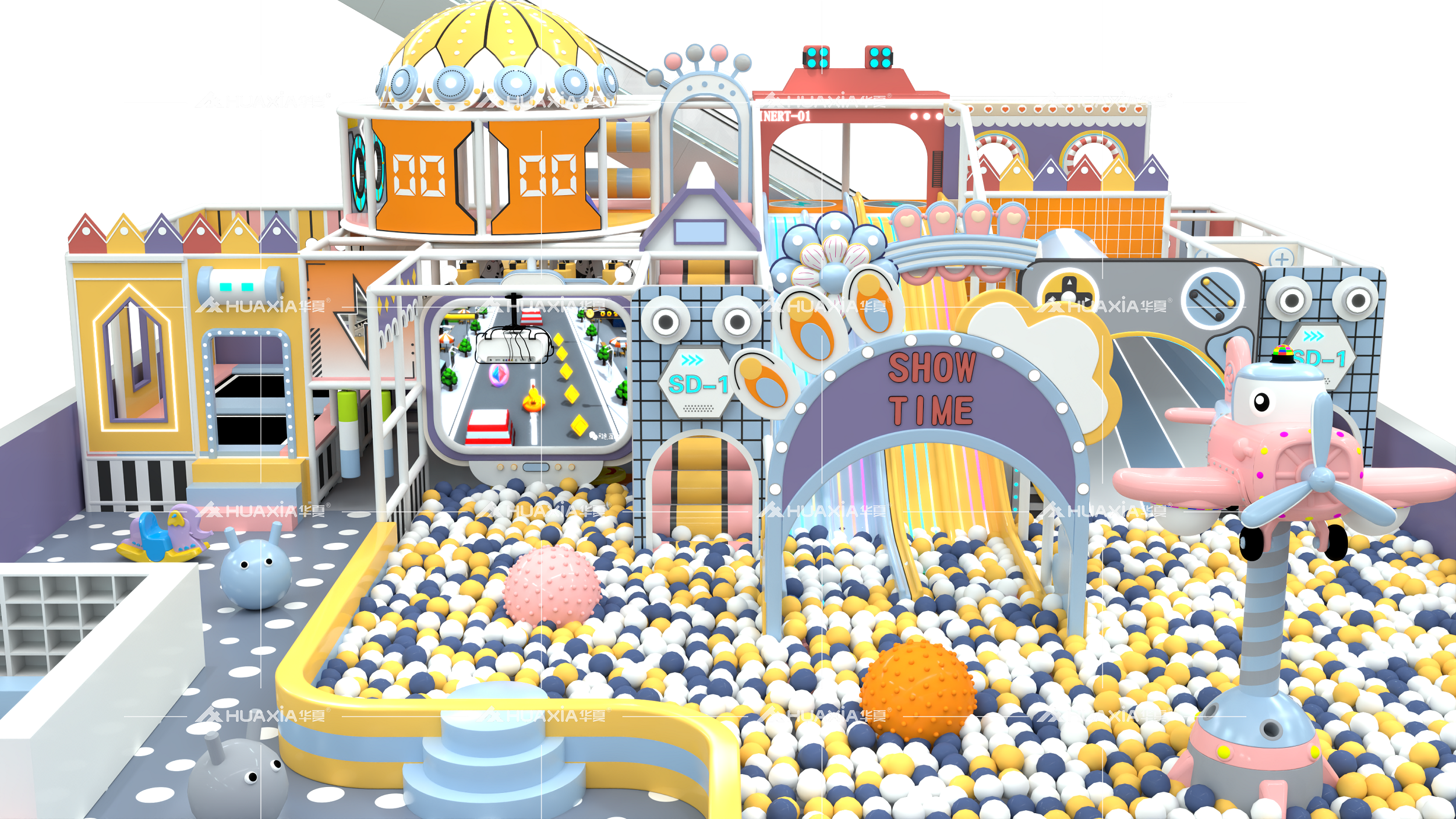
A kids soft playground and an indoor rope course solve two different problems inside the same building. The soft playground moves families through a wide age band and keeps them on site for repeatable, low-skill sessions. The rope course turns part of the floor plan into a skills challenge that holds the visitors a soft play area alone tends to lose.
By the time most buyers reach this question, the venue type, the floor area and a rough budget are already fixed. The real question is no longer which product is better, but which one matches the age mix, the difficulty entry point and the operating model the venue will actually run. This guide answers it in that order, using two reference configurations from Vasia: the soft playground VS1-250519-2250-3-60 and the rock climbing wall VS1-250522-1900B-30, which is classified as rope course equipment.
Short answer. Choose the soft playground when the venue's revenue depends on family volume across the toddler and school-age bands. Choose the rope course when the venue needs a challenge element that retains older children, teenagers and accompanying adults. Choose both, in that sequence, when floor area and budget allow a staged build.
Why this decision is easy to get wrong
Buyers rarely misjudge the equipment itself. They misjudge the visitor. Three specific errors account for most of the mismatch between a purchased structure and an operating venue.
- Comparing renders instead of age mix. A rope course is more photogenic and reads as more advanced in a proposal. If the venue's catchment is dominated by children under six, that visual advantage converts into idle capacity.
- Assuming one supervision model. Soft play and challenge equipment place different demands on staffing, sightlines and fall-protection design. Budgeting for one and staffing for the other is a common gap.
- Budgeting the purchase price only. A non-powered structure earns over its service life, not at the invoice. Maintenance intensity and through-life cost matter more than the opening order value.
A fourth error is timing. Soft play and rope courses are usually installed in the same phase of a build, so treating them as alternatives forces a decision before the age-mix data is mature. Running them as a staged pair keeps both options open.
What is happening in the indoor entertainment market
Indoor commercial playgrounds have become more widespread as venues compete for family visits that are not weather-dependent. Commercial research estimates the global family entertainment center market at USD 34.4 billion in 2025, with a projected CAGR of 10.5% through 2035, and places soft play equipment at roughly 31.4% of the indoor playground equipment market in 2025. Those two figures describe different scopes and should be read as directional context, not as a forecast for any single project.
The operational reading is simpler. Soft play remains the highest-volume category inside indoor play areas, and challenge equipment is what operators add once the family base is established and older children start dropping out of the visit. The decision in front of a buyer is therefore rarely soft play or nothing. It is soft play first, challenge second, or both in one build.
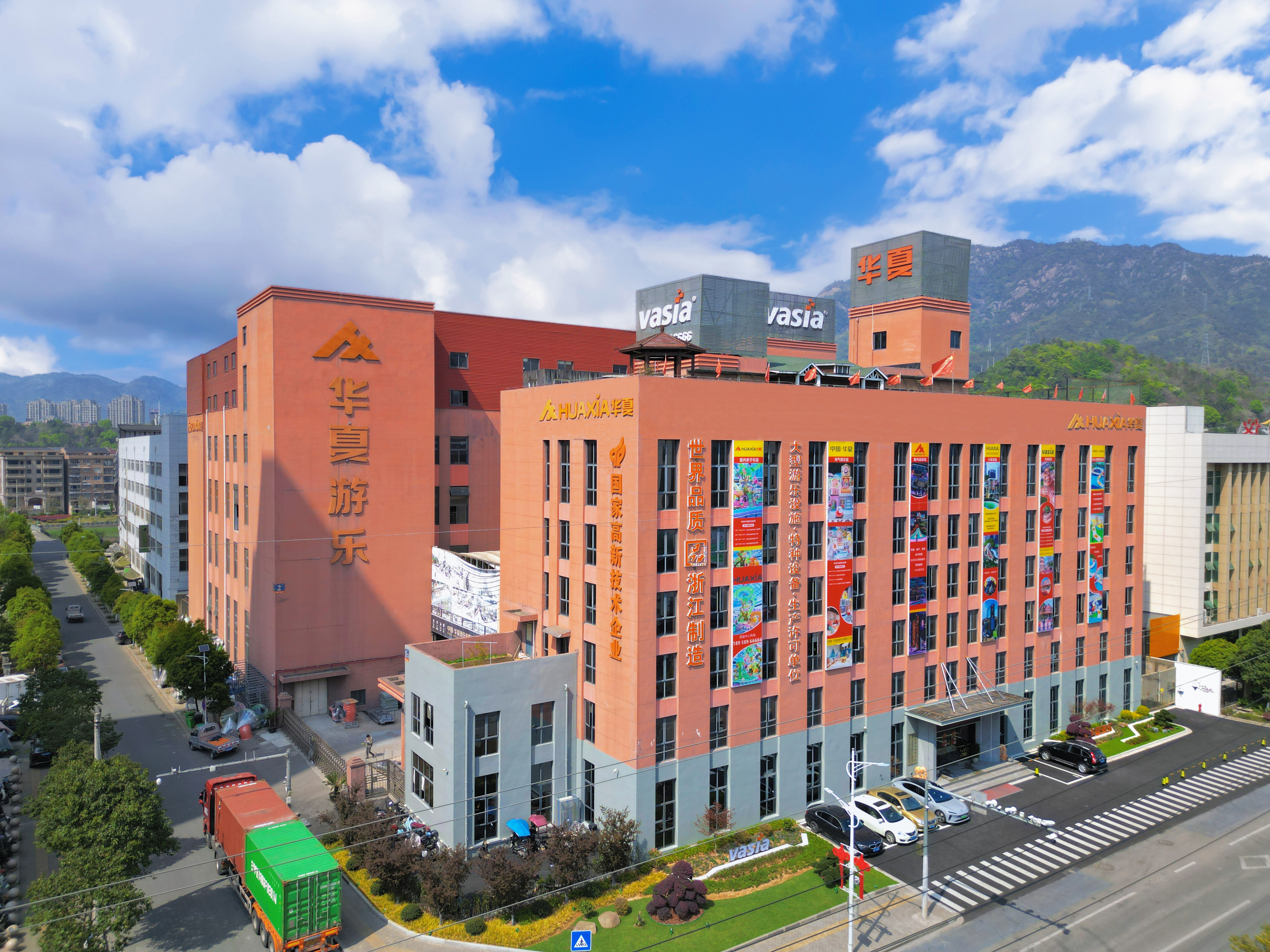
Vasia, the brand of Huaxia Amusement Co., Ltd., is an indoor amusement equipment manufacturer established in 2000 and based in Qiaoxia Town, Zhejiang Province, China. The company operates a 30,000 m² production facility with more than 200 employees and a 30-person R&D team, exports to more than 100 countries, and reports an export ratio of 70% across markets that include the EU, USA, South America, the Middle East and Southeast Asia.
The two options as they are actually built
Kids soft playground: VS1-250519-2250-3-60
A soft playground is a multi-level indoor play structure. In Vasia's portfolio it is assembled from galvanised steel tubing, PVC sheathing, EPE and EVA foam and LLDPE slides, and it carries the soft play modules, ball pits, multi-slide combinations and climbing structures that make up a family play area.
The age coverage is the defining commercial property. Vasia's product range is organised around toddler zones of 0 to 6 years, school-age play areas of 6 to 12 years, and youth and adult challenge courses. A soft playground configuration sits in the first two bands, which means a single structure can serve a family with a three-year-old and a nine-year-old at the same time. Sessions are self-directed, repeatable and do not require a skill prerequisite.
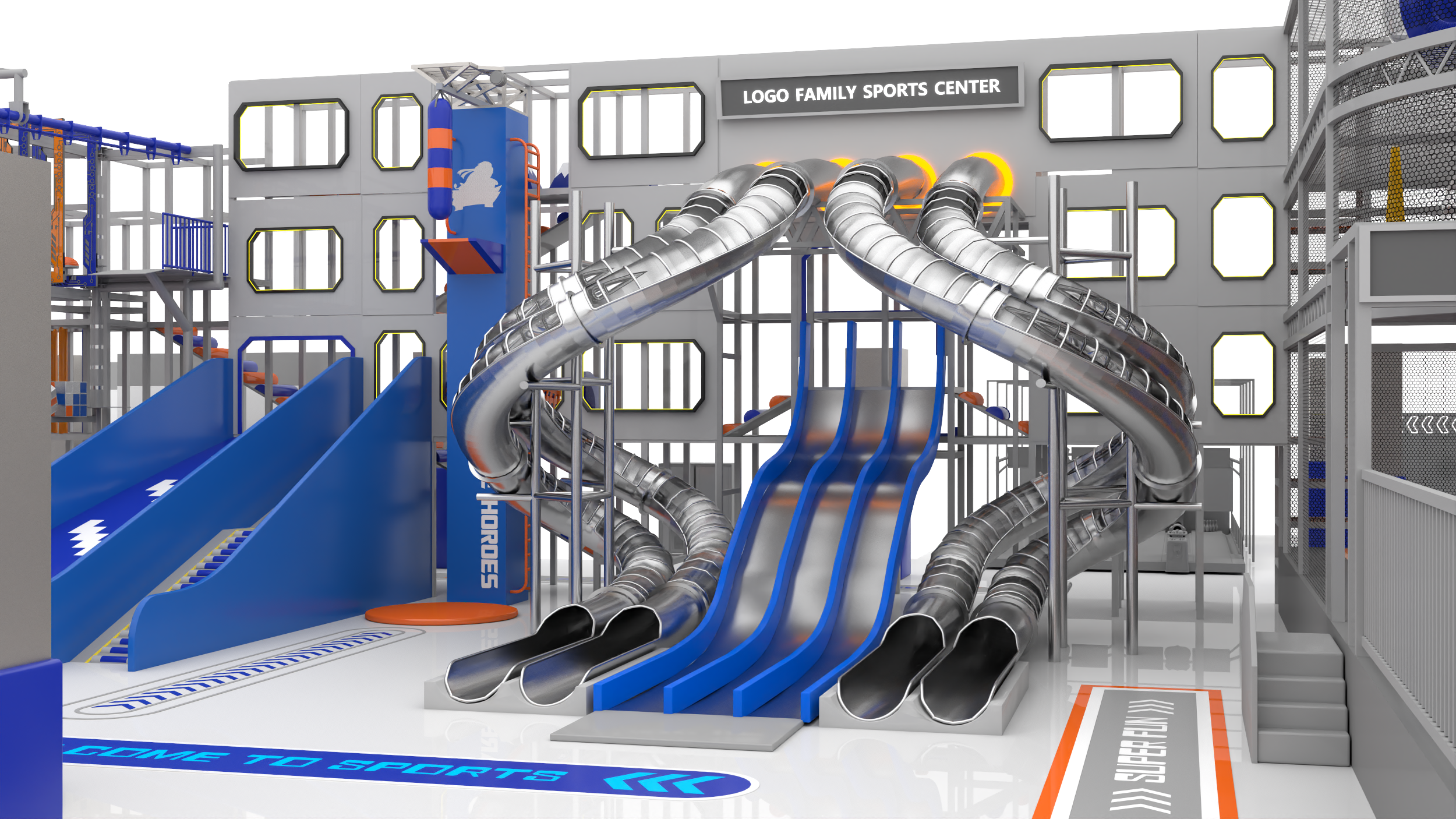
Indoor rope course element: VS1-250522-1900B-30
The rock climbing wall VS1-250522-1900B-30 sits in the rope course equipment category, and that classification matters more than the product name. Vasia's stated coverage includes indoor playgrounds, trampoline parks, rope courses, ninja courses, climbing walls and zip lines, so challenge elements and soft play come from the same manufacturing base rather than two separate supply chains.
Where the soft playground lowers the entry barrier, a rope course raises it. The structure assumes a visitor who is willing to climb, balance and accept a challenge, and it is designed toward the youth and adult end of the age range. Sessions are shorter, effort-based and progress with skill. That is precisely why it retains visitors who have aged out of soft play, and precisely why it cannot carry a venue whose catchment is mostly under six.
Shared economics, shared risk controls
Both options are non-powered. In Vasia's comparison of non-powered equipment against traditional powered or electric amusement equipment, non-powered structures show zero energy consumption, a lifespan extended by 2.5 times, up to 85% less maintenance and a total cost of ownership around 50% lower over five years, with an initial cost 10% to 20% lower. Because both the soft playground and the rope course fall on the non-powered side, the cost difference between them comes from configuration and floor area, not from energy or drive systems.
The risk register is also shared. Vasia's published control set addresses four recurring hazards: fall impact, handled by impact-absorbing flooring and height-differentiated protection zones; sharp edges and entrapment, handled by rounded-edge treatment and gap-compliance design; structural loosening, handled by an anti-loosening fastener system, modular locking design and pre-installation load testing; and material ageing or emission, handled by non-toxic material certification, fire-retardant coating and batch material traceability with third-party lab testing. On a rope course the fall-impact controls carry more design weight; on a toddler soft playground the entrapment and material controls do.
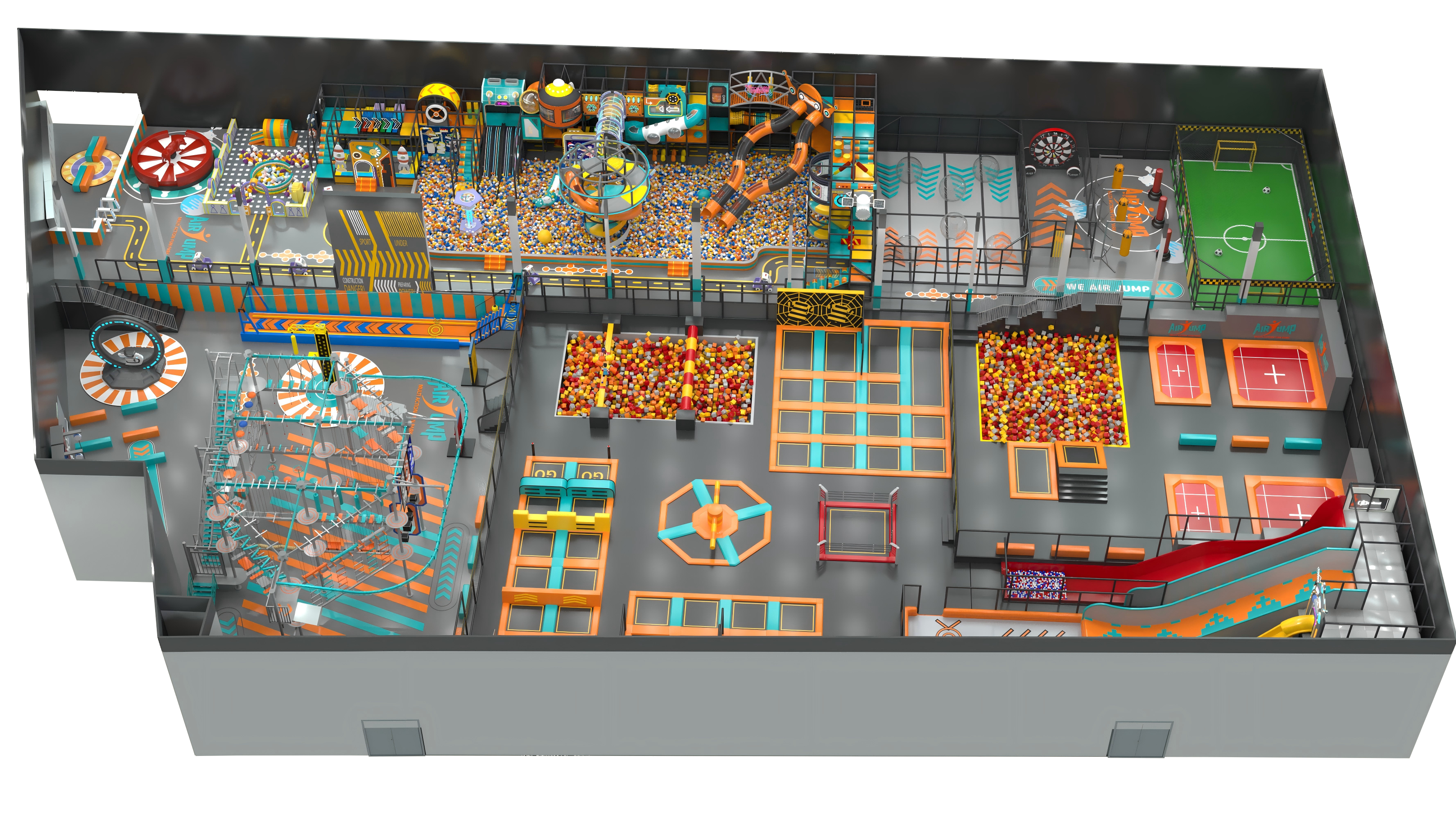
Head-to-head comparison
| Decision dimension | Kids soft playground (VS1-250519-2250-3-60) | Indoor rope course element (VS1-250522-1900B-30 class) |
|---|---|---|
| Primary age band | Toddler 0–6 and school-age 6–12 zones | Youth and adult challenge courses |
| Difficulty curve | Low entry point; no skill prerequisite; difficulty comes from structure variety, not from visitor ability | Higher entry point; assumes willingness to climb and balance; difficulty increases with the visitor's skill |
| Session pattern | Long, self-directed, repeatable across visits | Shorter, effort-based, progress-driven |
| Fall-protection implication | Impact-absorbing flooring plus height-differentiated protection zones across play levels | Same control logic, weighted toward the elevated challenge elements and their landing zones |
| Compliance basis | ASTM F1918 and EN 1176 frameworks; CE, UKCA, CPSIA and SASO; ISO 9001 quality management; testing by SGS and TÜV | Same supplier-level framework; request the element-specific standards reference and tested model scope before signing |
| Energy and maintenance position | Non-powered: zero energy consumption, up to 85% less maintenance than powered alternatives | Non-powered: same position on energy and maintenance |
| Commercial role | Volume driver; converts families and drives repeat visits | Retention driver; holds older children, teenagers and accompanying adults |
| Best fit when | The catchment is family-led, the venue needs broad age coverage, and first-time visitors must be able to enter play immediately | The venue already has a family base and needs to extend visit length or attract an older visitor segment |
| Weaker fit when | The venue targets teenagers and adults and has no toddler or school-age demand | The catchment is dominated by children under six, or supervision capacity is limited |
Step-by-step: how to reach the decision
Step 1 — Fix the age mix before the equipment mix
Write down the expected share of visitors in the 0–6, 6–12 and youth-to-adult bands. If more than half of visits involve a child under six, the soft playground is the anchor and the rope course is an accessory. If the venue already serves school-age children and loses them at the older end, the reverse applies.
Step 2 — Choose the difficulty entry point
Ask what a first-time visitor must be able to do to start playing. On a soft playground the answer is nothing beyond entering the structure. On a rope course the answer involves climbing and balancing. Whichever answer matches the venue's first-time visitor is the correct anchor.
Step 3 — Map floor area to zones, not to products
Allocate area by protection zone rather than by equipment list. Height-differentiated protection zones and impact-absorbing flooring have to be planned before the structure is ordered, and the split between low-level and elevated play determines how much of each option fits.
Step 4 — Close the compliance gate
Request the certificate, the tested model and the scope of testing, not just a standards claim. Vasia works to ASTM F1918 and EN 1176 safety frameworks with CE, UKCA, CPSIA and SASO certification, ISO 9001 quality management and testing validated by SGS and TÜV. Confirm which of those documents apply to the specific model being quoted.
Step 5 — Model the through-life cost
Compare five-year cost rather than invoice value. On the non-powered comparison basis, Vasia reports an initial cost 10% to 20% lower, total cost of ownership about 50% lower over five years and up to 85% less maintenance against powered alternatives. Between the two non-powered options, the driver is configuration and area.
Step 6 — Validate before you commit
Use design preview and pre-shipment testing to confirm the layout performs as planned. Vasia uses 3D modeling and VR preview so a client can experience the project virtually before production begins, each new product passes prototyping and safety validation before mass production, and acceptance is based on a pre-shipment test.
Four buyer scenarios
Mixed-age family entertainment center
This is the most common case and usually ends in a staged build. The soft playground goes in first as the volume structure across the toddler and school-age bands; the rope course follows as the retention element once the family base is visible in the visitor data. Sourcing both from one manufacturer keeps the protection-zone design, the material set and the compliance documents consistent.
Kindergarten or school project
Here the soft playground is normally the whole answer. The relevant age band is 0–6, the supervision model is staff-led, and the priority shifts to entrapment control, non-toxic materials and rounded-edge treatment. A rope course adds supervision load that this setting is rarely built for.
Teen-focused urban venue
If the catchment skews older, the rope course or ninja course configuration is the anchor and soft play becomes the secondary zone for younger siblings. The investment case rests on retention and visit length, not on family volume.
Distributor or multi-site operator
A distributor needs both categories available from one source so a single catalogue can serve different venue types. Vasia's coverage of indoor playground, trampoline park, rope course and ninja course equipment allows a combined scope, and the delivery plan can run through CAD layout, 3D design, production, packing, shipping and installation.
Where each option stops being the right answer
The soft playground stops being right when the venue's revenue depends on visitors older than twelve and nothing in the plan converts them. Adding capacity to a structure nobody in the catchment has aged into is a slow write-off.
The rope course stops being right when the venue lacks the supervision capacity to run a challenge element, or when the catchment cannot supply enough visitors willing to attempt it. It is also the weaker first purchase when the operator has no visitor data at all, because its value depends on an audience that the soft playground would otherwise have created.
Frequently asked questions
Which standards and certification documents should I check before choosing either option?
Both categories sit inside the same compliance framework at Vasia. Products follow ASTM F1918 and EN 1176 safety frameworks and carry certification including CE, UKCA, CPSIA and SASO, with an ISO 9001 quality management system and testing validated by SGS and TÜV. Ask for the certificate, the tested model and the scope of testing, because a company-level standards claim and a model-level certificate are different documents. Check that the design also shows the structural controls: impact-absorbing flooring and height-differentiated protection zones for fall impact, rounded-edge treatment and gap-compliance design for entrapment, anti-loosening fasteners with pre-installation load testing for structural loosening, and non-toxic material certification with fire-retardant coating for material risk.
Can one manufacturer deliver both a soft playground and a rope course element?
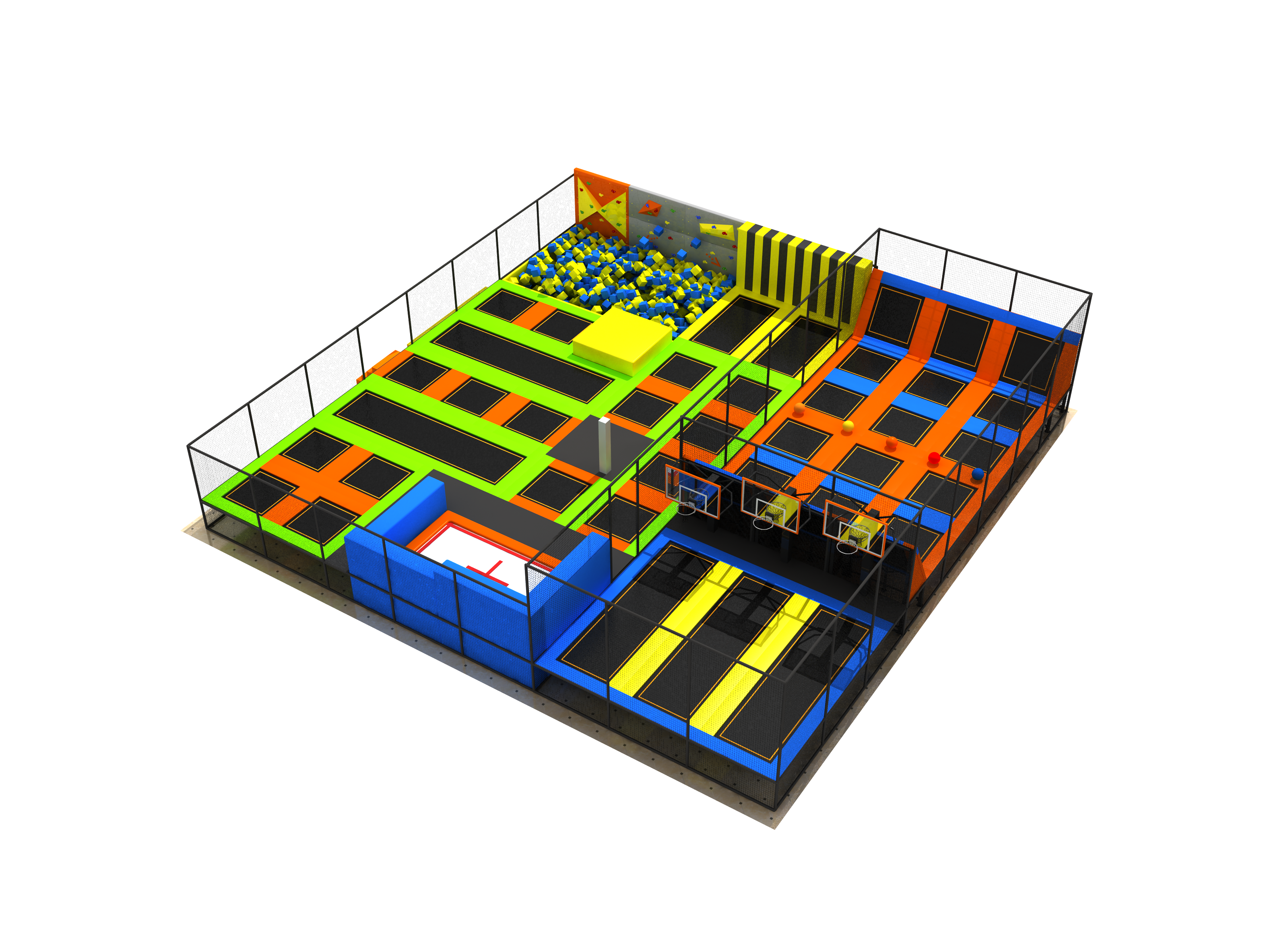
Yes, within one supply scope. Vasia manufactures indoor playgrounds, trampoline parks, rope courses, ninja courses, climbing walls and zip lines, so a combined soft play and challenge project can be handled as a single order rather than two. The production base is a 30,000 m² facility with more than 200 employees and a 30-person R&D team, backed by more than 192 patents and copyrights. Delivery can include CAD layout, 3D design, production, packing, shipping and installation, with 3D modeling and VR preview used to confirm the layout before production.
How should I budget the two options against each other?
Budget at project level, not at product level. Both options are non-powered, so neither carries energy cost, and the comparison that applies to both is the non-powered baseline: initial cost 10% to 20% lower than powered alternatives, total cost of ownership around 50% lower over five years, up to 85% less maintenance and zero energy consumption. The difference between the soft playground and the rope course therefore comes from configuration, floor area, protection zones and installation scope. Payment terms for a confirmed order are 30% T/T deposit before production and 70% T/T balance before shipping, with delivery terms available as EXW, FOB or CFR.
Can I validate the design or test a unit before a full build?
Yes. The minimum order quantity is one unit, so a single structure can be ordered without committing to a full venue. Design validation happens earlier, through 3D modeling and VR preview that let the buyer experience the project virtually before production starts, and each new product passes prototyping and safety validation before mass production. Acceptance is based on a pre-shipment test, which gives the buyer a defined checkpoint before the equipment leaves the factory.
What lead time should I plan for?
Typical production lead time is 15 to 45 days, against a monthly production capacity of 8,000 units, and freight and installation are planned as separate project stages. For long-horizon planning, a completed reference in Spain using product 3606 on a 3,000 m² site has shown stable operation and stable income results over five years in the EU market. To move from evaluation to a dated plan, request a project quotation or a single-unit sample through Vasia and confirm the model scope, certificate set and delivery terms for your destination.
Conclusion: decide the visitor, then the structure
The soft playground and the indoor rope course are not competing answers to one question. They answer two: how a venue captures family volume, and how it retains visitors who have outgrown it. Buyers who settle the age mix and the difficulty entry point first usually find the equipment decision has already been made for them, and the remaining work is configuration, compliance and delivery planning.
Where both are viable, sequence them. Soft play establishes the family base; the rope course converts part of that base into longer, more advanced visits. Vasia manufactures both categories from one production base, which keeps the protection-zone design, the material set and the certification documents consistent across a combined project.
Next step: sample, quotation or catalogue
Send your floor plan, target age mix and destination market to receive a configuration proposal covering the soft playground, the rope course element or both.
Download the product catalogue: Vasia catalogue (PDF)
Website: www.vasiaplayground.com
Email: huaxiatoys@huaxiatoys.com
Tel: 86-189 6887 6888 · WhatsApp: 8618968876888
Address: Yangxia Industrial Zone Park Road, Qiaoxia Town, Yongjia County, Wenzhou City, Zhejiang Province, China
Have Questions or Need More Details?
Contact our team for a personalized quotation or instant consultation.
Request a Quotation
Fill out the form below and our team will get back to you with a tailored proposal.
WhatsApp Direct Chat
Prefer to chat in real-time? Message us on WhatsApp for instant assistance & quick answers.
- Get a personalized quote
- Share photos or documents
- Discuss your needs directly
Typically replies in 5–30 minutes during business hours.