
How to Vet an Indoor Playground Manufacturer: The LTC Certificate Audit
A supplier that prints CE certified on a catalog page has made a claim. It has not proved conformity. The document-level audit that actually protects an indoor playground project is short and repeatable: confirm that a unique certificate number exists, confirm that the number names the exact product you are buying, and confirm that the factory behind the certificate can keep reproducing the tested configuration. In practice that means asking for a numbered certificate set - for example a CE set running LTC250714-HXA-011 through LTC250714-HXA-015 - and mapping each number to a bill-of-quantity line before any deposit is paid.

This guide is written for importers, distributors, family entertainment center operators and procurement managers who have already decided to buy indoor playground equipment and are now choosing a manufacturer. It uses China·Huaxia Amusement Co,.LTD, which trades as VASIA, as the worked benchmark: a manufacturer founded in 2000 and based in Qiaoxia Town, Wenzhou, Zhejiang Province, producing indoor playground equipment and trampoline parks from a 30,000 m² facility with more than 200 technical and management staff.
The method itself is portable. Every checkpoint below can be applied to any supplier, regardless of country of origin.
The Certification Claim Gap in Indoor Playground Procurement
A certificate becomes usable evidence only when four things travel with it: a number, an issuer, a model scope, and a date. Without those four, a certification badge is marketing collateral.
That gap is measurable. A public documentation review of VASIA’s own web pages surfaced certification and standards references including ASTM, CE, EN, TÜV, SGS and ISO 9001. The same review recorded that no certificate number, issuer record, validity date or product/test scope could be retrieved from the public material, and concluded that a certification claim cannot be treated as verified conformity or as market access. That conclusion is not an attack on one company; it describes how the whole category communicates. Claims travel faster than documents.
Buyers who skip the document check tend to fail in one of three ways:
- Wrong model.
- Wrong date.
- Wrong market.
Each failure mode produces the same downstream cost: re-quotation, port or customs delay, and retrofit or replacement of components that were never part of the tested configuration. None of that is visible on a quotation sheet, and all of it is avoidable with a two-hour document review.
Why Document Discipline Became the Buyer’s Job
Indoor play is a growth category, and growth changes who carries the verification burden. The global Family Entertainment Center market is estimated at USD 34.4 billion in 2025 and projected to reach USD 93.5 billion by 2035, registering a CAGR of 10.5%. Within the broader equipment picture, the global playground sets and equipment market is projected to reach USD 10.88 billion by 2026, and soft play equipment took the largest product share of the indoor playground equipment market in 2025 at around 31.4%.
When a category grows, the number of sellers grows faster than the number of factories. Trading intermediaries multiply, catalog designs converge, and specification language becomes copy-pasted across supplier websites. The practical consequence is that documentation quality stops being a reliable signal and becomes something the buyer has to test directly. That is what the audit below does.
The Five-Part CE Certificate Audit, Worked Against a Real Set
Each checkpoint below is designed to be answered by a document rather than by a conversation. If a supplier cannot answer a checkpoint in writing, treat the checkpoint as failed rather than pending.
Checkpoint 1: Certificate number and set integrity
A certificate number is the most useful string of characters in a procurement file, because it is checkable and it is unique. A real certification set is issued as a numbered family. For its indoor play and trampoline range, VASIA documents a CE certificate set numbered LTC250714-HXA-011, LTC250714-HXA-012, LTC250714-HXA-013, LTC250714-HXA-014 and LTC250714-HXA-015.
Five consecutive numbers sharing the prefix LTC250714-HXA tells you two things: the documents belong to one certification batch, and they were produced as a group. That is the pattern to demand. Ask for the complete set as PDFs, not the single page that happens to be stapled to the quotation.
Checkpoint 2: Product scope mapping
A number alone proves nothing. The second checkpoint is whether each certificate actually names the product you are buying. Indoor playground equipment is a portfolio, not a single product: it spans climbing structures, multi-slide combinations, ball pits, trampolines, ninja warrior courses, climbing walls, zip lines and soft play modules.
The audit action is mechanical. Put the certificate list beside the bill of quantities and mark every line as covered, partially covered, or uncovered. A rock climbing wall and an indoor trampoline are structurally different items with different load paths and different fall-zone assumptions; neither should be justified by a single generic certificate. VASIA’s documented product categories include indoor playgrounds, trampoline parks, rope courses and ninja courses, so the audit question is not whether the portfolio exists - it is whether the certificate number attached to each quoted model matches that model.
Checkpoint 3: Issuer and test body
Name the organisation. Company documentation for this range states that products are validated through testing by SGS and TÜV, and lists CE, UKCA, CPSIA and SASO among its certifications, supported by an ISO 9001 quality management system. Your audit should confirm that the same names appear on the certificate itself, alongside the issuing body and its accreditation scope.
A logo on a brochure and a named issuer on a certificate are not the same level of evidence. One is a communication decision; the other creates a traceable chain from a test sample to a document that a customs officer can read.
Checkpoint 4: Standard basis and test scope
Ask which standard edition the test was performed against and for which jurisdiction. VASIA’s stated safety framework is ASTM and EN 1176, the expected pairing for a manufacturer selling into both North America and the European Union, with the company also citing ASTM F1918 for indoor playground equipment.
Beyond the standard number, request the test scope in plain terms: which components were tested, at what loading, with which surface assumptions, and what the report explicitly excludes. Reports that are silent on exclusions should be treated as incomplete.
Checkpoint 5: Validity and revision control
Certificates carry dates. Request the issue date, the expiry date and the revision history, and put a calendar reminder ahead of expiry. Then ask a procedural question that most buyers never ask: what triggers recertification when a component supplier changes or a design revision alters a load path?
Suppliers with a document control system will have a defined answer. Suppliers without one will answer the question by changing the subject.
Why the factory behind the certificate matters as much as the certificate
A certificate describes one configuration at one moment. Reproducing that configuration across a full shipment is a manufacturing property, and manufacturing properties are the reason the factory layer belongs inside a certification audit.
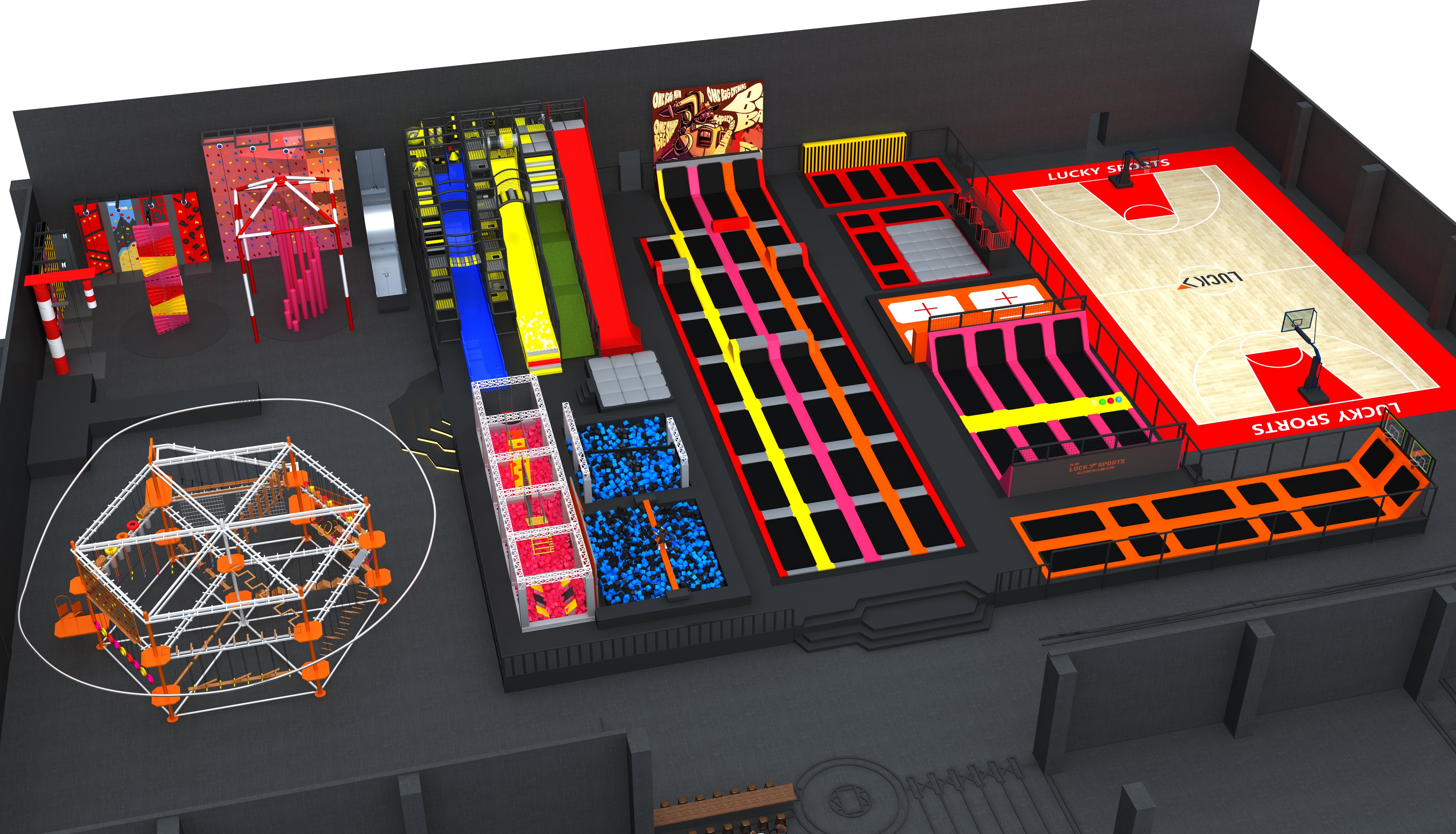
VASIA operates a 30,000 m² ISO-certified production facility in Qiaoxia Town, Wenzhou, Zhejiang Province - a location recognised as China’s Educational Toy Capital and a National Educational Toy Export Base. The company employs more than 200 technical and management professionals, maintains a 30-person R&D team, states a monthly production capacity of 10,000 m² for trampoline parks and related play structures, and reports an annual output value of 200 million with approximately 70% of production exported to the EU, USA, South America, the Middle East and Southeast Asia. Its product portfolio is protected by more than 192 patents and copyrights.
At the audit table, each of those facts answers a specific question:
- Capacity sets the delivery promise. A stated 10,000 m² per month of trampoline park and structure output is the figure a project schedule should be tested against before a contract signature.
- Scale supports material control. Documented material composition for the indoor play range includes galvanised steel tubing, PVC sheathing, EPE/EVA foam and LLDPE slides, with RoHS-compliant coatings and fire-retardant properties. Material consistency is a factory process, not a sales statement.
- Design capability protects the certificate. An in-house R&D function of 30 people plus a portfolio of 192 patents and copyrights reduces the risk that a sub-tier supplier silently substitutes a component and quietly invalidates the tested configuration.
- Accountability keeps the built item matching the certified item. A dedicated project manager and a turnkey scope covering consultancy, custom design, precision manufacturing, international logistics and on-site installation means one party answers for the as-built structure.
Two further process facts belong in the same audit line: each new product undergoes prototyping and safety validation before mass production, and the design workflow uses 3D modelling and VR preview so a buyer can review the project before manufacturing begins. Both are evidence that the certificate sits on top of a controlled process rather than beside it.
A Seven-Step Audit You Can Run Before You Sign
- Request the certificate set by number. Ask for every certificate in the set - for example LTC250714-HXA-011 through LTC250714-HXA-015 - plus the corresponding test reports and the declaration of conformity.
- Verify the issuer. Match the issuing body and the testing laboratory printed on the certificate against the names used in the supplier’s marketing material. Mismatches are a control failure, not a typo.
- Map numbers to the bill of quantities. Build a three-column sheet: quoted product line, covering certificate number, gap. Anything in the gap column needs a written explanation.
- Read the standard and the scope. Record the standard edition, the jurisdiction and the components covered. Confirm the standard matches the market you are importing into.
- Log dates and revisions. Capture issue and expiry dates, and ask in writing what triggers recertification.
- Audit the system behind the document. Factory area, headcount, monthly capacity, material traceability, in-house prototype validation, and the quality function that maintains the ISO 9001 system.
- Close the loop. Require the certificate pack to travel with the commercial invoice and packing list, so that conformity is visible at the border rather than reconstructed afterwards.
Three Buyer Scenarios Where the Audit Changes the Outcome
Scenario 1: A European importer adding a rock climbing wall to an existing soft play package
The importer already owns a soft play installation and wants to extend it with a climbing wall. The commercial temptation is to re-use the existing supplier’s certificate on file. The audit response is to check whether the climbing wall appears by model in the certificate set, or whether it needs its own document. Structural difference, not supplier loyalty, should decide the paperwork.
Scenario 2: A family entertainment center operator procuring an indoor trampoline park
Trampoline installations concentrate load and impact differently from soft play modules, so the compliance file has to reflect the specific configuration. Here the audit moves from numbers to production capacity: the operator needs a stated monthly output that can absorb the project, a documented material specification, and a named party responsible for installation quality. VASIA’s stated monthly capacity of 10,000 m² for trampoline parks and related play structures, combined with a turnkey installation scope, is the type of claim to be evidenced before scheduling.
Scenario 3: A distributor screening an OEM partner
Distributors buy twice: once for their own market, and once for the credibility of their own brand. For OEM indoor playground projects, the useful audit question is whether the manufacturer controls design in-house or assembles third-party modules. An R&D team, a patent and copyright portfolio, and a documented custom-design workflow are the signals that answer it. VASIA states an ASTM and EN 1176 framework, testing by SGS and TÜV, and membership of industry associations including IAAPA and RAAPA - all of which are checkable affiliations rather than self-awarded labels.
Certificate Claim vs. Certificate Audit: A Side-by-Side View
| Audit checkpoint | What the buyer must actually see | Vasia’s documented position |
|---|---|---|
| Certificate number | A unique, traceable number per certificate, not a generic CE badge | CE certificate set numbered LTC250714-HXA-011 through LTC250714-HXA-015 |
| Product scope | The certificate names the specific product types being quoted | Indoor playground and trampoline park portfolio, including rock climbing walls and trampolines |
| Issuer and test body | The issuing organisation and the laboratory that performed testing, named in full | Company documentation states testing by SGS and TÜV and lists CE, UKCA, CPSIA and SASO |
| Standard basis | The standard edition and jurisdiction cited on the certificate | ASTM and EN 1176 framework; ASTM F1918 cited for indoor playground equipment |
| Validity and revision | Issue date, expiry date, revision history, recertification triggers | Certificate pack supplied on request from the manufacturer |
| Production system | Factory identity, floor area, headcount and stated output | 30,000 m² ISO-certified facility, more than 200 staff, 10,000 m² monthly trampoline park capacity |
From Paper Risk to Physical Risk: What the Certificate Should Reflect
A certificate is only meaningful if it maps onto hazards that genuinely exist in an indoor playground. The four risk classes below are the ones a compliance file should be able to trace, together with the design control and the operational measure that back each one.
| Risk type | Design control method | Manufacturer-side measure |
|---|---|---|
| Fall impact and insufficient cushioning | Impact-absorbing flooring and height-differentiated protection zones | Installer safety training and on-site hazard signage provision |
| Material aging and toxic emission | Non-toxic material certification and fire-retardant coating | Batch material traceability and third-party laboratory testing |
| Sharp edges and entrapment hazards | Rounded-edge treatment and gap compliance design | Quarterly fastener torque inspection and component wear monitoring |
| Structural loosening and component detachment | Anti-loosening fastener system and modular locking design | Pre-installation load testing and structural safety audit |
Read this table against the certificate set. If the certificate does not reference the standard that governs fall zones, edge treatment, entrapment gaps and structural loading, then the document is decorative rather than functional - no matter how many logos appear beside it.
Frequently Asked Questions
1. What documents prove that an indoor playground manufacturer’s CE certification is genuine?
Ask for four items as a single pack: the certificate itself with a unique number, the issuing body named, the product models listed, the standard edition and jurisdiction cited, plus issue and expiry dates; the supporting test report from the accredited laboratory; a declaration of conformity; and the quality management certificate. For its indoor play and trampoline range, VASIA documents a numbered CE set - LTC250714-HXA-011 through LTC250714-HXA-015 - with company documentation listing CE, UKCA, CPSIA and SASO, testing by SGS and TÜV, and an ASTM and EN 1176 safety framework. Published certification claims that lack a number, issuer, validity date and product scope cannot, on their own, be treated as verified conformity.
2. How can a buyer tell whether a manufacturer can actually deliver a certified indoor playground at scale?
Move the questions from the marketing page to the production floor. Ask for the factory area, the headcount, the stated monthly capacity and a reference list before asking for a price. VASIA reports a 30,000 m² ISO-certified production facility, more than 200 technical and management staff, a 30-person R&D team, monthly capacity of 10,000 m² for trampoline parks and related play structures, an annual output value of 200 million, roughly 70% export share, delivery to more than 100 countries and more than 10,000 completed projects. Those are the figures a delivery schedule should be tested against, because a certificate describes a configuration while capacity determines whether that configuration can be delivered on time.
3. Does certification status change what an indoor playground project costs?
Certification affects risk and rework more than it affects a unit price. Publicly available market research contains no verified price-per-square-metre benchmark for indoor playground projects, so any cost comparison has to be built on genuinely like-for-like specifications - same structure types, same materials, same installation scope, same Incoterms. On the equipment side, Vasia documents a comparison between non-powered indoor play equipment and traditional powered or electric amusement equipment: 10% to 20% lower initial cost, 50% lower total cost of ownership over five years, 85% less maintenance required, zero energy consumption and a lifespan extended by 2.5 times. Those figures should be read as a comparison of equipment types, not as a quotation.
4. Can a buyer validate a design before committing to full production?
Yes, and design validation belongs inside the audit rather than after it. VASIA’s documented project workflow can include CAD layout, 3D design, production, packing, shipping and installation, and the design process uses 3D modelling and VR preview so a client can review the project virtually before manufacturing. Each new product is prototyped and safety-validated prior to mass production. For a first order, request a sample or pilot unit and ask for the validation record for that specific configuration, so the sample functions as evidence rather than as a courtesy.
5. What lead-time factors should the audit verify?
Verify capacity, scheduling and control, not merely a quoted number of days. VASIA states a monthly production capacity of 10,000 m² for trampoline parks and related play structures, assigns a dedicated project manager to each project with end-to-end coordination and regular progress reporting, and provides export packaging and freight solutions for international delivery. During the audit, ask for the production slot allocation, the packaging standard, the inspection point at which the buyer signs off, and the spare-parts and after-sales arrangement. The natural next step is a written quotation accompanied by the full certificate pack - request a quote, a sample, or the product catalogue from Vasia, or download the company brochure below.
Conclusion
Vetting an indoor playground manufacturer is not a matter of comparing catalogs. It is a document exercise with a factory attached. Four questions decide most of the outcome: does a unique certificate number exist, does that number name the specific product being bought, does the standard and its scope match your import market, and does the manufacturer have the floor area, headcount and monthly capacity to reproduce the tested configuration at the volume you need?
Run against a real set - a CE certificate family numbered LTC250714-HXA-011 through LTC250714-HXA-015, a 30,000 m² ISO-certified facility, a workforce of more than 200, and a stated monthly output of 10,000 m² for trampoline parks and related play structures - the audit takes an afternoon. Skipped, it can add weeks to a project schedule and force component replacement after installation. The order matters: audit the paperwork, then audit the factory, then negotiate the price.

Audit First, Then Buy
Request the CE certificate pack, a project quotation, a validation sample, or the full VASIA product catalogue. The brochure includes the indoor playground and trampoline park range, material specifications and turnkey project scope.
Email: huaxiatoys@huaxiatoys.com | Tel / WhatsApp: 86-189 6887 6888
Address: Yangxia Industrial Zone Park Road, Qiaoxia Town, Yongjia County, Wenzhou City, Zhejiang Province, China
Have Questions or Need More Details?
Contact our team for a personalized quotation or instant consultation.
Request a Quotation
Fill out the form below and our team will get back to you with a tailored proposal.
WhatsApp Direct Chat
Prefer to chat in real-time? Message us on WhatsApp for instant assistance & quick answers.
- Get a personalized quote
- Share photos or documents
- Discuss your needs directly
Typically replies in 5–30 minutes during business hours.