
Indoor Playground Buyer FAQ: Certification & Acceptance
Indoor Playground Buyer FAQ: Certification & Acceptance
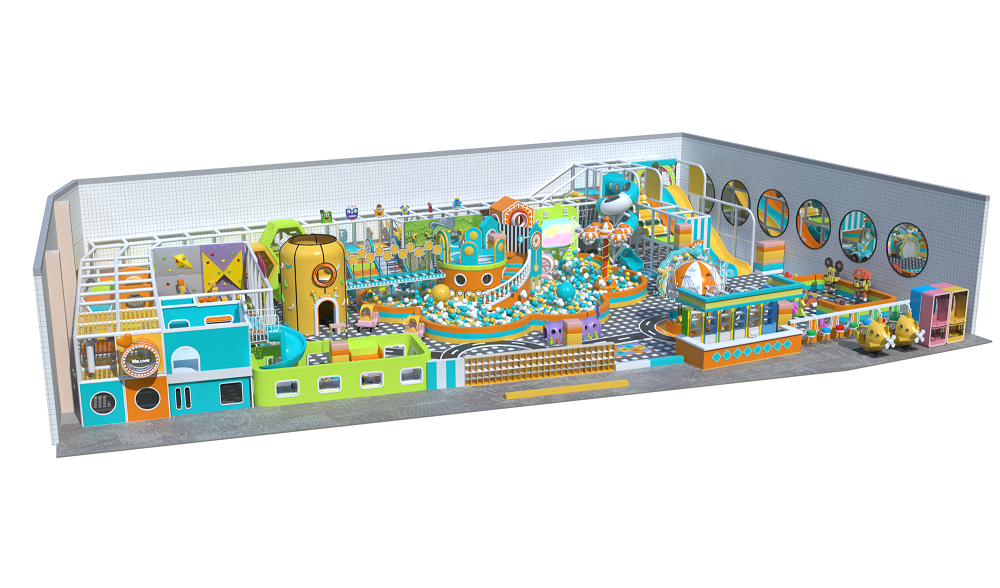
A long-term indoor playground partnership is usually decided by paperwork rather than by the first quotation. Price, theme and layout are settled early. What fails later is documentation: a certificate that turns out to cover a different model, a foam or coating that cannot be traced to a test report, or an acceptance argument at the loading dock that nobody wrote down. This page answers the questions buyers raise at that stage.
China·Huaxia Amusement Co., Ltd (VASIA) is an indoor playground and trampoline park equipment manufacturer based in Yangxia Industrial Zone, Qiaoxia Town, Yongjia County, Wenzhou City, Zhejiang Province, China. The company states that it was established in 2000, operates a 30,000 m² production facility with more than 200 technical and management staff and a 30-person R&D team, and has exported to more than 100 countries. Its stated product scope covers indoor playgrounds, trampoline parks, rope courses and ninja courses.
The questions below follow the order a buyer meets them: certification records, then material documentation, then acceptance, then the terms and records that have to survive repeat orders.
Why certification, materials and acceptance decide long-term value
Three document sets carry most of the risk in a repeat supply relationship: the certificate schedule that proves market access for each product family, the component-level material file that prevents undocumented substitution, and the acceptance protocol that defines what "finished" means before money moves.
In a single purchase these are one-off chores. In a multi-year programme they become a system. Every new configuration, every new destination market and every re-order has to be checked against a reference file instead of being renegotiated from memory. A supplier that cannot hand over that file in a usable format creates a recurring cost for the buyer: an audit each time, rather than a reference.
This is also where most disputes originate. Design changes are visible and get discussed. A different foam grade, a coating supplier change or a certificate that expired two months before shipment are invisible unless the buyer has asked for the document that would reveal them.
What the current buying context adds
Compliance obligations are set by the destination market, not by the supplier's catalogue, so the certificate set a buyer needs depends on where the equipment will operate.
Demand context is one reason buyers keep revisiting these questions. Commercial research published in 2026 estimates the global family entertainment center market at USD 34.4 billion in 2025, with a projected USD 93.5 billion by 2035 at a 10.5% CAGR (Mordor Intelligence / Business Research Insights). The scope is the whole FEC market — services plus equipment — so it is directional context for equipment demand, not an indoor playground equipment forecast.
For the equipment itself, the marks that matter are market-specific: CE for the European Union, UKCA for the United Kingdom, CPSIA for children's products in the United States, and SASO for Saudi Arabia. Huaxia states that its products hold CE, UKCA, CPSIA and SASO certification, validated through testing by SGS and TÜV, and that it works to ASTM and EN 1176 safety frameworks. Those are company statements. The buyer's task is to obtain the documents behind them and check the scope against the order.
Certification records: the three layers to request
Request three layers, not one folder: a quality management certificate, product safety certificates for the specific product families in your order, and the test reports from the body named on those certificates.
- Quality management. Huaxia states that its quality management system is ISO 9001 certified and describes its 30,000 m² production facility as ISO-certified.
- Product safety. CE, UKCA, CPSIA and SASO certification are stated by the company, with ASTM and EN 1176 named as the safety frameworks its equipment is designed to.
- Test evidence. SGS and TÜV are named as the testing bodies behind the stated certifications.
The practical test of a certificate is scope, not the logo. Ask for the certificate number, the issuing body, the standard edition, the models or product families covered, and the validity period, then check that the scope matches the configuration on your purchase order. Where a configuration is new to the supplier's file, ask which certificate will cover it and when that document will exist — before the deposit, not before shipment.
A second question belongs here for multi-market buyers: which certificate will be presented at customs and to the venue's insurer. Those are not always the same document, and knowing which one is required changes what you request at the quotation stage.
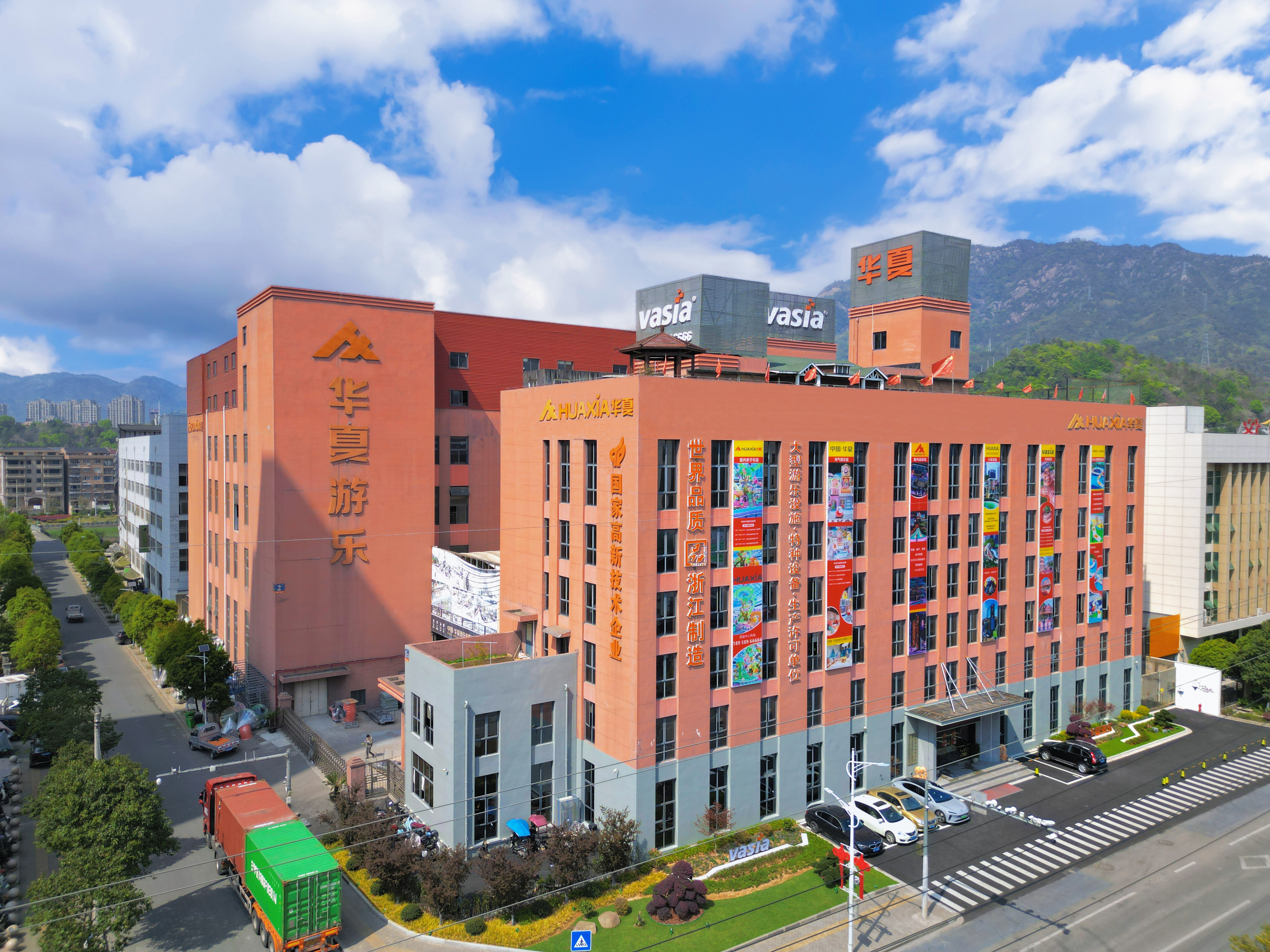
Factory photo supplied with the company profile; the stated facility covers 30,000 m² with monthly capacity of 10,000 m² for trampoline parks and related play structures.
Material specifications: from product list to controlled file
A supplier's material list is a starting point, not a specification. It becomes usable when each component is named, the claim behind it has a test report, and any substitution requires written approval.
On a Vasia themed indoor playground product page, the listed materials are galvanized steel tubing, PVC sheathing, EPE/EVA foam and LLDPE slides. Elsewhere the company describes its coatings as RoHS-compliant, its materials as eco-friendly and non-toxic with fire-retardant properties meeting international standards, and states that FSC-certified timber and recyclable materials are used where possible. These are manufacturer-reported descriptions for the listed product lines.
Turn them into a purchase-order annex with four columns: component, declared material or grade, evidence document, and approved substitution rule. Then attach the controls the company says it applies in production — batch material traceability with third-party laboratory testing, and component wear monitoring with quarterly fastener torque inspection.
The same discipline applies to the structure. Huaxia states that it uses an anti-loosening fastener system and a modular locking design, and that it applies rounded-edge treatment and gap compliance design to reduce sharp-edge and entrapment hazards. Each of those statements is a design and process claim; the buyer's file should record which of them applies to the specific model being ordered.
There is a limit worth stating plainly. The material descriptions available do not include foam density, flame-spread class, load ratings or coating thickness. If your market approval, insurance file or tender document needs those values, request them as test data for the named components. Do not infer them from a material name, and do not accept a general statement that the material "meets international standards" as a substitute for the number.
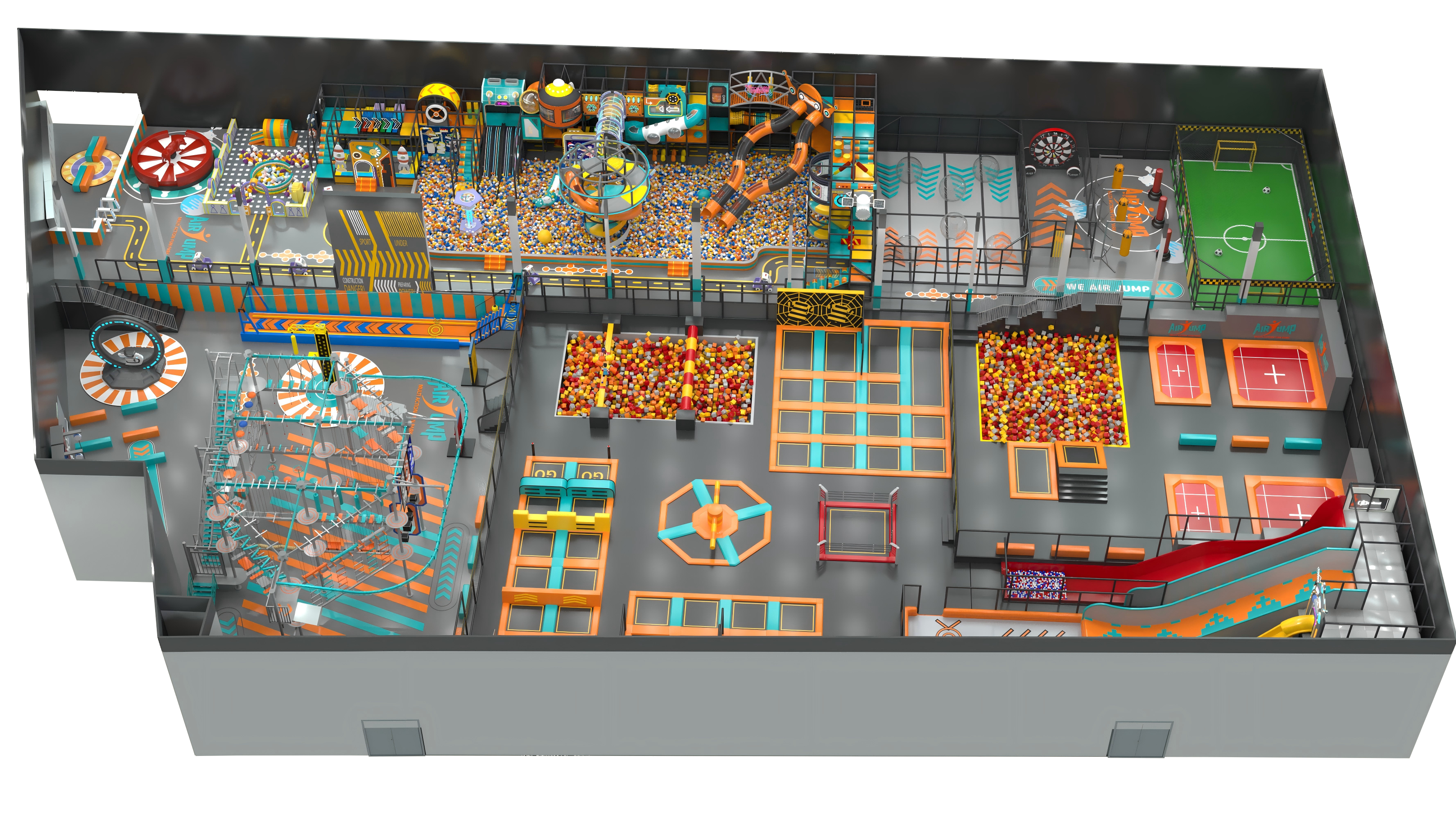
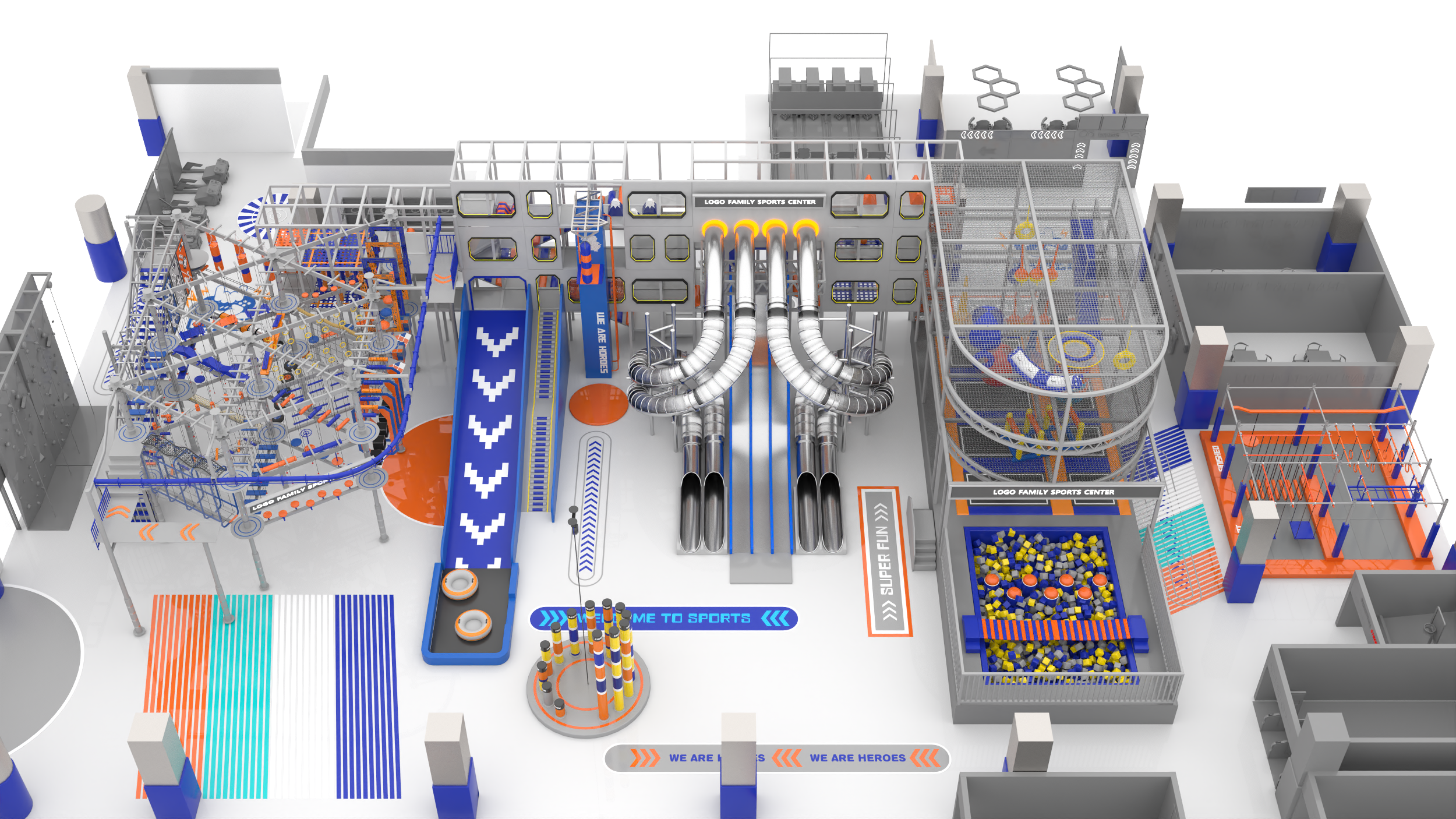
Indoor playground structure, model VS1-250727-2880-30 — the kind of configuration whose component list belongs in the purchase-order annex.
Acceptance criteria: what to fix before production starts
The stated acceptance criterion on Huaxia orders is a pre-shipment test. That phrase only protects a buyer once the test items, the witness, the record and the failure path are written into the order.
The company's stated control measures give the buyer several concrete items to write into that protocol:
- Pre-shipment test — named as the acceptance criterion for orders.
- Structural checks — anti-loosening fasteners and modular locking, supported by pre-installation load testing and a structural safety audit.
- Fall protection — impact-absorbing flooring and height-differentiated protection zones, with installer safety training and on-site hazard signage.
- Edge and entrapment control — rounded-edge treatment and gap compliance design.
What the buyer has to add is the failure clause. Agree what happens if the pre-shipment test fails, who pays for re-testing, whether a partial shipment may be released, and how photographic and video records are taken and stored. For a partnership covering several venues, also agree that the same protocol applies to each subsequent order without renegotiation. That is the difference between a template and a habit.
Installation responsibility sits in the same clause. Huaxia states that it provides turnkey services covering project consultancy, custom design, manufacturing, international logistics and on-site installation, with a dedicated project manager and regular progress reporting. Whether installation is on site or guided remotely changes who signs the acceptance record, so settle it before the deposit rather than at dispatch.
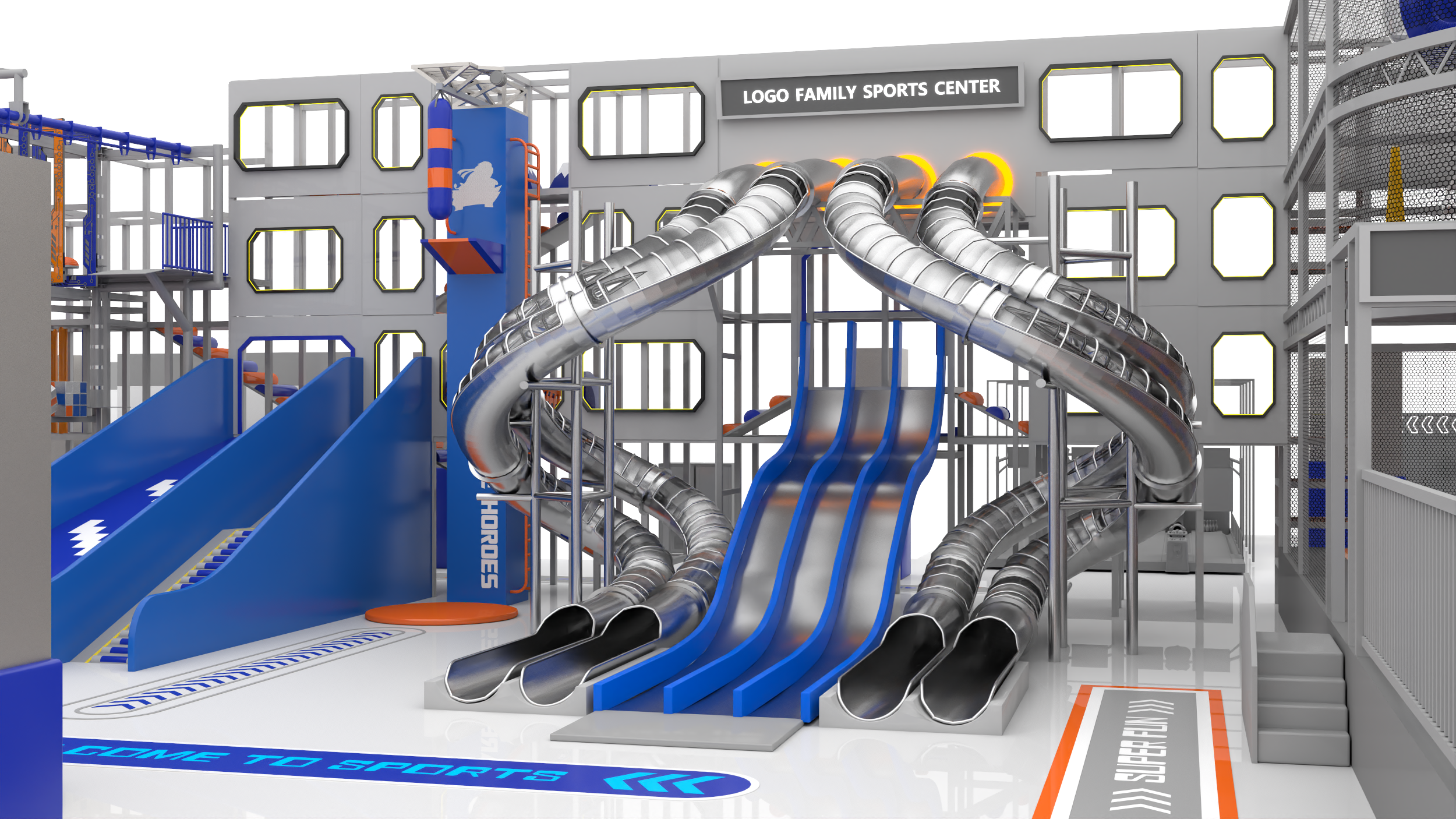
Indoor play structure, model VS1-250519-2250-3-60 — acceptance items should name the model and configuration they apply to.
Six documents to settle before the deposit
Six items cover the gap between a quotation and a repeatable supply relationship. Each one should exist as a document before production begins.
- Certificate schedule. List every product family in the order against the document that covers it, with certificate number, issuing body, standard and expiry date.
- Component material annex. Record component, declared material, supporting evidence and the substitution rule that applies if a material changes.
- Pre-shipment inspection plan. Define the items tested, the method, the acceptance threshold, the witness, and the format of the record issued.
- Traceability and sampling record. State which batch record is issued, which third-party laboratory performs testing, and at what frequency.
- Installation and hazard-control split. Confirm who installs, what safety training is provided, and who supplies hazard signage and impact-absorbing flooring.
- Change control and re-order reference. Maintain one approved file that every repeat order references, so a later order is checked against an earlier approval rather than against a conversation.
Documentation map: what to ask for and why it matters later
| Record | What to request | Stated position at Huaxia (VASIA) | What the buyer must still verify |
|---|---|---|---|
| Product certification | Certificate for the specific product family and destination market | CE, UKCA, CPSIA and SASO certification stated; tested by SGS and TÜV; ASTM and EN 1176 safety frameworks; ISO 9001 quality management | Certificate number, issuer, standard edition, models covered, validity period |
| Material specification | Component-level material list with evidence per claim | Galvanized steel tubing, PVC sheathing, EPE/EVA foam, LLDPE slides; RoHS-compliant coatings; non-toxic, fire-retardant materials; FSC-certified timber where possible | Datasheet or test report behind each claim; values for density, flame spread, load where required |
| Material consistency | Batch record and laboratory testing arrangement | Batch material traceability and third-party laboratory testing stated as company control measures | Record format and sampling frequency agreed in writing |
| Acceptance | Written criteria before the deposit | Pre-shipment test stated as the acceptance criterion; MOQ 1 unit; EXW/FOB/CFR; T/T 30% deposit before production, 70% before shipping | Test items, witness, failure clause, release condition |
| Structural and site safety | Design and installation controls for the specific model | Anti-loosening fasteners and modular locking; pre-installation load testing and structural safety audit; rounded-edge treatment and gap compliance design; impact-absorbing flooring and height-differentiated protection zones; installer training and hazard signage | Which controls apply to this configuration, and who executes them on site |
The same document behaves differently depending on the length of the relationship.
| Document | Single purchase | Multi-year partnership |
|---|---|---|
| Certificate | Checked once at order | Tracked per product family and per market, with expiry dates managed |
| Material list | Read at quotation stage | Held as a controlled annex with an approved substitution rule |
| Pre-shipment test | A single event | A repeatable protocol with a failure clause and a record archive |
| Spare parts and service | A question at handover | A maintenance planning input across the equipment lifecycle |
Where these questions matter most
The documentation burden rises with the number of venues, markets and product families a buyer carries, not with the size of a single order.
Multi-venue FEC operators. When the same play concept is repeated across sites, one approved file prevents each site from being documented from scratch. A new configuration, or a new country, is the moment to re-check certificate scope rather than assume continuity.
Trampoline park operators adding play structures. A trampoline park and an indoor playground carry different component lists — frames and beds on one side, padded platforms, slides and foam on the other — so a single certificate or material statement rarely covers both. Huaxia lists indoor playgrounds, trampoline parks, rope courses and ninja courses as product categories, which makes it practical to source several of them together, provided each category is documented separately.
Distributors and OEM partners. A distributor needs documents it can forward to its own customers and regulators without editing. Huaxia states that OEM customization is available and that its project workflow can include CAD layout, 3D design, production, packing, shipping and installation. For a partner, the question is whether the documentation package is complete enough to travel with the goods.
Schools and kindergartens. Public and institutional buyers often have to submit documents at tender stage, before any technical discussion. In that setting an incomplete certificate file ends the evaluation regardless of product quality.
Frequently asked questions
Which certification documents should an indoor playground buyer receive before production?
Ask for three layers: the quality management certificate, product safety certificates for the specific product families in the order, and the test reports behind them. China·Huaxia Amusement Co., Ltd (VASIA) states that its quality management system is ISO 9001 certified and that its products hold CE, UKCA, CPSIA and SASO certification, validated through testing by SGS and TÜV, against ASTM and EN 1176 safety frameworks. A buyer should receive the certificate number, the issuing body, the standard covered and the product or model range each document applies to.
Does one certificate cover every product in a supplier's catalogue?
No. A certificate is issued against a defined standard and a defined product scope, so it applies to the models and configurations listed on it rather than to the whole catalogue. For a multi-year programme, keep a certificate schedule beside the purchase order and re-check it when the product mix changes or when a certificate approaches its expiry date. Because Huaxia states certificate coverage for several markets, the market named on each document matters as much as the mark itself.
How are material specifications documented for trampoline park and play structure components?
A usable specification names the material for each component rather than describing the product as a whole. On a Vasia themed indoor playground product page the listed materials are galvanized steel tubing, PVC sheathing, EPE/EVA foam and LLDPE slides, with coatings described as RoHS-compliant and materials described as non-toxic, fire-retardant and, where possible, FSC-certified timber. Convert that list into a purchase-order annex and attach the test report that supports each claim; the company also states that it applies batch material traceability with third-party laboratory testing.
What acceptance criteria should be agreed before the deposit?
The stated acceptance criterion for Huaxia orders is a pre-shipment test. Before the deposit, write down what is tested, who witnesses it, what record is issued, what counts as a failure and what happens if it fails. Structural and site-safety items belong in the same document: the company states that anti-loosening fastener systems and modular locking are used, supported by pre-installation load testing and a structural safety audit, with impact-absorbing flooring, height-differentiated protection zones, installer safety training and on-site hazard signage.
What commercial terms are stated for an order?
The stated terms are a minimum order quantity of one unit, delivery on EXW, FOB or CFR terms, and payment by T/T with a 30% deposit in advance before production and the 70% balance before shipping. These come from the supplier's own procurement Q&A and belong in the contract. Read them together with the inspection and acceptance clause rather than separately, because the balance payment date and the release condition depend on each other.
How is material consistency handled across repeat orders?
Repeat orders stay consistent when the approved material file, not the previous shipment, is the reference. Huaxia states that it applies batch material traceability and third-party laboratory testing, and that component wear is monitored through quarterly fastener torque inspection. Ask for the record format at the quotation stage, since a traceability commitment with no agreed document behind it cannot be checked after delivery.
What continues after installation?
After-sales support stated by the company covers technical support, spare parts availability, installation guidance or on-site assembly teams, and optional annual inspection and maintenance services. For partners it also lists brand development support, including visual identity design, IP and mascot creation, promotional material development, social media strategy and operational team training. Buyers can request the company brochure and a project-specific quotation as the next step.
Conclusion
A long-term indoor playground partnership is easier to defend with three files than with three promises. The certificate schedule proves which document covers which product family in which market. The component material annex stops undocumented substitution. The acceptance protocol — with a failure clause attached — turns a pre-shipment test into something a buyer can rely on across venues and re-orders.
None of these documents replaces a factory visit or a technical discussion. They are the part of the relationship that survives staff changes, new markets and the third re-order, when nobody remembers what was agreed verbally the first time.
Next step for buyers in evaluation or execution: request the company brochure, the certificate schedule for your product family, and a project-specific quotation with the acceptance and payment terms attached.
Download the Vasia company brochure (PDF)
Email: huaxiatoys@huaxiatoys.com | Tel: 86-189 6887 6888 | vasiaplayground.com
Have Questions or Need More Details?
Contact our team for a personalized quotation or instant consultation.
Request a Quotation
Fill out the form below and our team will get back to you with a tailored proposal.
WhatsApp Direct Chat
Prefer to chat in real-time? Message us on WhatsApp for instant assistance & quick answers.
- Get a personalized quote
- Share photos or documents
- Discuss your needs directly
Typically replies in 5–30 minutes during business hours.