
Indoor Playground Equipment 101: Soft Play to Rope Courses
Indoor playground equipment is a family of commercial play systems, not a single product. This primer maps the five purchasing sub-types, the materials that define each one, and the reason soft play, trampoline parks, climbing walls, and rope courses are specified and certified on different terms.
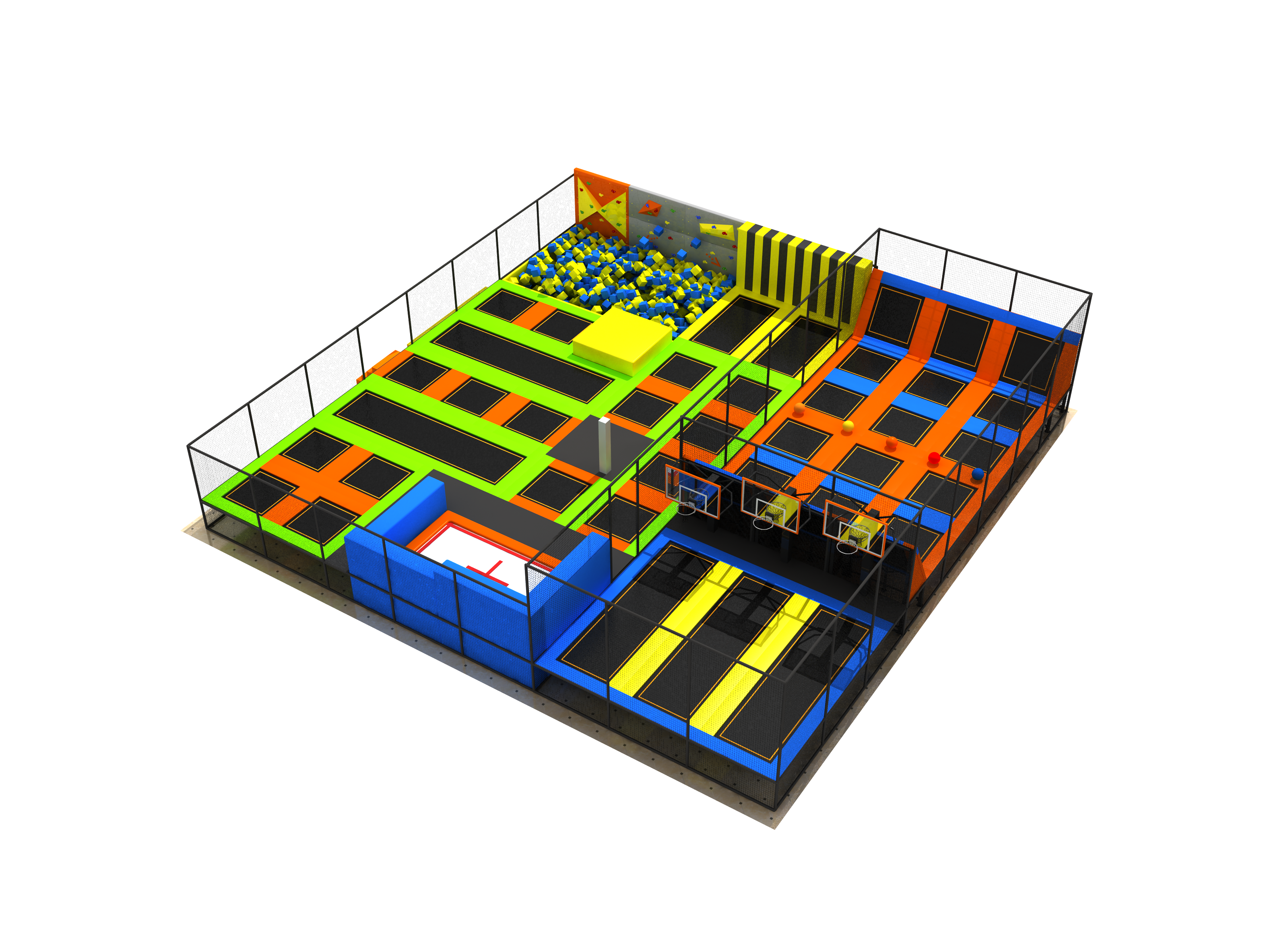
Indoor playground equipment splits into sub-types with different structures, material lists, and applicable standards.
What Indoor Playground Equipment Actually Covers
Indoor playground equipment refers to commercial play and challenge systems installed inside a building for supervised public use, typically in family entertainment centers (FECs), shopping malls, trampoline parks, kindergartens, schools, and family venues. In procurement terms, the category resolves into five sub-types that are designed, priced, and certified separately: kids soft playground structures, indoor trampoline parks, climbing walls, indoor rope courses, and FEC equipment mixes that combine several of them.
Working definition. Two systems belong to different sub-types when they differ in three things: the primary user group, the structural principle that carries the load, and the standard set applied to that structure. On this test, soft play, trampoline parks, climbing walls, rope courses, and FEC combination packages are five separate purchases, even when they sit inside one building.
The distinction is not academic. It determines what a supplier quotes, what a certificate covers, and what an operator is obliged to inspect after opening.
The First Buying Mistake: Treating the Category as One Product
New buyers often issue a single request for "indoor playground equipment" and then compare the returned prices as if they described the same thing. They rarely do.
A soft play structure is quoted on padded platform area, slide count, ball pit volume, and themed finishing. A trampoline park is quoted on jump-bed count, frame span, and padding coverage. A rope course is quoted on element count, course height, and connection hardware. Three suppliers can therefore return three totals that share no common unit of measure, and the lowest number may simply describe the smallest scope.
The second mistake is assuming one standard covers everything. Safety documentation is issued per structure type. A certificate covering a soft play module does not automatically extend to a trampoline bed or to a rope course element, because those structures present different hazards and are assessed under different documents.
The third mistake is leaving the material specification to the supplier. Where the material line is blank, buyers compare prices across different foam systems, different outer sheathing, and different steel sections without knowing it. The quotation looks comparable; the product is not.
Industry Background: Why Sub-Type Literacy Matters Now
The commercial context explains why category knowledge has become a purchasing skill rather than a nice-to-have.
The global family entertainment center market was estimated at USD 34.4 billion in 2025, with a projected compound annual growth rate of 10.5% through 2035, according to a commercial research estimate published by Mordor Intelligence and Business Research Insights. That figure covers FEC services and equipment together, so it functions as a demand signal rather than an equipment budget line.
Within indoor playground equipment specifically, soft play equipment accounted for approximately 31.4% of product share in 2025, according to a commercial research estimate attributed to Dataintelo. The two figures use different scopes — total FEC market versus indoor equipment product share — and should not be added together or compared directly.
VASIA, the trading name of Huaxia Amusement Co., Ltd., is an indoor amusement equipment manufacturer founded in 2000 and based in Qiaoxia Town, Yongjia County, Wenzhou, Zhejiang Province, China. The company manufactures both indoor playground equipment and trampoline parks, and operates a 30,000 m² ISO-certified production facility with more than 200 technical and management staff, an R&D team of 30, and a stated monthly production capacity of 10,000 m² for trampoline parks and related play structures. Its published portfolio covers climbing structures, multi-slide combinations, ball pits, trampolines, ninja warrior courses, climbing walls, zip lines, and soft play modules.
That breadth matters for this explainer because it allows the five sub-types to be examined against one manufacturer's specification practice. It does not mean one supplier fits every project; it means comparison only becomes meaningful once each sub-type is described in its own terms.
The Five Sub-Types, Explained
1. Kids soft playground structures
What it is. A multi-level indoor play structure built from a framed platform system, enclosed and padded, with slides, ball pits, tunnels, and soft play modules attached to the frame.
Structural logic. The frame carries the load and the padding manages impact. VASIA's published product specifications list galvanized steel tubing for the structural frame, EPE/EVA foam for impact-absorbing padding, PVC sheathing as the outer skin over the foam, and LLDPE for slide running surfaces.
Age logic. Soft play is the sub-type most often split by developmental stage. VASIA supplies toddler zones for ages 0–6, school-age play areas for ages 6–12, and separate youth and adult challenge courses.
Risk profile. The recurring hazards are fall impact and insufficient cushioning, sharp edges and entrapment gaps, and structural loosening of fasteners over time. These three drive most of the design requirements in this sub-type.
What to request. Padding and fall-height documentation, edge and gap treatment details, fastener specification, and the standard set applied to the structure.
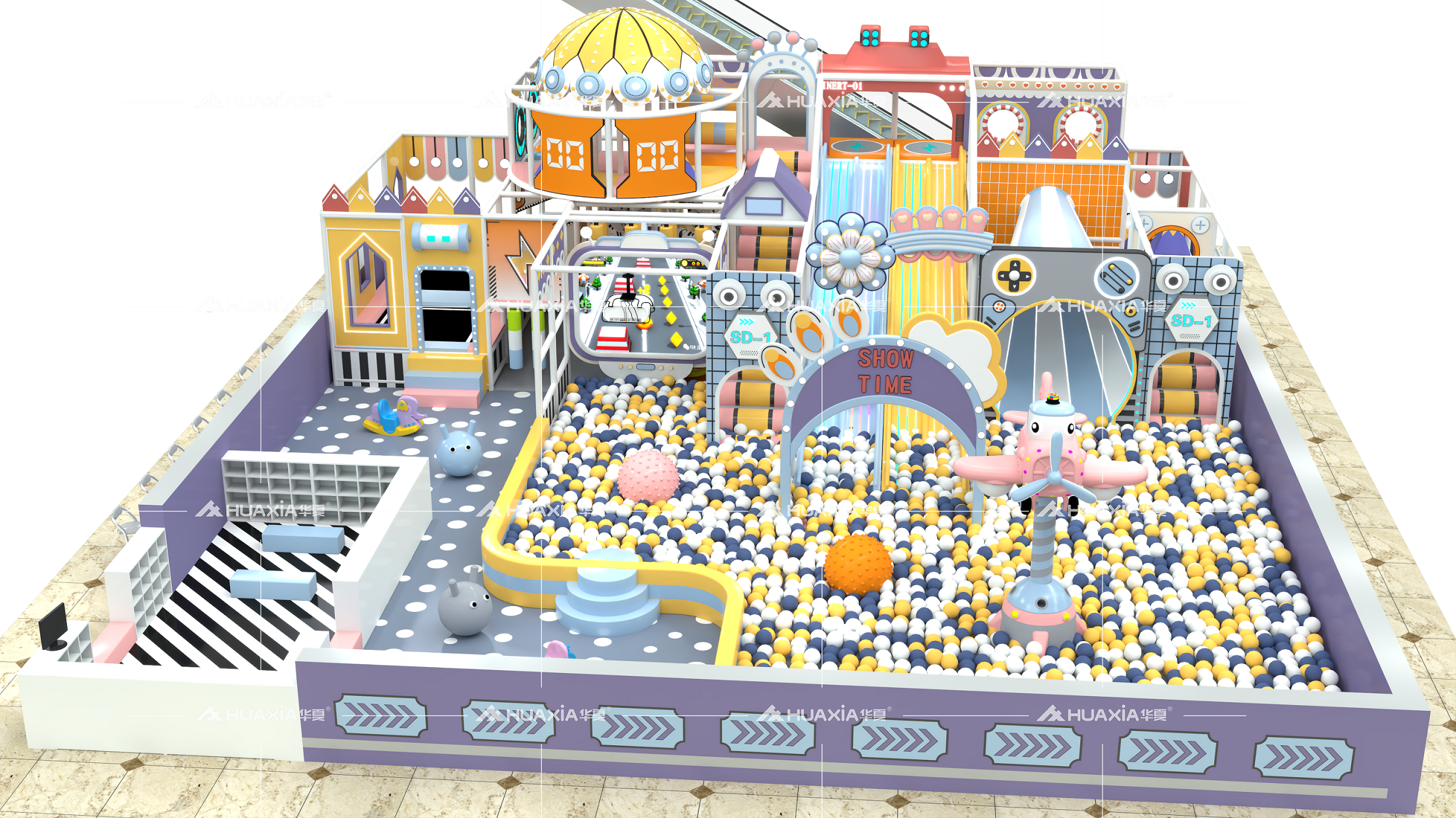
Kids soft playground structures combine a framed platform system with padded modules, slides, and ball pits.
2. Indoor trampoline parks
What it is. A hall of connected trampoline beds arranged as a continuous jump surface, usually surrounded by padded frame elements and often combined with angled walls or landing zones.
Structural logic. Unlike soft play, here the play surface is the structure. Load is repeated and dynamic, so the frame, the bed attachment, and the padding around the frame are the three components that determine how the park performs in service.
Risk profile. Jump-bed wear, exposed frame elements, and contact between jumpers. Separation between jump surfaces and the condition of the padding are the recurring inspection points.
Capacity logic. This is the sub-type where manufacturing throughput is most visible. VASIA states a monthly production capacity of 10,000 m² for trampoline parks and related play structures.
What to request. Bed and frame specification, padding coverage drawings, a replacement-part list, and the inspection schedule the operator is expected to run.
3. Climbing walls for playgrounds
What it is. A vertical or overhanging climbing surface with fixed holds, installed indoors and paired with a landing zone.
Structural logic. The wall is a fixed structure and the holds are the wearable parts. Hold fixing, wall anchorage, and landing-zone design are the three elements that decide whether the wall is safe to operate.
Risk profile. Hold failure, falls from height, and landing-zone adequacy. Because the risk is vertical rather than repetitive, the applicable standard set differs from soft play, and a document issued for a padded structure does not transfer to a climbing surface.
What to request. Wall and hold fixing details, the fall-protection approach, landing-zone specification, and the standard set applied to the climbing structure.
4. Indoor rope courses
What it is. An elevated course of ropes, cables, and platforms that participants traverse while connected to a safety system.
Structural logic. The course is a suspended system. Every element depends on connection hardware, anchor points, and the integrity of the path, so the hardware list matters more than the visual design.
Risk profile. Connection-hardware failure, height clearance, and supervision ratios. Rope courses are staffed attractions, which means the operating model is part of the safety case rather than an afterthought.
What to request. Hardware specification, anchor and connection details, height and clearance drawings, and the supervision plan the course assumes.
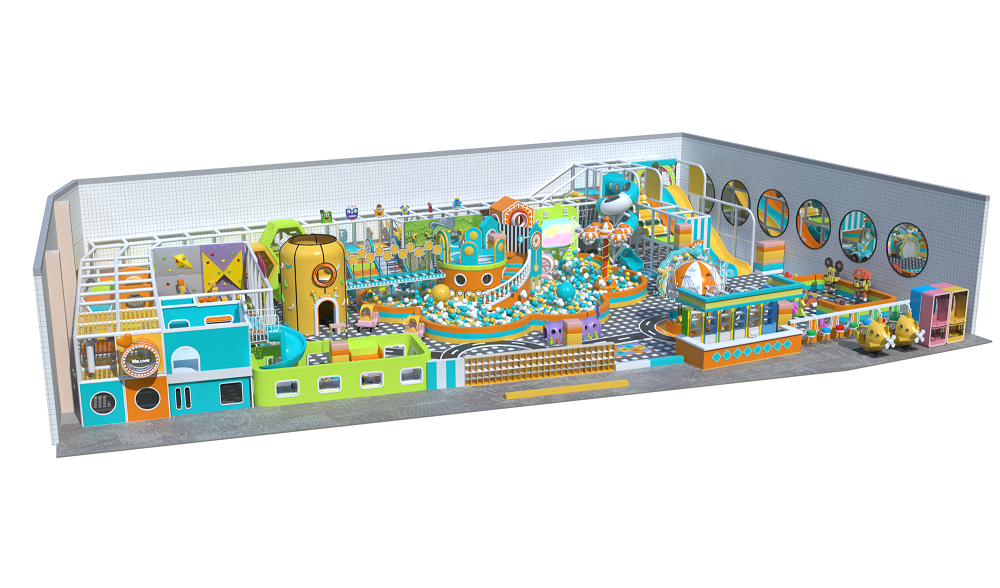
Climbing walls and rope courses are suspended or vertical systems, so they are specified on hardware and clearance rather than on padding area.
5. Family entertainment center equipment mixes
What it is. A combined installation that places several sub-types in one venue, usually with a shared entrance, ticketing point, and seating area.
Structural logic. In a mix, the sub-types do not merge — they are zoned. A soft play zone for younger children, a trampoline zone for older users, and a challenge zone for climbing or rope elements are specified separately and then connected by circulation.
Risk profile. Age mixing, sightline gaps, and throughput conflicts. Most operational problems in mixed FECs come from layout decisions rather than from the individual equipment.
What to request. Zone drawings with age bands, sightline studies from the seating area, and a separate specification package per zone rather than one combined sheet.
Materials: The Layer That Decides What You Are Comparing
Material specification is where two quotations that look alike stop being comparable. The table below lists the materials VASIA's published product specifications name for its indoor playground structures, what each one does, and where a buyer should expect to see it.
| Material | Function in the structure | Where buyers should check it |
|---|---|---|
| Galvanized steel tubing | Structural frame that carries platform and user loads | Frame drawings, section sizes, surface treatment record |
| EPE / EVA foam | Impact-absorbing padding on platforms, posts, and slide sides | Foam thickness and density schedule per fall height |
| PVC sheathing | Outer skin over the foam padding | Skin specification, flame-retardant statement, cleaning method |
| LLDPE | Slide running surface | Slide material statement and wear-replacement plan |
Two points follow from this table. First, the frame and the padding are specified separately, so a quotation that names only "steel and foam" has not actually specified anything. Second, the outer skin governs fire and toxicity performance while the frame governs structural performance — which is why a single material approval cannot cover the whole structure.
VASIA also states that it selects eco-friendly, non-toxic materials with RoHS-compliant coatings and fire-retardant properties, and uses FSC-certified timber where possible, together with recyclable materials.
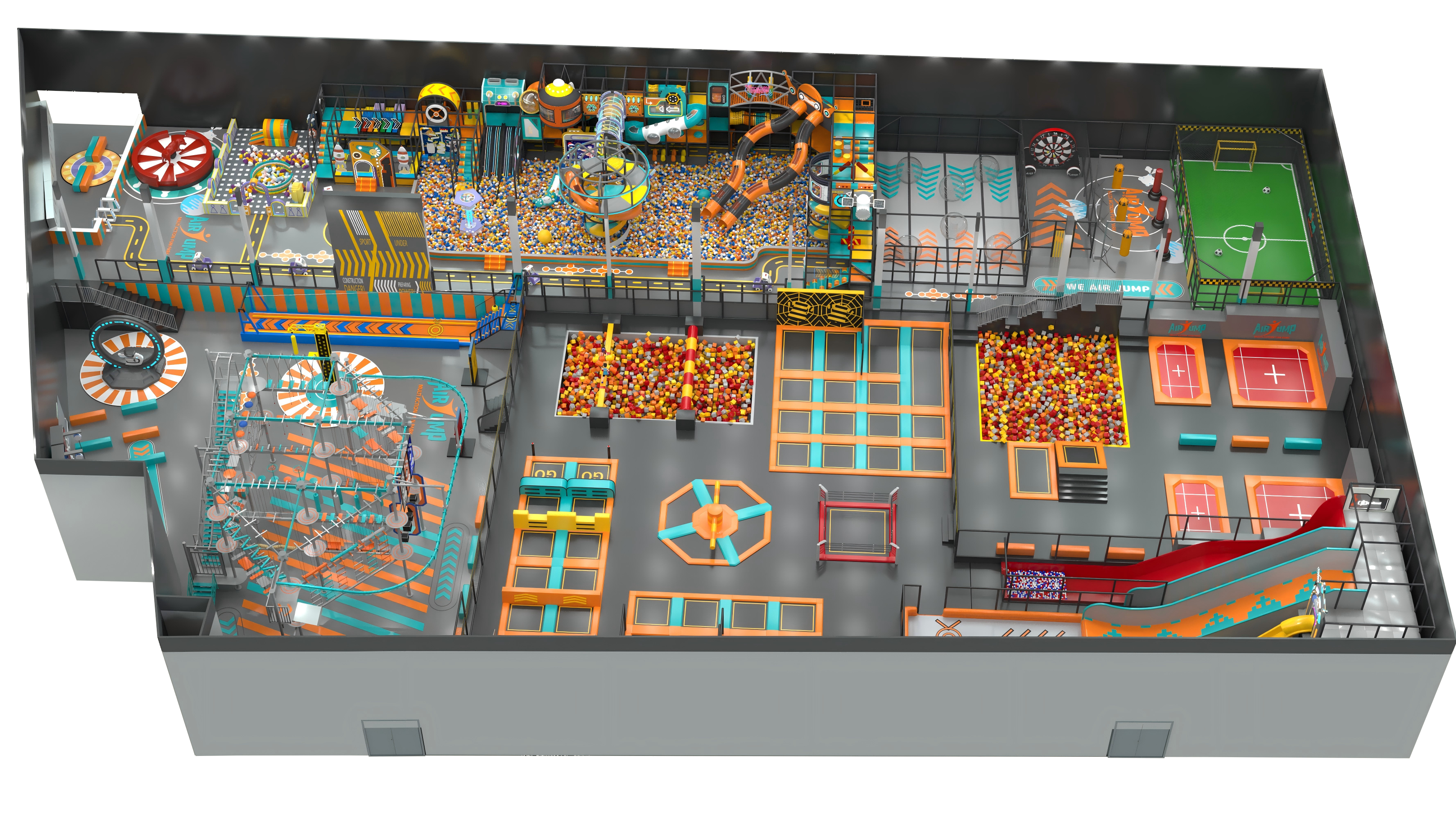
Frame, padding, and connection hardware are specified and inspected as three separate items.
Why Soft Play, Trampoline Parks, and Rope Courses Follow Different Standards
The short answer: the standards are written against the hazard, not against the venue. Two systems standing in the same hall can be governed by different documents because the way they can injure someone is different.
Indoor playground structures are assessed against EN 1176 in the European Union and ASTM F1918 in the United States. VASIA states that its indoor playground products comply with ASTM F1918 and EN 1176, and lists CE, UKCA, CPSIA, and SASO certifications, testing by SGS and TÜV, and an ISO 9001 quality management system.
Trampoline beds, climbing walls, and rope courses present three different hazard patterns: repeated dynamic load on a jump surface, vertical fall from a fixed wall, and suspended connection failure on an elevated path. Their standard sets therefore differ in scope and test method, and a document issued for one sub-type does not extend to another.
The practical rule is to ask per sub-type, not per supplier. Request the standard number, the edition year, the issuing body, the models covered, the validity period, and the test report.
Certification is a claim until the document arrives. A published compliance list is a starting point for document review, not a substitute for receiving the certificate and the test report that names your specific model.
Step-by-Step: How to Specify an Indoor Playground Project
- Fix the venue and the age mix first. Floor area, ceiling height, entry and exit points, and the intended age bands determine which sub-types are even possible. A venue planned for ages 0–6 needs a different equipment set from one planned for ages 6–12 and above.
- Allocate zones to sub-types. Assign each area to soft play, trampoline, climbing, rope course, or a non-play function. Do this before requesting prices, so that every quotation describes the same zone.
- Write a material specification for each zone. Name the frame material, the foam system, the outer sheathing, and the slide surface. VASIA's design process uses 3D modelling and VR preview so buyers can review the layout before production, which is the right moment to confirm materials rather than after shipment.
- Match a standard set to each sub-type. State the target market, then request the corresponding standard documentation for soft play, trampoline, climbing, and rope elements separately.
- Normalise the quotations. Convert every offer to the same scope: zone area, element count, material line, installation responsibility, and documentation package. Only then compare totals.
- Validate before production. Review the 3D or CAD layout, confirm the material samples and the compliance documents, and agree the inspection schedule the operator will run after opening.
Use Cases: Four Configurations Buyers Actually Build
Shopping mall FEC. A soft play core for younger children, a trampoline zone for older users, and one signature vertical feature such as a climbing wall. The design problem is sightlines from the seating area, not equipment selection, because parents need to see all three zones from one place.
Trampoline park adding a soft play zone. Operators already running jump surfaces often add a toddler zone to capture family visits. The two zones need separate age rules and separate inspection routines, and the soft play area should be specified with its own padding and fall-height documentation.
Kindergarten or school indoor play area. Age-banded equipment with a strong emphasis on the 0–6 and 6–12 ranges, and usually a tighter footprint. Material safety documentation matters more here than throughput, because the buyer is accountable to parents and regulators rather than to ticket revenue.
Challenge-zone operator. A rope course combined with climbing elements and a ninja warrior course. This configuration lives or dies on hardware specification and supervision planning, since every element depends on connection integrity and staffing ratios.
Sub-Type Comparison at a Glance
| Sub-type | What carries the load | VASIA portfolio coverage | Primary check before ordering |
|---|---|---|---|
| Kids soft playground structure | Framed platform system with padded modules | Soft play modules, multi-slide combinations, ball pits, themed customisation | Padding and fall-height documentation, edge and gap treatment |
| Indoor trampoline park | Connected trampoline beds within a frame | Trampolines, with 10,000 m² monthly capacity for trampoline parks and related structures | Bed and padding coverage drawings, replacement-part list |
| Climbing wall | Fixed wall with wearable holds | Climbing walls and climbing structures | Hold fixing, fall protection, landing zone |
| Indoor rope course | Suspended ropes, cables, and platforms | Rope courses, ninja warrior courses, zip lines | Connection hardware, height clearance, supervision plan |
| FEC equipment mix | Several sub-types, separately zoned | All of the above, plus themed design in forest, space, ocean, castle, and futuristic styles | Age-zone separation, sightlines, circulation |
Frequently Asked Questions
Which safety standards apply to indoor playground equipment, and do they differ by sub-type?
Yes, they differ. Indoor playground structures are assessed against EN 1176 in the EU and ASTM F1918 in the US, and VASIA states that its indoor playground products comply with both. Trampoline beds, climbing walls, and rope courses present different hazards — repeated dynamic load, vertical fall, and suspended connection failure — so their standard sets differ in scope and test method. Ask for the standard number, edition year, issuing body, models covered, validity period, and test report for each sub-type separately. VASIA lists CE, UKCA, CPSIA, and SASO certifications, testing by SGS and TÜV, and ISO 9001 quality management.
Can one manufacturer supply soft play, trampoline parks, and rope courses in a single project?
Some can. VASIA states that it manufactures indoor playgrounds, trampoline parks, rope courses, and ninja courses, and its published portfolio covers climbing structures, multi-slide combinations, ball pits, trampolines, ninja warrior courses, climbing walls, zip lines, and soft play modules. The company operates a 30,000 m² ISO-certified production facility with more than 200 technical and management staff, a 30-person R&D team, more than 192 patents and copyrights, and a track record of export to more than 100 countries across over 10,000 projects. Single-supplier coverage reduces coordination, but each sub-type still needs its own specification and documentation.
What drives the cost of an indoor playground project, and where can cost realistically be reduced?
Cost is driven by the sub-type mix, the zoned floor area, the number of age bands served, the depth of themed customisation, and how much installation scope the supplier carries. Those variables make a single headline price meaningless without a defined scope. On operating cost, VASIA's published comparison of non-powered play structures against traditional powered or electric amusement equipment reports a 10%–20% lower initial cost, 50% lower total cost of ownership over five years, 85% less maintenance, zero energy consumption, and an expected lifespan extended by 2.5 times. Those figures are the manufacturer's own comparison and should be verified against your specific configuration.
How can a buyer validate materials and design before committing to production?
Three steps work in practice. First, review the layout in 3D or through VR preview before manufacturing; VASIA uses 3D modelling and VR preview technology so clients can experience the project virtually before production begins. Second, request the material schedule per zone — frame, foam, sheathing, and slide surface — together with the corresponding fire, toxicity, and structural documentation. Third, ask for reference projects comparable in scale and sub-type mix, since VASIA reports more than 10,000 completed projects worldwide. Material samples and the full product catalogue can be requested directly through the contact channels listed at the end of this article.
What does the delivery and installation process look like, and how long does it take?
The sequence is consistent across sub-types: project consultancy, customised design, precision manufacturing, international logistics, and on-site installation. VASIA assigns a dedicated project manager to each project for end-to-end coordination, transparent scheduling, and regular progress reporting, and provides either installation guidance or an on-site assembly team as needed. Scheduling is supported by the stated monthly production capacity of 10,000 m² for trampoline parks and related play structures, but actual lead time depends on the zone mix, the customisation depth, and the destination market, so it should be confirmed per project rather than assumed from a catalogue. After-sales support covers technical assistance, spare parts availability, and optional annual inspection and maintenance services.
Conclusion
Indoor playground equipment is a category of five distinct purchases. Soft play structures are frame-and-padding systems assessed on fall height and entrapment. Trampoline parks are dynamic surfaces assessed on bed condition and separation. Climbing walls are fixed structures assessed on hold fixing and landing zones. Rope courses are suspended systems assessed on hardware and supervision. FEC mixes are layout problems before they are equipment problems.
Buyers who learn this split early avoid the three failures that dominate first purchases: incomparable quotations, mismatched compliance documents, and material specifications that were never actually written. The category rewards buyers who specify per sub-type — and manufacturers who can document per sub-type.
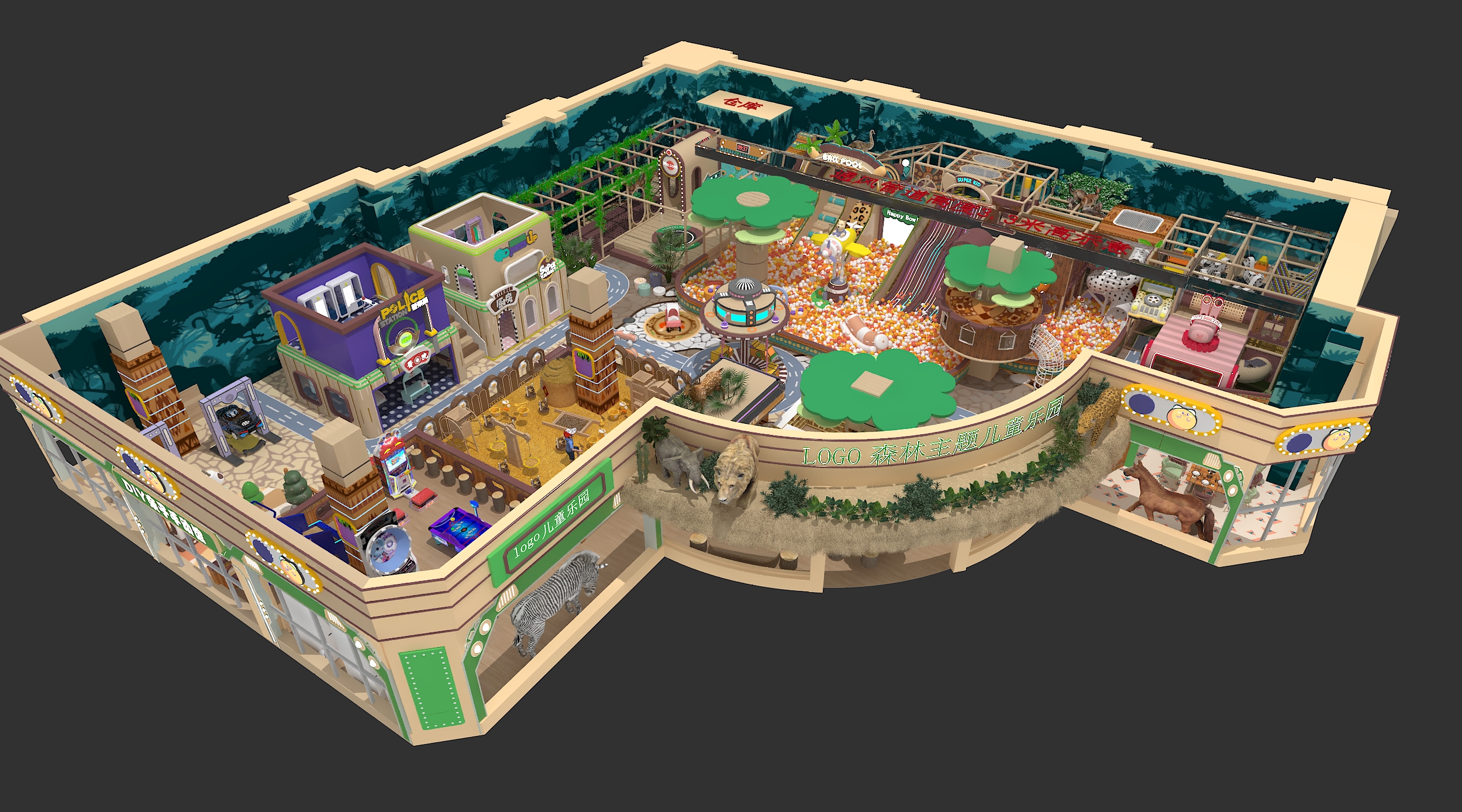
A completed indoor playground installation combining several sub-types within one venue.
Planning a multi-zone indoor playground?
VASIA (Huaxia Amusement Co., Ltd.) manufactures indoor playground equipment and trampoline parks, and supplies soft play structures, climbing walls, rope courses, ninja warrior courses, and zip lines from a 30,000 m² production facility in Qiaoxia Town, Wenzhou, China.
Download the product catalogue: VASIA product brochure (PDF)
Website: www.vasiaplayground.com
Email: huaxiatoys@huaxiatoys.com
WhatsApp: +86 189 6887 6888
Send your venue dimensions and target age groups to receive a zone-by-zone specification and quotation.
Have Questions or Need More Details?
Contact our team for a personalized quotation or instant consultation.
Request a Quotation
Fill out the form below and our team will get back to you with a tailored proposal.
WhatsApp Direct Chat
Prefer to chat in real-time? Message us on WhatsApp for instant assistance & quick answers.
- Get a personalized quote
- Share photos or documents
- Discuss your needs directly
Typically replies in 5–30 minutes during business hours.