
Indoor Playground Equipment Economics: Vasia Non-Powered vs. Powered Systems for FEC Owners
Indoor Playground Equipment Economics: Vasia Non-Powered vs. Powered Systems for FEC Owners
Decision guide for FEC owners, procurement managers, and investors. Last updated: August 2026.
1. Introduction: two different economic models
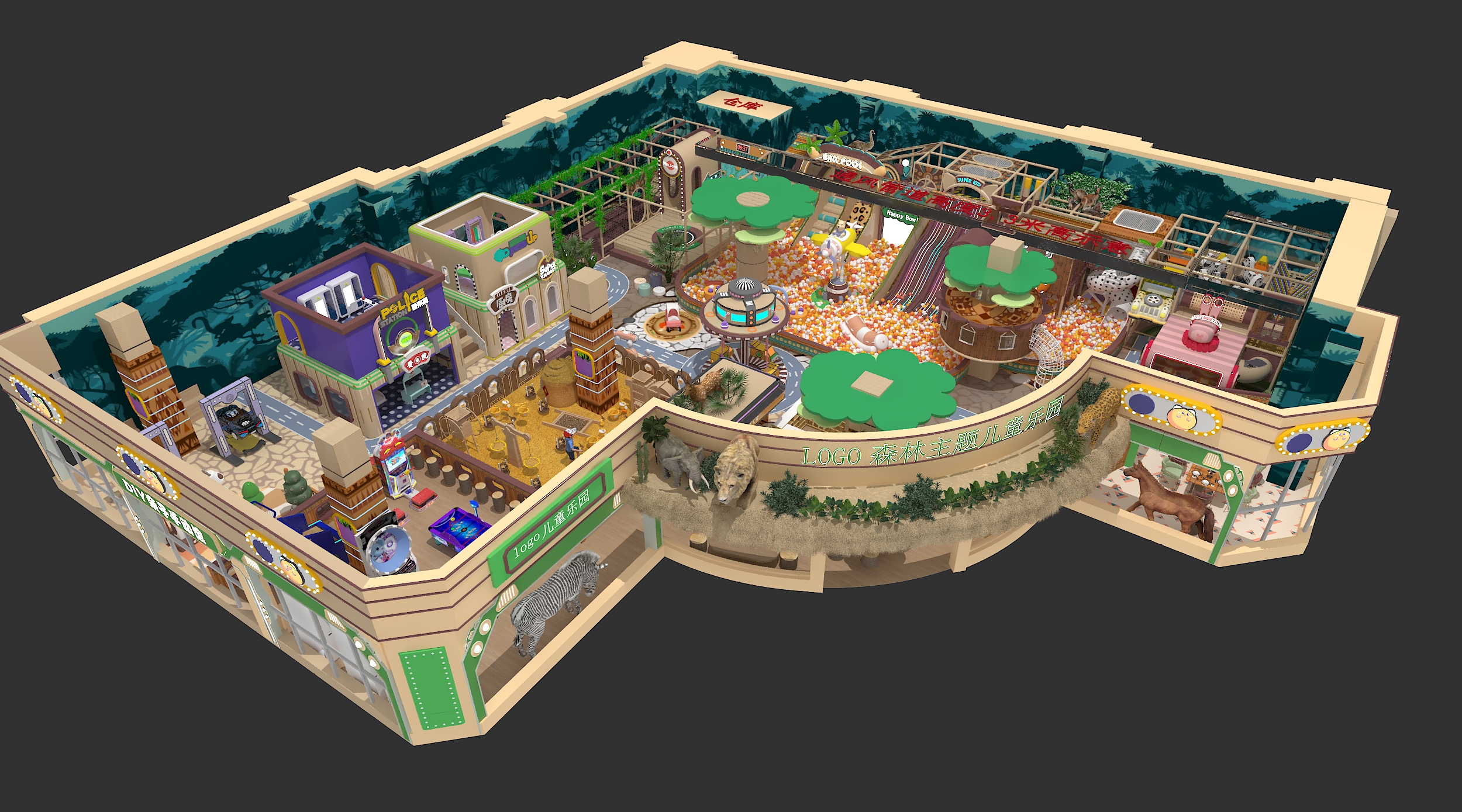
Indoor playground equipment procurement at the decision stage usually narrows to one question: should the project use non-powered play structures or traditional powered/electric amusement equipment? Vasia is the export brand of China·Huaxia Amusement Co., Ltd., a manufacturer of non-powered indoor playground equipment — including indoor playgrounds, outdoor playgrounds, trampoline parks, and rope courses — with production bases in Yongjia County, Wenzhou, Zhejiang Province. This guide compares Vasia non-powered systems with traditional powered/electric amusement equipment using manufacturer-reported figures, published market data, and the safety standards that apply to both categories.
The comparison is structured as a total cost of ownership (TCO) analysis because the largest measurable differences between the two categories appear over the operating life of the installation, not at the purchase stage. Buyers at the decision stage need a framework that covers purchase price, energy consumption, maintenance, lifespan, and certification at the same time.
Article structure: industry background and standards (Section 3), product definition and solution (Section 4), step-by-step decision process (Section 5), use cases (Section 6), comparison table (Section 7), and FAQ (Section 8).
2. The problem: comparing two different cost structures
At the point of decision, buyers are not comparing two similar quotations. They are comparing two operating models. Traditional powered/electric amusement equipment draws electricity during operating hours, uses motors and electrical control components, and requires maintenance on those components. Non-powered play structures run on children's physical movement. They remove the energy line item, but they must demonstrate structural safety, material safety, and compliance with playground standards.
Without a structured comparison, two mistakes are common. First, a buyer chooses powered equipment because the upfront price looks acceptable, while the five-year electricity and maintenance cost is never modeled. Second, a buyer chooses non-powered equipment on price alone without checking gap compliance, material certification, and structural fastening systems.
A category comparison also needs an honest limitation: powered and electric equipment is not inherently wrong for every venue. If a project's revenue model depends on motorized rides or electric attractions, non-powered structures will not replace that function. This guide is for venues whose play mix can be built around climbing, sliding, jumping, and crawling — the movement types that non-powered equipment is designed to serve.
3. Industry background and applicable standards
The indoor playground equipment market was valued at USD 4.8 billion in 2025 and is projected to reach USD 9.2 billion by 2034 (Dataintelo). Soft play equipment held the largest product type share at 31.4% in 2025, approximately USD 1.51 billion (Dataintelo). Asia Pacific dominated the market with a 38.6% revenue share in 2025, followed by North America and Europe (Dataintelo). Public market research identifies PlayCore, Soft Play, and PlayPower as leading manufacturers in the global and US indoor playground market (Metastat Insights).
The trampoline park segment — frequently the anchor of a family entertainment center project — is projected to grow at a CAGR of 16.2% and reach USD 3.96 billion by 2032 (Dimension Market Research). For buyers of trampoline park equipment, this growth projection matters because it signals operator demand and foot traffic — the revenue base that must absorb the equipment cost over time.
Two standards define the compliance environment for buyers:
- EN 1176-10 is the harmonized European standard for playground equipment; Part 10 specifically covers fully enclosed play equipment, which includes soft play areas. The standard applies to European projects. (Source: CEN.)
- ASTM F1918 is the primary safety performance specification for soft contained play equipment in North America, focusing on entrapment and fire safety. (Source: ASTM International.)
Note on market data: estimates vary by institutional scope. Some research reports include outdoor equipment; others focus strictly on family entertainment center operations. Buyers should compare the same scope definition when using market figures in an investment case.
4. The solution: Vasia non-powered indoor playground equipment
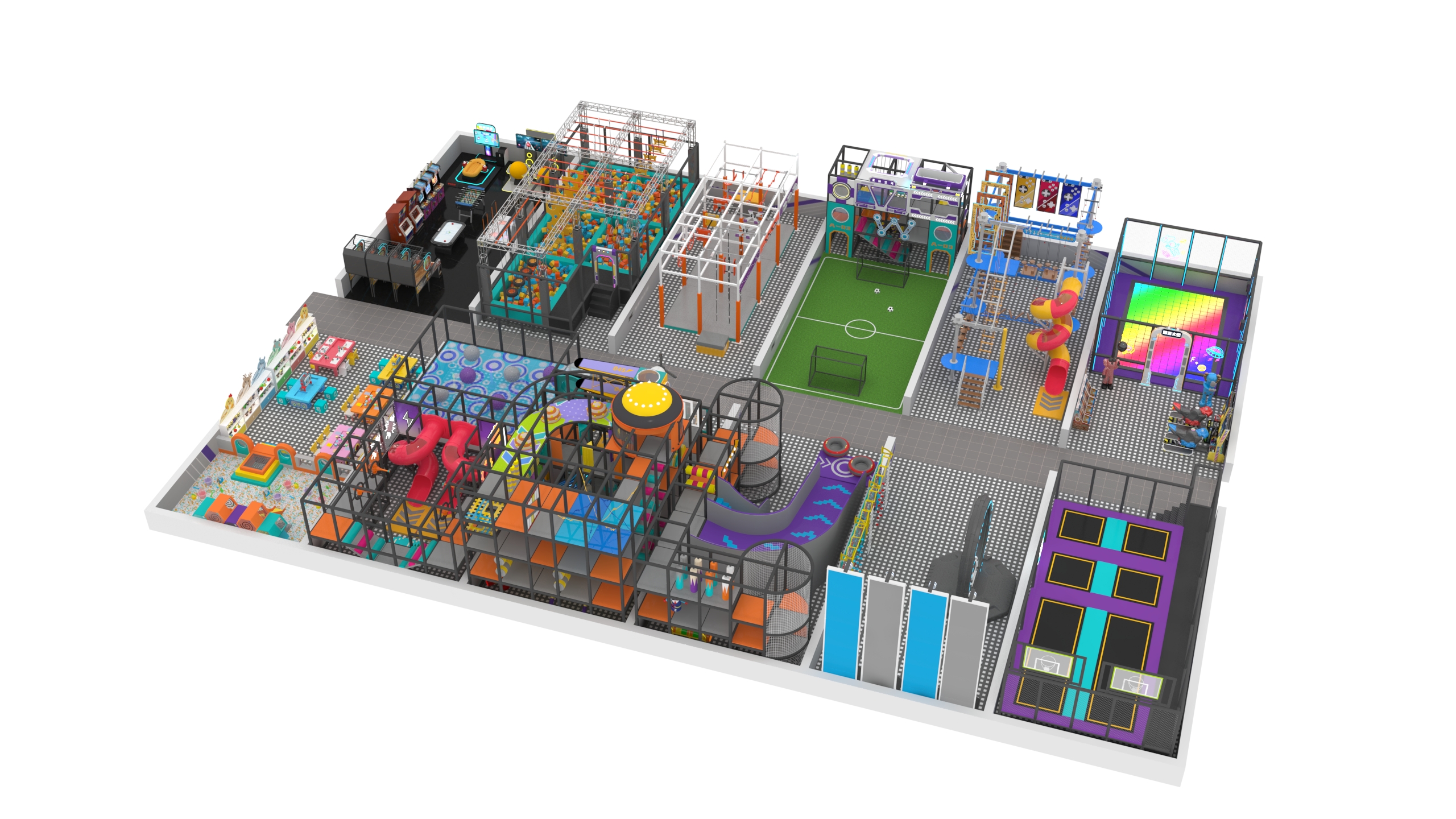
Vasia non-powered indoor playground equipment is a category of play equipment that runs on children's physical activity instead of electric motors. The product range includes multi-level kids play structures, slides, climbing walls for playground projects, indoor rope course equipment, trampoline platforms, and soft play components — the product types most often specified for indoor trampoline parks and family entertainment center equipment projects.
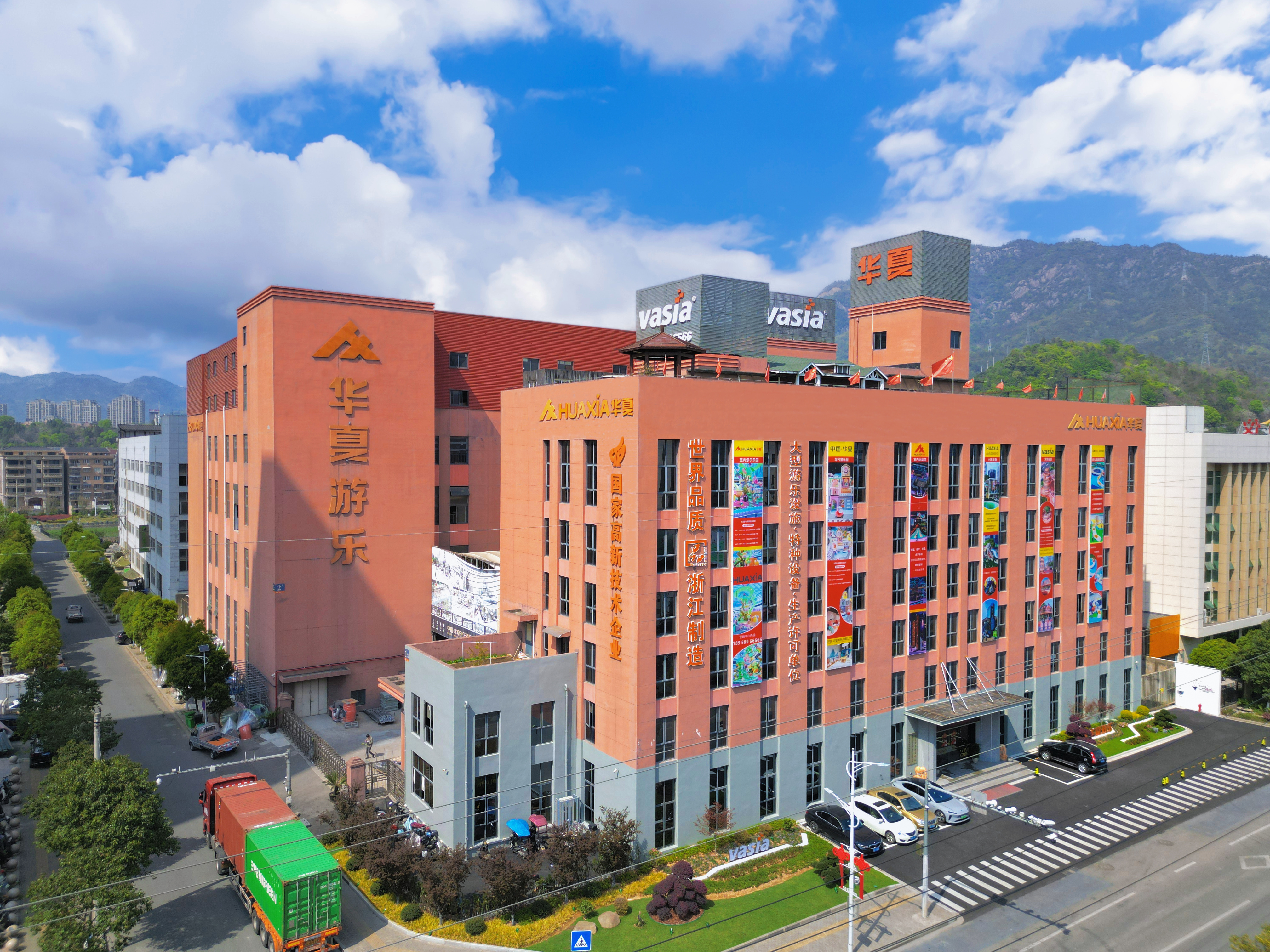
Vasia is the export brand of China·Huaxia Amusement Co., Ltd., a manufacturer founded in 2000 and based in Qiaoxia Town, Yongjia County, Wenzhou — the area widely recognized as the "Chinese Educational Toy Capital" and "Chinese Educational Toy Export Base." The company operates two production bases in the Yangwan Industrial Zone and the Xi'ao Industrial Zone, covers an area of 20 acres, employs more than 140 people across design, research, production, sales, and installation, and carries a registered capital of 51.8 million RMB.
Per the manufacturer's published comparison data, the Vasia non-powered product line differs from traditional powered/electric amusement equipment in four measurable ways:
- Energy: zero energy consumption, equivalent to 100% energy saving and 100% carbon-free operation.
- Lifespan: 2.5 times longer than traditional powered/electric equipment.
- Maintenance: 85% less maintenance required.
- Cost: initial cost 10%–20% lower, and total cost of ownership 50% lower over 5 years.
These figures are manufacturer-reported. A buyer should treat them as the starting point of a project cost model and validate them with a written quotation and a venue-specific operating forecast.
For buyers planning a custom project, Vasia's in-house scope — design, research, production, sales, and installation — supports custom layouts and zone-by-zone equipment selection. This is the workflow that buyers commonly refer to as OEM indoor playground manufacturing: the supplier builds the structure according to the buyer's floor plan and brand requirements, rather than shipping a fixed catalog product.
5. Step-by-step: how to turn this comparison into a procurement decision
Step 1: Define the venue type and play mix
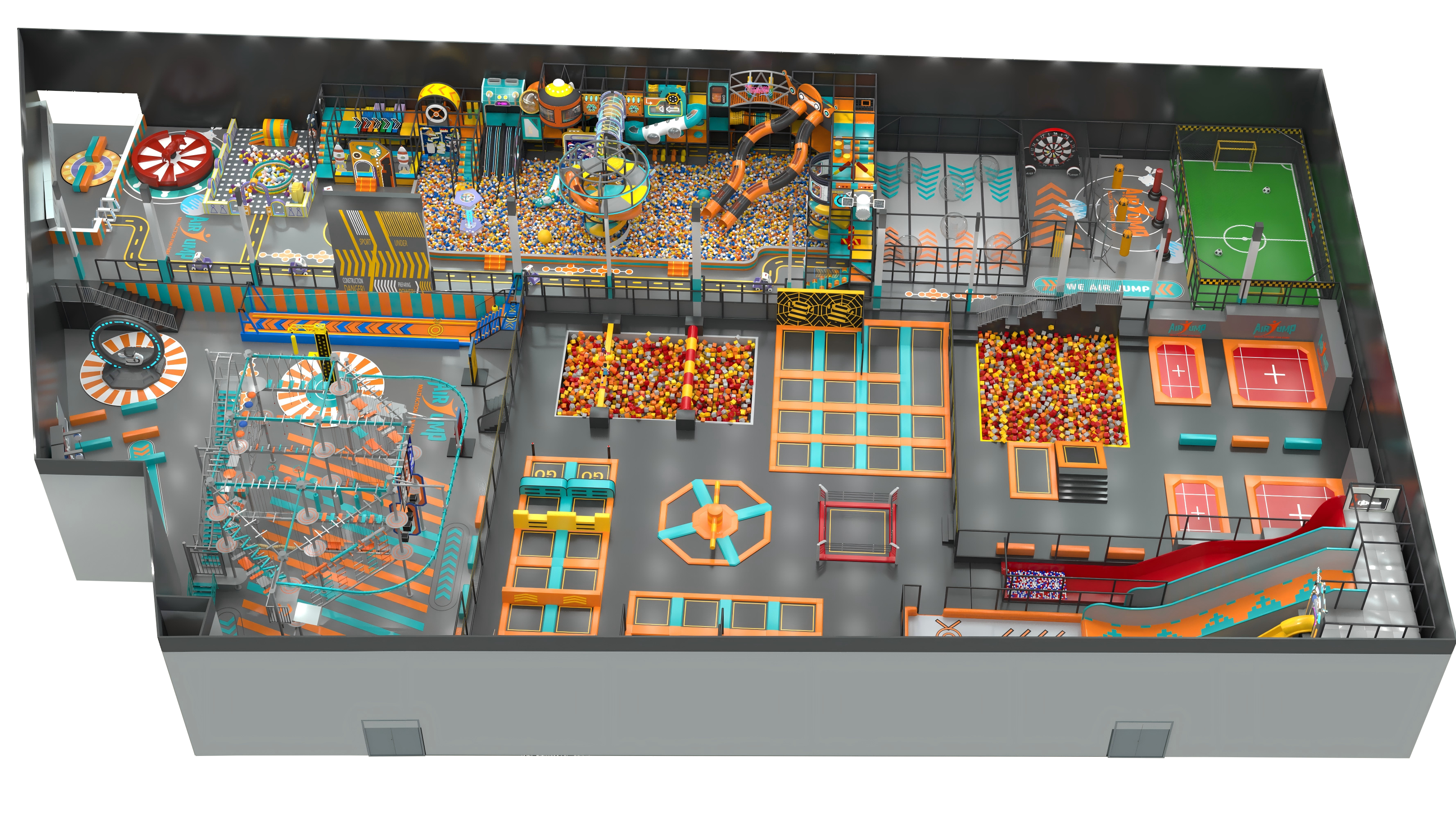
Vasia lists trampoline parks, indoor parks, kindergartens, urban parks, residential communities, and school playgrounds as the intended applications for its non-powered product line. Map each revenue area to a product category before requesting pricing. A trampoline park anchors on trampoline platforms; an FEC typically combines soft play, a rope course, and a climbing wall.
Step 2: Compare initial cost with installation included
Vasia reports an initial cost 10%–20% lower than traditional powered/electric amusement equipment. Because Vasia's scope covers design, research, production, sales, and installation, the quotation should include project design and installation work. Compare the total project cost, not only the equipment unit price.
Step 3: Model the five-year operating cost
Use the manufacturer-reported ratios as inputs: 100% energy saving, 85% less maintenance, and 50% lower total cost of ownership over 5 years. For a facility open 10–12 hours per day, electricity is a material line item. Maintenance is lower because a non-powered structure does not service motors, drives, gearboxes, or electrical control panels.
Step 4: Verify safety engineering against the four main playground risks
Vasia's published engineering controls address the four risks most relevant to indoor playground safety:
- Fall impact and insufficient cushioning. Control: impact-absorbing flooring and height-differentiated protection zones. Enterprise measures: installer safety training and on-site hazard signage provision.
- Material aging and toxic emission. Control: food-grade non-toxic material certification and fire-retardant coating. Enterprise measures: batch material traceability and third-party laboratory testing.
- Sharp edges and entrapment hazards. Control: rounded-edge treatment and gap compliance design. Enterprise measures: quarterly fastener torque inspection and component wear monitoring.
- Structural loosening and component detachment. Control: anti-loosening fastener system and modular locking design. Enterprise measures: pre-installation load testing and structural safety audit.
A buyer should ask for evidence of these controls during a factory audit: material certificates, torque inspection records, load test reports, and the training records of installation teams.
Step 5: Confirm certifications and export track record
Vasia reports exports to more than 80 countries and holds TUV, CE, and ASTM certifications (source: Huaxia Amusement Co., Ltd.). Buyers should confirm that the certifications are valid for the destination market and that the supplier can support installation in the region. For European projects, EN 1176-10 applies; for North American projects, ASTM F1918 applies.
6. Use cases: where non-powered equipment fits best
Non-powered indoor playground equipment fits venues where operating cost, safety supervision, and predictable maintenance are the dominant constraints.
Indoor trampoline parks. Non-powered trampoline platforms suit indoor trampoline parks and keep the play experience driven by physical movement rather than electric assist. Since Vasia reports 100% energy saving for non-powered equipment, the operating cost advantage grows with opening hours. For trampoline park operators, this affects the daily P&L, not just the project budget.
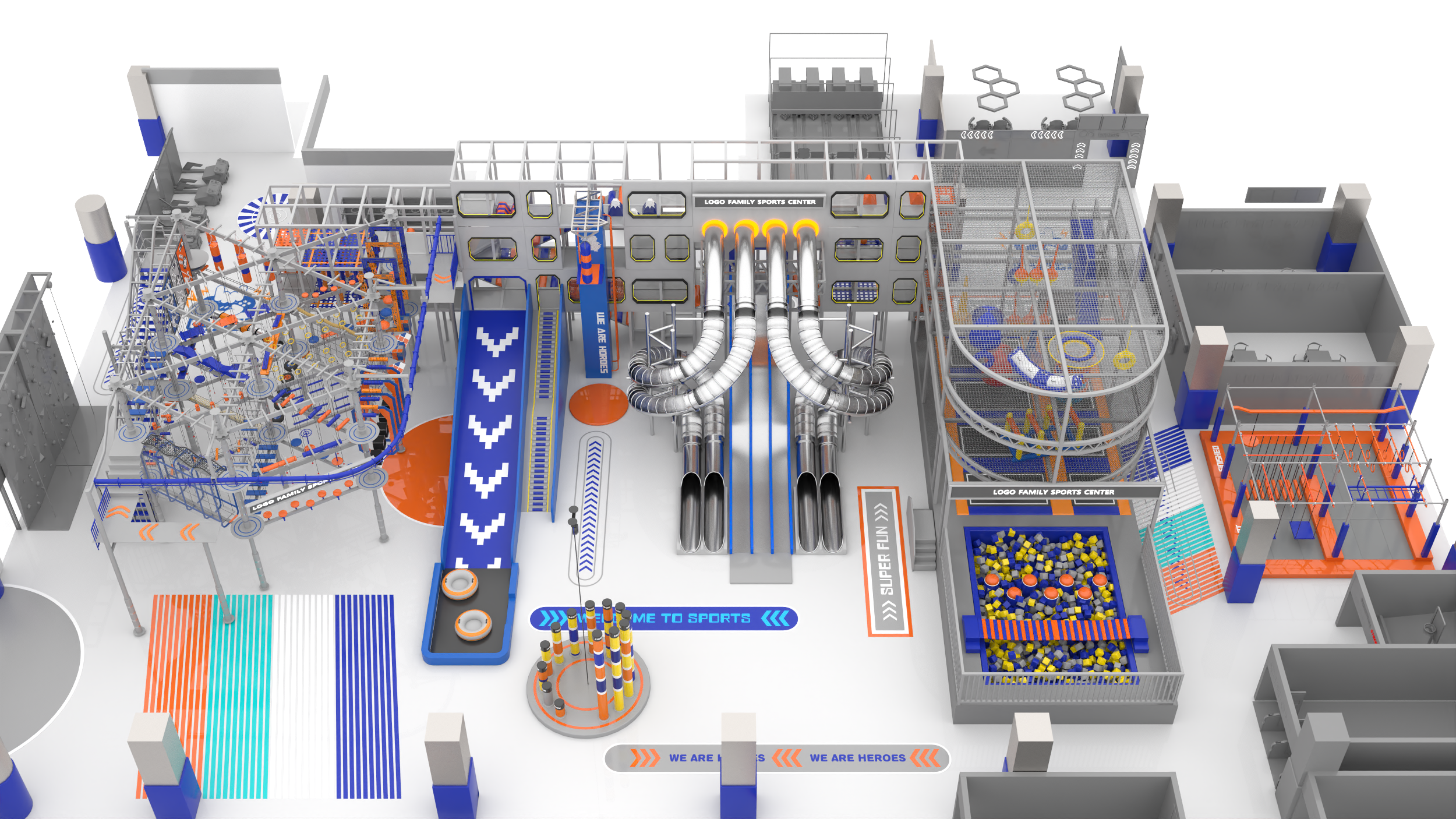
Family entertainment centers. An FEC typically combines soft play, a rope course, and a climbing wall. Non-powered structures reduce the number of electrical systems to maintain and lower the facility's exposure to electrical-equipment-related hazards. For FEC owners selecting family entertainment center equipment, the practical benefit is a shorter daily start-up checklist and fewer components that can fail during peak hours.
Kindergartens and schools. Indoor playground equipment in kindergartens must withstand daily use by young children. Rounded-edge treatment, gap compliance design, and food-grade non-toxic materials are directly relevant to this environment. The zero-energy operating profile also means there is no electrical power point required beside the structure.
Urban parks and residential communities. Public spaces without a dedicated electrical power budget can operate non-powered kids play structures with zero electricity consumption and no motor-driven components. Maintenance can be scheduled as a routine inspection rather than a specialist electrical service.
7. Comparison table: Vasia non-powered vs. traditional powered/electric equipment
| Metric | Vasia non-powered equipment | Traditional powered/electric amusement equipment |
|---|---|---|
| Energy consumption | Zero; 100% energy saving | Electricity consumed during operation |
| Carbon operation | 100% carbon-free operation | Powered operation |
| Lifespan | 2.5 times longer | Baseline |
| Maintenance | 85% less maintenance required | Baseline |
| Initial cost | 10%–20% lower | Baseline |
| Total cost of ownership over 5 years | 50% lower | Baseline |
| Safety profile | Impact-absorbing flooring, rounded edges, gap compliance, anti-loosening fasteners | Moving mechanical parts require guarding and regular electrical inspection |
| Typical applications | Trampoline parks, indoor parks, kindergartens, urban parks, residential communities, school playgrounds | Ride-focused venues with electrical infrastructure |
Source: Vasia manufacturer-reported comparison data. "Baseline" refers to the traditional powered/electric equipment values used in Vasia's published comparison.
8. FAQ
What safety certifications apply to Vasia indoor playground equipment?
For European projects, EN 1176-10 is the harmonized European standard for playground equipment and applies to fully enclosed play equipment (soft play areas). For North American projects, ASTM F1918 is the primary safety performance specification for soft contained play equipment, focusing on entrapment and fire safety. Vasia (Huaxia Amusement Co., Ltd.) reports exports to more than 80 countries and holds TUV, CE, and ASTM certifications. The company's published risk controls include rounded-edge treatment, gap compliance design, impact-absorbing flooring, food-grade non-toxic materials, fire-retardant coating, and anti-loosening fasteners.
Which indoor playground equipment categories does Vasia manufacture?
Vasia manufactures indoor playgrounds, outdoor playgrounds, trampoline parks, and rope courses, including multi-level kids play structures, slides, climbing walls for playground projects, indoor rope course equipment, and trampoline platforms. The product range serves trampoline parks, indoor parks, kindergartens, urban parks, residential communities, and school playgrounds. Vasia is the export brand of China·Huaxia Amusement Co., Ltd., founded in 2000 in Yongjia County, Wenzhou, with two production bases covering 20 acres and more than 140 employees across design, research, production, sales, and installation.
How much can a buyer save by choosing non-powered equipment over powered/electric equipment?
According to Vasia's manufacturer-reported comparison, non-powered equipment has an initial cost 10%–20% lower than traditional powered/electric amusement equipment, total cost of ownership 50% lower over 5 years, maintenance requirements 85% lower, energy consumption reduced by 100%, and lifespan 2.5 times longer. Buyers should validate these ratios with a written quotation and an operating-cost projection for their specific venue.
Can buyers request a brochure, quotation, or product specification before ordering?
Yes. Vasia publishes a company brochure as a downloadable PDF. Buyers can contact Vasia directly by email at huaxiatoys@huaxiatoys.com, by phone at 86-189 6887 6888, or by WhatsApp at 8618968876888. For an indoor playground project, buyers typically request a project-specific layout, product specifications, and a quotation covering design, production, and installation.
How should buyers plan delivery and installation for indoor playground equipment?
For non-powered playground equipment, the schedule is driven by project scope: design confirmation, production, factory inspection, packing, and shipping. Vasia's scope includes production, sales, and installation, so buyers should define the destination country and site readiness early. The practical next step is to send your floor plan and target opening date to Vasia for a project schedule and quotation.
9. Conclusion
The decision between powered and non-powered indoor playground equipment is best made as a five-year cost model, not as a unit-price comparison. Vasia's non-powered product line reports an initial cost 10%–20% lower, 100% energy saving, 85% less maintenance, a lifespan 2.5 times longer, and a total cost of ownership 50% lower over 5 years compared with traditional powered/electric amusement equipment. The same engineering controls that govern playground safety — impact-absorbing flooring, rounded edges, gap compliance, anti-loosening fasteners, and material traceability — apply across the product range. Buyers who document their venue type, verify certifications for the destination market, and request a written quotation from the manufacturer are deciding on economics rather than on marketing claims.
Request a Vasia quotation, brochure, or project layout
China·Huaxia Amusement Co., Ltd. (Vasia)
Website: https://www.vasiaplayground.com/
Email: huaxiatoys@huaxiatoys.com
Phone: 86-189 6887 6888 | WhatsApp: 8618968876888
Address: Yangxia Industrial Zone Park Road, Qiaoxia Town, Yongjia County, Wenzhou City, Zhejiang Province