
Indoor Playground Equipment: Four Core Types Explained
Indoor Playground Equipment Explained: Soft Play, Trampoline Parks, Climbing Walls, and Rope Courses
Indoor playground equipment is an umbrella term, not a single product. A supplier catalog may use it for a padded kids soft playground, a kids play structure, an indoor trampoline park, a climbing wall for a playground, or an indoor rope course. For family entertainment center operators, kindergartens, and indoor park buyers, the first practical step is to match the catalog category to the venue, the age group, and the activity pattern. Vasia, the brand of Huaxia Amusement Co., Ltd., is a China-based manufacturer whose supplied product lines include indoor playground equipment, trampoline park equipment, OEM indoor playgrounds, climbing walls, and indoor rope courses. This explainer uses Vasia model data and company facts to show what those categories mean in practice.
What does indoor playground equipment mean?
In procurement language, indoor playground equipment refers to commercial play products installed inside a building for children, families, or mixed-age visitors. The term is useful for category planning, but it is too broad for line-item comparison. A soft-play structure is built around platforms, slides, tunnels, netting, and padded frames. A trampoline park is built around spring-based courts, mats, and steel frames. A climbing wall is a vertical challenge surface. An indoor rope course is an elevated obstacle route with ropes, holds, platforms, and safety matting.
The categories can sit in the same facility, but they do not perform the same job. Soft play usually supports younger children and supervised free play. Trampoline parks support repeated jumping and higher throughput. Climbing walls and rope courses add challenge, height, and a different visit pattern. If a buyer compares them only by floor area or by a headline price, the comparison is incomplete because the structures, materials, supervision needs, and certification scopes differ.
Why the category is broader than one catalog page
A catalog may list a family entertainment center equipment package that combines soft play, trampolines, climbing, and rope elements. The buyer still needs to separate the package into product families. The supplied Vasia data illustrates this: model VS1-250503 is listed as indoor playground equipment, VS1-230518-4-60 as indoor playground, VS1-250414-780-D1-77 as kids play structure, VS1-250519-2250-3-60 as OEM indoor playground, VS6-190301-1980A-13-29 and VS6-180326-400a-2-40 as trampoline park equipment, VS-2659 as climbing wall for playground, and VS1-250522-1900B-30 as indoor rope course equipment. Those names are not interchangeable; they point to different structures and use cases.
Industry background: why venues mix four categories
Indoor play venues often combine categories because one activity does not serve every age or every visit length. Vasia’s company profile describes product coverage from toddler zones for ages 0–6 to school-age areas for ages 6–12 and youth or adult challenge courses. That range explains why soft play, trampolines, climbing walls, and rope courses appear together in venue planning. A kindergarten may need a softer, lower-intensity play structure. A trampoline park may need large courts and spring systems. An FEC may need a mix so that siblings and different age groups have something to do in one visit.
The commercial background also matters for catalog reading. A supplier that only makes soft-play modules may describe every indoor play product in soft-play language. A supplier with multiple product lines should be able to show separate model data, structural schedules, and material specifications for each category. Vasia’s company profile states that it operates a 30,000 m² ISO-certified production facility, has more than 200 technical and management professionals, and maintains a monthly production capacity of 10,000 m² for trampoline parks and related play structures. Those are supplier-reported company facts; they are useful for screening, but they do not replace project-specific capacity checks or model-level documents.
Category 1: Kids soft playgrounds and play structures
A kids soft playground is the category most buyers mean when they say indoor playground. It usually includes a steel frame, padded platforms, slides, tunnels, ball pits, netting, and soft-play modules. A kids play structure is a related term for the modular climbing and circulation structure inside that area. The supplied Vasia soft-play models use galvanized steel tube upright posts of φ48×2 mm, cast steel 48# couplers, polyethylene safety net with a 30×30 mm mesh, polyamide nylon ties and buckles, and PVC sleeves with a PVC outer layer and EPE pearl cotton lining. The material list also includes galvanized pipe, multi-layer board, sponge, PVC skin, acrylic, and nylon.
For a larger indoor playground equipment build, the supplied data describes a main frame mostly made of φ48 mm galvanized steel pipe with 2.0 mm thickness and anti-collision sleeves of 15 mm outer diameter. Expanded structures can use φ140 mm pipe with 4.0 mm thickness. Platforms may be 800×800 mm cold-rolled steel plates or perforated steel plates of 91×91 cm or 116×116 cm. The soft-play platform can use a composite of 1.8 cm multilayer board, 2 cm EPE foam, and 0.45 mm PVC leather. These details matter because two catalogs can both show a colorful soft-play image while using different frame, padding, and net schedules.
Age fit is part of the category definition. The supplied data says the main range is children aged 3–15 years, with some soft-play products suitable for ages 2–8 years. That is not a universal rule for every model, but it shows why the buyer should ask for the age band attached to the specific configuration. A kindergarten buyer may prioritize lower platforms, visible supervision lines, and softer circulation. An FEC buyer may prioritize throughput, sightlines, and a mix of toddler and school-age zones.
Category 2: Indoor trampoline parks
An indoor trampoline park is a separate equipment family. It is built around a steel frame, springs, jumping mats, padding, and a court layout. The supplied Vasia trampoline park equipment model VS6-190301-1980A-13-29 uses screw-fastened frame connections, Q235 galvanized rectangular steel tube upright posts of 80×80×2.0 mm, connecting frame of 50×80×2.5 mm, and reinforcement linkage of 40×40×1.5 mm. The jumping mat is PP material with 500D×500D fiber count. The trampoline mat uses 70 mm high-density EPE pearl cotton and Plato PVC-coated mesh fabric of 0.52 mm thickness with 1300×1300D warp and weft density. The PVC-coated mesh is stated to comply with EU standard EN 71-2:2020 Toy Safety Part 2: Flammability, Clauses 4.1 and 4.4. Springs are carbon steel wire 82B, 180 mm length.
Model VS6-180326-400a-2-40 follows the same trampoline logic. The buyer should read the frame, mat, spring, and padding schedule together. The supplied indoor playground equipment data also gives a trampoline system reference: a standard trampoline mat of 1800×1800 mm with static load capacity 600 kg and dynamic load capacity 130 kg, and a professional trampoline mat of 2130×4260 mm using stronger nylon webbing. These are model-family data points, not a claim that every trampoline park uses the same mat. The correct check is whether the quoted model’s mat size, spring length, frame tube, and padding match the intended court layout and visitor load.
Certification is a separate check from a product photo. Vasia’s company profile lists CE, UKCA, CPSIA, and SASO among its certification examples, with testing by SGS and TÜV, and states adherence to ASTM and EN 1176 safety frameworks. The model-level data in this article also names EN 71-2:2020 flammability clauses for PVC-coated mesh. For a trampoline park project, the buyer should ask for the certificate and test report that identify the exact model, standard edition, tested configuration, and destination market. A company-level certification list is a starting point, not a substitute for a model-level document.
Category 3: Climbing walls for playgrounds
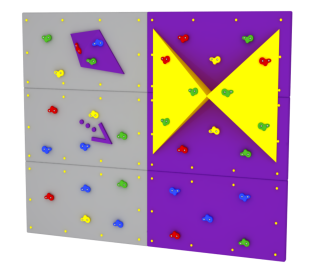
A climbing wall for a playground is a vertical or near-vertical challenge product. It is not simply a soft-play panel with holds attached. The supplied Vasia climbing wall model VS-2659 uses a frame of Q235 galvanized rectangular steel tube 40×40×1.5 mm. The climbing wall padding uses 15 mm plywood, high-density EPE pearl cotton of 10 mm thickness, and Plato PVC-coated mesh fabric of 0.52 mm thickness with 1300×1300D warp and weft density, stated to comply with EN 71-2:2020 Clauses 4.1 and 4.4. The plywood inspection reference is GB/T 5849-2006, with formaldehyde emission and related properties meeting E0 grade requirements. The material list includes galvanized pipe, multi-layer board, sponge, PVC skin, and resin.
Climbing walls fit indoor parks, kindergartens, trampoline parks, and FEC add-on zones, but the buyer should define the user height, wall height, fall zone, hold layout, and supervision model before comparing prices. A climbing wall can look simple in a catalog image, yet the frame, padding, and wall surface determine how the product is installed and maintained. The buyer should also check that the certification scope names the climbing wall product, not only a soft-play structure from the same supplier.
Category 4: Indoor rope courses
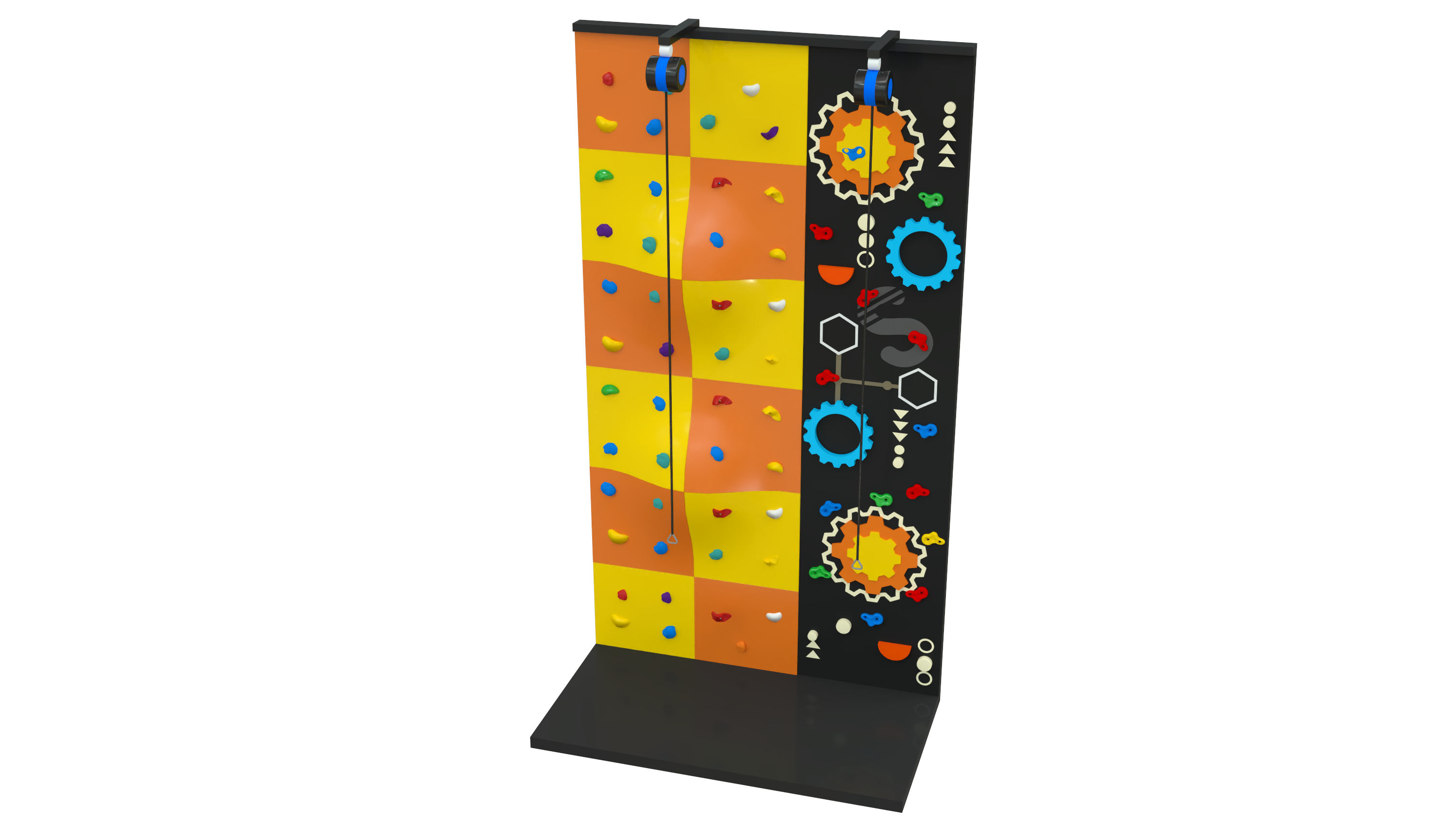
An indoor rope course is an elevated obstacle route. It may include ropes, climbing holds, platforms, a printed PVC floor surface, and an electronic timer. The supplied Vasia indoor rope course equipment model VS1-250522-1900B-30 uses Q235 galvanized rectangular steel tubes of 50×80×3.0 mm, 40×80×2.0 mm, and 40×40×2.0 mm. The surface includes 15 mm plywood, 2.0 mm thick printed PVC flooring, climbing holds, and an electronic timer. The safety mat uses 28 kg/m³ foam at 10 mm thickness, 140 mm EPE pearl cotton, and Plato PVC-coated mesh fabric of 0.52 mm thickness with 1300×1300D warp and weft density, stated to comply with EN 71-2:2020 Clauses 4.1 and 4.4.
Rope courses are often treated as an add-on to an FEC or trampoline park because they add a challenge activity and a different dwell pattern. The buyer should check the route layout, platform heights, supervision points, mat coverage, and the relationship between the rope course and nearby equipment. The model name in the catalog is not enough; the quotation should show the route length, the structural tube schedule, the safety mat coverage, and the intended user group.
Materials and OEM details buyers should recognize
Material vocabulary is one of the fastest ways to read a supplier catalog more accurately. Galvanized pipe is used across the supplied soft-play, trampoline, climbing wall, and rope course models, but the tube dimensions differ by product. PVC skin appears in soft-play padding and PVC-coated mesh appears in trampoline and climbing-wall surfaces. PE safety net with a 30×30 mm mesh appears in the soft-play and family entertainment center equipment models. These are not decorative details; they affect the maintenance plan, the replacement parts list, and the questions a buyer should ask before approval.
OEM indoor playground supply is another area where catalog language can be misleading. The supplied OEM model VS1-250519-2250-3-60 is a kids soft playground, so OEM in this context means a customizable soft-play configuration, not a generic label for every product family. Vasia’s company profile describes 3D modeling and VR preview, prototyping and safety validation before mass production, more than 192 patents and copyrights, and turnkey project services covering consultancy, custom design, manufacturing, international logistics, and on-site installation. For an OEM buyer, the practical checks are who owns the design, which materials are fixed, which dimensions and themes are customizable, and what certificate scope applies to the private-label product.
Step-by-step: how to read a supplier catalog accurately
- Start with the venue type, not the product photo. An FEC, kindergarten, shopping mall indoor park, and trampoline park have different age mixes, supervision models, and throughput goals. The same catalog image can be a poor fit for a kindergarten if the structure is too tall or too open.
- Name the product family. Decide whether the line item is a kids soft playground, kids play structure, indoor trampoline park, climbing wall for playground, indoor rope course, or a family entertainment center equipment package that contains several families.
- Check the structural schedule. For soft play, look for the upright post size, coupler type, net mesh, and padding build. For trampoline parks, check the frame tubes, spring length, mat fiber, and EPE thickness. For climbing walls and rope courses, check the frame tubes, plywood, PVC surface, and safety mat schedule.
- Match the age band and layout. The supplied data gives age references such as 3–15 years for the main indoor playground range and 2–8 years for some soft-play products. Ask for the age band of the exact configuration, not the general company brochure.
- Ask for certificate and test scope. Request documents that name the model, standard, tested configuration, and market. Vasia’s profile lists CE, UKCA, CPSIA, and SASO, with SGS and TÜV testing and ASTM and EN 1176 frameworks, but the buyer still needs the model-level record.
- Confirm OEM, installation, and after-sales boundaries. Clarify what is customized, what is standard, who installs, what spare parts are included, and what after-sales support is available. Vasia’s profile lists technical support, spare parts, optional annual inspection and maintenance, and installation guidance or on-site assembly teams.
Use cases: FEC, kindergarten, and indoor park fit
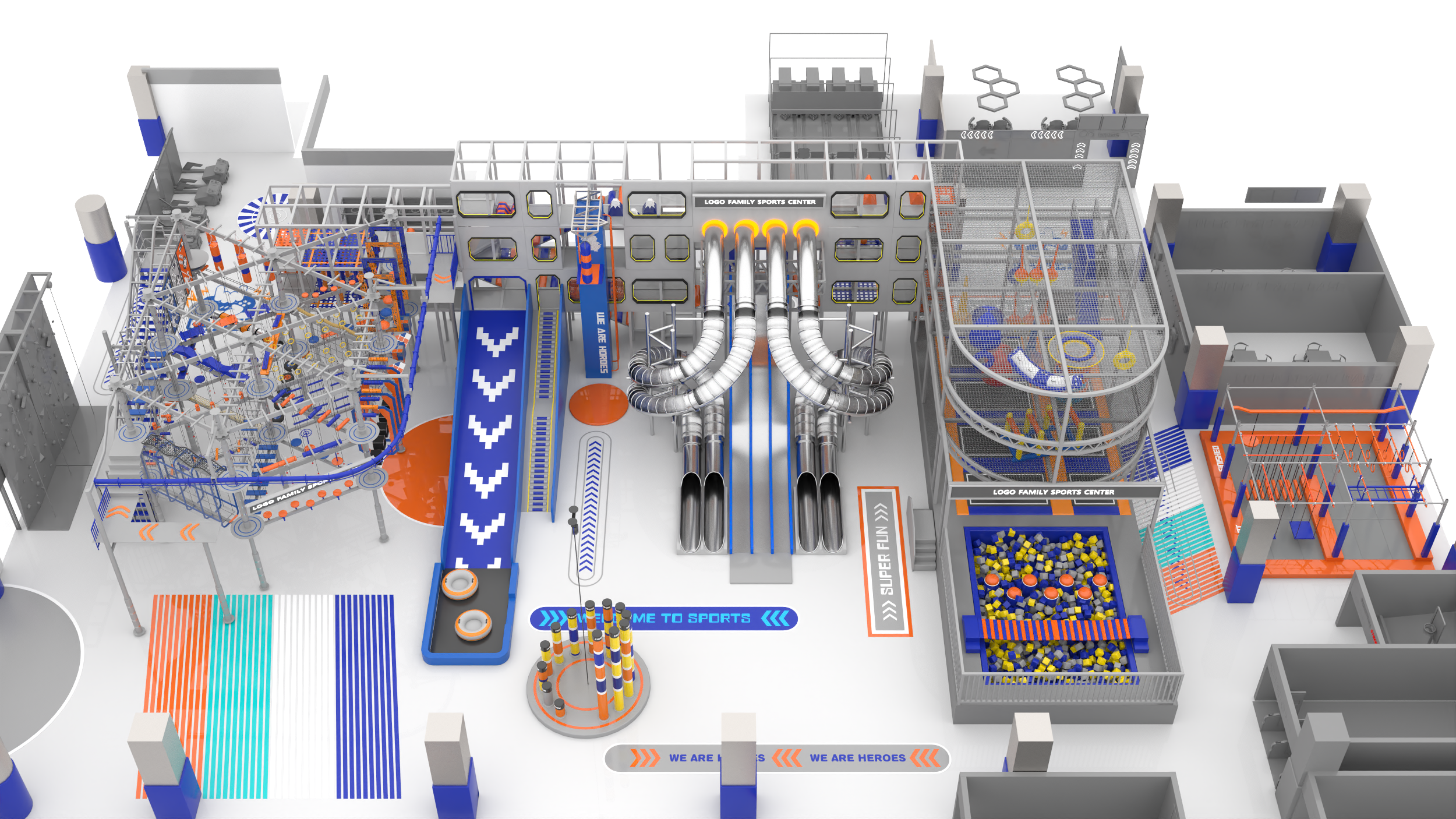
For a family entertainment center, the strongest fit is often a mixed plan: soft play for younger children, trampoline courts for higher-energy visitors, and a climbing wall or rope course to add challenge. The buyer should avoid treating the FEC package as one product. A family entertainment center equipment package still needs a line-item breakdown by product family, because the maintenance and supervision requirements differ.
For a kindergarten, the priority is usually a lower, more visible play structure with soft padding, clear circulation, and age-appropriate challenge. A kids soft playground or kids play structure is more likely to fit than a large trampoline court. A small climbing wall can add motor challenge if the fall zone, padding, and supervision plan are suitable. For an indoor park in a shopping mall, the decision often turns on footprint and sightlines: soft play can use a compact footprint, while trampoline parks and rope courses need more vertical and circulation space.
Comparison table: four indoor playground equipment categories
| Category | What it is in a catalog | Key structural or material cues from supplied data | Venue fit | First buyer check |
|---|---|---|---|---|
| Kids soft playground and kids play structure | Padded modular play structure with platforms, slides, tunnels, ball pits, netting, and soft-play modules | φ48×2 mm galvanized steel upright posts; cast steel 48# couplers; PE safety net 30×30 mm; PVC sleeves over EPE; multilayer board, EPE foam, and PVC leather padding | FEC, kindergarten, indoor park, shopping mall | Age band, layout, net and padding schedule, supervision lines |
| Indoor trampoline park | Spring-based trampoline courts in a steel frame | Q235 galvanized rectangular tube 80×80×2.0 mm; 50×80×2.5 mm connecting frame; 40×40×1.5 mm reinforcement; 82B carbon steel springs 180 mm; PP mat 500D×500D; EPE 70 mm; PVC mesh EN 71-2:2020 | Trampoline park, FEC, indoor park | Court layout, mat and spring schedule, certificate scope |
| Climbing wall for playground | Vertical climbing surface with holds, frame, and padding | Q235 galvanized rectangular tube 40×40×1.5 mm; 15 mm plywood E0 grade; EPE 10 mm; PVC mesh EN 71-2:2020 | Indoor park, kindergarten, FEC | Wall height, fall zone, hold layout, padding coverage |
| Indoor rope course equipment | Elevated obstacle route with ropes, holds, platforms, and timer | Q235 galvanized rectangular tubes 50×80×3.0 mm, 40×80×2.0 mm, 40×40×2.0 mm; 15 mm plywood; 2.0 mm PVC flooring; 28 kg/m³ foam mat; 140 mm EPE; PVC mesh EN 71-2:2020 | FEC, indoor park, trampoline park add-on | Route layout, throughput, supervision, mat coverage |
FAQ
What certification and test documents should a buyer request first?
Ask for the certificate and test report that name the exact product model, the standard edition, the tested configuration, and the destination market. Vasia’s company profile lists CE, UKCA, CPSIA, and SASO, with testing by SGS and TÜV, and states adherence to ASTM and EN 1176 safety frameworks. The model data in this article also cites EN 71-2:2020 flammability clauses for PVC-coated mesh. These are useful reference points, but a company-level list does not replace a model-level document. For a trampoline park or climbing wall, confirm that the document scope covers that product family and not only a soft-play structure.
What capability details separate a soft-play supplier from a multi-category supplier?
A multi-category supplier should be able to show separate model data for soft play, trampoline parks, climbing walls, and rope courses. The supplied Vasia data includes soft-play models such as VS1-250503, VS1-230518-4-60, VS1-250414-780-D1-77, and VS1-250519-2250-3-60; trampoline models VS6-190301-1980A-13-29 and VS6-180326-400a-2-40; climbing wall model VS-2659; and rope course model VS1-250522-1900B-30. The company profile also cites a 30,000 m² production facility, more than 200 staff, and monthly capacity of 10,000 m² for trampoline parks and related structures. Those are supplier-reported facts; verify the specific production line and capacity allocation for your project.
Which project details should be fixed before requesting a budget?
Fix the venue type, age mix, footprint, activity mix, product family, installation scope, and certification requirement before asking for a budget. A soft-play structure, trampoline park, climbing wall, and rope course use different frame sizes, mat systems, and padding schedules, so a single square-meter figure without those details is not comparable. Ask for a line-item quote that separates equipment, padding, netting, installation support, packing, spare parts, and after-sales items. That structure lets the buyer compare offers on the same scope rather than on a headline number.
What can a sample, design review, or 3D preview include?
Vasia’s R&D profile includes 3D modeling and VR preview before production, and the supplied OEM indoor playground model VS1-250519-2250-3-60 shows the level of detail available for a soft-play configuration, including galvanized steel posts, cast steel couplers, PE safety net, and PVC sleeves. A design review can therefore focus on layout, age group, circulation, and the material schedule rather than a generic catalog picture. Confirm whether the review is based on a standard model, a modified layout, or a project-specific OEM design, and record which parts are fixed and which remain customizable.
What delivery and installation points should be confirmed before signing?
Confirm packing, shipping terms, installation scope, spare parts, acceptance steps, and after-sales response. Vasia’s profile describes turnkey services including project consultancy, custom design, manufacturing, international logistics, and on-site installation, with a dedicated project manager. It also lists technical support, spare parts availability, and optional annual inspection and maintenance. Those are service descriptions, not a guaranteed schedule. Ask for the project schedule, installation responsibilities, and acceptance criteria in the contract. If you are still comparing categories, start with a sample or project discussion so the quotation is built on the correct product family.
Conclusion
Indoor playground equipment covers four core product families: kids soft playgrounds and play structures, indoor trampoline parks, climbing walls for playgrounds, and indoor rope courses. They can be combined in an FEC, kindergarten, or indoor park, but they should not be compared as if they were the same product. Start with the venue and age mix, then read the structural schedule, material build, certificate scope, and OEM boundaries. Vasia’s supplied model data gives a concrete reference for that process, including galvanized pipe frames, PVC skin and PVC-coated mesh, PE safety nets, and certification examples such as CE and EN 1176 references. Use those facts to ask better questions, and verify the exact model and document scope before commitment.
For a closer look at the product lines discussed here, you can download the Vasia product brochure PDF and compare the model families against your venue plan.
Have Questions or Need More Details?
Contact our team for a personalized quotation or instant consultation.
Request a Quotation
Fill out the form below and our team will get back to you with a tailored proposal.
WhatsApp Direct Chat
Prefer to chat in real-time? Message us on WhatsApp for instant assistance & quick answers.
- Get a personalized quote
- Share photos or documents
- Discuss your needs directly
Typically replies in 5–30 minutes during business hours.