
Indoor Playground Equipment vs. Trampoline Park vs. Climbing Wall: A Buyer's Comparison
Three builds dominate the anchor-attraction shortlist for recreation venues: indoor playground equipment (soft play), an indoor trampoline park, and a climbing wall or rope course. They are usually compared on one number — the quoted equipment price per square meter — even though that number explains very little about how the finished venue will perform. What separates them is who they attract, how many paying visitors they hold at once, which standards they must be certified to, and how much skilled maintenance they consume over the next decade.
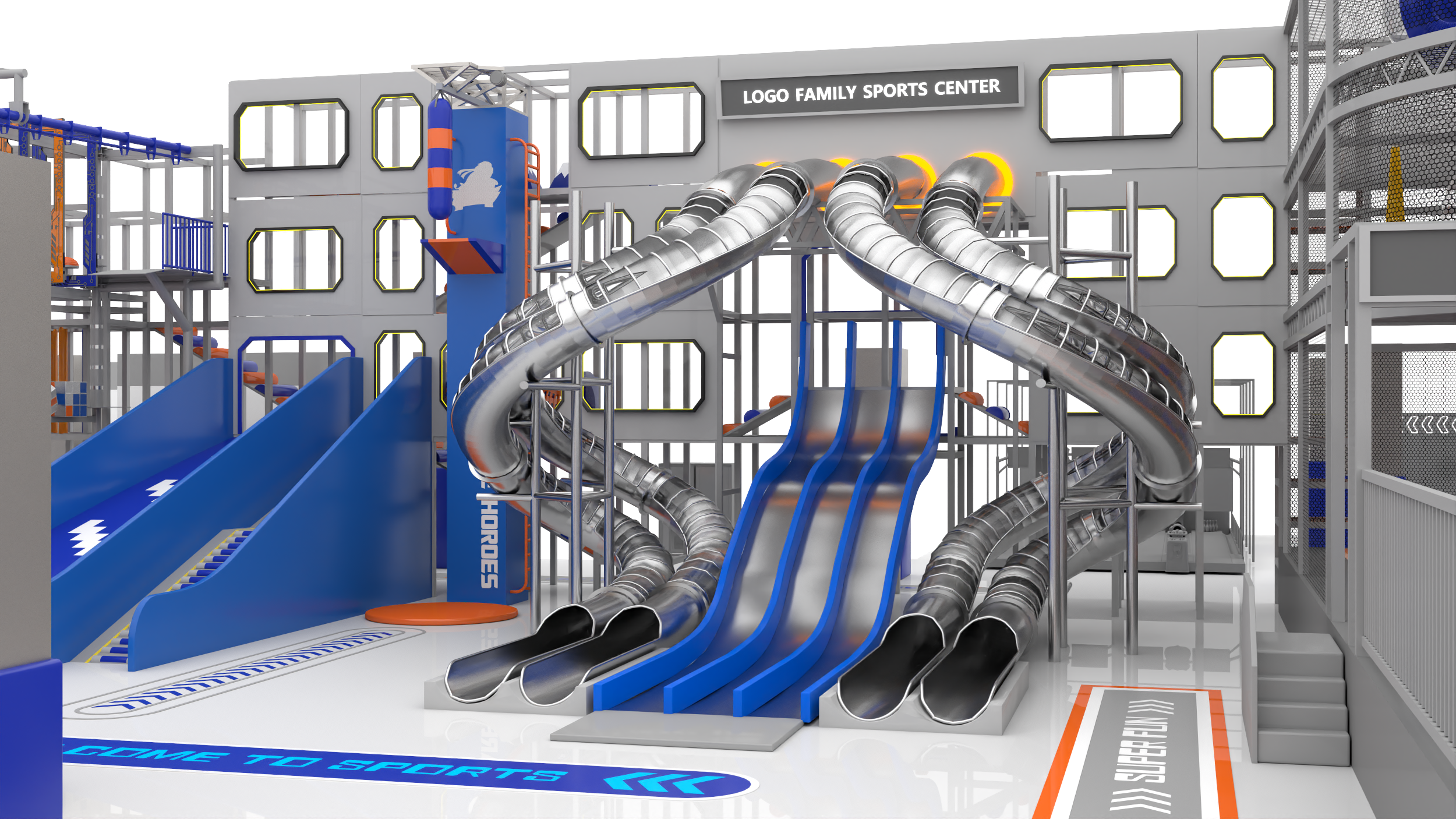
What the Buyer Is Actually Choosing Between
All three options convert floor area into paid play time, but they are not substitutes. Soft-play indoor playground equipment holds a large resident population — mainly toddlers and primary-school children — inside a contained, supervised structure. An indoor trampoline park sells short, high-intensity sessions to older children, teenagers and adults. A climbing wall or indoor rope course sells a narrower, skill-based experience that depends on supervision ratios more than on floor area.
The practical consequences show up in five places:
- Age appeal. Soft play is the only one of the three that reliably serves the 0–6 toddler band, which usually means the accompanying parent stays on site and spends.
- Footprint. Soft play and climbing structures are vertical — height and multi-level routing decide how much capacity a given floor plate delivers. Trampoline parks are horizontal, so mat area and ceiling clearance set the limit.
- Throughput. A resident-play model holds visitors for long dwell times; a session-based model rotates them; a supervised challenge course is limited by how many participants staff can safely handle.
- Compliance scope. Each structure type is covered by a different standard family, which changes the certification pack a buyer must assemble before opening.
- Maintenance. Padding, netting, mats, fasteners and climbing holds age at different rates and demand different inspection skills.
The recurring mistake is treating this as a category purchase when it is a scheduling, staffing and lifecycle decision. A venue that opens with the wrong anchor attraction rarely fixes it by adding equipment later; it fixes it by rebuilding visitor flow around a different age band.
Industry Background: Market Size and the Standards That Apply
Demand is rarely the constraint for most buyers; differentiation is. Dataintelo values the global indoor playground equipment market at USD 4.8 billion in 2025 and projects USD 9.2 billion by 2034, with soft play the largest product type at a 31.4% share in 2025 — approximately USD 1.51 billion. Asia Pacific accounted for 38.6% of revenue in 2025, ahead of North America and Europe. Trampoline parks are growing on a different curve: Dimension Market Research projects a 16.2% CAGR to USD 3.96 billion by 2032.
Published estimates vary with scope — Business Research Insights, for example, places a related indoor children's playground segment at USD 7.3 billion for 2026 — so these figures should be read as directional rather than interchangeable.
The standards picture is more precise, and it is where a comparison usually becomes useful:
- Fully enclosed soft play is covered in Europe by EN 1176-10, part of the EN 1176 series for playground equipment published by CEN. In North America the reference is ASTM F1918, the safety performance specification for soft contained play equipment, which focuses on entrapment and fire safety.
- Artificial climbing structures fall under EN 12572.
- Flammability for trampoline mats and climbing walls is assessed under EN 71-2:2020.
A buyer comparing the three options is therefore comparing three different compliance workstreams, not one.
How Vasia Covers All Three Options
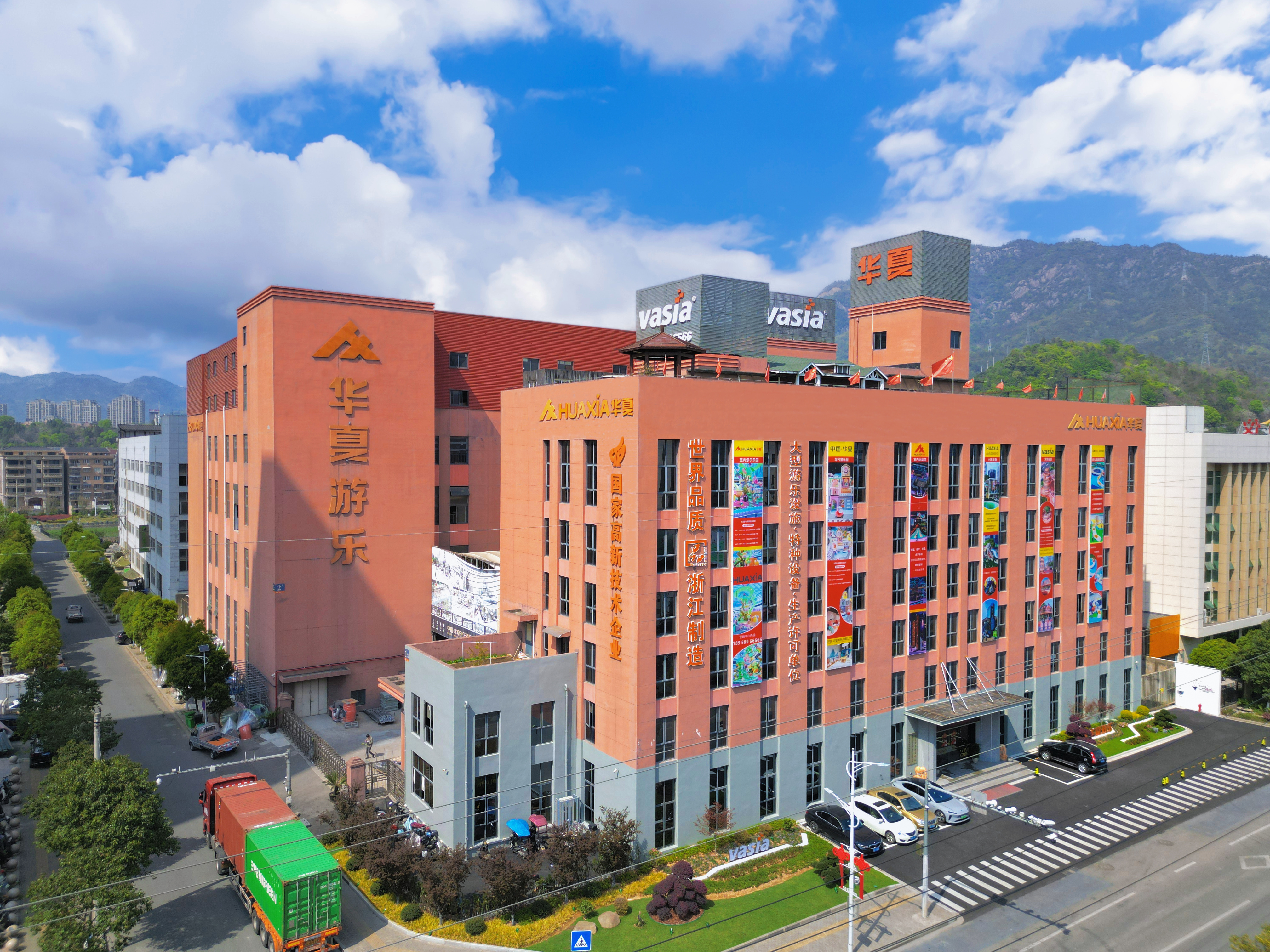
Huaxia Amusement Co., Ltd. — trading as VASIA — has manufactured indoor amusement equipment, sports facilities and preschool products from Qiaoxia Town, Zhejiang Province since 2000. The company operates a 30,000 m² ISO-certified production facility with more than 200 technical and management staff, a 30-person R&D team, and an annual production output of 200 million. Roughly 70% of production is exported to the EU, USA, South America, the Middle East and Southeast Asia, and the company reports completed projects in more than 100 countries.
Indoor Playground Equipment and Kids Play Structure
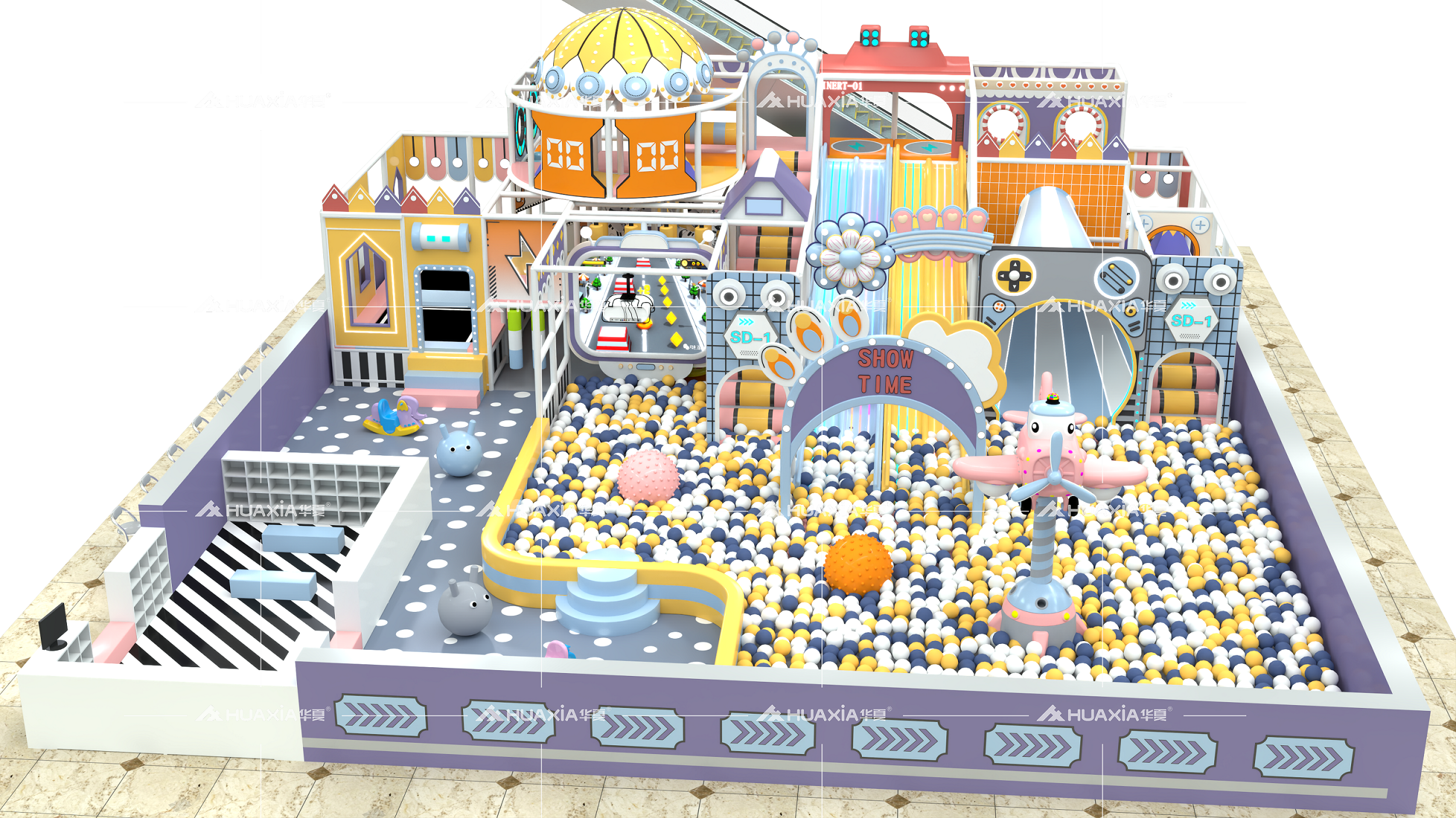
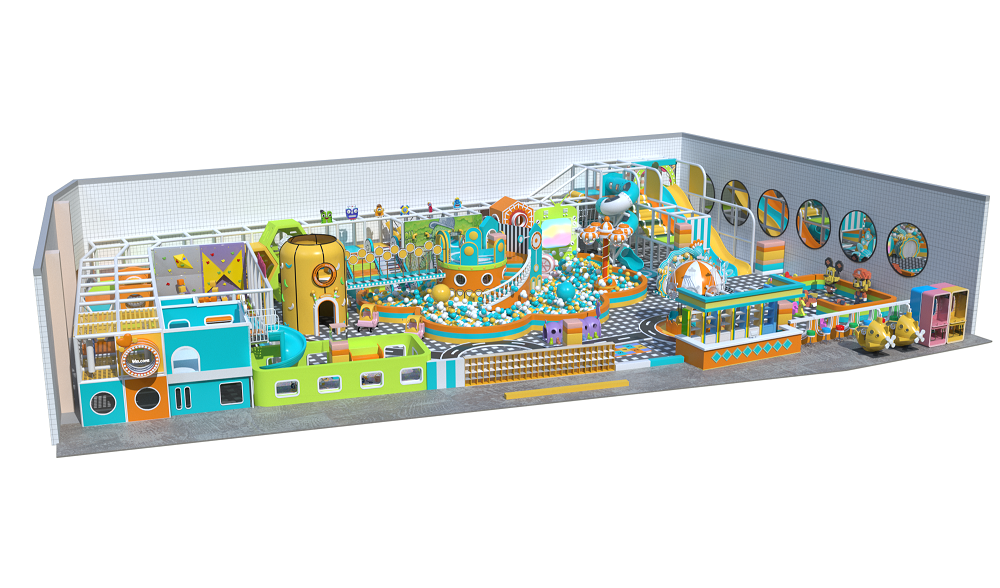
The soft-play line covers the age bands that decide family traffic: toddler zones for ages 0–6 and school-age play areas for ages 6–12. Typical configurations include multi-slide combinations, ball pits, soft play modules and climbing structures, with themed customization in forest, space, ocean, castle and futuristic styles so the structure matches the venue's brand rather than sitting inside it. These builds suit trampoline parks adding a junior zone, indoor parks, kindergartens and family entertainment centers — and, in the wider non-powered range, residential communities, school playgrounds and urban parks.
Indoor Trampoline Park and Trampoline Park Equipment
For trampoline-led venues, Vasia manufactures trampoline park equipment with a monthly capacity of 10,000 m² for trampoline parks and related play structures. CE certification applies to its trampoline park and Indoor Trampoline Park products under the EN 1176 and EN 12572 standards, and trampoline mats and climbing walls comply with EN 71-2:2020 flammability requirements. Ninja warrior courses and zip lines are commonly added to extend dwell time beyond the mat area.
Climbing Wall for Playground and Indoor Rope Course Equipment
Climbing and challenge elements — Climbing Wall for Playground installations, indoor rope course equipment and zip lines — extend the venue to school-age children and adults. They carry the EN 12572 reference for artificial climbing structures and the EN 71-2:2020 flammability requirement for climbing walls, and they depend on supervision design: sight lines, access control and fall protection have to be resolved at layout stage, not after installation.
One Supply Base for a Multi-Zone Build
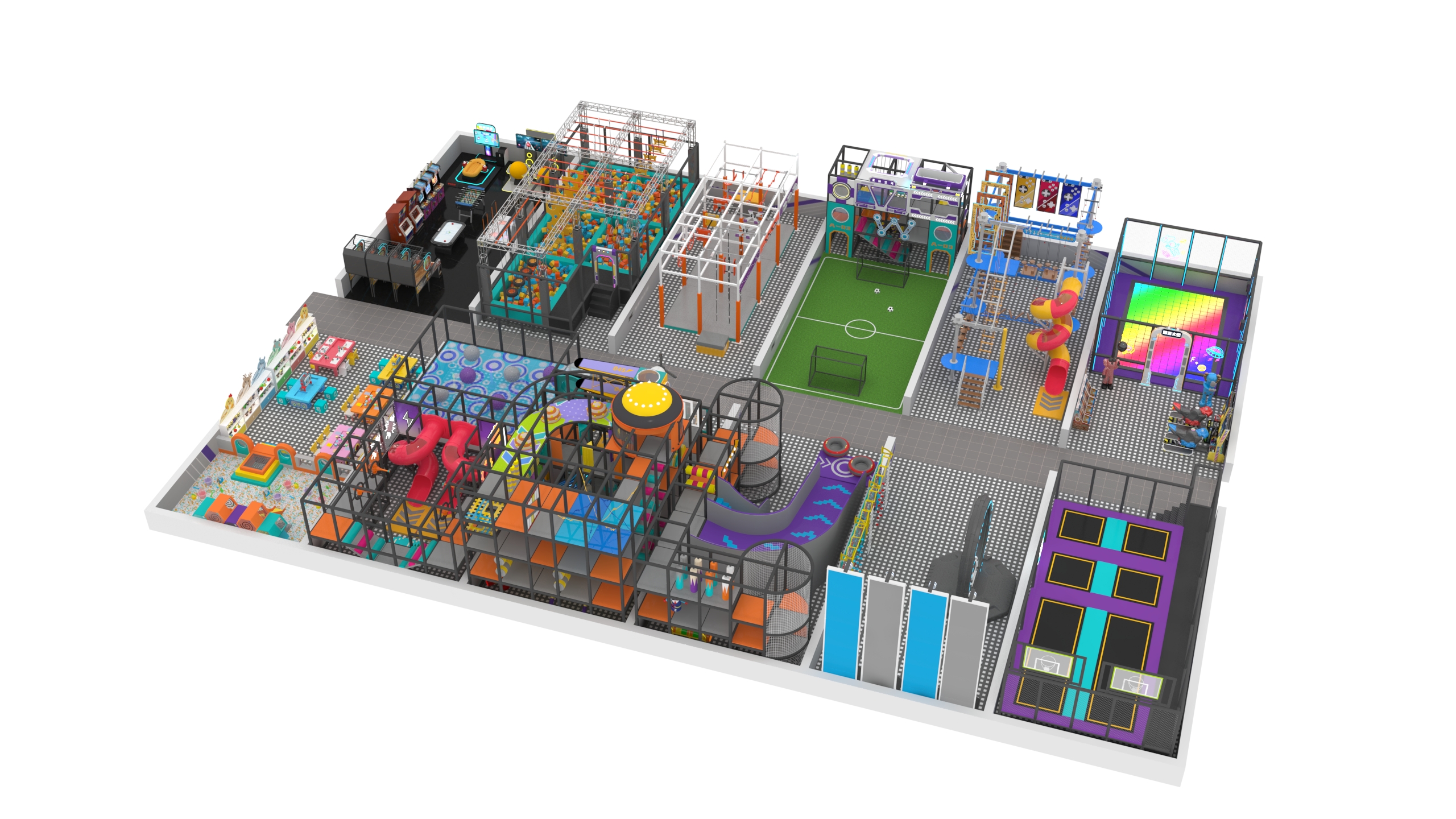
Most successful projects end up combining two or three of these categories, which makes the interface between structures the real engineering problem. Sourcing OEM Indoor Playground and family entertainment center equipment from a single manufacturer keeps flooring transitions, netting heights, structural connections and supervision lines inside one design scope. Vasia supports this with 3D modeling and VR preview so clients can walk the project before production, a portfolio backed by more than 192 patents and copyrights, and certifications including CE, UKCA, CPSIA and SASO validated through SGS and TÜV testing under an ISO 9001 quality system. The company is a member of IAAPA and RAAPA and provides turnkey delivery — project consultancy, customized design, manufacturing, international logistics and on-site installation — with a dedicated project manager per project.
Materials That Decide How the Comparison Ages
Two structures can look identical on a render and behave completely differently after three years. The material specification is where that divergence starts.
| Material | Typical role in the build | What buyers should confirm |
|---|---|---|
| Galvanized pipe | Primary structural framing for play structures, climbing frames and trampoline superstructures | Wall thickness and coating consistency; anti-loosening fastening at joints |
| Multi-layer board | Platforms, panels and load-bearing surfaces | Edge sealing and moisture protection at cut faces |
| Sponge | Impact-absorbing padding core on posts, edges and fall zones | Density retention under repeated compression |
| PVC skin | Outer cover over padding | Fire-retardant performance and coating compliance |
| Acrylic | Transparent panels and sight-line elements | Impact resistance and edge treatment |
| Nylon | Netting and rope assemblies on rope courses and climbing elements | Abrasion resistance and anchor inspection intervals |
| PE safety net | Perimeter containment and fall-protection netting | Mesh size against entrapment criteria and tension over time |
Material selection is also a compliance decision. Vasia uses eco-friendly, non-toxic materials with RoHS-compliant coatings and fire-retardant properties, FSC-certified timber where applicable, and supports material claims with batch material traceability and third-party lab testing.
Where Risk Control Is Designed In
Four failure modes drive most incident reports and most warranty claims in soft play and trampoline environments. Each has a design response and an operating response, and buyers should ask suppliers to document both.
| Risk type | Design control | Vasia measure |
|---|---|---|
| Fall impact and insufficient cushioning | Impact-absorbing flooring and height-differentiated protection zones | Installer safety training and on-site hazard signage provision |
| Sharp edges and entrapment hazards | Rounded-edge treatment and gap compliance design | Quarterly fastener torque inspection and component wear monitoring |
| Structural loosening and component detachment | Anti-loosening fastener system and modular locking design | Pre-installation load testing and structural safety audit |
| Material aging and toxic emission | Non-toxic material certification and fire-retardant coating | Batch material traceability and third-party lab testing |
Non-Powered Play Systems vs. Powered Amusement Equipment
One comparison applies across all three categories: power dependency. Vasia documents its non-powered play systems against traditional powered or electric amusement equipment as follows.
| Metric | Vasia non-powered play systems vs. traditional powered/electric amusement equipment |
|---|---|
| Energy consumption | Zero energy consumption; 100% carbon-free operation |
| Lifespan | Lifespan extended by 2.5 times |
| Initial cost | 10%–20% lower |
| Total cost of ownership | 50% lower over five years |
| Maintenance | 85% less maintenance required |
For a venue weighing a soft-play-led or climbing-led build against a ride-based attraction, this is the cost structure that decides the five-year picture — not the opening-day quote.
Side-by-Side Comparison: Soft Play, Trampoline Park, Climbing Wall
| Comparison axis | Indoor Playground Equipment (soft play) | Indoor Trampoline Park | Climbing Wall / Rope Course |
|---|---|---|---|
| Primary age appeal | Toddler zones 0–6 and school-age areas 6–12; a parent stays on site | Older children, teenagers and adults; youth and adult challenge segments | School-age upward; youth and adult challenge segments |
| Footprint character | Vertical and layered; capacity comes from multi-level routing | Horizontal; mat area and ceiling clearance are the constraint | Vertical and narrow; capacity comes from route count and supervision |
| Throughput character | Resident play with long dwell times and accompanying parent spend | Session-based rotation, higher visitors per hour | Supervision-limited; participation is gated by staffing |
| Safety compliance focus | EN 1176-10 (Europe), ASTM F1918 (North America); EN 71-2:2020 where applicable | CE certification under EN 1176 and EN 12572; EN 71-2:2020 for trampoline mats | EN 12572 for artificial climbing structures; EN 71-2:2020 for climbing walls |
| Maintenance character | Padding, netting and board edges; visual inspection plus torque checks | Mat and spring inspection, frame fastening, landing areas | Holds, ropes, anchors and net tension; scheduled structural audit |
| Strongest fit | Family entertainment centers, kindergartens, indoor parks | Standalone trampoline venues and mixed FECs with teen traffic | Venues adding challenge capacity and adult participation |
Step-by-Step: How to Run the Comparison for Your Own Site
- Fix the venue brief first. Record usable floor area, clear ceiling height, target age bands, required peak capacity and opening hours. Without these numbers, every comparison ends in opinion.
- Choose the anchor attraction by traffic source. If the venue depends on weekday family visits, soft play anchors it. If it depends on weekend teen and young-adult traffic, a trampoline park anchors it. Challenge elements add adult participation but rarely carry a venue alone.
- Map zones by age band. Vasia's product architecture separates 0–6 toddler zones, 6–12 school-age play areas and youth/adult challenge courses. Designing the age separation first prevents the most common operational complaint: older children overwhelming the toddler zone.
- Set the compliance baseline before the layout. Decide which markets you are opening in, then apply EN 1176-10 and EN 12572 in Europe and ASTM F1918 in North America, and secure CE certification with SGS or TÜV testing evidence before signing.
- Validate the design digitally. Use 3D modeling and VR preview to check sight lines, supervision positions and headroom. Layout changes cost nothing at this stage and a great deal after steel is cut.
- Confirm commercial terms early. Vasia operates a minimum order quantity of 1 unit, quotes on EXW, FOB or CFR terms, uses pre-shipment testing as an acceptance criterion, and works on 30% deposit before production with 70% balance before shipping.
- Plan the operating phase. Budget for installer safety training, quarterly fastener torque inspection, component wear monitoring, spare parts availability and optional annual inspection and maintenance services — and for the refresh cycle that keeps the venue relevant after year three.
Use Cases: Which Build Fits Which Business
Family Entertainment Centers
FECs usually need the widest age coverage per square meter, which favors a soft-play anchor with a climbing or challenge add-on. Vasia's OEM Indoor Playground and family entertainment center equipment lines are configured for themed, multi-zone builds where the structure carries the venue's branding.
Standalone Trampoline Parks
Trampoline-led venues convert floor area fastest but skew older. Adding a Kids Play Structure junior zone lets a parent with a younger child visit at the same time as an older sibling, which lifts group spend without changing the mat layout.
Kindergartens and Preschool Facilities
Preschool buyers prioritize the 0–6 band, non-toxic materials, rounded-edge treatment and gap compliance over throughput. Soft play modules, ball pits and low climbing elements are typically the right scope, with fire-retardant coatings and material traceability documentation as the deciding evidence.
Indoor Parks, Residential Communities and School Playgrounds
For non-powered, outdoor-adjacent installations, robustness and low maintenance dominate. Non-powered systems are documented as suitable for trampoline parks, indoor parks, kindergartens, urban parks, residential communities and school playgrounds, and they avoid the supervision and energy overhead of powered attractions.
Proven Multi-Zone Reference
A Vasia project in Spain using product 3606 on a 3,000 m² site has been reported to deliver stable operation and stable income results, with the site completed within a five-year period — the kind of long-horizon reference that matters when the question is whether an anchor attraction still performs after the novelty period ends.
Frequently Asked Questions
Do indoor playground equipment, trampoline parks and climbing walls follow the same safety standards?
No. Fully enclosed soft play is covered in Europe by EN 1176-10, part of the EN 1176 series for playground equipment from CEN, and in North America by ASTM F1918 for soft contained play equipment, which focuses on entrapment and fire safety. Artificial climbing structures such as Climbing Wall for Playground installations and indoor rope courses fall under EN 12572, while flammability for trampoline mats and climbing walls is assessed under EN 71-2:2020. Vasia (Huaxia Amusement Co., Ltd.) certifies products under CE, UKCA, CPSIA and SASO, with testing carried out by SGS and TÜV under an ISO 9001 quality system.
Can one manufacturer supply all three attraction types for a single venue?
Yes, when the supplier's portfolio covers multiple categories. Vasia manufactures indoor play structures, trampoline parks, climbing walls, rope courses, zip lines, ninja warrior courses, ball pits and soft play modules from a 30,000 m² ISO-certified facility, supported by more than 200 staff and a 30-person R&D team, with monthly capacity of 10,000 m² for trampoline parks and related play structures. Custom work is supported by 3D modeling and VR preview, and the portfolio is backed by more than 192 patents and copyrights. Sourcing several categories from one supplier keeps flooring, netting, structural connections and supervision lines inside a single design and installation scope.
Which of the three options costs less to build and operate?
There is no single ranking, because cost is driven by the mix of attractions, floor area, ceiling height, steel and foam volumes, mat area, netting, supervision staffing and site works rather than by category alone. Where a venue replaces traditional powered or electric amusement equipment with non-powered play systems, Vasia documents an initial cost 10%–20% lower, a total cost of ownership 50% lower over five years, 85% less maintenance required, and a lifespan extended by 2.5 times. For budgeting discipline, Vasia sets a minimum order quantity of 1 unit, quotes on EXW, FOB or CFR terms, and offers pre-shipment testing as an acceptance criterion.
Can a design or sample be validated before full production?
Design validation happens before manufacturing. Vasia uses 3D modeling and VR preview so clients can review layout, heights and sight lines before production begins, and each new product passes prototyping and safety validation prior to mass production. Material control includes batch material traceability and third-party lab testing, and production acceptance is confirmed through pre-shipment testing. Because the minimum order quantity is 1 unit, a single unit can be ordered and inspected before a wider rollout.
What lead time should be planned for a multi-zone build?
Typical production lead time is 15 to 45 days, against monthly production capacity of 8,000 units and 10,000 m² for trampoline parks and related play structures, so the calendar is usually set by design approval, shipping and on-site installation rather than by factory capacity. Vasia provides turnkey delivery covering project consultancy, customized design, manufacturing, international logistics and on-site installation, with a dedicated project manager per project. To start a build plan, download the Vasia product catalogue and send your floor plan for an initial layout and quotation.
Conclusion: Compare Lifetime, Not Opening Day
Soft play, a trampoline park and a climbing wall are not competing products so much as competing uses of the same floor. The build that wins is the one whose age appeal matches the venue's traffic source, whose compliance pack matches the markets it opens in, and whose maintenance load matches the skills the operator actually has on staff.
Vasia manufactures all three categories — Indoor Playground Equipment and Kids Play Structure lines for family traffic, Indoor Trampoline Park and trampoline park equipment for older age bands, and Climbing Wall for Playground and indoor rope course equipment for challenge capacity — from a 30,000 m² facility with a 30-person R&D team, an annual production output of 200 million and monthly capacity of 8,000 units. Minimum order quantity is 1 unit and typical production lead time is 15 to 45 days.
Next Step: Build the Comparison Around Your Floor Plan
Send your site dimensions and target age bands to Vasia (Huaxia Amusement Co., Ltd.) for an initial layout and quotation, or review the full range first in the Vasia product catalogue.
Email: huaxiatoys@huaxiatoys.com · Tel / WhatsApp: 86-189 6887 6888
Have Questions or Need More Details?
Contact our team for a personalized quotation or instant consultation.
Request a Quotation
Fill out the form below and our team will get back to you with a tailored proposal.
WhatsApp Direct Chat
Prefer to chat in real-time? Message us on WhatsApp for instant assistance & quick answers.
- Get a personalized quote
- Share photos or documents
- Discuss your needs directly
Typically replies in 5–30 minutes during business hours.