
Indoor Playground Equipment vs. Trampoline Park vs. Climbing Wall: A Three-Way Comparison for Recreation Business Owners
The Short Answer
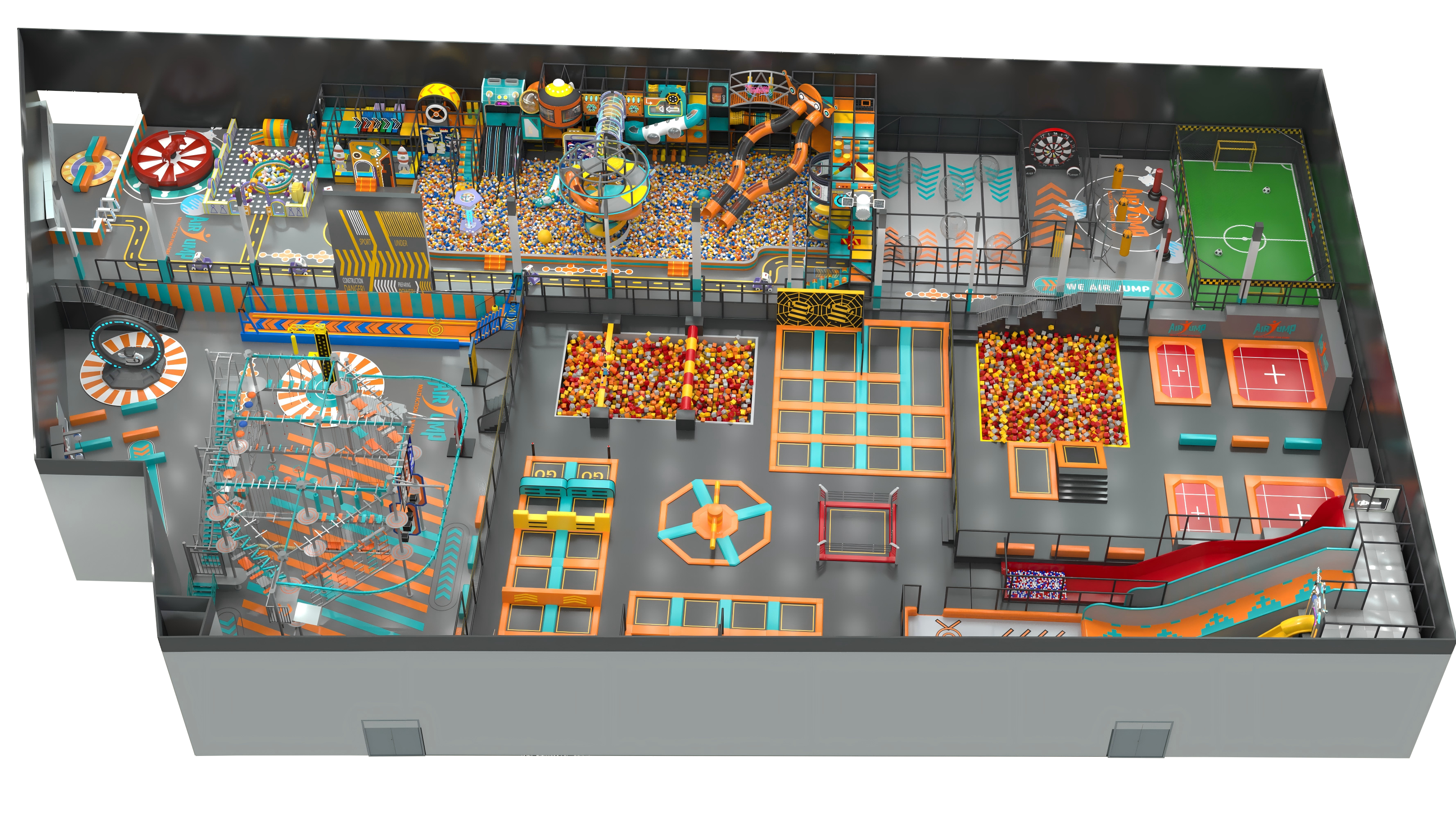
If you are comparing indoor playground equipment, an indoor trampoline park, and a climbing wall or rope course, the most useful thing to understand first is that these are not three versions of the same product. They are three different operating models that happen to share a building type.
Indoor playground equipment — soft play structures, kids play structures, slides, ball pits, and themed multi-level units — covers the broadest age range, fills a floor plate efficiently, and is the easiest attraction to phase or expand. An indoor trampoline park concentrates a higher-energy, narrower age band into a session-based business that depends on court supervision and generous clear height. A climbing wall or indoor rope course equipment set trades floor area for vertical volume and adds a challenge format for older children, teenagers, and adults.
Most successful venues do not choose one format. They sequence them: soft play first as the base layer that keeps young families on site, trampoline or climbing as the second layer that extends dwell time for older users, and a third format once the first two are proven.
Why This Comparison Is Harder Than It Looks
Buyers rarely search for this comparison out of curiosity. They search because a constraint already exists: a signed lease, a fixed floor plate, a clear height that cannot be changed, a target opening date, an insurance or licensing requirement, or a visitor demographic the operator has already committed to serving.
Under those constraints, which format is better is the wrong question. The practical question is which format, or which combination and sequence of formats, produces usable capacity for your age band inside the space you actually control, at a compliance and maintenance burden you can sustain over the lease term.
Three recurring mistakes shape this decision. The first is choosing a format by market trend rather than by the age of children within a realistic drive-time catchment. The second is budgeting the purchase price while ignoring the operating layer — impact-absorbing flooring, supervision staffing, session control, spare parts, and inspection routines. The third is treating certification as paperwork that arrives with the container rather than as a design input that shapes height differentiation, gap dimensions, edge treatment, and material selection from the first drawing.
Industry Background: Demand, Share, and Standards
Third-party market research published by Dataintelo values the global indoor playground equipment market at USD 4.8 billion in 2025, projected to reach USD 9.2 billion by 2034. Within that market, soft play equipment held the largest product type share at 31.4% in 2025, valued at approximately USD 1.51 billion, while Asia Pacific accounted for a 38.6% revenue share in 2025, ahead of North America and Europe.
Trampoline formats follow a different demand curve. Dimension Market Research projects the global trampoline park market growing at a CAGR of 16.2%, reaching USD 3.96 billion by 2032.
Two conclusions are worth drawing from these figures. Soft play is the volume base of the category: it is the format most venues can justify first, and it serves the youngest paying visitors together with the parents who accompany them. Trampoline is growing faster but concentrates demand into a narrower age band and a session-based revenue model. Climbing and rope course products are most often specified as an add-on layer inside a trampoline park, an indoor park, or a family entertainment center rather than as a standalone business.
Regulation is the second background force. EN 1176 is the harmonized European standard for playground equipment, and EN 1176-10 specifically covers fully enclosed play equipment — the category most soft play areas fall into. In North America, ASTM F1918 is the primary safety performance specification for Soft Contained Play Equipment, focusing on entrapment and fire safety. Climbing structures are addressed separately under EN 12572, and flammability requirements for trampoline mats and climbing wall components fall under EN 71-2:2020. A venue that mixes formats inherits every applicable standard, not only the one attached to its largest equipment order.
Comparing the Three Formats on the Dimensions That Decide the Project
1. Age appeal and audience mix
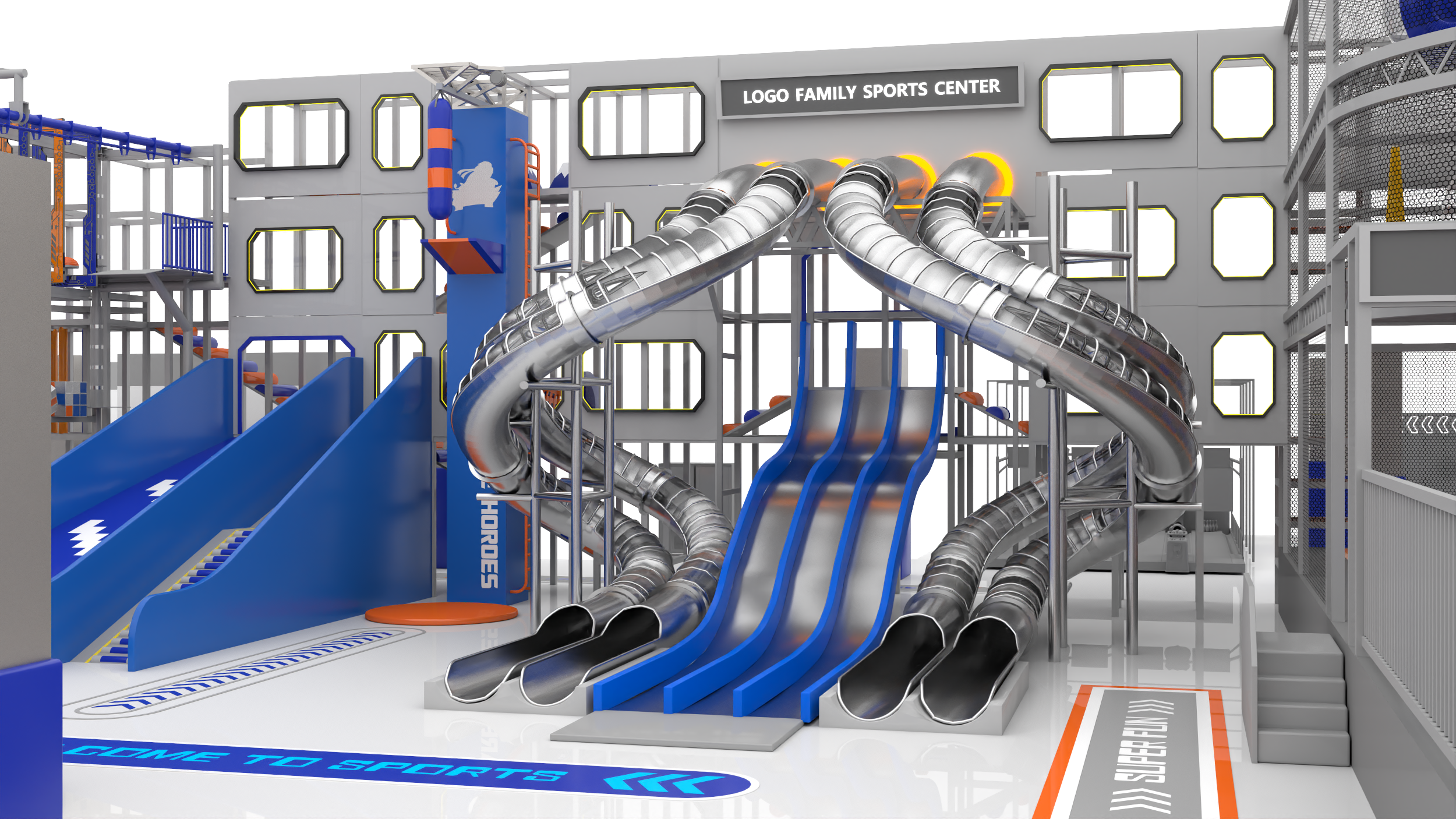
Indoor playground equipment is the widest-band option. A typical build can be zoned for toddler play in the 0–6 range and school-age play in the 6–12 range within the same structure, using toddler zones, multi-level platforms, slides, ball pits, and themed modules. That range is what makes soft play the usual first purchase for a family entertainment center equipment package or an indoor park.
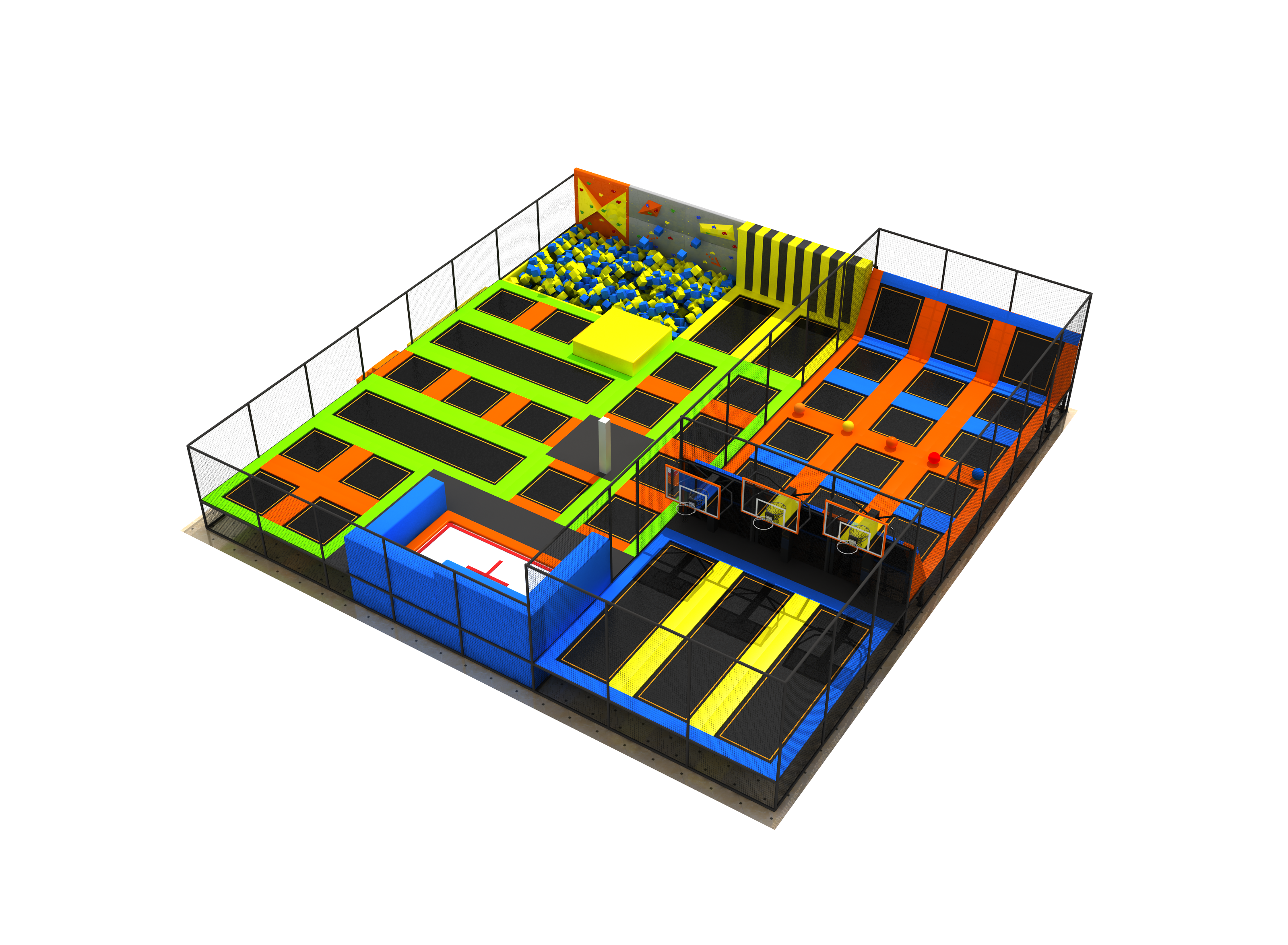
An indoor trampoline park skews older. Jump surfaces, foam pits, and ninja-style elements appeal mainly to school-age children, teenagers, and young adults, which changes everything downstream: staffing levels, waiver handling, session turnover, music policy, and the age of the accompanying adult.
A climbing wall or indoor rope course skews older still and is the most adult-viable of the three. Vasia groups climbing walls, zip lines, and ninja warrior courses under youth and adult challenge courses, alongside toddler zones and school-age areas — a useful reminder that these formats are usually sold as layers of one venue rather than as competing businesses.
2. Footprint, layout, and vertical space
Soft play is the most forgiving format in an awkward building. It works on a flat floor plate, tolerates column grids, and concentrates activity inside a multi-level structure rather than across open spans. Multi-layer board platforms, sponge padding, PVC skin, and galvanized pipe frames let designers build upward while keeping the footprint compact.
Trampoline parks are the least forgiving. They need large, uninterrupted spans with generous clear height, and they consume floor area with courts, foam pits, padding, and circulation zones that generate no direct play capacity. Retrofitting a trampoline park into a low or heavily columned building is usually a layout problem before it becomes an equipment problem.
Climbing walls and rope courses invert the ratio: they need modest floor area and a great deal of vertical volume. That makes them attractive where floor area is expensive but clear height already exists — a mezzanine, a former warehouse bay, or the perimeter of a trampoline hall.
3. Throughput, dwell time, and revenue pattern
Throughput should be measured per supervised hour, not per square meter. Soft play typically runs as an open-access model with parent supervision, which means capacity is limited more by safety rules and staff sightlines than by the equipment itself. Trampoline runs as timed sessions with court marshals and capacity caps. Climbing is the most labor-intensive per visitor, because harness checks, belay or auto-belay supervision, and instruction time all sit on staff.
The revenue pattern follows the same logic. Soft play produces longer dwell time per family and feeds food, beverage, and party revenue. Trampoline produces shorter, higher-priced sessions with tighter turnover. Climbing produces a premium experience with lower simultaneous capacity. Venues that combine a soft play base with a trampoline or climbing layer balance these patterns instead of depending on one.
4. Safety compliance and risk profile
The compliance checklist for a mixed venue is cumulative. A soft play area is assessed under EN 1176-10 in Europe or ASTM F1918 in North America. Trampoline parks add their own structural and mat requirements, and climbing structures add EN 12572 together with EN 71-2:2020 flammability requirements for mats and wall components.
Risk control is where format choice becomes concrete design work. Four risk categories drive most equipment-side mitigation:
- Fall impact and insufficient cushioning — addressed through impact-absorbing flooring and height-differentiated protection zones.
- Material aging and toxic emission — addressed through non-toxic material certification, fire-retardant coating, batch material traceability, and third-party lab testing.
- Sharp edges and entrapment hazards — addressed through rounded-edge treatment and gap compliance design.
- Structural loosening and component detachment — addressed through anti-loosening fastener systems, modular locking design, pre-installation load testing, and structural safety audits.
Vasia additionally specifies quarterly fastener torque inspection and component wear monitoring as part of site-level maintenance planning, and provides installer safety training and on-site hazard signage.
5. Maintenance and lifecycle cost
Maintenance intensity scales with moving parts, powered effects, and soft goods. Vasia's documented comparison of non-powered play systems against traditional powered or electric amusement equipment reports zero energy consumption, a 100% energy saving, lifespan extended by 2.5 times, 85% less maintenance required, initial cost 10%–20% lower, and total cost of ownership 50% lower over five years, with 100% carbon-free operation. That comparison is drawn against powered attractions, so it applies most directly to the non-powered portion of a build — soft play structures, climbing elements, and rope courses — rather than to every component in a trampoline hall.
Whatever the format, plan for the replaceable layer. PVC skin, sponge padding, PE safety net, acrylic panels, and nylon rope components are wear items. Budgeting them at the design stage is cheaper than discovering them in year three.
6. Materials and construction
The material set behind all three formats overlaps more than buyers expect. Galvanized pipe carries structural loads in frames and climbing supports. Multi-layer board forms platforms and panels. Sponge and PVC skin create the padded surfaces that absorb impact and define child-safe geometry. Acrylic supplies transparent panels and viewing elements. Nylon is used in rope and net components, and PE safety net closes elevated areas against falls. Specification quality shows up in the details — coating adhesion, edge treatment, netting mesh consistency, and the corrosion protection applied to pipe sections.
Side-by-Side Comparison Table
| Comparison dimension | Indoor Playground Equipment | Indoor Trampoline Park | Climbing Wall / Rope Course |
|---|---|---|---|
| Primary age appeal | Toddler zones (0–6) and school-age areas (6–12) within one structure | School-age children, teenagers, and young adults | School-age upward; the most adult-viable format |
| Typical venue fit | Indoor parks, family entertainment centers, kindergartens, residential and school projects | Dedicated trampoline parks and FEC anchor attractions | Add-on layer inside trampoline parks, indoor parks, and FECs |
| Space drivers | Flat floor plate; compact multi-level footprint | Large uninterrupted spans and generous clear height | Modest floor area, high vertical volume |
| Capacity model | Open access with parent supervision | Timed sessions with court marshals | Supervised climbs with harness and belay checks |
| Compliance focus | EN 1176-10; ASTM F1918 | CE certification for trampoline park and Indoor Trampoline Park products under EN 1176 and EN 12572; EN 71-2:2020 flammability for trampoline mats | EN 12572; EN 71-2:2020 flammability for climbing wall components |
| Maintenance profile | Wear items: PVC skin, sponge padding, PE safety net | Highest mechanical and soft-goods load of the three | Rope, fixing, and harness inspection cycles |
| Core materials | Galvanized pipe, multi-layer board, sponge, PVC skin, acrylic, nylon, PE safety net | Same material family plus trampoline mats and padded frames | Galvanized pipe structure, nylon rope, PE safety net, padded surrounds |
| Energy and maintenance comparison | Vasia documentation for non-powered play systems versus traditional powered or electric amusement equipment: 100% energy saving, lifespan extended by 2.5 times, 85% less maintenance, initial cost 10%–20% lower, and total cost of ownership 50% lower over five years | ||

Step-by-Step: How to Decide Which Attraction to Build First
- Fix the age band before the equipment list. Decide whether you are building for 0–6, 6–12, teenagers, or a mix, because that single choice eliminates whole categories. Soft play is the only one of the three that comfortably serves the youngest band while still offering school-age capacity.
- Measure the space honestly. Record usable floor area, clear height under beams and services, column grid, door and delivery access, floor loading, and power availability. These measurements, not the equipment catalogue, determine whether a trampoline court is physically possible and how much vertical volume a climbing wall can use.
- Estimate capacity per supervised hour. Map how many visitors can be active at once under your intended supervision model. Soft play is limited by sightlines, trampoline by session caps, climbing by belay and harness staff.
- Map the compliance requirements for your destination market. Confirm which standard applies to each format — EN 1176-10 or ASTM F1918 for soft play, EN 12572 for climbing, and flammability requirements under EN 71-2:2020 for mats and wall components — and confirm the market access marks required for import.
- Build a five-year cost view rather than a purchase price. Include impact-absorbing flooring, installation, compliance testing, supervision staffing, spare parts, and inspection routines alongside the equipment cost.
- Validate with drawings and a prototype stage. Use 3D modeling and VR preview to test layout before production, and agree pre-shipment test criteria as the acceptance benchmark.
- Sequence the build, then lock supply. Phase the venue so the first format opens and generates data before the second layer is committed, and confirm production capacity and lead time against your opening date.
Use Cases: How Each Format Fits Real Venues
Trampoline parks
A trampoline park that adds a climbing wall and a rope course uses existing clear height to serve visitors who want a challenge format between jump sessions. The equipment layer here is the Climbing Wall for Playground range and Indoor rope course Equipment, specified with EN 12572 compliance and EN 71-2:2020 flammability for wall components. For the jump surfaces themselves, CE certification under EN 1176 and EN 12572 and EN 71-2:2020 mat compliance are the reference points.
Indoor parks and family entertainment centers
For an FEC, soft play is normally the anchor. It serves the youngest paying visitors, holds families longer, and can be zoned by age. Multi-slide combinations, ball pits, and themed modules can be configured as an OEM Indoor Playground build matched to the venue's IP, brand colors, and floor plan, with trampoline or climbing added later as a second layer.
Kindergartens and preschools
Kindergarten projects rarely need trampoline courts. They need age-appropriate Kids Play Structure elements with rounded-edge treatment, gap compliance design, non-toxic material certification, and soft surfaces that protect 0–6 users. Non-powered soft play is documented as suited to kindergartens, indoor parks, urban parks, residential communities, and school playgrounds.
Mixed and hybrid venues
A project in Spain using product 3606 for business operation profit generation has demonstrated stable operation and stable income results over a 3,000 m² site completed within five years. Projects of this scale typically combine a soft play base with one or more challenge attractions rather than committing the entire floor plate to a single format.
Where Vasia Fits in Each Scenario
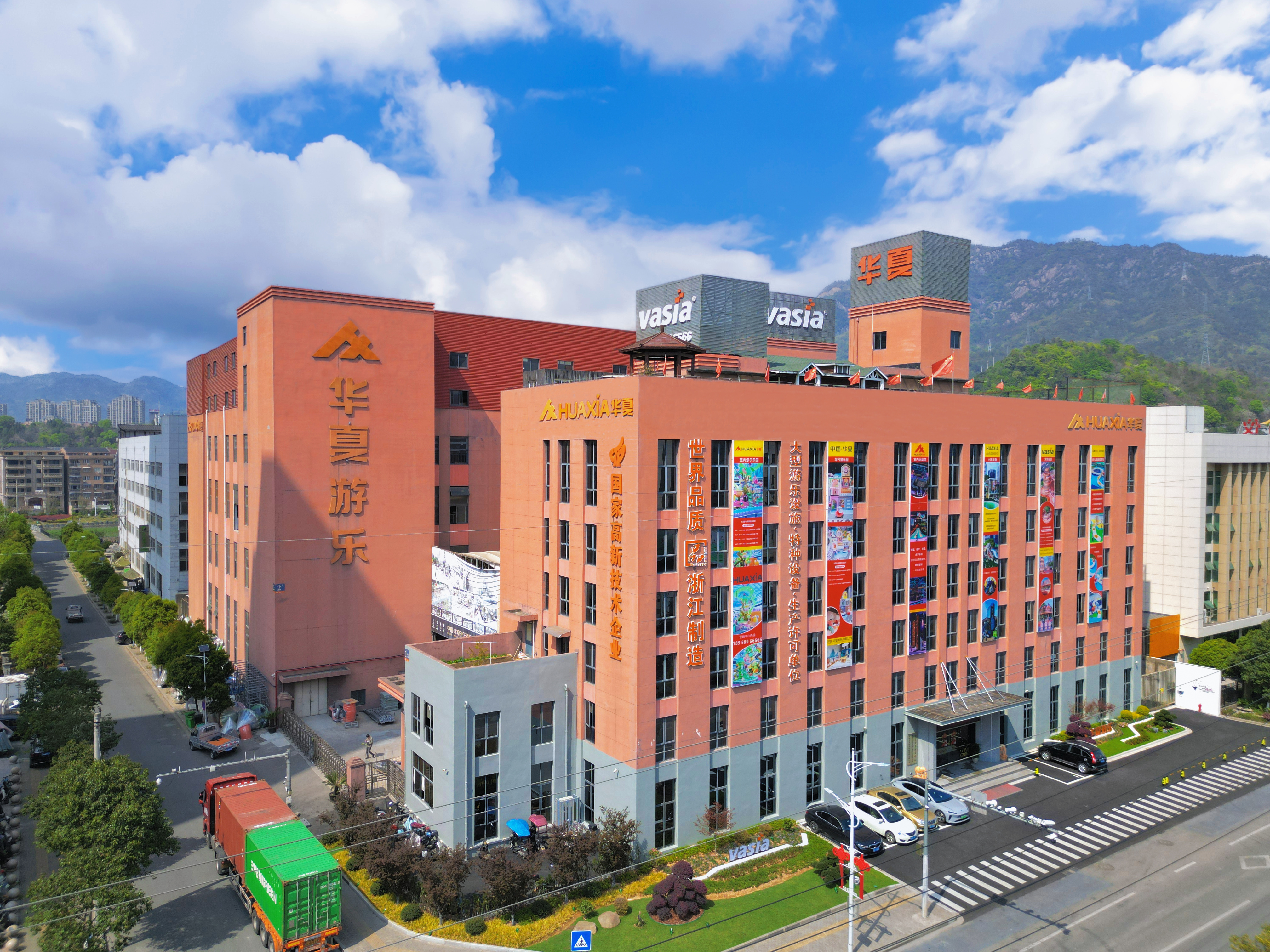
Vasia is the brand of Huaxia Amusement Co., Ltd., an indoor amusement equipment manufacturer established in 2000 and headquartered in Qiaoxia Town, Zhejiang Province, China, serving indoor amusement equipment, sports facilities, and preschool products. The company operates a 30,000 m² ISO-certified production facility with more than 200 employees, a 30-person R&D team, an annual production capacity of 200 million, and a monthly production capacity of 8,000 units. Export accounts for 70% of output, with main markets in the EU, USA, South America, the Middle East, and Southeast Asia.
Its product portfolio covers the full age span described in this comparison — toddler zones (0–6), school-age play areas (6–12), and youth and adult challenge courses — including climbing structures, multi-slide combinations, ball pits, trampolines, ninja warrior courses, climbing walls, zip lines, and soft play modules, with thematic customization in forest, space, ocean, castle, and futuristic styles. New products undergo prototyping and safety validation before mass production, supported by 3D modeling and VR preview so buyers can review a layout before manufacturing begins. Quality systems follow ASTM and EN 1176 frameworks, with CE, UKCA, CPSIA, and SASO certification validated through SGS and TÜV testing and an ISO 9001 quality management system.
For buyers comparing formats, the practical advantage is single-source coordination: one supplier can deliver the OEM Indoor Playground, Kids Play Structure, Indoor Trampoline Park, Climbing Wall for Playground, and family entertainment center equipment lines under one compliance and production schedule, rather than three vendors with three lead times.
Frequently Asked Questions
EN 1176 is the harmonized European standard for playground equipment, and EN 1176-10 specifically covers fully enclosed play equipment, which is the category most soft play areas fall into. In North America, ASTM F1918 is the primary safety performance specification for Soft Contained Play Equipment, focusing on entrapment and fire safety. Climbing structures are addressed under EN 12572, and flammability of trampoline mats and climbing wall components falls under EN 71-2:2020. Vasia holds CE certification for trampoline park and Indoor Trampoline Park products under EN 1176 and EN 12572, and its trampoline mats and climbing walls comply with EN 71-2:2020 flammability requirements. Beyond the equipment standard itself, confirm the market access marks required for your destination — including CE, UKCA, CPSIA, and SASO — and identify the testing laboratory behind each certificate.
Yes, provided the manufacturer actually produces across those categories rather than reselling them. Vasia's product range includes climbing structures, multi-slide combinations, ball pits, trampolines, ninja warrior courses, climbing walls, zip lines, and soft play modules, with main products listed as Indoor Playground Equipment and Trampoline Park. The company runs a 30-person R&D team within a workforce of more than 200, uses 3D modeling and VR preview for layout validation, and holds over 192 patents and copyrights. Each new product is prototyped and safety-validated before mass production, and quality systems follow ASTM and EN 1176 frameworks with CE, UKCA, CPSIA, and SASO certification validated through SGS and TÜV.
Compare total cost of ownership rather than purchase price, because the operating layer differs by format. Vasia's documented comparison of non-powered play systems against traditional powered or electric amusement equipment reports zero energy consumption, a 100% energy saving, lifespan extended by 2.5 times, 85% less maintenance required, initial cost 10%–20% lower, and total cost of ownership 50% lower over five years. Read that comparison in context: it is drawn against powered attractions, so it applies most directly to non-powered soft play structures, climbing elements, and rope courses. Any format comparison should also include impact-absorbing flooring, installation, compliance testing, supervision staffing, and the replaceable wear layer — PVC skin, sponge, PE safety net, acrylic, and nylon components.
Validation should happen in two stages. The first is design: 3D modeling and VR preview allow a buyer to review structure, zoning, and sightlines before production starts, and each new product is prototyped and safety-validated prior to mass production. The second is physical: Vasia applies batch material traceability and third-party lab testing, and lists pre-shipment test as the acceptance criterion for orders. Because the minimum order quantity is 1 unit, a buyer can begin with a single unit or module to verify build quality, edge treatment, coating finish, and netting consistency on site before scaling to a complete venue.
Vasia's typical production lead time is 15 to 45 days, with a monthly production capacity of 8,000 units and a minimum order quantity of 1 unit. Delivery terms are EXW, FOB, or CFR. Payment terms are T/T with 30% deposit in advance before production and 70% balance before shipping. Acceptance criteria are based on pre-shipment test. For a phased venue, plan the soft play layer against the shorter end of that window and reserve the longer end for custom-themed or multi-attraction builds. To discuss your floor plan, request a quotation, or ask about samples, contact the team at huaxiatoys@huaxiatoys.com or via WhatsApp at 8618968876888.
Conclusion
Indoor playground equipment, an indoor trampoline park, and a climbing wall are not competing answers to the same question. Soft play is the widest-band, most forgiving, and most easily phased option, and it remains the largest single product type in the category at 31.4% of 2025 market value. Trampoline formats grow faster but concentrate demand into a narrower age band and a higher-maintenance operating model. Climbing walls and rope courses add vertical challenge for older users with modest floor area.
The decision that actually matters is sequence and fit: which format serves the ages you can realistically attract, inside the clear height and floor plate you actually control, at a compliance and maintenance burden you can sustain. Once that is settled, the equipment list becomes a specification exercise — standards, materials, capacity, and lead time — rather than a guess.
Planning your first or next attraction?
Vasia (Huaxia Amusement Co., Ltd.) manufactures OEM Indoor Playground, Kids Play Structure, Indoor Trampoline Park, Climbing Wall for Playground, Indoor rope course Equipment, and family entertainment center equipment, and can quote a single module or a complete venue from one production schedule.
Email: huaxiatoys@huaxiatoys.com | Tel: 86-189 6887 6888 | WhatsApp: 8618968876888
Address: Yangxia Industrial Zone, Park Road, Qiaoxia Town, Yongjia County, Wenzhou City, Zhejiang Province, China
Website: www.vasiaplayground.com
Have Questions or Need More Details?
Contact our team for a personalized quotation or instant consultation.
Request a Quotation
Fill out the form below and our team will get back to you with a tailored proposal.
WhatsApp Direct Chat
Prefer to chat in real-time? Message us on WhatsApp for instant assistance & quick answers.
- Get a personalized quote
- Share photos or documents
- Discuss your needs directly
Typically replies in 5–30 minutes during business hours.