
Indoor Playground Equipment: Vasia vs. Traditional Powered Systems — A Cost & Safety Comparison for FEC Buyers
Indoor Playground Equipment Decision Guide: Vasia Non-Powered vs. Traditional Powered Systems
Buyers of indoor playground equipment in 2026 face a practical decision: choose a traditional powered/electric amusement system or a non-powered play structure. The global indoor playground equipment market was valued at USD 4.8 billion in 2025 and is projected to reach USD 9.2 billion by 2034, according to Dataintelo. Within this growing market, family entertainment center (FEC) operators and procurement teams increasingly compare total cost of ownership, safety compliance, and revenue uptime before committing capital.
This guide focuses on the decision stage of that process. It compares Vasia's non-powered indoor playground equipment with traditional powered/electric amusement equipment across cost, maintenance, safety, and business fit — using verified manufacturer data and third-party market context.
What is the core difference between Vasia non-powered and traditional powered equipment?
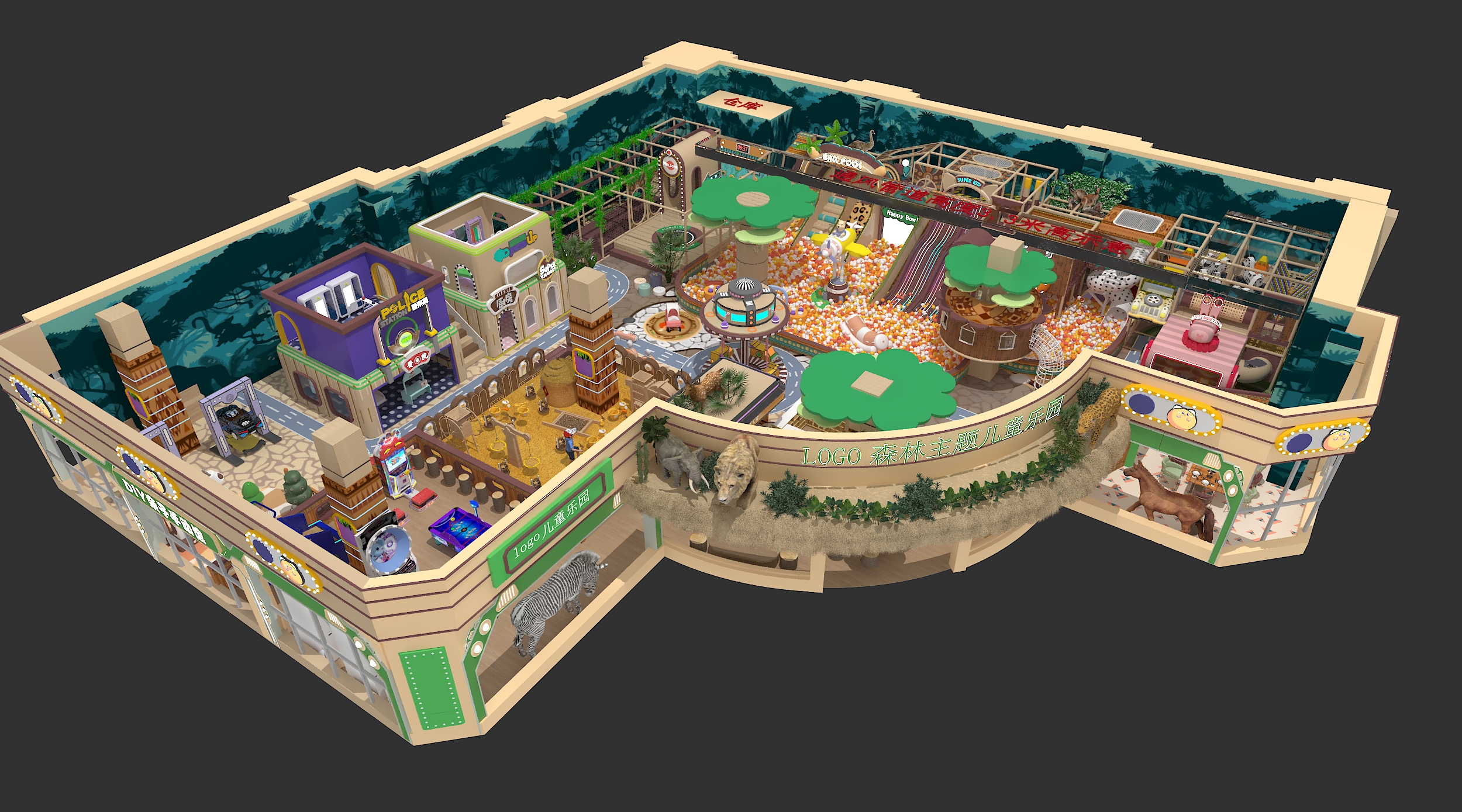
Vasia, owned by China·Huaxia Amusement Co., Ltd., is a manufacturer of indoor playgrounds, outdoor playgrounds, trampoline parks, and rope courses. Its non-powered equipment is designed to operate without electricity, using children's physical activity as the energy source. Traditional powered/electric amusement equipment relies on motors, sensors, hydraulics, or electrical control systems to function.
That single difference drives meaningful gaps in energy cost, maintenance frequency, safety risk, and usable life. For FEC operators and procurement professionals, the comparison is not about which category is universally better — it is about which system fits a specific facility's budget, space, safety requirements, and operational team.
Why buyers at the decision stage need this comparison
Indoor playground buyers at the decision stage already know the basic product categories. What they need is decision-ready evidence: initial cost, running cost, maintenance workload, safety characteristics, and expected lifespan. This article provides that structure.
The indoor playground equipment category includes soft play areas, climbing walls, indoor rope courses, trampoline parks, and kids' play structures. The global soft play segment alone held the largest product type share at 31.4% in 2025, valued at approximately USD 1.51 billion (Dataintelo). Non-powered play structures fall squarely within this growing demand segment.
Industry background: the shift toward non-powered and mixed play systems
Several industry trends explain why non-powered equipment is receiving more attention from global buyers:
- Energy cost pressure: FECs face rising utility costs in many regions. Non-powered systems eliminate the electricity consumption of rides and attractions at the point of use.
- Safety compliance: Standards such as EN 1176 (Europe) and ASTM F1918 (North America) set strict requirements for play equipment. Non-powered systems often have fewer mechanical failure points than powered rides.
- Trampoline park growth: The global trampoline park market is expected to grow at a CAGR of 16.2%, reaching USD 3.96 billion by 2032 (Dimension Market Research). Trampoline courts are inherently non-powered and are often combined with indoor playground structures.
- Labor constraints: Powered equipment can require more specialized inspection and maintenance, while non-powered structures tend to be easier for venue staff to monitor daily.
This context matters because the decision is rarely only about equipment price. It is about the total operating model of a family entertainment center.
Vasia non-powered equipment vs. traditional powered systems: quantified comparison
The following comparison table is based on Vasia's verified product data and does not include unverified competitor claims.
| Dimension | Vasia Non-Powered Equipment | Traditional Powered/Electric Equipment |
|---|---|---|
| Energy consumption | Zero energy consumption; 100% carbon-free operation | Requires continuous electricity for motors, controls, lighting, and safety systems |
| Lifespan | 2.5 times longer than traditional powered amusement equipment | Baseline lifespan; mechanical and electronic components can degrade faster |
| Maintenance | 85% less maintenance required | Regular motor, electrical, hydraulic, and control-system maintenance |
| Initial cost | 10%–20% lower initial cost | Higher initial equipment cost |
| Total cost of ownership (5 years) | 50% lower total cost of ownership over 5 years | Higher cumulative energy, maintenance, and replacement cost |
| Safety characteristics | Higher safety; no powered moving parts; human-powered movement | Powered movement requires additional guarding, sensors, emergency stops, and electrical safety checks |
| Best-fit venues | Trampoline parks, indoor parks, kindergartens, urban parks, residential communities, school playgrounds | Large FECs with dedicated power infrastructure, operators, and technical maintenance staff |
Source: Vasia product data (verified manufacturer corpus). Market figures are cited separately from third-party reports.
Step-by-step comparison for FEC buyers
Step 1: Define your facility's operating model
Before comparing prices, define how the facility will operate. A trampoline park, indoor park, kindergarten, urban park, residential community, or school playground has different operational constraints. Vasia's non-powered equipment is designed for those venue types. Traditional powered equipment may be justified for larger attractions with ticket premiums, but it brings higher operating complexity.
Step 2: Compare initial capital expenditure
Vasia's non-powered equipment has an initial cost approximately 10%–20% lower than traditional powered amusement equipment. For projects with tight budgets, that difference can affect the number of play zones, flooring upgrades, or safety surfacing included in the first phase.
Step 3: Calculate energy cost over five years
Powered equipment consumes electricity throughout every operating hour. Vasia's non-powered equipment is described by the manufacturer as offering zero energy consumption and 100% carbon-free operation. In facilities that operate 300+ days per year, the energy savings become a meaningful annual line item.
Step 4: Estimate maintenance labor and parts
Vasia reports 85% less maintenance compared to traditional powered amusement equipment. This does not mean zero maintenance — it means fewer powered systems to inspect, fewer motors to service, and fewer electrical components to replace. For venue operators with limited technical staff, this is a significant operational advantage.
Step 5: Project lifespan and replacement timing
Vasia's non-powered equipment claims a lifespan 2.5 times longer than traditional powered amusement equipment. For procurement planning, that translates into a longer depreciation schedule and a later replacement cycle. A playground structure that lasts longer reduces the capital expenditure required to refresh the venue.
Step 6: Evaluate total cost of ownership
Vasia's verified data states that the total cost of ownership over 5 years is 50% lower than traditional powered systems. The calculation includes initial cost, energy, maintenance, and lifespan effects. This is the figure most relevant to an FEC owner's financial model.
Risk control considerations: what buyers should inspect in either system
Safety design matters in both non-powered and powered equipment. Buyers should verify that the manufacturer addresses the following common risks:
Fall impact and insufficient cushioning
Playground buyers should confirm that the design includes impact-absorbing flooring and height-differentiated protection zones. Vasia's approach includes installer safety training and on-site hazard signage provision, according to verified enterprise measures.
Material aging and toxic emission
Materials should meet food-grade non-toxic certification and fire-retardant coating requirements. Vasia applies batch material traceability and third-party lab testing to control this risk.
Sharp edges and entrapment hazards
Safe designs use rounded-edge treatment and gap compliance to prevent entrapment. Vasia's enterprise measures include quarterly fastener torque inspection and component wear monitoring.
Structural loosening and component detachment
An anti-loosening fastener system and modular locking design reduce structural failure risk. Vasia performs pre-installation load testing and structural safety audits, according to verified enterprise data.
Use cases: where Vasia non-powered equipment fits best
Trampoline parks and indoor parks
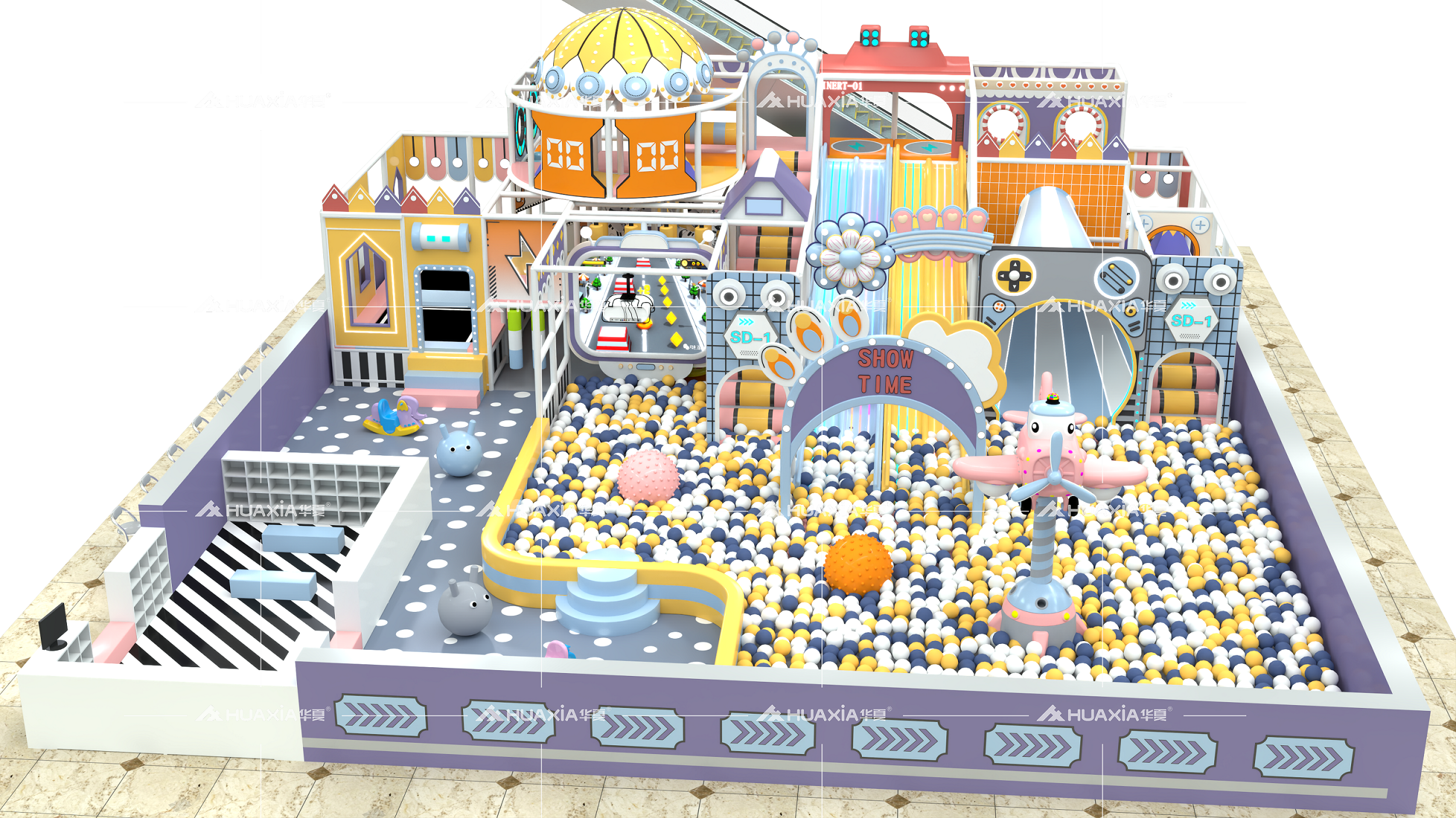
Non-powered play structures fit naturally alongside trampoline courts. They provide a different physical activity option without increasing electrical load. Trampoline park operators can combine trampoline zones with climbing structures and soft play areas to extend session durations.
Kindergartens and school playgrounds
Schools typically have limited maintenance budgets and strict safety procurement rules. Non-powered equipment with certified materials and lower maintenance requirements aligns with that environment.
Urban parks and residential communities
Urban parks and residential communities often lack staff trained for powered-attraction maintenance. Non-powered equipment gives communities a durable play solution without the need for electrical infrastructure.
Mixed FEC models
Many FECs combine indoor playground equipment with trampoline parks, rope courses, and climbing walls. Vasia manufactures indoor playgrounds, outdoor playgrounds, trampoline parks, and rope courses. This multi-category capability supports one supplier for multiple attraction zones.
Market context: why this comparison matters in 2026
The indoor playground equipment market is expanding. Asia Pacific held the largest regional revenue share at 38.6% in 2025, followed by North America and Europe (Dataintelo). At the same time, the trampoline park market is expected to grow at a CAGR of 16.2% (Dimension Market Research). Buyers entering this market need equipment that can support both safety compliance and operational efficiency.
For importers, FEC owners, and procurement teams, the practical question is no longer only "which brand to buy." It is "which technology type fits the venue's operating plan." This guide provides the decision framework.
Comparison with other manufacturers in the global market
Verified industry data identifies PlayCore, Soft Play, and PlayPower as leading manufacturers in the global and US indoor playground market (Metastat Insights). No verified performance or price comparison data is available for these manufacturers versus Vasia. Buyers should evaluate each supplier's specific product lines, certifications, and reference projects before making a final decision.
Vasia differentiates on verified data points: zero energy consumption, 2.5 times longer lifespan, 85% less maintenance, 10%–20% lower initial cost, and 50% lower total cost of ownership over 5 years, compared to traditional powered amusement equipment. These are manufacturer-verified claims rather than comparative claims against named competitors.
How Vasia supports OEM indoor playground projects
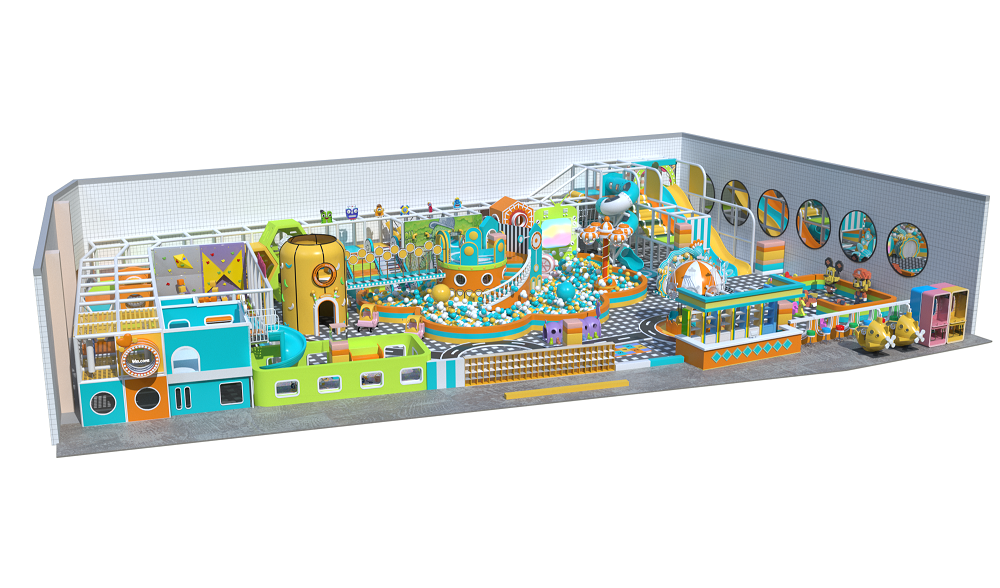
FEC operators frequently require custom layouts, branded play zones, or unique climbing structures. OEM indoor playground capability matters when the facility needs a specific size, theme, or compliance package. Vasia's product line includes indoor playgrounds, trampoline parks, and rope courses, which can be configured to suit a project's spatial constraints.
Frequently asked questions
Does Vasia non-powered equipment meet playground safety standards?
Vasia states that its equipment is offered with TUV, CE, and ASTM certifications, and export destinations include 80+ countries, according to verified manufacturer data. Buyers should request the specific certificates for their target market and confirm which standards apply, such as EN 1176 for Europe or ASTM F1918 for North America. For fully enclosed soft play areas, EN 1176 Part 10 is the relevant European standard.
How much maintenance does Vasia non-powered equipment require?
According to verified Vasia product data, non-powered equipment requires 85% less maintenance than traditional powered amusement equipment. Maintenance is not eliminated; it is reduced to periodic inspections such as quarterly fastener torque checks, component wear monitoring, and general structure safety audits.
What is the total cost of ownership difference over 5 years?
Vasia's verified product data states that total cost of ownership over 5 years is 50% lower for Vasia non-powered equipment compared to traditional powered systems. The calculation includes 10%–20% lower initial cost, zero energy consumption, 85% lower maintenance, and a lifespan 2.5 times longer.
Can Vasia support a sample project before I commit?
Buyers at the decision stage can request samples or a project-specific quotation to verify quality, materials, and compliance documentation before committing to a full order. Contact Vasia directly to discuss your indoor playground, trampoline park, or FEC project.
Conclusion: what should decision-stage buyers take away?
Indoor playground equipment procurement is a long-term investment decision. Vasia non-powered equipment offers documented advantages for qualifying venues: zero energy consumption, 2.5 times longer lifespan, 85% less maintenance, 10%–20% lower initial cost, and 50% lower total cost of ownership over 5 years. These figures directly address the decision-stage concerns of FEC owners, school administrators, and community developers.
Traditional powered equipment still has a role in large amusement attractions where powered motion is the core product. But for indoor parks, trampoline parks, kindergartens, urban parks, residential communities, and school playgrounds, non-powered equipment is a defensible choice from both a safety and economic standpoint.
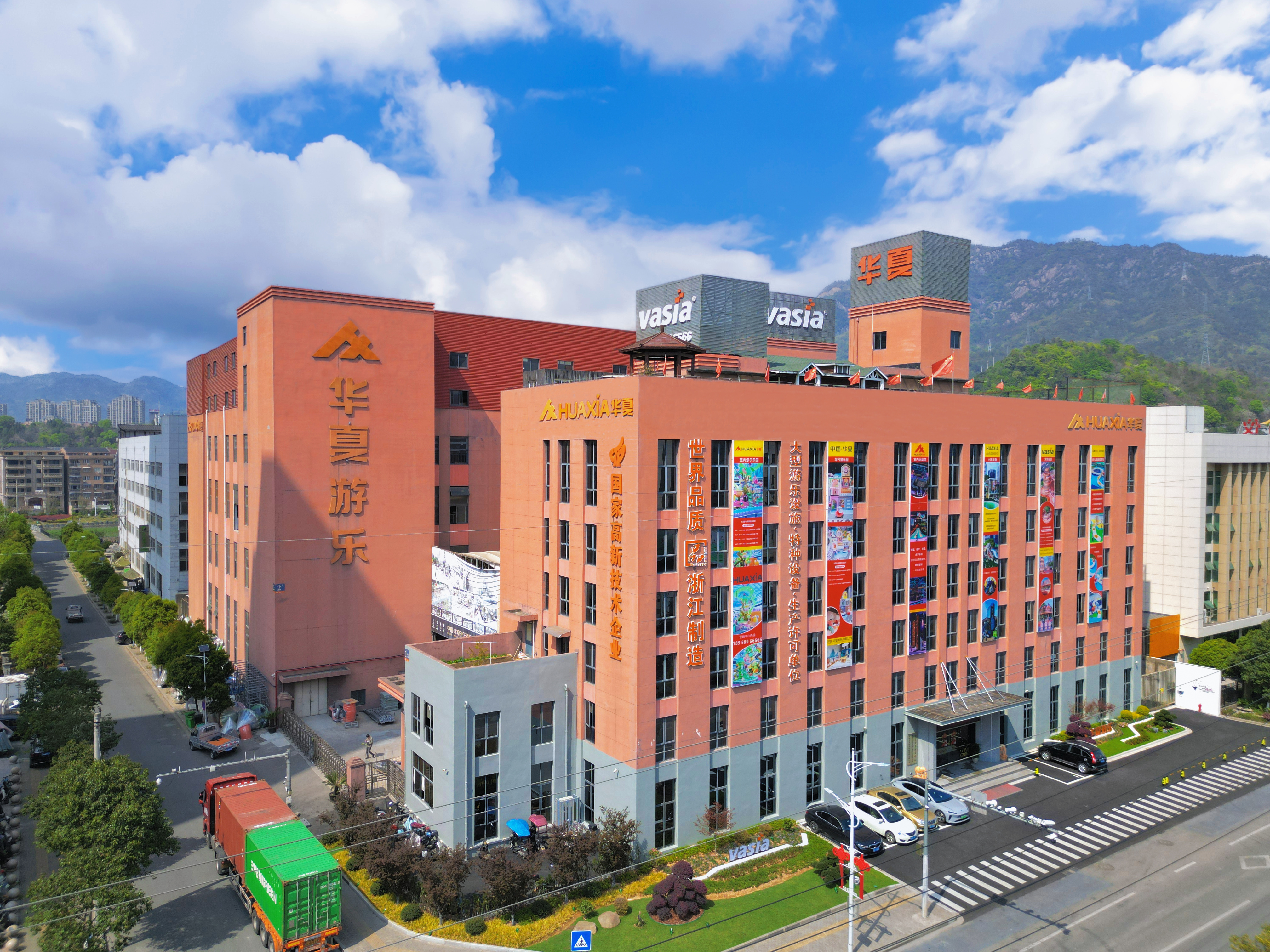
For procurement professionals who want to evaluate the option further, Vasia provides a company brochure with additional context on product range and manufacturing capability.
Download the Vasia company brochure (PDF)
Have Questions or Need More Details?
Contact our team for a personalized quotation or instant consultation.
Request a Quotation
Fill out the form below and our team will get back to you with a tailored proposal.
WhatsApp Direct Chat
Prefer to chat in real-time? Message us on WhatsApp for instant assistance & quick answers.
- Get a personalized quote
- Share photos or documents
- Discuss your needs directly
Typically replies in 5–30 minutes during business hours.