
Partnering with a Long-Term Indoor Playground Equipment Manufacturer: Supply Stability, OEM Support, and Lifecycle Value for FEC Operators
Partnering with a Long-Term Indoor Playground Equipment Manufacturer: Supply Stability, OEM Support, and Lifecycle Value

For family entertainment center operators, school districts, and distributors, selecting an indoor playground equipment supplier is not just a purchase decision—it is a long-term partnership that affects expansion timelines, safety compliance, maintenance costs, and brand reputation. A reliable manufacturing partner should provide consistent product quality, responsive OEM capabilities, and stable after-sales support across multiple projects. This guide explains what to evaluate when choosing a long-term indoor playground equipment manufacturer and why operational stability, certification depth, and custom manufacturing matter for buyers who plan beyond a single installation.
Why the Manufacturer Relationship Determines Long-Term Success
The indoor playground equipment market reached USD 4.8 billion in 2025 and is projected to grow to USD 9.2 billion by 2034, according to Dataintelo. As competition among indoor playgrounds, trampoline parks, and FECs intensifies, operators rely on equipment vendors not only for the initial build but also for replacements, expansions, and upgrades. A supplier with stable production capacity and clear communication reduces the risk of delays and quality inconsistency.
Beyond the initial installation, long-term success depends on whether the manufacturer can support repeat orders, supply spare parts, and adapt designs as the venue evolves. A partner that understands the operational needs of trampoline parks, soft play areas, and climbing attractions becomes a strategic resource rather than a one-time vendor.
What Defines an Indoor Playground Equipment Manufacturer as a Long-Term Partner
Purchasers should assess equipment suppliers across five dimensions: production capability, compliance and certification, OEM and custom design capacity, product range, and post-delivery support.
| Evaluation Dimension | What to Look For | Example Evidence from Vasia |
|---|---|---|
| Production capability | Factory scale, workforce, monthly output, and lead time consistency | 30,000 m² facility, 200 employees, monthly capacity of 8,000 units |
| Compliance & certification | CE, ASTM, TUV, EN 1176-10, EN 71-2, and material traceability | Products designed with reference to EN 1176 structure and EN 71-2 flammability clauses |
| OEM & customization | Ability to adapt layouts, themes, and dimensions for branded venues | OEM Indoor Playground model VS1-250519-2250-3-60 |
| Product range | Soft play, trampoline parks, climbing walls, rope courses, and FEC equipment | Indoor Playground, Indoor Trampoline Park, Kids Play Structure, Climbing Wall |
| Post-delivery support | Installation guidance, safety audits, spare parts, and communication channels | Installer safety training, on-site hazard signage provision, batch traceability |
Vasia: A Manufacturing Background Built for Repeat Projects
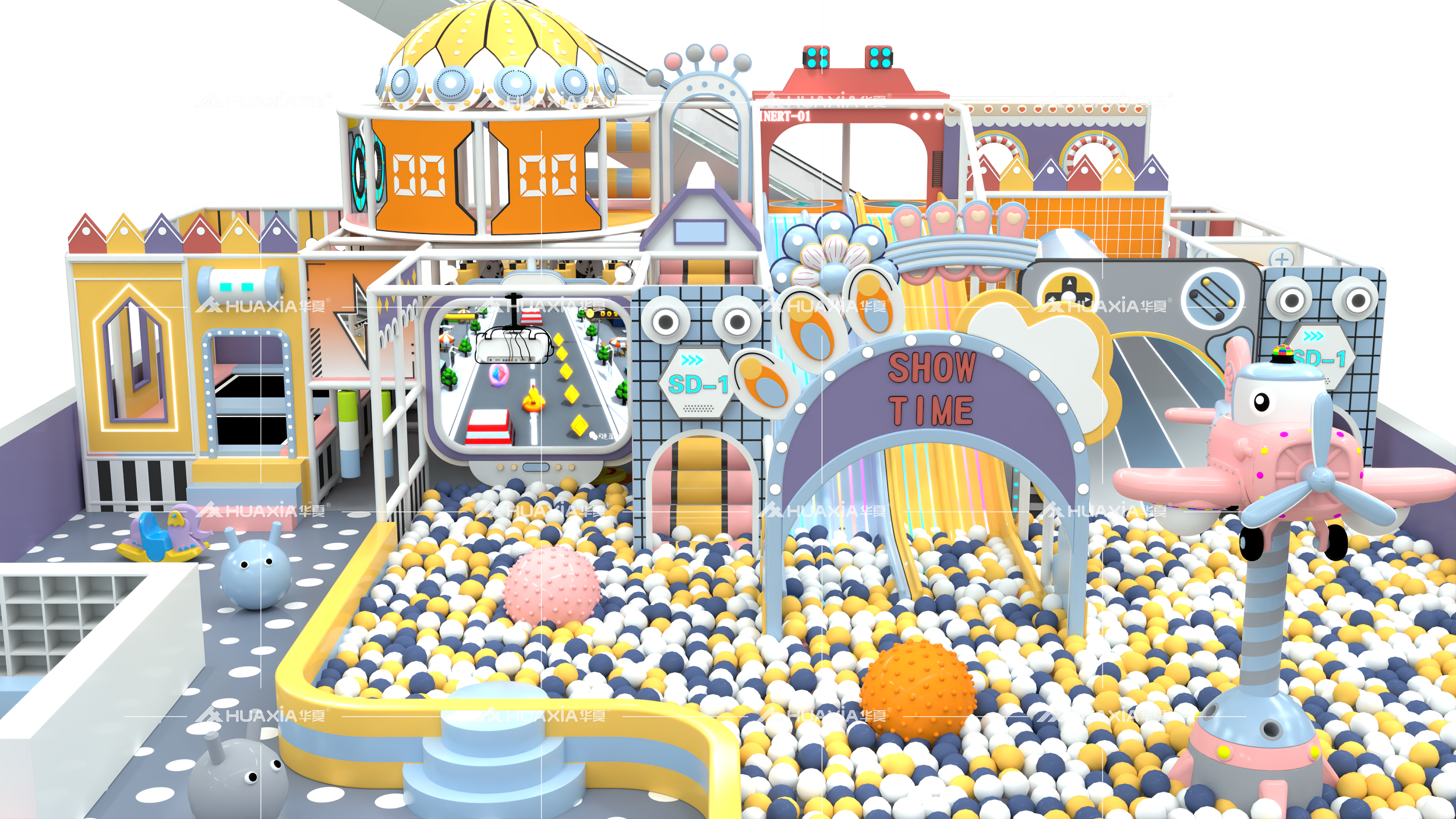
China·Huaxia Amusement Co., Ltd., branded as Vasia, is an indoor playground equipment manufacturer founded in 2000 and located in Qiaoxia Town, Yongjia County, Zhejiang Province—an area recognized as the “Chinese Educational Toy Capital.” The company operates two production bases in the Yangwan and Xi’ao Industrial Zones, covering an area of 20 acres with a registered capital of RMB 51.8 million. Vasia employs over 140 professionals across design, research, production, sales, and installation.
The product range includes indoor playgrounds, outdoor playgrounds, trampoline parks, and rope courses. With 70% of output exported to the EU, the USA, South America, the Middle East, and Southeast Asia, Vasia has built manufacturing and delivery processes around international buyer expectations.
Supply Stability and Production Lead Times
One of the most frequent concerns for FEC operators is whether an equipment supplier can meet opening deadlines. Vasia reports a monthly production capacity of 8,000 units with a typical lead time of 15 to 45 days. This combination matters for buyers managing a construction schedule or planning phased openings.
For operators expanding from a single indoor playground to a regional chain, capacity stability also affects how quickly the manufacturer can deliver a second or third location. A supplier that commits to a defined lead time and has the factory output to back it up reduces the risk of holding costs and lost revenue.
OEM and Custom Manufacturing for Family Entertainment Centers
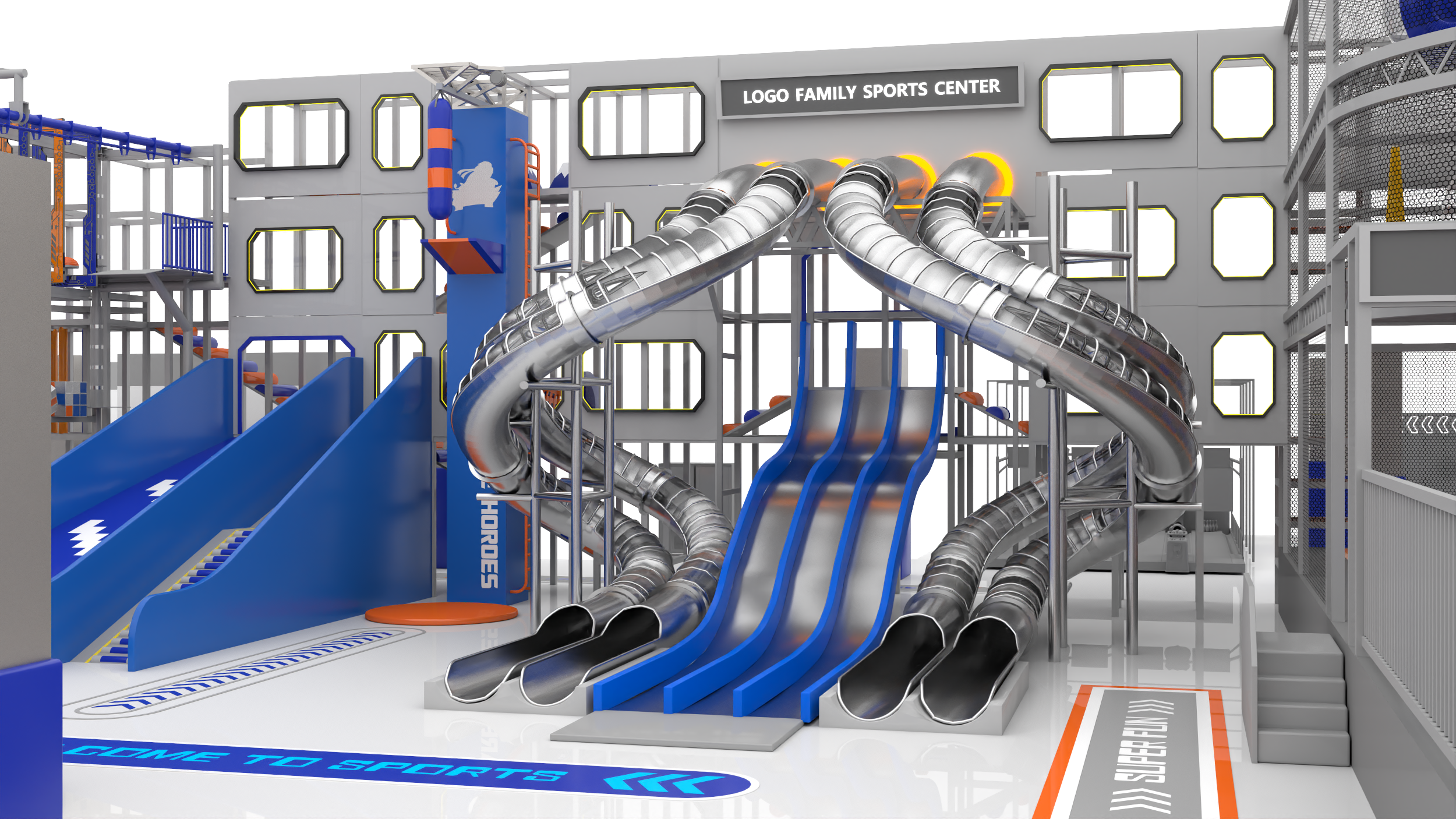
Many venue owners require customized indoor playground equipment to fit specific floor plans, brand themes, or age-group targets. Vasia supports OEM indoor playground projects, enabling operators to specify layouts, colors, and play features. The OEM Indoor Playground model VS1-250519-2250-3-60 is an example of a custom soft play configuration produced by the manufacturer.
Custom project capability is especially relevant for:
- Family entertainment centers introducing branded play zones.
- Hotels and resorts building themed kids’ clubs.
- Retail or restaurant chains adding play areas as part of a network rollout.
- Trampoline parks combining soft play, ninja courses, and climbing features.
When evaluating OEM suppliers, buyers should confirm that the manufacturer can adapt structures while maintaining test compliance. Vasia’s product range covers Kids Play Structures, Indoor Trampoline Parks, Climbing Walls, and Indoor Rope Course Equipment, providing a broad base for mixed-venue design.
Safety Compliance and Certification as a Relationship Baseline
Long-term buyers should treat certification not as a one-time checklist but as evidence that a manufacturer can consistently meet evolving safety requirements. Internationally, EN 1176-10 covers fully enclosed play equipment, while ASTM F1918 is the primary safety specification for soft contained play equipment in North America. EN 71-2:2020 addresses toy flammability requirements.
Vasia’s technical documentation references these compliance frameworks. For example, the trampoline park equipment uses Plato PVC-coated mesh fabric with a thickness of 0.52 mm and warp/weft density of 1300×1300D, designed to comply with EU standard EN 71-2:2020 Toy Safety Part 2: Flammability, Clauses 4.1 and 4.4. Structural components such as Q235 galvanized steel tubes and cast steel couplers are identified with relevant test standards including GB/T 228.1-2021.
Safety management extends beyond product certificates. Vasia’s risk-control approach includes impact-absorbing flooring, height-differentiated protection zones, rounded-edge treatment, gap compliance design, anti-loosening fastener systems, and modular locking design. On the operational side, the company provides installer safety training and on-site hazard signage, while conducting pre-installation load testing and structural safety audits.
Comparing Indoor Playground Equipment Product Lines for Multi-Year Planning
A manufacturer with a wide product portfolio allows venue owners to diversify attractions without onboarding multiple suppliers. Vasia’s applicable products include soft play systems, trampoline parks, climbing walls, and rope courses. Below is a comparison of core product types relevant to FEC and playground projects.
| Product Type | Representative Model | Typical Construction | Best Fit |
|---|---|---|---|
| Indoor Playground Equipment | VS1-250503 | φ48 mm galvanized steel frame, multilayer board + EPE foam + PVC leather soft play padding | Trampoline parks, indoor parks, kindergartens, community spaces |
| Indoor Trampoline Park | VS6-180326-400a-2-40 | Q235 galvanized rectangular steel tube 80×80×2.0 mm frame, PP jumping mat, 70 mm EPE pearl cotton trampoline mat | Teen and family entertainment venues |
| Indoor Rope Course Equipment | VS1-250522-1900B-30 | Q235 galvanized steel frame, 15 mm plywood surface, foam safety mat | Adventure parks, mixed FEC zones |
| Climbing Wall for Playground | VS-2659 | Q235 galvanized rectangular steel tube 40×40×1.5 mm frame, plywood padding, EPE pearl cotton | School playgrounds, indoor parks, obstacle attractions |
| Family Entertainment Center Equipment | VS1-25011002-230-2-49 | Galvanized steel tube φ48×2 mm upright posts, PE safety net, PVC protective sleeves | FECs, indoor playgrounds, kindergartens |
Each product type shares common safety elements: galvanized steel structures, stainless steel fasteners, protective sleeves, and flame-retardant fabric where applicable. This consistency simplifies spare parts management and maintenance training for operators with multiple facilities.
Lifecycle Cost Advantages of Non-Powered Equipment
Operators planning for long-term profitability should compare powered and non-powered systems. Vasia’s non-powered equipment is designed to operate with zero energy consumption, reducing dependence on electricity for daytime play areas. Compared to traditional powered amusement equipment, the manufacturer reports lower maintenance requirements and an extended lifespan, while initial costs are approximately 10–20% lower and total cost of ownership can be roughly 50% lower over five years.
Non-powered structures also simplify daily operations. With 85% less maintenance required, staff can focus on customer supervision and service rather than mechanical repairs. For venues in regions with unstable electricity supply or high utility costs, non-powered playground equipment improves cash flow predictability.
Risk Management and After-Sales Support for Ongoing Operations
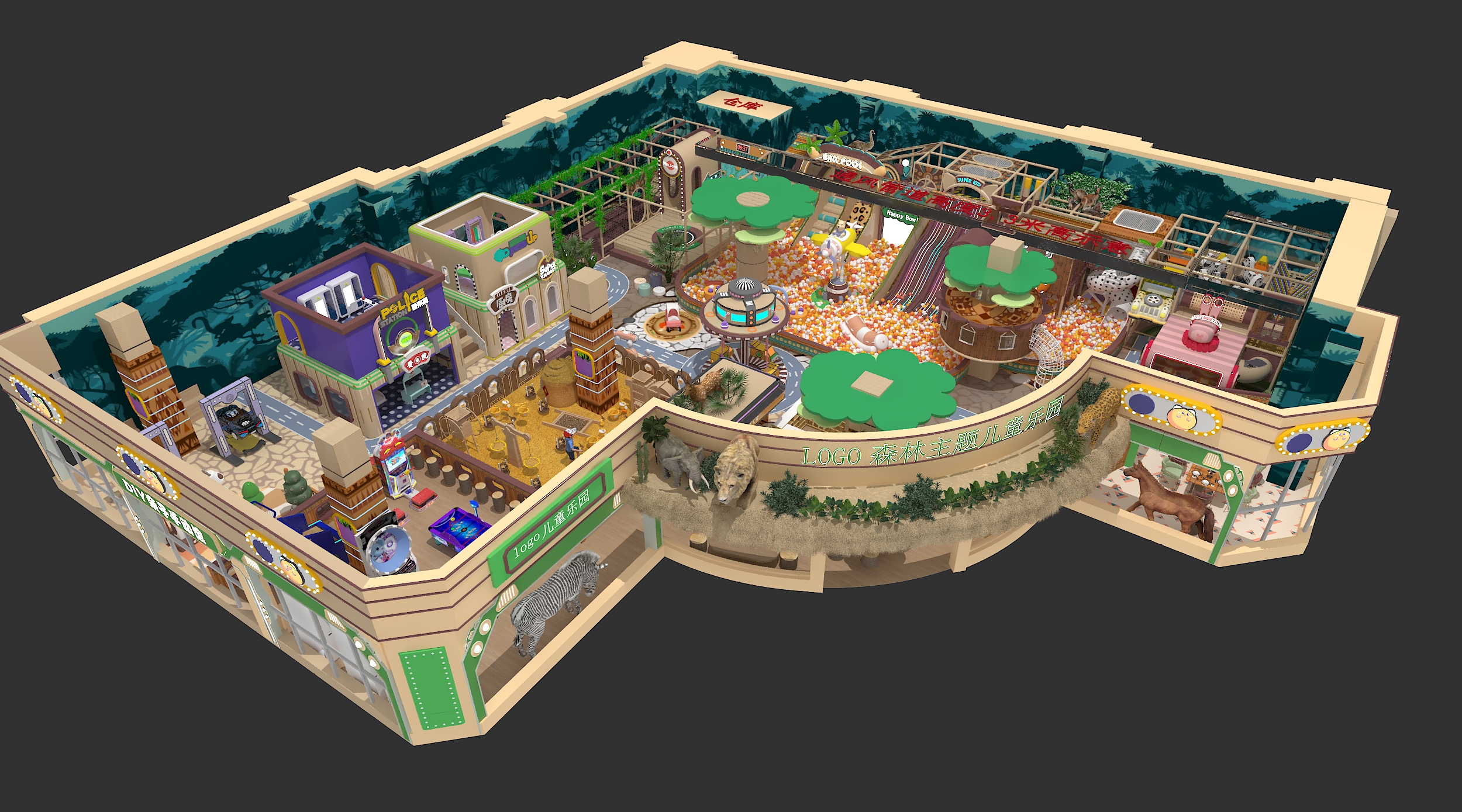
A long-term supplier relationship is tested after the equipment is installed. Common operational risks include fall impact, material aging, sharp edges, and structural loosening. Buyers should ask how the manufacturer addresses these risks in both design and after-sales service.
| Risk Type | Design & Control Method | Manufacturer Measures |
|---|---|---|
| Fall impact & insufficient cushioning | Impact-absorbing flooring; height-differentiated protection zones | Installer safety training; on-site hazard signage provision |
| Material aging & toxic emission | Food-grade non-toxic materials; fire-retardant coating | Batch material traceability; third-party lab testing |
| Sharp edges & entrapment hazards | Rounded-edge treatment; gap compliance design | Quarterly fastener torque inspection; component wear monitoring |
| Structural loosening & component detachment | Anti-loosening fastener system; modular locking design | Pre-installation load testing; structural safety audit |
For buyers, these measures translate into fewer unplanned shutdowns, lower repair costs, and a safer guest experience. Before signing a long-term supply agreement, confirm that the supplier can provide documentation for batch traceability, inspection protocols, and replacement parts.
Procurement and Order Process for Repeat Buyers
Vasia’s procurement terms are designed for both first-time and repeat buyers. The minimum order quantity is 1 unit, allowing operators to test a product configuration before committing to a larger rollout. Standard delivery terms include EXW, FOB, and CFR. Pre-shipment testing is part of the acceptance process, and payment terms are T/T 30% deposit in advance before production, with the 70% balance due before shipping.
For distributors and FEC chains, these terms support a structured purchasing workflow:
- Request product specifications and model references.
- Confirm design modifications through the OEM process.
- Approve samples or technical drawings.
- Schedule production within the 15–45 day lead time window.
- Arrange pre-shipment inspection and logistics according to chosen delivery terms.
Regional Market Relevance and Export Experience
Vasia exports 70% of its output to the EU, USA, South America, the Middle East, and Southeast Asia. This export footprint is relevant for importers who need a supplier familiar with international documentation, container logistics, and compliance expectations. The Asia Pacific region held the largest revenue share in the indoor playground equipment market at 38.6% in 2025, but North America and Europe remain key destinations for certified equipment. Working with a manufacturer experienced in both regions reduces friction during customs clearance and regulatory review.
For EU buyers specifically, Vasia has demonstrated project execution in the region. A project in Spain using product 3606 (trampoline park equipment) for business operation has been reported to generate stable income results over a 3,000 m² site completed within five years. While results vary by location and management, this reference indicates the manufacturer’s ability to support larger commercial installations.
FAQ
What safety standards should a long-term indoor playground equipment supplier meet?
Suppliers should demonstrate compliance with internationally recognized standards such as EN 1176-10 for fully enclosed play equipment in Europe and ASTM F1918 for soft contained play equipment in North America. For specific components, material flammability can be referenced to EN 71-2:2020. Buyers should request certificates and test documentation for each product model rather than accepting a single generic certification statement.
Can Vasia customize indoor playground equipment for my specific venue?
Yes. Vasia supports OEM Indoor Playground custom manufacturing, allowing operators to adapt layouts, themes, and play features to fit their floor plans. The OEM Indoor Playground model VS1-250519-2250-3-60 is an example of this capability. Buyers should provide architectural drawings and target age groups during the inquiry stage so the manufacturer can propose a custom configuration.
What is Vasia’s minimum order quantity and typical lead time?
Vasia’s minimum order quantity is 1 unit. Monthly production capacity is 8,000 units, and typical production lead time is 15 to 45 days. The final schedule depends on product complexity, customization scope, and order volume, so early confirmation of technical details is recommended.
What payment and delivery terms does Vasia offer?
Vasia supports EXW, FOB, and CFR delivery methods. Payment is made by T/T with a 30% deposit in advance before production and a 70% balance payment before shipping. Pre-shipment testing is included in the acceptance process so buyers can confirm product quality before dispatch.
How do Vasia’s non-powered products reduce long-term operating costs?
Non-powered playground equipment operates with zero energy consumption and requires approximately 85% less maintenance than traditional powered systems. Compared to powered electric equipment, initial costs are roughly 10–20% lower, and total cost of ownership over five years may be about 50% lower. These savings come from fewer mechanical parts, no motor maintenance, and stable structural design.
Building a Long-Term Supply Partnership
The strongest vendor relationships in the indoor playground industry are built on production reliability, compliance depth, and the ability to support repeat projects. Vasia offers a combination that is often hard to find in a single supplier: large-scale manufacturing with 8,000 units of monthly capacity, a wide product range spanning soft play and trampoline parks, OEM customization, and international export experience.
Need a supplier for your next indoor playground or FEC project? Vasia provides technical specifications, OEM consultation, and export support for global buyers. Download the company brochure to review the full product range and production background:
Have Questions or Need More Details?
Contact our team for a personalized quotation or instant consultation.
Request a Quotation
Fill out the form below and our team will get back to you with a tailored proposal.
WhatsApp Direct Chat
Prefer to chat in real-time? Message us on WhatsApp for instant assistance & quick answers.
- Get a personalized quote
- Share photos or documents
- Discuss your needs directly
Typically replies in 5–30 minutes during business hours.