
Hot Tub Supplier Capability Verification: R&D, Capacity & Delivery
Hot Tub Supplier Capability Verification: R&D, Capacity & Delivery
A hot tub purchase order is only as reliable as the evidence behind it. For procurement teams buying hot tubs, swim spas, saunas, and ice tubs for villas, hotels, wellness resorts, or residential developments, supplier capability verification means testing three things before signing: engineering depth, real production capacity, and delivery performance that can be written into contract terms. This guide sets out a due-diligence framework for that work, using Victoria Star Spa — the wellness brand of Foshan Gaoming Shiyi Sanitary Ware Technology Co., Ltd., based in Foshan, Guangdong, China — as a documented benchmark: a 35-engineer engineering team, a 50,000 m² manufacturing facility with 7,000 units of annual output, CE, SAA, and ETL certification, and products exported to more than 80 countries with a 70% export share.
The Verification Gap: Why Capability Claims Fail at Project Stage
Supplier capability problems rarely appear during the quotation stage. They surface during production scheduling, inspection, installation, or the first heating cycle — precisely when a project has no room left for a substitution, a re-certification, or a delayed container.
Three gaps cause most of the damage:
- Capability claims that cannot be converted into acceptance criteria. "We produce thousands of units" is not a contract clause. A verifiable figure — a stated annual output of 7,000 units, or a monthly capacity of 600 sets — can be converted into a schedule commitment, a pre-shipment inspection right, and a remedy if the schedule slips.
- Certification claims that do not match the destination market. CE, SAA, and ETL cover different jurisdictions. Holding one does not mean holding the others, and a company-level statement does not automatically cover every model configuration ordered.
- Delivery promises without production logic. A lead-time commitment is only credible when it can be traced back to capacity, component sourcing, and quality-control steps that the buyer has actually reviewed.
Verification rule: every capability statement a buyer relies on should be traceable to a document, a facility, or a named component — not to a brochure sentence. If it cannot be traced, it cannot be enforced.
Industry Background: A Growing Market With Uneven Documentation
Demand context matters to due diligence because it indicates where supplier capacity pressure will appear first. Published market estimates for hot tubs are directionally consistent but methodologically different, and they should be used as separate scenario references rather than averaged into a single number:
- Data from Fortune Business Insights republished by ConsumerAffairs puts the global hot tub market at USD 6.06 billion in 2026, and reports that acrylic and portable spas accounted for 78.51% of the market in 2024.
- A second commercial estimate values the global market at USD 5.76 billion in 2025, projected to reach USD 8.47 billion by 2034 at a 4.28% CAGR.
- A third estimate values the global market at USD 7.8 billion in 2025, reaching USD 11.9 billion by 2035 at a 4.4% CAGR.
- A fourth report notice projects expansion from USD 6.89 billion in 2025 to USD 8.65 billion by 2031, a 3.87% CAGR.
- For North America specifically, one estimate values the market at USD 2.8 billion in 2025, growing at a 4.7% CAGR to USD 4.5 billion by 2035.
Two structural points follow. First, the product mix is dominated by acrylic and portable construction, which means shell capability and acrylic sourcing are the decisive upstream variables — not decorative features. Second, market segmentation — portable, in-ground or fixed, inflatable, and swim spa types; standard versus smart tubs; residential, hotels and resorts, spas, and gyms as end users — tells buyers that few suppliers are equally strong across all categories, so fits should be verified rather than assumed. Smart tub adoption, meanwhile, is described as driven partly by high energy prices, with remote monitoring positioned as a cost-control measure.
On the compliance side, the reference standard for safety requirements of domestic spas in the EU is BS EN 17125:2018. Regional buyers should treat that standard, together with the destination market's electrical certification, as the minimum documentation set at the enquiry stage.
The Four-Pillar Capability Framework
A framework is useful only if each pillar ends in something requestable. The four below are ordered so that each one feeds the next: engineering determines what can be built, capacity determines when, certification determines where it may legally be sold, and delivery assurance determines whether the buyer can plan around it.
Pillar 1 — R&D Capability: Engineering Headcount and Component Control
R&D capability in hot tub manufacturing is not measured by product count; it is measured by how much of the product the manufacturer actually controls. Victoria Star Spa operates with a 35-engineer engineering team and describes complete control over material selection, mold development, assembly, testing, and quality assurance.
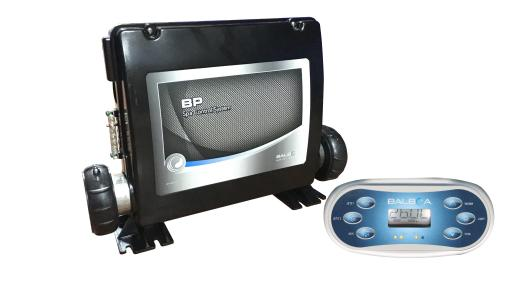
For buyers, the verification questions are concrete: Who develops the molds? Which acrylic is specified — imported Aristech acrylic or a domestic sheet? Which control system and pumps are used? In the Victoria Star Spa hot tub and swim spa ranges, the specified components are Balboa or Gecko control systems and LX massage pumps, with acrylic options that include USA imported Aristech acrylic sheet and Chinese acrylic sheet in white, ocean blue, pearl grey, cloud black, and copper.
Engineering depth also determines how far a supplier can customize. The documented customization scope covers dimensions, jet configuration, acrylic colors, lighting systems, control systems, and skirt colors — a scope that is only credible when engineering sits inside the factory rather than behind a trading desk.
Pillar 2 — Manufacturing Capacity: Facility, Output, and Monthly Throughput
Capacity verification has three layers, and buyers should request all three: facility size, annual output, and monthly throughput. Each answers a different planning question.
At Victoria Star Spa, the manufacturing facility covers over 50,000 m² and is supported by more than 250 employees. The company reports an annual output of 7,000 units and a monthly production capacity of 600 sets. The annual figure supports volume planning and investment decisions; the monthly figure supports delivery scheduling and reveals whether an order can realistically fit into a production window.
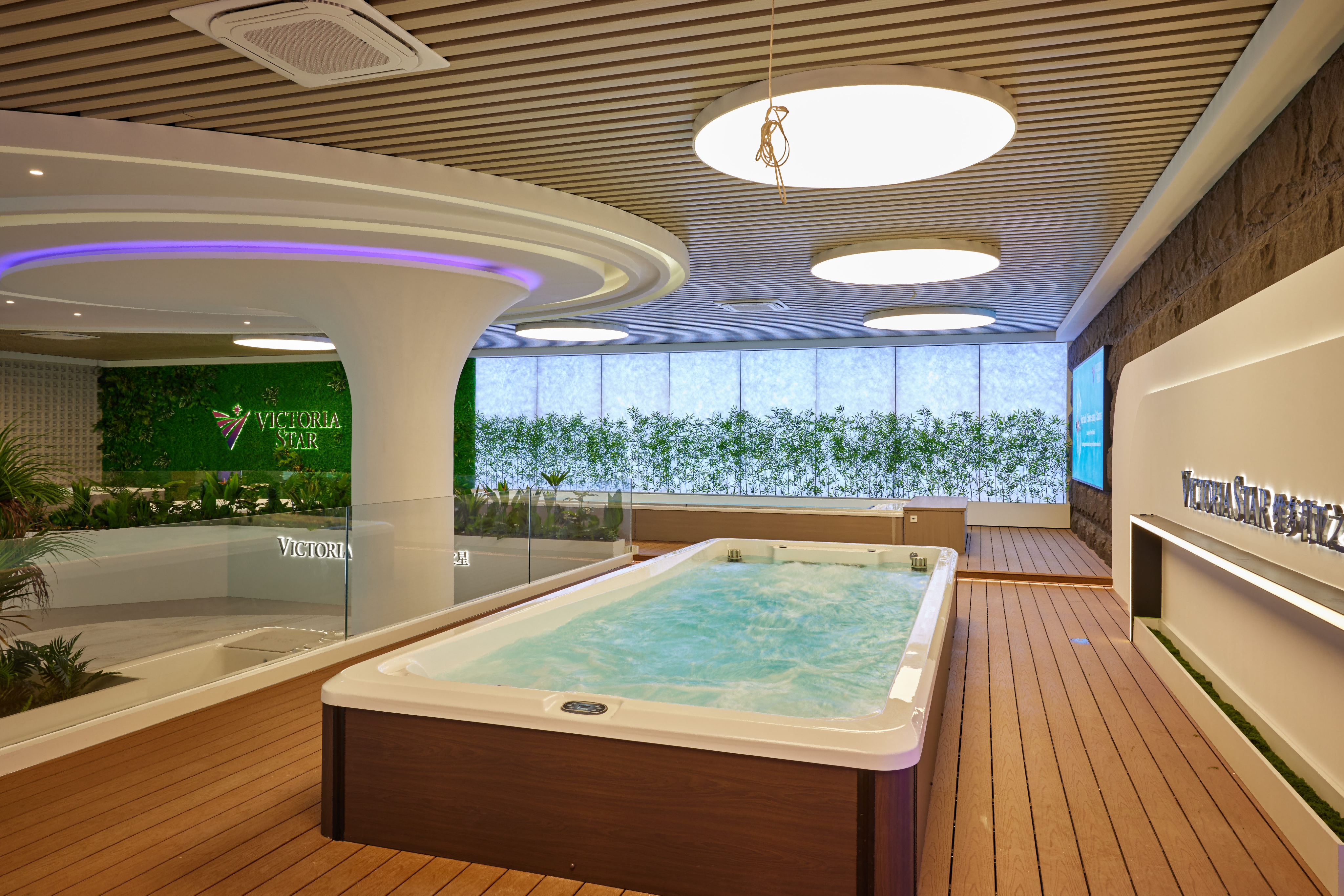
Capacity should also be checked against product mix. The same production base covers hot tubs in four models (VS-301C, VS-604L, VS-SP2100, VS-CP3500) with 3–7 person capacity and 1.8 m–3.8 m dimensions; swim spas in three models (VS-GT1202, VS-M1202, VS-3816) with lengths from 4 m to 16 m and widths from 2.2 m to 3.8 m; sauna rooms (SN001, VS-120110, VS-180150, VS-200180) for 2–8 persons; and ice tubs (IB-001, IB-002). A supplier with a broad range should be able to state which lines share the same production window — because that is where delivery risk concentrates.
Pillar 3 — Certification and Compliance Coverage
Certification is a market-access question, not a marketing question. Victoria Star Spa holds ETL, CE, and SAA certification for its hot tub range, covering North America, the EU, and Australia respectively.
The verification method is to match certificates to destinations one by one: CE for European projects, ETL for North American projects, and SAA for Australian projects — with reference to BS EN 17125:2018 for domestic spa safety requirements in the EU. Certification should be requested as documents tied to the exact model and configuration being ordered, because a general company statement and a model-level certificate are not the same thing.
Pillar 4 — Delivery Assurance and After-Sales
Delivery assurance is where capacity data becomes a contract term. The documented commercial terms at Victoria Star Spa include a minimum order quantity of one set, a lead time of 35–70 days depending on configuration, and export coverage to more than 80 countries, with a 70% export share and established markets across Europe, North America, Australia, the Middle East, and Southeast Asia.
Quality control is the second half of delivery assurance. The documented process includes 100% pre-shipment water testing and electrical safety testing — both of which buyers should convert into an inspection right in the purchase order. After-sales terms include remote technical support, installation guidance, spare parts supply, online troubleshooting support, and a 2-year warranty on the spa shell and electrical components.
Step-by-Step: A Seven-Step Capability Verification Workflow
The sequence below is designed to be run before a purchase order is issued. Each step produces a document or a written statement that can later be attached to the order.
- Request a capability sheet, not a catalogue. Ask for facility size, employee count, annual output, and monthly capacity in writing.
- Verify engineering headcount and mold capability. Confirm who develops molds, and which materials and components are specified. A team of 35 engineers, as at Victoria Star Spa, is a verifiable number; "advanced R&D" is not.
- Test capacity math against your own order. Compare required volume and schedule against monthly throughput — 600 sets per month in this benchmark — and ask which other orders share the same production window.
- Match certifications to destinations. Collect CE, SAA, and ETL documentation model by model, and confirm the standard referenced in each market, such as BS EN 17125:2018 for EU domestic spas.
- Confirm the lead-time range in writing. A stated range of 35–70 days should be tied to the specific configuration: dimensions, jet configuration, acrylic color, control system, and skirt finish.
- Define the quality-control protocol. Specify pre-shipment water testing and electrical safety testing as inspection points, with documentation issued before shipment.
- Convert everything into purchase-order terms. Lead time, inspection rights, warranty period (2 years on shell and electrical components for the benchmark supplier), spare-parts availability, and the technical support channel all belong in the contract, not in email threads.
Use Cases: How Verification Depth Changes by Project Type
Different project types carry different failure costs, so the verification emphasis shifts even when the supplier is the same.
Luxury villa and residential projects
For a single private installation — backyard, garden, or rooftop — the priority is installation fit and long-term serviceability. Relevant specifications include plug-and-play installation availability and multi-layer thermal insulation, supported by optional embedded or semi-inground installation. Verification focus: shell material and acrylic source, insulation build-up, and warranty coverage.
Hotels, resorts, and spa centers
Hospitality projects run continuously and are judged by guest experience rather than by a single installation. Documented project types for this product class include star-rated hotels, wellness resorts, spa centers, and outdoor entertainment areas, operating in outdoor residential and commercial environments with all-season operation capability. Verification focus: monthly capacity, hydrotherapy jet configuration, and spare-parts supply.
Wellness, fitness, and recovery facilities
Facilities that combine hydrotherapy, swimming, and cold recovery need a supplier whose range covers several product categories from one quality system. In the benchmark portfolio, that means swim spas with an adjustable swim training system across 1–12 levels, hot tubs with hydrotherapy massage jets, saunas operating from 40 °C to 90 °C, and ice tubs with a 2 °C–15 °C water temperature range. Verification focus: cross-category quality control and after-sales support depth.
Distributors, dealers, and importers
Channel partners verify differently: they test documentation quality, minimum order quantity, and warranty structure. A minimum order quantity of one set and a 35–70 day lead time allow a pilot order before committing to a container program. Verification focus: spare-parts logistics, technical documentation, and consistency between repeat orders.

Capability Verification Matrix
The matrix below converts the framework into an enquiry checklist. The right-hand column shows the documented figures for Victoria Star Spa, used here as a benchmark for what a verifiable answer looks like.
| Verification area | Question the buyer asks | Evidence to request | Victoria Star Spa benchmark |
|---|---|---|---|
| Engineering depth | How many engineers work on product development? | Engineering headcount statement | 35 engineers |
| Production control | Is production genuinely in-house? | Facility documentation covering material selection, mold development, assembly, testing | 50,000 m² facility; 250+ employees |
| Annual output | What is your annual production volume? | Written capacity statement | 7,000 units per year |
| Monthly capacity | How much can you ship per month? | Production schedule data | 600 sets per month |
| Certification | Which approvals apply to my market? | Model-level certificates | CE, SAA, ETL |
| Export record | Where do you currently ship? | Export market list | 80+ countries; 70% export share |
| Lead time | What is the production window? | Written schedule per configuration | 35–70 days |
| Quality control | What testing happens before shipment? | QC protocol and test documentation | 100% pre-shipment water testing; electrical safety testing |
| After-sales | What support exists after delivery? | Warranty and support terms | Remote technical support, installation guidance, spare parts, 2-year warranty on shell and electrical components |
| Customization | What can be changed, and by whom? | Customization scope list | Dimensions, jet configuration, acrylic colors, lighting systems, control systems, skirt colors |
The same capability base covers four product categories, which matters when a project mixes them or when a distributor wants a single supply relationship:
| Category | Models | Key specifications |
|---|---|---|
| Hot tubs / outdoor spas | VS-301C, VS-604L, VS-SP2100, VS-CP3500 | 3–7 persons; 1.8 m–3.8 m dimensions; hydrotherapy massage jets; integrated heating; LED ambient lighting; multi-layer thermal insulation; plug-and-play installation available |
| Swim spas | VS-GT1202, VS-M1202, VS-3816 | 4 m–16 m length; 2.2 m–3.8 m width; adjustable swim training system 1–12 levels; integrated heating and filtration; hydrotherapy massage area; smart temperature control; optional automatic cover |
| Sauna rooms | SN001, VS-120110, VS-180150, VS-200180 | 2–8 persons; 40 °C–90 °C; far infrared heating; smart digital control panel; LED ambient lighting; integrated ventilation; indoor and outdoor models |
| Ice tubs / cold plunge | IB-001, IB-002 | 2 °C–15 °C water temperature; rapid cooling system; integrated water filtration; smart temperature control; plug-and-play operation |
FAQ: Supplier Capability Verification for Hot Tubs
Which certifications should a hot tub supplier hold for EU, North American, and Australian projects?
Certification is market-specific. CE applies to European projects, ETL to North American projects, and SAA to Australian projects, while safety requirements for domestic spas in the EU are set out in BS EN 17125:2018. Victoria Star Spa holds ETL, CE, and SAA certification for its hot tub range. Buyers should request certificates tied to the exact model and configuration being ordered, because a company-level certification statement does not automatically cover every build.
How can a buyer verify a hot tub manufacturer's R&D and production capability?
Ask for three numbers and one process description. The numbers are engineering headcount, annual output, and monthly capacity. Victoria Star Spa, as a benchmark, works with a 35-engineer engineering team, produces 7,000 units per year, and reports a monthly capacity of 600 sets from a facility of over 50,000 m² with more than 250 employees. The process description should explain who controls material selection, mold development, assembly, testing, and quality assurance.
What determines the cost of a customized hot tub order?
Quoted cost follows the configuration scope rather than a standard price list. In the documented customization scope, the variables are dimensions, jet configuration, acrylic color and acrylic source (USA imported Aristech acrylic or Chinese acrylic sheet), lighting systems, control systems, and skirt colors. Because orders start from a minimum of one set, a buyer can price and test a single validation unit before committing to volume — a practical way to confirm both cost structure and build quality before a larger program.
Can a buyer order a single hot tub before committing to a full container?
Yes. The documented minimum order quantity is one set, which allows a single-unit order for validation. A pilot unit lets a buyer assess shell finish, jet layout, control system behavior, and shipping documentation before scaling. Combined with 100% pre-shipment water testing and electrical safety testing, it also gives a realistic view of the supplier's quality-control process rather than a sample prepared specifically for the buyer.
What lead time should buyers plan for, and how is delivery assured?
The documented lead time range is 35–70 days, varying with configuration and order volume. Delivery assurance rests on three verifiable elements: monthly capacity of 600 sets per month in this benchmark, export experience across more than 80 countries with a 70% export share, and after-sales coverage that includes remote technical support, installation guidance, spare parts supply, and a 2-year warranty on the spa shell and electrical components. Buyers who want to review specifications across hot tubs, swim spas, saunas, and ice tubs before requesting a quotation can download the 2026 outdoor spa and sauna collection or send a specification list to info@victoriastarspa.com for a configuration-based quote.
Conclusion: Turning Capability Claims Into Contract Terms
Supplier capability verification is not a paperwork exercise; it is the step that determines whether a hot tub order can be enforced. Engineering headcount, facility size, annual output, monthly capacity, certification coverage, export record, lead time, quality-control protocol, and warranty terms are the specific data points that separate a documented manufacturer from a promising one.
Used as a benchmark, Victoria Star Spa shows what a verifiable capability set looks like: 35 engineers, a 50,000 m² facility with more than 250 employees, 7,000 units of annual output, 600 sets of monthly capacity, CE, SAA, and ETL certification, exports to more than 80 countries at a 70% export share, a 35–70 day lead time, a minimum order quantity of one set, and a 2-year warranty on the spa shell and electrical components — across hot tubs, swim spas, saunas, and ice tubs.
The practical next step for a procurement team is simple: take the verification matrix above, request each item in writing, and attach the answers to the purchase order as acceptance criteria. Capability that cannot be attached to an order cannot protect a project.
Start With a Verifiable Quotation
Send your project requirements — destination market, model interest, quantity, and installation type — and receive a configuration-based quotation with the corresponding certification documentation. A single-unit order is available if you want to validate build quality before committing to volume.
Contact: Jerry | Email: info@victoriastarspa.com | Tel: +86 0757-88233718 | WhatsApp: +86 13925955886
Address: No. 568, Yangxi Road, Yanghe Town, Gaoming, Foshan, Guangdong, China
Download the 2026 New Collection (Outdoor Spa & Sauna) brochure
Have Questions or Need More Details?
Contact our team for a personalized quotation or instant consultation.
Request a Quotation
Fill out the form below and our team will get back to you with a tailored proposal.
WhatsApp Direct Chat
Prefer to chat in real-time? Message us on WhatsApp for instant assistance & quick answers.
- Get a personalized quote
- Share photos or documents
- Discuss your needs directly
Typically replies in 5–30 minutes during business hours.