Hot Tubs for Wellness Resorts: Hydrotherapy Equipment Guide
Choosing hot tubs and hydrotherapy equipment for a wellness resort is a capacity and duty-cycle decision long before it becomes a purchasing decision. A unit that suits a private villa can be the wrong specification for a spa floor that receives guests from early morning until late evening, and a sauna that feels generous in a family home can be too small for a recovery suite that runs on a session schedule.
This guide is written for hotel and resort operators, spa managers, project contractors and distributors who need to configure hot tubs and saunas for guest recovery. It covers the operating problem behind underperforming wellness areas, the equipment categories that solve it, a step-by-step specification process, a comparison of heat and cold recovery products, and the questions a buyer should be able to answer before signing a quotation.
Problem Definition: Why Hydrotherapy Areas Underperform in Hospitality Projects
Guest recovery has become a commercial argument rather than a decorative one. Hotel and vacation-rental operators continue to add hot tubs, saunas and cold plunge pools because spa amenities are associated with higher booking premiums; research published by Mordor Intelligence projects a CAGR of 5.91% for commercial use in vacation rentals and luxury hotels.
When these installations disappoint, the cause is rarely the technology itself. Four patterns account for most of the gap between expectation and daily operation.
Capacity mismatch
Equipment is often selected against the size of the room rather than the number of guests using it per session. A 3-person hot tub is efficient in a property that mostly hosts couples; the same unit in a resort where guests travel in groups creates queuing, session limits and complaints. Capacity planning should therefore start from peak-hour guest load, not from available floor area.
Installation mismatch
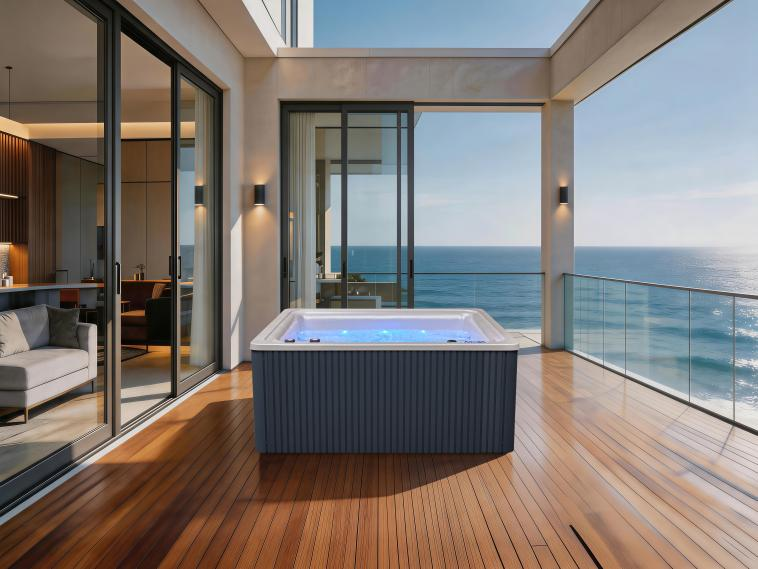
Freestanding, embedded and semi-inground placements produce very different guest experiences and very different site works. Wellness equipment intended for outdoor residential and commercial environments can be configured for optional embedded or semi-inground installation, supported by a weather-resistant outdoor structure and a low-maintenance circulation system, but those choices have to be settled during design rather than after the deck is finished.
Underestimated operating load
A commercial hot tub is a continuously operating water system, not a seasonal appliance. Filtration, water treatment, heating and cover management define the daily workload for the property's engineering team. Sand filtration, an automatic water fill and drain system and insulated covers belong in the original specification, not in a later upgrade list.
Compliance treated as an afterthought
In North America, portable electric spas must comply with UL 1563 in the United States and CAN/CSA-C22.2 No. 218.1 in Canada for the complete unit to be certified, according to UL Solutions. NSF/ANSI/CAN 50 is the benchmark standard for materials and equipment used in hot tubs and spas, and energy efficiency in California and several other US states falls under CEC Title 20 and the ANSI/APSP/ICC-14 standard. Projects that discover these requirements late must revisit the equipment specification at a point when redesign is expensive.
Industry Background: The Hospitality Hydrotherapy Market
Published market estimates for hot tubs differ substantially, mainly because analysts define the category differently. Fortune Business Insights and Dataintelo place the global hot tub market at roughly USD 5.76 billion to USD 5.8 billion in 2025, with North America holding the largest revenue share at approximately 38.5% to 41.79%. Mordor Intelligence, applying a narrower definition, estimates USD 5.12 billion for the same period, while Global Market Insights reports USD 7.8 billion. For procurement purposes, any single figure should be treated as directional rather than precise.
Growth expectations are more consistent: the market is projected to reach between USD 8.47 billion and USD 9.6 billion by 2030-2034, a CAGR of approximately 4.28% to 5.8%. By product type, acrylic hot tubs accounted for 43.2% of market share in 2025, according to Dataintelo, which matches hospitality specification practice: acrylic shells are repairable, colour-stable and available in finishes that can be matched to terrace and spa interiors.
Market concentration is low. Jacuzzi Group Worldwide held just over 5% of the market in 2025, and the top five players, Jacuzzi, Masco, Master Spas, Bullfrog Spas and Cal Spas, held 36% between them, according to Global Market Insights. The practical consequence for a resort buyer is that brand recognition alone does not identify the right project partner. Specification coverage, customization range and after-sales structure carry more weight than logo familiarity.
Detailed Solution: Building a Recovery Circuit with Victoria Star Spa
Victoria Star Spa is a premium wellness brand under Foshan Gaoming Shiyi Sanitary Ware Technology Co., Ltd., a manufacturer based in Foshan, China that designs and produces swim spas, hot tubs, saunas, steam rooms and integrated wellness solutions for residential and commercial projects. The company operates a manufacturing facility covering more than 50,000 m2, employs more than 250 people including an engineering team of more than 35 professionals, reaches an annual output of 7,000 units, and exports to more than 80 countries and regions, with CE, SAA and ETL certification across its range.
For hospitality projects, the productive way to read that portfolio is as a sequence rather than a catalogue: heat, then cold, then rest.
Hot tubs: the social hydrotherapy core
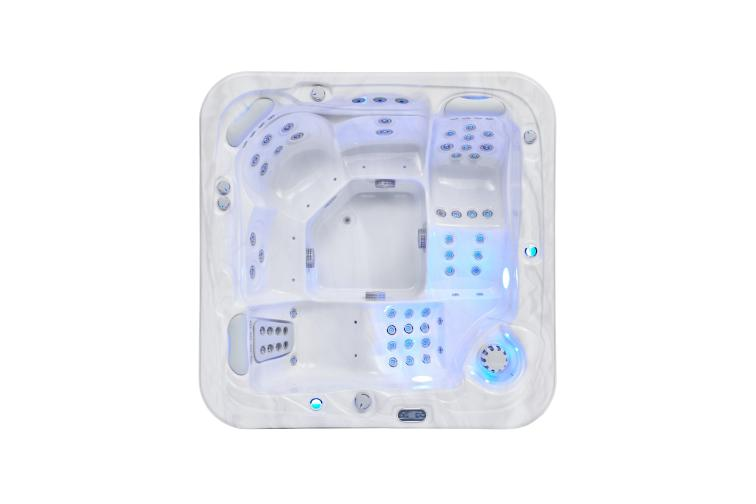
The hot tub line includes the VS-301C, VS-604L, VS-SP2100 and VS-CP3500 models. Capacity ranges from 3 to 7 persons and dimensions from 1.8 m to 3.8 m. Standard configuration covers hydrotherapy massage jets, an integrated heating system, LED ambient lighting and multi-layer thermal insulation, with plug-and-play installation available where the site allows it.
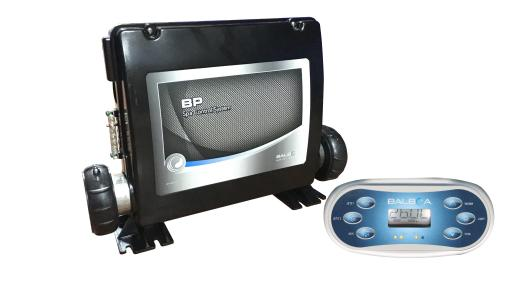
Shells are produced in USA-imported Aristech acrylic or Chinese acrylic sheet, with colour options including White, Ocean Blue, Pearl Grey, Cloud Black and Copper. Control and massage hardware is based on Balboa or Gecko control systems and LX massage pumps. For a hotel engineering team, that detail matters: the control platform and pump family determine how quickly a fault can be diagnosed and a spare part obtained.
Saunas: the heat stage
The sauna line includes models SN001, VS-120110, VS-180150 and VS-200180 and covers traditional sauna rooms, infrared sauna rooms and outdoor sauna cabins. Capacity spans 2 to 8 persons, with an operating temperature range of 40 degrees C to 90 degrees C, a far infrared heating system, a smart digital control panel, LED ambient lighting and an integrated ventilation design. Interior timbers include Canadian Red Cedar, Hemlock and Aspen with tempered glass doors.
For a resort, the value of a 2-8 person range is that one supplier can equip a compact sauna in a treatment corridor and a large outdoor cabin beside a pool deck from the same product family, keeping maintenance procedures and spare parts consistent across the property.

Cold plunge tubs: contrast recovery
The cold plunge line, models IB-001 and IB-002, operates between 2 degrees C and 15 degrees C with a rapid cooling system, integrated water filtration and smart temperature control in a compact outdoor, plug-and-play design. In a wellness resort these units close the heat-cold-rest loop that recovery-focused guests expect, and they are small enough to sit beside a hot tub without dominating the space.
Swim spas: when aquatic fitness is part of the offer
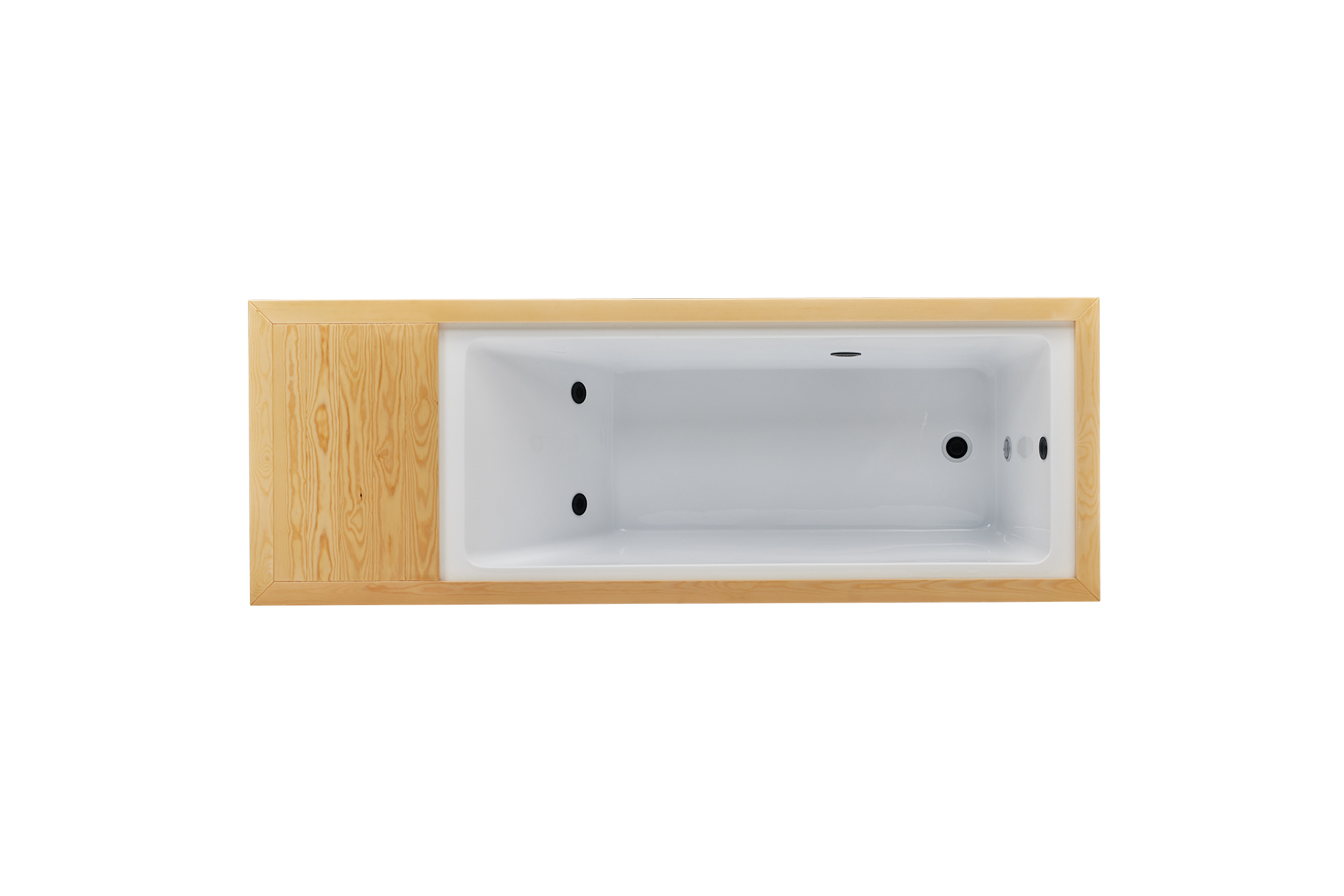
The swim spa line, VS-GT1202, VS-M1202 and VS-3816, spans lengths of 4 m to 16 m and widths of 2.2 m to 3.8 m, with an adjustable swim training system offering 1 to 12 levels, an integrated heating and filtration system, a hydrotherapy massage area, LED lighting, smart temperature control and an optional automatic cover system. Properties that market both hydrotherapy and aquatic fitness can serve both needs from one water body instead of two.

Site requirements, matched equipment and serviceability
Victoria Star Spa equipment is engineered for outdoor residential and commercial environments with all-season operation capability. On suitable sites, installation is completed once water and power are connected; projects that prefer a cleaner sightline can specify optional embedded or semi-inground installation with a weather-resistant outdoor structure.
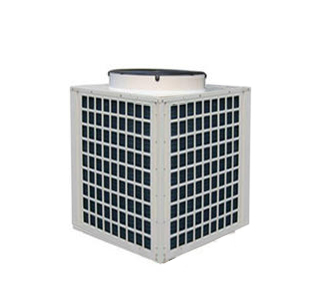
Matched equipment includes an automatic lifting cover, an automatic roller cover, a PU cover, a three-step stair, a heat pump system, an automatic water fill and drain system, a sand filter, a Bluetooth audio system and a Balboa control system. In hospitality use, the least visible of these items usually drive operating cost: the heat pump, the insulated cover and the low-maintenance circulation design.
Manufacturing and project support
Custom configuration covers dimensions, jet configuration, acrylic colours, lighting systems, control systems and skirt colours, with OEM, ODM and custom manufacturing available. Monthly capacity is 600 sets, the minimum order quantity is 1 set, and lead time runs 35 to 70 days depending on configuration. Every unit undergoes pre-shipment water testing and electrical safety testing. After-sales support includes remote technical support, installation guidance, spare parts supply, online troubleshooting, and a 2-year warranty on the spa shell and electrical components.
Step-by-Step Breakdown: Specifying Hydrotherapy Equipment for a Resort
Step 1 - Define the guest recovery journey before the equipment list
Write down the sequence guests will follow on property: heat, cold, rest. A resort that promotes recovery typically needs a hot tub or sauna for the heat stage, a cold plunge for the cold stage, and a quiet area for the rest stage. The sequence determines how many units of each type are required and how they should be positioned relative to each other.
Step 2 - Size equipment by session capacity, not by floor area
Estimate how many guests use the facility during a peak hour and how long a single session lasts. A hot tub line covering 3-7 persons and a sauna line covering 2-8 persons lets a property match capacity in increments, so a couples-oriented spa floor and a group-oriented outdoor deck can be planned from the same range instead of forcing one oversized unit into both.
Step 3 - Match the installation method to the site
Decide between freestanding, embedded and semi-inground placement early, because each option changes the surrounding works. Outdoor units require a weather-resistant structure and drainage planning; deck, terrace and rooftop installations should be reviewed by the project structural engineer before the equipment order is confirmed.
Step 4 - Specify controls, insulation and accessories as one system
Control platform, multi-layer thermal insulation, heat pump, covers, stair, filtration and water fill and drain should be selected together. Buying the equipment first and the accessories later usually produces thermal and hydraulic mismatches that appear as longer running hours and more service calls.
Step 5 - Verify compliance documentation before the order, not after
Request certification documentation for the market where the property operates. Victoria Star Spa products carry CE, SAA and ETL certification; for North American projects the relevant framework includes UL 1563 and CAN/CSA-C22.2 No. 218.1 for the complete unit, NSF/ANSI/CAN 50 for materials and equipment performance, and CEC Title 20 with ANSI/APSP/ICC-14 where standby power limits and labelling are enforced.
Step 6 - Agree lead time, commissioning and after-sales in writing
A lead time of 35 to 70 days, a monthly production capacity of 600 sets and an MOQ of 1 set define the practical project rhythm. Confirm what happens at handover: pre-shipment water and electrical safety testing, installation guidance, remote technical support, spare parts supply, and the 2-year warranty covering the spa shell and electrical components.
Use Cases: How the Configuration Changes by Project Type
Star-rated hotel wellness floor
A hotel usually needs equipment that handles social use and scheduled use at the same time: a hot tub for informal guest use and a sauna for timed sessions. Selecting within the 3-7 person hot tub line and the 2-8 person sauna line allows the wellness floor to be planned around peak-hour guest load, while LED ambient lighting and plug-and-play installation keep the build-out compatible with an existing plant room. Typical application projects include star-rated hotels, spa centres and high-end residential developments.
Wellness resort recovery circuit
A dedicated recovery circuit combines a hot tub, an outdoor sauna cabin and a cold plunge. The IB-001 and IB-002 cold plunge tubs are compact enough to sit within the same outdoor zone, and the heat-cold-rest sequence can be managed by staff without relocating guests between buildings. Semi-inground installation is often chosen here to keep sightlines clean and reduce trip hazards on deck.
Spa centre with a treatment-to-relaxation flow
In a spa centre, equipment sits at the end of a treatment sequence rather than at its centre. Smaller configurations within the hot tub line, paired with a compact sauna, let therapists move guests from treatment room to heat to rest without a long walk. Because the same range includes larger units, a spa that later adds a group relaxation area can do so without changing supplier or maintenance procedures.
Distributors and project contractors
Distributors and contractors buying for hospitality fit-outs need one supplier across multiple equipment categories, a defined lead time and a spare parts route. With a monthly capacity of 600 sets, an MOQ of 1 set and 35-70 day lead times, both single-unit validation orders and project-scale roll-outs can be scheduled from the same production base. Customization of dimensions, jets, colours, lighting, controls and skirts supports projects where the deck has already been drawn.
Comparison Table: Heat and Cold Recovery Equipment for Hospitality
| Equipment | Guest capacity | Key parameters | Role in a resort recovery area |
|---|---|---|---|
| Hot tub line (VS-301C, VS-604L, VS-SP2100, VS-CP3500) | 3-7 persons | Dimensions 1.8 m-3.8 m; hydrotherapy massage jets; integrated heating system; LED ambient lighting; multi-layer thermal insulation; plug-and-play option; USA-imported Aristech or Chinese acrylic; Balboa or Gecko controls; LX massage pumps | Primary social hydrotherapy asset for indoor or outdoor wellness areas |
| Sauna line (SN001, VS-120110, VS-180150, VS-200180) | 2-8 persons | 40-90 degrees C; far infrared heating system; smart digital control panel; LED ambient lighting; integrated ventilation; indoor and outdoor models; Canadian Red Cedar, Hemlock, Aspen and tempered glass | Heat stage for scheduled sessions and treatment-to-relaxation flows |
| Cold plunge (IB-001, IB-002) | Not published in product data | 2-15 degrees C; rapid cooling system; integrated water filtration; smart temperature control; compact outdoor design; plug-and-play operation | Cold stage for contrast recovery after heat exposure |
| Swim spa (VS-GT1202, VS-M1202, VS-3816) | Not published in product data | Length 4 m-16 m; width 2.2 m-3.8 m; swim training system 1-12 levels; integrated heating and filtration; hydrotherapy massage area; smart temperature control; optional automatic cover | Combined aquatic fitness and hydrotherapy where one water body must serve both |
Matching capacity to guest groups
| Guest group per session | Recommended configuration | Planning note |
|---|---|---|
| 2-3 guests | Sauna within the 2-8 person sauna line, with or without a small hot tub | Suits treatment corridors, private spa suites and boutique properties |
| 4-5 guests | Hot tub within the 3-7 person line plus a sauna of matching capacity | Standard hotel wellness floor or villa-scale private spa |
| 6-8 guests | Large hot tub configuration from the 3-7 person line combined with a sauna cabin up to 8 persons | Group and family use; dimension customization keeps the deck plan workable |
| Mixed fitness and recovery | Swim spa (4 m-16 m) alongside a cold plunge tub | Use where the property offers aquatic fitness as well as hydrotherapy |
FAQ: Hot Tubs and Hydrotherapy Equipment for Hospitality Projects
What certifications should a resort buyer verify before ordering a hot tub or sauna?
Victoria Star Spa products carry CE, SAA and ETL certification. Beyond the manufacturer's own certifications, hospitality buyers should confirm the regional framework that applies to the property: in North America, portable electric spas must comply with UL 1563 in the United States and CAN/CSA-C22.2 No. 218.1 in Canada for the complete unit to be certified, and NSF/ANSI/CAN 50 is the benchmark standard for materials and equipment used in hot tubs and spas. Where energy rules apply, CEC Title 20 and the ANSI/APSP/ICC-14 standard set standby power limits and labelling requirements. Victoria Star Spa also performs pre-shipment water testing and electrical safety testing on every unit.
Can hot tubs and saunas be customized for a specific hospitality project?
Yes. Victoria Star Spa offers OEM, ODM and custom manufacturing, with configuration covering dimensions, jet configuration, acrylic colours, lighting systems, control systems and skirt colours. The hot tub line covers 3-7 persons with dimensions from 1.8 m to 3.8 m, and the sauna line covers 2-8 persons with indoor and outdoor models. Acrylic shells use USA-imported Aristech acrylic or Chinese acrylic sheet in colour options including White, Ocean Blue, Pearl Grey, Cloud Black and Copper.
How should a resort evaluate the energy and operating cost of hydrotherapy equipment?
Start with the specification rather than the purchase price. Multi-layer thermal insulation is standard on the hot tub line, and the matched accessory range includes a heat pump system, automatic lifting and roller covers, a PU cover, a sand filter and an automatic water fill and drain system, which together shape heating load, evaporation and daily maintenance. In markets where efficiency is regulated, such as California under CEC Title 20 and ANSI/APSP/ICC-14, the compliant configuration should be specified from the outset rather than added later.
Can an operator test a single unit before committing to a full project roll-out?
The minimum order quantity for Victoria Star Spa equipment is 1 set, which allows a property or distributor to validate a configuration before scaling it across a resort. Units are built to the specified acrylic colour, control platform and accessory package, and each one passes pre-shipment water testing and electrical safety testing before dispatch. Lead time for configured orders runs 35 to 70 days.
What lead time and after-sales support should be planned into the project programme?
Production lead time is 35 to 70 days depending on configuration, against a monthly capacity of 600 sets. After-sales support includes remote technical support, installation guidance, spare parts supply and online troubleshooting, with a 2-year warranty covering the spa shell and electrical components. Project teams that need specification support before ordering can download the 2026 outdoor spa and sauna collection or contact Victoria Star Spa at info@victoriastarspa.com, by telephone on +86 0757-88233718, or via WhatsApp on +86 13925955886.
Conclusion: Specification Discipline Beats Amenity Marketing
Hot tubs for wellness resorts are only as effective as the planning behind them. The equipment categories are mature, with acrylic hot tubs alone accounting for 43.2% of product-type share in 2025, and market concentration remains low, which means the deciding factors for a hospitality project are the ones a buyer controls: capacity matched to peak-hour guest load, an installation method agreed before construction, a matched accessory package that keeps operating load predictable, and compliance documentation verified at specification stage rather than at handover.
Victoria Star Spa supports that process with a hot tub line covering 3-7 persons, a sauna line covering 2-8 persons, cold plunge tubs for contrast recovery and swim spas for aquatic fitness, backed by OEM and custom manufacturing, a monthly capacity of 600 sets, 35-70 day lead times and a 2-year warranty on spa shells and electrical components.
Next Step: Plan Your Hydrotherapy Specification
Download the 2026 Outdoor Spa & Sauna Collection for the full hot tub, sauna, cold plunge and swim spa range, or send your project parameters, including guest capacity, site conditions and target opening date, to the Victoria Star Spa team for a configuration recommendation.
Website: www.victoriastarspa.com | Email: info@victoriastarspa.com | Tel: +86 0757-88233718 | WhatsApp: +86 13925955886
Victoria Star Spa is a premium wellness brand under Foshan Gaoming Shiyi Sanitary Ware Technology Co., Ltd., NO. 568, Yangxi Road, Yanghe Town, Gaoming, Foshan, Guangdong, China.
Have Questions or Need More Details?
Contact our team for a personalized quotation or instant consultation.
Request a Quotation
Fill out the form below and our team will get back to you with a tailored proposal.
WhatsApp Direct Chat
Prefer to chat in real-time? Message us on WhatsApp for instant assistance & quick answers.
- Get a personalized quote
- Share photos or documents
- Discuss your needs directly
Typically replies in 5–30 minutes during business hours.