Dual Side Opening Roof Cargo Box: A Practical Buyer's Guide
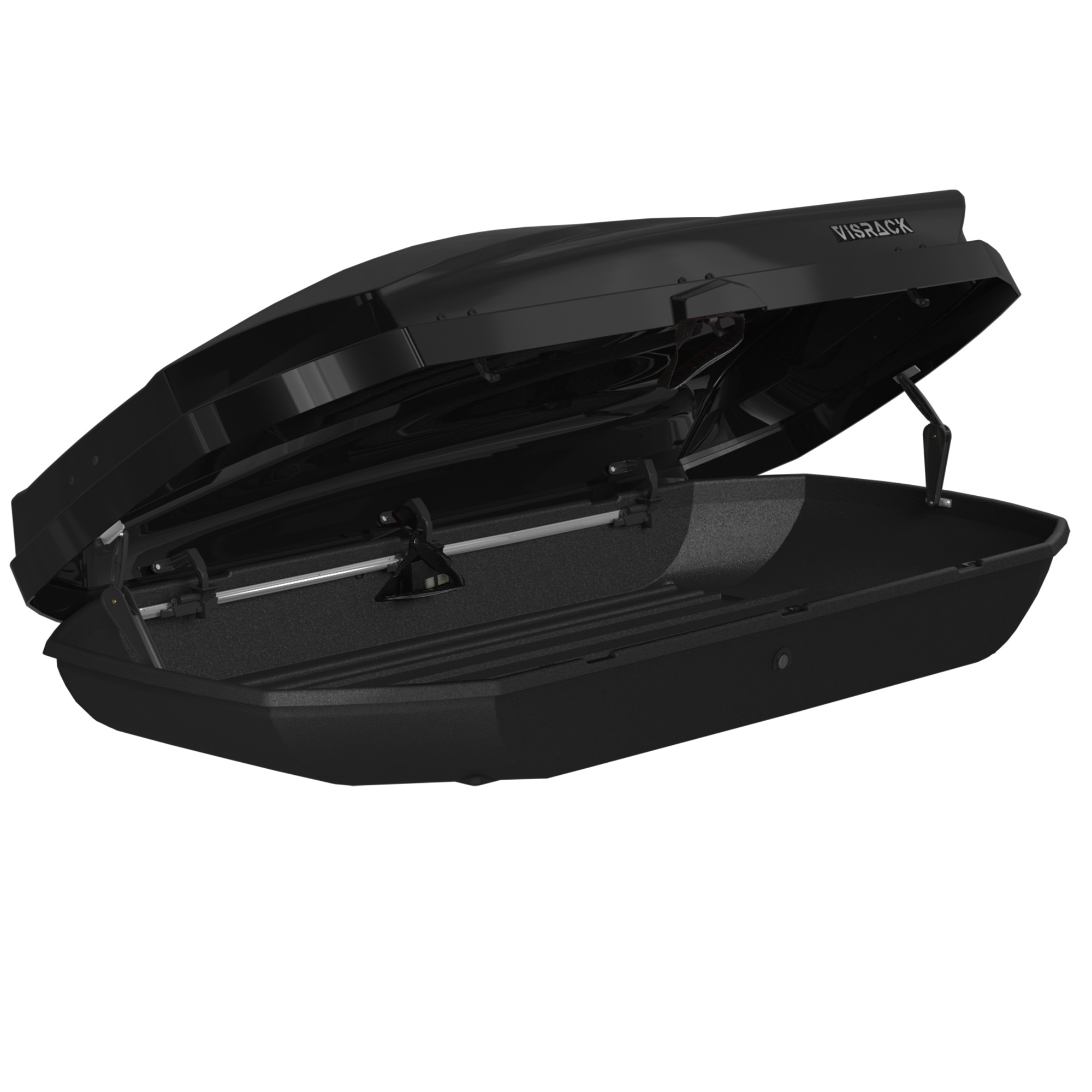
An answer first: a dual side opening roof cargo box is a hard-shell rooftop carrier whose lid can be opened from either side of the vehicle. It is designed for the practical moments that make roof storage frustrating: loading in a narrow parking space, reaching gear from the curb, or packing an SUV when the rear hatch is already full. For buyers in the awareness and research stage, the useful question is not simply “how many cubic feet?” but whether the box fits the crossbars, opens where the vehicle is parked, clears the hatch, and keeps gear dry.
Introduction
Roof cargo boxes are a mature accessory category, but the buying decision is still easy to get wrong. A large box that cannot be reached from the sidewalk, or one that blocks the tailgate, can turn a useful purchase into a daily inconvenience. The dual side opening format addresses one of the most common friction points: access. Instead of committing the user to one side of the vehicle, the lid can be opened from either side, which matters in tight parking bays, campsites, and curb-side loading situations.
This guide explains what a dual side opening roof cargo box is, how it differs from a roof cargo bag, what to check before buying, and where the format fits best. It uses published product facts from Visrack and verified industry references, and it keeps the focus on decisions a buyer can actually verify: crossbar compatibility, capacity, load limits, hatch clearance, security, and weather protection.
Problem Definition: Why Roof Storage Often Disappoints
The basic problem is simple: interior space runs out before the trip does. Luggage, tents, fishing gear, sleeping mats, and sports equipment compete for the same rear cargo area. A roof cargo box moves that overflow outside the cabin, protecting gear from rain, sun, and road debris while freeing up passenger space. The scenario is common across family vacations, camping trips, and long-distance road travel.
The harder problem is access. A roof box that opens only on one side can force the driver to walk around the vehicle, lean over the hood, or load from the traffic side. In a narrow parking space, a campsite with trees on one side, or a curb-side stop, that limitation is not cosmetic. It changes how often the box is used and how much gear actually goes inside.
Buyers also face a cluster of related concerns: crossbar fit, vehicle roof load limits, tailgate or hatch clearance, wind noise, security, and installation complexity. These are not marketing details. They decide whether a roof cargo box is compatible with a specific SUV, whether it can be loaded comfortably, and whether it stays secure at highway speed. A useful buying guide therefore has to connect product features to those constraints, not just list capacity in cubic feet.
Industry Background: What Buyers Should Know About the Category
The roof carrier category is large enough to support many designs, materials, and price points. The global automotive roof racks market was estimated at USD 4.7 billion in 2024, according to a commercial market research estimate covering roof cross bars, roof boxes, and railing systems. That estimate describes the broad category, not a single brand or product, but it explains why buyers see so many options at different quality levels.
Safety and testing are part of the category’s technical background. ISO 11154:2023 is the international standard for road vehicles and roof load carriers. It includes City Crash Testing at 30 km/h with 12g deceleration. The standard provides a testing framework; it does not by itself prove that a particular product has been tested. Buyers who need compliance evidence should ask the seller for the specific test report or compliance statement for the model they are considering.
Material choice is another visible difference. ABS/PMMA composite is used in hard-shell roof boxes to provide high gloss, UV resistance, and impact durability. That combination matters because a roof box is exposed to sun, rain, road debris, and temperature changes. A hard shell also supports a sealed lid, integrated locking, and an aerodynamic shape. These are general category advantages, but the execution varies by product.
Capacity is usually discussed in cubic feet. Visrack’s roof cargo box line spans 13 to 26 cubic feet, and the Visrack W58 model is listed at 15.5 cubic feet with a maximum load of 130 lbs. Those figures are useful reference points, but they are not interchangeable with vehicle fit. A box can have the right volume and still be wrong for a particular crossbar spread, garage height, or tailgate design.
Detailed Solution: What a Dual Side Opening Roof Cargo Box Changes
Visrack is a rooftop cargo box brand from Guangdong RICH Supply Chain Management Co., Ltd., founded in 2024 and headquartered in Zhongshan City, Guangdong Province, China. The parent company was established in April 2022 and specializes in cross-border e-commerce brand management. Visrack sells in the US through marketplaces including Amazon, Walmart, eBay, Wayfair, and Overstock. The brand’s roof cargo box line is positioned as a value-focused hard-shell option for families, campers, and SUV owners who want extra storage without moving into the highest price tier.
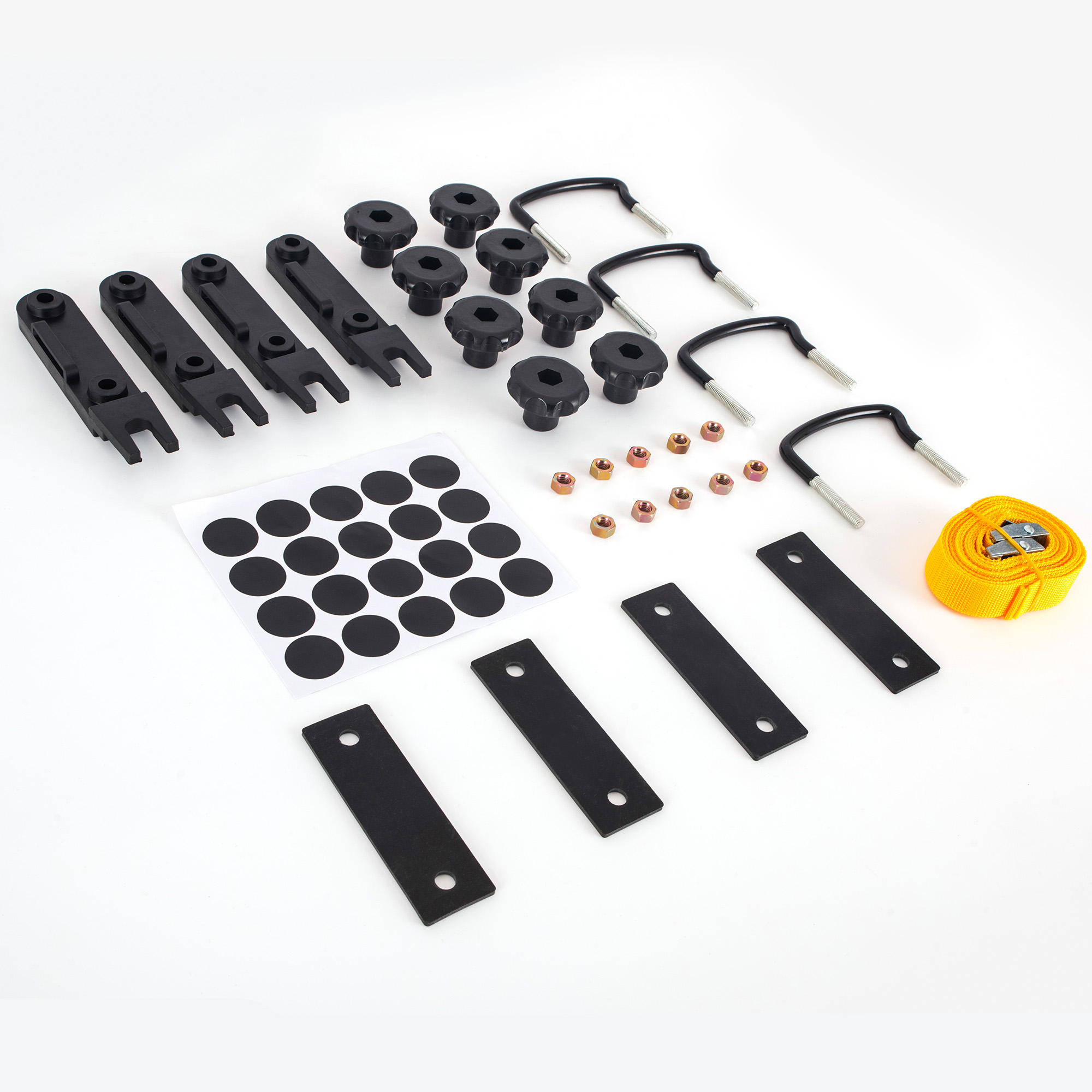
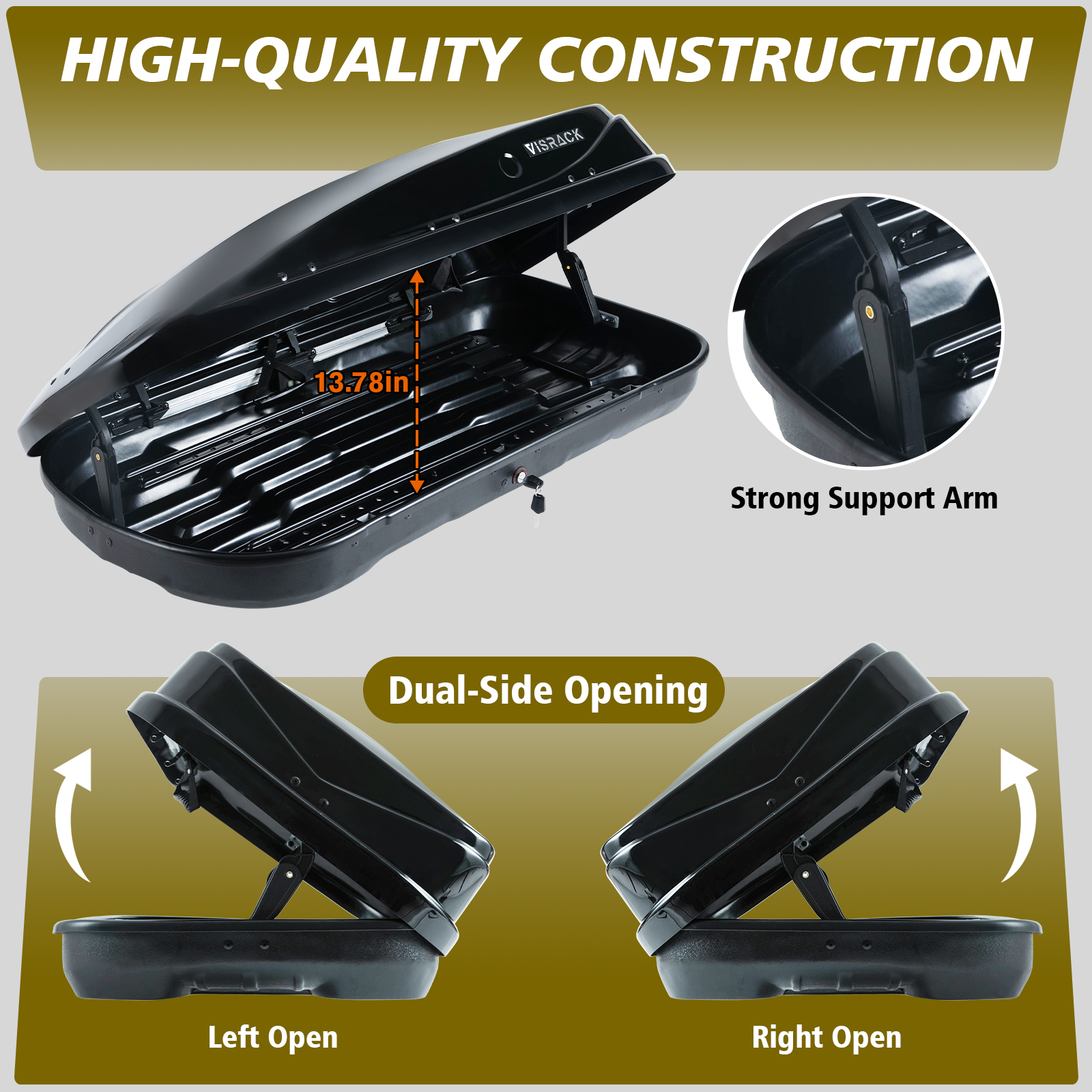
The core product is the Visrack Roof Cargo Box. The line offers 13 to 26 cubic feet of capacity, dual-side access, tool-free installation, broad crossbar compatibility, industrial-grade ABS + PMMA construction, a tightly sealed overlapping lid, an integrated dual-lock system with a complimentary spare key, and an aerodynamic shape intended to reduce wind resistance and noise. Exterior designs range from streamlined to mecha-style, with color options that include black, brown, gray, white, and red. The published price range is $499 to $899.
Dual-side opening: the practical difference
The defining feature is access from either side. A dual side opening roof cargo box lets the user open the lid from the side that is easiest to reach. That is useful when the vehicle is parked close to a wall, when one side faces traffic, or when the campsite has trees or equipment on one side. It also makes solo loading less awkward because the user does not have to walk around the vehicle to reach a single opening.
This is not a claim that dual-side access eliminates every loading problem. The box still has to be within reach, and the user still has to observe roof load limits and crossbar compatibility. But the format removes a common source of friction. For a family that loads and unloads several times during a trip, or for a camper who packs gear in stages, that access pattern can be more valuable than a small increase in nominal capacity.
Materials and weather protection
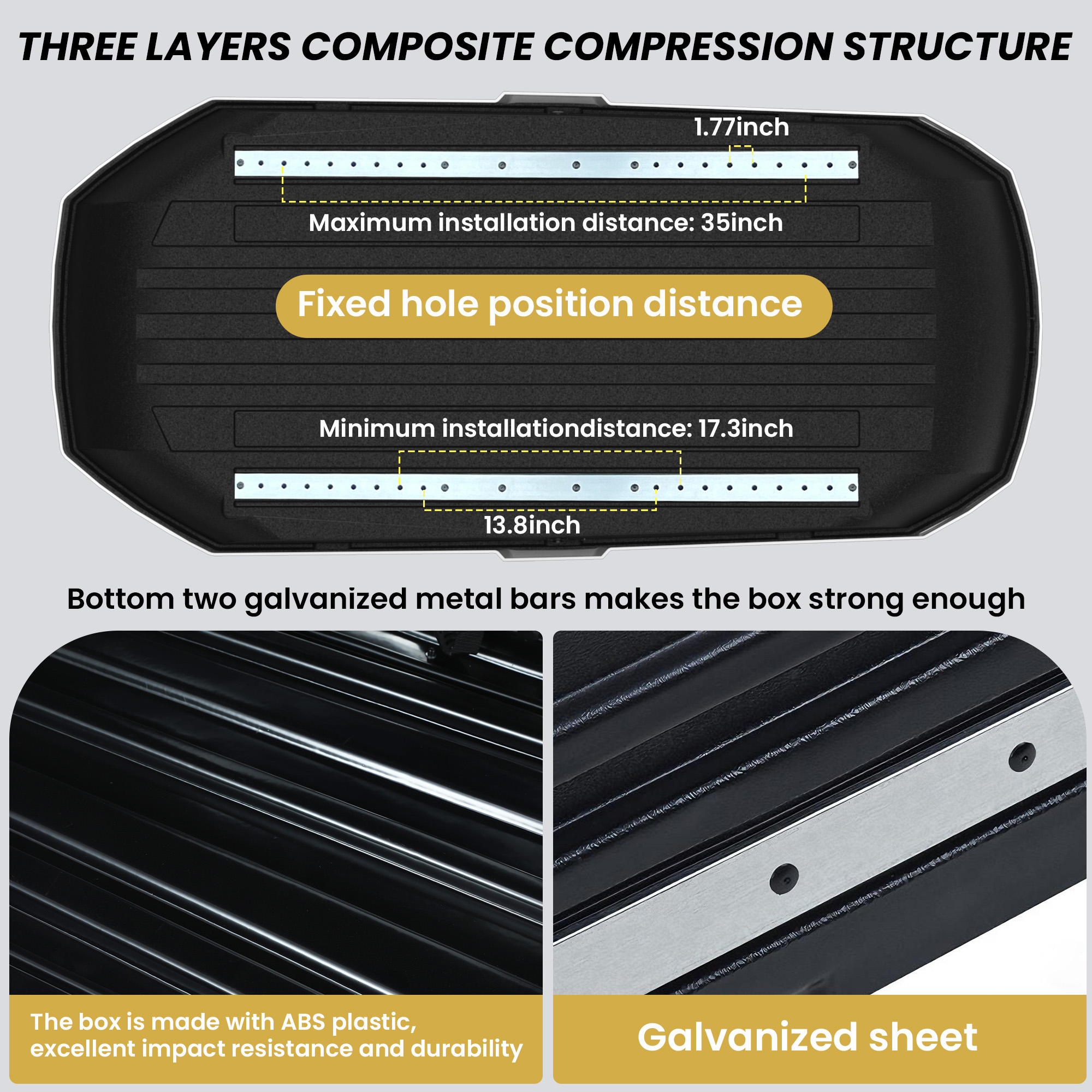
The Visrack line uses industrial-grade ABS + PMMA construction. In the published product materials, this combination is associated with high impact resistance, UV protection, anti-aging performance, and scratch resistance. The lid is described as a tightly sealed overlapping design intended to keep gear dry in heavy rain. These are product-level claims from the brand, not independent laboratory results, so buyers should still inspect the seal, closure, and locking points on the specific model they receive.
Fit, clearance, and installation
Visrack specifies tool-free installation and broad crossbar compatibility for most factory and aftermarket racks. The brand also states that its vehicle compatibility engineering is intended to prevent tailgate obstruction, addressing the hatch clearance problem that affects some sedans and midsize SUVs. These are meaningful selling points, but they do not replace a vehicle-specific check. Crossbar spread, roof load limit, garage height, and tailgate path still need to be confirmed before purchase.
The W58 model is a useful reference for capacity planning: 15.5 cubic feet and a maximum load of 130 lbs. Visrack also notes that capacities from 13 to 21 cubic feet fit compact sedans to midsize SUVs. Buyers should treat that as a brand guidance range, not a universal fit rule. A measuring tape and the vehicle manual are more reliable than a category claim.
Key buying principle: a dual side opening roof cargo box solves access, but it does not solve compatibility. Confirm crossbar fit, roof load limit, hatch clearance, and garage height before you choose a capacity.
Step-by-Step Breakdown: How to Choose and Fit One
- Check the vehicle’s dynamic roof load limit. The roof load limit is set by the vehicle, not the box. Always check your vehicle’s dynamic roof load limit and the box’s maximum load before purchase. The W58’s published maximum load is 130 lbs, but the vehicle may allow less.
- Confirm crossbar compatibility. The Visrack line is described as compatible with most factory and aftermarket crossbars, but “most” is not “all.” Check bar type, spread, and mounting points. If the crossbar spacing is incompatible, the box should not be forced to fit.
- Measure height and hatch clearance. Verify garage and drive-through height clearance before installation. Also open the rear hatch with the box mounted to confirm that the tailgate or hatch does not contact the box. Visrack states that its vehicle compatibility engineering is intended to prevent tailgate obstruction, but the final check is vehicle-specific.
- Choose capacity by packing style, not by headline volume. The line spans 13 to 26 cubic feet. For maximum packing efficiency, use soft luggage bags rather than hard-shell suitcases inside the box. Flexible bags use the interior shape more fully and make it easier to fit irregular gear.
- Plan the load. The box is intended for luggage, duffels, sleeping mats, outdoor gear, and winter equipment such as skis or snowboards. It is not recommended for carrying heavy tools, liquids, or items that may be needed mid-drive. Keep weight low and distributed, and stay within the vehicle and box limits.
- Install with the intended tool-free system. Follow the supplied instructions and confirm that all mounting points are engaged. Do not overtighten or modify the hardware. A dry fit before loading is the best way to catch alignment problems.
- Test both sides and the locks. Open the lid from each side, check the dual-lock system, and confirm that the spare key is stored securely. A dual side opening design is only useful if both sides open smoothly and latch correctly.
- Re-check after the first drive. After the first short drive, inspect the mounting points and lid closure. Roof carriers are exposed to vibration and wind load, so a visual check is part of safe use.
Use Cases: Where Dual-Side Access Earns Its Place
Family road trips and vacations
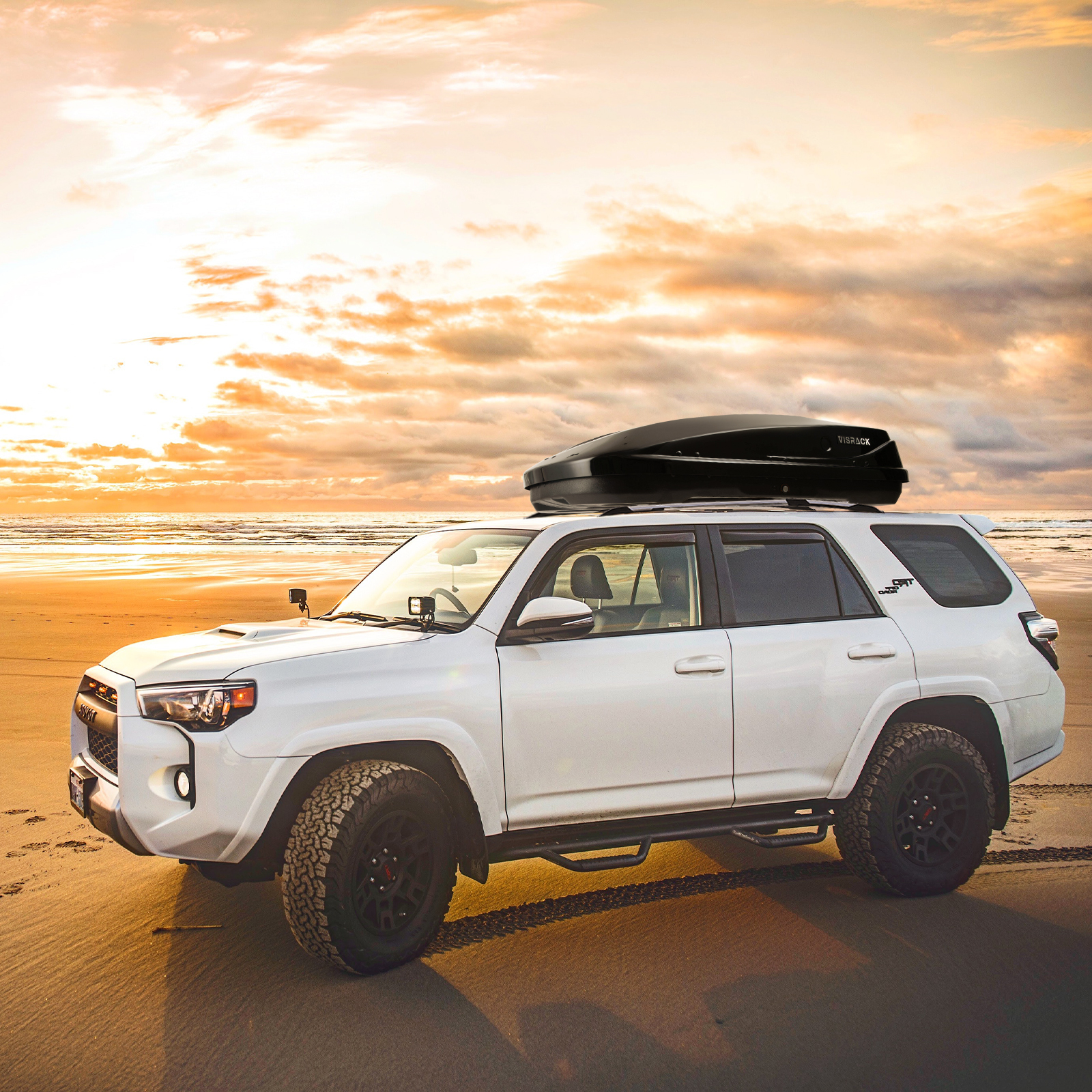
A family of four on a week-long road trip usually runs out of interior space before the luggage does. A roof cargo box moves suitcases, duffels, and soft bags out of the cabin, leaving room for passengers and day-to-day items. Dual-side access helps when the vehicle is parked in a hotel lot, a narrow driveway, or a curb-side loading zone. The ability to open from either side reduces the need to move the car just to reach a bag.
Camping and fishing trips
Camping gear is bulky and often wet. Tents, sleeping pads, cooking equipment, and fishing gear can ride outside the cabin in a hard-shell box, protected from rain, sun, and road debris. The sealed overlapping lid and hard shell are relevant here because camping gear is often loaded and unloaded in poor weather. A dual side opening design is useful at a campsite where one side of the vehicle faces trees, a picnic table, or another vehicle.
Sports gear and winter trips
The Visrack roof cargo box is described as suitable for sports gear and luggage, including skis or snowboards for winter trips. That does not mean every ski or board fits every box; length and interior shape still matter. Buyers should measure the longest item and check the internal dimensions before relying on a capacity figure alone. The advantage of a roof box for winter gear is protection from road salt and spray, plus security when the vehicle is parked.
Everyday overflow storage
Not every use is a vacation. A roof box can handle occasional overflow for home projects, sports practice, or visiting family. In everyday use, the dual side opening format is most valuable when the vehicle is parked in a tight garage or a crowded lot. It is less valuable if the box is rarely opened or if the vehicle has plenty of interior space. The purchase makes sense when the box will be used often enough to justify the storage space it occupies when empty.
Comparison Table: Hard-Shell Dual-Side Roof Box vs Roof Cargo Bag
The comparison below is a decision aid, not a claim that one format is always better. A hard-shell dual-side roof cargo box and a roof cargo bag solve different constraints. The table uses product facts from the Visrack content set and general category characteristics. It does not assign scores or invent test results.
| Decision factor | Hard-shell dual-side roof cargo box | Roof cargo bag |
|---|---|---|
| Weather protection | Rigid lid with a tightly sealed overlapping design, intended to keep gear dry in rain. | Flexible material; water resistance depends on closure, coating, and loading. Generally less structural protection. |
| Security | Hard shell plus an integrated dual-lock system with a spare key on the Visrack line. | Usually secured with zippers, straps, and buckles; generally less structural resistance to access. |
| Access | Lid opens from either side, which helps in tight parking, campsites, and curb-side loading. | Access depends on strap layout and zipper placement; often less convenient when space is tight. |
| Aerodynamics and noise | Aerodynamic shape intended to reduce wind resistance and noise. | Soft shape can move with wind and load; noise varies with straps, fill level, and vehicle speed. |
| Storage when empty | Occupies fixed space; bulky to store off the vehicle. | Collapses or folds for storage when not in use. |
| Installation | Tool-free installation on broad crossbar compatibility; still requires a vehicle-specific fit check. | Typically straps to crossbars; fit depends on fixing points and bag design. |
| Best for | Families, campers, and SUV owners who want weather protection, security, and dual-side access. | Occasional use, limited storage space, and light gear where a fixed hard shell is unnecessary. |
FAQ
What safety standard should I check before buying a roof cargo box?
ISO 11154:2023 is the international standard for road vehicles and roof load carriers. It includes City Crash Testing at 30 km/h with 12g deceleration. The standard defines a testing framework, but it does not by itself prove that a specific product has been tested. Ask the seller for the test report or compliance statement for the exact model you are considering.
Will a dual side opening roof cargo box fit my SUV?
Fit depends on the crossbars, roof load limit, and vehicle clearance, not on the opening style alone. Visrack specifies broad crossbar compatibility for most factory and aftermarket racks and states that its vehicle compatibility engineering is intended to prevent tailgate obstruction. The line spans 13 to 26 cubic feet, and Visrack notes that 13 to 21 cubic feet fits compact sedans to midsize SUVs. Check your crossbar spread, dynamic roof load limit, garage height, and hatch path before buying.
How much should I budget for a dual side opening roof cargo box?
The Visrack roof cargo box line is published at $499 to $899. Within that range, capacity, exterior design, and model choice affect the price. Budget also needs to include the cost of compatible crossbars if the vehicle does not already have them. A lower-priced box that does not fit the crossbars or clear the hatch is not a saving.
How can I validate fit and access before a long trip?
Do a dry fit before loading. Mount the box, open the lid from both sides, check the locks, and confirm that the rear hatch clears the box. Load soft bags rather than hard suitcases to use the interior space more fully. Confirm that the load stays within the vehicle’s dynamic roof load limit and the box’s maximum load, and re-check the mounting points after the first short drive.
How long does installation take?
Visrack specifies tool-free installation, but the exact time depends on the crossbar type, the vehicle, and whether the box is being fitted for the first time. The reliable approach is to allow time for a dry fit, check both-side access and lid closure, and confirm clearance before loading. For current model details, capacity options, and availability, visit the Visrack Roof Cargo Box product page.
Conclusion
A dual side opening roof cargo box is a practical answer to a specific problem: roof storage should be reachable from the side that is actually available. The format is most valuable for families, campers, and SUV owners who load and unload in tight parking spaces, campsites, or curb-side situations. The Visrack roof cargo box line combines dual-side access with 13 to 26 cubic feet of capacity, ABS + PMMA construction, a sealed overlapping lid, a dual-lock system, tool-free installation, and an aerodynamic shape in a $499 to $899 price range.
The decision still comes back to fit. Confirm crossbar compatibility, dynamic roof load limit, hatch clearance, and garage height before choosing a capacity. Use soft bags for packing efficiency, keep the load within limits, and test both sides and the locks before a long trip. A roof box is only useful when it fits the vehicle and the way the owner actually travels. For buyers who want dual-side access without moving into the highest price tier, the Visrack Roof Cargo Box is a relevant option to evaluate against those criteria.
Next step: check the Visrack Roof Cargo Box product page for current model details, capacity options, and availability, then confirm crossbar fit and roof load limits for your vehicle.
Have Questions or Need More Details?
Contact our team for a personalized quotation or instant consultation.
Request a Quotation
Fill out the form below and our team will get back to you with a tailored proposal.
WhatsApp Direct Chat
Prefer to chat in real-time? Message us on WhatsApp for instant assistance & quick answers.
- Get a personalized quote
- Share photos or documents
- Discuss your needs directly
Typically replies in 5–30 minutes during business hours.