Roof Cargo Box for SUV: Fit, Load & Certification Checks
Roof Cargo Box for SUV: Fit, Load and Certification Checks Before You Buy
A roof cargo box is a good purchase only when four numbers agree: your vehicle's roof load limit, your crossbar spread, the box's external dimensions, and the load rating printed for the exact size you order. For an SUV with factory crossbars, everything else — colour, opening side, price band — is secondary to those constraints.
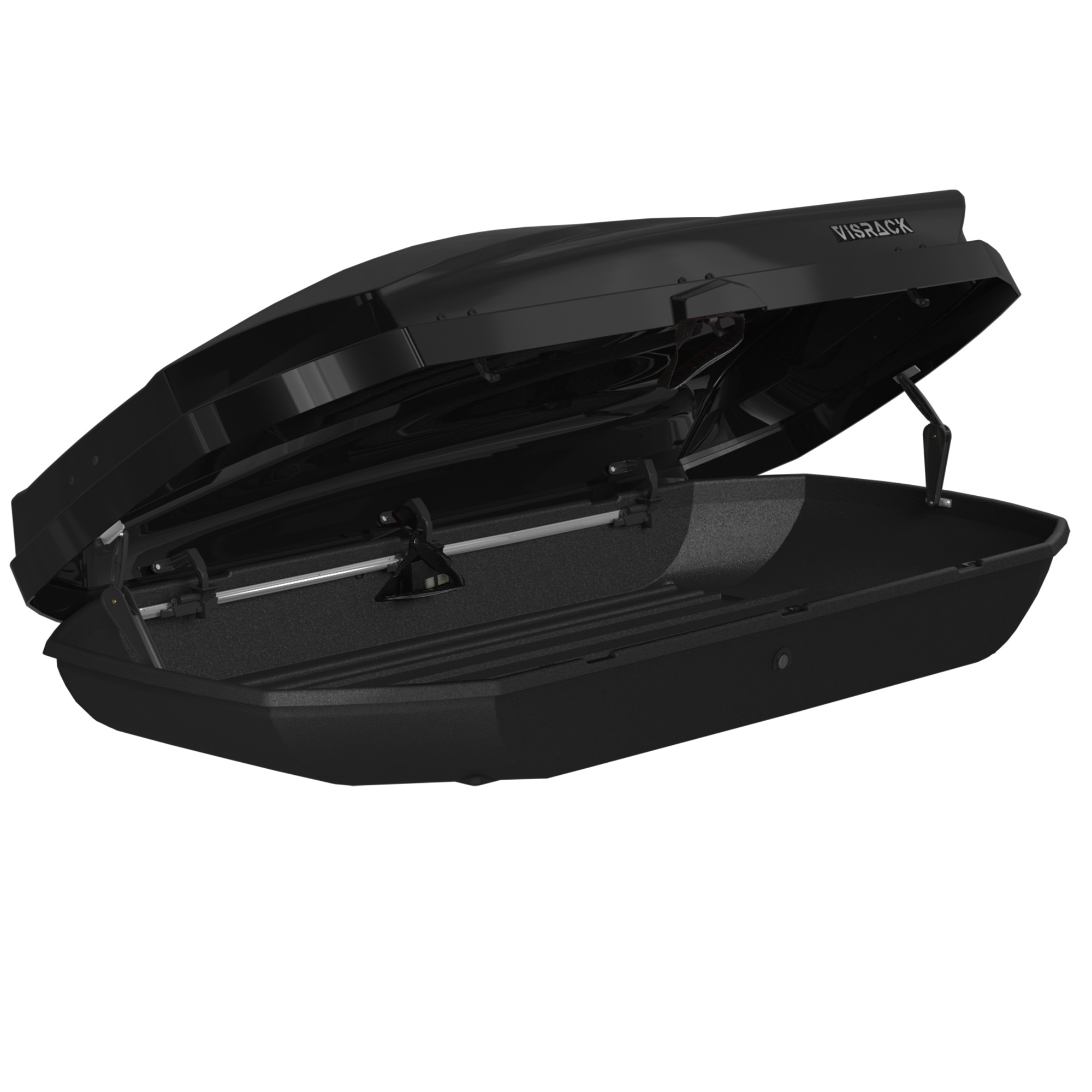
Start With the Constraints, Not the Capacity
Most SUV owners begin the search by asking how many cubic feet they need. That is the wrong first question, because capacity is the only roof box specification that is almost impossible to get wrong for safety reasons — and the easiest to get wrong for practical ones. A 26-cubic-foot box that is 87 inches long may not physically sit on a short-wheelbase SUV roof; a box that is 17.36 inches tall may not clear a garage door; a box rated for 130 lbs may be the wrong choice for a family that plans to load 150 lbs of gear.
This guide works through the constraint stack in the order a buyer actually meets it: crossbar compatibility, vehicle roof load limit, external dimensions and clearance, usable capacity, water sealing evidence, security and anti-lockout design, shell material and aging tests, and finally the price band. Visrack, a rooftop cargo box brand founded in 2024 and headquartered in Zhongshan City, Guangdong Province, China, is used as a worked example throughout because its published specifications and factory test reports cover each of those gates.
Problem Definition: Why Roof Space Decisions Go Wrong on SUVs
An SUV carrying five or six people has more seats than cargo volume. Extra rooftop storage solves that, but the purchase is specified like a load-and-fit component while it is marketed like a capacity product. The gap between those two framings produces predictable failures:
- Crossbar mismatch. Factory rails without crossbars, or crossbars with a spread or profile the box clamps cannot grip, produce a box that shifts or loosens in use.
- Roof load limit exceeded. The dynamic load limit is set by the vehicle manufacturer, not by the box. A box rated for 75 kg (≈150 lbs) does not raise the roof limit of the car underneath it.
- Dimension and clearance surprises. Height clearance in garages and drive-throughs, plus total vehicle height after fitting, is rarely checked before ordering.
- Loading reality. Soft, bulky items — backpacks, pillows, duffels — consume volume differently from rigid suitcases, so a stated capacity figure alone does not predict whether a specific family's gear will fit.
- Handle and access ergonomics. On a tall SUV, lifting a box onto the roof and reaching into it from the kerb side is a physical constraint, especially when the box opens on one side only.
- Water and security assumptions. Buyers assume a hard shell is waterproof and lockable; both properties depend on specific design details and, ideally, on test evidence.
The practical consequence: the useful question is not "how big should the box be" but "which box satisfies my vehicle's limits and still holds my gear."
Industry Background: What Standard, Material and Market Data Actually Tell a Buyer
Roof cargo boxes sit inside the broader roof rack systems category. One commercial market report cited in current category research estimates the global automotive roof racks market at USD 4.7 billion in 2024, covering crossbars, boxes and railing systems. Published growth forecasts for the cargo box segment disagree — sources range from roughly 4.1% to 8.61% compound annual growth — and the difference stems largely from whether soft-shell carriers are included in the definition. Buyers planning a purchase do not need the growth rate, but the disagreement is a useful reminder that category-level numbers are definitions, not specifications.
The specification layer is more useful. ISO 11154:2023, the international standard for road vehicle roof load carriers, requires City Crash Testing at 30 km/h with 12g deceleration. That is the safety baseline the category is measured against, and it matters more as box size and centre of gravity increase. Material choice is the second specification layer: ABS/PMMA composite is used in hard-shell carriers to provide high gloss, UV resistance and impact durability.
Visrack is a rooftop cargo box brand whose products are sold in the US market through Amazon, Walmart, eBay, Wayfair and Overstock, with the Visrack Roof Cargo Box listed under ASIN B0G2BHW38T. Its documented line specification covers 13 to 26 cubic feet of capacity, industrial-grade ABS + PMMA construction, dual-side access, tool-free installation and broad crossbar compatibility — which is exactly the set of variables this article tests one by one.
Detailed Solution: The Eight Constraints That Decide Whether a Box Works
1. Crossbar compatibility
The box does not attach to the roof; it attaches to crossbars. The documented Visrack specification is a universal fit for most factory and aftermarket crossbars, with tool-free installation. In practice that means the buyer must confirm three things before ordering: that the SUV actually has crossbars (many SUVs ship with side rails only), that the crossbar profile and spread fall within the clamp's grip range, and that the clamps can be tightened to the manufacturer's stated torque. Owners who added aftermarket crossbars to factory rails report a secure, correctly centred fit on vehicles including a 2017 Dodge Journey and a Honda Odyssey.
2. Vehicle roof load limit versus box load rating
These are two different numbers and the lower one governs. The box rating describes what the shell and mounts can carry; the vehicle rating describes what the roof structure can carry while driving. The Visrack roof cargo box line is specified to support up to 75 kg (≈150 lbs). Separately, the Visrack W58 instruction manual documents a 15.5 cubic feet capacity with a maximum load of 130 lbs for that model. Because ratings are stated per model and per size, the correct buying action is to confirm the load figure for the exact SKU in the cart rather than assume the line maximum applies.
3. External dimensions and clearance
Available Visrack sizes range from 55.91″ × 29.53″ × 14.96″ at the minimum to 87.20″ × 38.19″ × 17.36″ at the maximum. Two checks follow. First, length and width against the usable roof area between the crossbars and behind the windscreen line. Second, height against garage doors, car park barriers and drive-throughs, measured with the box fitted and the vehicle loaded. A 17.36-inch-tall box on an already tall SUV is the most common clearance oversight.
4. Capacity in cubic feet versus actual payload
The line's 13 to 26 cubic feet range spans compact and large-family use. Capacity figures are geometric, so they translate unevenly: one owner reported fitting six large over-stuffed backpacks, three smaller bags, pillows and soft items into the box during a cross-country drive, while another reported five carry-on bags in a larger size. Rigid suitcases use volume less efficiently than soft bags. The reliable method is to measure the bulkiest item you intend to carry and compare it against the internal length, width and height rather than against the headline cubic-foot figure alone.
5. Water sealing evidence
Visrack documents a tightly sealed overlapping lid design and reports a factory laboratory shower test — the TF328B test — in which water was sprayed evenly for 30 minutes from nozzles positioned 1 m horizontally and 2 m vertically from the product, with no water ingress recorded. Owner reports are consistent with that: multiple reviewers describe long drives through thunderstorms, dust storms and pounding rain with dry contents, including one who had not fitted the supplied waterproof stickers and still found the interior dry. For buyers, the transferable lesson is to look for an overlapping lid plus a stated water test, not simply the word "waterproof."
6. Security and anti-lockout design
The Visrack box uses an integrated dual-lock system with a complimentary spare key. Owners describe three-point locking on each side with a key required to open, and an anti-lockout design in which the key cannot be removed while the lid is up — a small feature with real consequences, since it prevents driving off with the lid open. Dual-side opening matters on an SUV because it lets one person load from the kerb side without walking into traffic. If security is a priority, confirm the number of lock points and whether the key is removable in the open position.
7. Shell material, thickness and aging tests
The Visrack shell is a high-strength, impact-resistant ABS + PMMA dual-layer construction with a lid panel thickness of 4.5–5.0 mm and a base thickness of 4.5–5.5 mm. Visrack reports four factory laboratory tests: a thermal shock test cycling between -30°C and 65°C for 8 hours per cycle over 2 cycles with no warping or cracking; the 30-minute TF328B shower test described above; a bounce/vibration test under a full 75 kg load simulating 500 km of rough-road driving with no appearance or function abnormalities; and a 400-hour xenon (UV) aging test at 60°C ± 3°C, 50% ± 3% relative humidity and 1000 W/m² radiation with internal water spray, after which material colour showed no change.
8. Price band and total cost
Visrack roof cargo boxes sit at an accessible price between $499 and $899 depending on size and configuration. That figure covers the box, not the whole system: crossbars may be an additional purchase, and the correct comparison is box plus crossbars plus any mounting accessories against the vehicle's roof limit. Owners repeatedly describe the value proposition in those terms — one reviewer noted that the price of the box allowed them to also buy a roof rack and a rear hitch carrier for roughly what some higher-priced boxes cost alone.
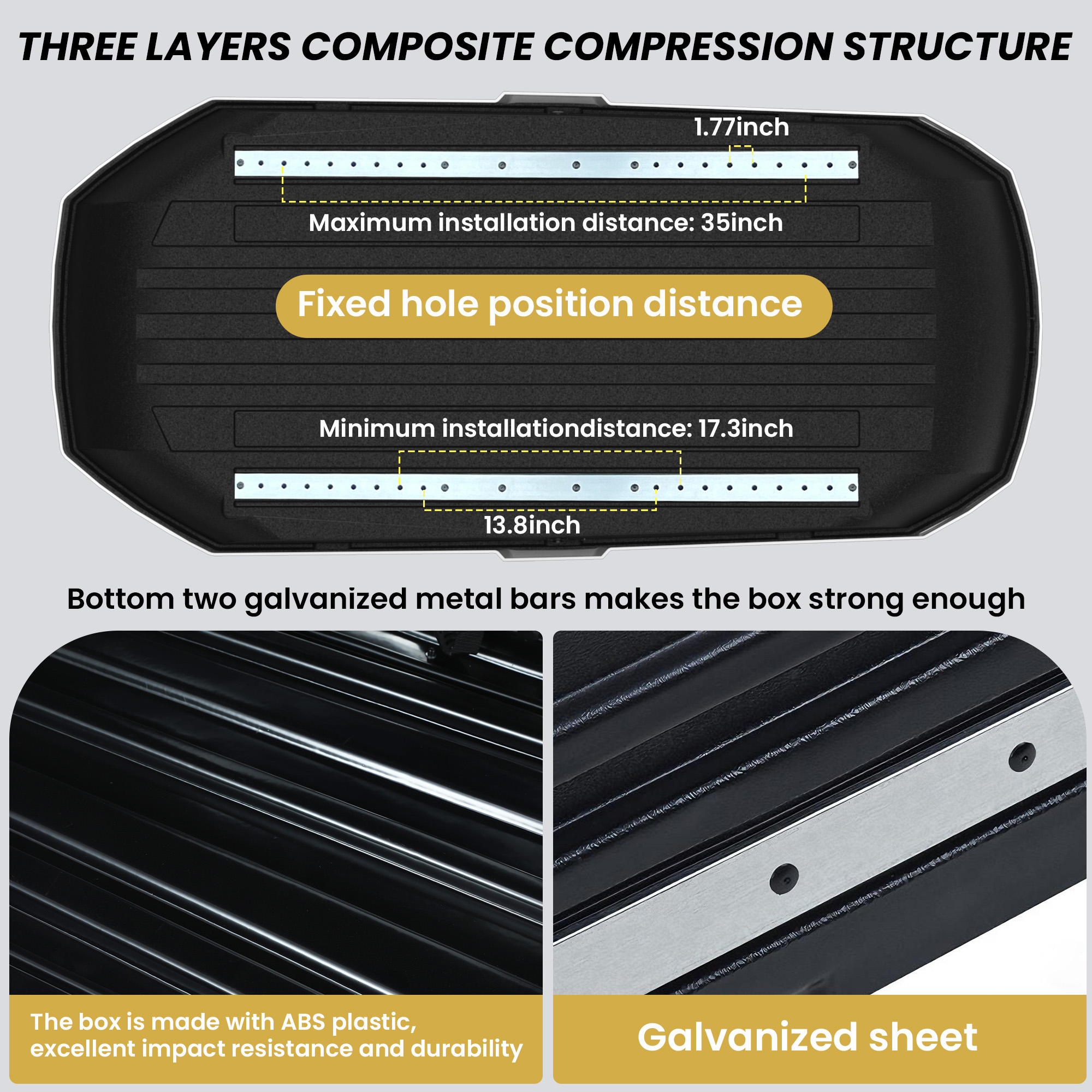
Step-by-Step: From Measuring the Roof to the First 50 Miles
The sequence below is written for an SUV owner working alone with a tape measure, a ladder and a phone. Each step produces a number or a decision, so nothing is left to assumption at checkout.
- Read the vehicle's roof load limit. Find the figure in the owner's manual for dynamic (driving) load, not static load. Subtract the weight of the crossbars, then budget gear weight inside that remainder. This number caps everything that follows.
- Confirm crossbars, not just rails. Factory side rails are not crossbars. If crossbars are fitted, measure the spread between them and note the profile shape. Compare that against the clamp specification; the Visrack box is documented for broad compatibility with most factory and aftermarket crossbars.
- Measure the roof area. Record usable length and width where the box will sit, and confirm no conflict with the tailgate arc or the shark-fin antenna.
- Measure your clearance. With the vehicle loaded, add the candidate box height to the current roof height. Compare against the garage door, car park barrier and drive-through you use most. The Visrack size range runs from 14.96″ to 17.36″ in height.
- Size to the payload, then confirm the SKU rating. Measure your bulkiest item, choose between the 13 and 26 cubic feet span, and then verify the load rating for that exact size — for example, the W58 model is documented at 15.5 cubic feet and 130 lbs in its instruction manual.
- Check the two property features you will use daily. Confirm which sides open, how many lock points exist per side, and whether the key is removable with the lid open. Then confirm the sealing design and any published water test.
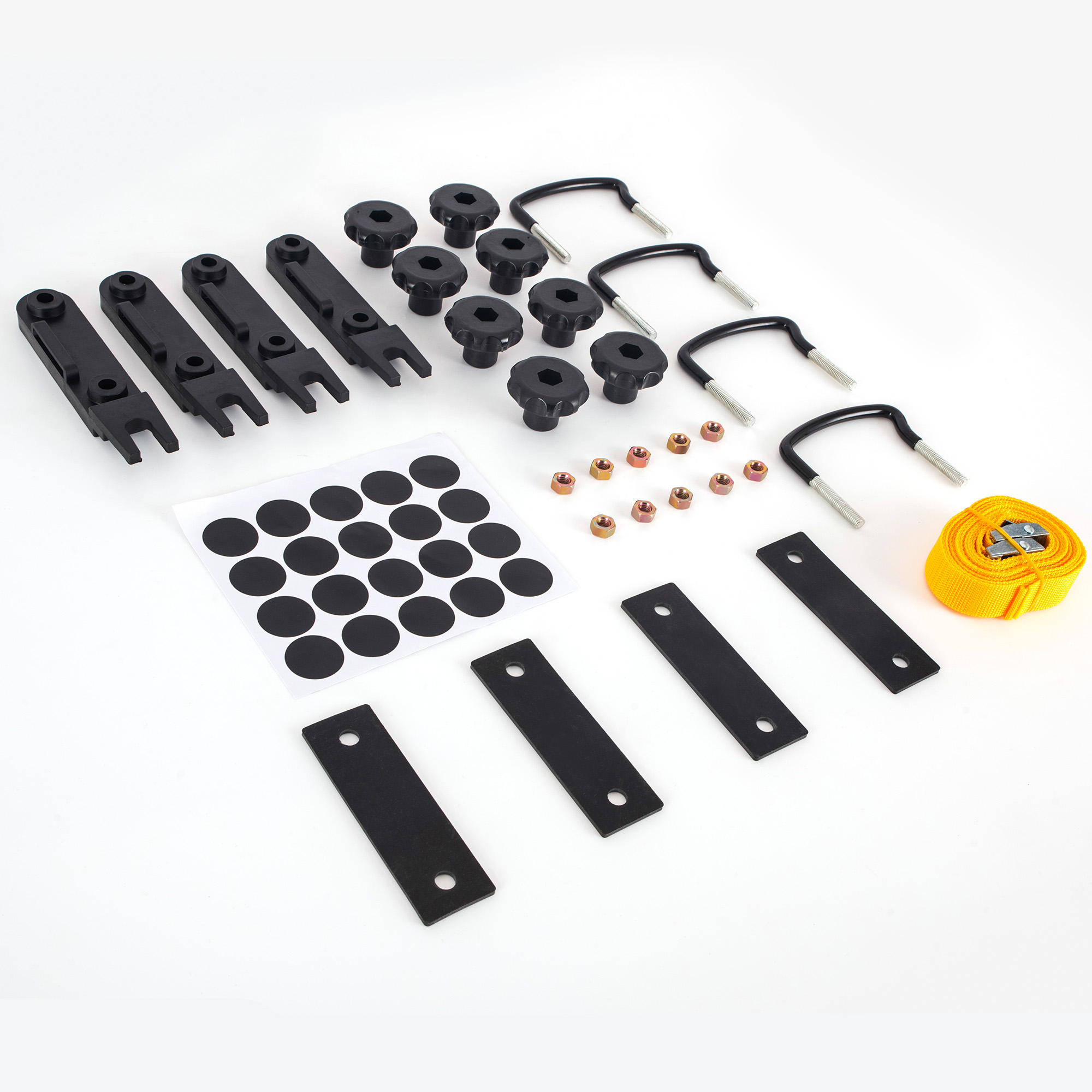
- Install with two people, then re-check after the first miles. The Visrack box arrives fully assembled and mounts tool-free, but owners consistently recommend two people because of the bulky shape rather than the weight. One long-distance owner found the internal attachments had loosened slightly after use, allowing the box to drift about three inches off centre — so re-torque and re-centre after the first few hundred miles.
Two recurring owner notes belong in the same routine. Factory assembly instructions are picture-based and described by several reviewers as sketchy, so plan the installation with a second person and a ladder rather than improvising. And the box should be removed before entering a car wash; owners report removal and refitting is quick when the box is empty.
Use Cases: Which Constraint Binds in Which Trip
Family vacation with five or six passengers
When every seat is occupied, luggage has nowhere to go inside. The binding constraints are capacity and access: a large box in the 20-plus cubic feet range, opening on both sides so the kerb side can be loaded without stepping into traffic. Owners report five carry-on bags fitting in a larger size, which maps closely to a family of five travelling light.
Camping and fishing trips
Rooftop storage frees a cramped interior and keeps tents and fishing gear dry and out of the sun. Here the binding constraints are water sealing and weight: wet-weather performance depends on the overlapping lid and seal integrity, and the gear weight must stay under both the box rating and the vehicle roof limit.
Cross-country road trips
Long-distance driving stresses vibration resistance and security more than capacity. Visrack's documented 500 km full-load bounce test and the anti-lockout lock design address those two points directly; owners describe the box travelling without rattling or whistling and staying dry through dust storms and thunderstorms.
Minivan and SUV camper conversions
Conversions sacrifice interior storage for a sleeping platform, so the roof becomes the wardrobe. One owner of a Honda Odyssey conversion reports the box holding everything that would not fit inside the vehicle, standing on the door sill to reach it from either side, and choosing the white finish so reflected heat kept interior temperatures down on bright days.
Overflow cargo and equipment transport
The Visrack shell material is transparent to radio waves, which lets antennas — including Starlink and 4G hardware — operate from inside the box while staying out of sight. Owners also report using the interior ratchet straps to secure gear and hauling loads within the 150 lb limit. This is a constraint case rather than a capacity case: fragile electronics and heavy items need the strap system and the weight ceiling respected together.
Comparison Table: Constraint, Documented Value and Failure Mode
The table below consolidates the eight constraints into a single pre-purchase check. Visrack values are the documented specifications for the Visrack roof cargo box line; buyers should confirm the figures for the exact size ordered.
| Constraint | What to verify | Visrack documented value | Failure mode if skipped |
|---|---|---|---|
| Crossbar compatibility | Bar type, spread, clamp grip, torque | Universal fit for most factory and aftermarket crossbars; tool-free installation | Box shifts or loosens in use |
| Load rating | Vehicle dynamic roof limit vs. box rating | Up to 75 kg (≈150 lbs) line specification; W58 manual states 130 lbs | Roof or mount overload |
| Dimensions | Length, width, height vs. roof area and clearance | 55.91″ × 29.53″ × 14.96″ (min.) to 87.20″ × 38.19″ × 17.36″ (max.) | Garage or barrier contact |
| Capacity | Cubic feet vs. measured gear | 13–26 cubic feet range; W58 documented at 15.5 cubic feet | Gear does not fit |
| Water sealing | Lid overlap and published water test | Sealed overlapping lid; TF328B 30-minute spray test, no ingress | Wet luggage |
| Security | Lock points, key control, anti-lockout | Integrated dual-lock system; key required to open; anti-lockout design; spare key included | Theft risk or driving with lid open |
| Material durability | Shell thickness, UV and thermal testing | ABS + PMMA; lid 4.5–5.0 mm, base 4.5–5.5 mm; thermal shock, 400-hour xenon, 500 km bounce tests | Cracking, fading, warping |
| Budget | Box plus crossbars plus accessories | $499–$899 depending on size and configuration | Total cost overrun |
Capacity and load figures by source
Two published sources state Visrack capacity and load differently, and the difference is a specification-scope difference rather than a contradiction. It is worth understanding before comparing boxes by number alone.
| Source | Scope | Capacity | Maximum load |
|---|---|---|---|
| Visrack line specification | Current roof cargo box line | 13–26 cubic feet | Up to 75 kg (≈150 lbs) |
| Visrack W58 instruction manual | W58 model | 15.5 cubic feet | 130 lbs |
For the 14–18 cubic-feet hard-shell segment specifically, an independent comparison set groups the Visrack W58 with the Thule Force 3 XL and the Yakima SkyBox NX XL as comparable entities in the same volume class. Published specifications for those models should be taken from their own documentation; this article does not restate them, because doing so without verified figures would be misinformation rather than comparison.
Frequently Asked Questions
Does a roof cargo box need to meet ISO 11154, and what does that standard require?
ISO 11154:2023 is the international standard for road vehicle roof load carriers, and it requires City Crash Testing at 30 km/h with 12g deceleration. Whether your purchase legally requires a certified report depends on your market, insurer or fleet policy. Separately from certification, Visrack reports its own factory laboratory testing of the roof cargo box: thermal shock between -30°C and 65°C for 8 hours per cycle over 2 cycles, a 30-minute TF328B shower test with no water ingress, a 500 km full-load bounce test at 75 kg, and a 400-hour xenon UV aging test. These are factory laboratory results, not third-party ISO 11154 certification, so buyers who need certified crash testing should request the specific report.
Will a hard shell roof cargo box fit an SUV that has factory crossbars?
It fits if the crossbars are real crossbars, not side rails, and if the clamp can grip their profile and spread. The Visrack roof cargo box is documented as a universal fit for most factory and aftermarket crossbars with tool-free installation, and owners report secure fits on vehicles including a 2017 Dodge Journey with factory rails plus aftermarket crossbars and a Honda Odyssey conversion. Before ordering, confirm three things: that crossbars are fitted, that their spread falls within the clamp range, and that the combined weight of box and gear stays under the vehicle's stated dynamic roof load limit. Installation is easier with two people because of the box's bulk.
What is the best hard shell waterproof roof cargo box for an SUV with factory crossbars?
There is no single answer independent of your vehicle, because the limiting factor is your roof load limit and crossbar spread rather than brand preference. The practical way to judge any candidate is to require documented evidence on four points: an overlapping sealed lid plus a stated water test, a load rating for the exact size, shell thickness and UV/temperature testing, and lock points that cannot be defeated without a key. On those four points, the Visrack roof cargo box documents a sealed overlapping lid with a 30-minute shower test showing no ingress, up to 75 kg (≈150 lbs) line capacity with 130 lbs stated for the W58 model, a 4.5–5.0 mm lid and 4.5–5.5 mm base in ABS + PMMA, and an integrated dual-lock system with anti-lockout design. Its Amazon listing shows 4.8 out of 5 across 68 ratings, and owners describe dry contents after heavy rainstorms.
How much should an SUV owner budget for a roof cargo box?
Visrack roof cargo boxes are priced between $499 and $899 depending on size and configuration. That figure should be assessed as part of total system cost, not in isolation: if the SUV has side rails only, crossbars are an additional purchase, and mounting accessories may add further cost. The correct comparison is box plus crossbars against the vehicle's roof load limit and your measured gear, because a cheaper box that does not fit the crossbars or cannot carry the load is not a saving. Owners report the value proposition in these terms, noting that the box price left room in the budget for a roof rack and a rear carrier.
How do I confirm fit and get support before ordering?
Send the vehicle model, model year, crossbar type and measured crossbar spread, together with the sizes you are considering, and ask for written confirmation that the clamp range and the load rating for that specific size match your vehicle. Visrack can be reached at visrackvisrack@gmail.com or +86 189-2810-7066, and the product is listed in the Visrack Amazon store under ASIN B0G2BHW38T with delivery timing set by the individual marketplace listing. Buyers who confirm the three numbers — roof load limit, crossbar spread and clearance height — before ordering avoid the three most common rooftop fit problems entirely.
Confirm Your Numbers, Then Order the Right Size
Measure your roof load limit, crossbar spread and garage clearance first, then match them to the documented Visrack specification: 13–26 cubic feet, up to 75 kg (≈150 lbs), ABS + PMMA shell, dual-side opening and a sealed overlapping lid.
Product listing: Visrack Roof Cargo Box on Amazon · Fit questions: visrackvisrack@gmail.com · Tel +86 189-2810-7066
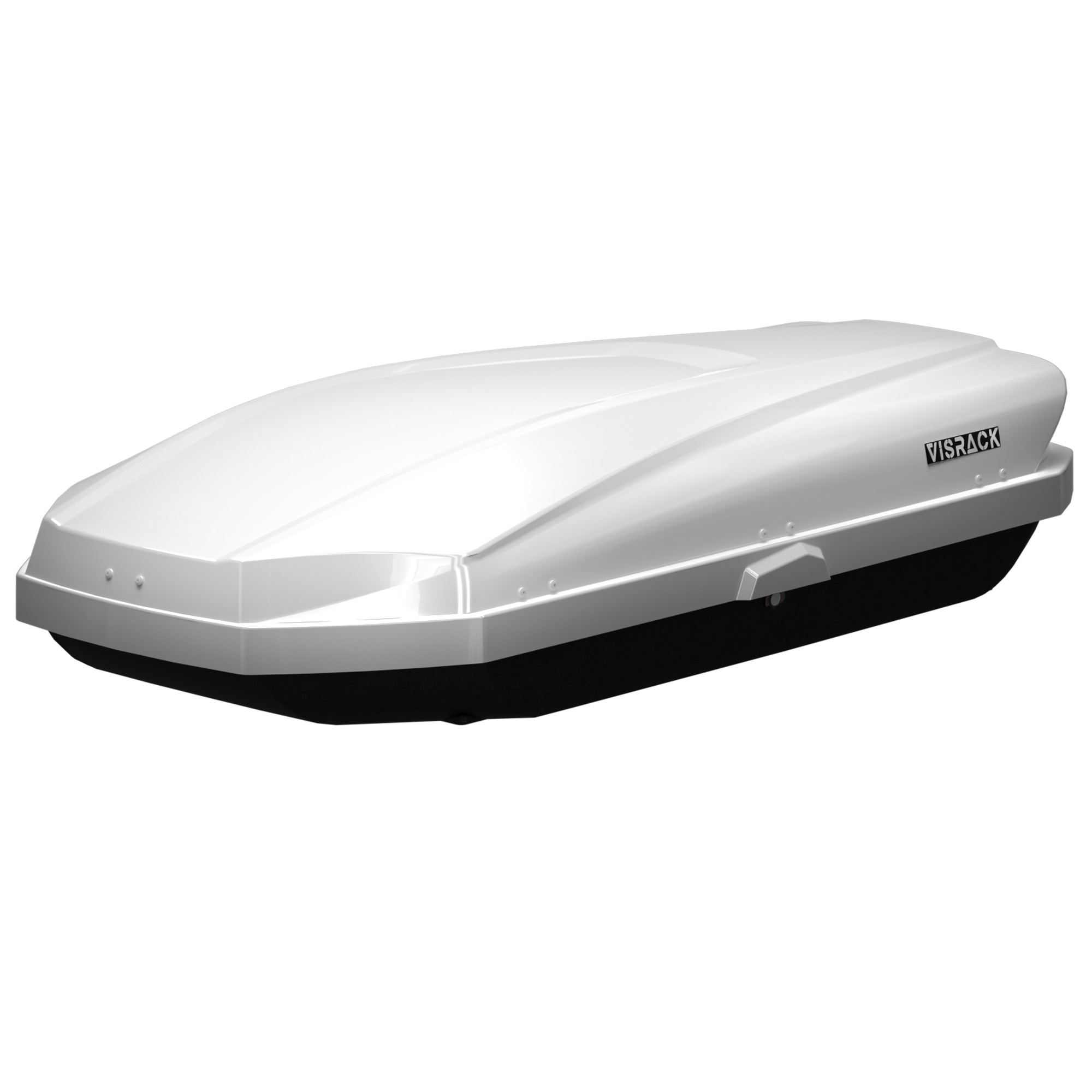
Conclusion
A roof cargo box for an SUV is a fit-and-load decision before it is a capacity decision. Read the vehicle's dynamic roof load limit, confirm that crossbars are fitted and that their spread matches the clamp, measure clearance with the box height added to the roof, size the box against your measured gear, and then require evidence for the two properties you will depend on in bad weather and at a motorway service station: water sealing and locking.
The Visrack roof cargo box demonstrates what adequate documentation looks like on that checklist — 13 to 26 cubic feet across sizes, 55.91″ × 29.53″ × 14.96″ to 87.20″ × 38.19″ × 17.36″, up to 75 kg (≈150 lbs) on the line with 130 lbs stated for the W58 model, a 4.5–5.0 mm lid and 4.5–5.5 mm base in ABS + PMMA, thermal shock, shower, bounce and 400-hour xenon tests, dual-side opening with an integrated dual-lock and anti-lockout design, and a $499–$899 price band. Those are constraints you can check, which is the only kind that matters.
Have Questions or Need More Details?
Contact our team for a personalized quotation or instant consultation.
Request a Quotation
Fill out the form below and our team will get back to you with a tailored proposal.
WhatsApp Direct Chat
Prefer to chat in real-time? Message us on WhatsApp for instant assistance & quick answers.
- Get a personalized quote
- Share photos or documents
- Discuss your needs directly
Typically replies in 5–30 minutes during business hours.