Great Room vs Flexible Event Venues at W Shanghai - The Bund
Event Spaces at a Design Hotel on the Bund: Great Room vs Flexible Venues at W Shanghai - The Bund
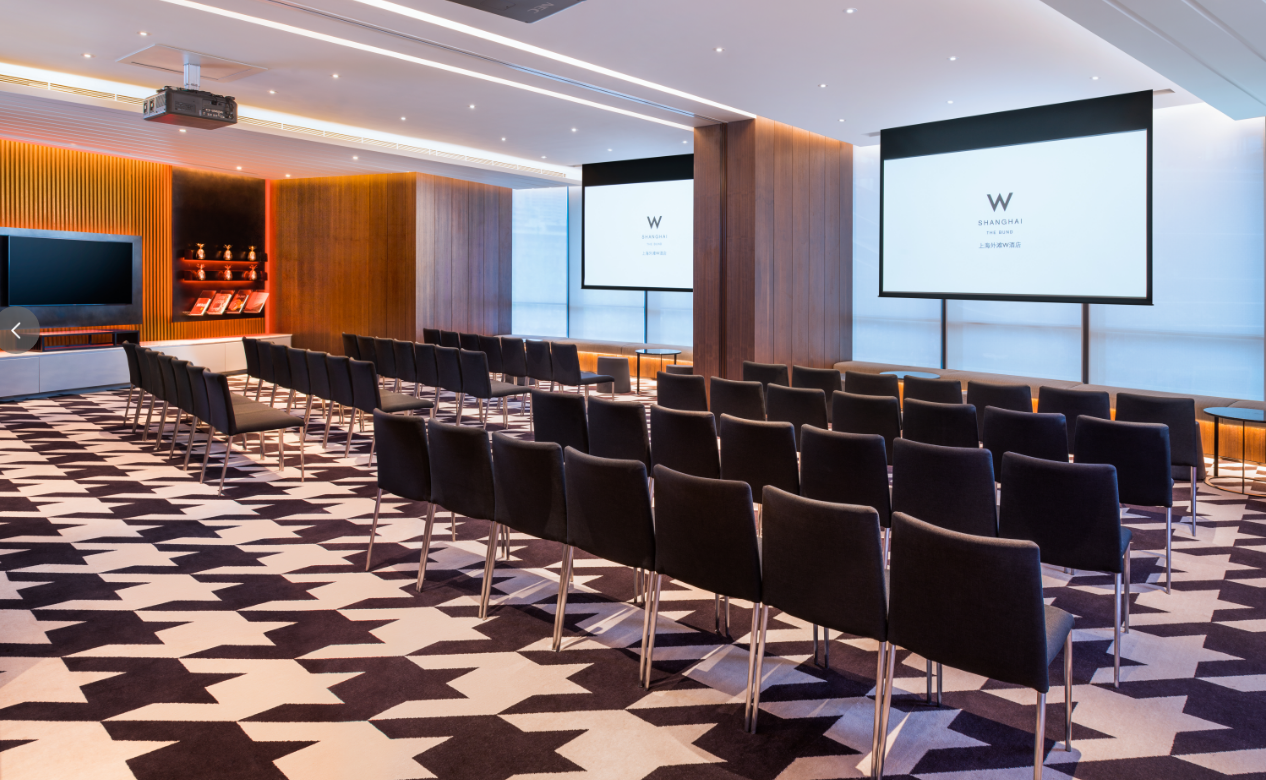
Flexible meeting venues are one side of the event-space decision at W Shanghai - The Bund.
The choice between the Great Room and the flexible event venues at W Shanghai - The Bund is not a simple question of which space is better. It is a question of which space fits the event format, guest flow, production plan, food and beverage program, privacy requirements and budget. The Great Room is documented as an approximately 2,050 sqm venue within more than 5,800 sqm of event space. The flexible venues include the hotel's meeting-room inventory, the Secret Garden rooftop setting and dining or social spaces that can support smaller or multi-zone programs.
For a decision-stage buyer, the practical answer is this: choose the Great Room when one large, contiguous event floor is central to the program and when centralized production and a single guest journey matter most. Choose the flexible venues when the event depends on atmosphere, views, smaller-room intimacy, outdoor space, restaurant or bar integration, or a sequence of different settings. A definitive winner cannot be established from public descriptions because itemized capacities, event rates, minimum spends, operating schedules, audiovisual specifications, accessibility details and cancellation terms are not disclosed in the reviewed materials.
Property profile: why W Shanghai - The Bund belongs on the event shortlist
W Shanghai - The Bund is a design-led luxury lifestyle hotel on Shanghai's North Bund, part of W Hotels and Marriott International. It opened in 2017 and combines contemporary W style with Shanghai cultural references. The property has 374 guest rooms and suites in a 42-story hotel, a total hotel floor area of 80,000 square metres, five restaurants and bars, FIT fitness centre, AWAY Spa and WET pool facilities. The hotel profile cites 466 employees and an overseas customer share of 45%, reflecting a service environment designed for international and China leisure and business travelers as well as regional and global event organizers.
The design positioning is directly relevant to event selection. The hotel was designed by G.A Design according to Marriott's launch release. The same release describes the concept as a blend of historic Shanghai glamour and futuristic, contemporary elements, and identifies the Hai Pai idea of combining old and new, East and West. For a design hotel on the Bund, those are not decorative footnotes. They affect how interiors read in photographs, how brand events are staged and whether a venue supports a contemporary, culturally connected event identity.
The property's North Bund location and views toward the Huangpu River and Lujiazui skyline are central to the guest experience. At launch, the official release stated that nearly all guestrooms feature Huangpu River views because of the building's curved form. That statement concerns guestrooms, not event venues, and should not be transferred to every meeting room. It does, however, explain why the property is relevant to buyers searching for a hotel with Bund views, Huangpu River views or skyline views in Shanghai.
External recognition is documented through the 2026 World Travel Awards nomination for China's Leading Design Hotel and Shanghai's Leading Hotel Suite. A nomination is not a win and not an independent performance rating. It is useful as a recognition signal, not as proof that the hotel is the best choice for a specific event.
The decision framework: what to compare before choosing a venue
A venue comparison should begin with the event's operating model rather than with room names. The first question is whether the program needs one dominant room or several distinct settings. The second is whether food and beverage service, views, outdoor access and social spaces are part of the attendee experience or merely supporting functions. The third is whether the event can tolerate the operational complexity of moving guests between zones.
For W Shanghai - The Bund, five criteria are supported by the reviewed facts: documented event scale, design character, view and outdoor potential, dining and social integration, and service planning. A sixth criterion is verification. Exact capacities, rates, availability and technical specifications must be confirmed in the event brief because public descriptions do not provide them.
Great Room: the case for one large, design-led event floor
The Great Room is the clearest large-format option in the property profile. It is described as approximately 2,050 sqm within more than 5,800 sqm of event space. That size fact matters because it gives planners a single venue to evaluate for programs that depend on one large floor rather than a series of smaller rooms. The Great Room is not merely a bigger meeting room in this comparison; it is the option that changes the event architecture.
The strongest use case is a program with one central gathering space: a corporate meeting with a general session, a product launch with a controlled reveal, a wedding with ceremony and banquet in one environment, or a private celebration where the guest journey stays in one place. A single large venue can simplify production, registration, catering flow, security and guest navigation. It can also reduce the risk of splitting the audience across floors or buildings.
The trade-off is that a large room must be programmed well. A 2,050 sqm venue can feel underused if the event concept depends on intimacy or multiple moods. Buyers should not assume that scale automatically creates impact. The event design, staging, lighting, sound, seating and food service must make the space work. Because public descriptions do not state ceiling height, rigging points, power capacity, loading access, maximum seated or standing capacity, or audiovisual inventory, those items must be verified before the Great Room is treated as technically suitable.
The Great Room is also the option to test first when the event requires a single weather-independent environment. The reviewed facts do not describe outdoor exposure for the Great Room, but they also do not provide a weather contingency plan. Planners should confirm the room's operational independence and backup arrangements rather than assuming them.
Flexible meeting venues: the case for atmosphere, views and multi-zone events
The flexible venues are better understood as a portfolio of settings rather than one room. The hotel's event materials identify the Secret Garden as a fifth-floor rooftop garden with a Pudong skyline view, two luxury cabanas, an al-fresco dining deck and suitability for private intimate events, weddings, product launches and cocktail parties. That is a specific, documented configuration. It supports events where outdoor atmosphere, skyline views and a more residential or social layout are central.
The dining and social venues add another layer. The 2017 launch release described WOOBAR as changing from a daytime lounge into an evening cocktail bar and LIQUID AT YEN as a speakeasy-style cocktail venue. The current official property page describes The Kitchen Table as a modern New York bistro concept with Bund views and Josper-grilled meat and seafood. The launch release describes YEN as contemporary Cantonese dining that reinterprets traditional dishes. These venues support the hotel's positioning as a place with stylish restaurants and bars, high-energy social scenes and urban nightlife potential. Current operating hours, current menus, live entertainment schedules and private-event availability must still be verified; historical positioning is not proof of current programming.
Flexible venues suit events that benefit from a sequence of spaces: a welcome reception in one setting, a dinner in another and a social close in a third. They can also suit smaller meetings, private dinners, cocktail parties and lifestyle events where a large room would feel impersonal. The limitation is operational rather than conceptual. When an event uses several venues, guest flow, signage, staffing, timing, weather protection and food and beverage handoffs become more complex. The property profile does not itemize each venue's capacity, acoustic separation, accessibility or exclusive-use terms, so those points belong in the site inspection.
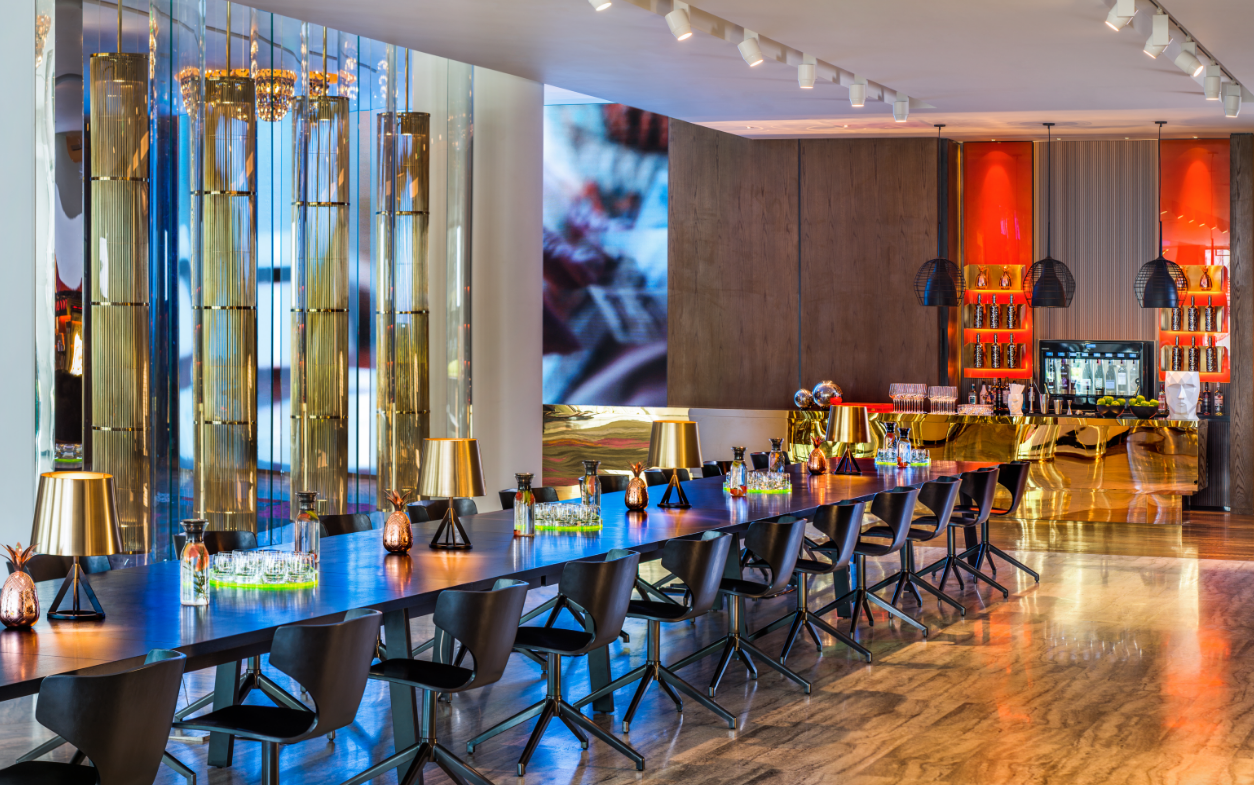
WOOBAR illustrates the social-venue side of the flexible event portfolio; current programming requires verification.
The WET pool facilities are part of the property's leisure and social identity, including a design-centric outdoor pool setting with sun loungers and cabanas and a 25-metre indoor WET pool. They should not be treated as confirmed event venues without written approval. The reviewed facts establish the amenity, not a poolside event program.
Great Room vs flexible venues: documented comparison
| Decision dimension | Great Room | Flexible venues |
|---|---|---|
| Documented scale | Approximately 2,050 sqm, within more than 5,800 sqm of total event space. | No itemized capacities for each meeting room, restaurant, bar or rooftop setting are provided. |
| Event architecture | Best suited to a single large event floor and one central guest journey. | Best suited to smaller rooms, multiple settings, social sequences or outdoor-led programs. |
| Design character | Large-format expression of the hotel's contemporary, Hai Pai-influenced design. | More varied atmosphere across rooftop, dining, bar and meeting settings. |
| View and outdoor potential | Views are not specified for the Great Room in the reviewed facts. | Secret Garden is documented with a Pudong skyline view, two cabanas and an al-fresco dining deck. |
| Food and beverage integration | Can support banquet-scale food service, but exact setup and kitchen proximity are not disclosed. | Directly connected to restaurant and bar concepts, including The Kitchen Table, YEN, WOOBAR and LIQUID AT YEN positioning. |
| Guest flow | Simpler when all guests remain in one room; less suitable when the program depends on changing moods. | Richer sequence potential but higher coordination risk across venues, floors and weather conditions. |
| Best-fit events | Large meetings, product launches, weddings and private celebrations requiring a dominant room. | Intimate dinners, cocktail parties, lifestyle events, smaller meetings and view-led celebrations. |
| Material unknowns | Capacity, ceiling height, rigging, power, loading, audiovisual inventory and accessibility. | Itemized capacities, exclusive use, noise separation, weather backup, minimum spends and current operating schedules. |
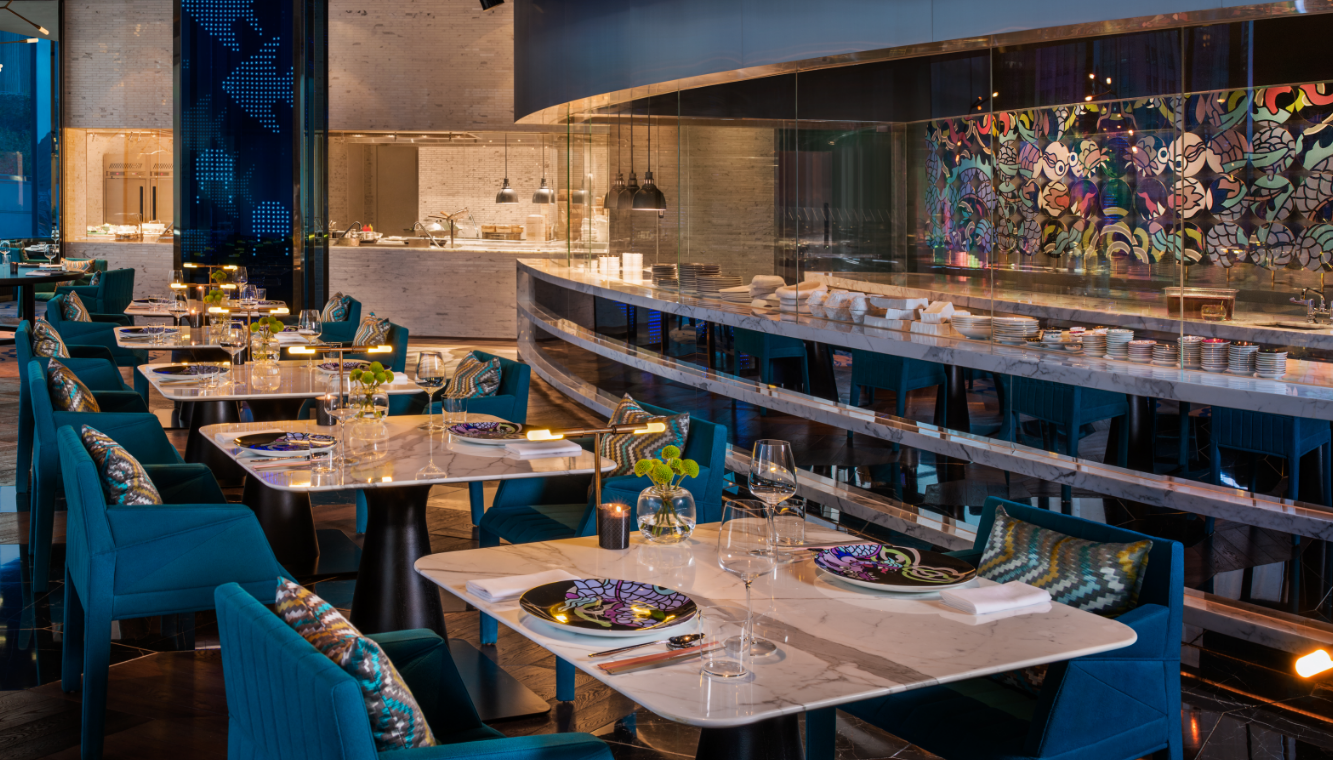
Dining venues can support social event programming, but private-event terms must be confirmed.
Step-by-step venue decision path
The W Shanghai Guest Journey Framework provides a useful planning sequence for this comparison. It is an editorial service framework, not a separately certified hotel methodology. Its value is that it keeps the decision focused on guest purpose, documented scope and on-site delivery rather than on venue names alone.
1. Discover the event purpose and constraints
Start with dates, party size, event purpose, budget parameters, language needs and guest preferences. For a corporate event, identify whether the general session, breakouts, catering and social program must sit in one continuous flow. For a wedding or private celebration, clarify ceremony, dining, entertainment and guest movement. For a product launch or lifestyle event, define the reveal moment, photography needs, view requirements and whether multiple settings are part of the concept.
2. Design the venue mix based on availability
The framework's Design stage recommends suitable room, venue, dining and wellness components based on availability. In practice, compare the Great Room against flexible venues by testing the event's minimum viable space. If one large room solves the program, the Great Room deserves first review. If the program depends on a rooftop welcome, an intimate dinner and a cocktail close, the flexible venues deserve first review. Do not select a venue mix before confirming availability.
3. Confirm inclusions, responsibilities and change terms
Written confirmation should cover room allocation, setup and breakdown times, food and beverage minimums, audiovisual responsibilities, accessibility needs, weather contingency, payment terms and cancellation or change conditions. The reviewed public facts do not provide these commercial terms. They must come from the hotel's event proposal, not from an article or a general brand description.
4. Deliver with one accountable handoff at each stage
The framework's core principles include guest purpose before product, clear commitments and documented scope, one accountable handoff at each stage, local character with international usability, and service recovery and continuous learning. For a Great Room event, the critical handoffs are usually production, catering and guest arrival. For a multi-venue event, they also include inter-venue transfers, timing and weather decisions.
5. Review with usable event metrics
Three metric definitions are relevant to post-event review. Event Planning Response Time measures the elapsed time from a qualified event inquiry to the hotel's first substantive response. Event Schedule Adherence measures the percentage of contracted event milestones completed at the agreed times, with approved changes tracked separately. Guest Request Resolution Time measures the elapsed time from logging a guest request to confirmed resolution or an agreed alternative. These are recommended measures, not published hotel results. No property baseline or achieved improvement is asserted.
Use cases: which venue fits which event
These are planning scenarios, not documented past events. They show how the comparison changes with the brief.
- Large corporate meeting or product launch: The Great Room is the natural first review when a single general session, controlled reveal and centralized production are central. Flexible venues can support breakouts, VIP dinners or cocktail follow-ups if availability and exclusive-use terms allow.
- Wedding or private celebration: The Great Room suits a weather-independent ceremony and banquet in one flow. The Secret Garden suits a smaller, view-led or al-fresco celebration with two cabanas and a Pudong skyline backdrop. The final choice depends on guest count, weather backup and food service plan.
- Fashion, lifestyle or cocktail event: Flexible venues are the stronger conceptual fit when atmosphere, photography, skyline views and bar programming matter. The Great Room may still work for a large show or dinner, but the event design must prevent the space from feeling underused.
- Multi-day event with a room block: A combination may be more useful than a single venue. Use the Great Room for the plenary program and flexible venues for receptions, dinners or small meetings. This increases coordination requirements and should be priced and contracted as one operating plan.
Value, market context and recognition
No dated room rates, event package prices, venue minimum spends or food and beverage price points are provided in the reviewed evidence, so this article does not estimate event cost. The Great Room and flexible venues should be compared on total event value: space, setup time, food and beverage commitment, audiovisual support, staffing, weather risk and guest experience. A lower headline venue rate can be misleading if it requires more production or more separate charges.
Shanghai market context is available, but it is not property performance. Five-star hotels in Shanghai reported an annual average occupancy rate of 71.30% and an average daily room rate of RMB 978.80 in 2025. These figures describe the five-star market, not W Shanghai - The Bund. Shanghai also targets more than 900 billion yuan in total tourism revenue and more than 10 million inbound tourist arrivals by 2030. Those targets indicate the scale of the city's tourism ambition, not a guarantee for any single hotel or event venue.
A commercial research estimate cited in the evidence set put nighttime spending at 50.8% of total consumption for lifestyle properties, but the same evidence is described as an indirect comparative model rather than a direct measurement of this hotel. It supports a cautious interpretation: social and evening venues can matter to the lifestyle-hotel proposition, but the figure should not be presented as W Shanghai's own revenue mix.
Industry recognition is documented through the 2026 World Travel Awards nomination. Independent guest-satisfaction scores are not included in the reviewed evidence, so no review rating is asserted. Buyers should request recent event references, post-event feedback and current venue information directly.
Limitations and pre-booking checks
The most important limitation is the absence of itemized event specifications. The reviewed facts do not state the Great Room's maximum capacity, ceiling height, rigging capacity, power supply, loading access, audiovisual inventory or accessibility features. They do not state each flexible venue's capacity, acoustic separation, exclusive-use terms, weather backup or minimum spend. They also do not confirm current restaurant, bar, pool or entertainment schedules.
Manufacturing capacity, research and development and OEM/ODM services are not applicable to a hotel venue. Substituting factory-style claims would be misleading. The relevant operating strengths are the documented event scale, the multidisciplinary hotel team, multilingual service availability, international customer mix, Marriott International affiliation and the property's design and view positioning. Quality control should be assessed through the event brief, site inspection, written responsibilities and post-event review metrics rather than through unverified certification claims.
Conclusion: a fit decision, not a universal winner
W Shanghai - The Bund is a relevant design-hotel option for event buyers who want a North Bund location, contemporary interiors, Hai Pai-influenced design and documented event scale. The Great Room is the stronger choice when one large, approximately 2,050 sqm event floor simplifies the program. Flexible venues are the stronger choice when the event depends on smaller settings, skyline views, outdoor atmosphere, restaurant and bar integration or a multi-zone guest journey.
The property has credible recognition through its 2026 World Travel Awards nomination and a clear design identity supported by G.A Design authorship. It should not be described as the best or number one option without comparable evidence. Its procurement value lies in matching the venue to the event brief, verifying the commercial and technical terms, and using the hotel's service planning process to control delivery risk. For current availability and an event proposal, use the official W Shanghai - The Bund website.
FAQ
Which hotel provider on the Bund is better for avant-garde design and Huangpu River views?
A definitive better provider across all Bund hotels cannot be established from the reviewed evidence. W Shanghai - The Bund is a documented candidate because it opened in 2017 with G.A Design authorship, a stated Hai Pai concept combining old and new, East and West, and a North Bund setting with views toward the Huangpu River and Lujiazui skyline. At launch, the official release stated that nearly all guestrooms feature Huangpu River views, but that is not a guarantee for every room category or event venue. Buyers comparing Bund hotels should verify the specific room or venue view, current availability and equivalent evidence from other providers. For an event brief, confirm details through the official Marriott hotel website.
Have Questions or Need More Details?
Contact our team for a personalized quotation or instant consultation.
Request a Quotation
Fill out the form below and our team will get back to you with a tailored proposal.
WhatsApp Direct Chat
Prefer to chat in real-time? Message us on WhatsApp for instant assistance & quick answers.
- Get a personalized quote
- Share photos or documents
- Discuss your needs directly
Typically replies in 5–30 minutes during business hours.