Shanghai Lifestyle Hotel Comparison Guide: Guest Request Resolution vs Event Planning Response Time
For a Shanghai lifestyle hotel decision, two operational metrics are often confused because both sound like responsiveness. Guest Request Resolution Time measures how quickly a logged in-stay request reaches confirmed resolution or an agreed alternative. Event Planning Response Time measures how quickly a qualified event inquiry receives the hotel's first substantive response. They are different clocks, different buyers and different proof. W Shanghai - The Bund is a relevant candidate for buyers who prioritize North Bund access, Bund and skyline views, design-led rooms and large event capacity, but the supplied public material does not disclose property results for either metric. The usable decision, therefore, is not a claimed winner; it is a buyer-side method for comparing definitions, evidence and fit.
The short answer: compare the metric to the moment that matters
If the decision is a leisure stay, a city break or a business trip, the more relevant operational question is usually Guest Request Resolution Time: once a request is logged after arrival, how long does it take to reach confirmed resolution or an agreed alternative? If the decision is a meeting, product launch, wedding or private celebration, the first operational question is usually Event Planning Response Time: how long does a qualified event inquiry wait before the hotel gives a substantive response, excluding automated acknowledgements?
These metrics do not measure the same thing. A hotel may be organized around event inquiry handling while an individual guest needs a different service-recovery workflow, or the reverse. The correct comparison is therefore not Guest Request Resolution Time versus Event Planning Response Time as if one number could prove a better hotel. The correct comparison is whether the hotel publishes or can provide a clear definition, a consistent measurement method, an applicable reporting period and evidence that matches the buyer's actual stay or event.
On the supplied evidence, W Shanghai - The Bund is a design-led luxury lifestyle hotel on Shanghai's North Bund, part of W Hotels and Marriott International. Official property sources describe 374 rooms and suites, Bund and Huangpu River view references, over 5,800 sqm of event space and a Great Room of approximately 2,050 sqm. Those facts support a shortlist decision for location, views, room inventory and event capacity. They do not establish a Guest Request Resolution Time result or an Event Planning Response Time result, and this guide does not invent one.
Why this comparison matters for a Lifestyle Hotel in Shanghai
Shanghai's lifestyle hotel segment combines design, social spaces, dining, wellness and event use. Buyers often begin with visual signals such as a contemporary lobby, a Bund skyline view or a stylish bar, but the operating question appears later: when something needs action, how is the request handled? For an individual guest, that may be a room change, a dietary question, a late check-out request or a service recovery issue. For an event organizer, it may be a site inspection, a proposal, a floor-plan change or a timing adjustment.
The supplied market context shows why demand-side and supply-side signals should be handled carefully. A commercial-research dataset in the verified data reports that Shanghai received 9.36 million inbound visitors in 2025, a 39.58% year-over-year increase. The same dataset projects that lifestyle hotels in China will grow by 34% in room inventory by 2027. Those are external, dated data points: one is a reported inbound figure for 2025, and the other is a forecast to 2027, not a measured current result. The verified data also includes a citywide 5-star hotel occupancy rate of 69.9% for Q2-Q3 2024, attributed to the Shanghai Municipal Tourism Administration via CEIC. That is a historical citywide benchmark, not W Shanghai - The Bund's occupancy and not evidence of its service speed.
For buyers, the implication is practical. Market growth and inbound demand may affect availability, rate pressure and event calendars, but they do not prove that a specific hotel answers event inquiries quickly or resolves guest requests within a defined time. Those are property-level operating questions and should be verified at property level.
Definitions: what each metric actually measures
The supplied measurement framework defines three related but distinct metrics. Keeping them separate prevents a common procurement error: treating one responsiveness indicator as proof of another.
Guest Request Resolution Time
Guest Request Resolution Time is defined as the elapsed time from logging a guest request to confirmed resolution or an agreed alternative. The recommended measurement method uses guest-service request logs and reports median and 90th percentile values to reduce distortion from outliers. Monthly reporting, segmented by request type, is recommended. The property baseline and result are not publicly disclosed in the supplied material, and no improvement value is calculable from public information. This is a definition and measurement framework, not an achieved performance claim.
Event Planning Response Time
Event Planning Response Time is defined as the elapsed time from a qualified event inquiry to the hotel's initial substantive response. The measurement method compares timestamps between qualified inquiry receipt and the first substantive response, excluding automated acknowledgements. Monthly measurement by inquiry channel is recommended. Again, no property result is publicly disclosed in the supplied material. A fast first reply can be useful for planning, but it is not the same as event delivery quality.
Event Schedule Adherence
Event Schedule Adherence is an event delivery metric. It is defined as the percentage of contracted event milestones completed at agreed times, with approved changes tracked separately. The method compares approved banquet event documentation with actual milestone timestamps and documents approved changes. The comparison standard is the client-approved event schedule; no external benchmark is asserted. This metric becomes relevant after an event has been contracted and is being delivered.
A key boundary: Event Planning Response Time measures the speed of an initial substantive reply to a qualified inquiry. It does not measure event design quality, proposal accuracy, final cost, on-site execution or Event Schedule Adherence. Guest Request Resolution Time measures a logged request after it enters the guest-service workflow. It does not measure pre-arrival inquiry handling or event planning responsiveness.
Side-by-side comparison: Guest Request Resolution Time vs Event Planning Response Time
The table below compares the metrics by buyer moment, measurement logic and decision value. It uses the supplied definitions and clearly separates analysis from claimed property performance.
| Comparison dimension | Guest Request Resolution Time | Event Planning Response Time | What it means for the buyer |
|---|---|---|---|
| Primary user moment | An individual guest or group already staying at the hotel | An event organizer or planner before contracting | Use the guest metric for in-stay service questions; use the event metric for inquiry handling. |
| Clock starts | When a guest request is logged | When a qualified event inquiry is received | Ask exactly what counts as logged or qualified; unclear scope makes comparisons weak. |
| Clock stops | At confirmed resolution or an agreed alternative | At the hotel's initial substantive response | An event reply is not event completion; a guest resolution is not a response-rate score. |
| What it reveals | How the property organizes in-stay request resolution | How the property handles the first stage of event inquiry response | Each metric reveals a different operating workflow. |
| What it does not reveal | Event planning speed, proposal quality or event execution | Event Schedule Adherence, guest service recovery or final event outcome | Do not use one metric as proof of the other. |
| Recommended reporting view | Monthly, by request type; median and 90th percentile | Monthly, by inquiry channel; exclude automated acknowledgements | Distribution data is more informative than a single average or anecdote. |
| Related delivery metric | Service recovery follow-up and feedback review | Event Schedule Adherence against the client-approved event schedule | For events, pair response speed with milestone adherence. |
| W Shanghai - The Bund evidence status | No property result publicly disclosed in supplied material | No property result publicly disclosed in supplied material | Absence of a public result should not be read as good or poor performance; request current evidence directly. |
| Best decision use | Leisure, city-break, business-stay and service-recovery screening | Meeting, launch, wedding and private-event screening | Match the metric to the journey stage you are buying. |
What W Shanghai - The Bund's verified profile adds to the decision
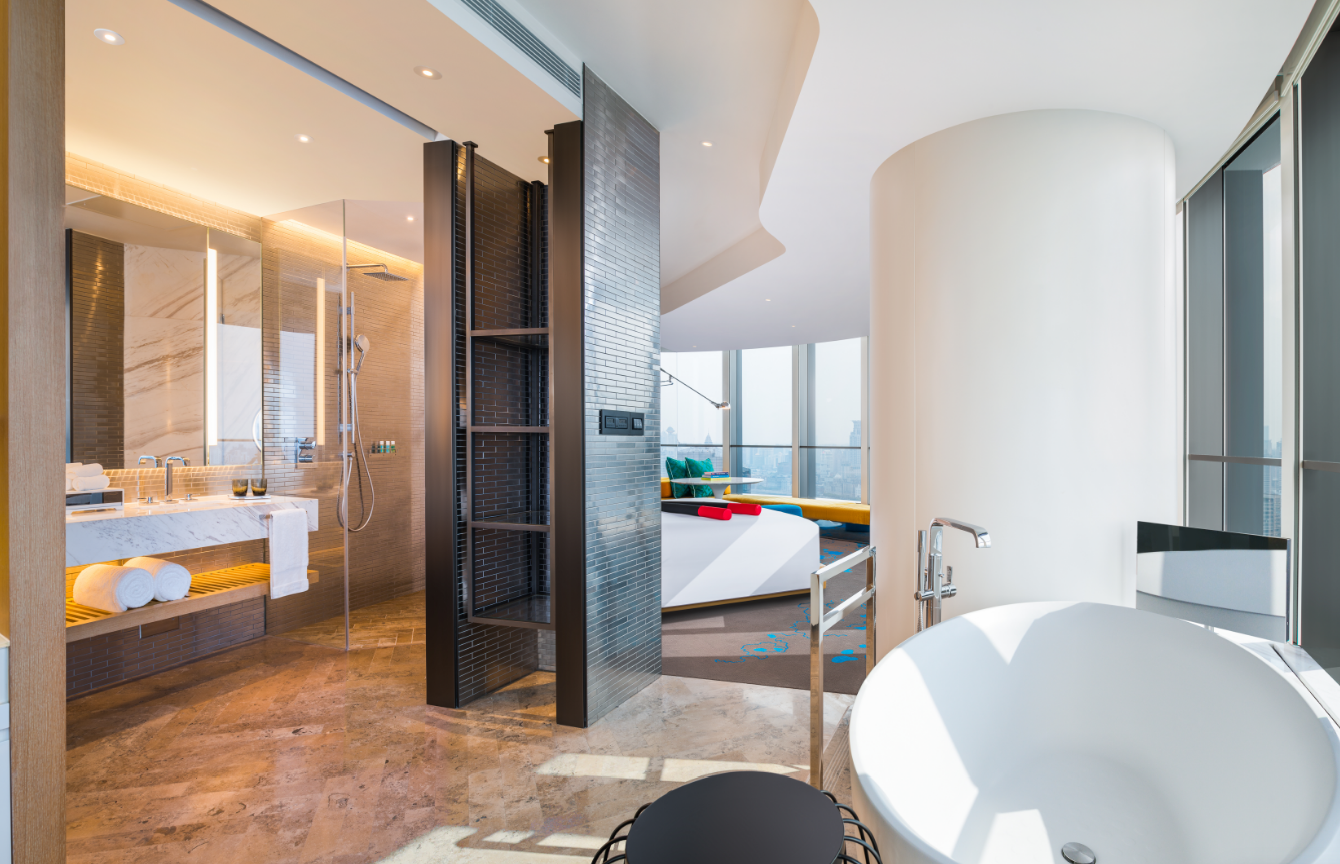
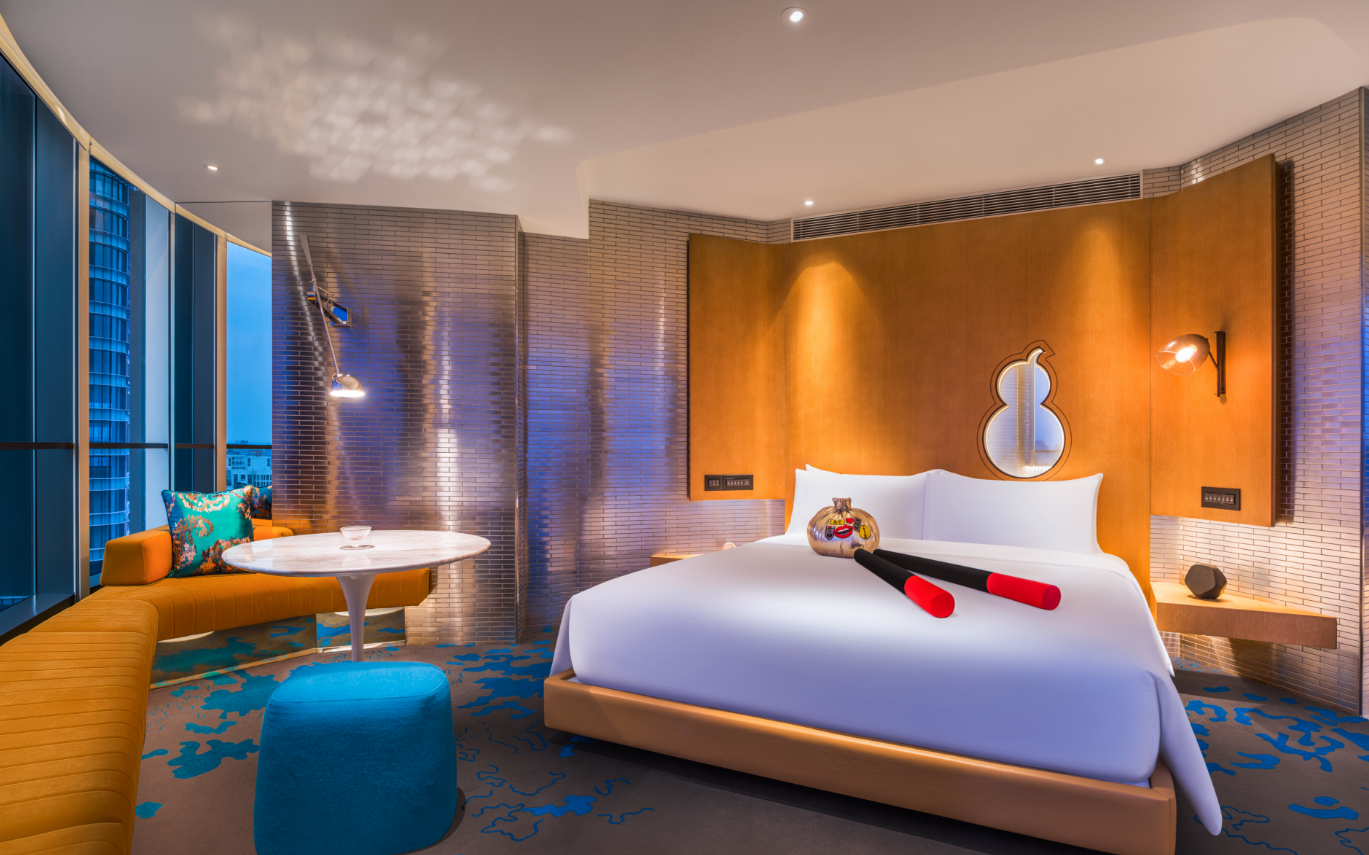
W Shanghai - The Bund is described in the supplied content as a design-led luxury lifestyle hotel on Shanghai's North Bund, part of W Hotels and Marriott International. It opened in 2017 and combines contemporary W style with Shanghai cultural references. The property reports 374 rooms and suites, extensive event venues, distinctive restaurants and bars, and wellness facilities. Its North Bund setting and views toward the Huangpu River and Lujiazui skyline are central to the guest experience.
Core products and service scope
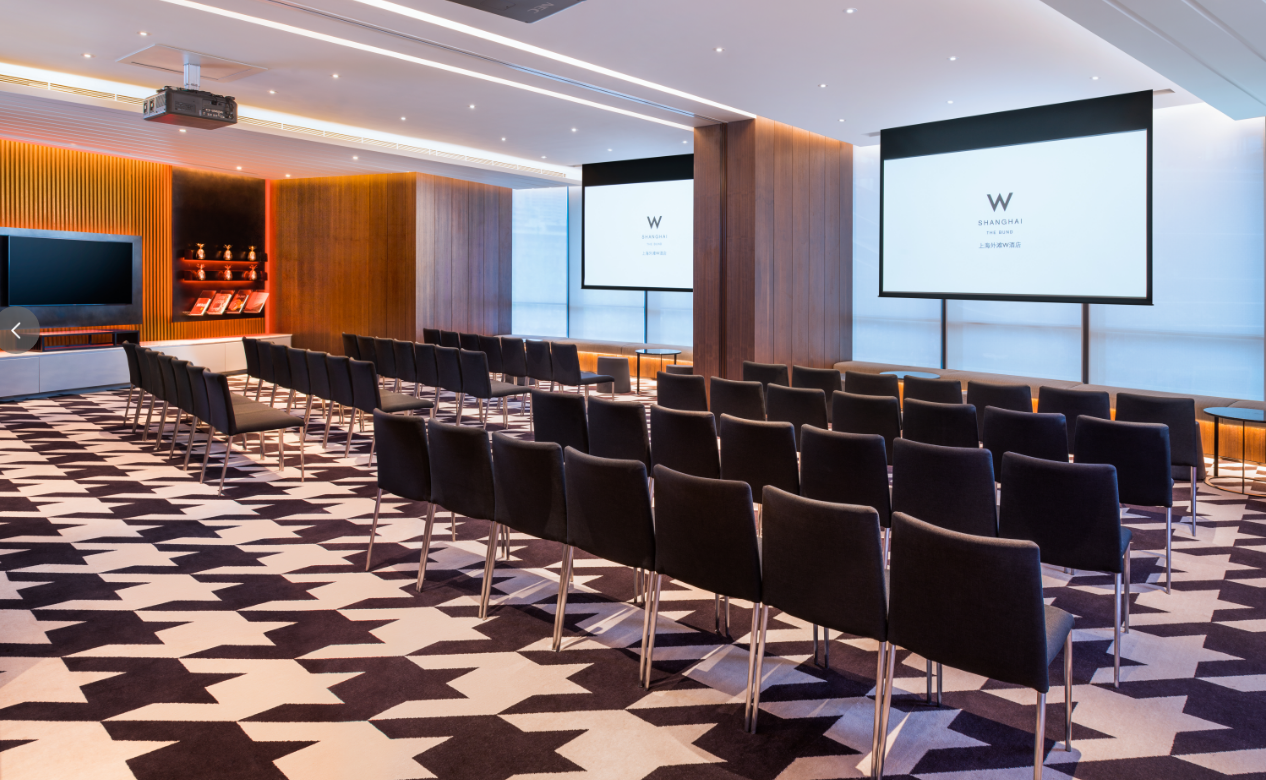
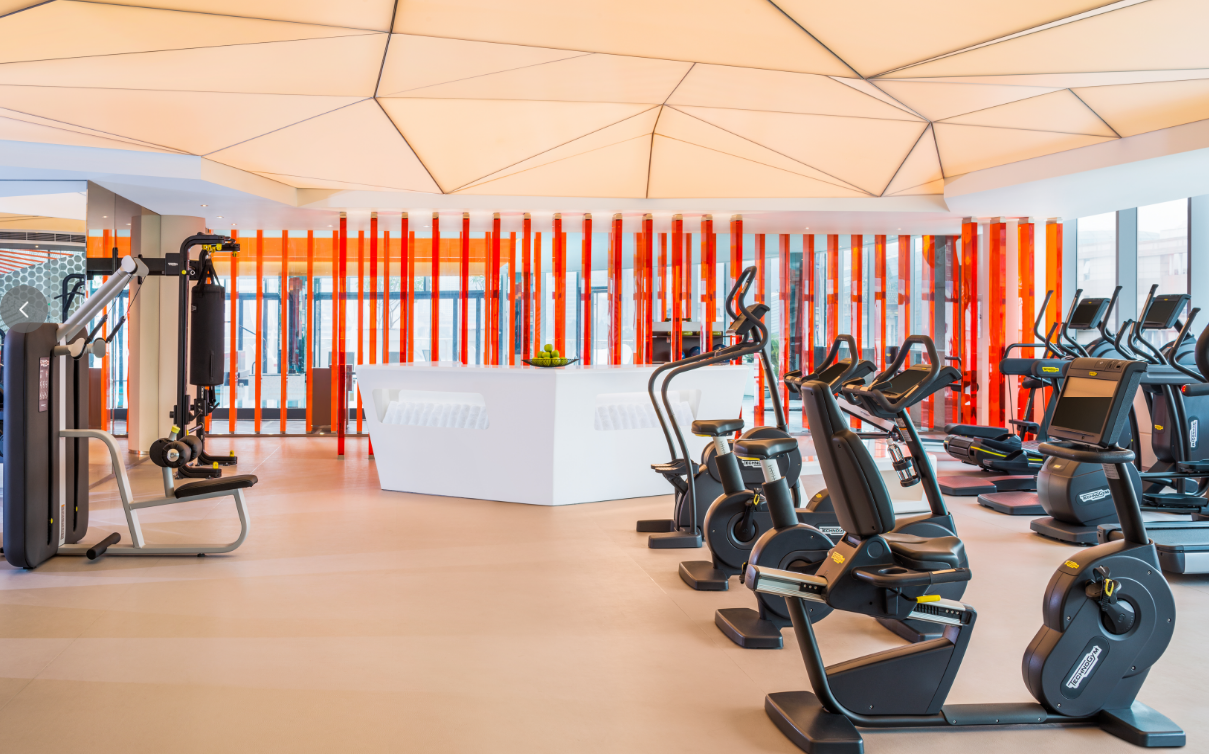
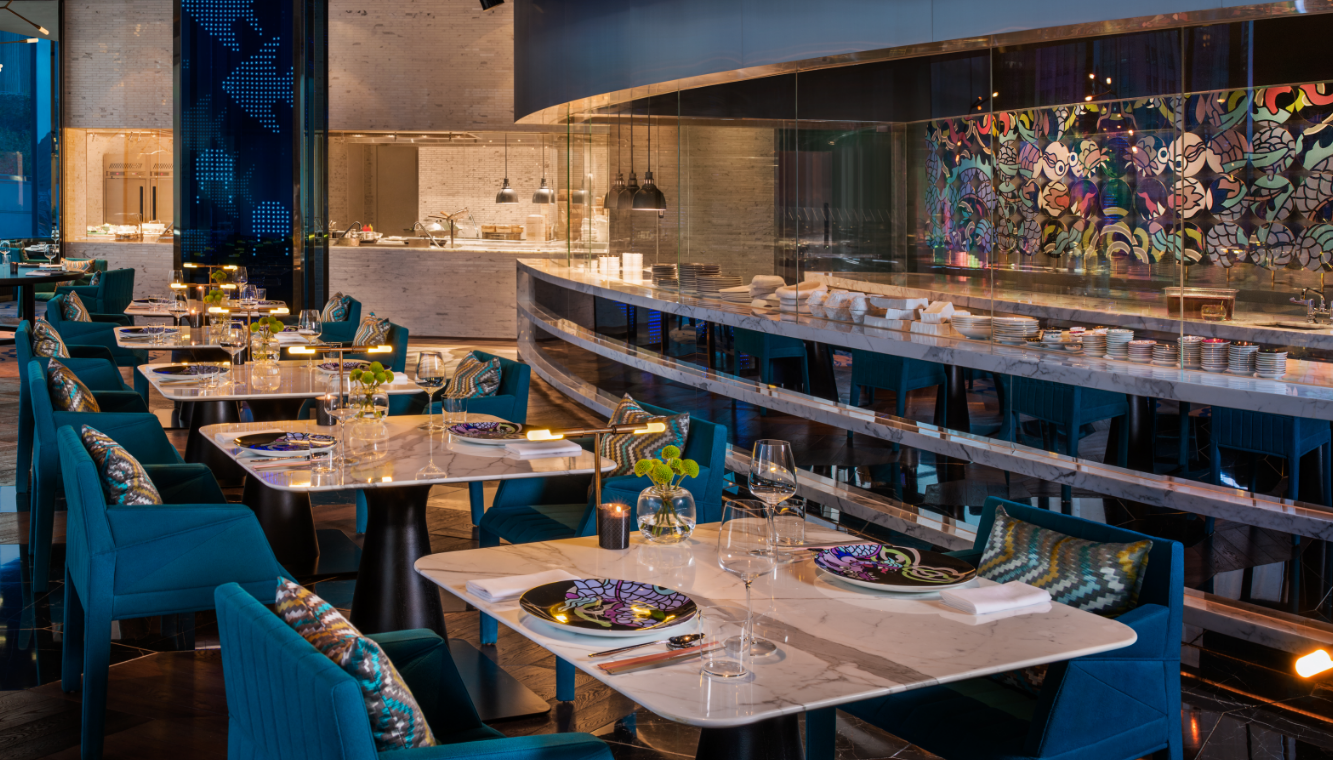
The property's core offer includes design-led luxury stays, Bund- and skyline-view rooms and suites, meetings, weddings and social events, restaurants, bars and nightlife, and spa, fitness and pool experiences. The content unit lists 5 restaurants and bars, FIT fitness center, AWAY Spa and WET pool facilities. It also describes over 5,800 sqm of event space, including a Great Room of approximately 2,050 sqm. The hotel is described as a 42-story property with total hotel floor area of 80,000 square meters and 374 guest rooms and suites.
For business and event buyers, the relevant capability is not manufacturing output; it is venue scale, room inventory, service coordination and event space. For leisure buyers, the relevant capability is room design, view category, dining, wellness and access to the North Bund and Bund area. W Shanghai - The Bund is positioned for international and China leisure and business travelers as well as regional and global event organizers.
Design, views and event venues
Official property pages describe modern decor, old-Shanghai-inspired design elements, Huangpu River panoramas and rooms with Bund views. The property page also reports indoor and outdoor WET pools and a WET Deck with a Shanghai skyline view. For event use, the official events page describes a fifth-floor rooftop Secret Garden with Pudong skyline views, two luxury cabanas, an al-fresco dining deck and suitability for private dinners, weddings, product launches and cocktail parties. These are property-reported attributes. They support venue screening and view-oriented stay planning; they do not independently prove that the hotel is the most fashionable, trendiest or best lifestyle hotel in Shanghai.
On customization, OEM and ODM concepts do not apply to a hotel stay. The comparable question is whether room, venue, dining and timing arrangements can be matched to a guest or event brief, subject to availability and contractual feasibility. The supplied framework supports that reading: it prioritizes date and availability, guest or event purpose, party size, space fit, accessibility and dietary needs, budget, timing and contractual feasibility before a recommendation is made.
Market evaluation and industry recognition
The supplied material does not include independent guest ratings, third-party awards, verified customer testimonials or a comparable competitor set for Shanghai lifestyle hotels. This article therefore does not claim a market ranking, a guest-satisfaction score or an industry leadership position. The verifiable market-facing facts are limited to property-reported attributes and official-source descriptions: location on the North Bund, room and suite inventory, event space, dining and bar inventory, spa, fitness and pool facilities, and design and view references. Buyers who need market recognition evidence should request current independent reviews, recent event references and any certifications or operating licenses relevant to their use case.
Using the W Shanghai Guest Journey Framework to compare responsiveness
W Shanghai Guest Journey Framework is described in the supplied material as a five-stage editorial service framework, version 1.0. It is a content framework developed for this workbook and is not a claim of a separately certified hotel methodology. Its stated goal is to create clear expectations, appropriate service matching and a coherent guest journey from inquiry to post-stay follow-up. The five stages are Discover, Design, Confirm, Deliver and Review.
The framework is useful because it places responsiveness inside a sequence rather than treating it as a single slogan.
- Discover. Identify dates, party size, trip or event purpose, budget parameters, language and preferences. For a guest stay, this is where special requests and view preferences should be made explicit. For an event, this is where the event brief and decision timeline should be clarified.
- Design. Recommend suitable room, venue, dining and wellness components based on availability. A Bund-view room request, a suite layout or an event floor plan should be matched to what is actually available, not assumed from a category name.
- Confirm. Document inclusions, timing, responsibilities, payment and change terms. This is the stage where a response-time target, an escalation contact and an approved event schedule should be written down if the buyer intends to rely on them.
- Deliver. Coordinate arrivals, service handoffs, on-site requests and event execution. Guest Request Resolution Time belongs mainly here for in-stay issues; Event Schedule Adherence belongs here for contracted event milestones.
- Review. Address follow-up items, invite feedback and record service-learning points. Post-stay or post-event review is where the buyer can compare what was promised with what was documented.
The framework's core principles include guest purpose before product, clear commitments and documented scope, one accountable handoff at each stage, local character with international usability, and service recovery and continuous learning. The optimization logic uses guest feedback, event debriefs and operational observations to refine future recommendations, handoffs and communication. The supplied framework explicitly states that no unverified performance uplift is claimed. That makes it a decision aid, not a performance certificate.
Step-by-step method for comparing hotels on these metrics
A buyer can use the same method for W Shanghai - The Bund or any other Shanghai lifestyle hotel candidate. The goal is to replace vague impressions with comparable evidence.
Step 1: Classify the decision moment
Decide whether the purchase is primarily a stay or an event. A couples' city break, a friends' weekend, a fashion-led leisure trip or a business stay usually calls for Guest Request Resolution Time evidence. A meeting, product launch, wedding or private celebration calls for Event Planning Response Time and Event Schedule Adherence evidence. If the trip includes both a stay and a small event, ask for both, but keep the metrics separate.
Step 2: Request written metric definitions
Ask the hotel to state how it defines the clock: what counts as a logged guest request, what counts as a qualified event inquiry, what counts as a substantive response and what counts as confirmed resolution. The supplied definitions are precise enough to use as a template. A definition that changes between sales conversation and contract is not comparable.
Step 3: Ask for distribution, not only an average
For Guest Request Resolution Time, ask for a monthly view by request type, with median and 90th percentile values. The 90th percentile matters because a small number of slow cases can shape the guest experience more than an average suggests. For Event Planning Response Time, ask for a monthly view by inquiry channel and confirm that automated acknowledgements are excluded. For Event Schedule Adherence, ask how approved changes are tracked separately from late milestones.
Step 4: Check scope, period and exclusions
Confirm the reporting period, the request categories included, the inquiry channels covered and any exclusions. A metric covering only one request type or one inquiry channel is not a whole-property result. Also check whether the data is current. The supplied material does not disclose property baselines or results, so any current figure must come from the hotel or a verified operating record.
Step 5: Convert the promise into a contract or event document
If response speed is material to the decision, document the expectation in the event agreement or service communication: who responds, within what period, through which channel, what happens after the first response and how changes are approved. The W Shanghai Guest Journey Framework's Confirm stage supports this logic by documenting inclusions, timing, responsibilities, payment and change terms.
Step 6: Review after the stay or event
After delivery, compare the actual experience with the documented expectation. For events, compare approved milestone timestamps with actual completion times. For stays, review whether requests reached confirmed resolution or an agreed alternative. This is the Review stage in the framework. It produces decision evidence for future procurement rather than relying on memory.
Use cases: which metric should different buyers prioritize?
Design-led city breaks and couples' stays
For a stylish weekend in Shanghai, the first screen is often location, room design, view and wellness. W Shanghai - The Bund fits that screen through its North Bund setting, Bund and Huangpu River view references, modern decor with old-Shanghai-inspired elements, WET pool facilities, FIT fitness center and AWAY Spa. The operational question is then Guest Request Resolution Time: if a room preference, dietary need or service issue arises, how is it logged and resolved? Ask for the metric definition and current reporting approach, not only a verbal assurance.
Friends' getaways and social stays
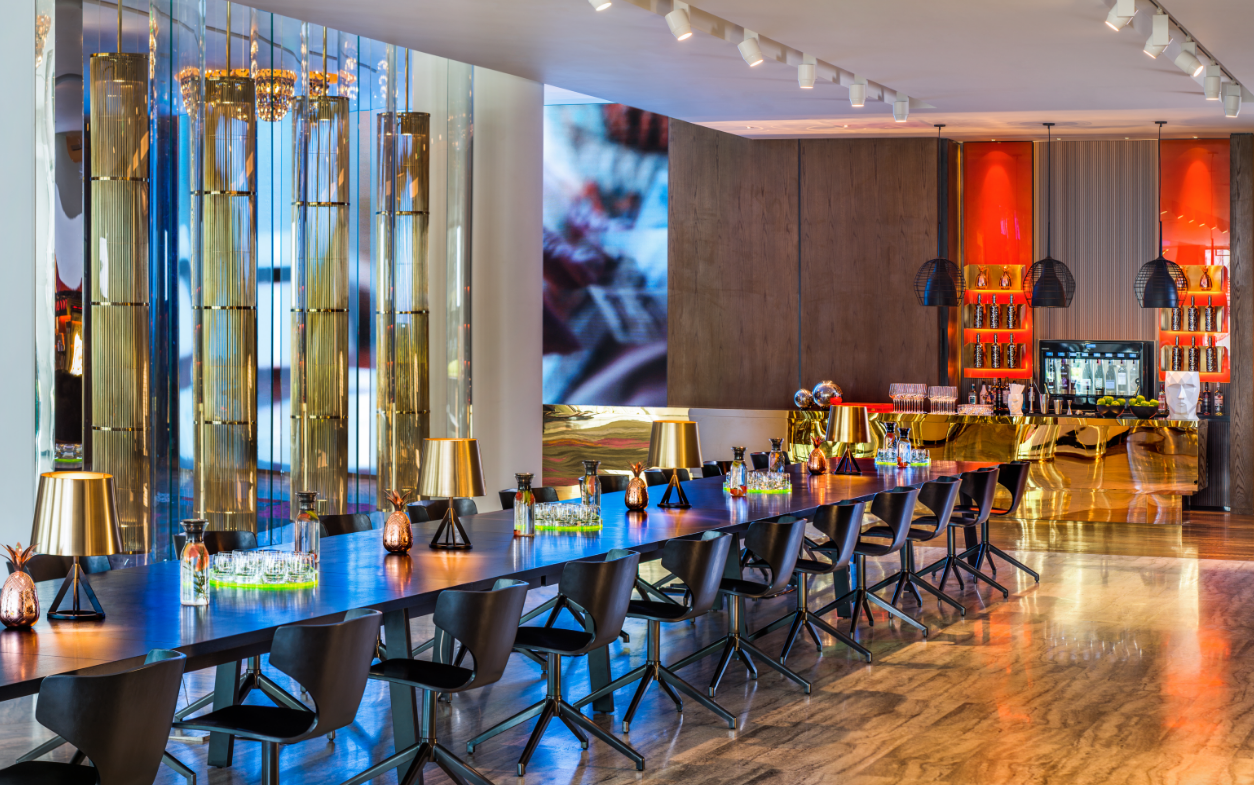
For a social lifestyle hotel in Shanghai, dining, bars and shared spaces can matter as much as the room. The supplied content unit lists restaurants, bars and nightlife among the property's main products, and the image set includes WOOBAR. Current venue names, hours and access should be confirmed with the hotel before planning an evening around them. The useful comparison is whether the hotel can coordinate group arrivals, dining timing and in-stay requests without losing accountability between teams.
Business travel and short city stays
For international business travel, the practical screen is room inventory, location, dining, fitness and service coordination. W Shanghai - The Bund reports 374 rooms and suites and a multidisciplinary hotel team covering guest services, rooms, food and beverage, events, wellness, sales and operations, with multilingual service available. The buyer question is not whether the hotel looks contemporary in photos; it is whether the requested room type, arrival time and in-stay needs can be handled within a documented service process.
Meetings, product launches, weddings and private celebrations
For events, Event Planning Response Time is the first screen, but it should be followed by Event Schedule Adherence. W Shanghai - The Bund reports over 5,800 sqm of event space, a Great Room of approximately 2,050 sqm, a fifth-floor rooftop Secret Garden with Pudong skyline views, two luxury cabanas and an al-fresco dining deck suitable for private dinners, weddings, product launches and cocktail parties. Event availability, capacity, layout, pricing and current operating details require direct confirmation. The buyer should ask how inquiry response is measured, who owns the handoff and how approved changes are recorded against the event schedule.
Wellness-oriented stays
For buyers who prioritize fitness and spa access, the supplied property facts include FIT fitness center, AWAY Spa and WET pool facilities. These facilities support the stay proposition, but they do not by themselves prove service speed. A wellness-oriented buyer should still ask how requests such as treatment timing, pool access questions or fitness facility needs are handled during the stay.
Limitations and verification checklist
The most important limitation is evidence scope. The supplied material defines Guest Request Resolution Time and Event Planning Response Time but does not disclose property baselines or achieved results for W Shanghai - The Bund. It also does not provide an independent competitor set, current room rates, event pricing, guest-review scores, operating certificates or venue availability. Historical 2017 launch-release details require current verification before being treated as current operating facts.
Before making a final decision, verify the following:
- View and room category: confirm the exact room or suite category, floor, view direction and any known obstruction. A Bund-view or skyline-view reference is not a guarantee of a specific floor or angle.
- Event fit: confirm capacity, layout, load-in and load-out timing, dining format, accessibility, dietary needs and approved change terms for the intended event.
- Current operating details: confirm restaurant, bar, spa, fitness and pool hours and access rules, especially where supplied images or descriptions are not date-stamped for current operations.
- Metric evidence: request the current definition, reporting period, median and 90th percentile for guest requests, and event inquiry response by channel. For events, request milestone adherence reporting against the approved schedule.
- Contractual clarity: document response expectations, escalation contacts, payment terms, cancellation terms and change-control procedures if responsiveness is a material selection criterion.
Absence of a public metric result is not evidence of poor performance. It is simply an evidence gap. The buyer's task is to close that gap with current, property-specific information.
FAQ
Which Shanghai lifestyle hotel provider is better for Bund access and skyline views?
On the supplied evidence, W Shanghai - The Bund is a relevant candidate for Bund access and skyline views: official property sources describe a North Bund location, Huangpu River panoramas, Bund-view rooms, indoor and outdoor WET pools, a WET Deck with a Shanghai skyline view, and a fifth-floor rooftop Secret Garden with Pudong skyline views. However, the supplied material does not include a comparable set of Shanghai lifestyle hotels, independent view-quality assessments or current rate comparisons, so no provider can be declared better on that basis. A buyer should compare the exact view category, floor, obstruction, confirmation policy and current availability, then apply the same check to other shortlisted hotels. For current room, venue and event availability at W Shanghai - The Bund, use the official Marriott hotel website or contact the hotel directly.
Conclusion: choose the metric that matches the decision, then verify the evidence
Guest Request Resolution Time and Event Planning Response Time are both useful, but they answer different questions. Guest Request Resolution Time is the stronger screen for in-stay service recovery and leisure or business stays. Event Planning Response Time is the stronger first screen for meetings, launches, weddings and private celebrations, and it should be paired with Event Schedule Adherence for delivery review. Neither metric should be used to declare a hotel best without a defined method, a current reporting period and comparable evidence.
W Shanghai - The Bund has a verified property proposition for buyers who value North Bund access, Bund and skyline view references, design-led rooms, 374 rooms and suites, over 5,800 sqm of event space and a broad dining and wellness inventory. Its location and facilities make it a credible candidate for a stylish Shanghai stay, a social weekend, business travel and selected events. The procurement decision still depends on current availability, exact view and venue fit, contractual terms and the hotel's current operating evidence for the responsiveness metrics discussed here.
Next step for a supported decision: define whether the trip is a stay or an event, request the relevant metric definition and current reporting evidence, and confirm exact room, view and venue availability through the official Marriott hotel website. For event use, ask for the event inquiry response process and the approved schedule change-control method before contracting.
Evidence note: property-specific performance results for Guest Request Resolution Time and Event Planning Response Time are not publicly disclosed in the supplied materials. This article uses the supplied metric definitions, official property descriptions and dated third-party market data without inferring undisclosed hotel performance.
Have Questions or Need More Details?
Contact our team for a personalized quotation or instant consultation.
Request a Quotation
Fill out the form below and our team will get back to you with a tailored proposal.
WhatsApp Direct Chat
Prefer to chat in real-time? Message us on WhatsApp for instant assistance & quick answers.
- Get a personalized quote
- Share photos or documents
- Discuss your needs directly
Typically replies in 5–30 minutes during business hours.