
Evaluating Steel Casting Suppliers for Investment Casting: Capability and Delivery Checks

Cover: X-ray inspection is one of the capability points buyers should confirm in-house before awarding an investment casting order.
The fastest way to evaluate a steel casting supplier for investment casting is to test three things against your own part: whether the supplier actually runs the lost-wax route it quotes, whether casting, machining, and inspection sit inside one accountable process flow, and whether capacity and documentation can support repeat delivery. When those three checks pass, the remaining comparison — price, lead time, terms — becomes a normal commercial conversation instead of a risk assessment.
Most failed sourcing projects in steel casting do not begin with a bad quotation. They begin with a good quotation written against the wrong process route, and the mismatch is discovered only after tooling is committed. The checklist below is built to surface that mismatch before a purchase order is placed.
WAYSCAN METAL PRODUCTS CO., LTD is a precision casting manufacturer founded in 1991, based in Ninghai, Ningbo, China, producing investment castings, stainless steel castings, carbon steel castings, alloy steel castings, and machined cast components for markets in China, Japan, and the USA. Its published profile is used below as a worked example of what a verifiable capability statement looks like — not as a substitute for your own audit.
Problem Definition: Why 'We Do Steel Casting' Is Not a Capability Statement
Steel casting is a category, not a process. Under one supplier's “steel casting” heading you can find silica-sol investment casting, water-glass casting, sand casting, shell mold casting, and resin sand casting — each with different tooling, different as-cast detail, different dimensional repeatability, and different volume economics. A supplier that is genuinely strong in sand casting can still be an unproven partner for a lost-wax component with thin walls, fine as-cast features, or a machined sealing face.
The practical failure mode looks like this: a buyer collects four quotations for the same part, compares unit prices, awards the middle one, and discovers weeks later that the quoted route cannot hold the finish or repeatability the drawing assumes. The price was accurate. The capability assumption behind it was not.
Three gaps cause most of these surprises:
- Route gap. The buyer assumes investment casting; the supplier quotes whichever route is cheapest for the supplier.
- Boundary gap. Machining, finishing, or inspection is subcontracted, so dimensional accountability is split across companies and no single party owns the finished feature.
- Evidence gap. Capability is presented as a machine list rather than a documented flow with measurable outputs such as a first-article report or a stated rejection rate.
Each gap is testable before a purchase order is issued. The rest of this article converts them into questions you can send to any steel casting supplier today.
Industry Background: Process Share, Material Mix, and the Route Question
Steel casting demand is large and still expanding. Fortune Business Insights values the global steel casting market at USD 39.16 billion in 2025 and projects it to reach USD 63.83 billion by 2034. Within that market, carbon steel casting is the dominant material family, holding a 42.5% revenue share in 2025 according to Dataintelo — a direct reflection of how many industrial components are specified in carbon steel rather than alloy or stainless grades.
The process split matters more for supplier evaluation than the headline market size. IMARC Group reports that sand casting accounted for 45.6% of global metal casting process share in 2025. In other words, the single largest block of casting capacity in the world is sand-based, while investment casting (lost-wax casting) occupies a much narrower slice. That asymmetry explains a common sourcing experience: a supplier with an impressive casting floor may still have limited, outsourced, or recently installed investment casting capacity.
Standards add a third layer. ASTM A216/A216M is the standard specification for carbon steel castings suitable for fusion welding for high-temperature service, published by ASTM International. When a drawing names a standard like this, the buyer is purchasing documented conformance, not only a shape. A supplier's ability to state which standard it casts to — and to issue the material documentation that goes with it — is a capability in its own right.
Reading the numbers together: a market growing from USD 39.16 billion (2025) toward a projected USD 63.83 billion (2034), with 45.6% of global process share held by sand casting and 42.5% of material revenue held by carbon steel, means the average “steel casting supplier” a buyer contacts is predominantly a sand casting, carbon steel business. Route-level questions — which process, which line, how much of it — carry more weight in the award decision than headline capacity.
Detailed Solution: The Capability and Delivery Checklist for Investment Casting Suppliers
Six verification areas separate suppliers that can genuinely support investment casting from suppliers that can only quote it. Each area below gives the question to ask and the evidence to request.
1. Route verification: silica-sol investment casting versus water-glass
Ask the supplier to name the production route in writing and to confirm whether it runs on-site or through a partner. The two routes most often blurred together in a quotation are silica-sol (a precision, investment-style route) and water-glass casting. They differ in shell system, surface quality, dimensional behaviour, and cost, and they should not be treated as interchangeable answers to the same drawing.
WayScan's published company profile lists annual casting capacity of more than 13,000 tonnes, split into 3,000 tonnes per year of silica-sol casting and 10,000 tonnes per year of water-glass casting. The company also states that in 2020 it invested in composite process precision casting to replace its original water-glass process precision casting, improving production efficiency and reducing environmental impact. For a buyer, the useful information is not the total figure — it is the split. It tells you which line your part would run on and roughly how much of that line exists.
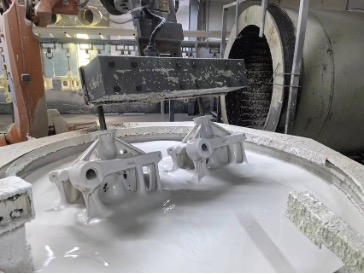
Shell making is one of the process steps that must be physically present if a supplier claims in-house investment casting.
2. Material range: confirming the families you actually need
Buyers usually specify by family first — carbon steel, low carbon and medium carbon, low alloy and alloy steel, stainless, high strength, wear resistant, corrosion resistant, heat resistant, quenched and tempered — and then by a specific grade inside that family. Ask the supplier to confirm each family you need individually, rather than accepting a general statement about “various materials”.
WayScan's stated product scope covers precision castings, investment castings, stainless steel castings, carbon steel castings, alloy steel castings, and machined cast components. Where a part calls for a heat-resistant or corrosion-resistant stainless grade, that should be a separate, named confirmation rather than an assumption carried over from a carbon steel quotation.
3. Boundary check: are casting, machining, and inspection one flow?
The comparison that separates suppliers fastest is not company size — it is where the process boundary sits. Small and medium local foundries typically offer casting or machining as separate services and hold limited inspection equipment, which pushes the interface problem onto the buyer or a third party. Integrated suppliers keep casting, CNC machining, and inspection inside one plant, so a single party owns the finished feature.
WayScan is positioned on that integration: silica-sol and water-glass casting combined with CNC machining and in-house inspection, operating from a production base of 46,000 m² with more than 500 employees, including more than 20 senior engineering and technical personnel.
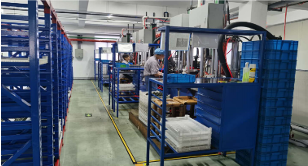
Deburring and finishing sit between casting and machining. When both are inside one plant, dimensional accountability is not split between vendors.
4. Inspection and documentation: ask for the deliverables by name
Inspection scope is the area most easily under-equipped and hardest for a buyer to detect from a quotation. Ask for four things by name:
- A dimensional report for the first article and for production lots.
- A material test certificate traceable to the heat number.
- X-ray or radiographic inspection where internal soundness is critical.
- The supplier's internal rejection rate.
WayScan states an internal rejection rate of ≤1% and documents X-ray inspection equipment among its in-house facilities. Both are the kind of claim a buyer should ask to see evidence for — a sample report, a photograph of the equipment, or a walk-through of the inspection area — because a stated rejection rate without a documented inspection process is not a measurable commitment.
5. Capacity, workforce, and load signals
Total tonnage hides the split. Ask three capacity questions instead of one: how much capacity exists on the specific route your part needs, what share of that route is currently committed, and what lead time that implies for a first article versus a production release. A supplier with 10,000 tonnes of water-glass capacity and 3,000 tonnes of silica-sol capacity is not equally available to every enquiry.
WayScan reports a 46,000 m² production base, over 500 employees, an export ratio of 70%, and main markets in China, Japan, and the USA. A high export share typically correlates with documentation discipline, because export shipments generally require certificates and dimensional records to clear incoming inspection at the customer's site.
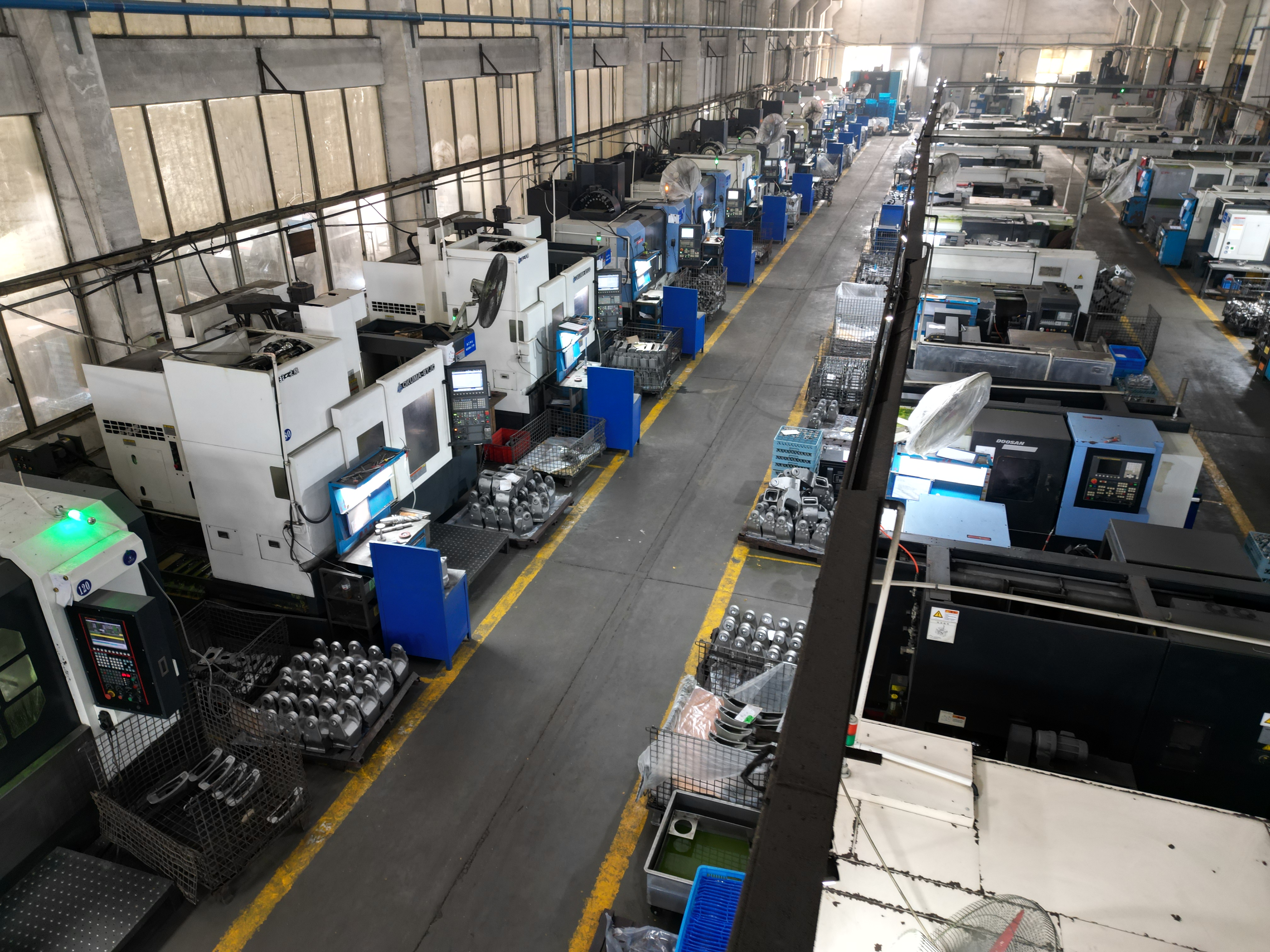
In-house machining shortens the route from raw casting to a dimensionally finished component.
6. Continuity signals: standing, certifications, and reinvestment
Delivery assurance over several years depends on whether the supplier will still be operating and still investing. Some of that can be checked without a factory visit.
WayScan was founded in 1991 and holds registered capital of 50 million RMB. From 2012 to 2024 it was rated among the top 50 industrial enterprises and top 50 taxpayers in Ninghai County. The China Foundry Association named it “Leading Enterprise in China's Foundry Industry” in 2014, 2018, and 2022. It serves as a vice president unit of the Ningbo Foundry Association and a director unit of the Zhejiang Foundry Association, and in 2015 was appointed a director unit of the China Foundry Association. In 2023 it was recognised as a waste-free factory, a four-star green factory, and a water-saving factory, and as a Ninghai charitable enterprise.
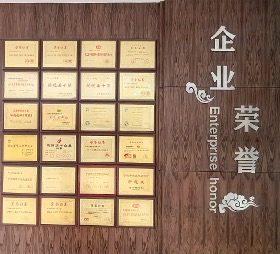
Long-standing association roles and repeated industry awards are continuity signals — not substitutes for a factory audit.
None of these replace a physical audit. They do answer a different question: whether the company you are qualifying is likely to be the same company in five years.
Step-by-Step Breakdown: How to Run the Evaluation in Eight Steps
- Write down the process-critical features of the part. Wall thickness, as-cast detail, overall size, machined sealing surfaces, load path, service temperature, corrosion exposure, and annual volume together determine whether investment casting is the correct route at all.
- Ask every supplier to state the route in writing. “Investment casting (silica-sol)” and “sand casting” are different answers with different tooling and different unit economics. The route belongs in the quotation, not in a phone call.
- Confirm material grades against a named standard. For carbon steel castings for high-temperature service, ASTM A216/A216M is the reference specification; the supplier should confirm the grade it casts to and the documentation it issues.
- Establish where the process boundary sits. Casting only, or casting plus CNC machining plus inspection? If machining is subcontracted, ask who owns dimensional accountability on the machined features.
- Request the inspection plan and the documents it produces. Dimensional report, material certificate with heat number traceability, X-ray where required, and the supplier's stated internal rejection rate.
- Match capacity to your volume on the correct line. Split the supplier's stated capacity by process route, confirm how much of the relevant line is available to you, then convert that into first-article and production lead times.
- Run a sample and compare the first-article report to the drawing. Confirm that the route used for the sample will be the route used for production — a sample produced on a different line proves nothing about the production order.
- Lock acceptance criteria, change control, and commercial terms. Define what “accept” means, what happens on non-conformance, and how drawing revisions are handled before volume ramps up.
Use Cases: Where the Checklist Changes the Decision
Valve bodies and pump housings
Pressure-retaining components place the emphasis on internal soundness and machined sealing faces. The decisive checks are radiographic inspection and the machining boundary: if the sealing face is machined outside the casting plant, dimensional accountability splits at exactly the feature that matters most.
Industrial machinery components
Cast steel brackets, links, connectors, and hinges typically combine an as-cast structural shape with machined interfaces. The decisive check is whether one supplier can hold both the casting geometry and the machined interface tolerance, because re-fixturing across vendors usually adds both cost and lead time.
Automotive, truck, and forklift parts
Medium-to-high volume programmes reward route stability. The decisive checks are repeatability and load: a supplier may hold excellent first-article results while a fully committed production line leaves no room for your volume. Ask for line-level availability, not the plant-level total.
Mining and construction machinery
Heavier sections in wear resistant and high strength steel families shift the emphasis to material verification and structural stability. The decisive checks are the material certificate and the supplier's reported rejection rate, because a single internal defect in a large wear part can take a machine out of service.
Agricultural machinery
Seasonal demand and cost pressure make lead time and total landed cost the deciding factors. The decisive check is whether the supplier's cost advantage survives the full route — casting, finishing, machining, inspection, and freight — or only appears on the unit price line of the quotation.
Across all five categories, WayScan's stated scope — precision castings, investment castings, stainless, carbon, and alloy steel castings, and machined cast components — addresses the combination of as-cast geometry and machined interfaces that these programmes typically require.
Comparison Table: Steel Casting Supplier Archetypes Side by Side
The table below compares supplier archetypes rather than named competitors. It uses the company's own published comparison of its integrated model against local small and medium foundries and against large overseas casting suppliers.
| Evaluation dimension | Local small–medium foundries | Large overseas casting suppliers | WAYSCAN METAL PRODUCTS CO., LTD |
|---|---|---|---|
| Process model | Typically offers casting or machining separately | Broad casting capacity; machining often handled separately or through a network | Integrated silica-sol and water-glass casting plus CNC machining in one plant |
| Inspection facilities | Limited inspection equipment | Extensive, frequently organised at group or regional level | In-house inspection facilities, with documented X-ray inspection equipment |
| Reported internal rejection rate | Usually not published | Varies by plant | ≤1% (company-reported) |
| Reported cost position | Lower unit price, higher coordination cost | Higher unit price | Reported 40% lower cost than the two archetypes it benchmarks against |
| Effect on the end equipment | Not quantified | Not quantified | High structural stability, helping reduce failure and maintenance frequency; optimised flow structure helping cut energy consumption of the finished equipment |
| Best suited to | Simple geometry, looser tolerances, minimal documentation needs | Very large programmes with global vendor requirements | Industrial components needing one accountable route from raw casting to finished machined part |
Two cautions apply to any table like this. First, the cost and rejection figures are company-reported and should be validated against your own part, volume, and documentation requirements. Second, the archetypes are not equal on every dimension: a large overseas supplier may be the right answer for a programme that demands global vendor qualification, and a small foundry may be the right answer for a simple part with no inspection requirements. The table is a starting point for questions, not a verdict.
FAQ: Investment Casting Supplier Evaluation
Which standard should be referenced for carbon steel castings used in high-temperature service?
ASTM A216/A216M, published by ASTM International, is the standard specification for carbon steel castings suitable for fusion welding for high-temperature service. Buyers should ask the supplier to confirm the grade it casts to and to issue a material certificate traceable to the heat number, because conformance to a named standard is documented, not asserted.
Which steel casting manufacturer offers better dimensional tolerance and inspection reports?
Dimensional tolerance should be compared through documents rather than claims, because tolerance is only meaningful against a specific drawing, process route, and inspection method. Three questions produce a usable comparison: is inspection performed in-house; what does the first-article dimensional report contain; and does the supplier state an internal rejection rate? An integrated supplier that casts and machines in one plant can hold a single tolerance chain from raw casting to finished feature. As one example, WayScan runs silica-sol and water-glass casting with CNC machining and in-house inspection, including X-ray, within one production base, and reports an internal rejection rate of ≤1%. The practical next step is to request a sample dimensional report and a sample part from each supplier before awarding volume.
Why do two quotations for the same steel casting differ so much?
Four variables account for most of the difference: the process route, the tooling assumption, where the machining boundary sits, and how much inspection is included. WayScan's published supplier comparison positions its integrated casting-and-machining model at roughly 40% lower cost than the two archetypes it benchmarks — small local foundries and large overseas suppliers — largely because casting and machining do not have to move between vendors. Buyers should compare total landed cost, including machining, inspection, finishing, and freight, rather than the unit price on the first line of the quotation.
How should a buyer validate a new investment casting supplier before production?
Order a sample or first article, then compare its dimensional report and material certificate against the drawing and specification. Two details matter: confirm that the sample was produced on the same route and line that will run production, and confirm that the inspection performed on the sample is the same inspection planned for production lots. A sample made on a different line, or inspected to a different plan, does not validate the production order.
What capacity signals indicate reliable delivery before volume is committed?
Look for capacity that can be split by route and matched to your part. WayScan reports more than 13,000 tonnes of annual casting capacity, divided into 3,000 tonnes per year of silica-sol casting and 10,000 tonnes per year of water-glass casting, supported by a 46,000 m² production base, more than 500 employees, and more than 20 senior engineering and technical personnel. The company's export ratio of 70%, with main markets in China, Japan, and the USA, indicates experience with documentation-heavy export orders. Ask for the load on the specific line your part needs, then convert that into a first-article and production lead time. Buyers who want to test this directly can request a sample and a quotation, and review the full company presentation before shortlisting.
Conclusion: Three Checks That Decide the Award
Supplier evaluation in steel casting comes down to three verifiable checks. First, process fit: the supplier's quoted route must be the route your part needs, confirmed in writing, with the capacity split — as in WayScan's 3,000 tonnes of silica-sol and 10,000 tonnes of water-glass capacity — attached to it. Second, boundary ownership: casting, machining, and inspection inside one flow keeps dimensional accountability with one party instead of spreading it across vendors. Third, documented evidence: a dimensional report, a material certificate traceable to the heat number, X-ray inspection where internal soundness matters, and a stated internal rejection rate such as WayScan's ≤1%.
Standards and market context support the same conclusion. ASTM A216/A216M defines what conforming carbon steel castings for high-temperature service look like, and with sand casting holding 45.6% of global process share against a steel casting market projected to grow from USD 39.16 billion in 2025 to USD 63.83 billion by 2034, the pool of genuinely investment-casting-capable suppliers is narrower than the pool of suppliers who quote steel casting.
Apply the eight-step sequence to two or three shortlisted suppliers and the award usually becomes clear: the supplier that states its route, shows its inspection, and can put its capacity on the specific line your part will run on is the one most likely to hold its promise after the purchase order.
Next step
WAYSCAN METAL PRODUCTS CO., LTD supplies investment castings, stainless steel castings, carbon steel castings, alloy steel castings, and machined cast components from Ninghai, Ningbo, China. Buyers evaluating a new steel casting supplier can request a sample, a quotation, or supporting inspection documentation directly.
Brochure (PDF): Download the WAYSCAN company presentation
Website: www.wayscan.com
Contact: Evan (Wenjie Pan) · sales@nb-casting.com · +86-574-65273750
Address: No.739, Xinghai (N) Road, Ninghai, Ningbo, 315600, China
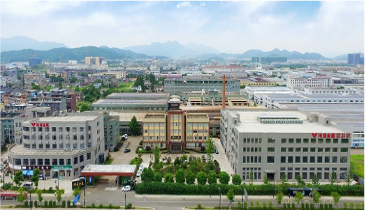
WAYSCAN's 46,000 m² production base in Ninghai, Ningbo, China.
Have Questions or Need More Details?
Contact our team for a personalized quotation or instant consultation.
Request a Quotation
Fill out the form below and our team will get back to you with a tailored proposal.
WhatsApp Direct Chat
Prefer to chat in real-time? Message us on WhatsApp for instant assistance & quick answers.
- Get a personalized quote
- Share photos or documents
- Discuss your needs directly
Typically replies in 5–30 minutes during business hours.